
Alignment Lines Give You the Feedback a Home Practice Is Missing
Proprioception — your sense of where your limbs are in space — is surprisingly unreliable in loaded, unfamiliar positions. In a Warrior II or a Downward Dog you genuinely cannot tell that your back foot has crept forward or that one hand is two inches ahead of the other; your body reports symmetry it is not producing. Printed alignment lines replace that faulty internal feedback with an external visual reference. Over weeks, repeatedly correcting to the line trains a more accurate internal map, so the asymmetries you built in gradually stop reappearing. The lines are a cue, not a cure — they cannot see your hips or your spine.
Key Benefits
- Visual reference for hand and foot placement. Centre lines and lateral markings let you check stance width and symmetry at a glance, without a mirror or a teacher walking the room.
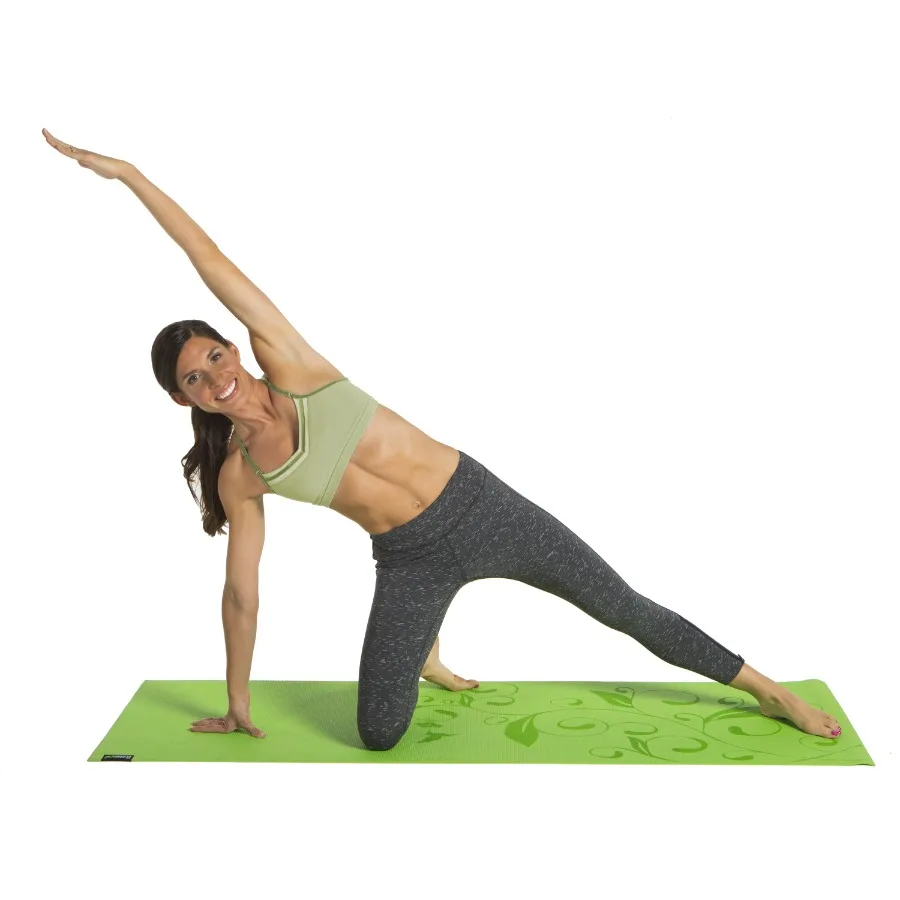
- Generous 24 x 68 inch surface. Wider and longer than a standard mat, which matters in wide-legged standing poses and long-limbed lunges where a narrow mat runs out of real estate.
- Trains symmetry over time. Most practitioners are noticeably stronger and more mobile on one side. Correcting to a fixed line each session slowly closes that gap instead of reinforcing it.
- Included pose poster for structured self-practice. A reference sheet is genuinely useful when you are building a home sequence and cannot remember what came after triangle.
- Reduces the guesswork that makes home practice frustrating. Beginners quit yoga partly because they never know if they are doing it right. Lines give a definite answer on at least one variable.
- Honest limitation. Alignment lines guide your extremities only. They will not tell you that your lumbar spine is over-extended or your front knee is collapsing inward — for that, occasional teacher feedback or filming yourself remains irreplaceable.
How to Use
Set the mat on a flat, clean floor with the long centre line running away from you. Use the lines as a check, not a cage: enter the pose as you normally would, then glance down and see where your hands and feet have actually landed relative to the markings, and adjust. The value is in the correction, not in obsessing over the line — chasing perfect placement while holding your breath defeats the purpose. In standing poses, use the lateral markings to set a consistent stance width so today’s Warrior II matches last week’s. In Downward Dog, check that both hands sit equidistant from the centre line. Give the mat a few days to fully unroll and flatten if it arrives curled, and wipe it before first use — new mats often have a slick factory film that makes them slippery until washed.
Specifications
| Product type | Alignment yoga mat with printed guide lines |
|---|---|
| Dimensions | 24 x 68 inches (approx. 61 x 173 cm) |
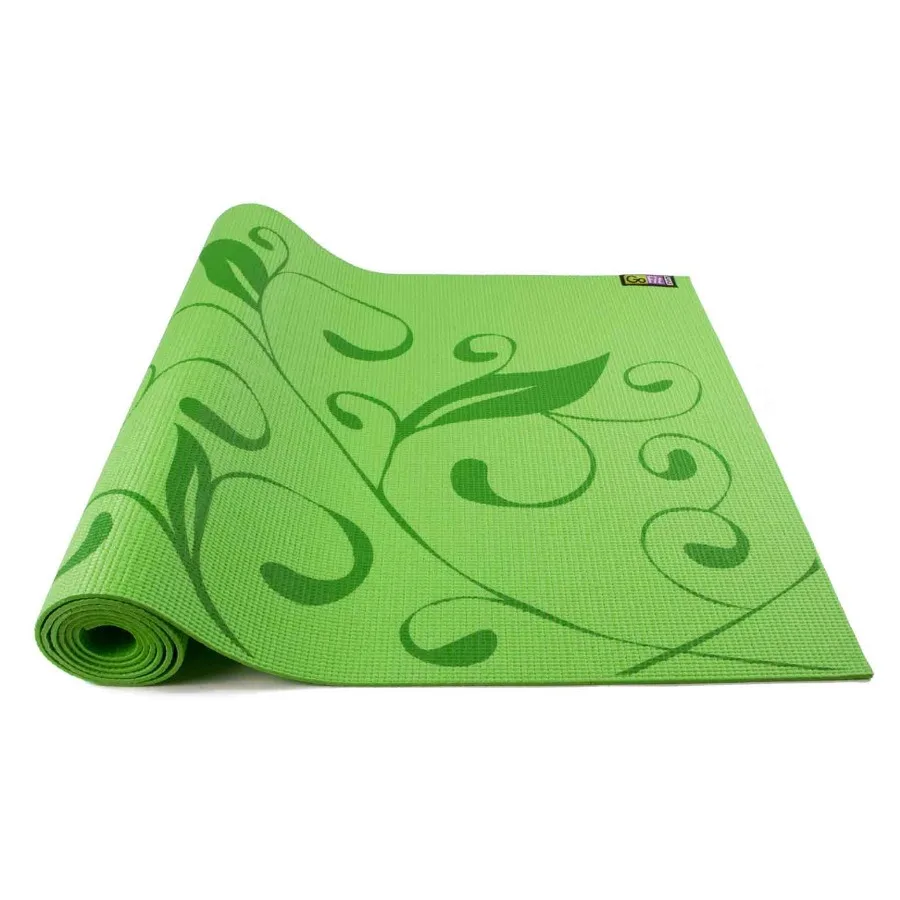
| Colour | Green |
| Surface | Printed alignment and symmetry markings |
| Included extra | Pose reference poster |
| Best for | Home practice, beginners, alignment-focused styles (Hatha, Iyengar, Vinyasa) |
| Thickness / material | Variant dependent — see product options |
| Orientation | Long centre line with lateral placement markings |
Care & Maintenance
Wipe down after each practice with a damp cloth or a diluted mild soap solution — sweat and skin oils are what make a mat slippery over time, and a slippery mat is a hazard in standing poses. Avoid harsh solvents, alcohol-heavy sprays and abrasive scrubbing, all of which will fade the printed alignment lines, which are the reason you bought this mat. Air-dry flat, out of direct sunlight; UV degrades mat material and washes out the printing. Roll it with the printed side facing outward to reduce curling at the corners, and store it rolled rather than folded — creases in a yoga mat are permanent.
What’s in the Box
1 x 24 x 68-inch alignment yoga mat (green) and 1 x pose reference poster.
Reviews
There are no reviews yet.