

The Mat That Grips Harder the Wetter Your Hands Get
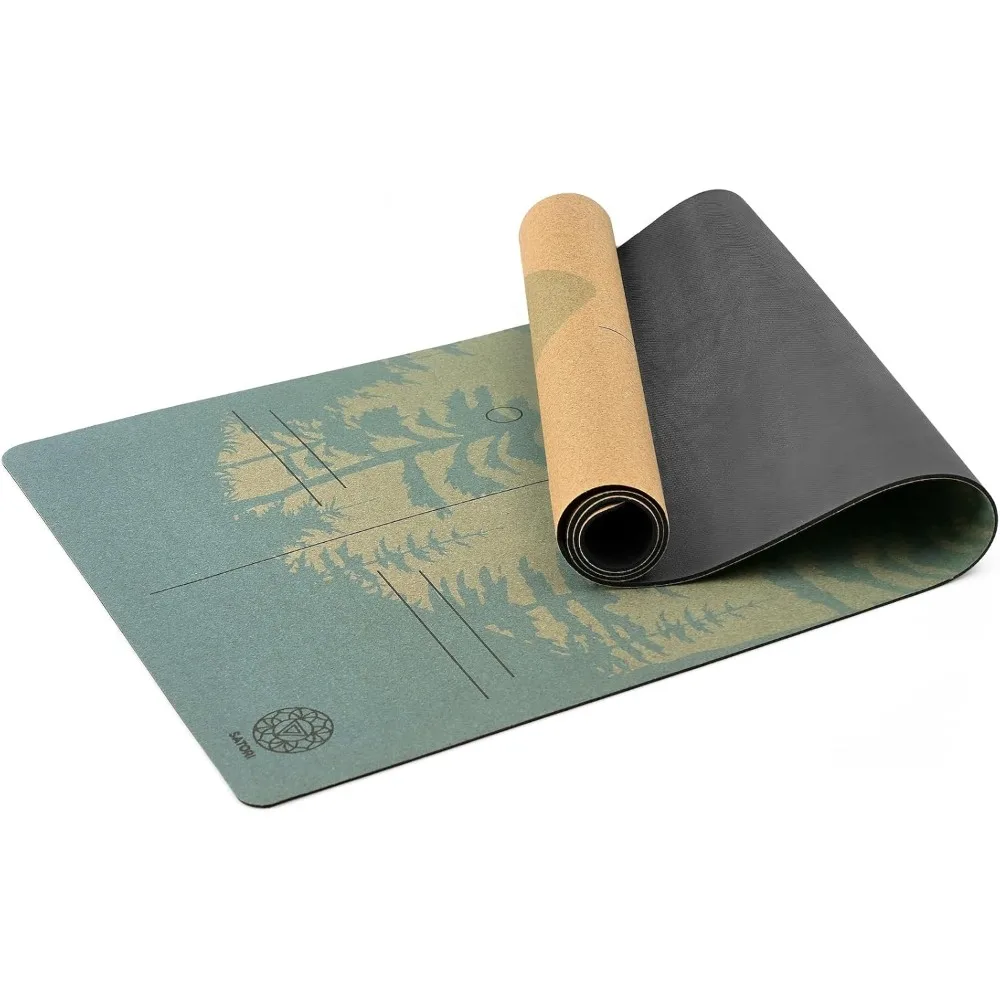
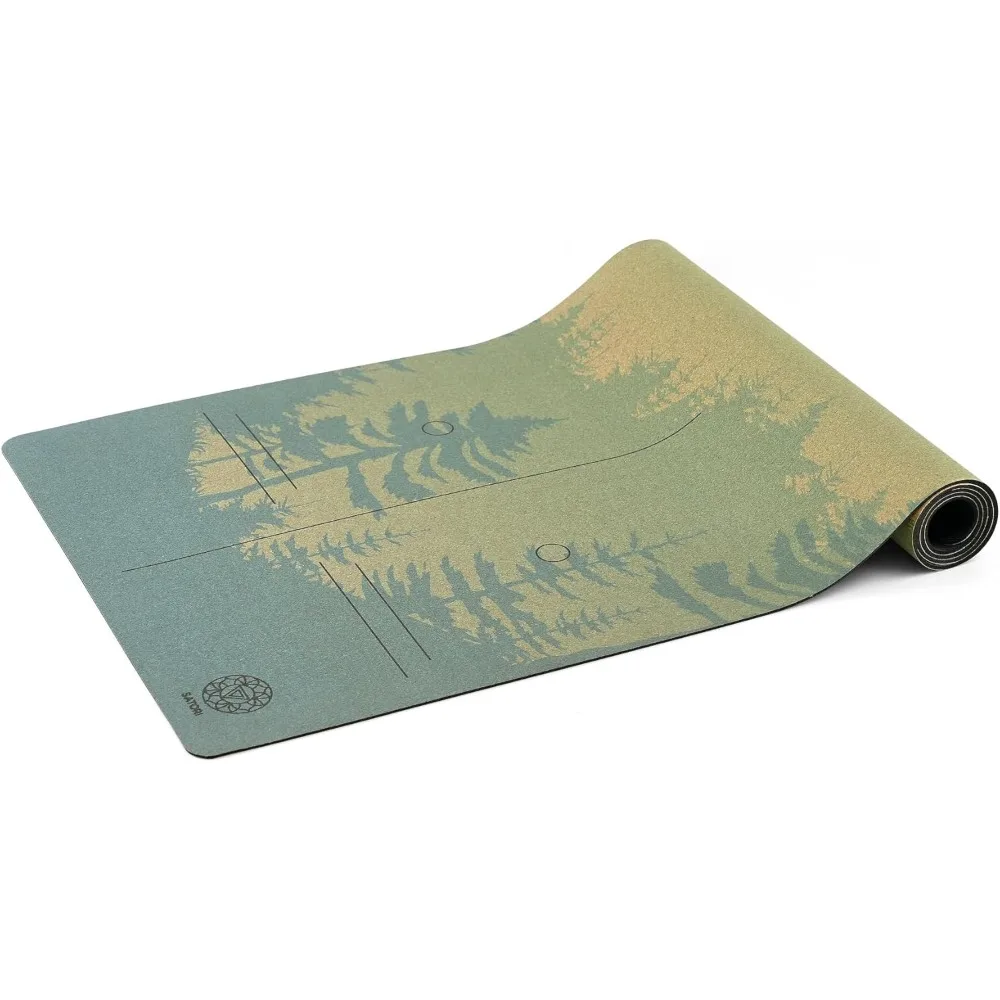
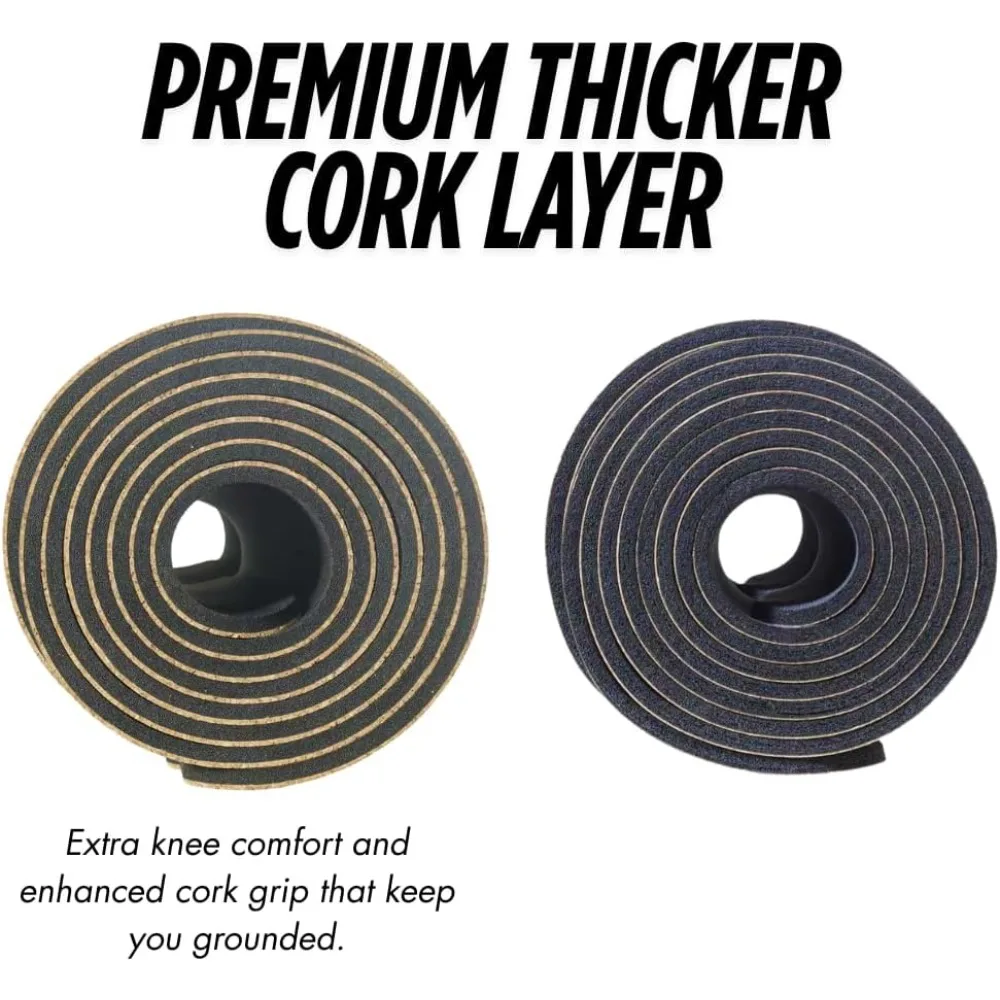
Most mats fail in the same way: a PVC or TPE surface develops a film of sweat, the coefficient of friction collapses, and your hands slide forward out of downward dog. Cork behaves differently. Its surface is a closed-cell structure of suberin-rich cells, and when a thin layer of moisture sits on it, the friction against skin actually increases — a sweaty palm grips cork better than a dry one does. Underneath, a solid natural rubber base supplies both the mass that keeps the mat still on a hard floor and the compressive cushioning that takes load off wrists, knees and the crests of the hip bones in floor work.
Key Benefits
- Grip that improves with sweat — the single most useful property of cork, and the reason it suits hot yoga and hard flows where synthetic mats turn into slip hazards.
- Solid natural rubber base — dense enough that the mat stays put on wood or tile instead of creeping forward with every vinyasa, and it does not need a towel to anchor it.
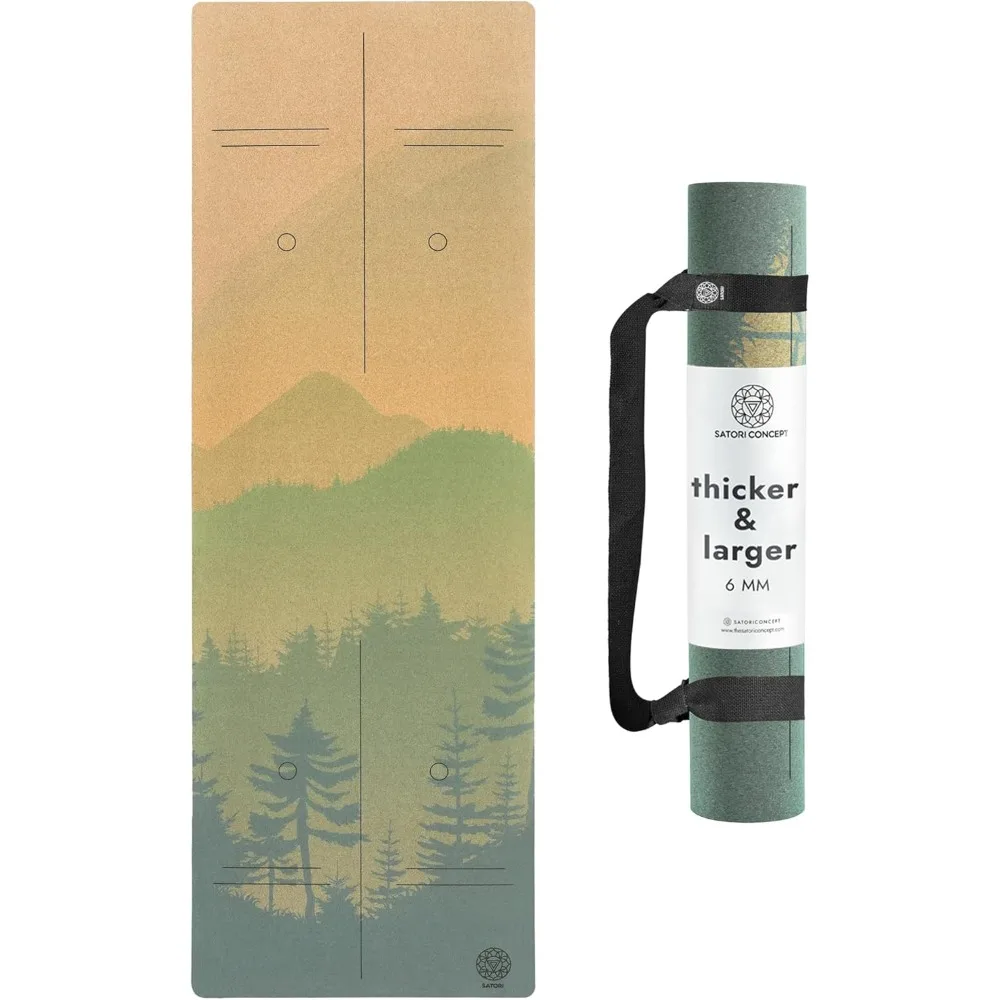
- Extra size and extra thickness — meaningful for taller practitioners who run out of mat in long lunges, and for anyone whose knees complain in kneeling postures.
- Real cushioning where joints load — extra thickness reduces peak pressure at the wrist heel, patella and iliac crest, which is usually what ends a floor practice early.
- Naturally odour-resistant surface — cork’s suberin content makes it inhospitable to the bacteria that give a well-used foam mat its characteristic smell.
- Two honest trade-offs — it is heavy (that mass is the point, but you will feel it on the walk to class), and the base is natural latex rubber, so it is not suitable if you have a latex allergy.
How to Use
Unroll cork-side up and let it settle flat for a few minutes; a new mat holds its roll and will curl at the corners for the first week or two. Practise on it dry and it grips well; practise on it sweaty and it grips better — if your hands still slide, a light mist of water on the palms of your contact points genuinely improves adhesion rather than reducing it, which is counter-intuitive but correct. Do not use oily lotions or grip sprays on cork; oil is absorbed into the surface and permanently ruins the friction. Safety and suitability: the base is natural rubber (latex) — do not buy this if you have a latex allergy. The mat is heavy; lift it with your legs when moving it, and store it standing rather than propped where it can fall. Ensure a clear space around the mat and a wall or chair within reach if you are working on balance postures.
Specifications
| Surface | Natural cork |
|---|---|
| Base | Natural rubber (contains latex) |
| Size | Extra large (exact dimensions variant dependent) |
| Thickness | Extra thick for joint cushioning (variant dependent) |
| Grip characteristic | Increases with surface moisture |
| Weight | Heavy — a consequence of the solid rubber base |
| Best for | Hot yoga, sweaty flows, larger practitioners, sensitive knees and wrists |
| Not suitable for | Anyone with a latex allergy |
Care & Maintenance
Wipe the cork down with a cloth and plain water after sweaty sessions; water is the correct cleaner. Avoid oils, alcohol-heavy sprays and harsh detergents — cork absorbs them and once the surface is oiled, the grip does not come back. For a deeper clean, use a very dilute mild soap solution, wipe, then wipe again with clean water. Dry flat and out of direct sunlight; prolonged UV degrades natural rubber and makes the base brittle and crumbly. Store rolled cork-side out, or laid flat. Never machine wash or tumble dry.
What’s in the Box
1 × cork yoga mat with natural rubber base. Strap, bag and blocks are not included unless the listing variant states otherwise.

Reviews
There are no reviews yet.