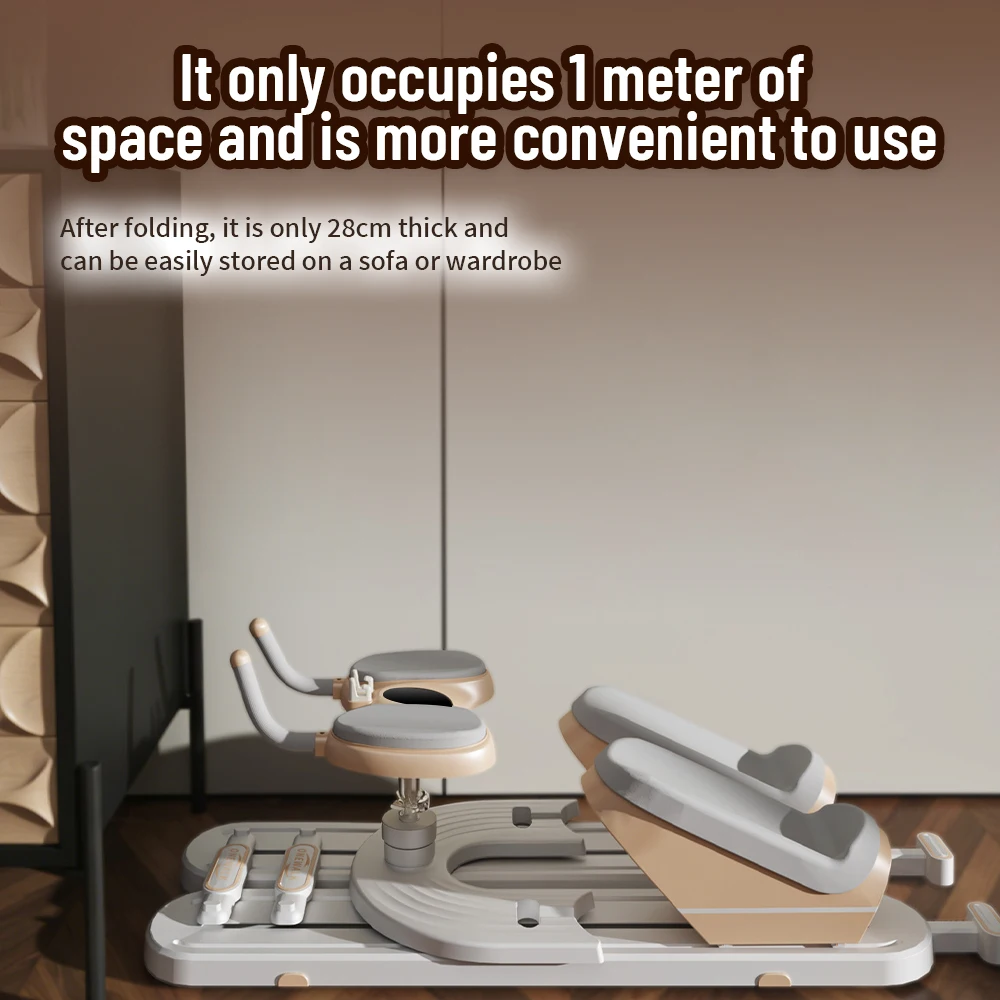
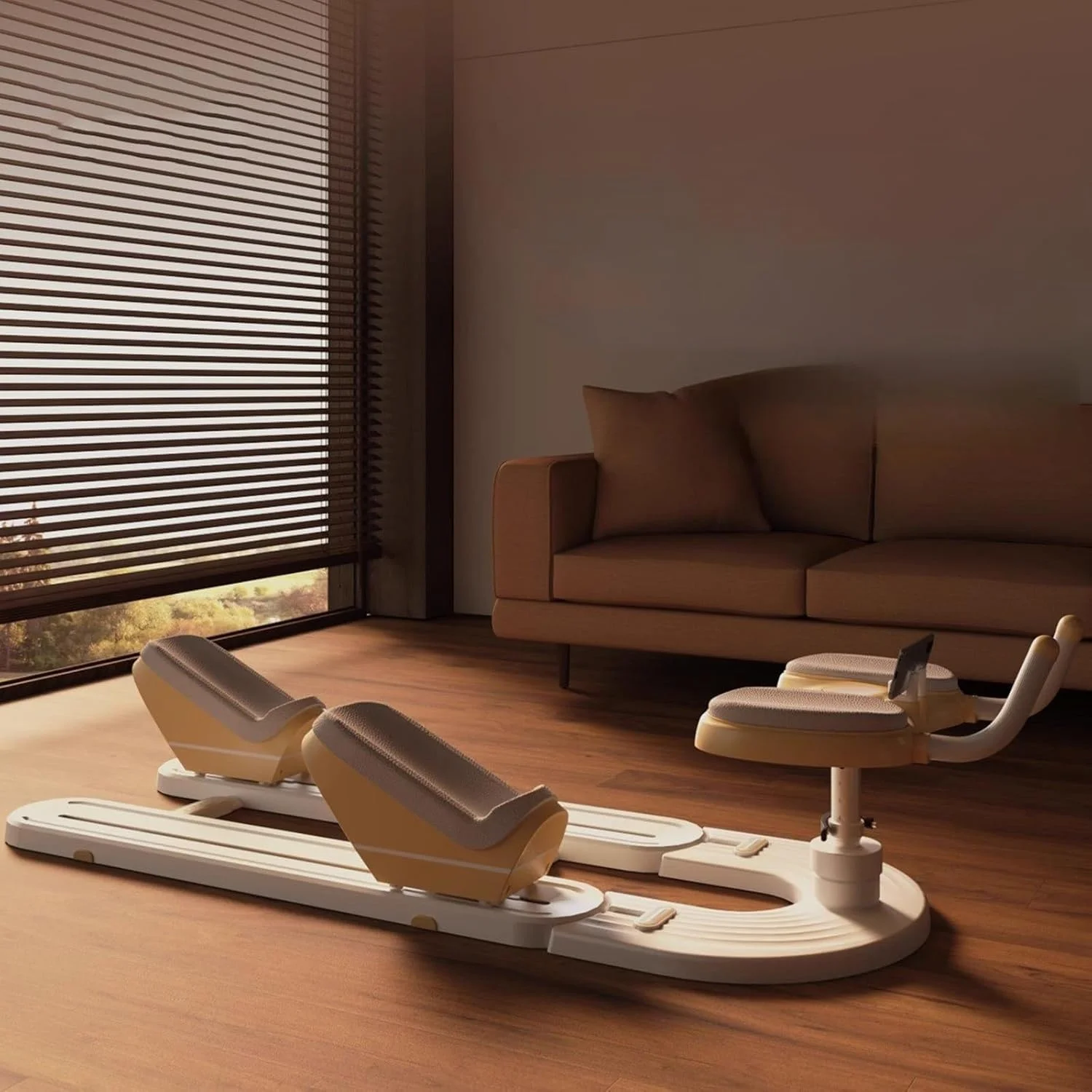
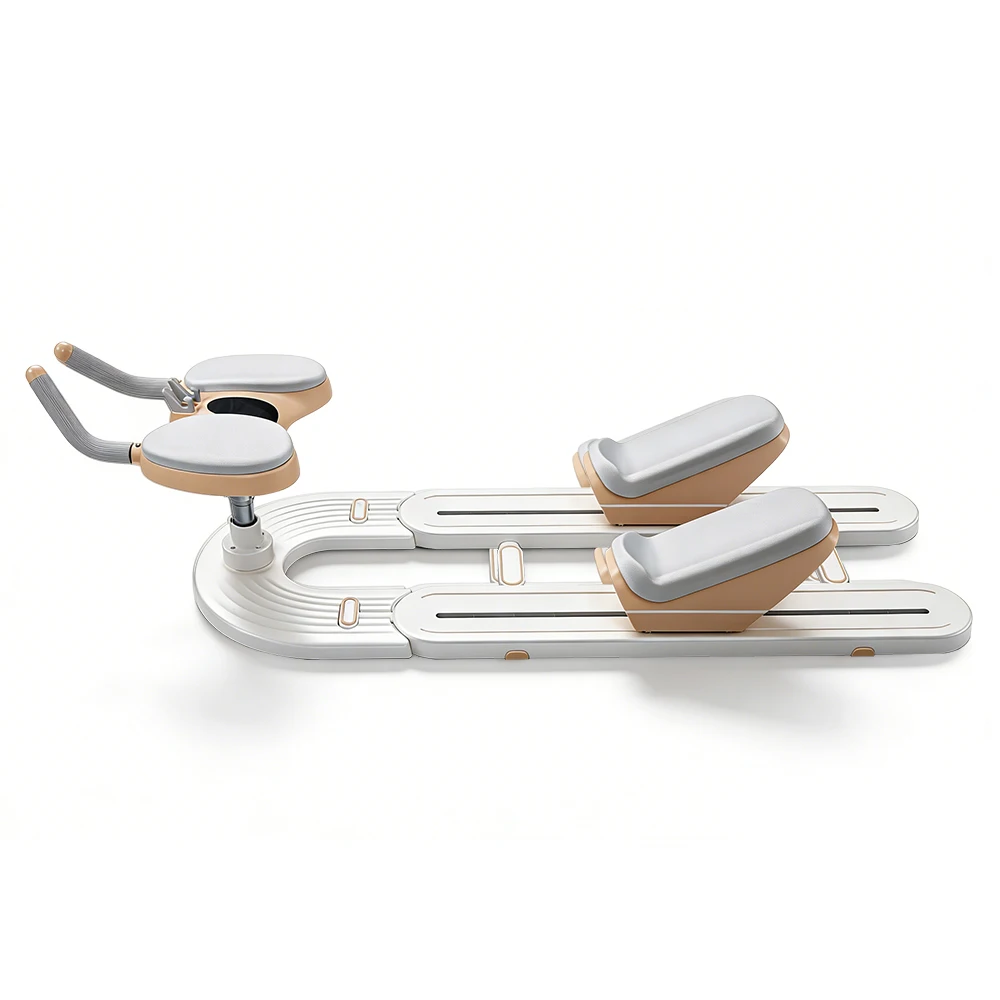
Rotation Is the Movement Modern Life Removes First
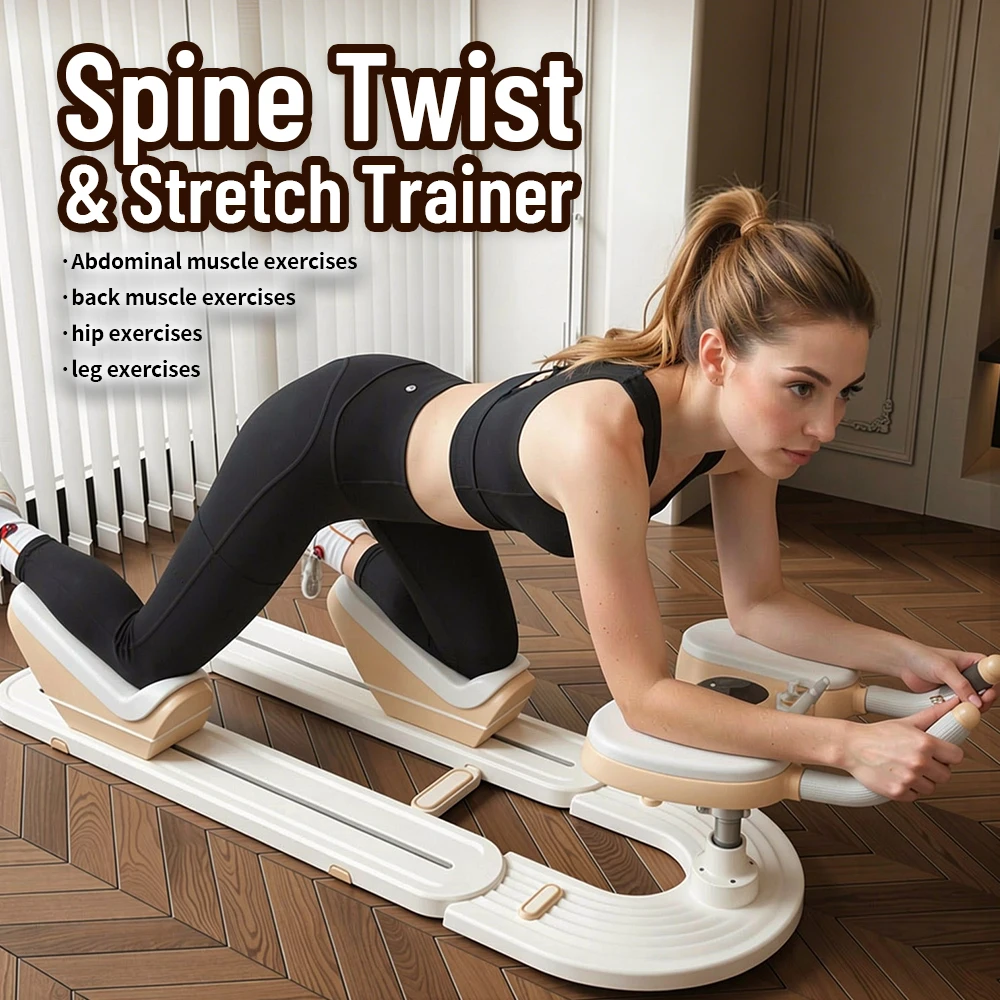
Your spine is built to rotate — roughly 30–35 degrees at the thoracic segments, with more available at the hips. Sitting fuses that range out of you: the obliques and hip rotators shorten, the thoracolumbar fascia stiffens, and eventually the lumbar spine starts absorbing rotation it was never designed to handle. That’s a common route to low-back complaints. This trainer restores rotation under controlled, low-load conditions, taking the joints through their available arc so tissue adapts to the range rather than defending against it.
Key Benefits
- Restores thoracic rotation, not lumbar strain. Guided rotation with a stable base encourages movement to come from the mid-back and hips rather than being forced through the vulnerable lumbar segments.
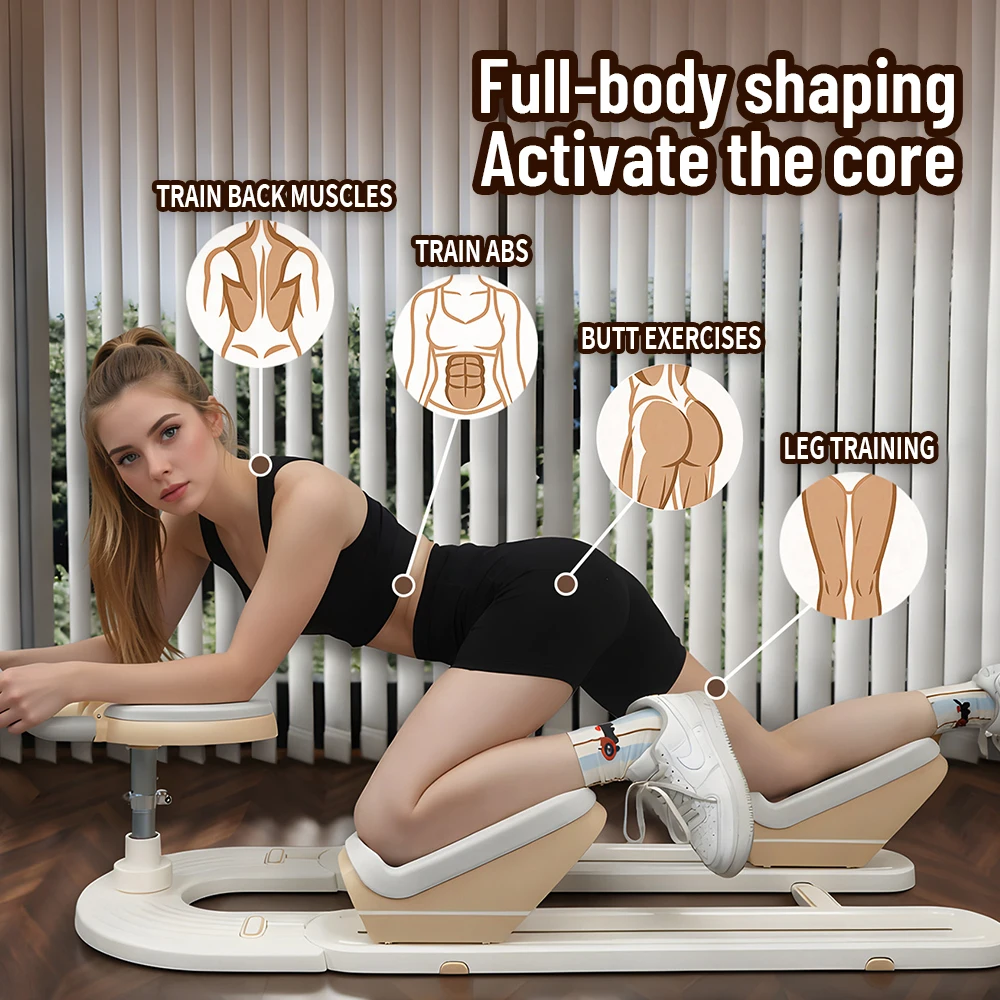
- Loads the obliques through range, not just isometrically. Rotational movement recruits the internal and external obliques and the deep transverse abdominis as an anti-rotation and rotation system — the way they actually function in walking and throwing.
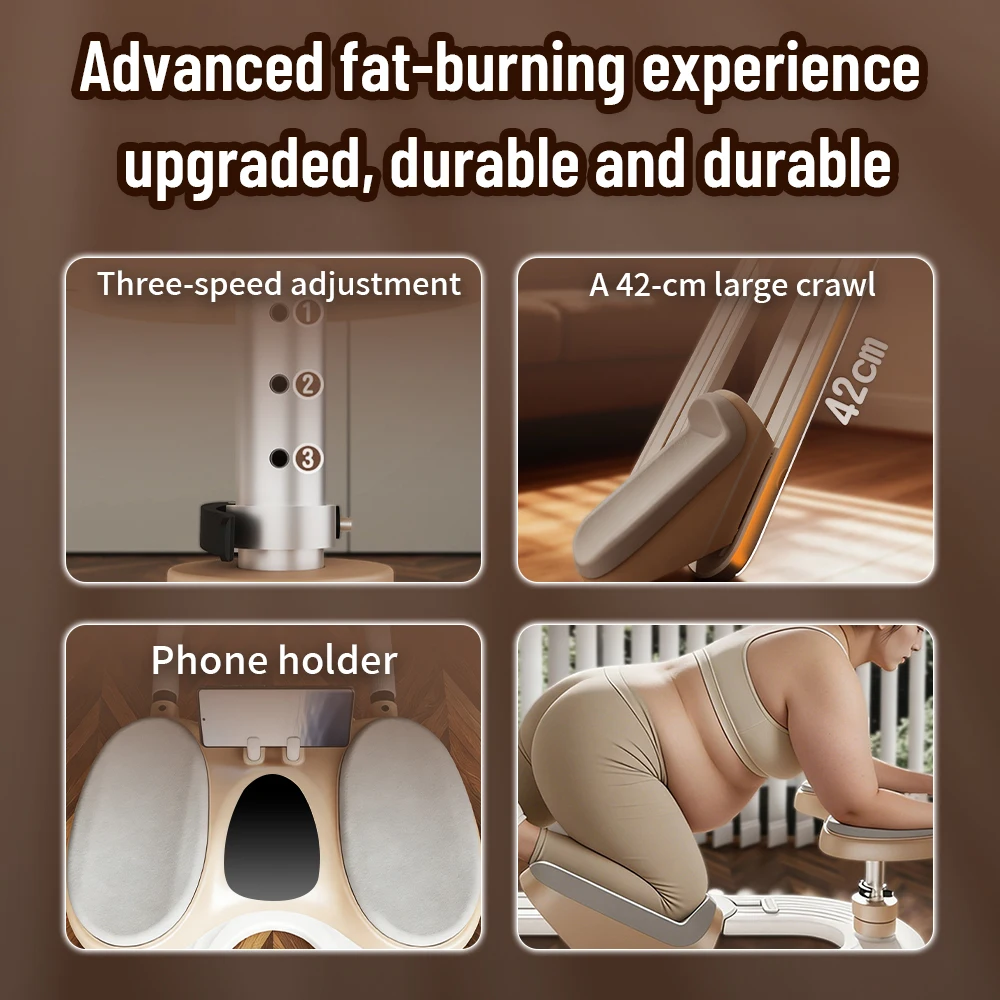
- Honest about fat loss: it does not tone your waist by burning fat there. Spot reduction is not physiologically real. Twisting works the muscles under the fat; the fat itself only responds to an overall calorie deficit. What this machine genuinely delivers is mobility and rotational strength.
- Low-impact and joint-friendly. Little to no compressive loading and no ballistic impact, which makes it usable by people who cannot tolerate running, jumping or loaded squatting.
- Doubles as a leg and hip-flexor stretching station. The frame provides something to brace against for supported hamstring and adductor lengthening after a session.
- Repeatable daily dosing. Mobility responds to frequency far more than intensity — a low-impact machine you’ll actually use for ten minutes daily beats a punishing one you’ll use monthly.
How to Use
Stand on the platform with feet hip-width and knees softly unlocked — never rigid. Brace your abdomen gently, as if about to be poked, then rotate slowly to one side, letting the movement travel through the hips and mid-back while the head stays quiet. Pause at the end of range for a beat, then return under control. Slow beats fast: fling yourself through the range and you’re using momentum, not muscle. Start with 30–60 seconds and build up. Stop immediately if you feel any sharp or radiating pain, especially anything travelling down a leg — that’s a nerve signal, not a stretch. If you have a diagnosed disc injury, spinal fusion, spondylolisthesis, or are pregnant, get clearance from a clinician before using rotational equipment.
Specifications
| Type | Standing rotational twist and stretch trainer |
|---|---|
| Primary use | Thoracic and hip rotational mobility, oblique activation, leg stretching |
| Impact level | Low impact — no jumping or compressive loading |
| Movement | Rotational (transverse plane), plus supported static stretching |
| Muscles targeted | Obliques, transverse abdominis, hip rotators, erector spinae |
| Placement | Freestanding, flat floor, requires clear space to rotate |
| Assembly | Home assembly required |
| Colour / finish | Variant dependent |
Care & Maintenance
Wipe the platform and handles with a damp cloth after use — sweat is corrosive over time. Check every bolt and fastener monthly and re-tighten; rotational equipment loosens faster than static equipment because of the torque it absorbs. Store indoors and away from damp to prevent rust at the joins. Do not use if any pivot feels loose, gritty or notchy.
What’s in the Box
Spine twist and stretch trainer, assembly hardware and tool, instruction manual. Exact contents may vary by variant.
Reviews
There are no reviews yet.