
Proprioception: The Sense That Fails First After an Ankle Sprain
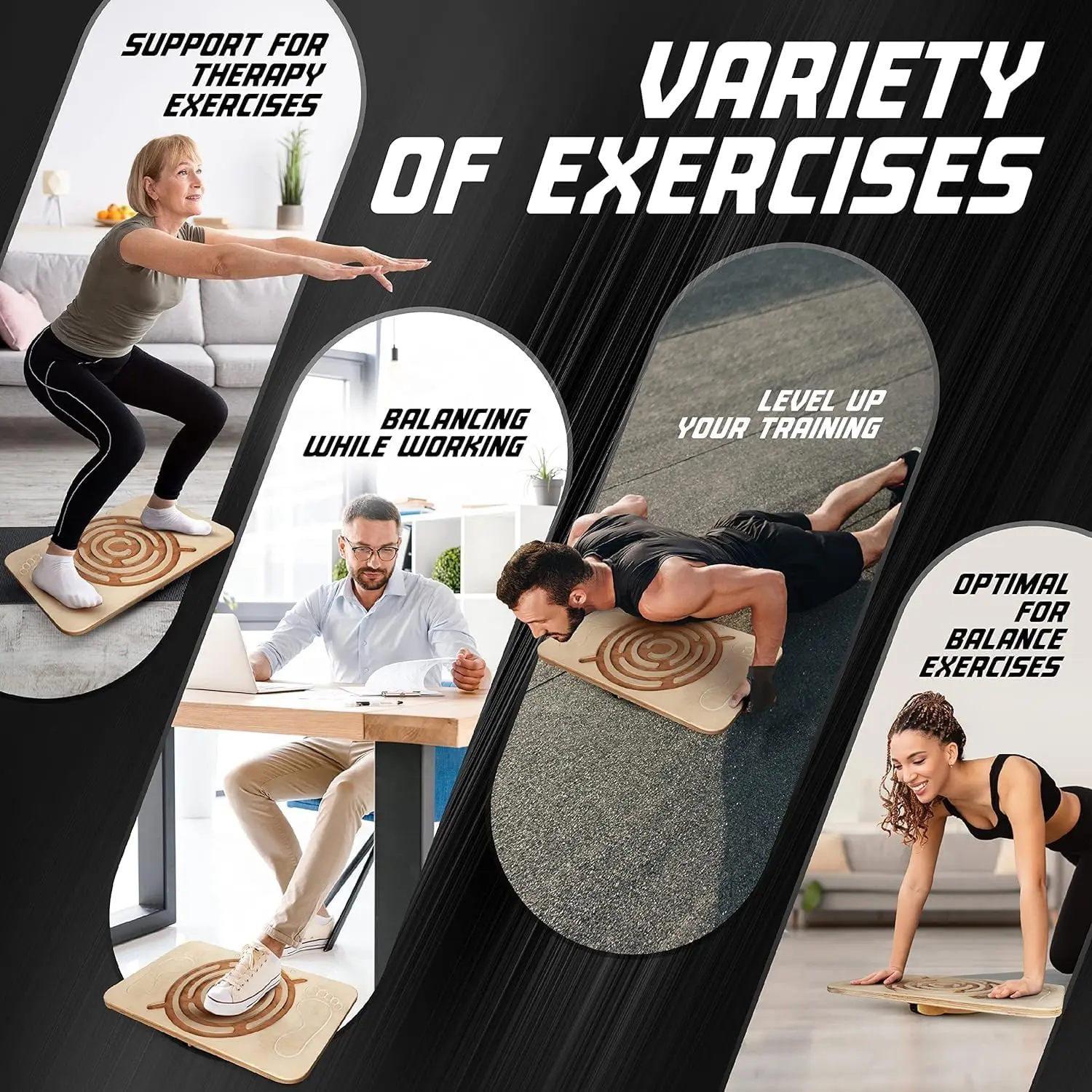
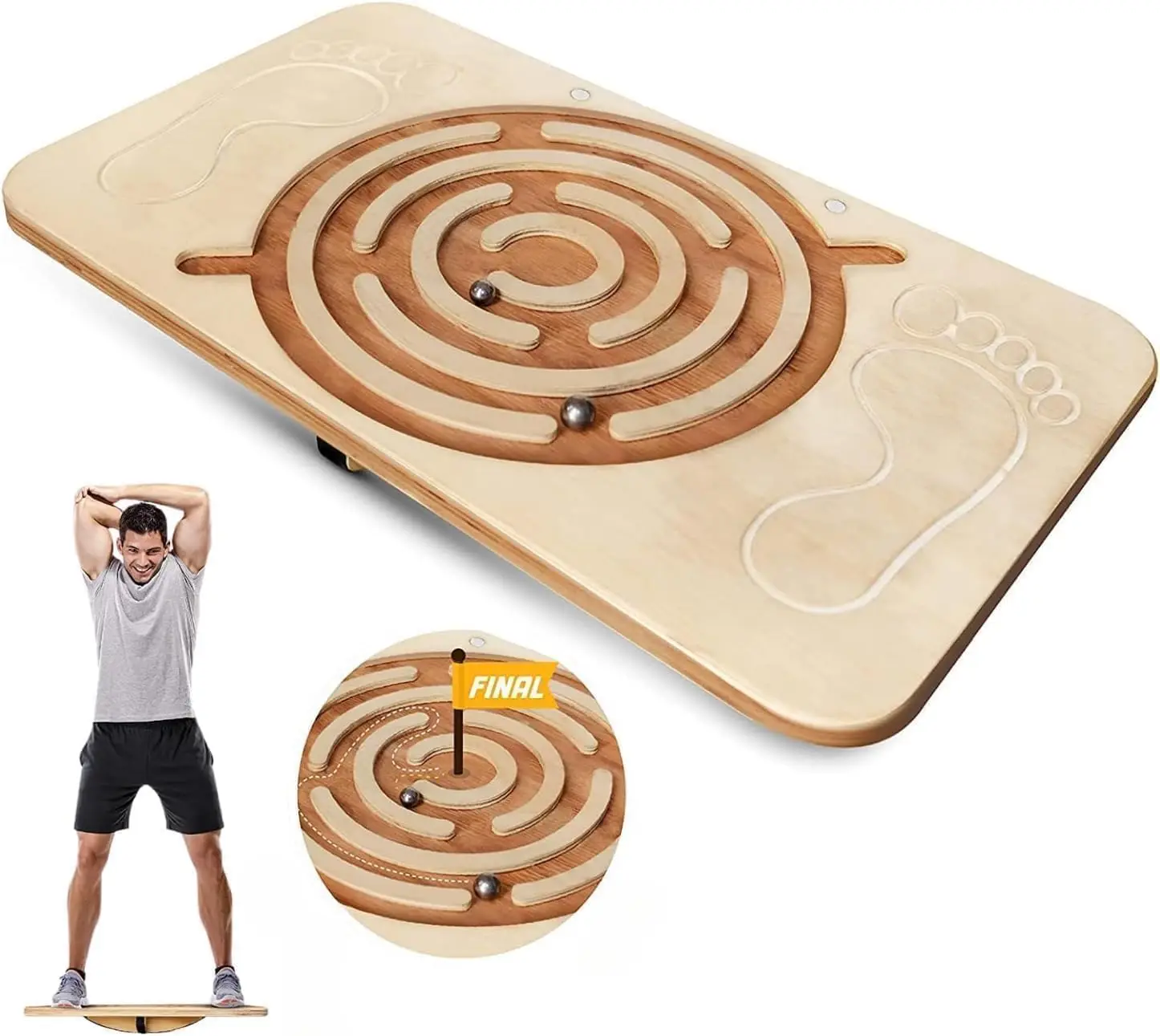
Your ankle is dense with mechanoreceptors — sensors in the ligaments, joint capsule and muscle spindles that report joint position and movement to the spinal cord. When you sprain an ankle, you damage those receptors along with the ligament, and the reflex loop that fires the peroneal muscles to catch you when the ankle rolls gets slower. That delay, not the ligament laxity, is the main reason a first sprain so reliably becomes a second one. A wobble board forces continuous small corrections, retraining that loop and shortening reaction latency. The same mechanism explains why balance training reduces fall risk with age, and why it improves control in any sport played on one leg at a time.
Key Benefits
- Retrains the reflex, not just the muscle — balance work restores the ankle’s proprioceptive reaction speed, which is the specific deficit that makes sprains recur.
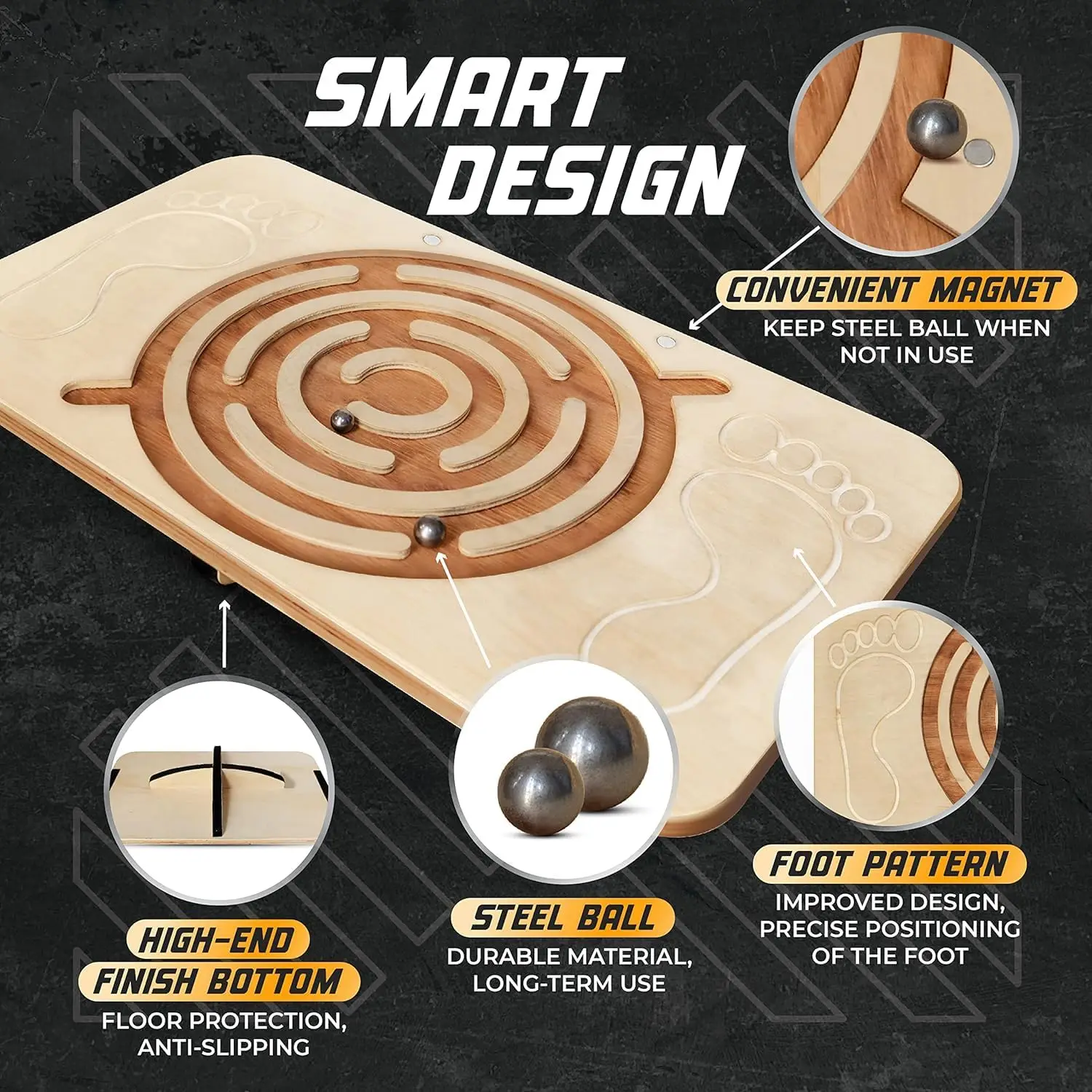
- Solid wood, 350 lb rating — a rigid platform gives honest, immediate feedback; a flexy board mutes the very signal you are there to train.
- Anti-slip surface — grip on a device whose entire purpose is instability is not a nice-to-have, it is the safety feature.
- Works the deep stabilisers — engages the small muscles of the foot, ankle and hip that never get a look-in during machine-based leg work.
- Trains the core without a single crunch — maintaining balance is continuous, low-level trunk stabilisation, and it is closer to how the core is used in life.
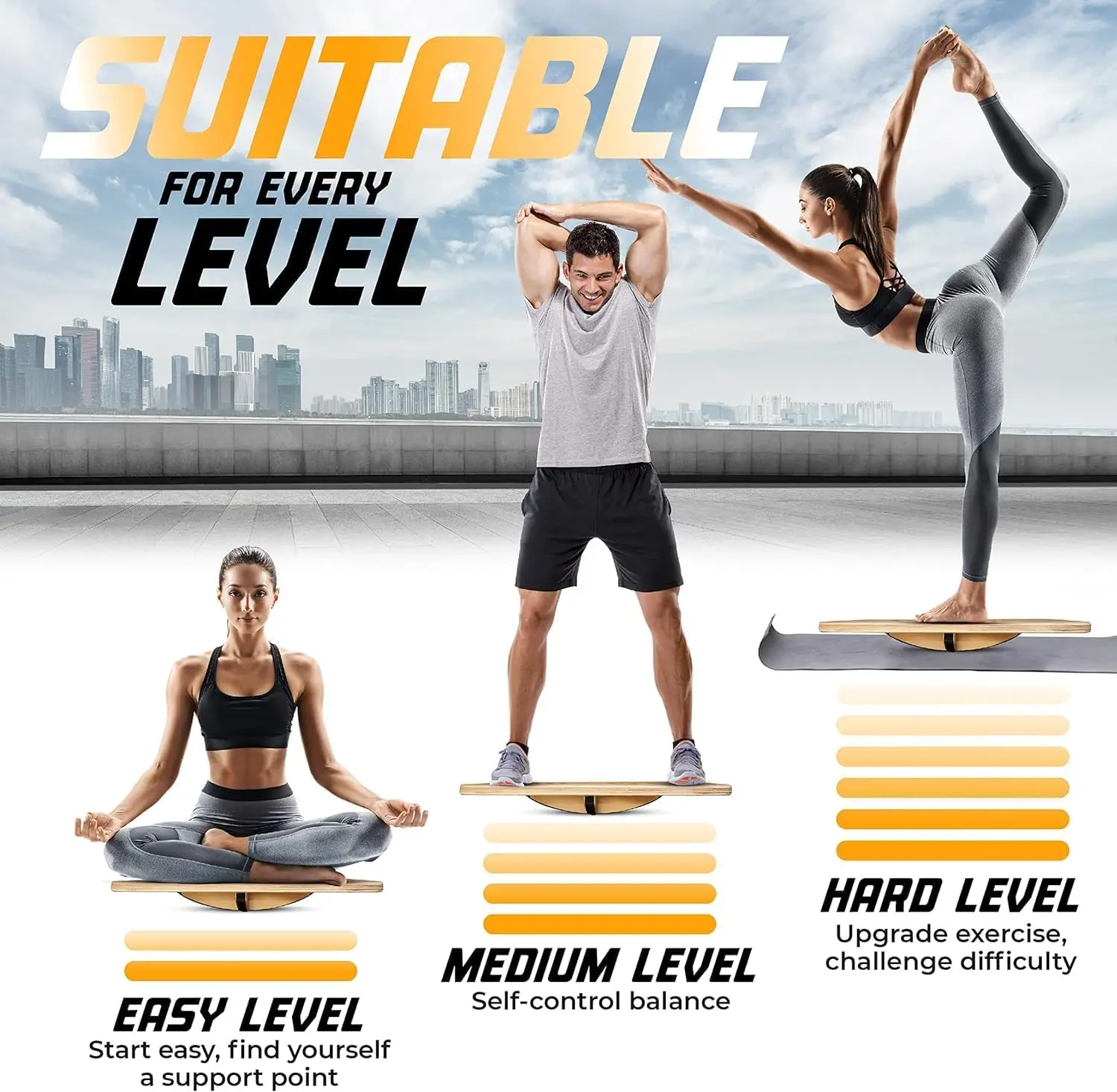
- Progresses with you — two feet, then narrower, then eyes closed, then one foot: the difficulty ladder is built in and costs nothing to climb.
How to Use
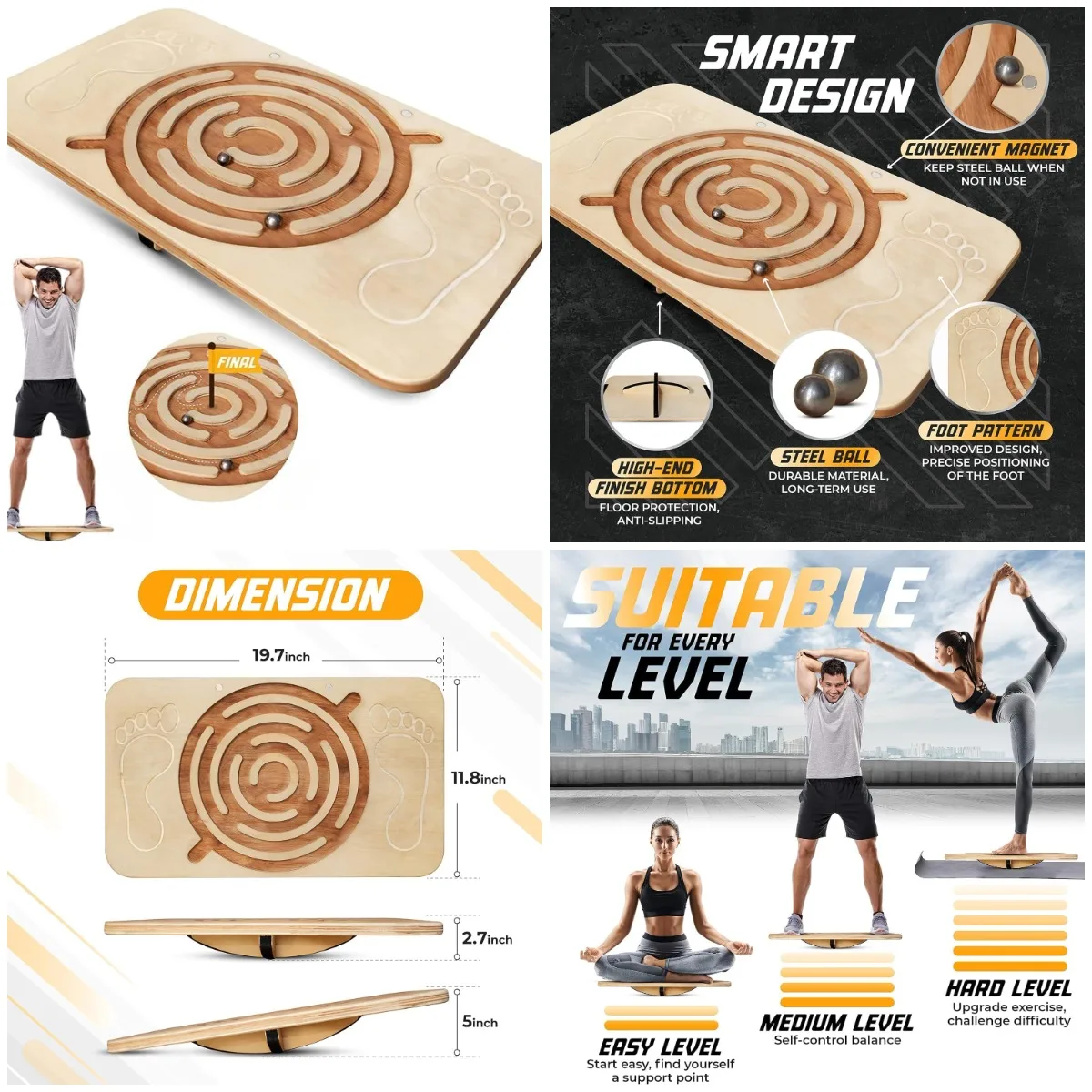
Set the board on a flat, non-slip floor — never a rug — with a wall, doorframe or sturdy chair within arm’s reach, and use it for the first sessions. Step on with both feet near the edges and find the level position; fix your gaze on a point at eye level, because your vestibular and visual systems are doing much of the work and a wandering gaze makes it far harder. Start with 30-second holds. Progress by narrowing your stance, then adding gentle circles, then closing your eyes, then moving to a single leg. Two or three short sessions a week beats one long one — this is a neural adaptation and it responds to frequency. SAFETY: clear the surrounding area of furniture and hard edges before you start, and keep support within reach every session, not just the first. Do not use it on a slippery, wet or carpeted surface. If you are rehabilitating an acute injury, follow your physiotherapist’s progression rather than jumping to eyes-closed single-leg work because it looks impressive.
Specifications
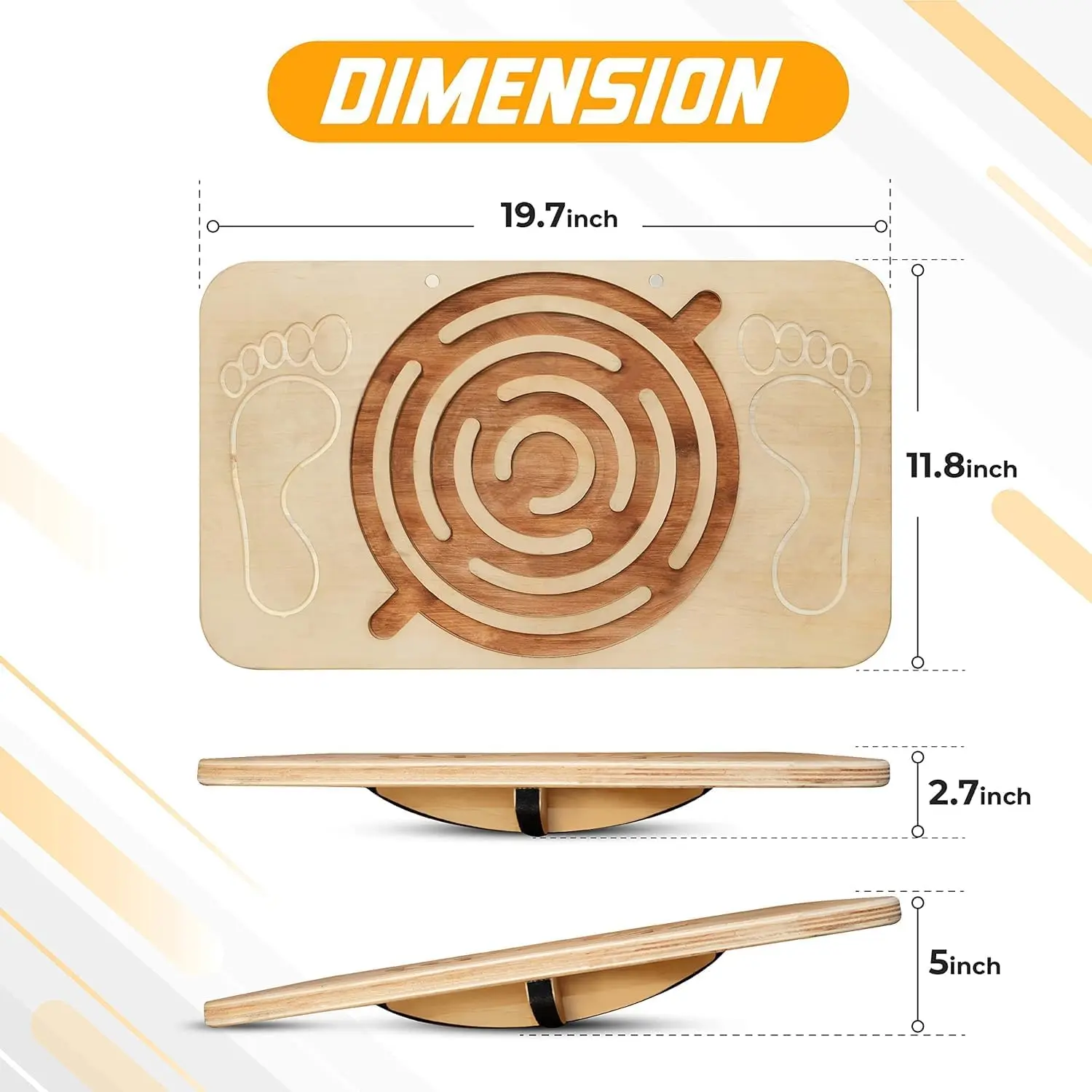
| Material | Wood platform |
|---|---|
| Weight capacity | 350 lb (approx. 159 kg) |
| Surface | Anti-slip textured top |
| Type | Rocker / wobble balance board |
| Trains | Ankle proprioception, foot and ankle stabilisers, hips, core |
| Best for | Ankle sprain rehab, fall prevention, sport balance, standing desk use |
| Assembly | Minimal or none |
| Placement | Flat, hard, non-slip floor with support within reach |
Care & Maintenance
Wipe the deck clean and dry after use; keep the wood out of damp environments, since moisture ingress will warp a wooden board and a warped board rocks unpredictably. Check the underside and any pivot component for cracks, splinters or wear before each session and retire the board if you find any. Do not leave it outdoors or store it against a radiator.
What’s in the Box
1 x wooden balance / wobble board. Instructions and accessories are variant dependent.
Reviews
There are no reviews yet.