What a Mouthguard Can and Cannot Fix About Your Night
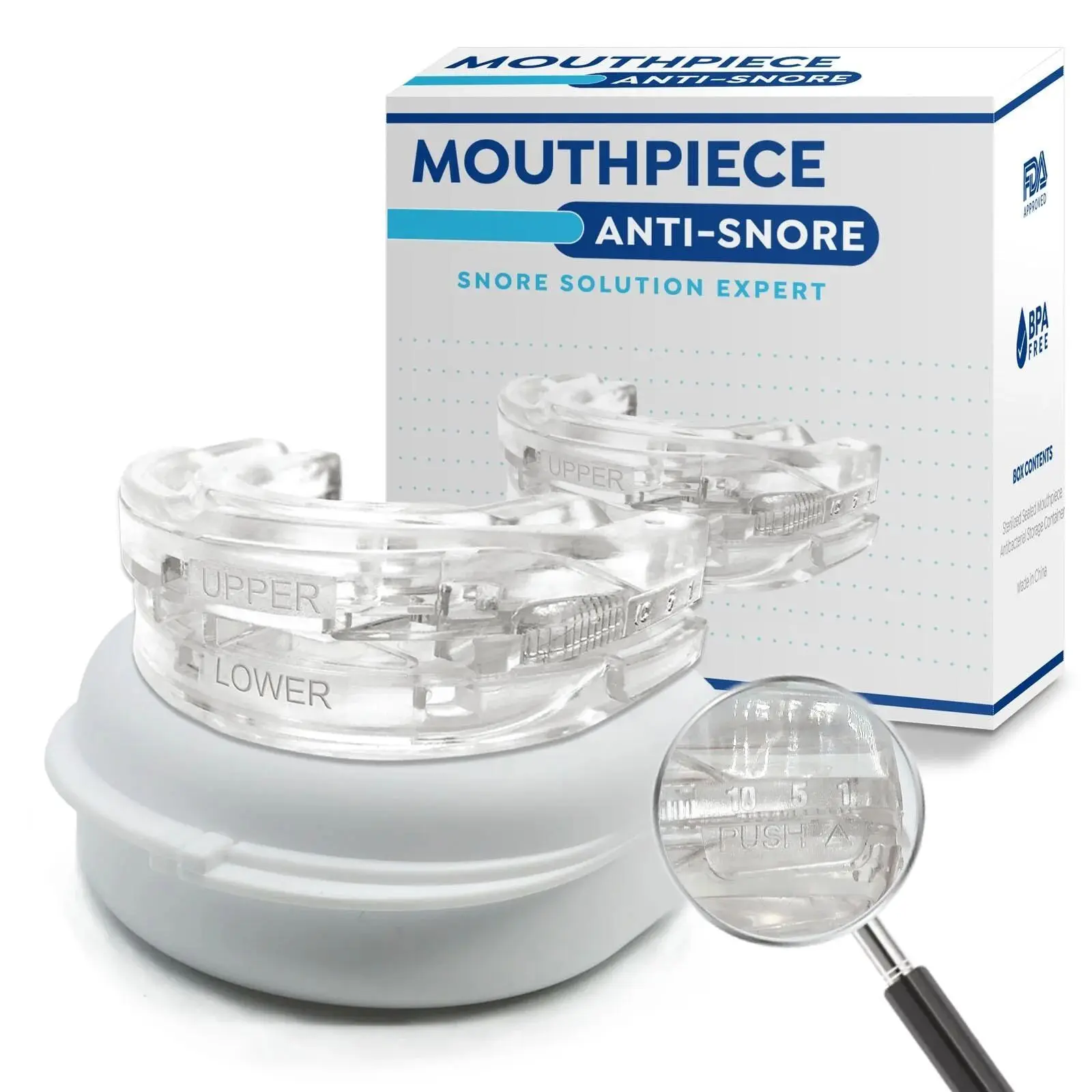
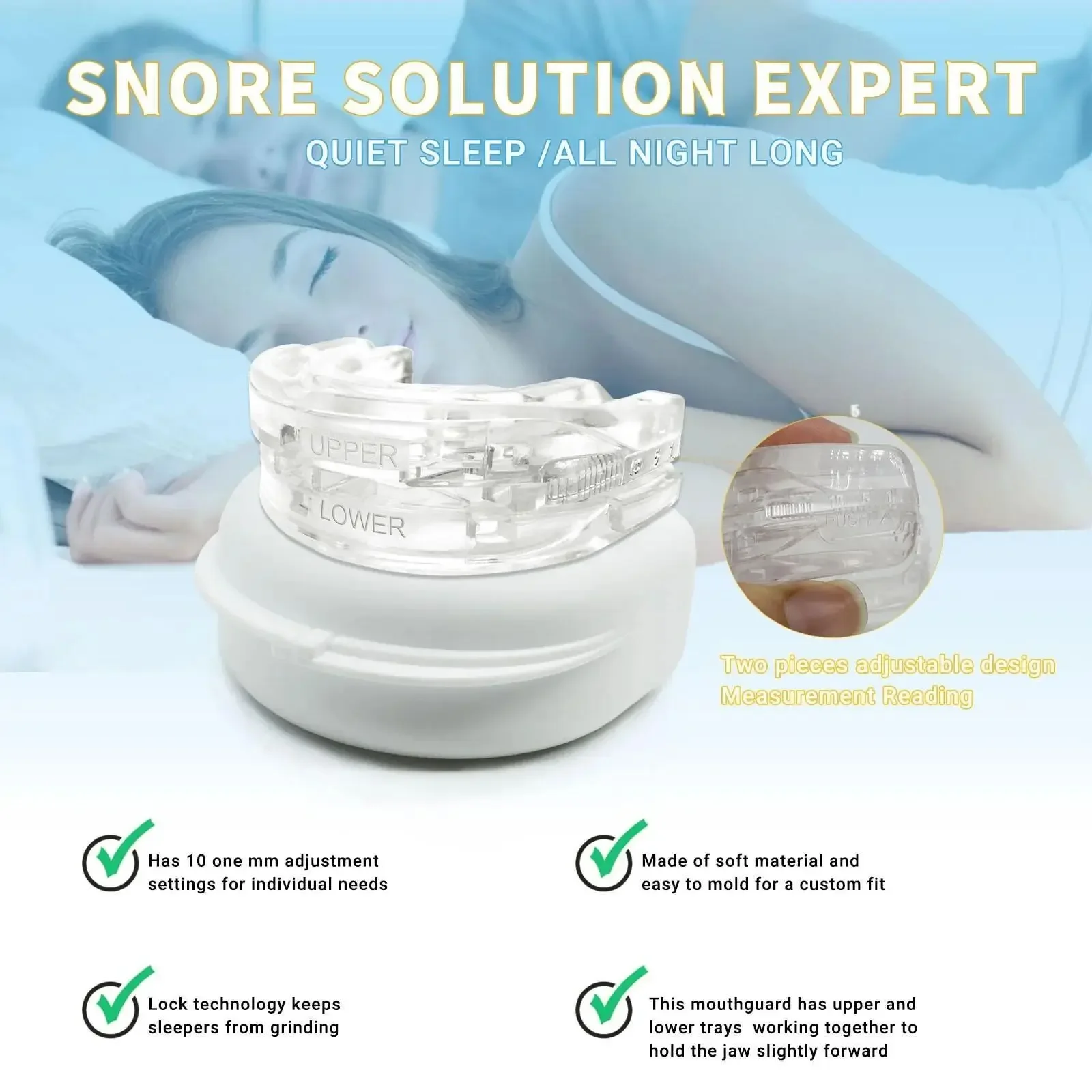
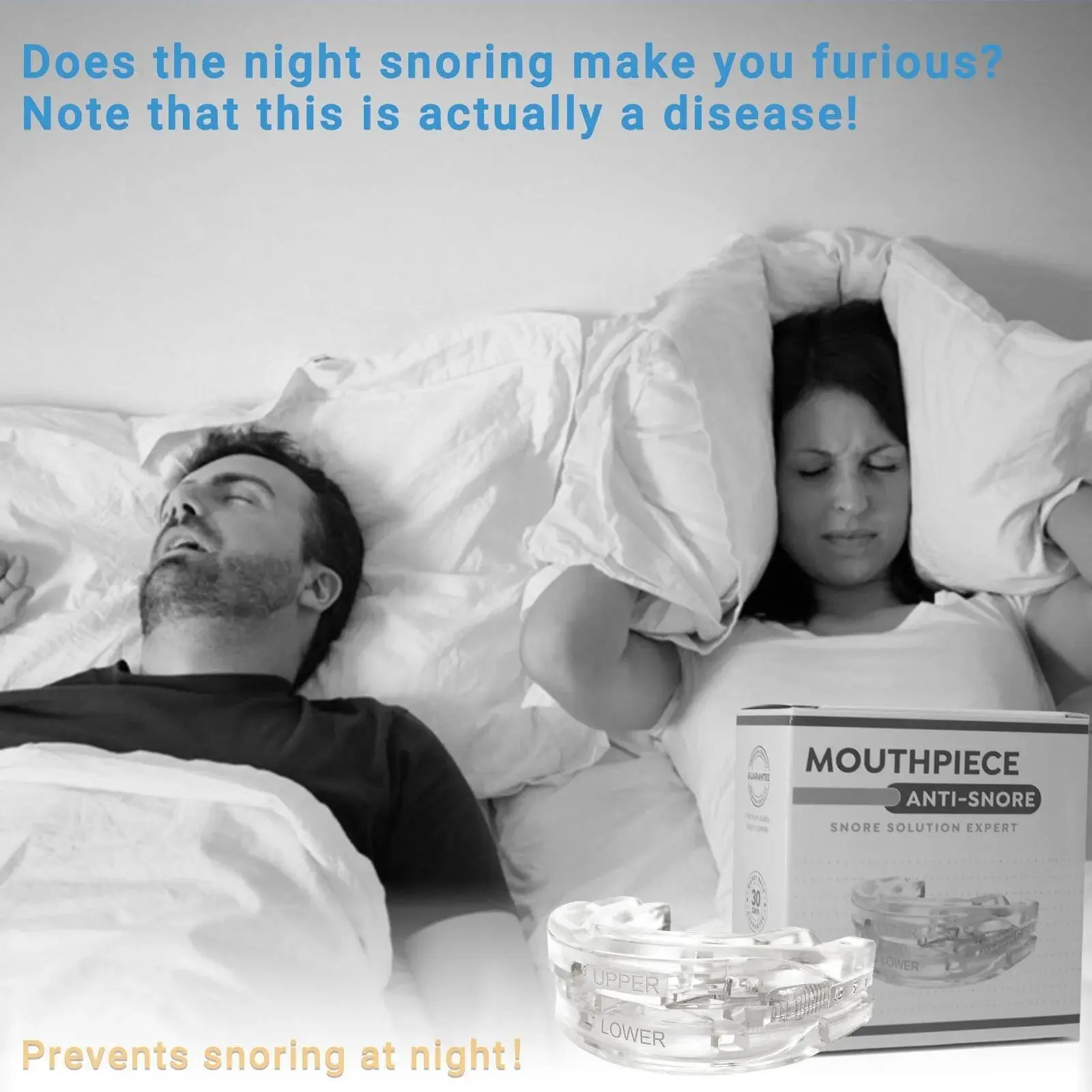
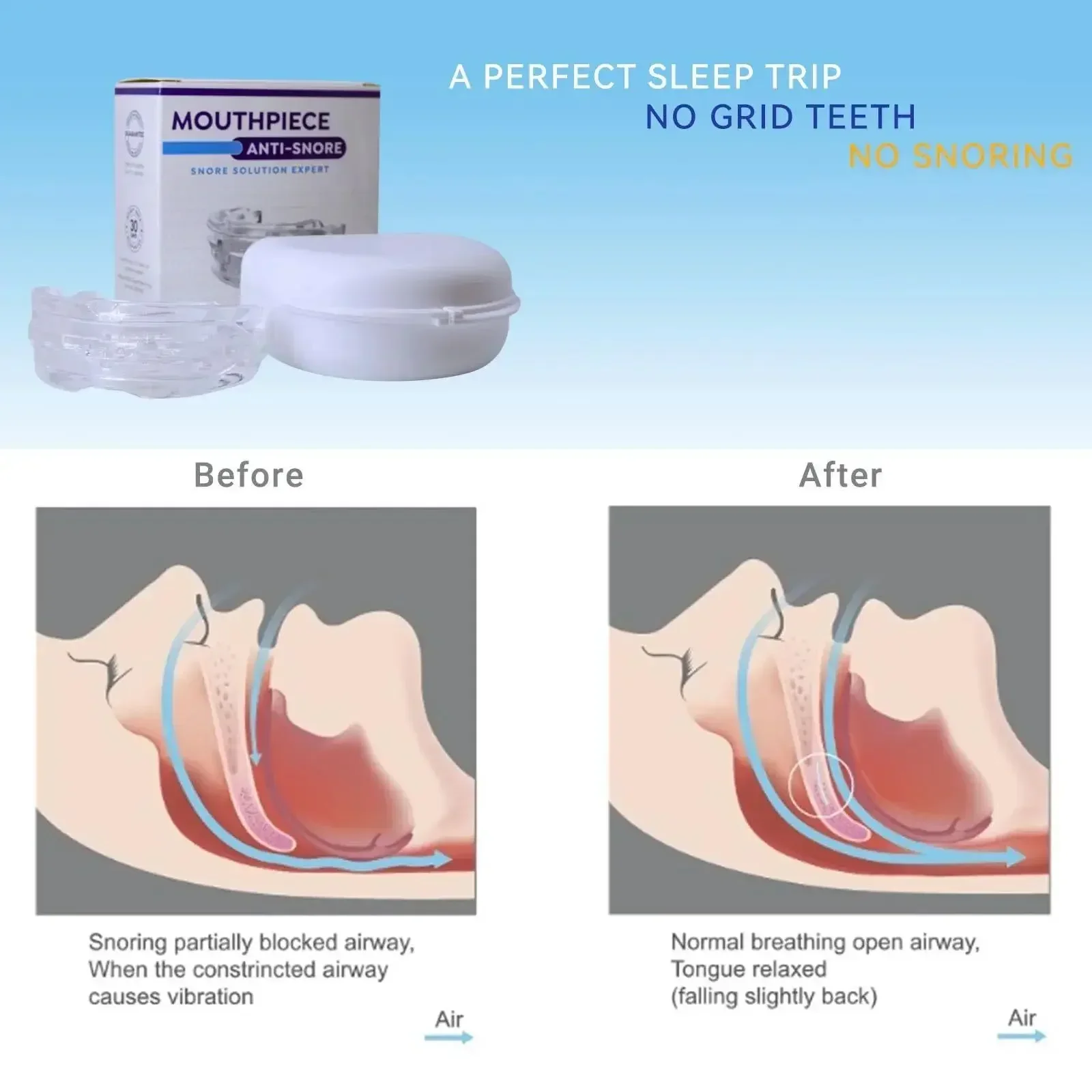
Snoring is the sound of soft tissue vibrating in a partly collapsed airway. When you fall asleep, the muscles holding your jaw and tongue lose tone, the tongue base drifts back toward the pharyngeal wall, and the narrowed channel makes air turbulent. A mandibular advancement device holds the lower jaw a few millimetres forward, which pulls the tongue base with it and widens that airway, so less tissue vibrates. Teeth grinding is a different problem entirely: a guard cannot stop the clenching reflex, but it puts a sacrificial layer of thermoplastic between your enamel surfaces so the guard wears down instead of your teeth.
Key Benefits
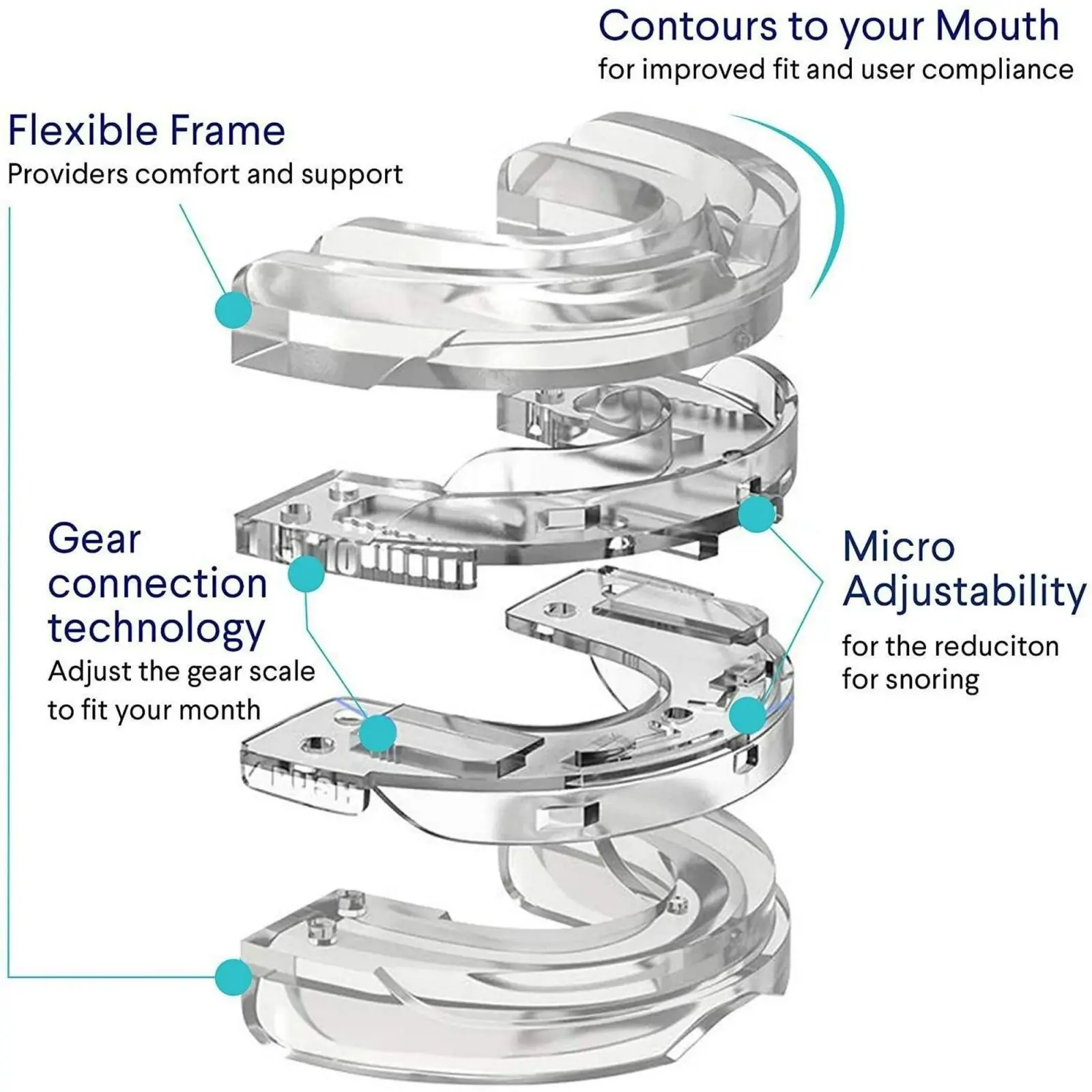
- Mechanically opens the airway. Mandibular advancement is a well-established approach to simple snoring, and adjustability lets you use the smallest amount of jaw advancement that actually works.
- Protects enamel from grinding. If you wake with a sore jaw or your dentist has flagged worn teeth, a guard absorbs the load. Be clear that it is protection, not a cure – bruxism is usually driven by stress, sleep disturbance or medication, and those are what need addressing.
- It is not a sleep apnoea treatment. If you gasp, choke or stop breathing in your sleep, or you are exhausted despite a full night in bed, do not self-treat with a mouthguard. Get assessed for obstructive sleep apnoea. Untreated apnoea carries cardiovascular risk that a shop-bought guard does nothing about.
- Custom fit without the dental lab bill. The boil-and-bite thermoplastic moulds to your own dental arch, so it stays put instead of being spat out at 3am.
- Adjustable advancement. You can increase the forward position gradually, which is how you find the point where snoring stops before your jaw starts complaining.
- A cheap thing to try first. For straightforward positional snoring, it is a low-cost intervention that either works within a week or clearly does not.
How to Use
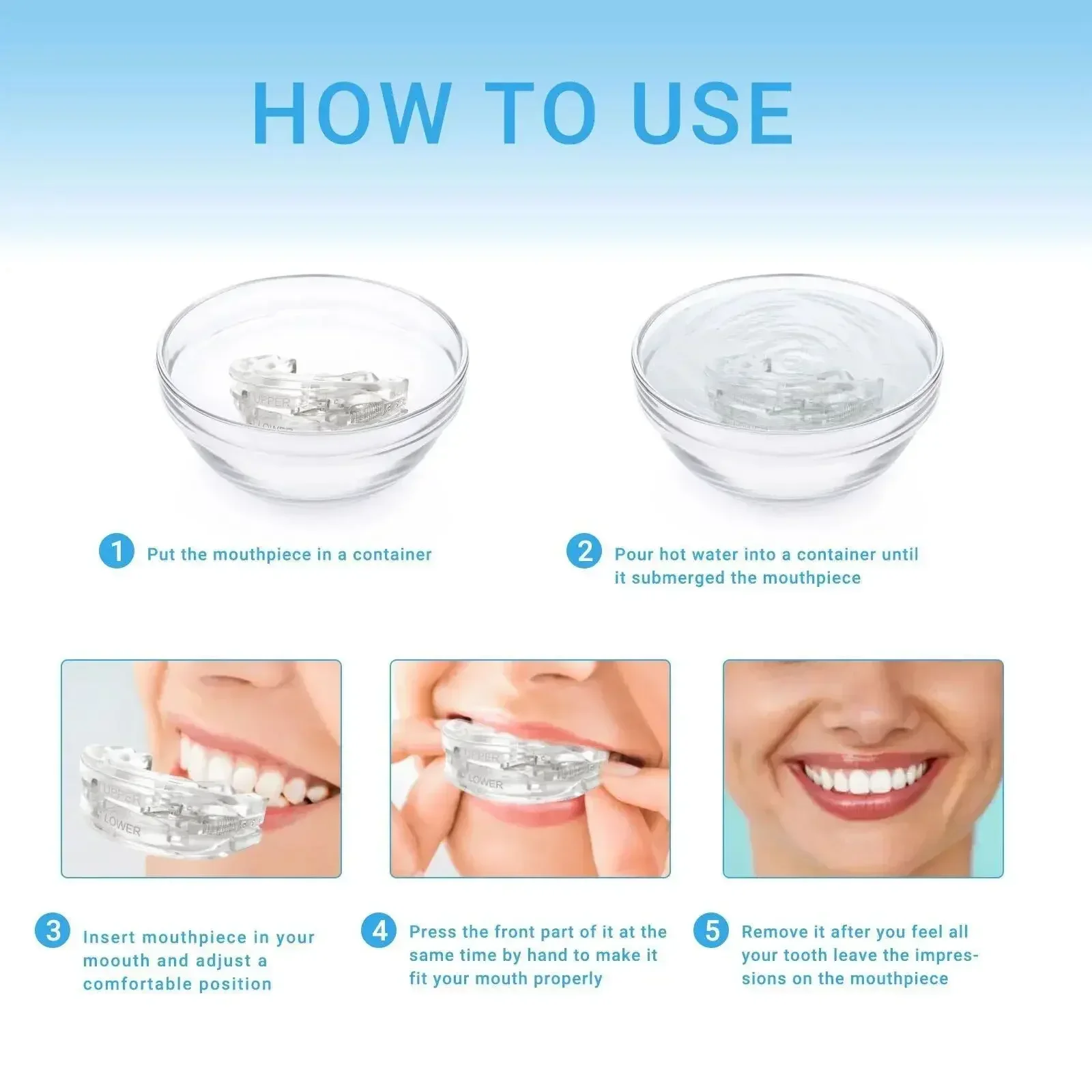
Fit it by the boil-and-bite method: soften in hot (not boiling) water for the time stated in the instructions, seat it on your upper and lower teeth, bite gently with the jaw slightly forward, then press the guard against your teeth and cheeks before cooling it in cold water. Start with minimal advancement and increase in small steps every few nights. Mild jaw soreness and extra saliva for the first three or four nights is normal and usually settles. Stop and see a dentist if you get persistent jaw joint pain, your bite feels different in the morning, or teeth start to feel loose or shift. Do not use it if you have dentures, crowns or bridges without dental advice, if you have a diagnosed TMJ disorder, or if you have loose teeth or gum disease. Not suitable for children, whose jaws are still developing. Rinse before and after every use – a warm, wet mouthguard is an excellent bacterial habitat.
Specifications
| Type | Adjustable mandibular advancement device / night guard |
|---|---|
| Fitting method | Boil and bite thermoplastic |
| Adjustment | Incremental forward jaw positioning |
| Intended use | Simple snoring; enamel protection for bruxism |
| Not suitable for | Sleep apnoea, children, undiagnosed TMJ disorder |
| Material | BPA status variant dependent – check listing |
| Coverage | Upper and lower arch |
| Included | Storage case (variant dependent) |
Care & Maintenance
Rinse in cold water immediately after use and brush gently with a soft toothbrush – no toothpaste, which is abrasive and will scratch the surface. Never wash it in hot water or leave it in a hot car; heat will deform the mould you carefully made. Store dry in a ventilated case, not sealed while wet. Replace it when it becomes thin, cracked, discoloured or no longer grips – a degraded guard stops protecting and starts harbouring bacteria.
What’s in the Box
Adjustable mouthguard and storage case. Exact contents are variant dependent.

Reviews
There are no reviews yet.