Why Your Neck Hurts After You Fall Asleep Sitting Up
Awake and upright, the postural muscles of your neck hold your head — around five kilograms of it — balanced over your spine. As you drift into sleep those muscles switch off. The head then falls sideways or forwards until something stops it, and typically nothing does, so the cervical spine settles at the very end of its range in lateral flexion or rotation. Ligaments and facet joints take the strain for the next several hours. A U-shaped pillow fills the gap between jaw and shoulder so the head runs out of travel before the joints do. It is a mechanical stop, and that is precisely why it works.
Key Benefits
- Limits end-range head travel. The pillow’s job is not comfort in the abstract — it is stopping your head short of the position that strains the joint.
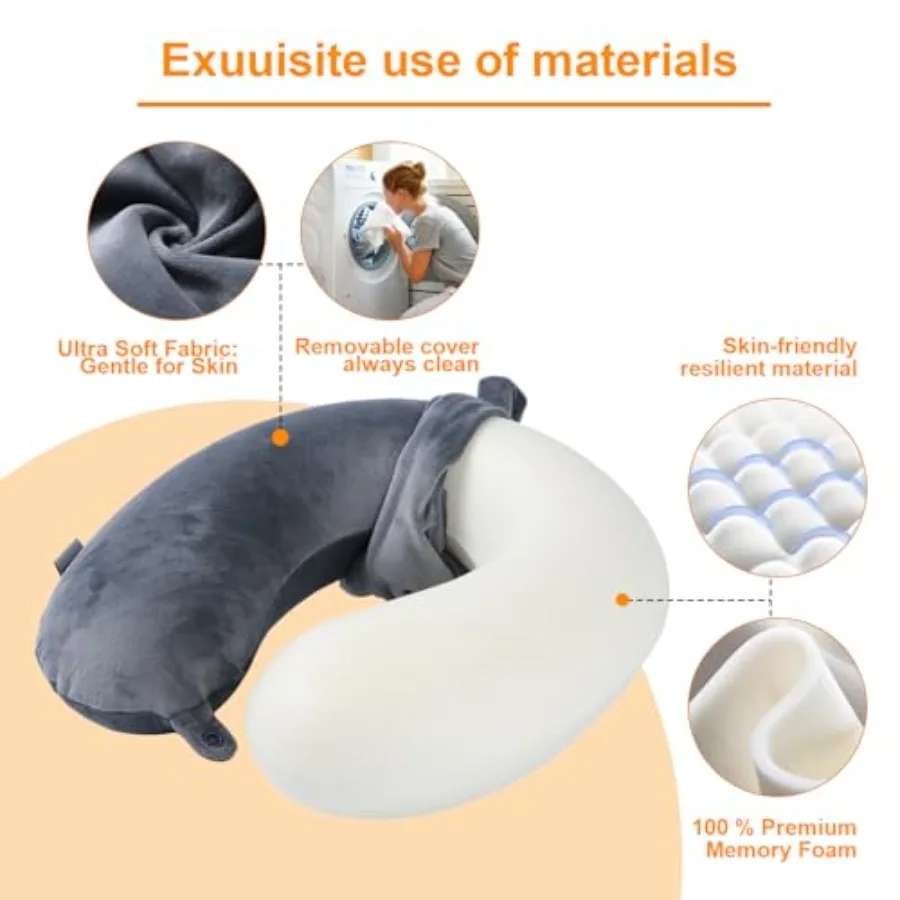
- Temperature-responsive memory foam. Viscoelastic foam softens with body heat and conforms to your neck shape, spreading contact pressure instead of concentrating it at one point.
- 100% foam, not beads or air. Beads redistribute and collapse under load; air pillows go soft as cabin pressure changes. Foam holds its shape for the whole flight.
- Lightweight and portable. Light enough that it doesn’t cost you anything meaningful in luggage allowance.
- Honest about its limits: this is not a treatment for neck pain. It prevents one specific mechanism of strain while you sleep upright. It will not correct posture, fix a disc problem, or resolve existing neck pathology.
- Fit matters more than the pillow. A pillow too thick at the back pushes your head forwards into flexion — the exact posture you are trying to avoid. Wear the opening at the front.
How to Use
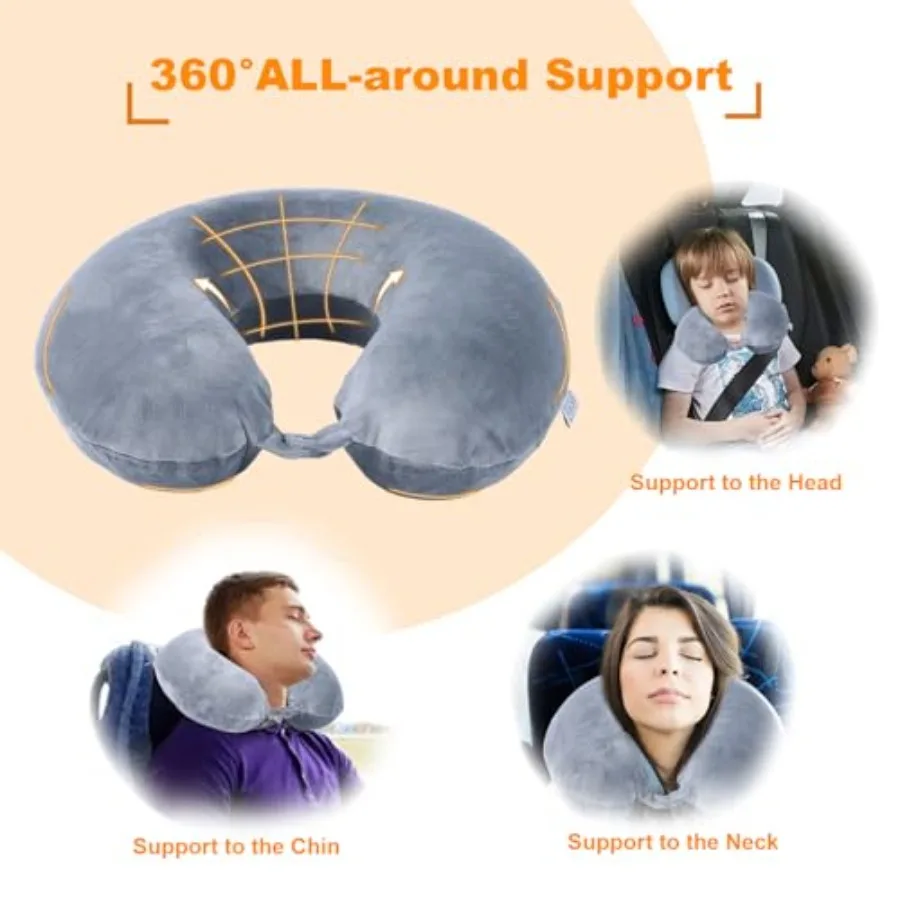
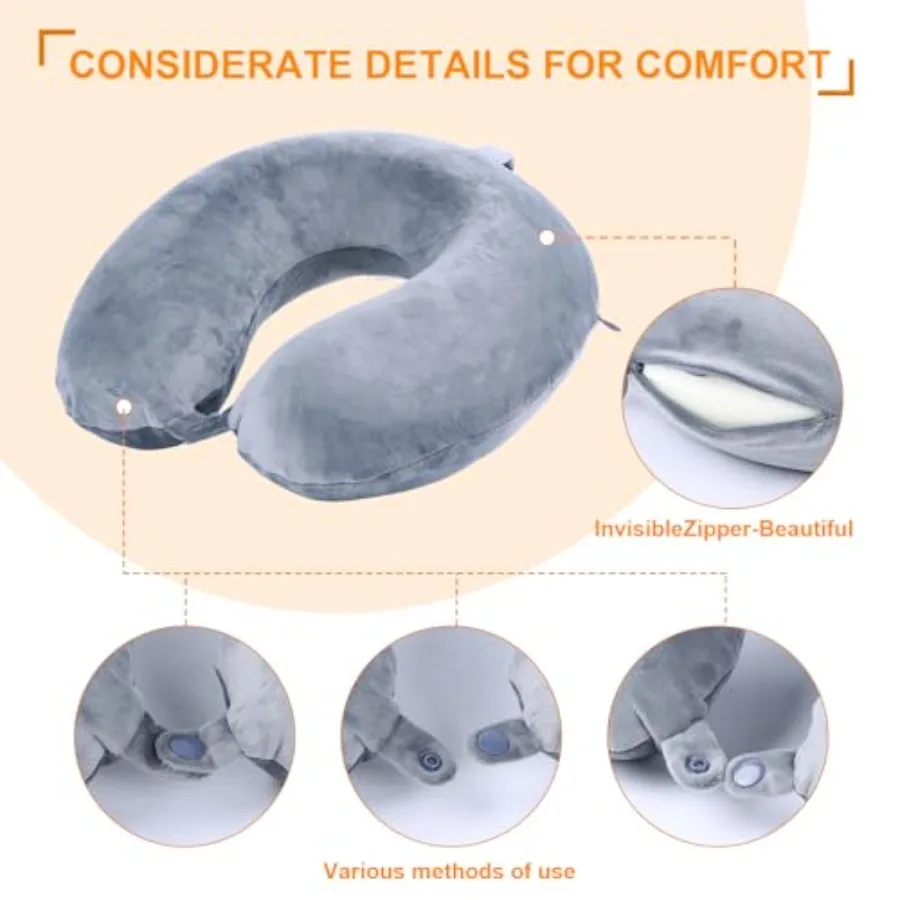
Wear the pillow with the gap at the front of your neck and the closed, bulkier section behind your head. Many people wear it backwards, with the thick part under the chin, which shoves the head forwards and creates the strain it should prevent. If your chin is being pushed onto your chest, turn it around. For side-sleepers, rotate the pillow so the thicker section sits on whichever side your head tends to fall towards, giving that side something to land on. Let the foam warm up for a minute before judging the fit — cold memory foam is firm and misleading. Safety: not suitable for infants or young children, and never use it while driving, as it restricts head rotation and shoulder checks.
Specifications
| Fill | 100% memory foam (viscoelastic polyurethane) |
|---|---|
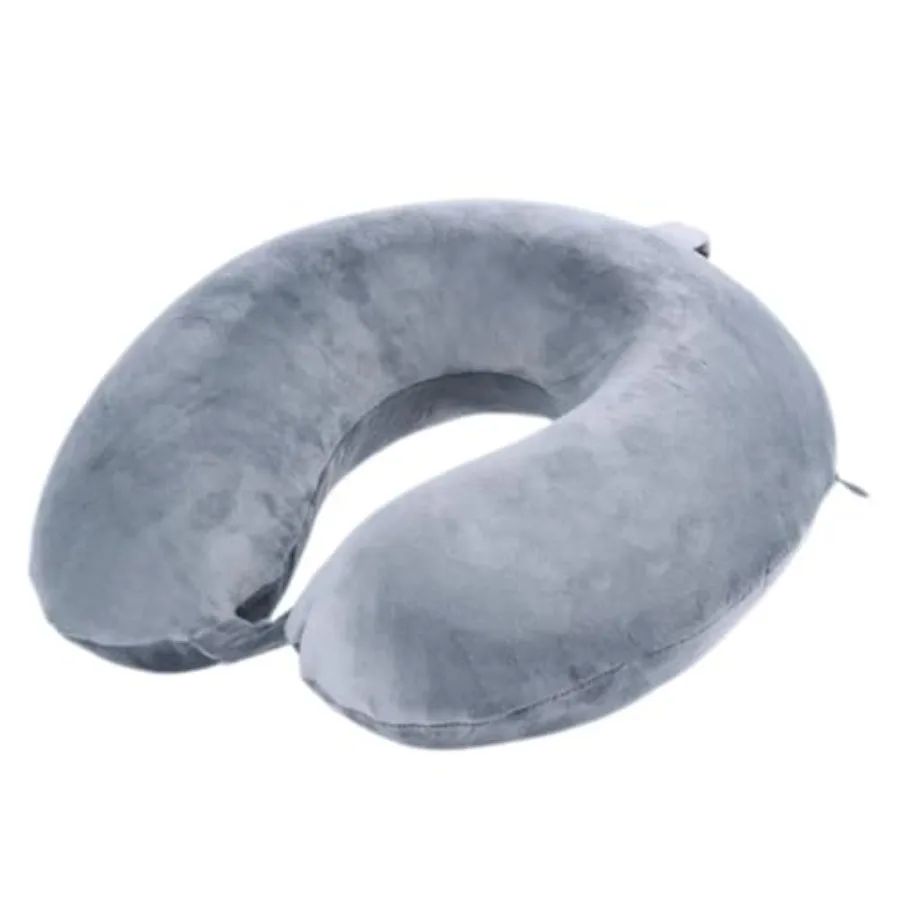
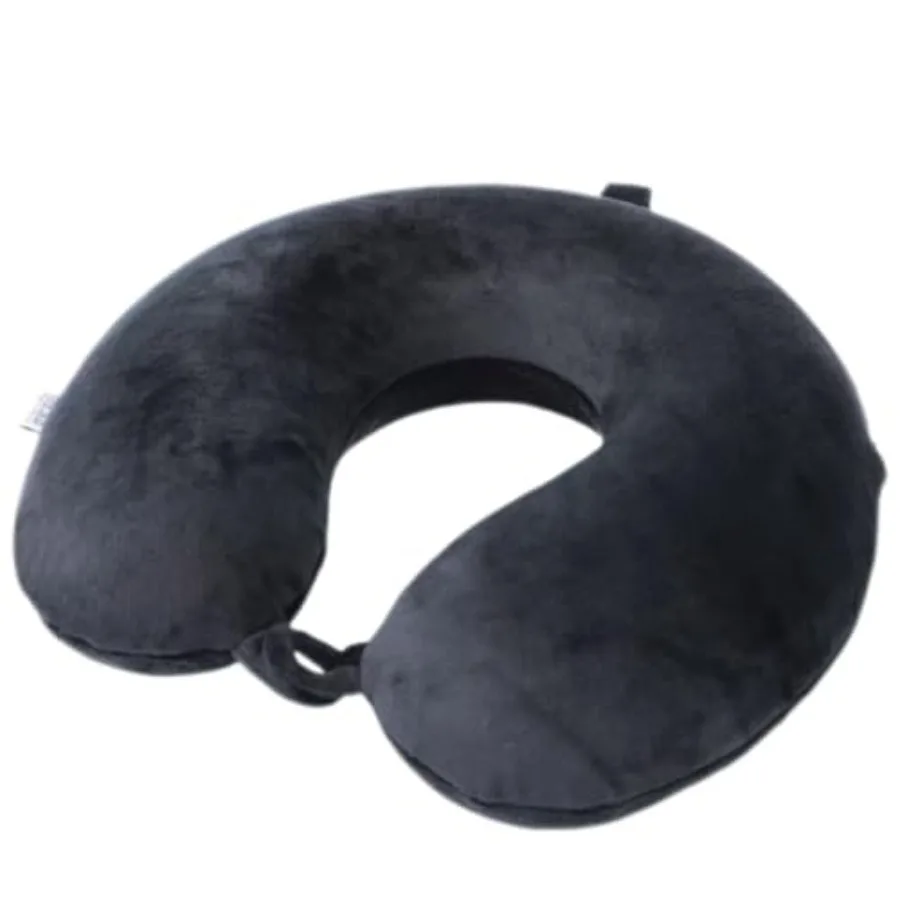
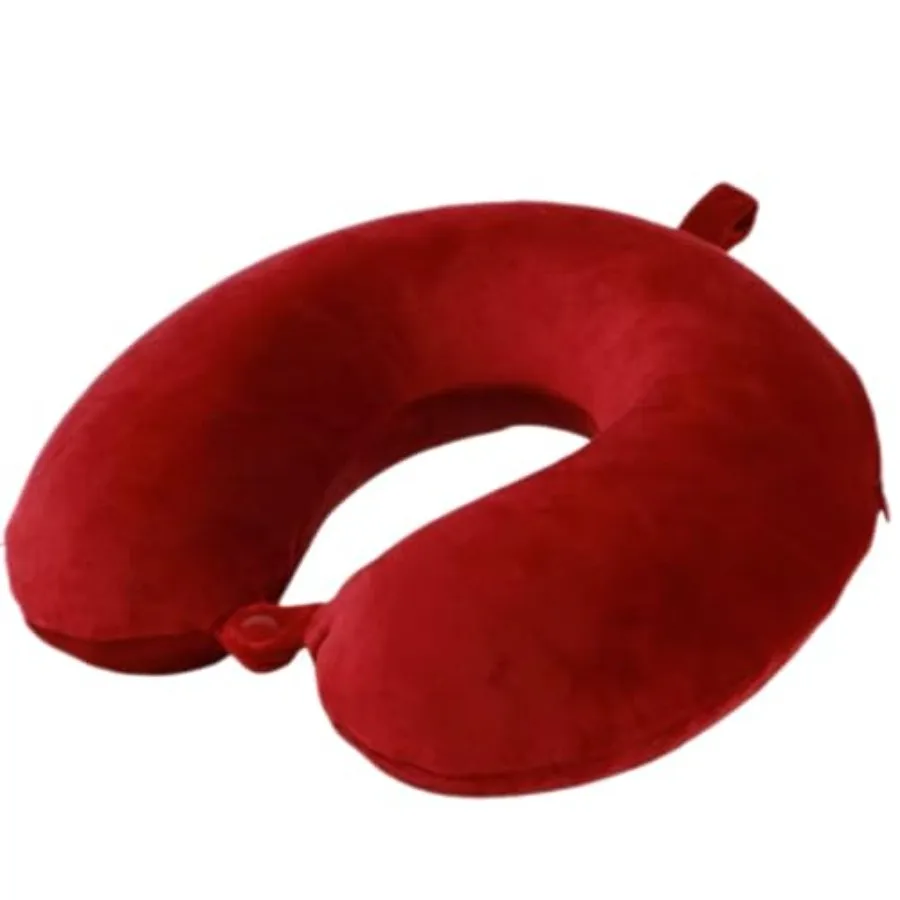
| Shape | U-shaped / horseshoe neck pillow |
| Weight | Lightweight — exact weight variant dependent |
| Cover | Removable, washable — variant dependent |
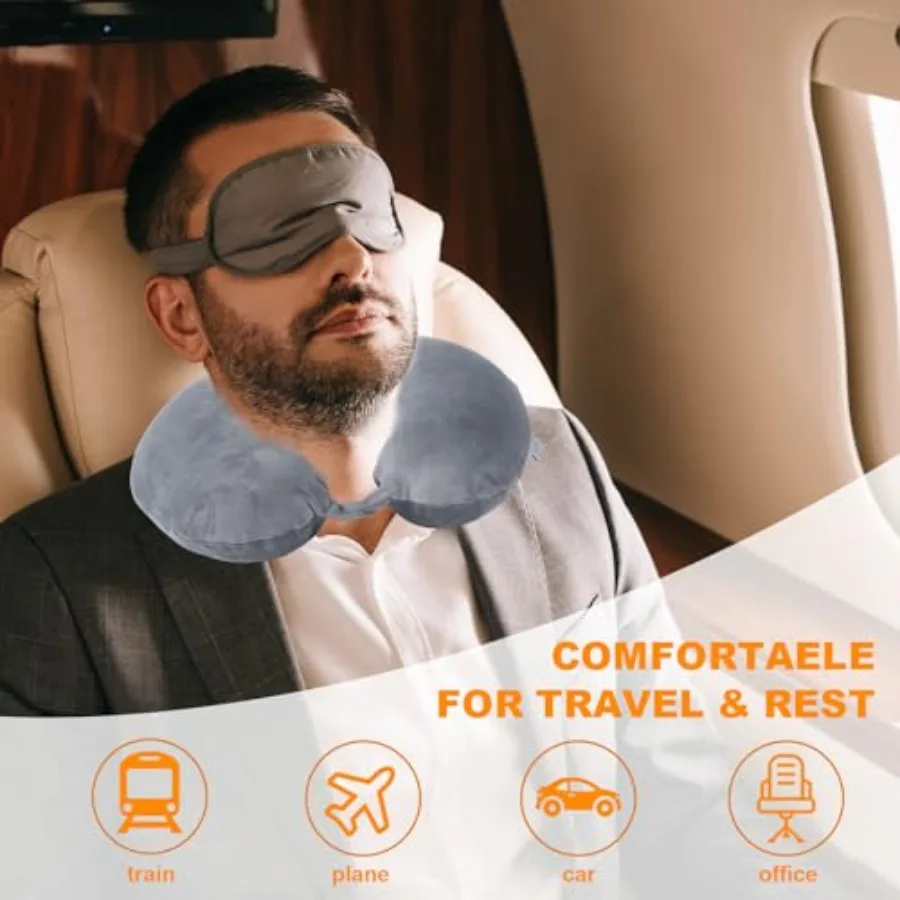
| Best for | Aeroplane, car passenger, train, office, home rest |
| Not suitable for | Infants, or use by the driver of a vehicle |
| Packability | Compressible; carry pouch variant dependent |
| Support type | Passive head-travel limiter (not orthopaedic treatment) |
Care & Maintenance
Wash the cover, not the foam. Memory foam should never be machine washed or wrung out — it tears internally and never recovers loft. Spot clean the foam with a barely damp cloth and let it air-dry completely before putting the cover back, as foam that is stored damp will hold mildew inside where you cannot reach it. Store it uncompressed when possible; leaving it crushed in a bag for months permanently reduces its ability to spring back.
What’s in the Box
U-shaped memory foam travel pillow with cover. Carry pouch inclusion varies by variant.
Reviews
There are no reviews yet.