Why Gel Outlasts Foam Under a Long Sit
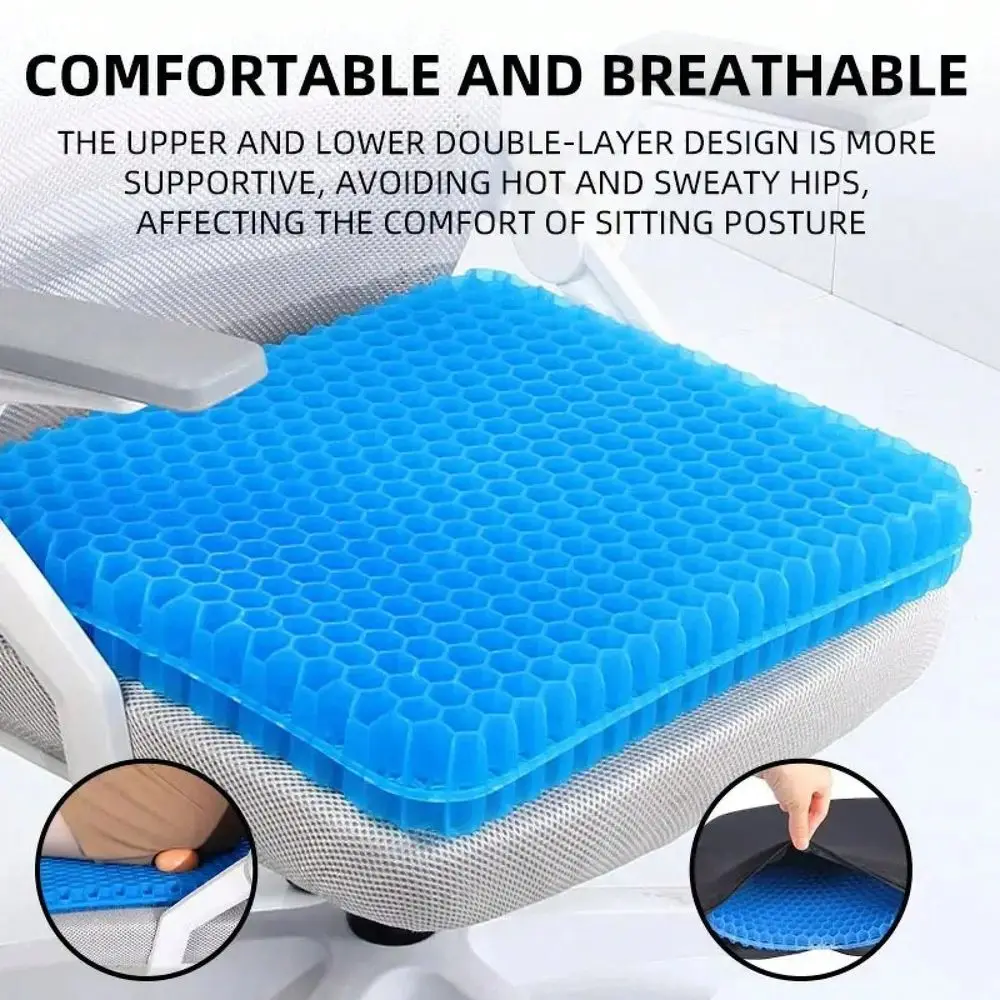
When you sit, most of your upper-body weight funnels into the two ischial tuberosities — the sitting bones — and, if you slump, the coccyx. Peak pressure at those small contact points is what causes the ache, the numbness and the fidgeting. Foam initially cushions but then bottoms out: it compresses under sustained load and stops distributing anything. A honeycomb gel grid instead buckles column by column, letting the loaded cells collapse while neighbouring cells continue to carry weight, spreading pressure across a wider area. The open structure also lets air move, which is why gel sits cooler than a memory-foam pad.
Key Benefits
- Distributes peak pressure. The honeycomb grid spreads load across the whole seat surface instead of letting it concentrate on the sitting bones and coccyx.
- Does not bottom out. Unlike foam, the gel structure keeps redistributing weight through hour three of a long drive or a long shift.
- Genuinely breathable. The open cells let air circulate, so it does not build the sweaty heat trap that closed-cell foam creates in summer.
- Works where you actually sit. Office chairs, car seats, wheelchairs, stadium seats and hard dining chairs — anywhere the seat is harder than you are.
- Useful after tailbone injury or surgery. Offloading the coccyx is standard, sensible advice for coccydynia and post-operative sitting discomfort.
- An offloading aid, not a cure. It reduces the pressure that provokes pain. It does not heal a coccyx injury, treat sciatica, or correct your posture for you.
How to Use
Place it on the seat with the flat face down and sit fully back so your sitting bones land on the middle of the pad rather than perched on the front edge. It should raise you slightly — if it lifts you so high that your feet no longer rest flat on the floor, lower your chair to compensate, because dangling feet just move the problem to the backs of your thighs. Practical guidance: a cushion is not a substitute for moving. Stand up every 30–45 minutes; no cushion prevents the stiffness that comes from staying still. If you have reduced sensation, diabetes, or are using this for wheelchair seating with pressure-injury risk, get a clinician’s advice on pressure management — over-the-counter cushions are not a substitute for a prescribed pressure-relief system. Persistent tailbone pain that is not improving deserves a proper diagnosis.
Specifications
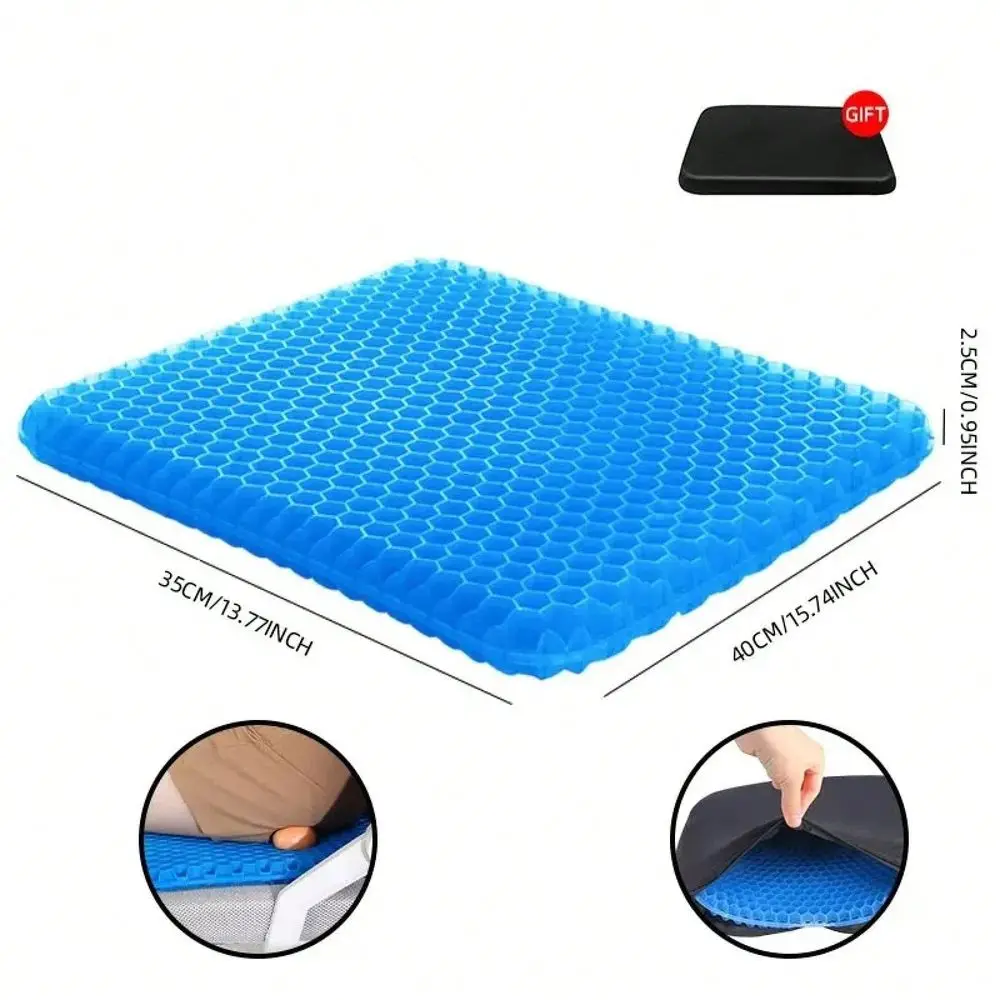
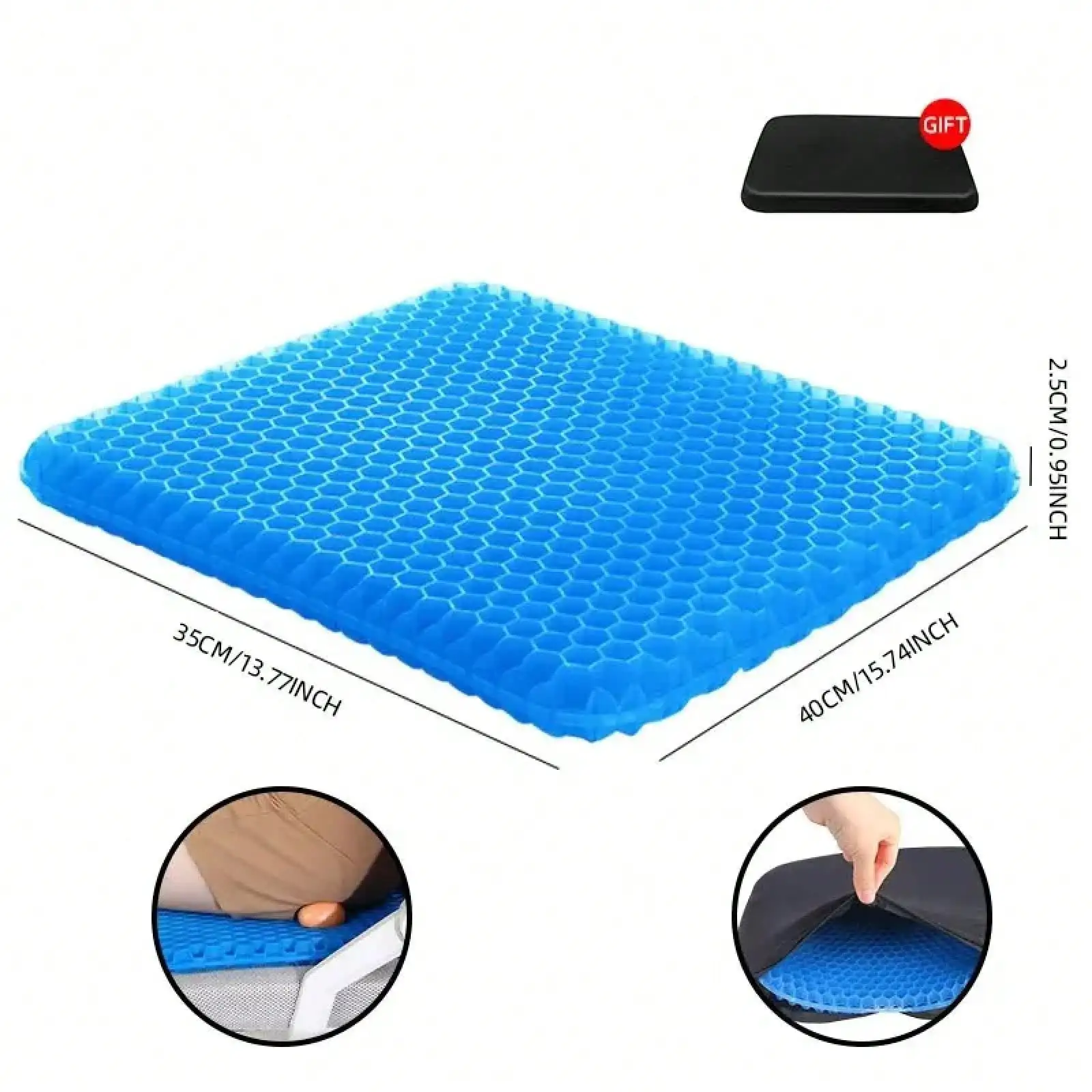
| Type | Honeycomb gel seat cushion |
|---|---|
| Structure | Open honeycomb gel grid |
| Primary purpose | Pressure distribution and tailbone relief |
| Breathability | Open-cell airflow design |
| Use with | Office chair, car seat, wheelchair, hard seating |
| Cover | Removable non-slip cover |
| Colour | Blue |
| Not suitable as | A prescribed medical pressure-relief cushion |
Care & Maintenance
The gel core can be wiped down with a damp cloth and mild soap, or rinsed and left to air-dry fully before use — do not dry it on a radiator or in direct sun, as heat can deform the gel. Wash the cover separately per its label. Store flat rather than folded or wedged, so the honeycomb structure does not take a permanent set.
What’s in the Box
Honeycomb gel seat cushion and removable non-slip cover.
Reviews
There are no reviews yet.