Steel, Skin and Fascia: How Scraping Actually Works
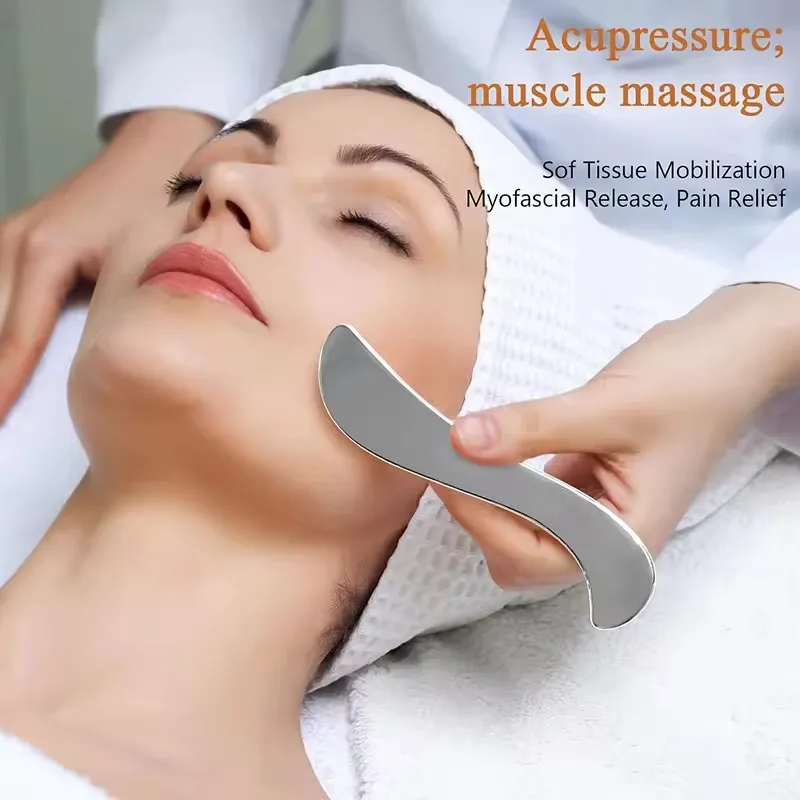
Gua sha — and its clinical cousin, instrument-assisted soft tissue mobilisation — applies a firm, oblique shearing stroke to skin and the fascia beneath. Two things happen. Mechanically, the stroke shears the layers of connective tissue against each other, which appears to improve the glide between them where movement has become restricted. Neurologically, the strong, broad input floods the area with sensory signal and reduces local pain sensitivity for a period afterward, which is why range of motion typically improves right away. The redness — petechiae — is superficial capillary response, not bruising from damage, and it should fade within days.
Key Benefits
- Stainless steel transmits feedback — a steel edge lets you feel the grain of adhesion under the tool, which jade and plastic simply do not do.
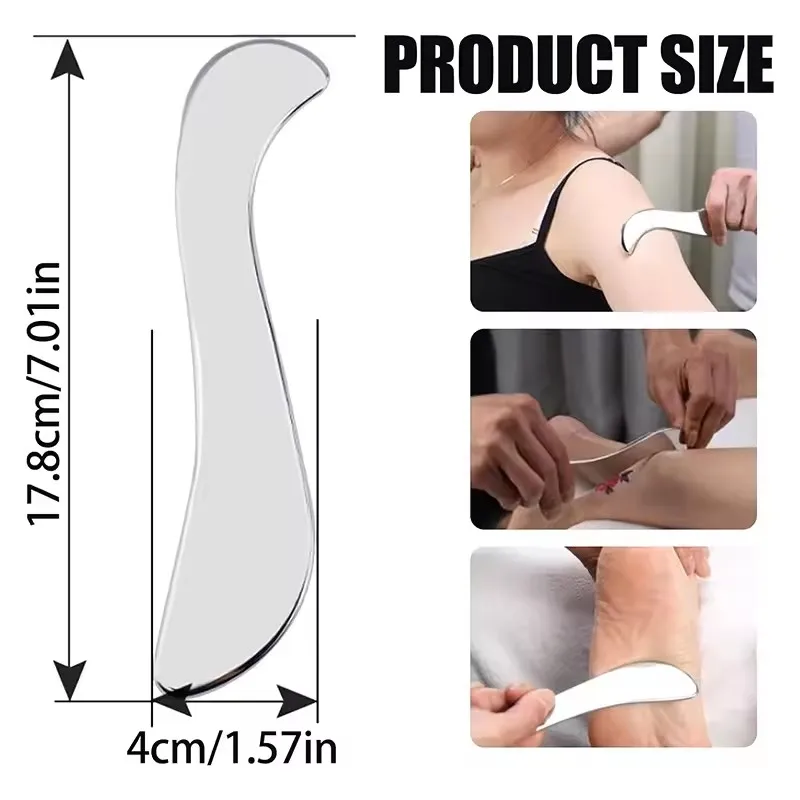
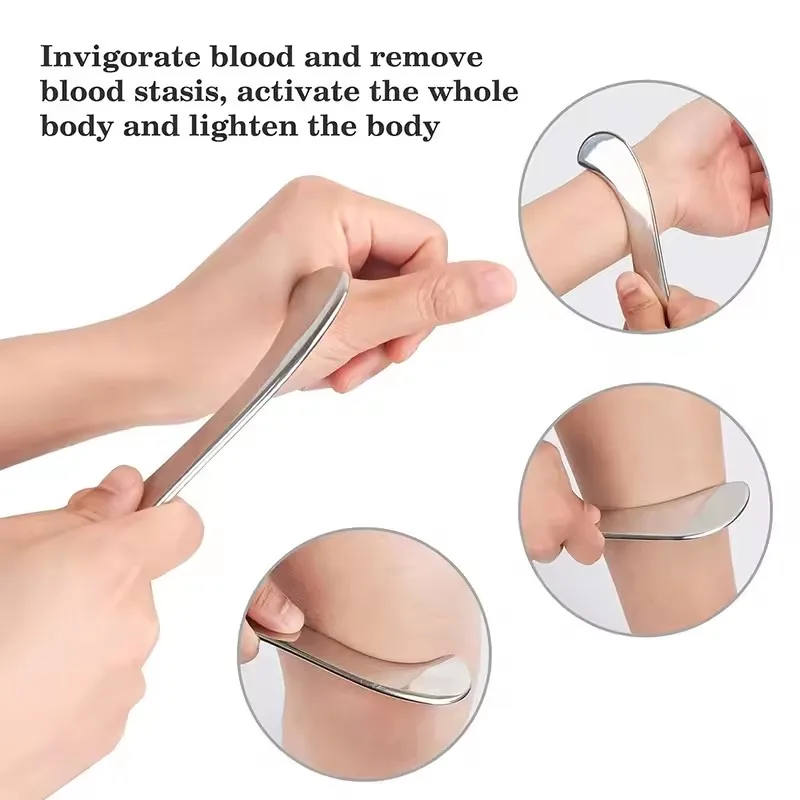
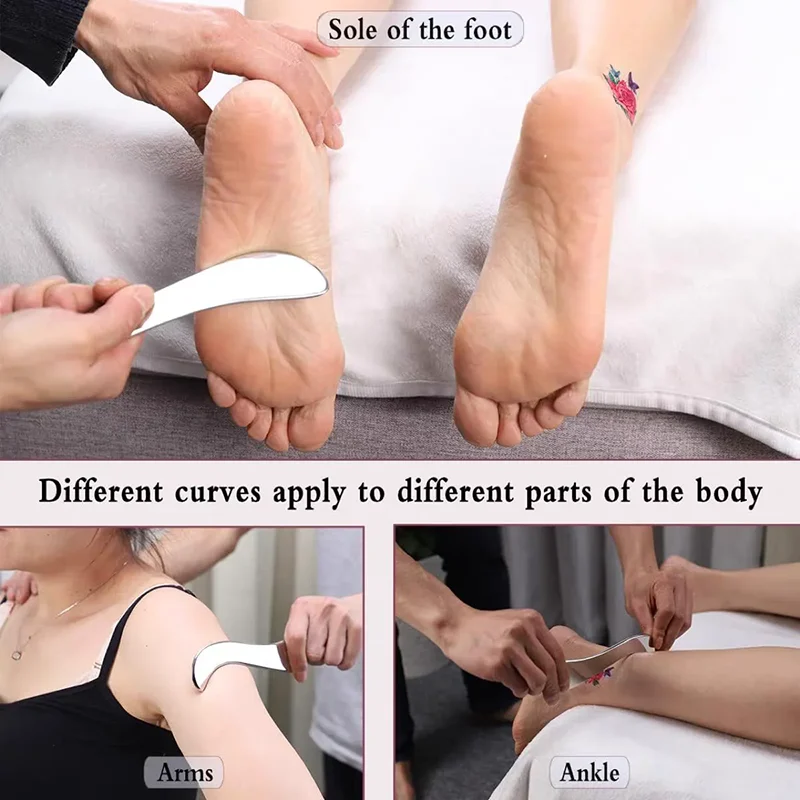
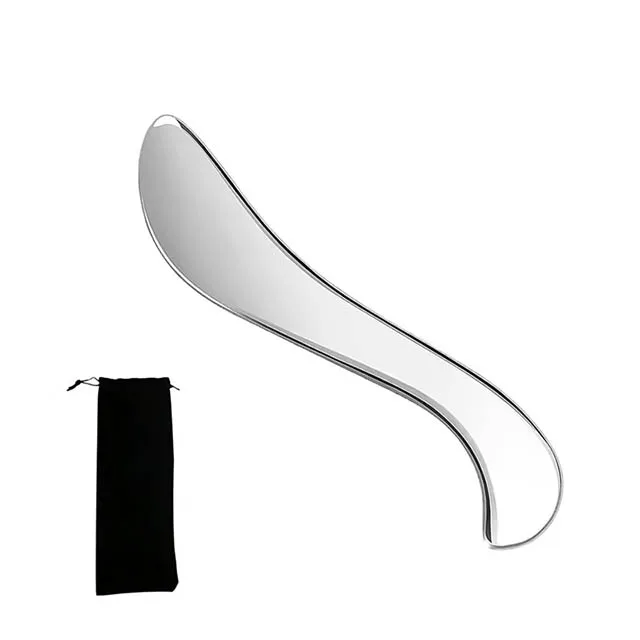
- Multiple contoured edges — a long convex edge for broad areas like the back and quads, a concave curve for calves and forearms, a comb or notch for tendon lines.
- Non-porous and hygienic — steel does not absorb oil, sweat or bacteria the way wood does, and it can be properly disinfected.
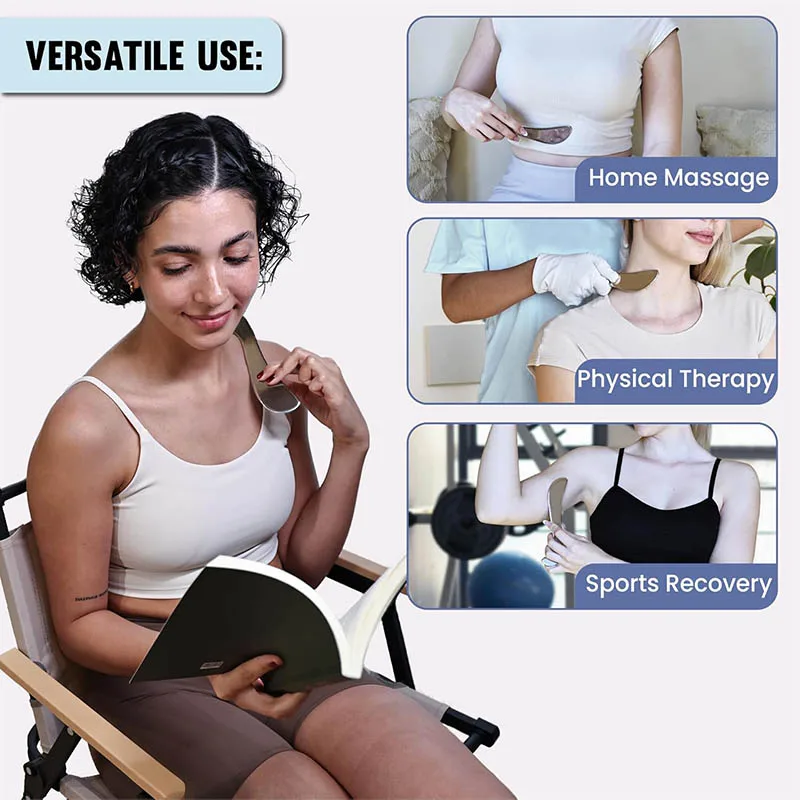
- Works on IT band, calves, forearms, plantar fascia and traps — the areas where you cannot generate enough pressure with a thumb.
- Rigid enough for real pressure — the tool takes the load, not your hands, which is why therapists switched to instruments in the first place.
- Cool to the touch — steel draws heat, which many people find soothing over an inflamed, tender area.
How to Use
Always use a lubricant — a body oil, balm or lotion — never on dry skin, or the tool will drag and tear. Hold the tool at roughly 30 to 45 degrees to the skin and stroke in one direction along the muscle, using long, smooth passes with moderate pressure. Work an area for 30 to 60 seconds, watching for light pink flushing, and stop when redness appears. Do not chase deep bruising; that is not the goal and does not mean it worked. Avoid bony prominences, the front of the neck and throat, the spine itself, varicose veins, moles, broken or infected skin, and any area that is acutely swollen or freshly injured. Do not use it if you are on anticoagulants, have a bleeding disorder, low platelets, are pregnant, or have a DVT — the risk of significant bruising is real. Expect tenderness for a day or two afterward; that is normal.
Specifications
| Type | Gua sha / IASTM soft tissue scraping tool |
|---|---|
| Material | Stainless steel |
| Edges | Multiple contours — convex, concave and notched, shape variant dependent |
| Finish | Polished, non-porous |
| Requires | Oil, balm or lotion (not included) |
| Target areas | Back, shoulders, arms, legs, IT band, feet |
| Reusable | Yes — sanitisable between uses |
| Sterilisation | Alcohol-safe; not for autoclave use unless the supplier states otherwise |
| Best for | Fascial restriction, muscle tightness, mobility work |
Care & Maintenance
Wash with warm soapy water immediately after use to remove oil, and dry thoroughly — sitting damp is how even stainless steel eventually spots. Wipe with isopropyl alcohol to disinfect, especially if the tool is shared, though sharing is best avoided. Store dry, in a pouch, away from other metal that can scratch the working edge. Never put it in a dishwasher.
What’s in the Box
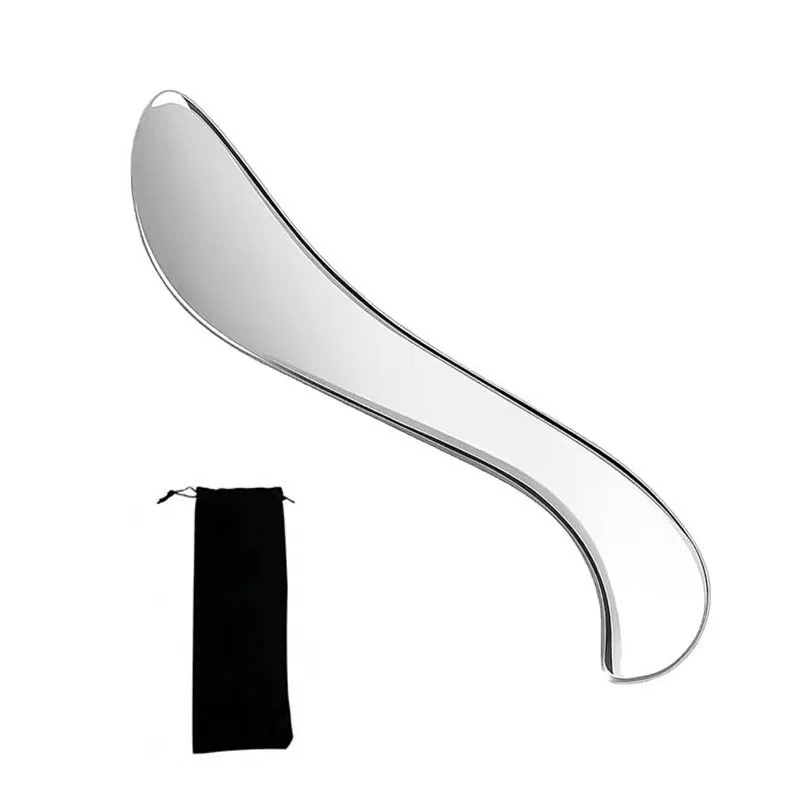
1 × stainless steel gua sha scraping tool. Shape as pictured; oil, balm and storage pouch are not included unless stated on the variant.
Reviews
There are no reviews yet.