
Light Is the Only Cue Your Body Clock Really Trusts
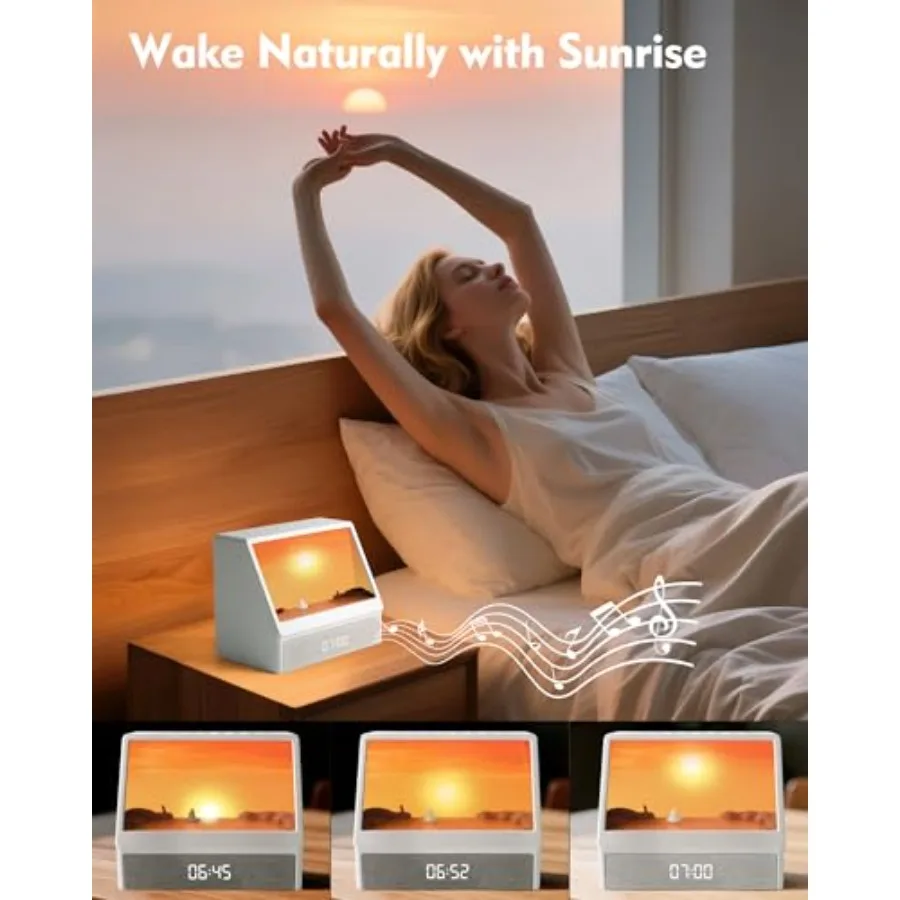
Your circadian rhythm is set by light, and by a dedicated pathway: specialised retinal cells containing the pigment melanopsin detect ambient brightness and signal the suprachiasmatic nucleus in the hypothalamus, which acts as the master clock. Morning light suppresses melatonin and advances circadian phase. That is why a gradual pre-alarm light ramp works — over 20 to 30 minutes it lifts you into lighter sleep stages so that when the alarm sounds you are already close to the surface, rather than being hauled out of slow-wave sleep. That transition is what determines sleep inertia, the fogged, heavy grogginess that can last an hour. Trials on dawn-simulation devices consistently show reduced sleep inertia and better subjective morning alertness. Honest caveat: a bedside lamp produces a few hundred lux at best, where daylight is well over ten thousand. It eases waking. It is not a light-therapy box, and it does not replace getting outside.
Key Benefits
- Wakes you from the right sleep stage. The gradual ramp lifts you toward lighter sleep before the alarm, which is the mechanism behind reduced grogginess — not a gentler noise.
- Reduced sleep inertia, measurably. Dawn-simulation studies show better subjective alertness and mood in the first hour after waking compared with a conventional alarm.
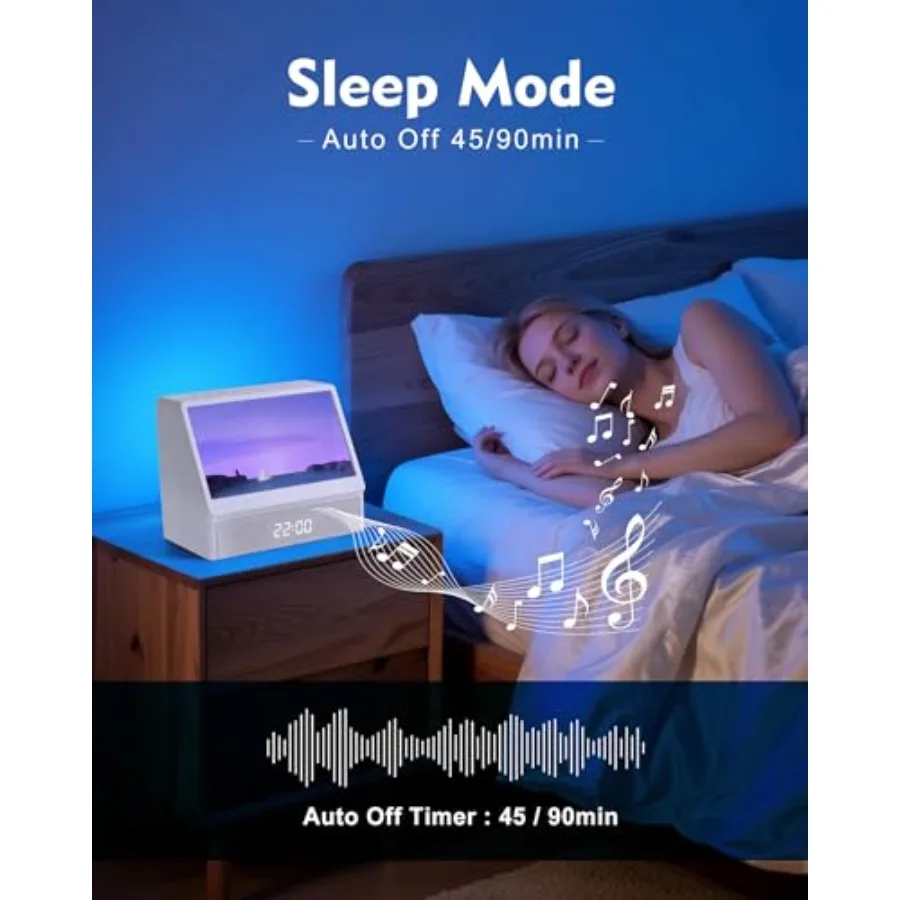
- The sound machine addresses the other end of the day. Broadband noise masks the environmental sounds — traffic, a partner, a creaking house — that fragment sleep without fully waking you.
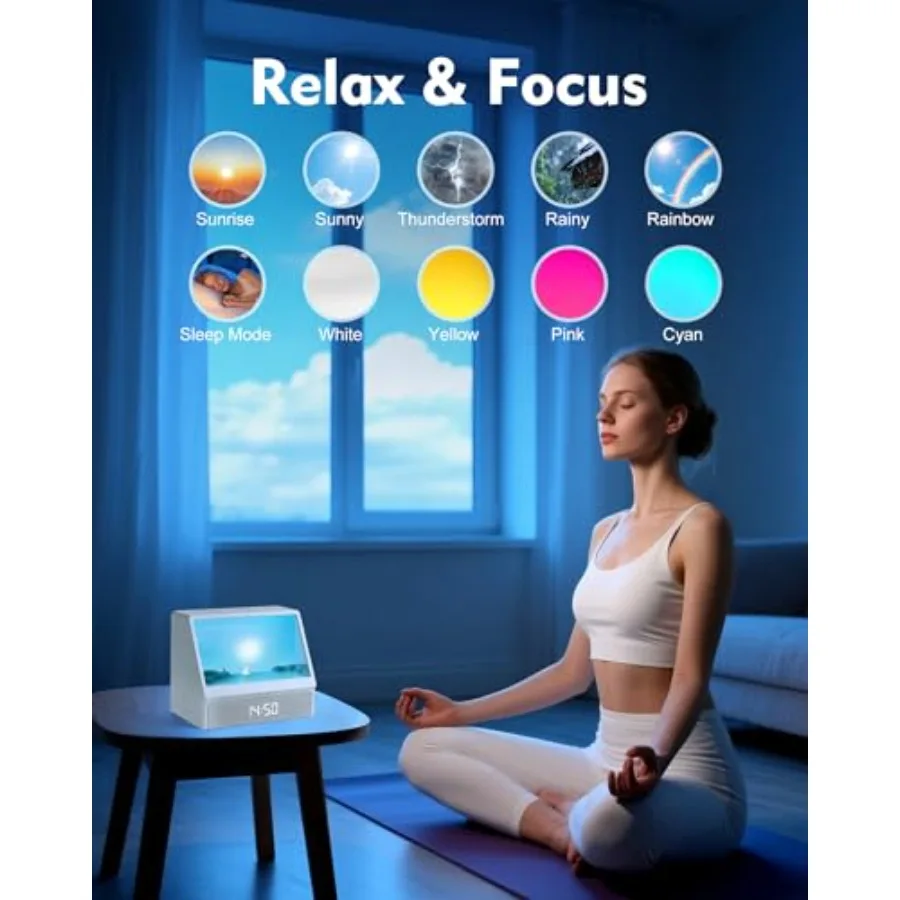
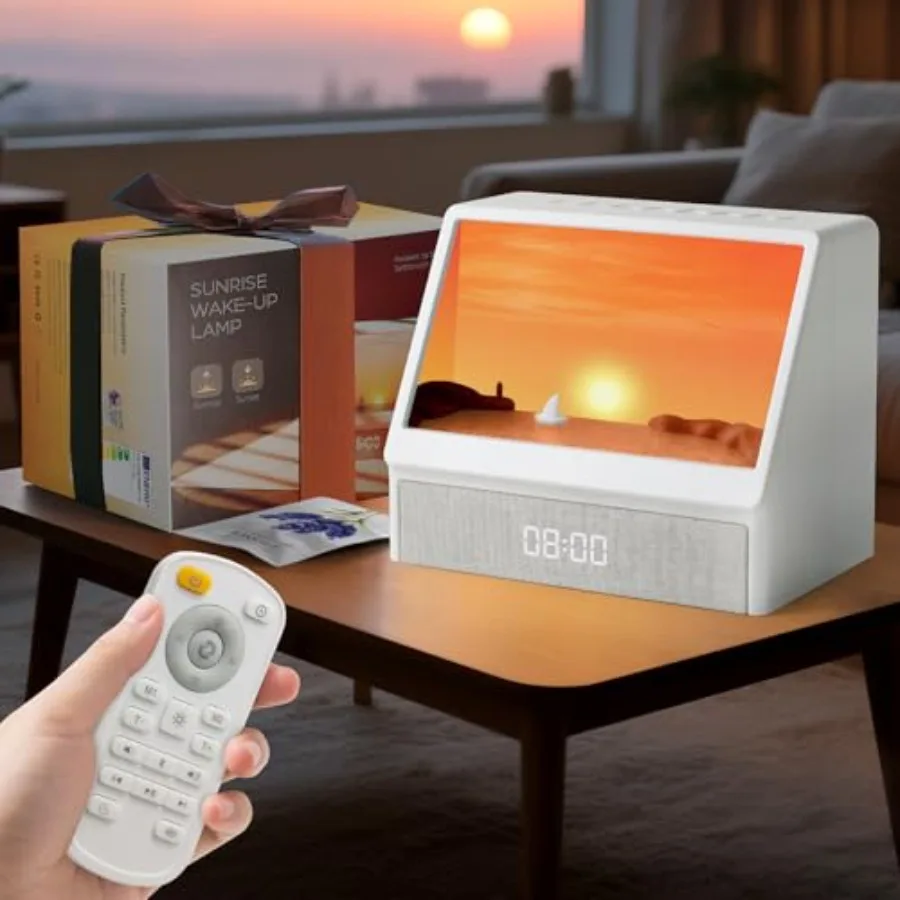
- Ten scene simulations. Enough variety to find a wake-up profile and a wind-down soundscape you will actually stick with, which is the whole battle with sleep tools.
- Doubles as a warm evening lamp. Used at low brightness on a warm setting in the last hour before bed, it gives you light to read by without the alerting blue-weighted light of a phone screen.
- The honest limit. It will not fix insomnia, sleep apnoea or a genuinely misaligned schedule, and it is not bright enough to count as seasonal-affective light therapy. It makes waking up less horrible. That is the promise.
How to Use
Place the clock on a bedside table roughly at head height and within about 50 cm of your pillow — the light needs to reach your closed eyelids, so do not tuck it behind a stack of books. Set the sunrise ramp to begin 20 to 30 minutes before your target wake time and choose a brightness that is comfortable, not blinding. Keep the backup sound alarm enabled for the first couple of weeks; light alone does not wake heavy sleepers. In the evening, drop the lamp to its lowest, warmest setting an hour before bed and use the sound machine at a volume just loud enough to mask disturbances — a whisper above your background noise, not a roar. Then do the thing that actually matters, which no device can do for you: get outside into real daylight within an hour of waking. Ten minutes of morning sun delivers more circadian signal than any bedside lamp can. If you have a diagnosed sleep disorder, take medication affecting sleep, or have an eye condition or photosensitivity, talk to a clinician before using bright-light devices.
Specifications
| Wake function | Gradual sunrise simulation before alarm |
|---|---|
| Scenes | 10 scene simulations |
| Sound machine | Built-in sleep and nature sounds |
| Sunrise duration | Adjustable ramp — typically 10–30 minutes |
| Backup alarm | Audible alarm alongside the light |
| Evening use | Dimmable warm-light bedside lamp |
| Placement | Bedside, within ~50 cm of the pillow |
| Power, brightness and snooze options | Variant dependent — see selected option |
Care & Maintenance
Wipe the diffuser with a dry microfibre cloth; do not use solvents or alcohol wipes, which craze the plastic and cloud the light. Keep it away from spills and out of a bathroom. If it is USB or mains powered, check the cable for damage occasionally. If it has an internal battery, avoid leaving it fully discharged for long periods.
What's in the Box
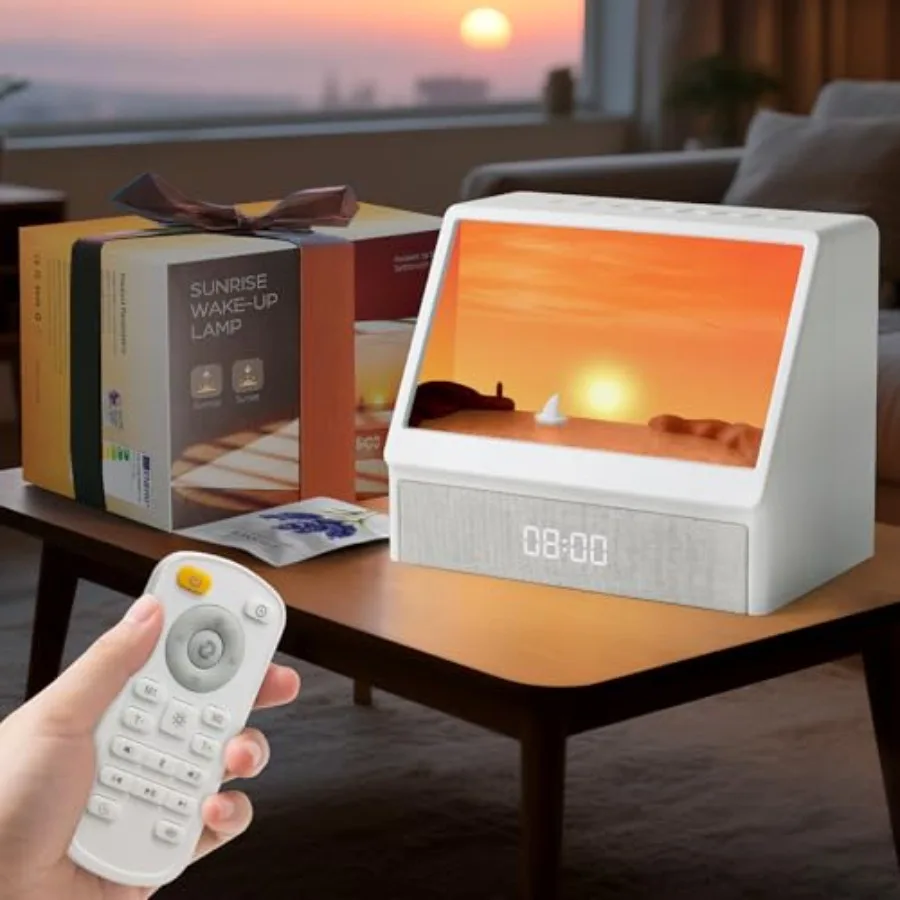
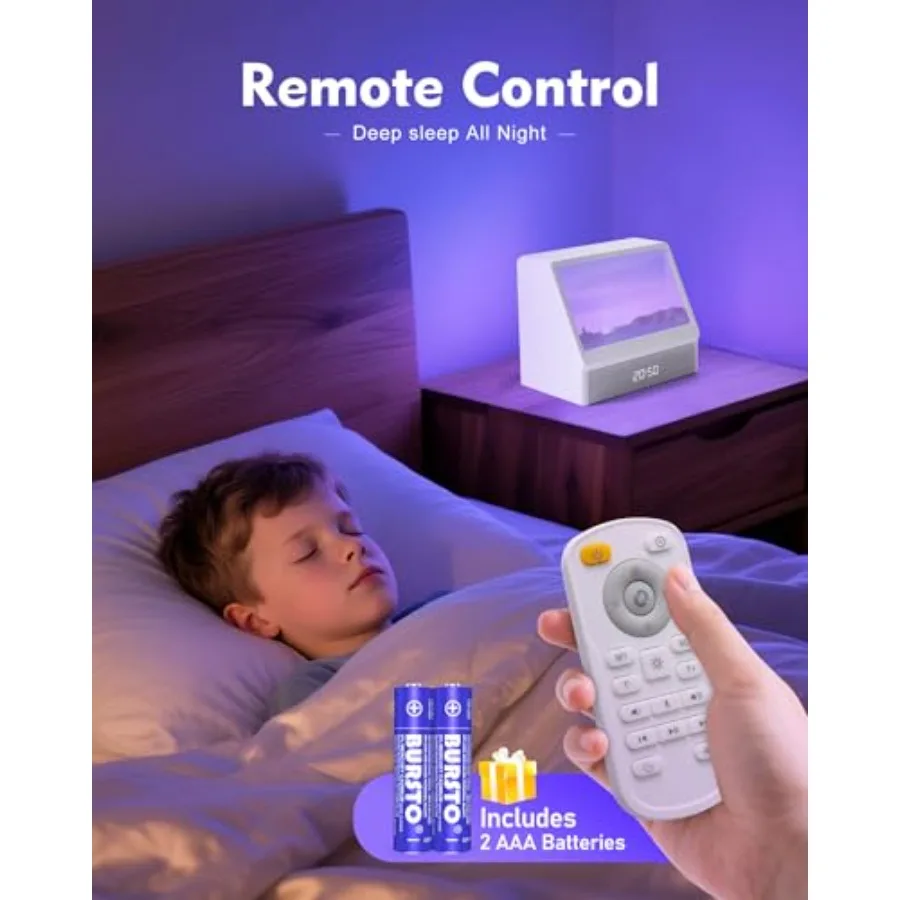
1 sunrise alarm clock with built-in sound machine, power cable and user manual. Remote control and adapter are variant dependent.



Reviews
There are no reviews yet.