How Electrical Nerve Stimulation Interrupts a Pain Signal
TENS works on the gate-control theory of pain. Pain travels to the brain along slow, thin nerve fibres, but touch and vibration travel along fast, thick fibres — and those fast signals can effectively crowd out the slow ones at the spinal cord. A TENS unit floods the area with harmless electrical pulses that stimulate those fast fibres, closing the gate on the pain signal. At higher intensities and lower frequencies it may also prompt endorphin release. Be clear about what this means: it is symptomatic relief, not repair. It doesn’t fix a disc, mend a tendon, or cure arthritis — it makes living with them more tolerable, drug-free.
Key Benefits
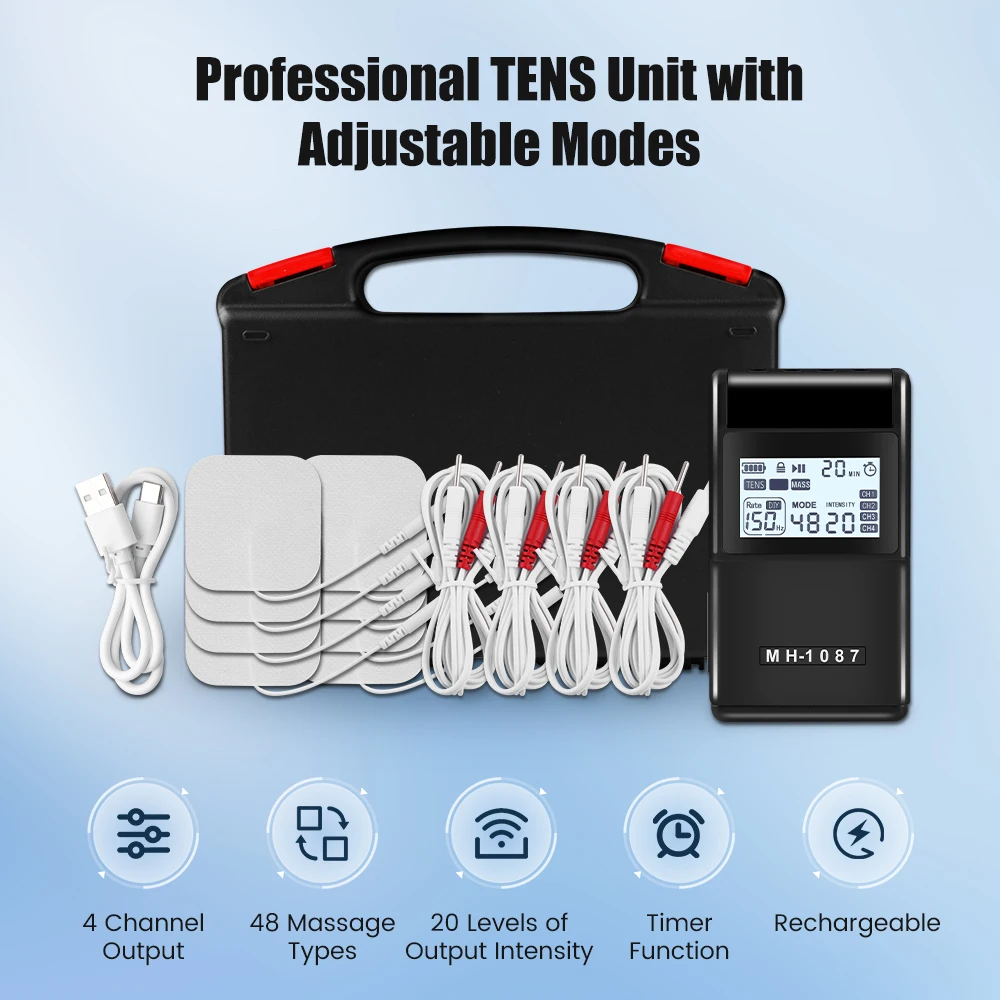
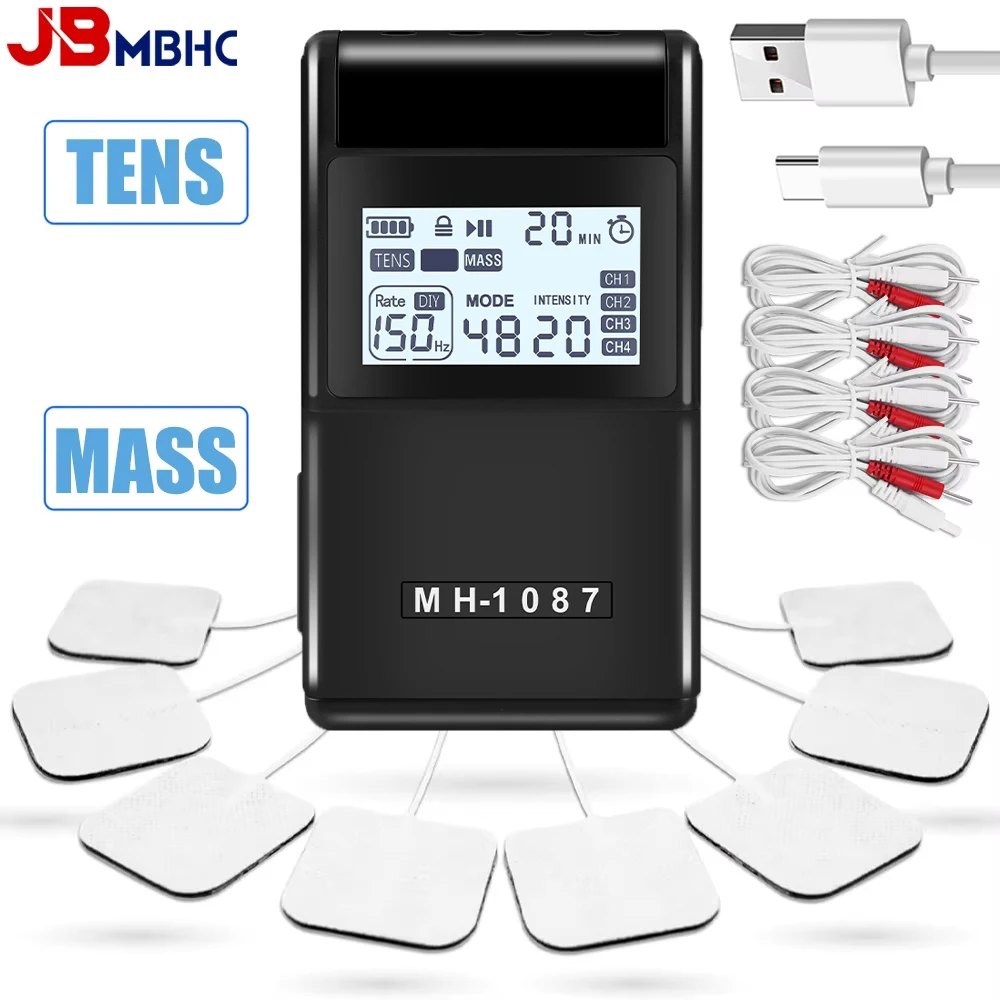
- Four channels, eight pads, real coverage. Most cheap units run two channels. Four lets you treat both shoulders and both lumbar sides simultaneously, or one large region with proper pad spacing.
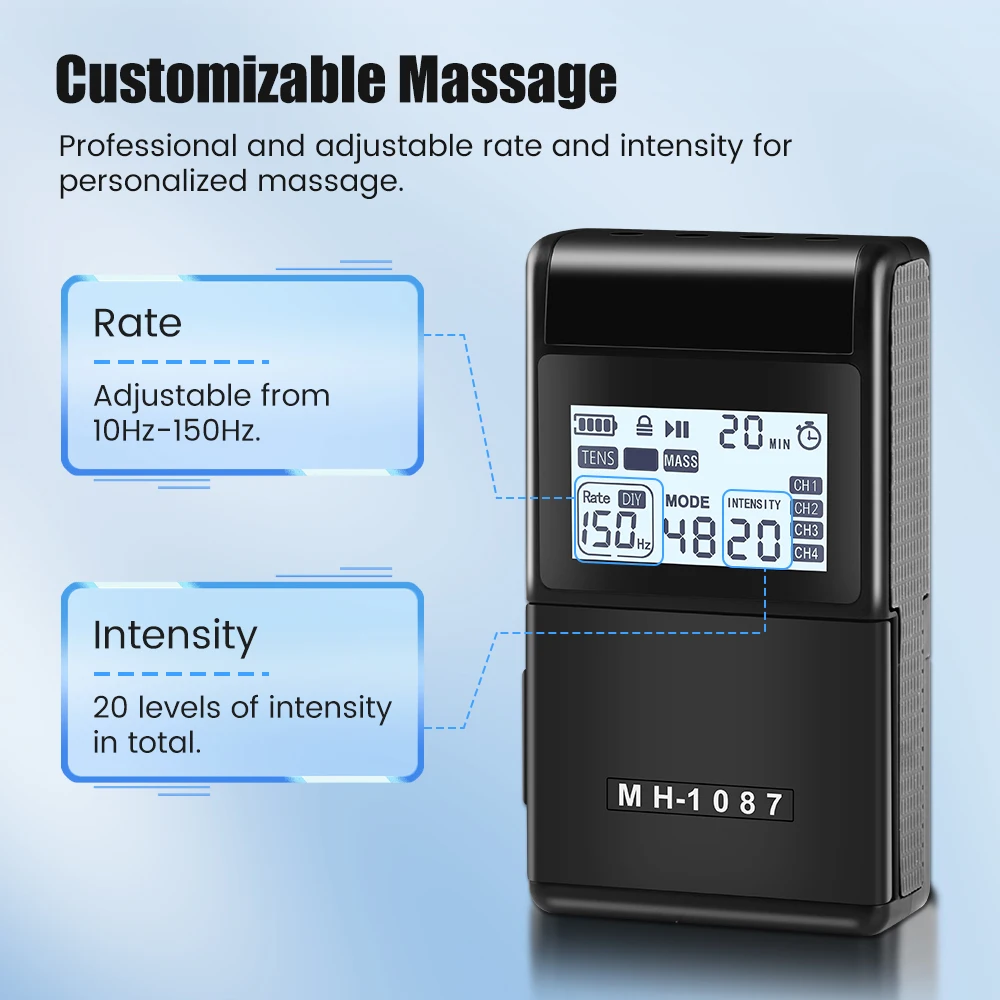
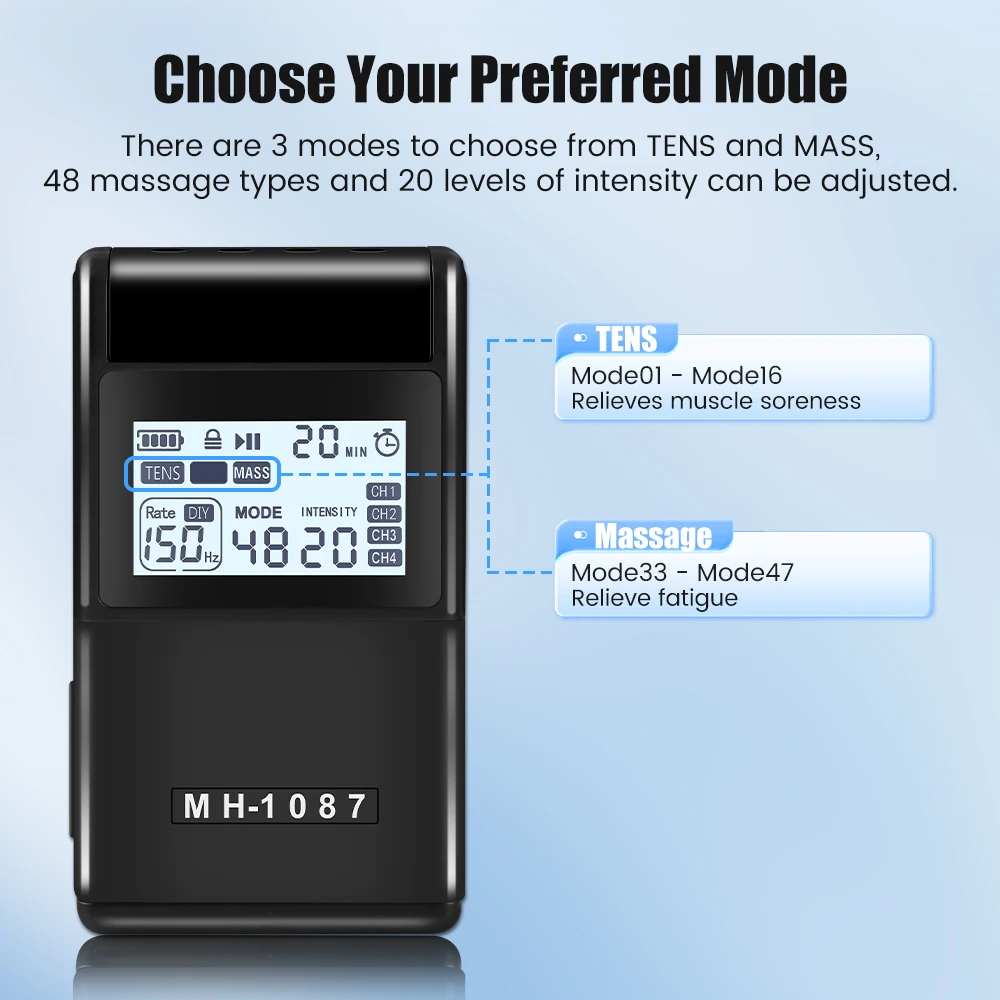
- Twenty intensity levels for fine control. The therapeutic window is narrow — strong enough to feel clearly, never strong enough to hurt. Fine steps let you find it instead of jumping past it.
- Drug-free and repeatable. Unlike analgesics, there’s no daily ceiling or stomach-lining cost, so it suits chronic, long-running pain where medication use adds up.
- TENS and EMS modes. TENS targets nerves for pain relief; EMS contracts muscle for stimulation and recovery. Two distinct jobs from one device.
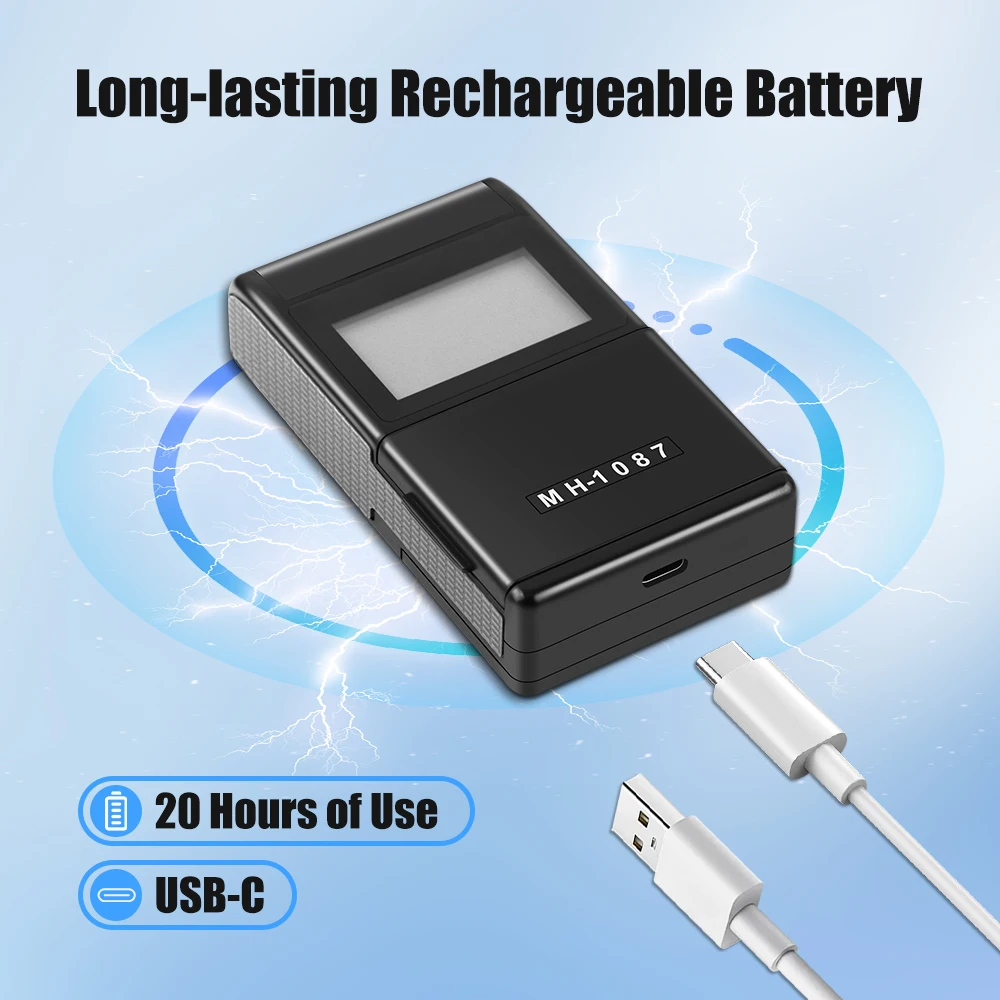
- Rechargeable, not battery-hungry. A chronic-pain routine that runs on disposable AAs quietly gets abandoned.
- Portable enough to use where the pain is. Belt-clip sized, so it works at a desk or on the road, not just on a treatment table.
How to Use
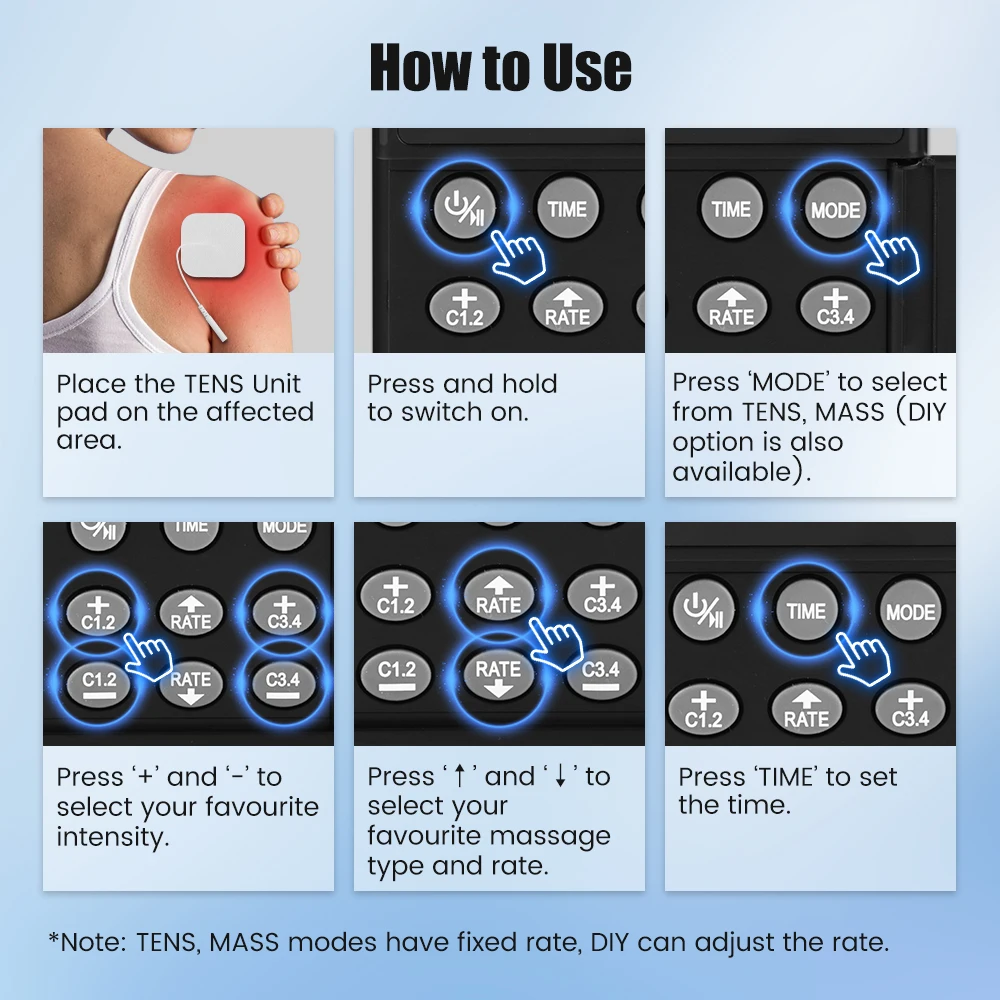
Place clean, tacky pads on clean, dry, unbroken skin around — never directly on — the painful area, keeping at least 2-3cm between pads on the same channel. Start at zero and raise the intensity slowly until you feel a strong but comfortable tingling, then stop. It should never be painful or make the muscle jerk uncontrollably. Sessions of 20-30 minutes are typical; you can repeat several times a day. Read this before you use it: do NOT use a TENS or EMS unit if you have a pacemaker, implanted defibrillator or any implanted electronic device; if you are pregnant; if you have epilepsy, a heart condition or a history of arrhythmia; if you have cancer in the treatment area; or on areas with numb or damaged skin. Never place pads on the front or sides of the neck (this can affect blood pressure and the airway), across the chest and heart, on the head, over the eyes, or across broken skin. Do not use while driving, operating machinery, in a bath or shower, or while asleep. If your pain is new, unexplained or worsening, get a diagnosis before masking the symptom.
Specifications
| Type | Digital TENS / EMS electrostimulator |
|---|---|
| Channels | 4 independent output channels |
| Intensity levels | 20 |
| Power | Rechargeable battery |
| Electrode pads | Included — 12-pad sets available on some variants |
| Modes | Multiple TENS and EMS programme modes |
| Display | Digital LCD |
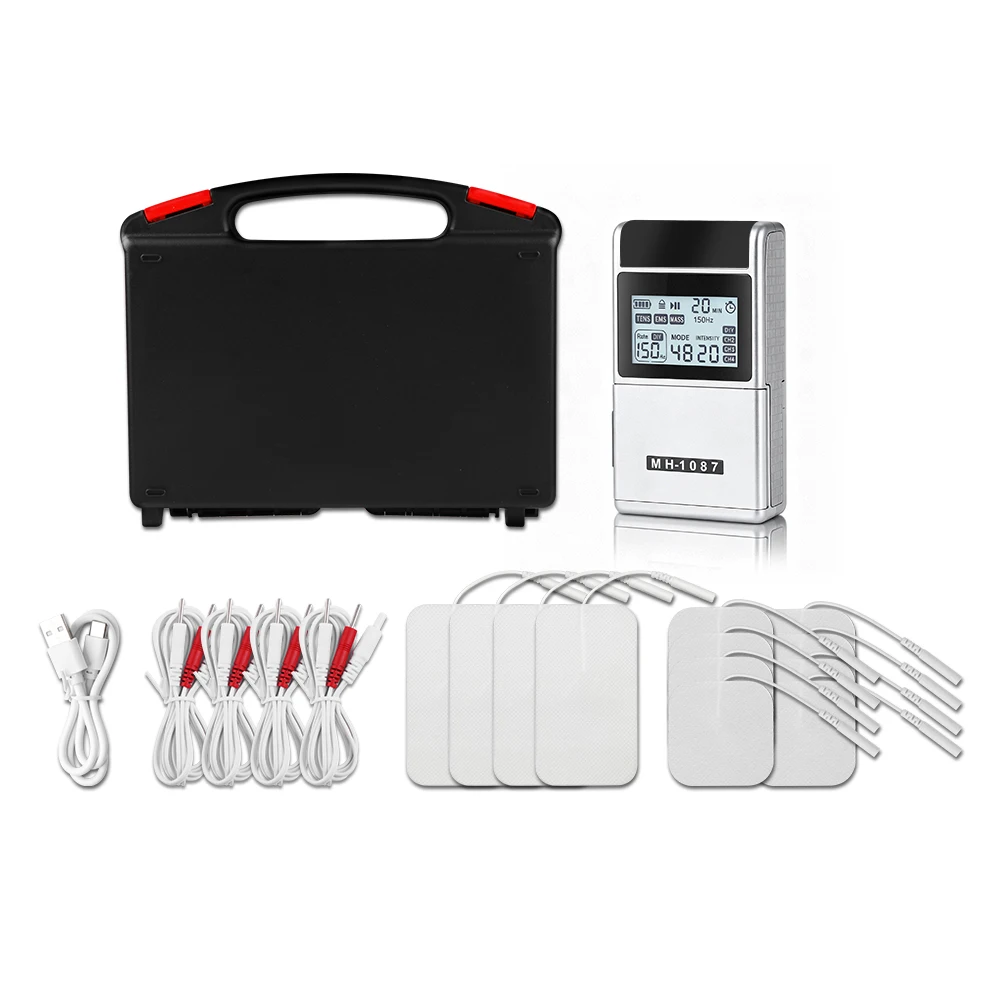
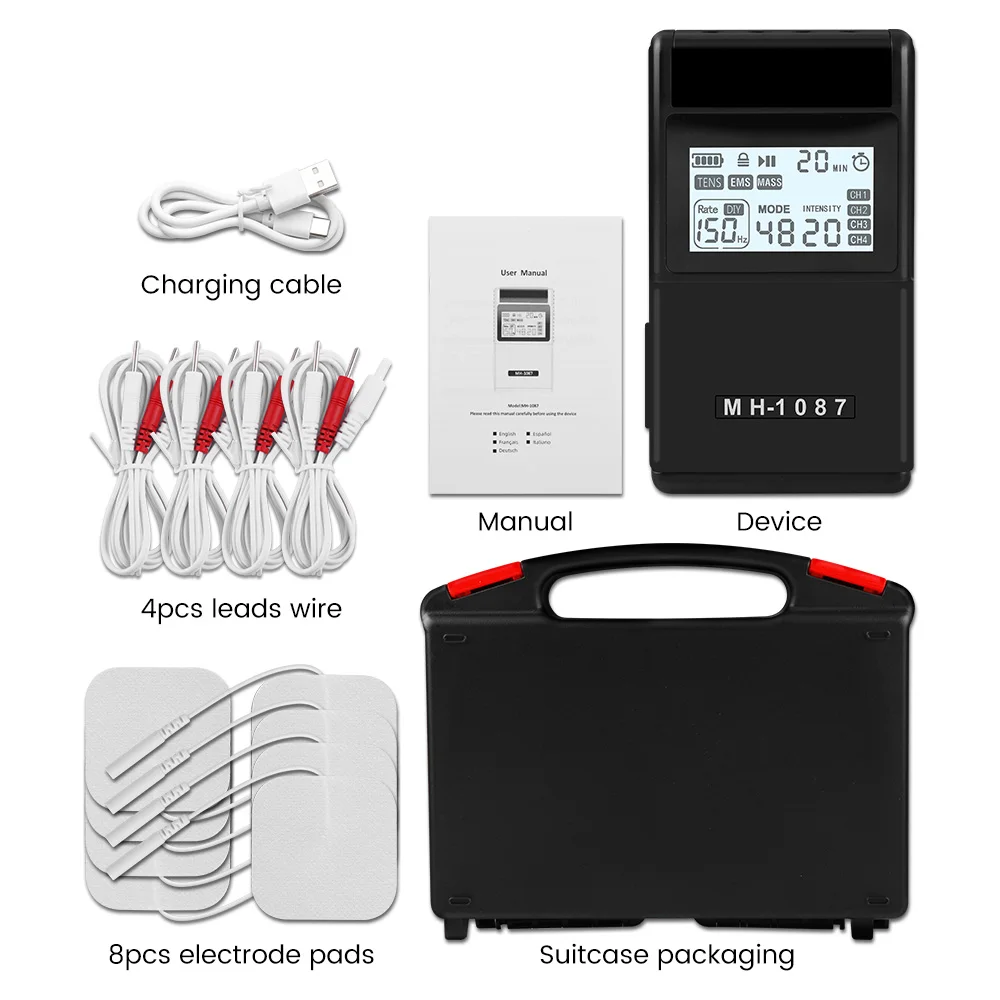
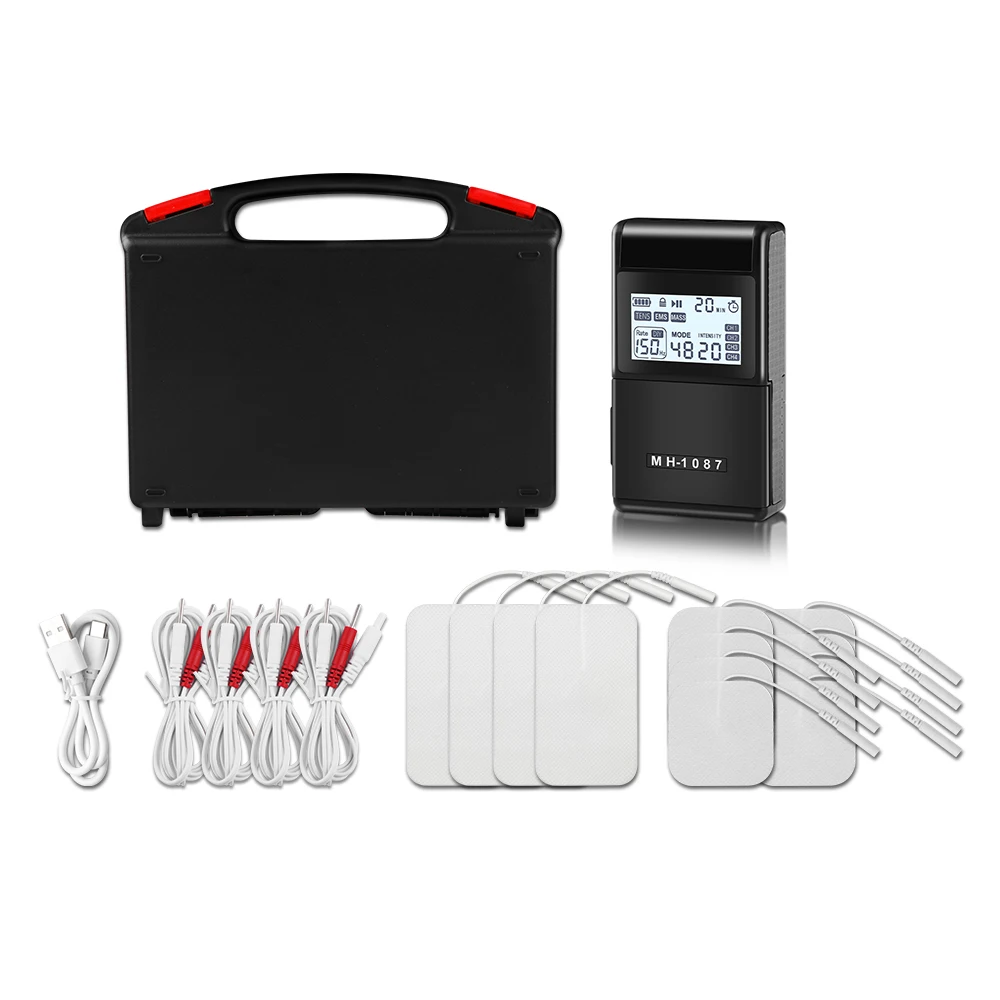
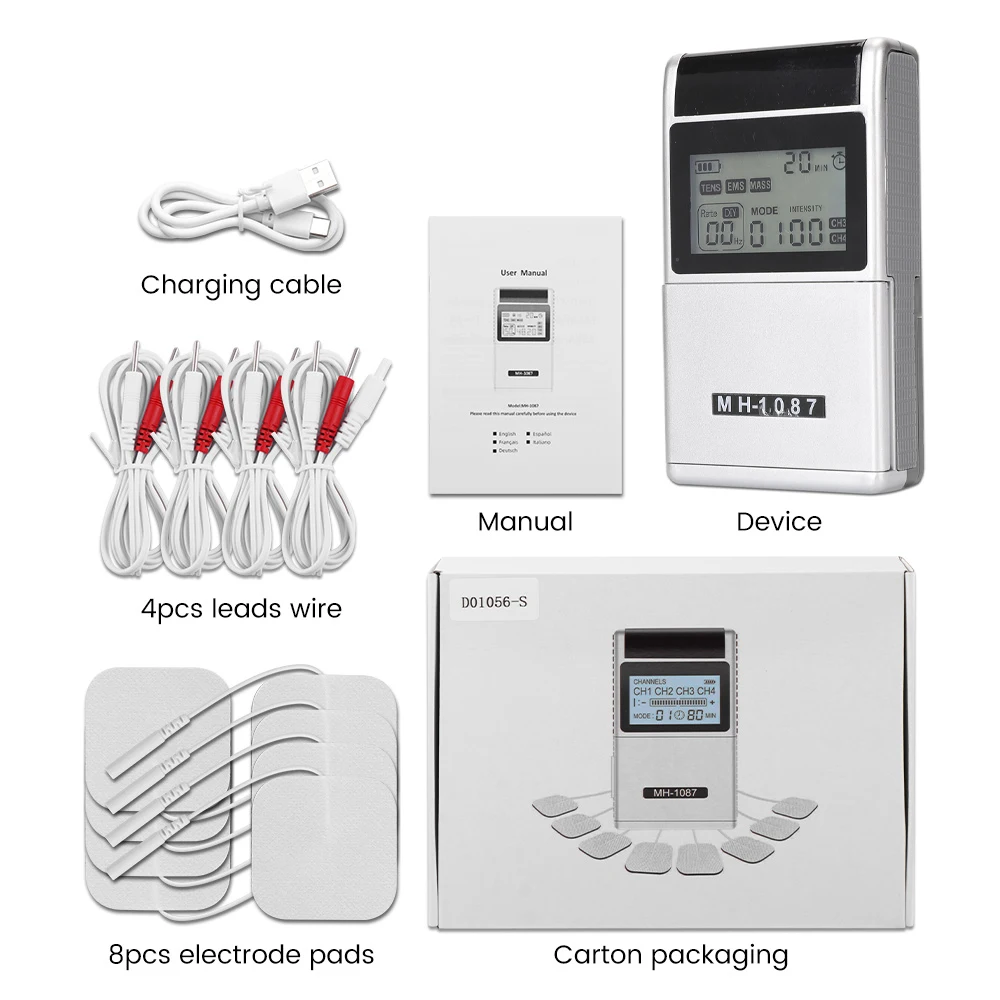
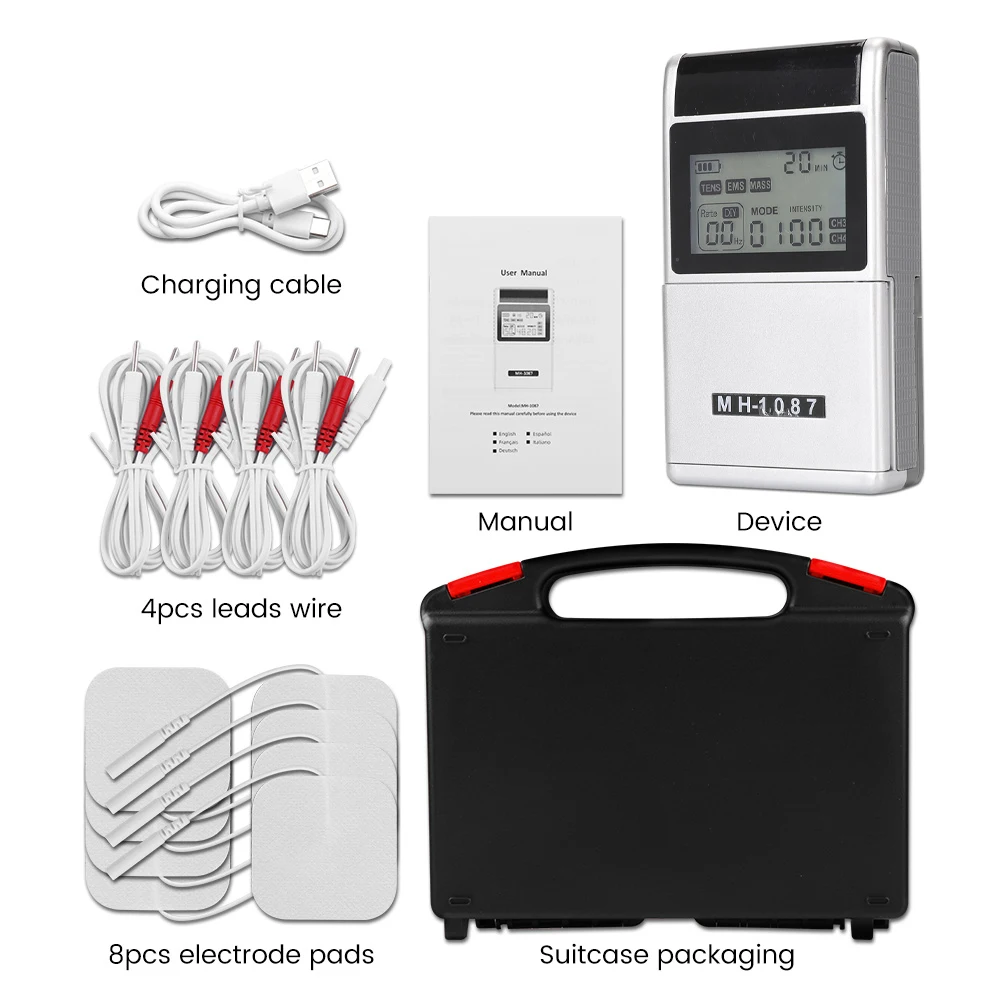
| Set options | With box or with carry case, silver or black — variant dependent |
| Best for | Chronic back, neck, shoulder, knee and joint pain; muscle stimulation |
Care & Maintenance
Pad life is everything with a TENS unit. Return the electrode pads to their plastic backing sheet after every session and refrigerate them if you live somewhere warm; skin oil and dust kill the adhesive gel. If a pad stops sticking, put one drop of water on the gel side and let it absorb — if that doesn’t restore it, replace the pad, as a poorly adhered pad concentrates current and can sting or mark the skin. Wipe the unit with a dry cloth, never a solvent, and store it out of direct heat.
What’s in the Box
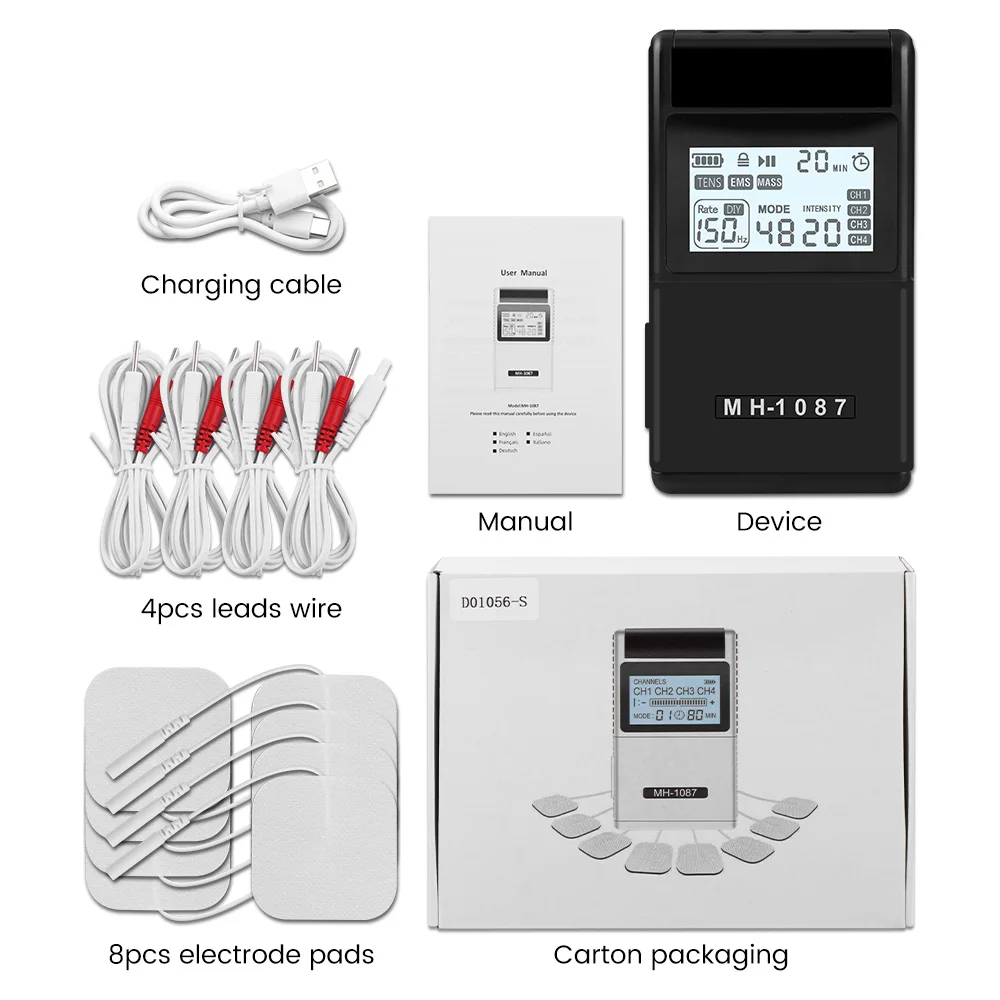
1 x 4-channel TENS/EMS unit, electrode pads (quantity varies by variant, typically 8-12), lead wires, charging cable, user manual. Storage box or carry case depending on the variant selected.



Reviews
There are no reviews yet.