
Ten Minutes of Not Holding Your Own Head Up
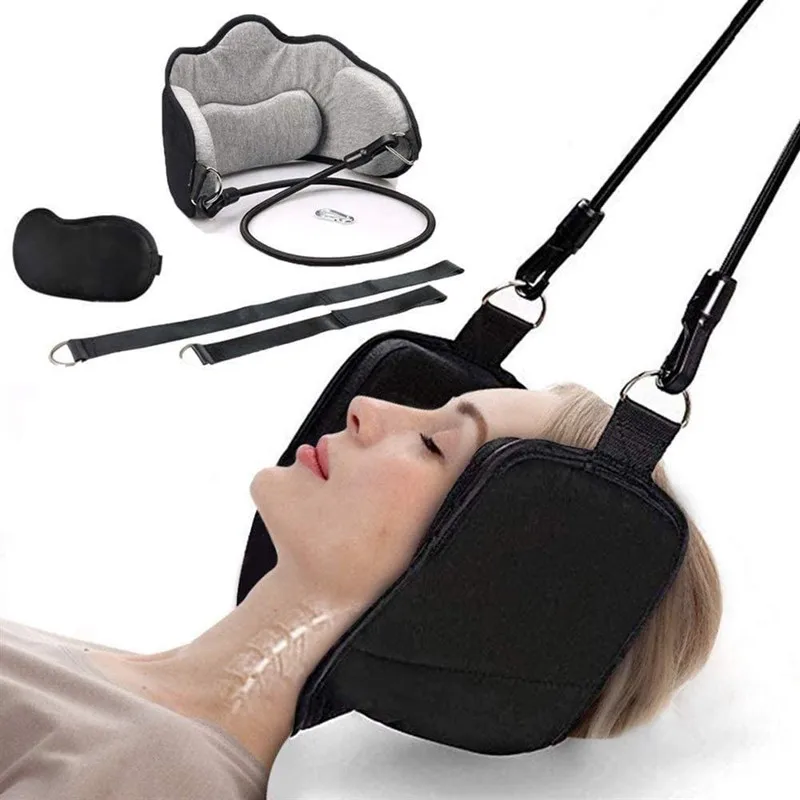
The cervical spine carries roughly four to five kilograms of head, and the deep neck extensors and upper trapezius hold it there continuously – more so if you spend the day looking down at a screen. A traction hammock cradles the occiput and applies a gentle, sustained distraction force along the axis of the neck. Two things happen: the postural muscles are relieved of their load and can genuinely relax, and the intervertebral spaces are slightly and temporarily widened, which can reduce mechanical pressure at the facet joints. The effect is real but short-lived. This is symptom relief, not structural correction.
Key Benefits
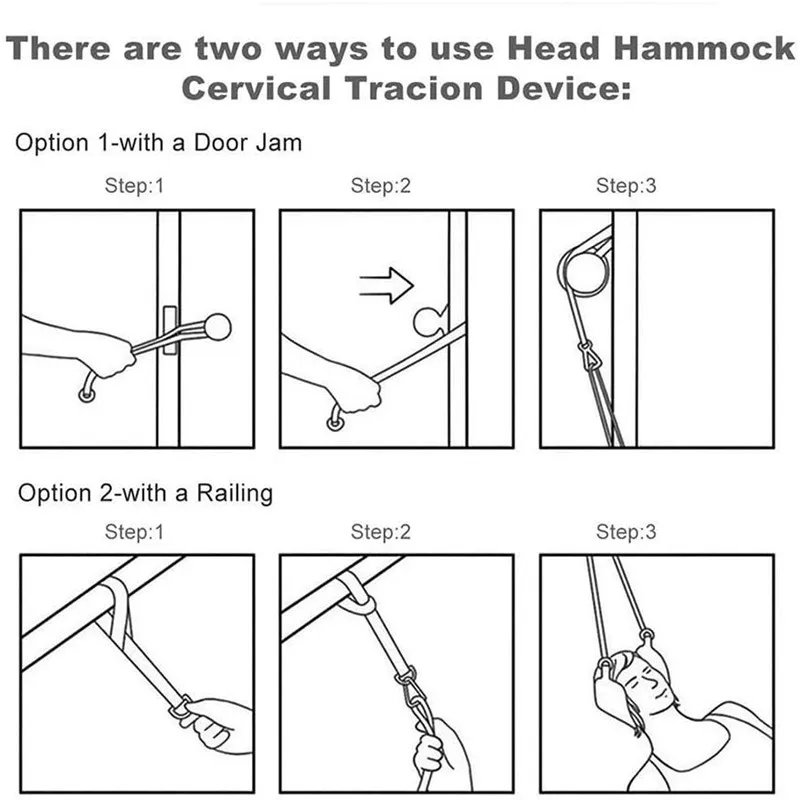
- Free-standing – no door, no hooks, no drilling – door-mounted traction slings fail the moment someone opens the door. The included stand means you can set it up in the middle of a room and lie down.
- Unloads the postural neck muscles completely – for ten minutes the upper traps and deep extensors have nothing to hold. For a desk worker, that is often the only rest they get all day.
- Gentle, self-limiting distraction – the force is your own head weight, not a winch. You cannot accidentally crank it to a dangerous load.
- Encourages the chin-tuck position – the cradle naturally supports the head in slight flexion rather than the forward-poking posture most people default to at a keyboard.
- It relieves symptoms – it does not repair discs – no hammock reverses a herniation, degenerative change or arthritis. If your neck pain is persistent, worsening, or comes with arm pain, weakness or numbness, see a clinician rather than self-treating.
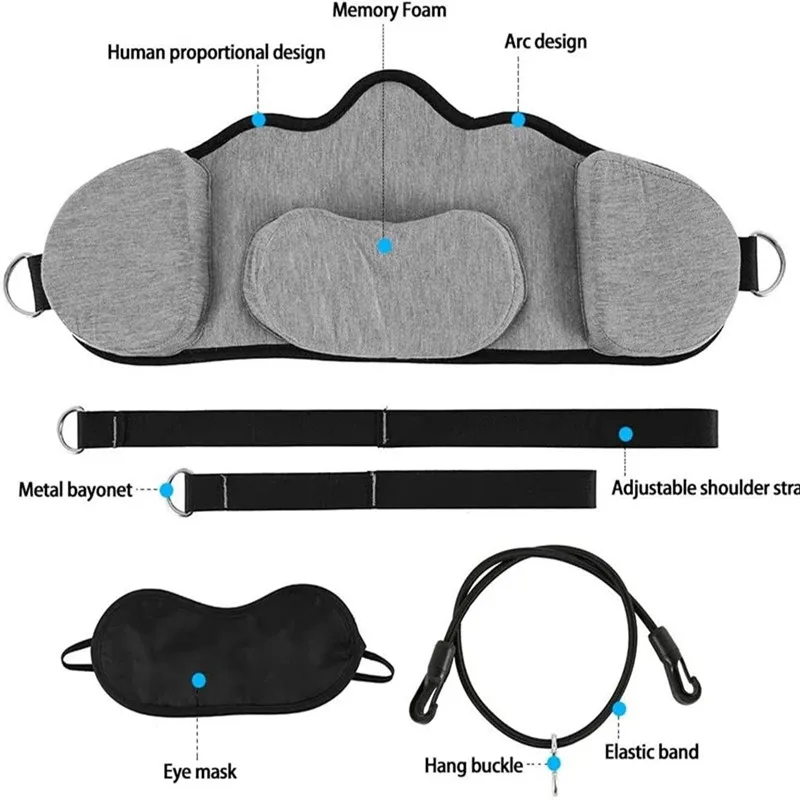
- Includes an eye mask – a small thing, but ten minutes of traction in the dark is markedly more restful than ten minutes staring at a ceiling light.
How to Use
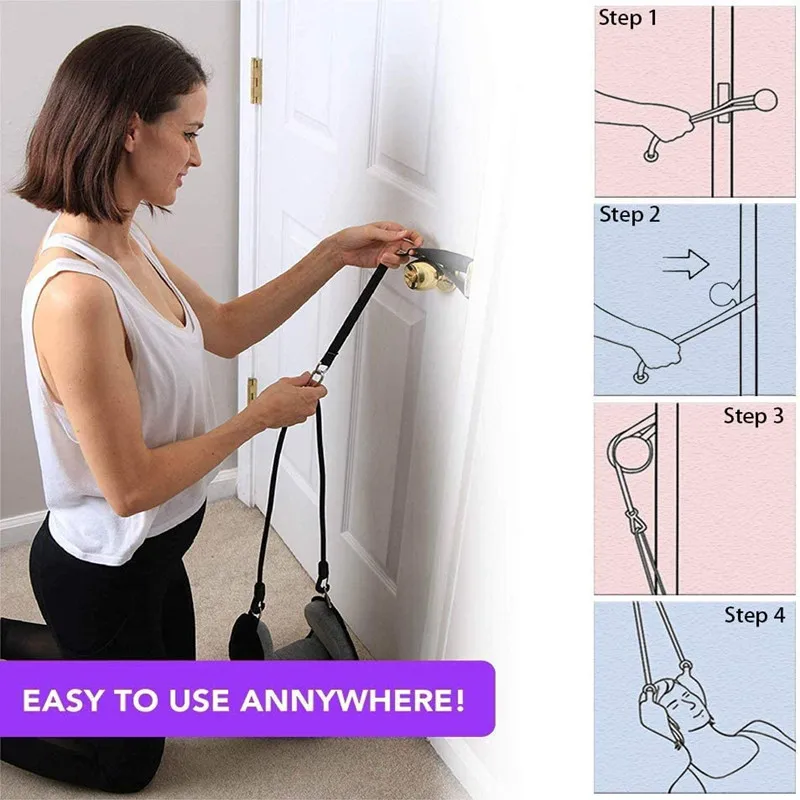
Set the stand on a firm, flat floor – not a soft rug that can tip it. Lie on your back and settle the back of your head into the cradle so the strap supports the base of the skull, not your neck. Let your shoulders drop and your arms rest at your sides, then simply breathe and let the weight of your head do the work. Start with five minutes on the first few sessions and build to a maximum of ten to fifteen; longer is not better and can leave the neck feeling sore and unstable. Get up slowly afterwards, as some people feel briefly lightheaded. Safety: stop immediately and do not continue if you feel dizziness, nausea, visual disturbance, or tingling, numbness or weakness in the arms or hands. Do not use this if you have cervical instability, recent neck surgery or fracture, osteoporosis, rheumatoid arthritis affecting the neck, a known vertebral artery problem, uncontrolled high blood pressure, glaucoma, or if you are pregnant, without clearance from your doctor. If you have been diagnosed with a disc problem, ask your physiotherapist before using traction at home.
Specifications
| Type | Cervical traction hammock with free-standing frame |
|---|---|
| Traction source | Head weight – no mechanical tensioner |
| Mounting | Free-standing frame – no door or ceiling fixing needed |
| Use position | Supine (lying on back) |
| Recommended session | 5 minutes to start, 10–15 minutes maximum |
| Setup | Folds down for storage |
| Included extra | Eye mask |
| Colour / frame finish | Variant dependent – see options |
Care & Maintenance
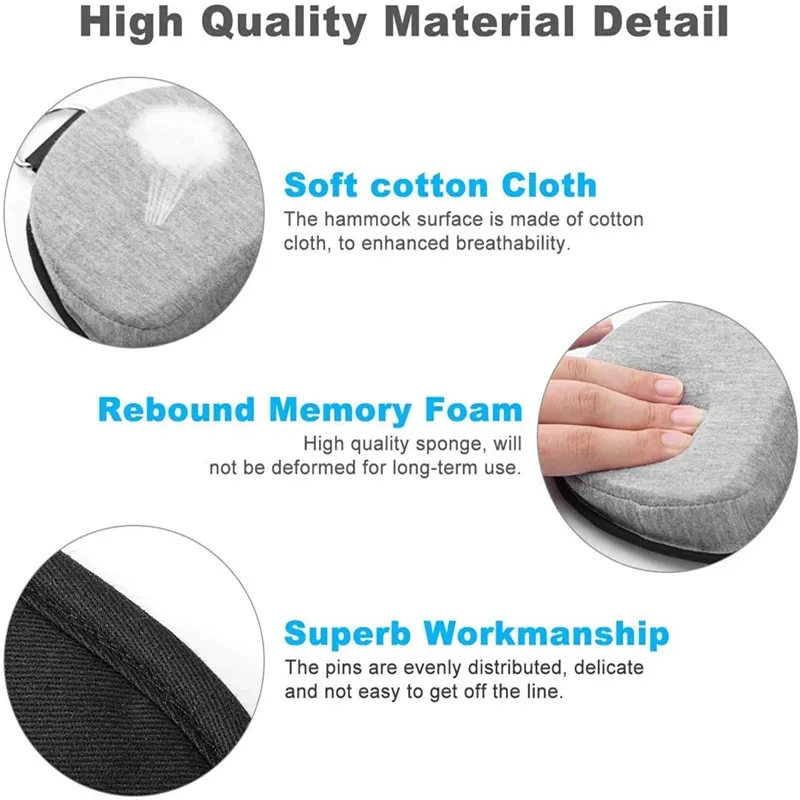
Hand-wash the fabric cradle in cool water with mild detergent and air-dry it flat – a tumble dryer will shrink and weaken the webbing. Before every use, run the straps through your fingers and check for fraying, stitching that has pulled, or any deformation of the frame; a sling that fails while your head is in it is not a small problem. Keep the frame dry to prevent corrosion at the joints, and store it folded rather than under load.
What’s in the Box
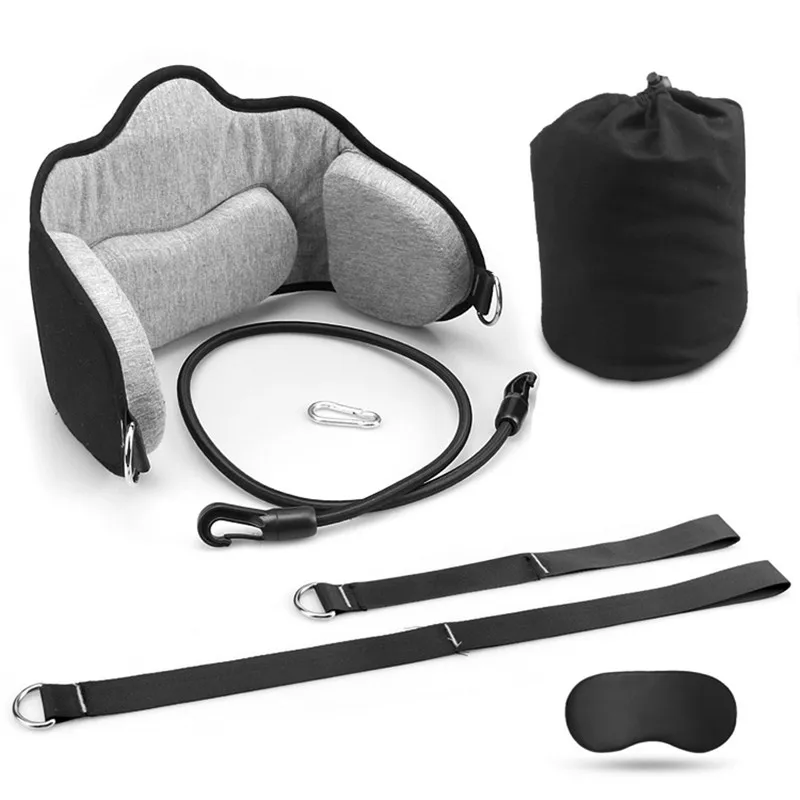
1 x neck traction hammock cradle, 1 x free-standing frame, 1 x eye mask. Basic assembly required.

Reviews
There are no reviews yet.