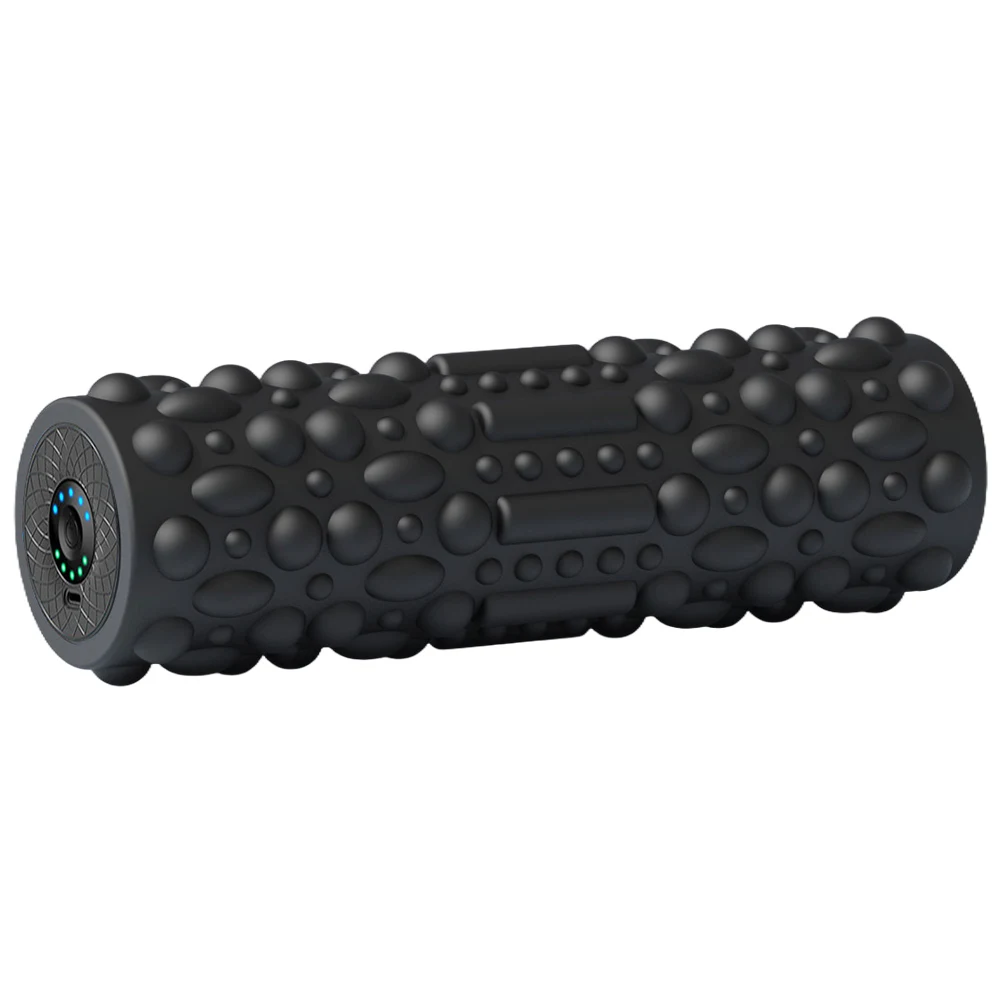
Why Adding Vibration Makes Rolling Hurt Less and Work Better
Foam rolling does not break up fascia. Fascia is tough connective tissue that requires forces far beyond anything a person can generate with bodyweight to permanently deform. What rolling actually does is neurological. Sustained pressure stimulates mechanoreceptors and Golgi tendon organs, which reduces motor-neuron excitability and raises your tolerance to stretch — so range of motion improves within minutes without any loss of strength. Vibration adds a second, competing stream of sensory input along the same nerve pathways, which dampens the pain signal. The practical result: you can tolerate deeper pressure for longer, which is precisely the variable that determines whether rolling does anything at all.
Key Benefits
- Vibration raises your pain threshold. Studies comparing vibrating and static rollers consistently find greater range-of-motion gains with vibration, largely because people can tolerate more pressure for longer.
- Range of motion without a strength cost. Unlike long static stretching before a session, rolling improves mobility without the acute drop in force output — making it a legitimate pre-lift warm-up tool.
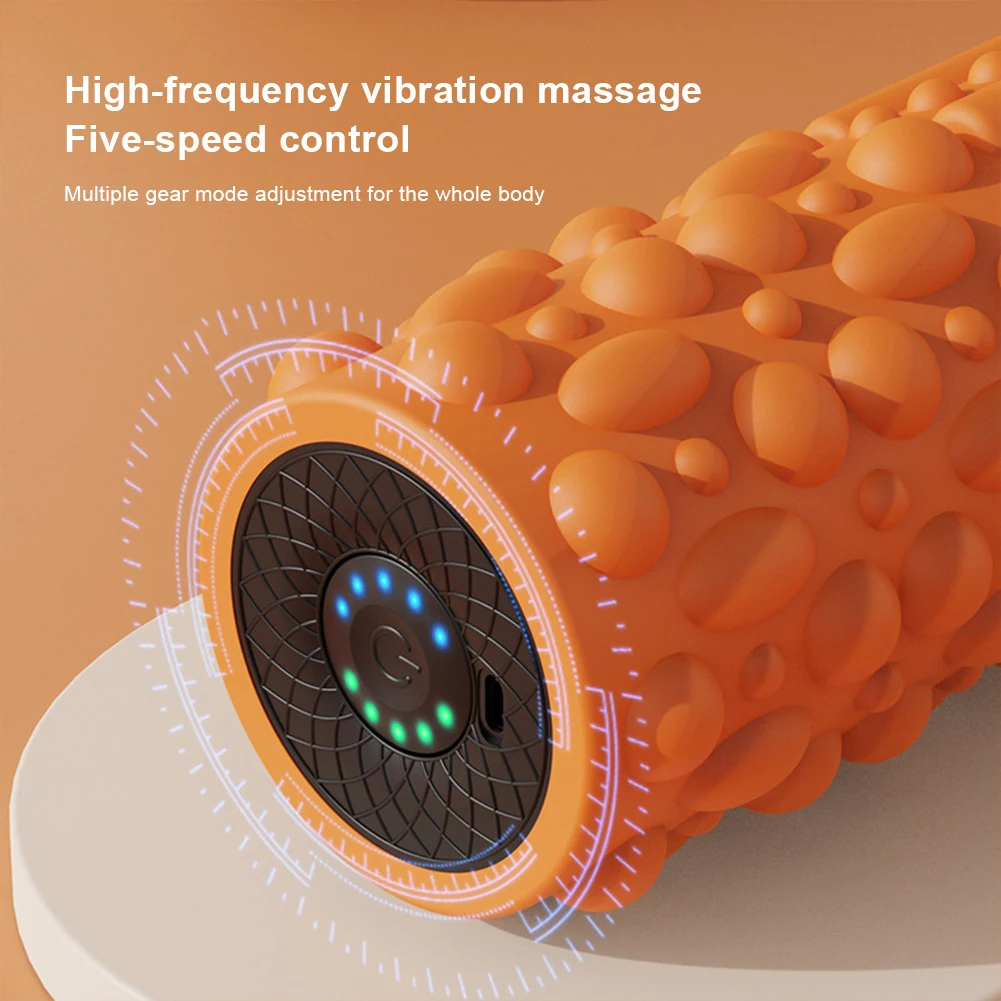
- Five speeds for different jobs. Low settings suit a light pre-training flush and sensitive areas; higher settings suit dense, well-covered tissue like quads and glutes.
- Blunts delayed-onset soreness. Rolling after hard training reliably reduces how sore people report feeling 24–48 hours later, and reduces the performance decrement that comes with it.
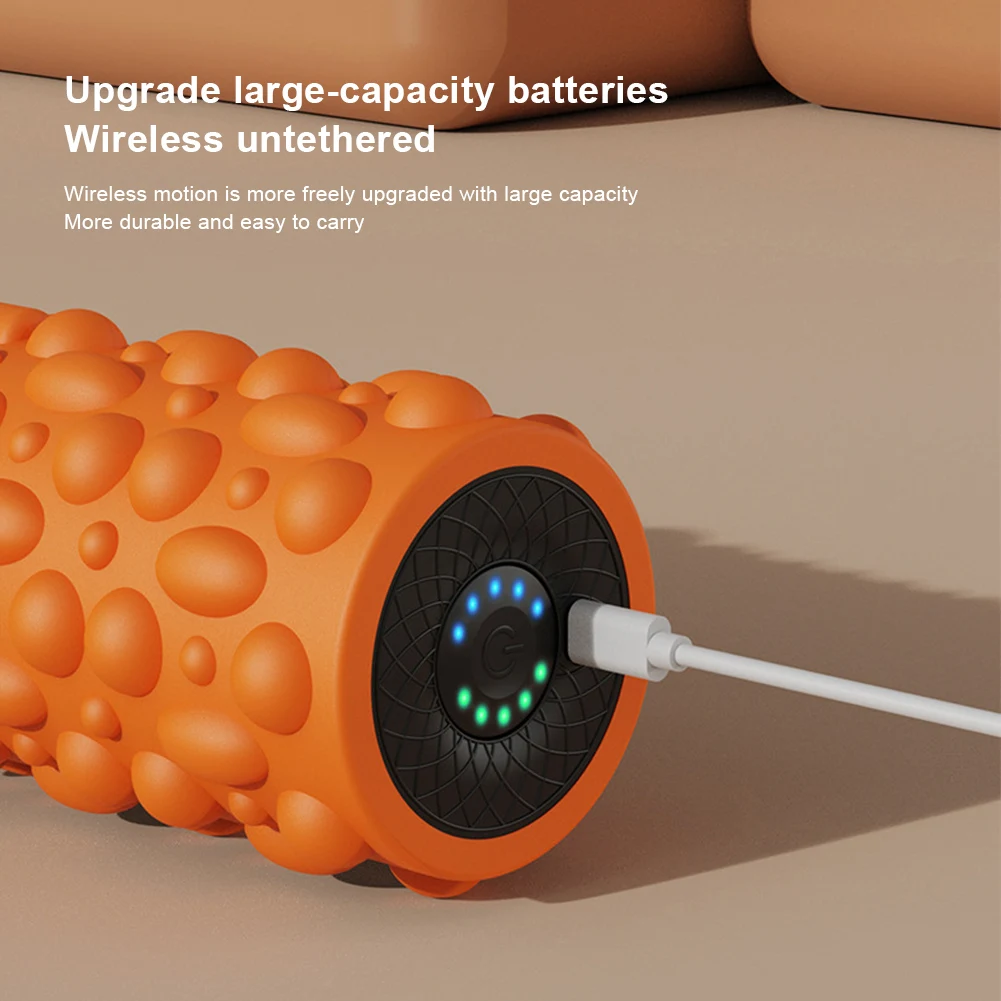
- Cordless and rechargeable. No cable to work around when you are lying on the floor with a leg over the roller.
- Honest about what it is not. It will not lengthen a muscle, dissolve scar tissue or fix a structural problem. It buys you comfortable range — what you do with that range is what changes you.
How to Use
Work one muscle group at a time. Roll slowly, around 2–3 cm per second, until you find a spot that is tender but bearable — roughly a 6 or 7 out of 10 — then stop moving and hold there for 20–45 seconds, breathing out slowly. Tension follows the breath; if you are bracing and holding your breath, you are fighting the tool. Thirty to sixty seconds per area is enough; grinding away for five minutes adds nothing. Never roll directly over the lumbar spine — the erector muscles there have no bony protection and the vertebrae do not appreciate the pressure. Instead, bridge the roller under the upper back with your ribcage supported, or use it on glutes and lats to relieve the lower back indirectly. Avoid rolling over joints, bony prominences, varicose veins, bruises or areas of numbness. If you have deep vein thrombosis, an active blood clotting disorder, osteoporosis or are pregnant, check with a clinician before using a vibrating device.
Specifications
| Modes | 5 vibration speeds |
|---|---|
| Power | Rechargeable internal battery, cordless in use |
| Charging | USB charging cable included |
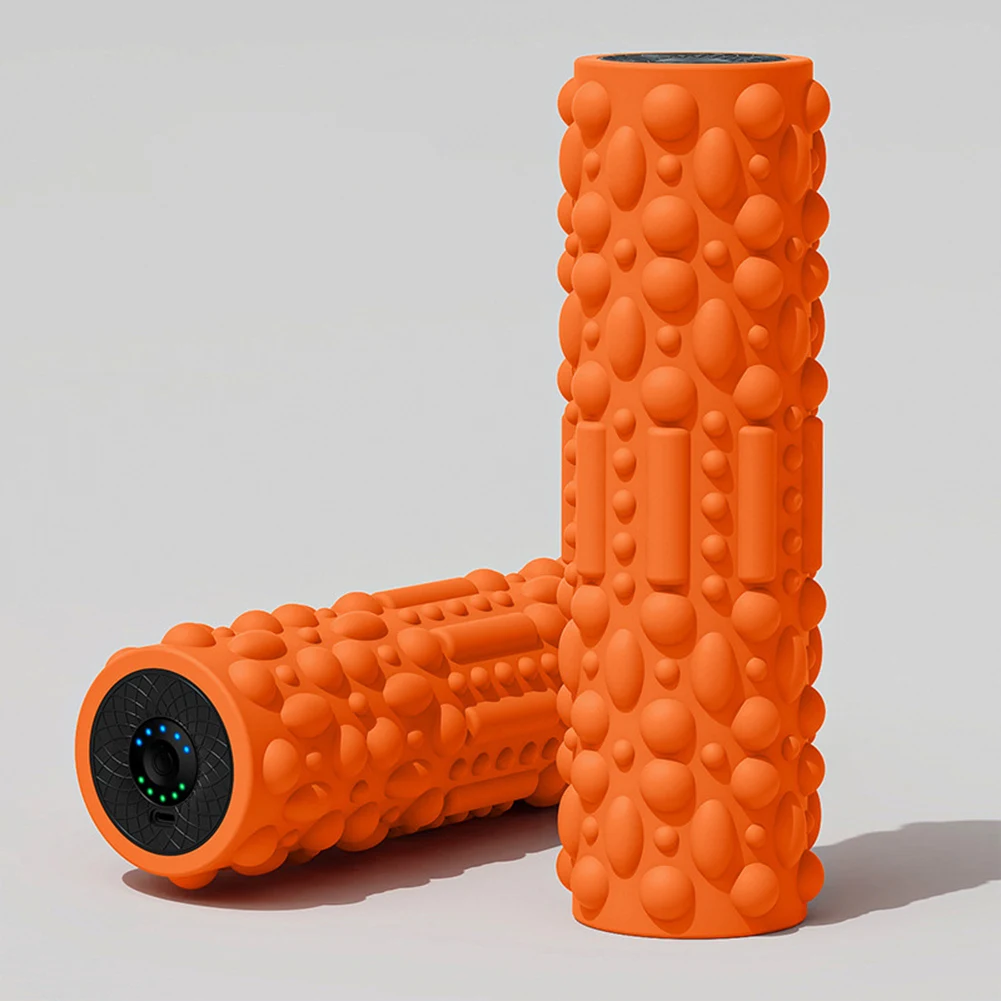
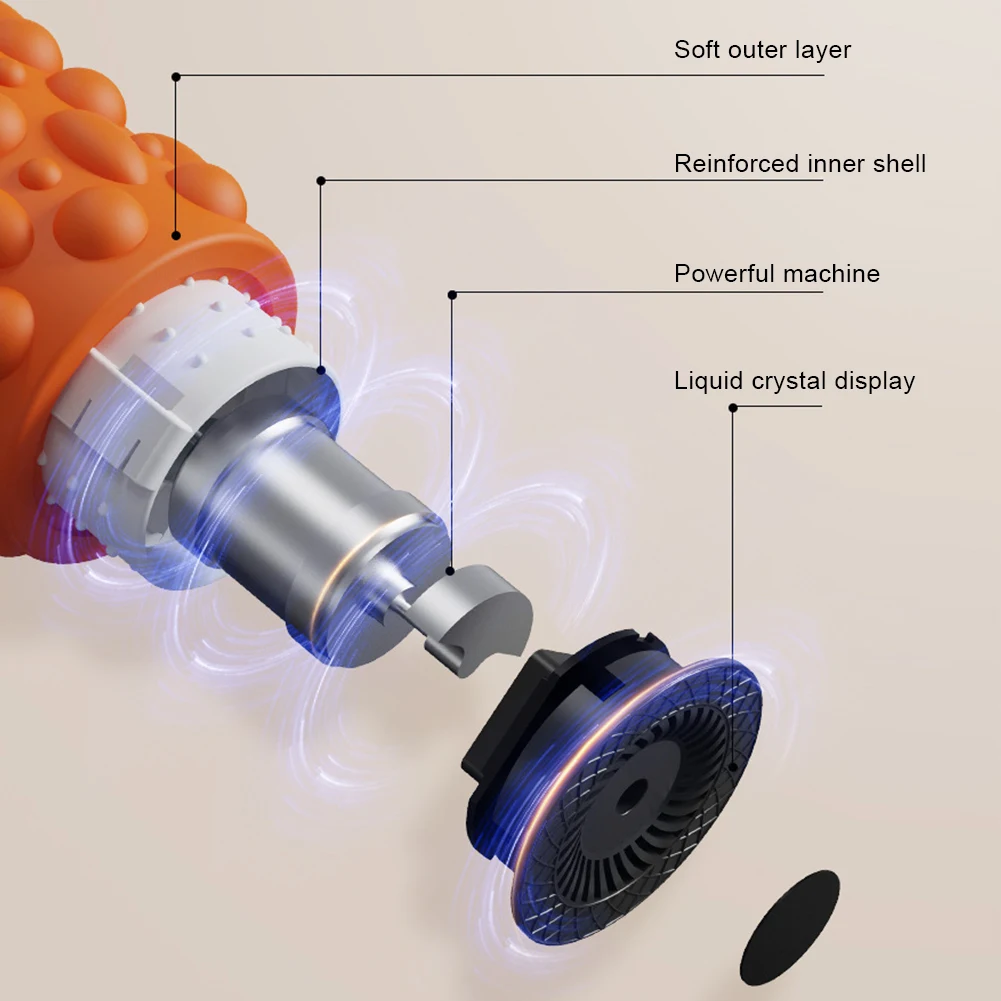
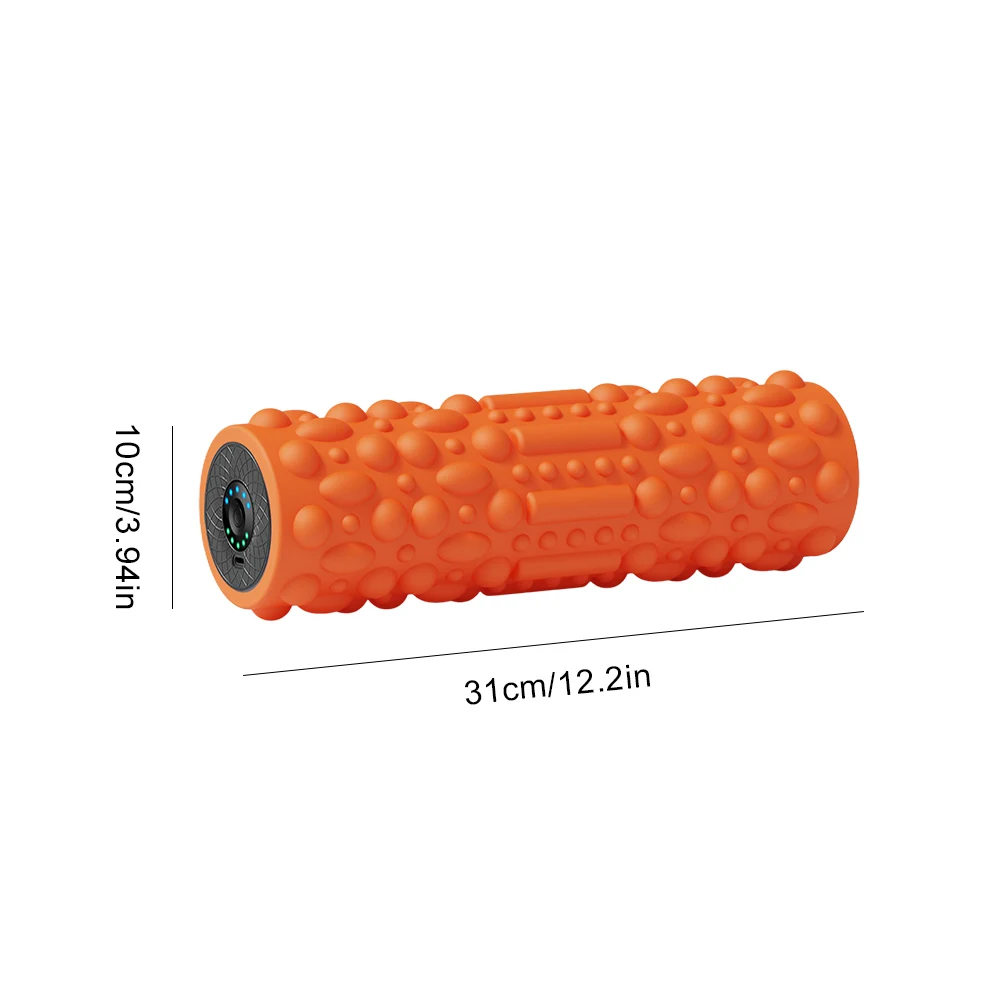
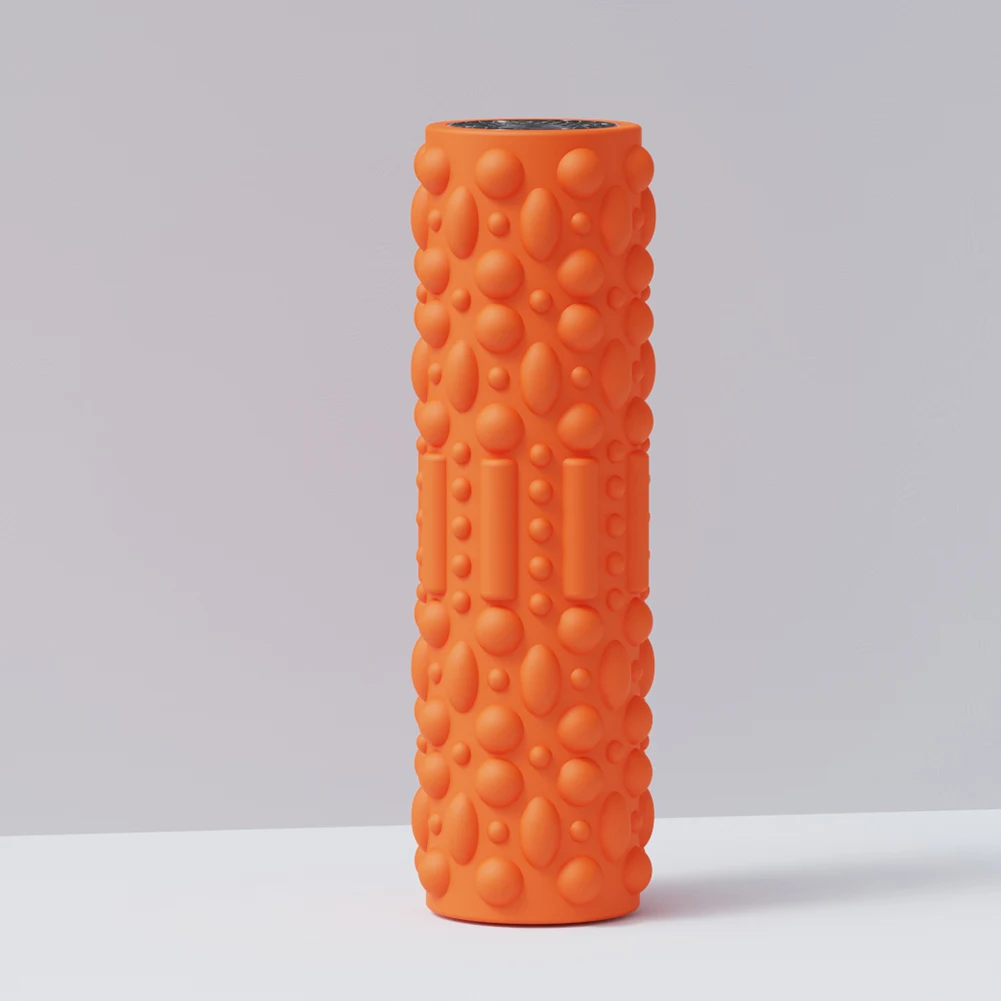
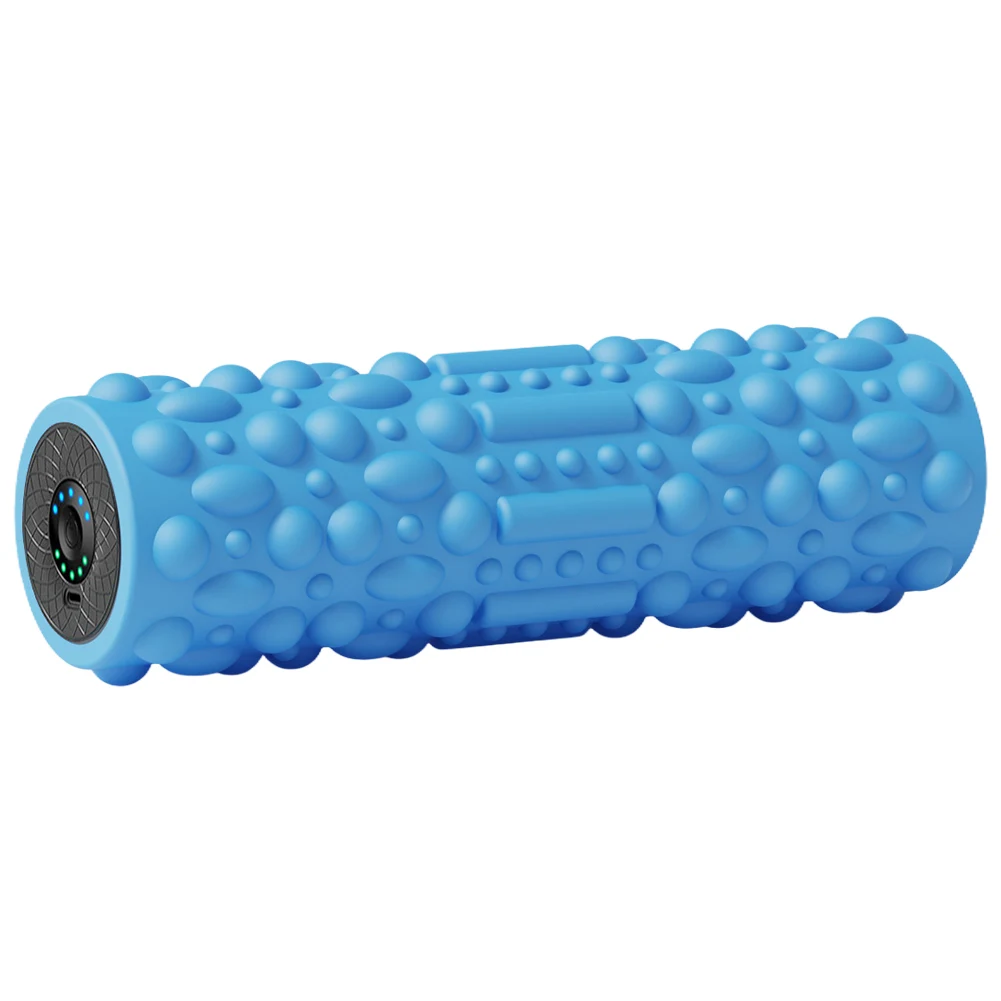
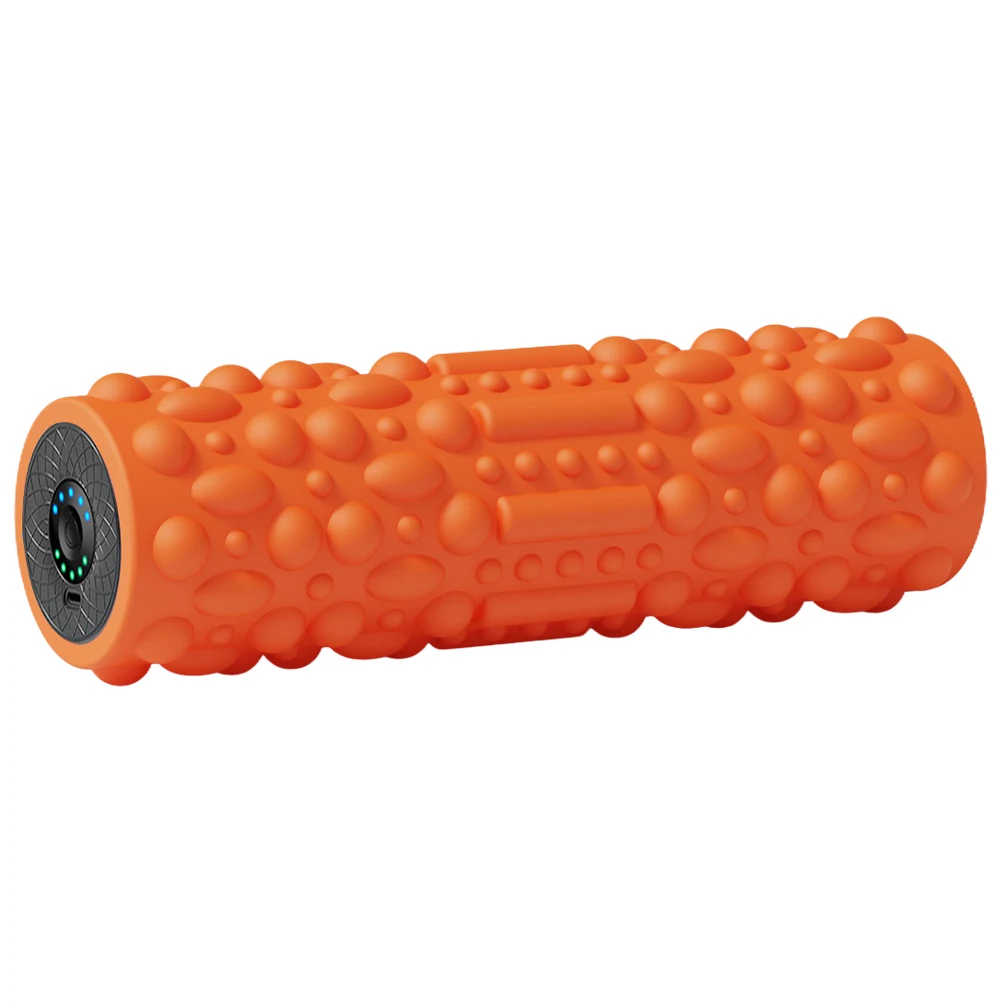
| Surface | Textured high-density roller for pressure-point contact |
| Core | Rigid inner cylinder housing motor and battery |
| Best for | Quads, hamstrings, glutes, calves, lats, upper back |
| Not for | Direct lumbar spine, joints or bony prominences |
| Dimensions and weight | Variant dependent — see selected option |
Care & Maintenance
Wipe the surface after each use with a damp cloth or mild disinfectant wipe; sweat left on the foam degrades it and encourages bacterial growth. Do not submerge the roller or run it under a tap — the motor and battery are inside the core. Charge fully before first use and recharge every couple of months even if unused, since letting a lithium cell sit flat shortens its life. Store upright or flat, away from direct sunlight and heat, and avoid leaving heavy objects resting on it, which can deform the foam permanently.
What's in the Box
1 electric vibrating foam roller, 1 USB charging cable and a user manual. Colour and exact length vary by selected option.
Reviews
There are no reviews yet.