What 660nm and 850nm Actually Do Inside a Cell
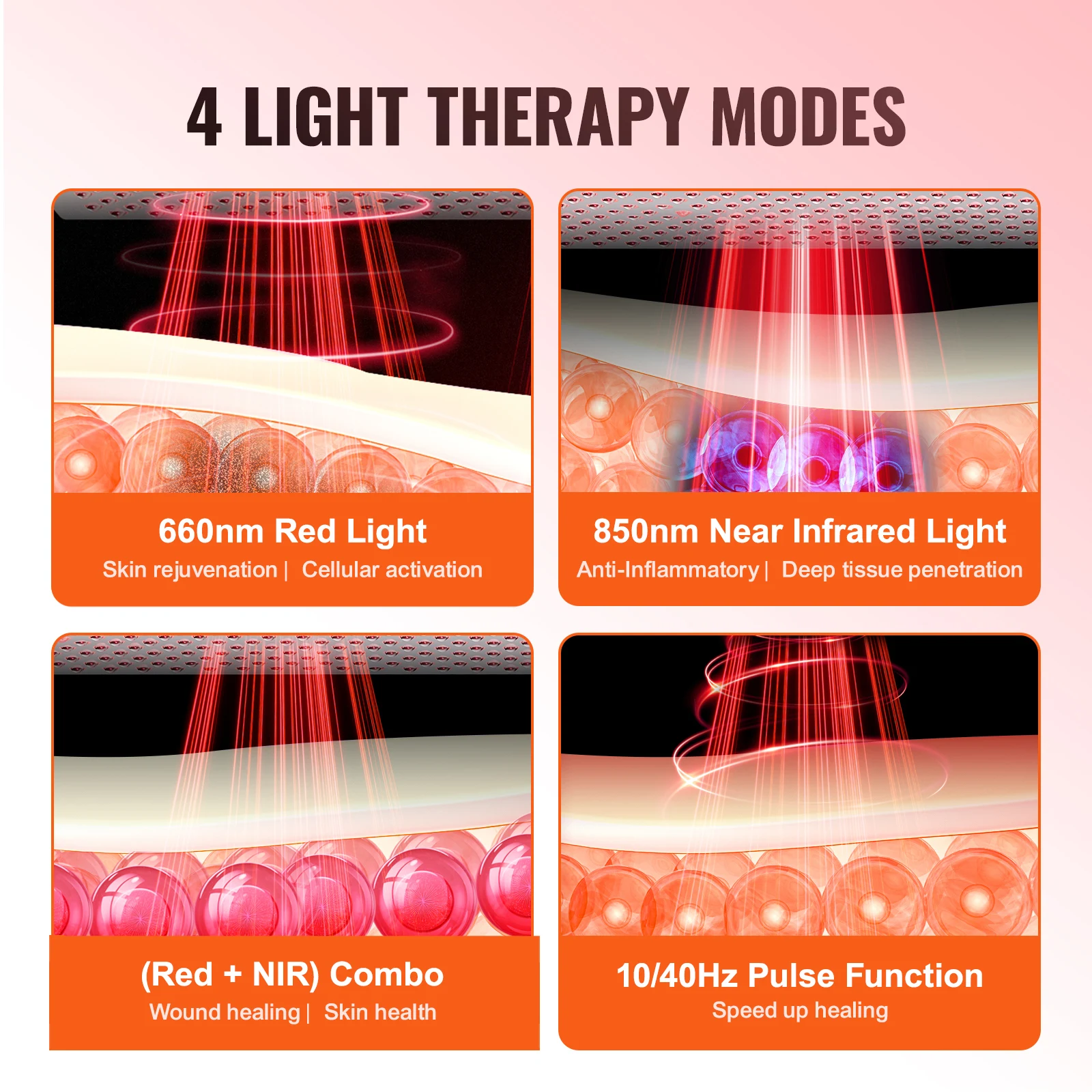
Photobiomodulation has a specific, well-described mechanism. Red and near-infrared photons are absorbed by cytochrome c oxidase, the terminal enzyme of the mitochondrial electron transport chain. Light appears to displace inhibitory nitric oxide bound to that enzyme, briefly increasing electron flow and ATP output, and triggering a small burst of reactive oxygen species that acts as a cell-signalling event rather than damage. The two wavelengths do different work: 660nm is absorbed superficially and reaches skin and shallow tissue, while 850nm penetrates further and is the wavelength that matters for muscle and joint. That is the mechanism. The clinical evidence is genuinely promising for muscle recovery, delayed-onset soreness and localised pain, weaker and more mixed elsewhere, and this panel is not a medical device and treats no disease.
Key Benefits
- Two wavelengths, two depths. 660nm is absorbed at the surface for skin and superficial tissue; 850nm near-infrared passes deeper, which is what you want for muscle bellies and joints.
- Best-supported use is recovery. The strongest body of evidence for red and near-infrared light is pre- and post-exercise: reduced delayed-onset soreness, lower markers of muscle damage and faster return of force output.
- Skin evidence is real but modest. Controlled trials show improvements in skin texture and collagen density with consistent red-light exposure. It is a slow, cumulative effect — not a filter.
- Pulse mode included. Pulsing is offered on many panels and there is some evidence it changes tissue response, though the literature is far from settled. Continuous wave is the mode most studies used.
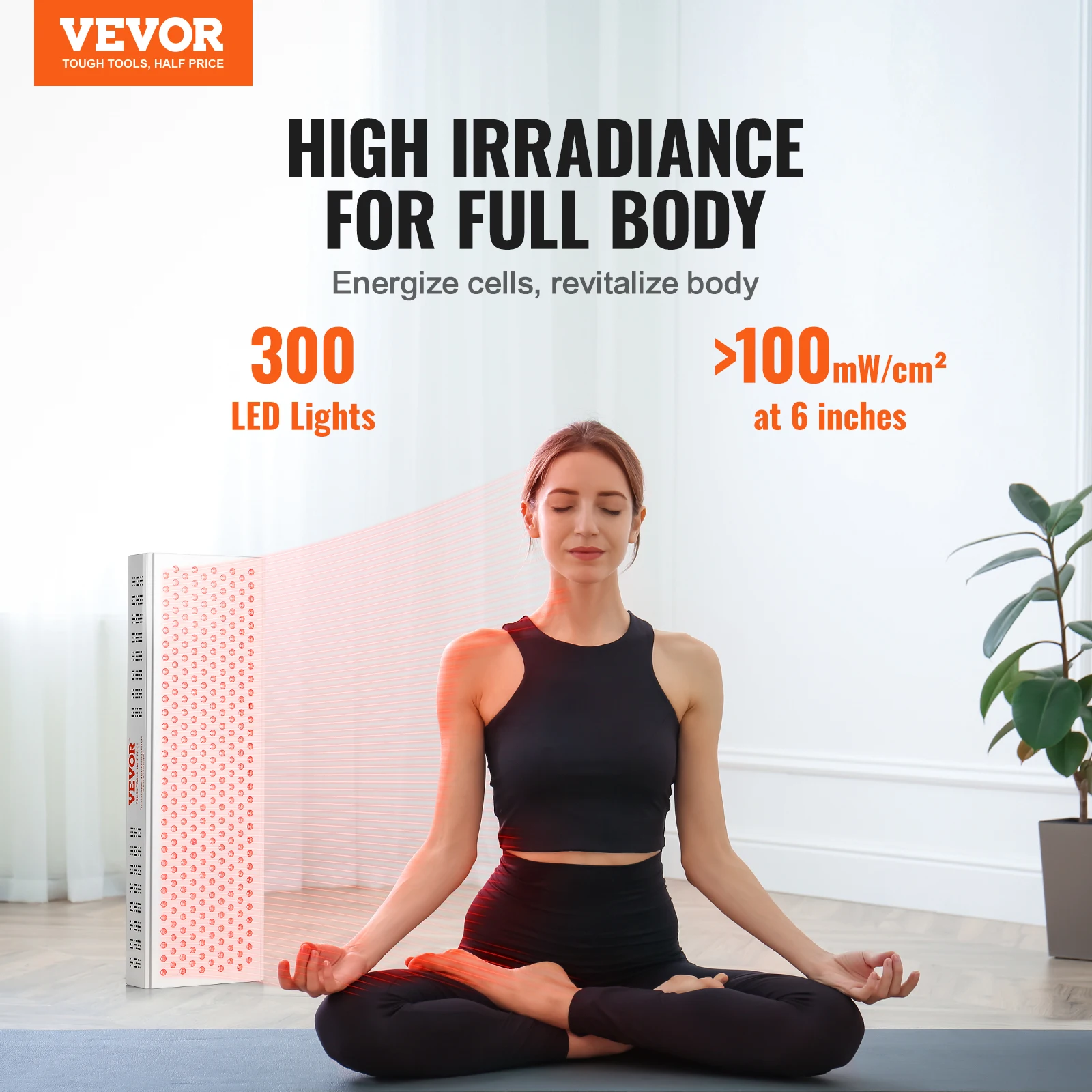
- Full-body coverage saves time. A panel treats a whole region at once rather than the postage-stamp area a handheld wand covers, which is the difference between a habit you keep and one you abandon.
- What it will not do. It does not burn fat, cure injuries, replace medical treatment or work faster if you use it longer. Photobiomodulation has a biphasic dose response — too much light is less effective than the right amount.
How to Use
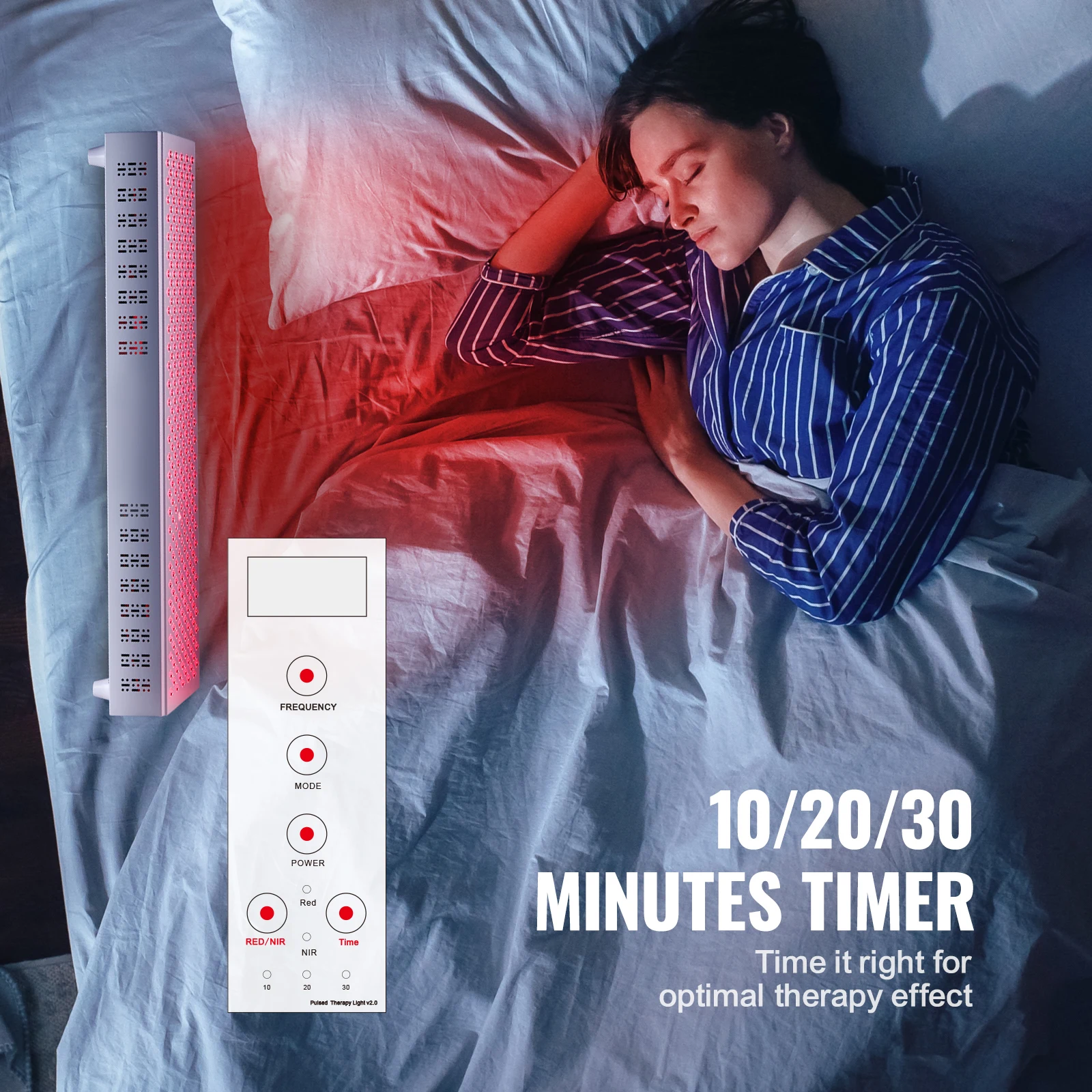
Position the panel roughly 15–30 cm from bare skin; light must land on skin, not clothing. Start with 10 minutes per area and work up to no more than 15–20 minutes, three to five times a week. This is not a case where more is better — the biphasic dose response means overexposure blunts the effect, so resist the urge to double up. For recovery, sessions after training (or shortly before) are the protocols most trials used. Consistency over weeks is what produces results; a single session produces nothing you will notice. Wear the supplied eye protection: these are high-irradiance LEDs and staring into them is genuinely uncomfortable and unwise, particularly with near-infrared, which is invisible and so does not trigger a blink reflex. Do not use over active cancers, over the thyroid, on photosensitive skin conditions or while taking photosensitising medication such as certain antibiotics, retinoids or St John’s Wort without medical advice. If pregnant, avoid direct abdominal exposure.
Specifications
| Wavelengths | 660nm red and 850nm near-infrared |
|---|---|
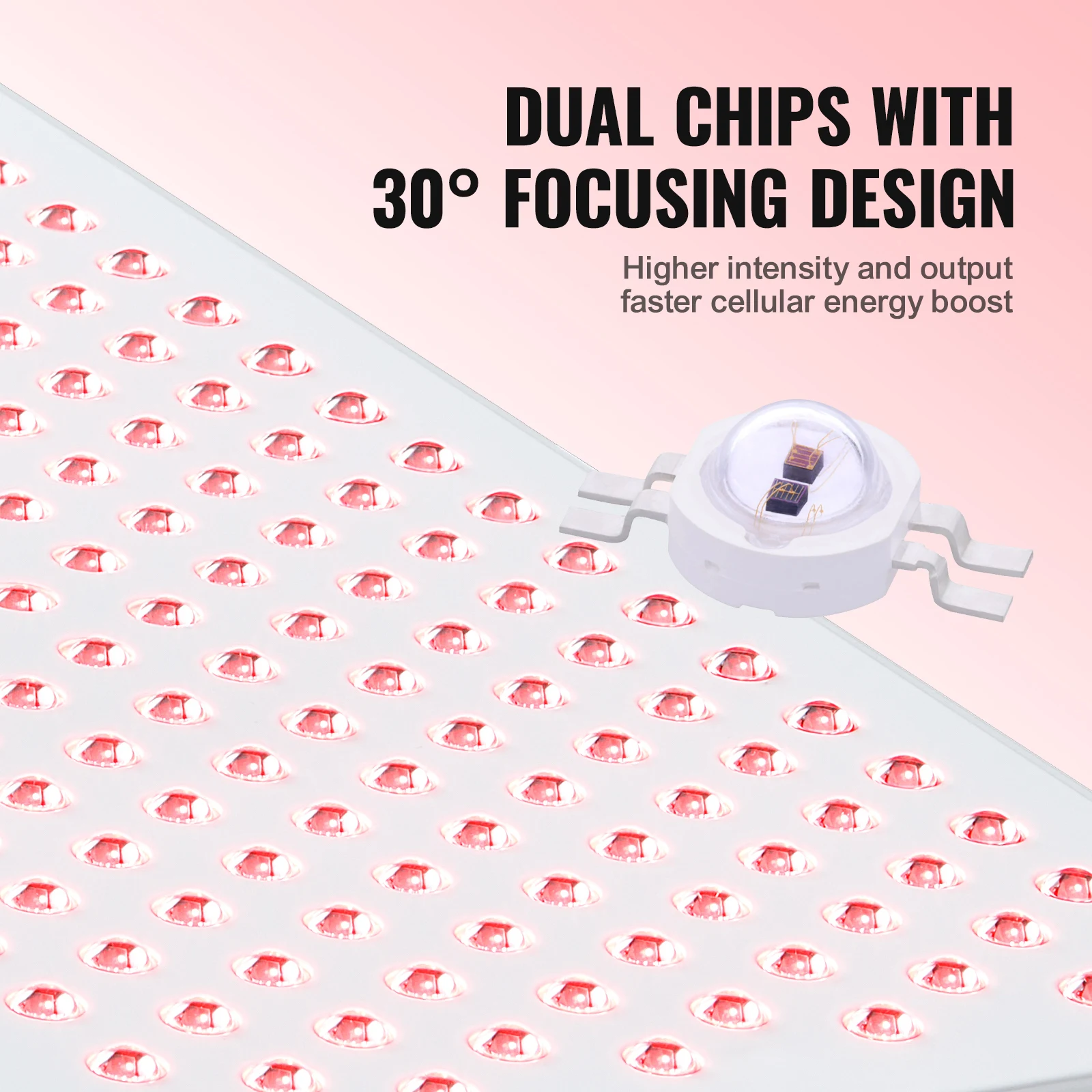
| LED type | Dual-chip LEDs |
| Modes | Continuous and pulsed output |
| Coverage | Full-body panel format |
| Recommended distance | Approx. 15–30 cm from bare skin |
| Session length | 10–20 minutes per area |
| Frequency | 3–5 sessions per week |
| Panel size, LED count and power | Variant dependent — see selected option |
Care & Maintenance
Wipe the LED face with a dry or barely damp microfibre cloth only when the unit is off and cool — never spray liquid onto the panel. Keep the rear vents and any cooling fans unobstructed; overheating is the main cause of premature LED failure. Do not use the panel in a bathroom or anywhere it may be splashed. Check the mounting hardware or stand periodically if it is hung, and inspect the power cable for damage before each use.
What's in the Box
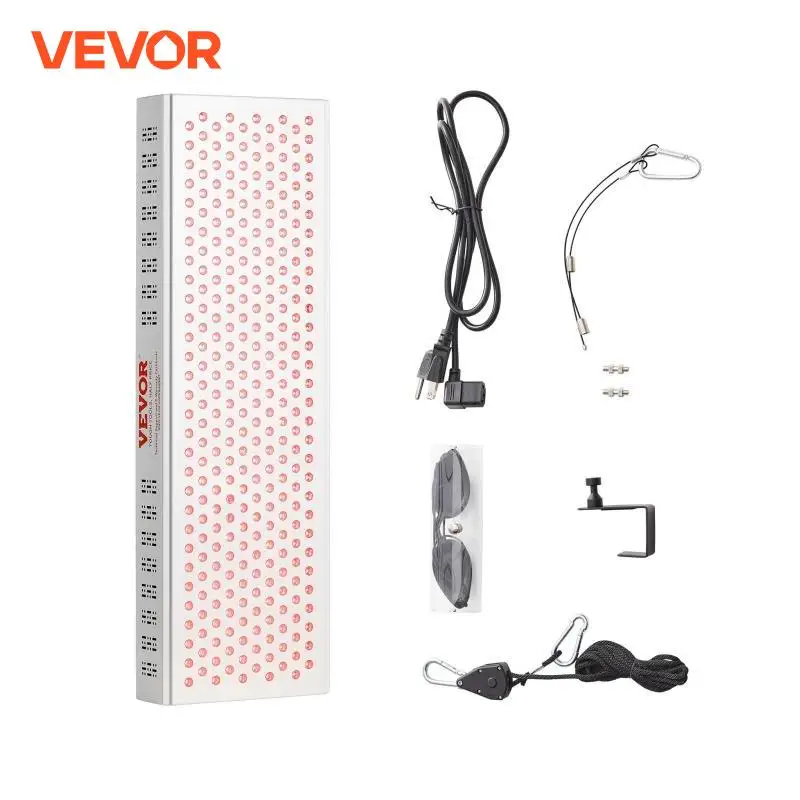
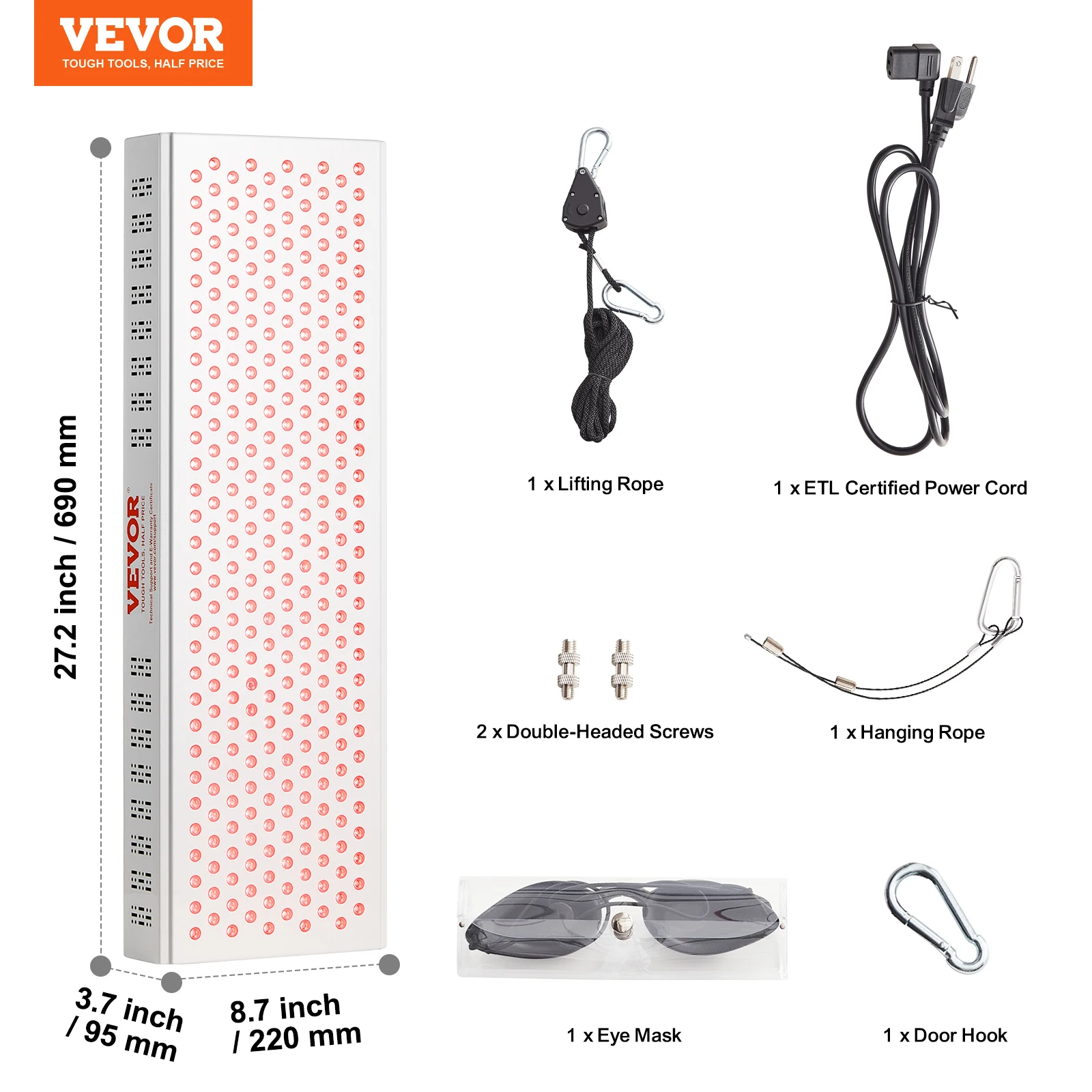
1 red light therapy panel, power cable, mounting or hanging hardware, protective goggles and a user manual. Stand, door hooks and remote availability are variant dependent.
Reviews
There are no reviews yet.