Why a Roller Stick Beats a Foam Roller on Your Calves
Rolling does not break up scar tissue or flush lactic acid – lactate clears from the blood within an hour of exercise on its own. What the research does support is real and useful: mechanical pressure temporarily raises tissue tolerance to stretch, increases short-term range of motion without a strength cost, and reliably reduces the perception of delayed-onset muscle soreness. Most of that effect appears to be neural, mediated through pressure-sensitive receptors and descending pain modulation. A stick gives you fine hand control over that pressure, which is exactly what a bony area like the shin or calf needs.
Key Benefits
- You control the pressure, not your bodyweight – on a foam roller a tight calf gets whatever your leg weighs. With a stick you dial it up or down mid-stroke, which means you actually finish the session.
- Genuinely reduces perceived soreness – the most consistent finding in the rolling literature is a drop in DOMS ratings in the 24–72 hours after hard training. It feels better, and that is not nothing.
- Short-term range of motion, without losing power – unlike long static stretching, rolling improves ROM without the temporary strength decrement, so it is safe to use in a warm-up.
- Works on the areas foam rollers can’t reach well – shins, the medial calf, forearms and the hamstring insertion are all awkward on a floor roller and straightforward with a stick.
- Usable anywhere, including seated – no floor space, no getting down and up. It travels in a kit bag, which is why it gets used at races and tournaments.
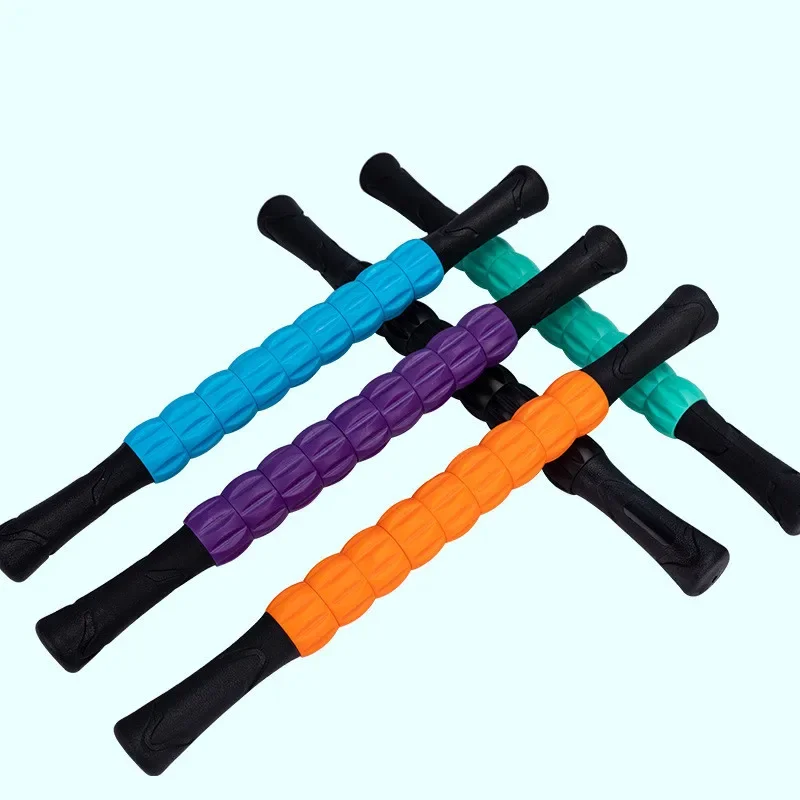
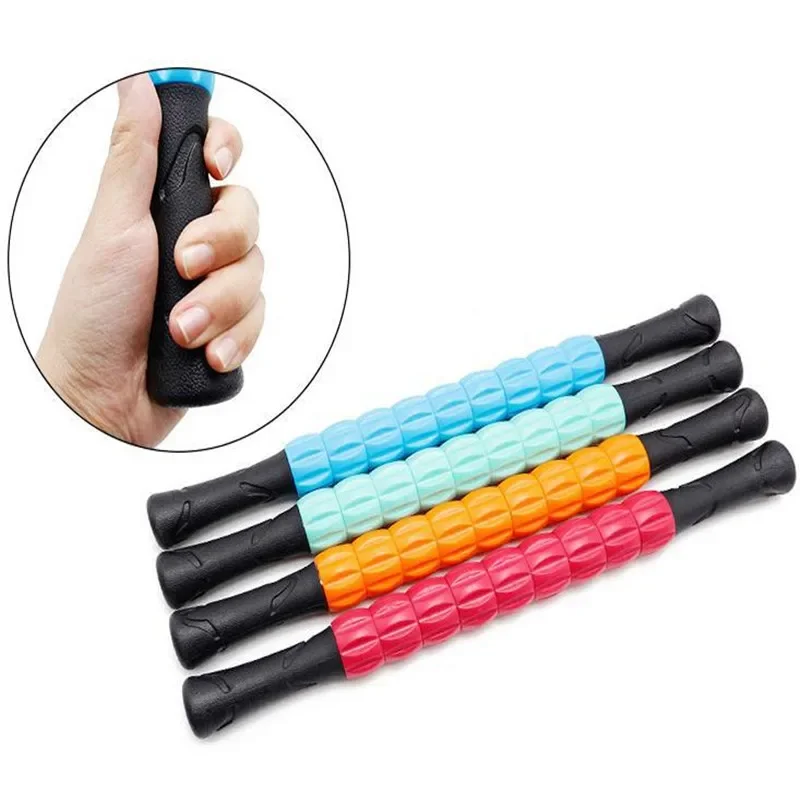
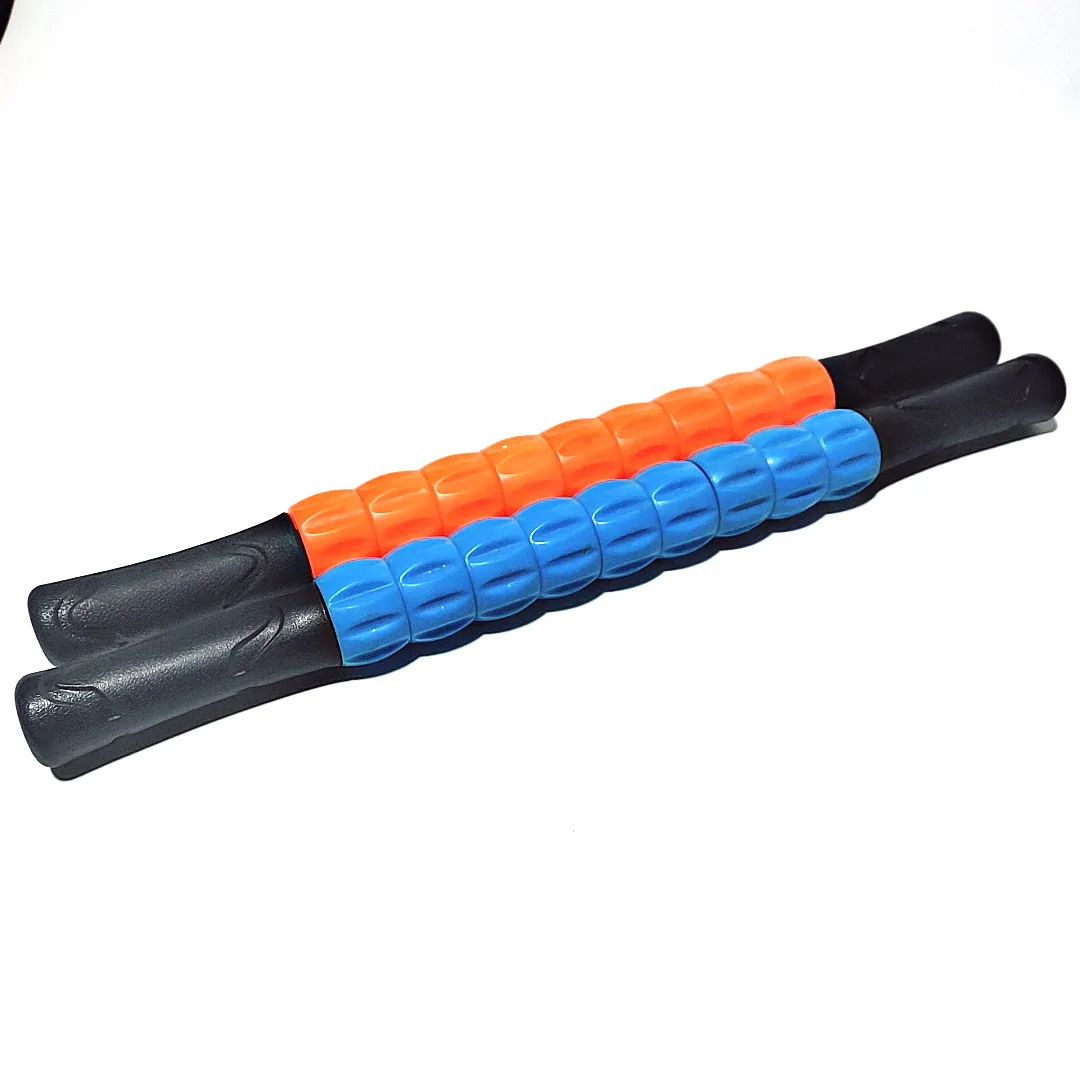
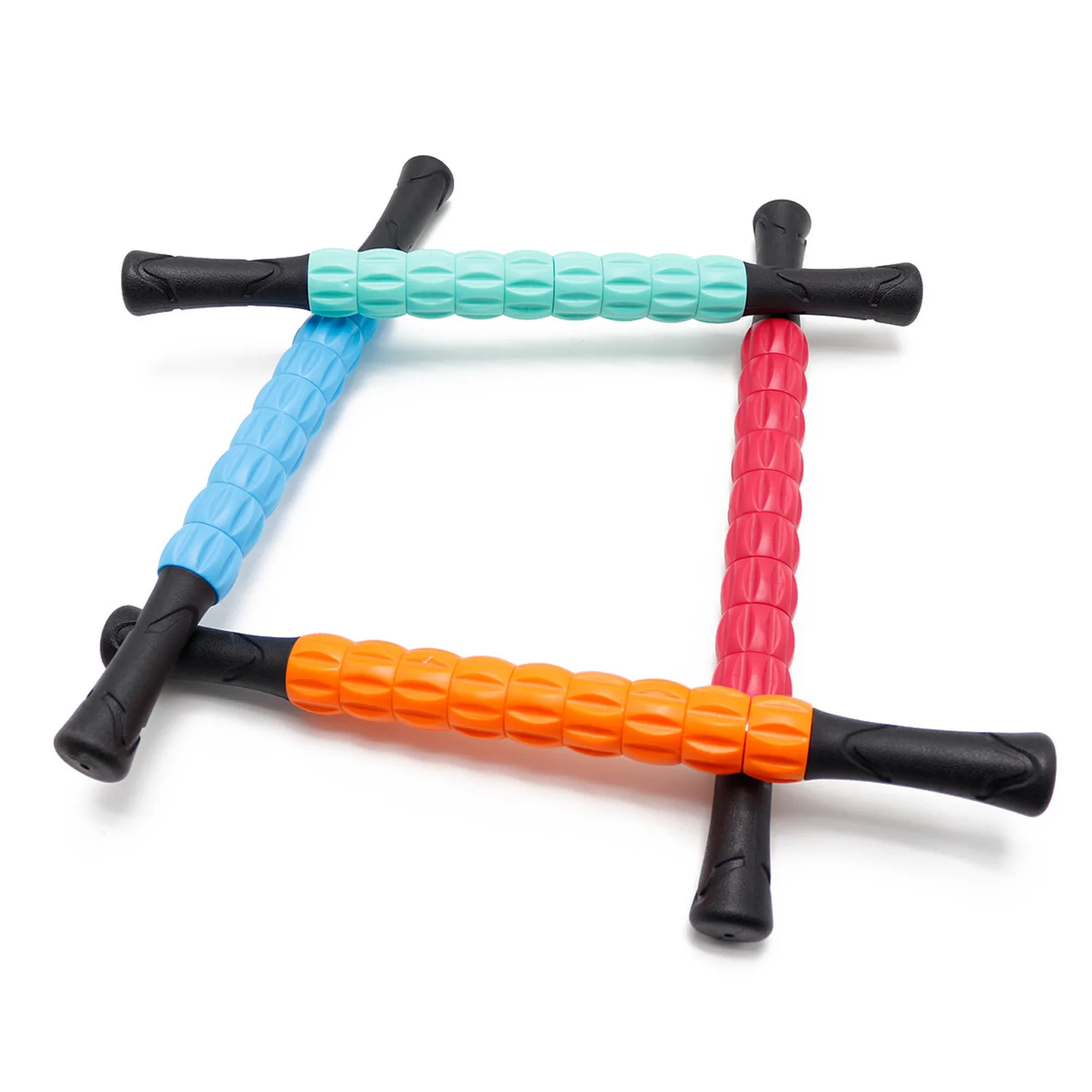
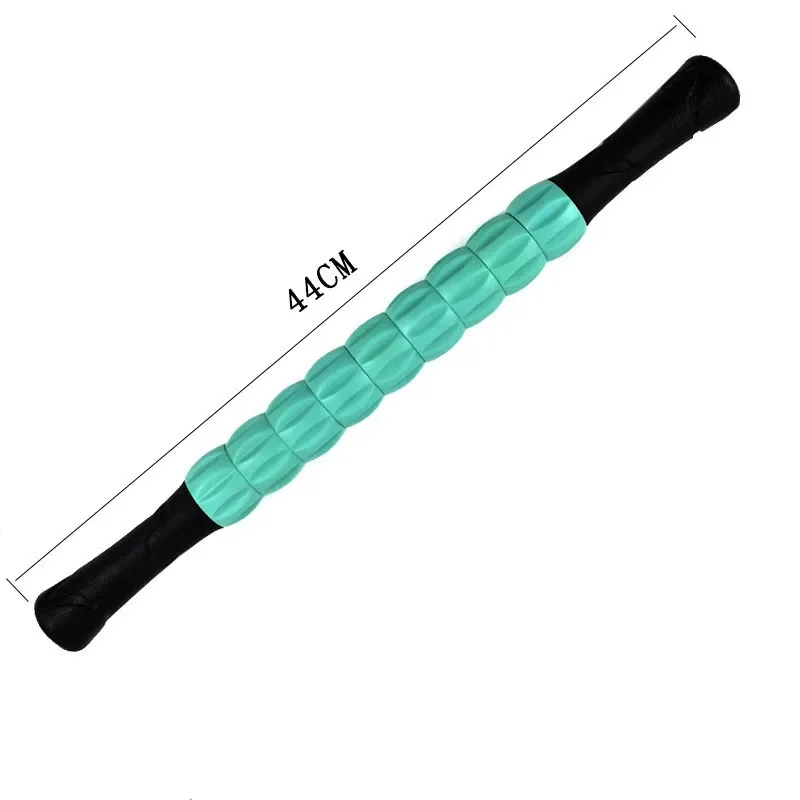
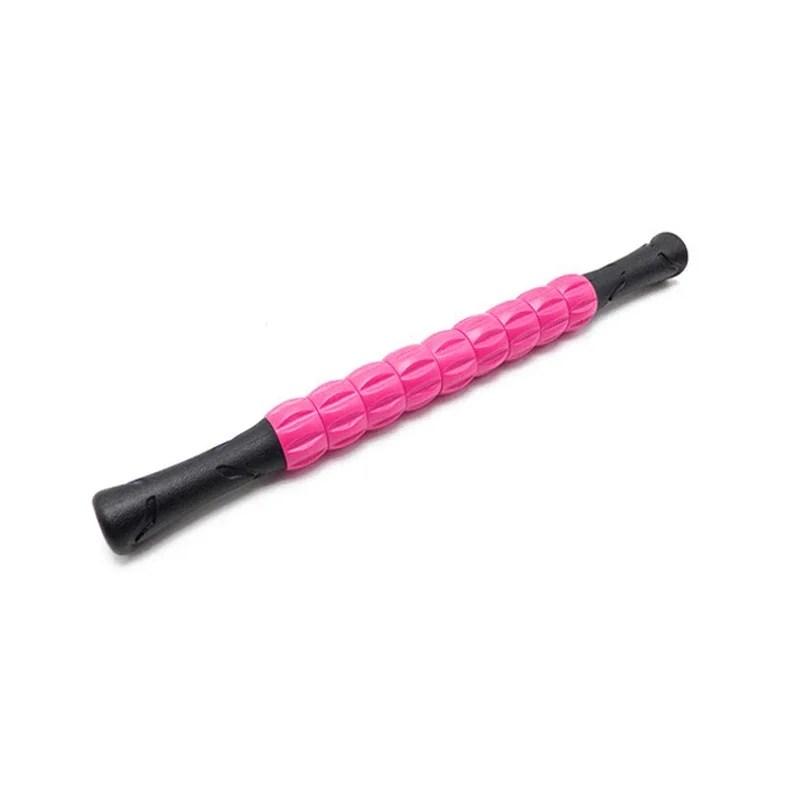
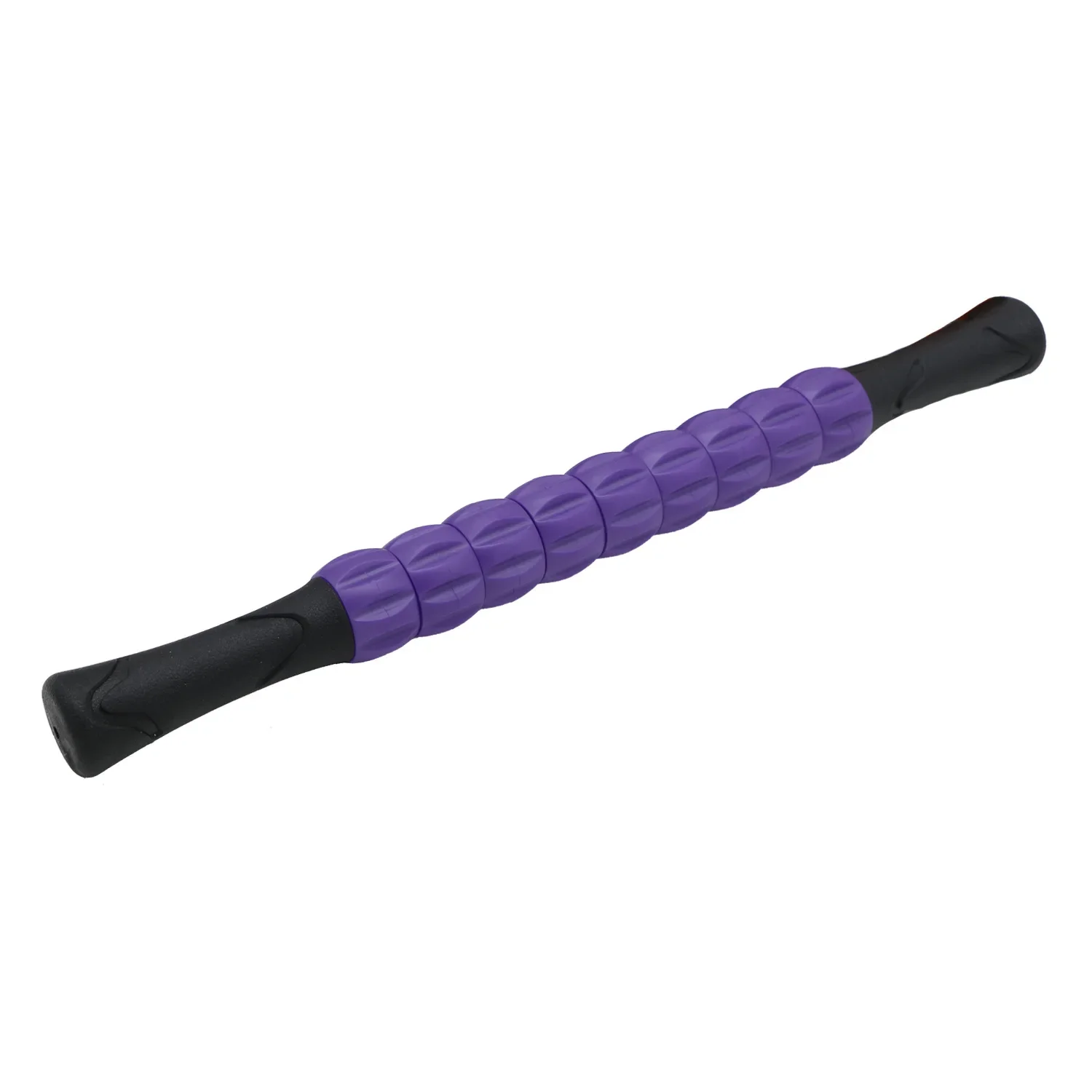
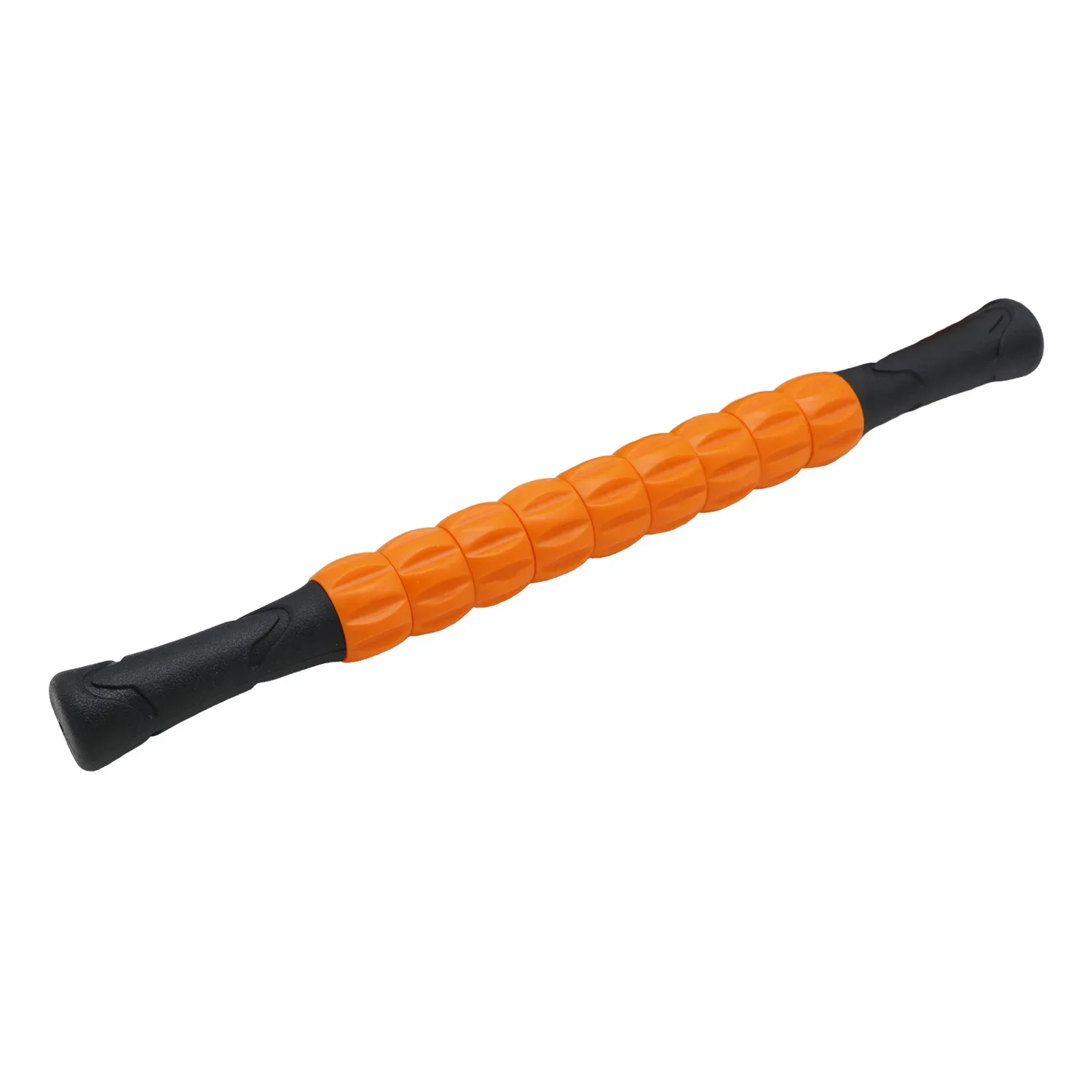
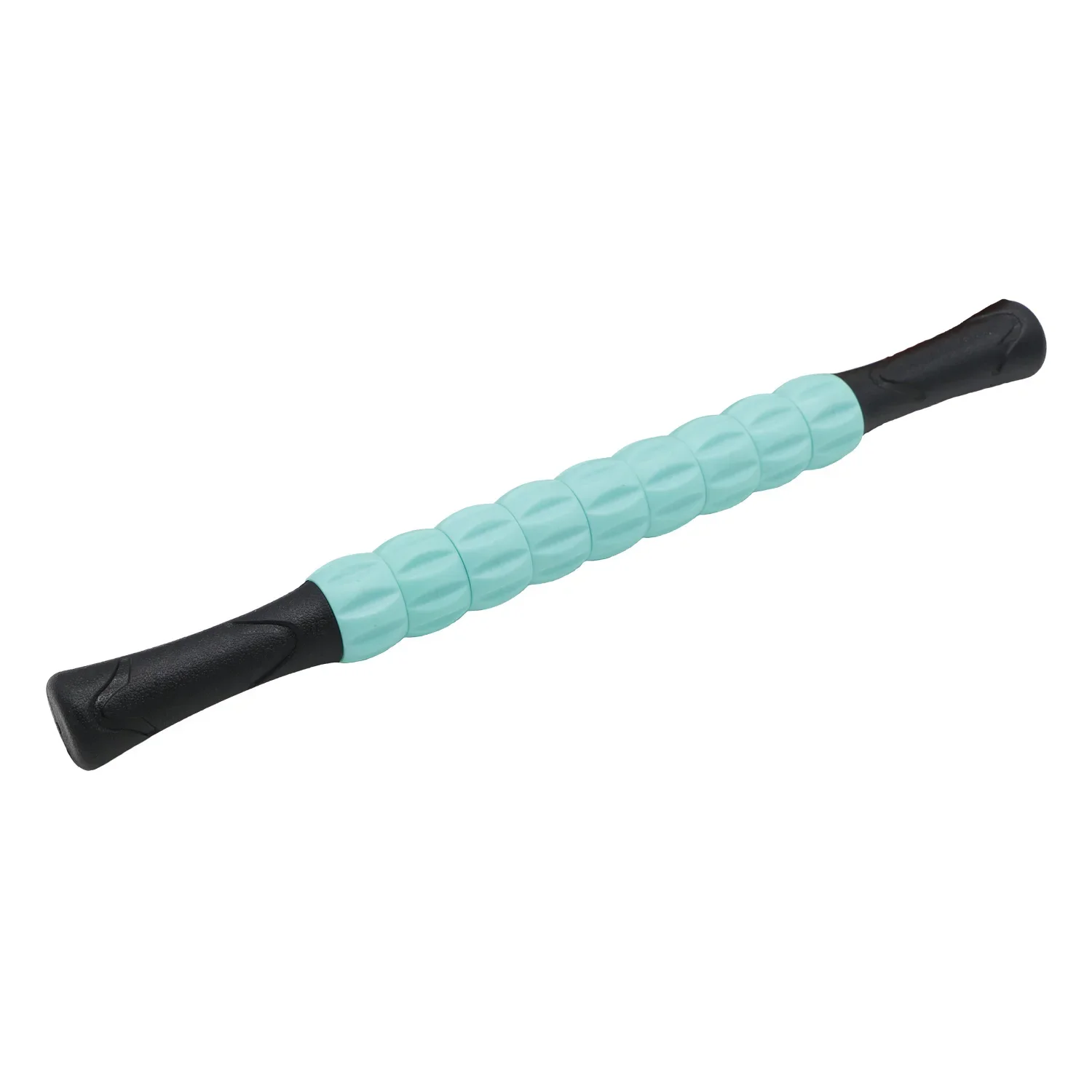
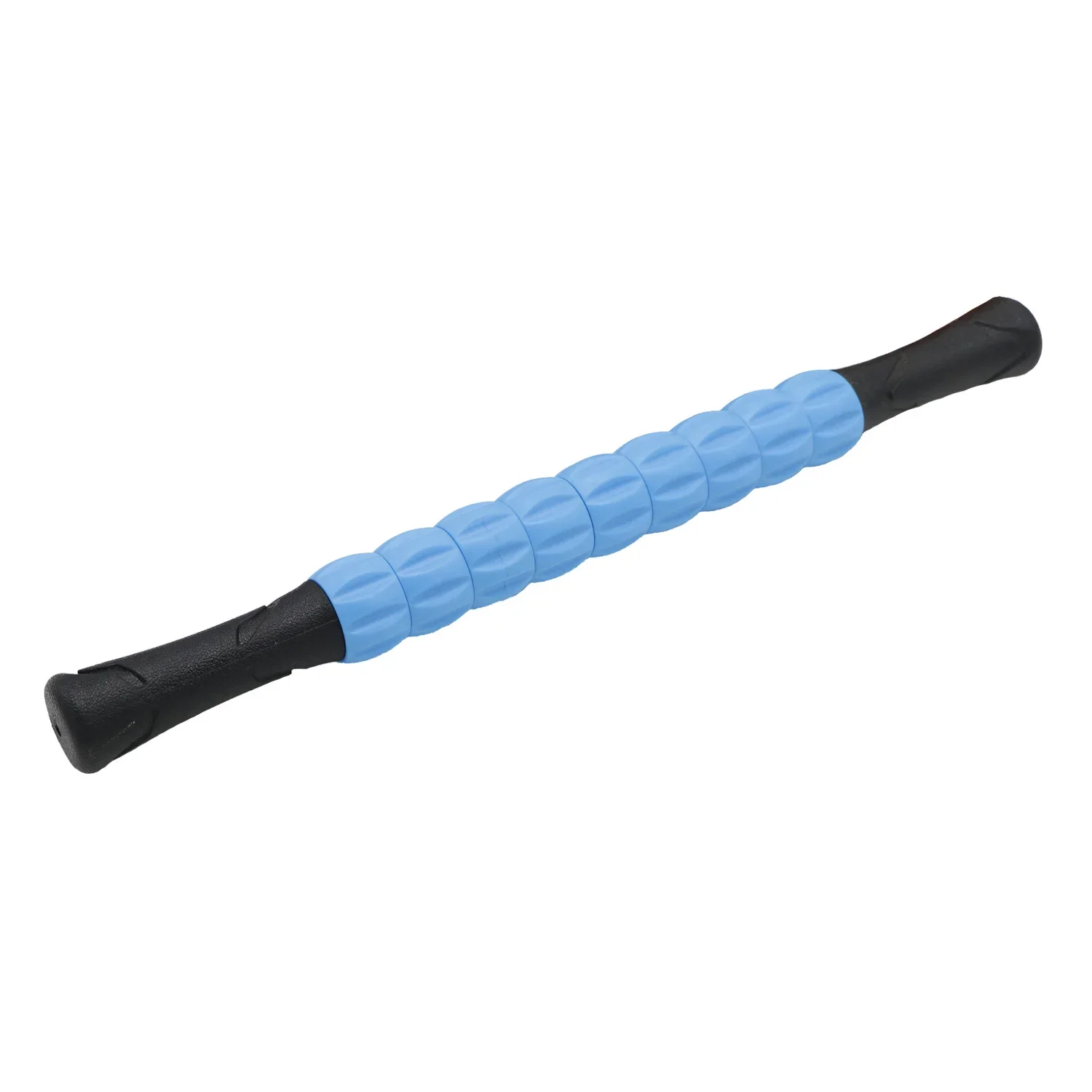
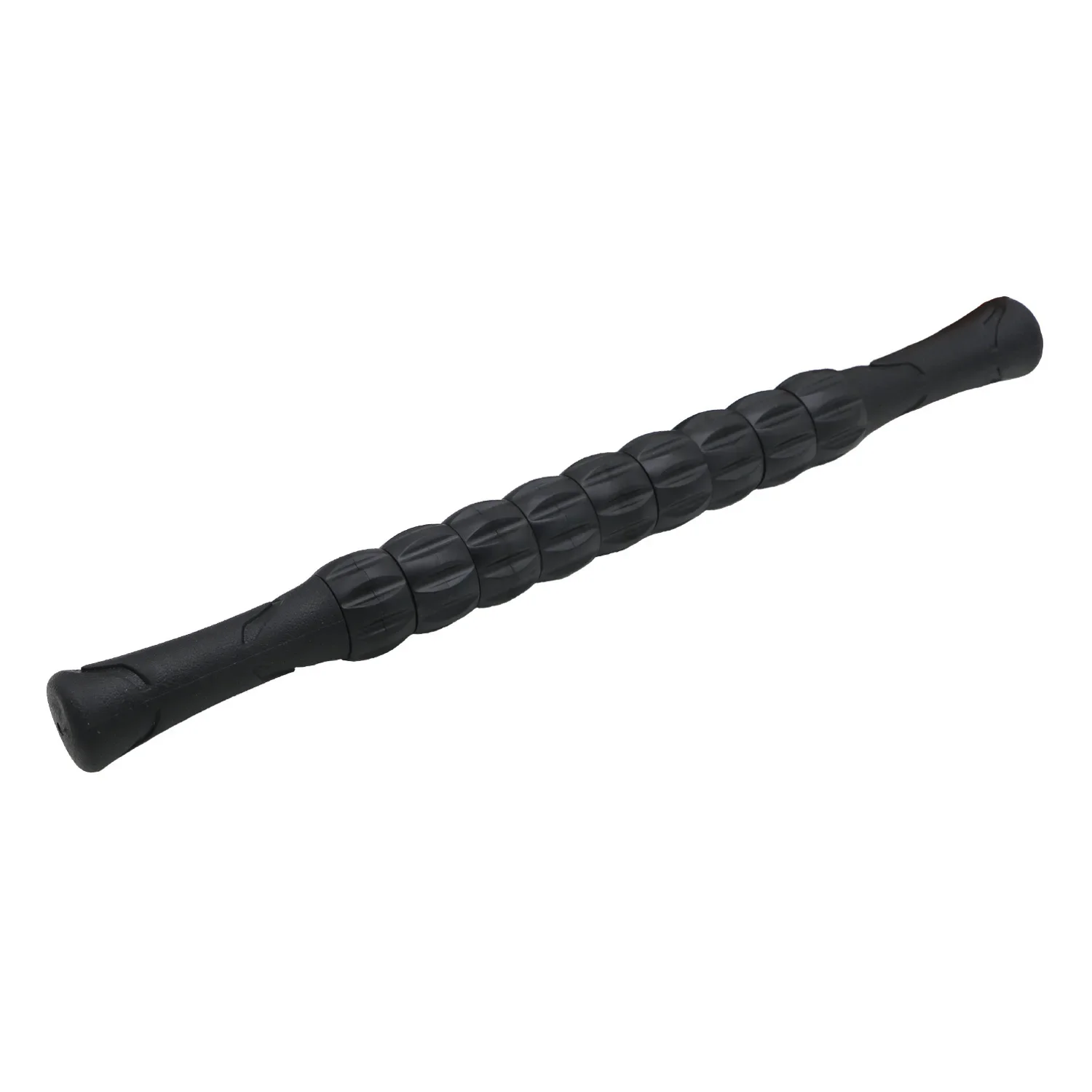
- Independent rollers over a rigid core – the segments spin individually so the stick tracks the shape of the limb instead of skidding across it.
How to Use
Sit with the muscle relaxed – a contracted muscle resists the pressure and the session hurts more for less benefit. Rest the stick across the belly of the muscle and roll with slow, deliberate passes of about one inch per second, applying enough pressure to feel a firm discomfort you can still breathe through. Spend 30 to 60 seconds per area; if you find a tender spot, pause on it and hold for 20–30 seconds rather than grinding back and forth. Two to three passes per muscle is enough. Safety: roll muscle, never bone, joints or the back of the knee, and stay off the shin bone itself. Avoid rolling directly over a fresh strain, bruise, varicose veins or any area that is hot, swollen or numb. Pain that is sharp or radiating is a signal to stop, not to push harder.
Specifications
| Type | Handheld segmented roller stick |
|---|---|
| Target areas | Calves, quads, hamstrings, IT band, shins, forearms |
| Roller segments | Independently rotating |
| Core | Rigid central rod with handles at each end |
| Best for | Post-run recovery, pre-training warm-up, travel |
| Pressure control | Manual – set by hand force |
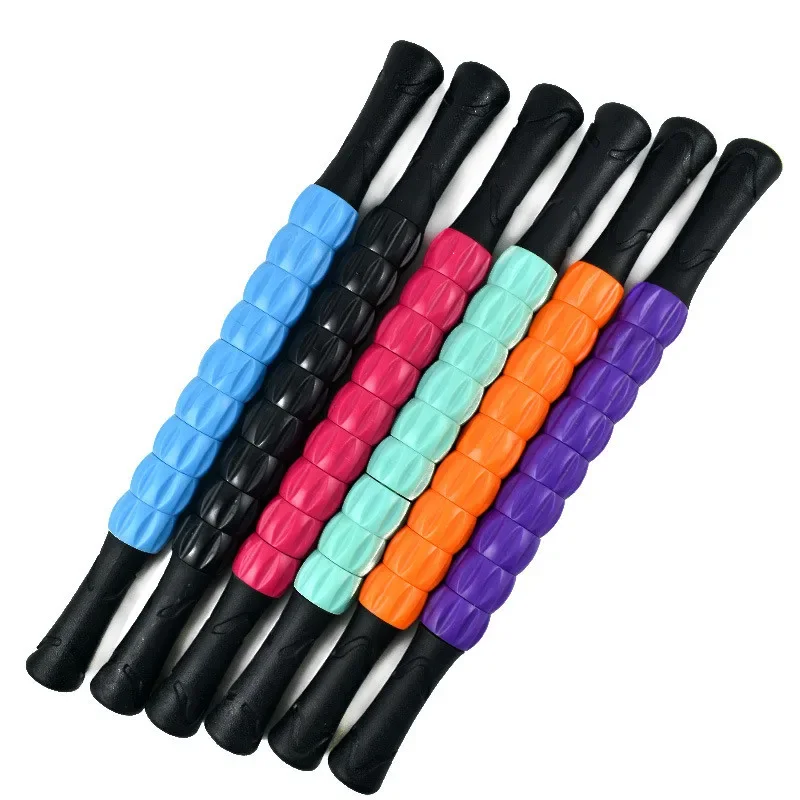
| Length / colour | Variant dependent – see options |
| Assembly | None required |
Care & Maintenance
Wipe the rollers with a damp cloth and mild soap after use and dry them before storing; skin oils and sweat make the segments tacky and slow their rotation. Do not soak the stick, as moisture trapped around the bearings will make them seize. Store it flat rather than leaning against a wall under load, and check the end caps occasionally – they are the first part to loosen with heavy use.
What’s in the Box
1 x handheld muscle roller stick. No assembly or batteries required.
Reviews
There are no reviews yet.