Climbing & Bouldering
Climbing accessories are almost entirely about the hands: chalk for friction, grip trainers for strength, and extensor work to keep the forearm balanced so the elbows survive the volume.
A small collection of climbing and bouldering training accessories.
Train the opposite direction
Climbers develop very strong finger flexors and comparatively weak extensors, and that imbalance is a common contributor to elbow pain. Two to three sets of 15 finger extensions with a rubber band, two or three times a week, is the standard corrective.
Frequently asked questions
When should a beginner start hangboarding?
Not for at least the first six to twelve months of climbing. Finger tendons and pulleys adapt far more slowly than muscle, and early hangboarding is a well-known route to injury. Climb more first.
Loose chalk or a chalk ball?
Chalk balls for gyms that ban loose chalk and for less mess; loose chalk for maximum coverage. Liquid chalk lasts longest between reapplications and is the standard in many indoor gyms.
Do grip trainers help climbing?
General grippers build crush strength, which is not the same as the open-hand and half-crimp strength climbing needs. They are useful for balance and forearm health; specific finger strength comes from climbing and, later, careful hangboard work.
Showing all 3 results
-
Climbing & Bouldering
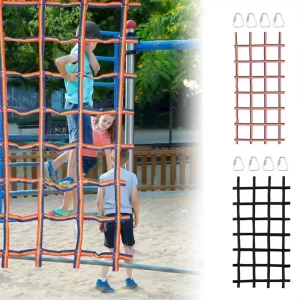
Climbing Cargo Net 89″ x 46″ – Polyester Rope Ladder for Ninja & Swing Sets
$26.99 Select options This product has multiple variants. The options may be chosen on the product page -
Climbing & Bouldering
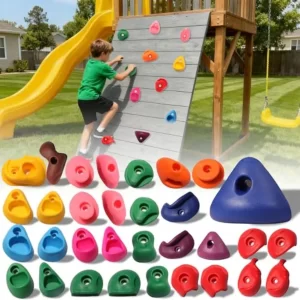
Rock Climbing Holds Set – Wall Grips Kit for Indoor & Outdoor Climbing Walls
Price range: $108.99 through $171.99 Select options This product has multiple variants. The options may be chosen on the product page -
Climbing & Bouldering
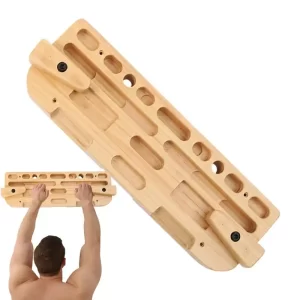
Wooden Climbing Hangboard – Non-Slip Fingerboard Grip Strength Trainer
Price range: $63.99 through $79.99 Select options This product has multiple variants. The options may be chosen on the product page