
Train Both Sides of the Hand — Not Just the Squeeze
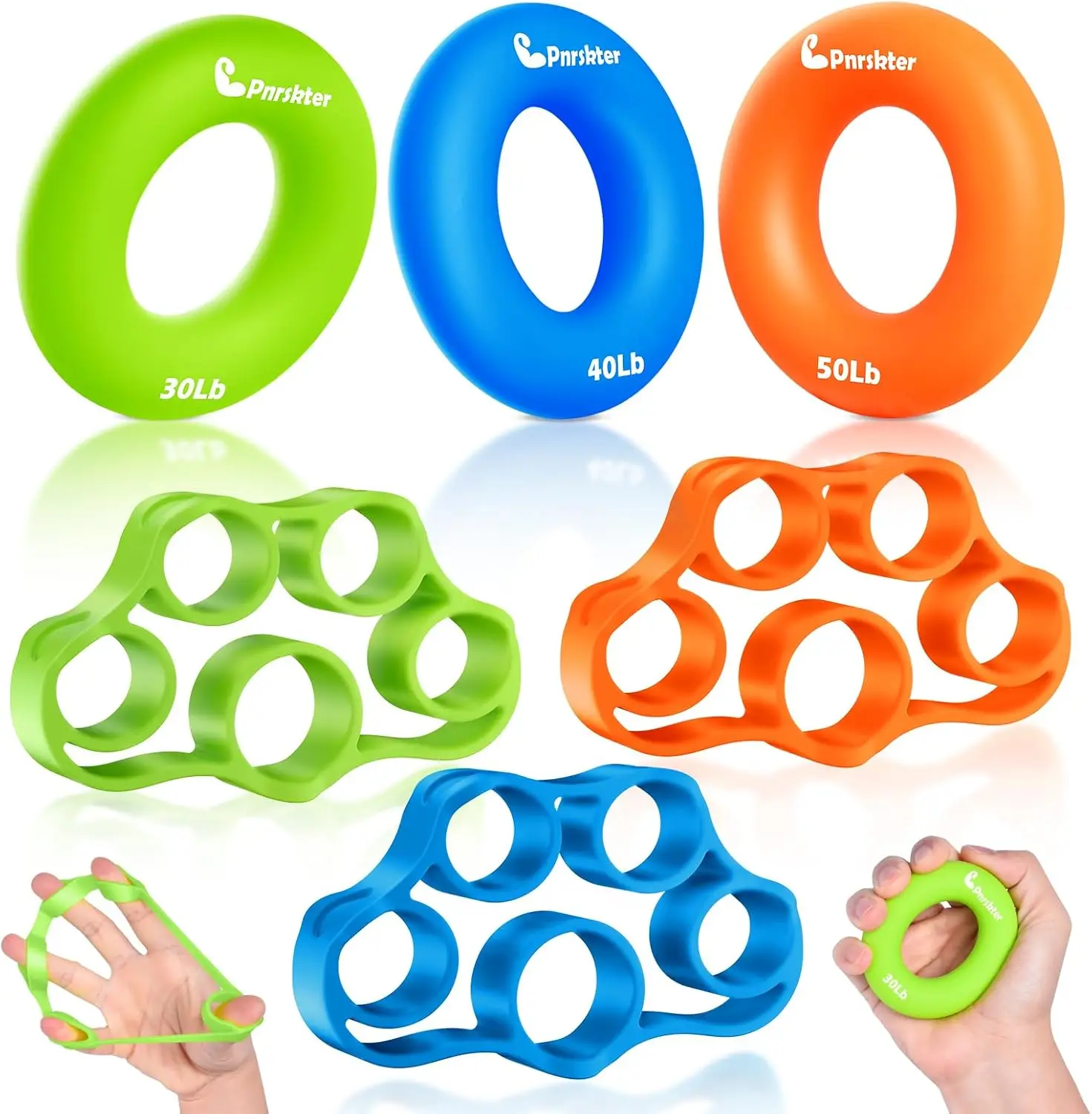
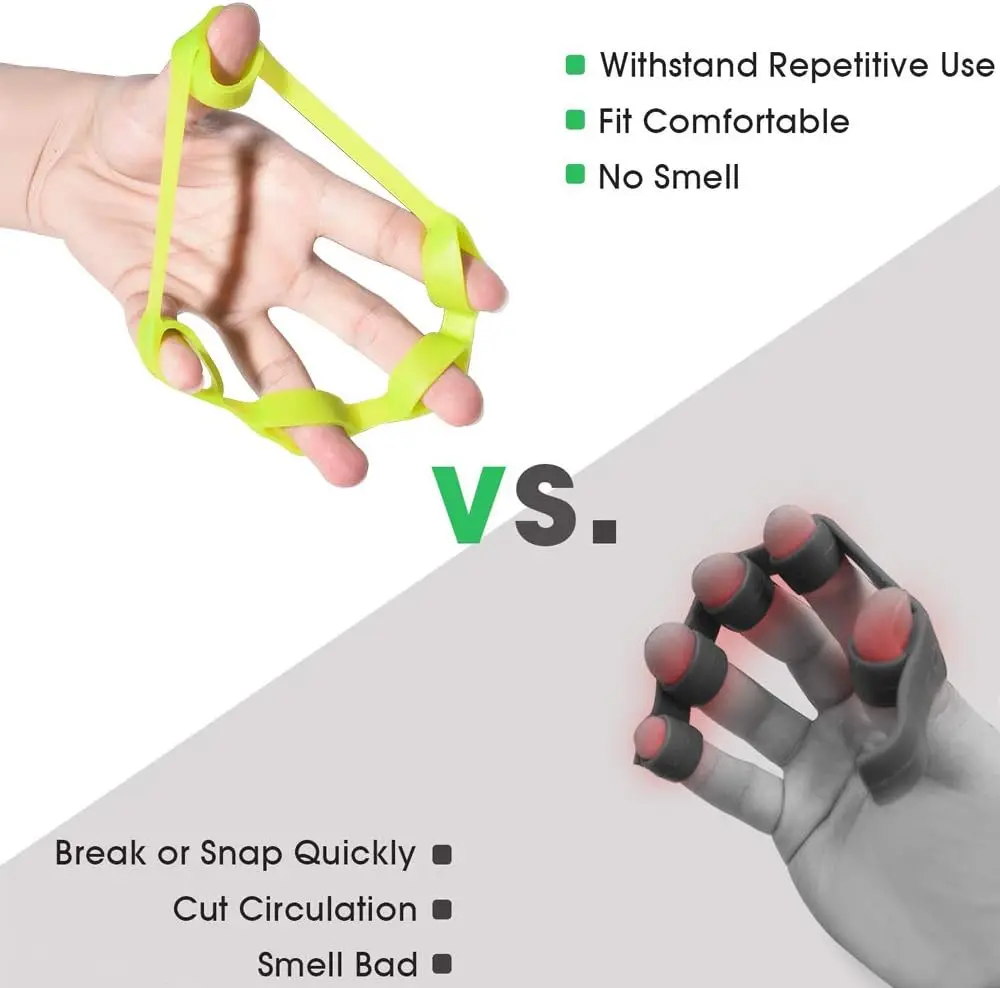
Your hand is driven by two opposing muscle groups, and almost nobody trains the second one. The flexors close the fingers and get worked constantly — by gripping, typing, carrying, lifting. The extensors open the hand, and they get worked essentially never. That asymmetry is why forearm and elbow overuse pain so often shows up on the extensor side, at the outer elbow. A set that gives you both a gripper and a finger-extension band lets you load closing and opening, and it lets you do it progressively — which, for tendon tissue, is the whole game. Tendons remodel in response to gradually increasing load, not rest.
Key Benefits
- Loads the extensors, not just the flexors. The finger bands resist opening the hand — the direction almost every other grip tool ignores, and the one most closely linked to outer-elbow overuse.
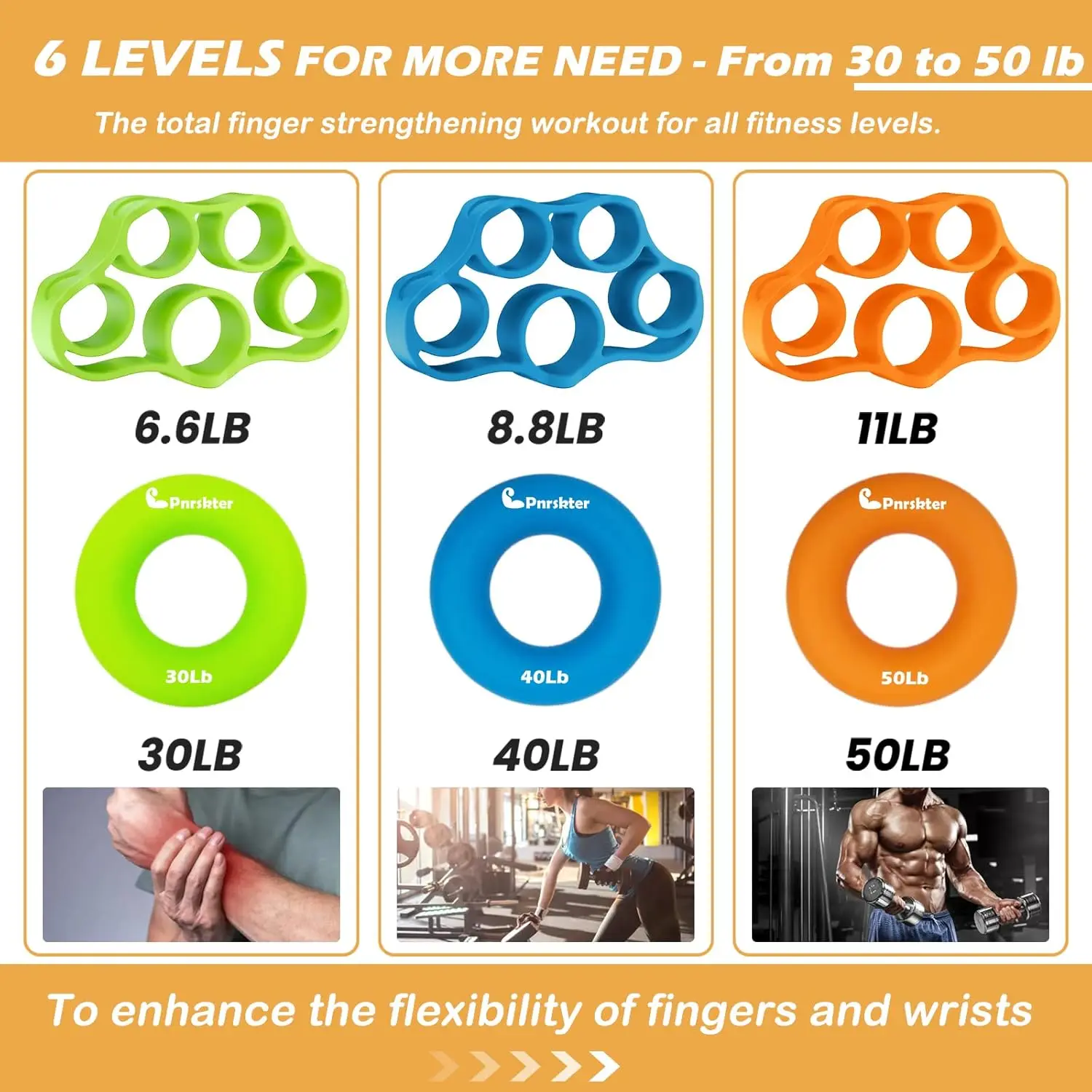
- Multiple resistances in one set. Six pieces means you can start at a level you can control and step up, which is what progressive loading actually requires.
- Silicone, not steel springs. Quiet, light, no pinch points, and comfortable to hold for the slow high-rep work that tendons respond to.
- Builds usable grip. Grip strength is the limiting factor in deadlifts, rows, pull-ups and carries long before your back is done. It is also one of the better general markers of overall strength.
- Genuinely portable. It lives in a desk drawer, a bag or a coat pocket, which means you will actually do it — the biggest predictor of whether accessory work happens.
- Useful for climbers, lifters, musicians and keyboard workers. Anyone who loads their hands repetitively in one direction all day.
How to Use
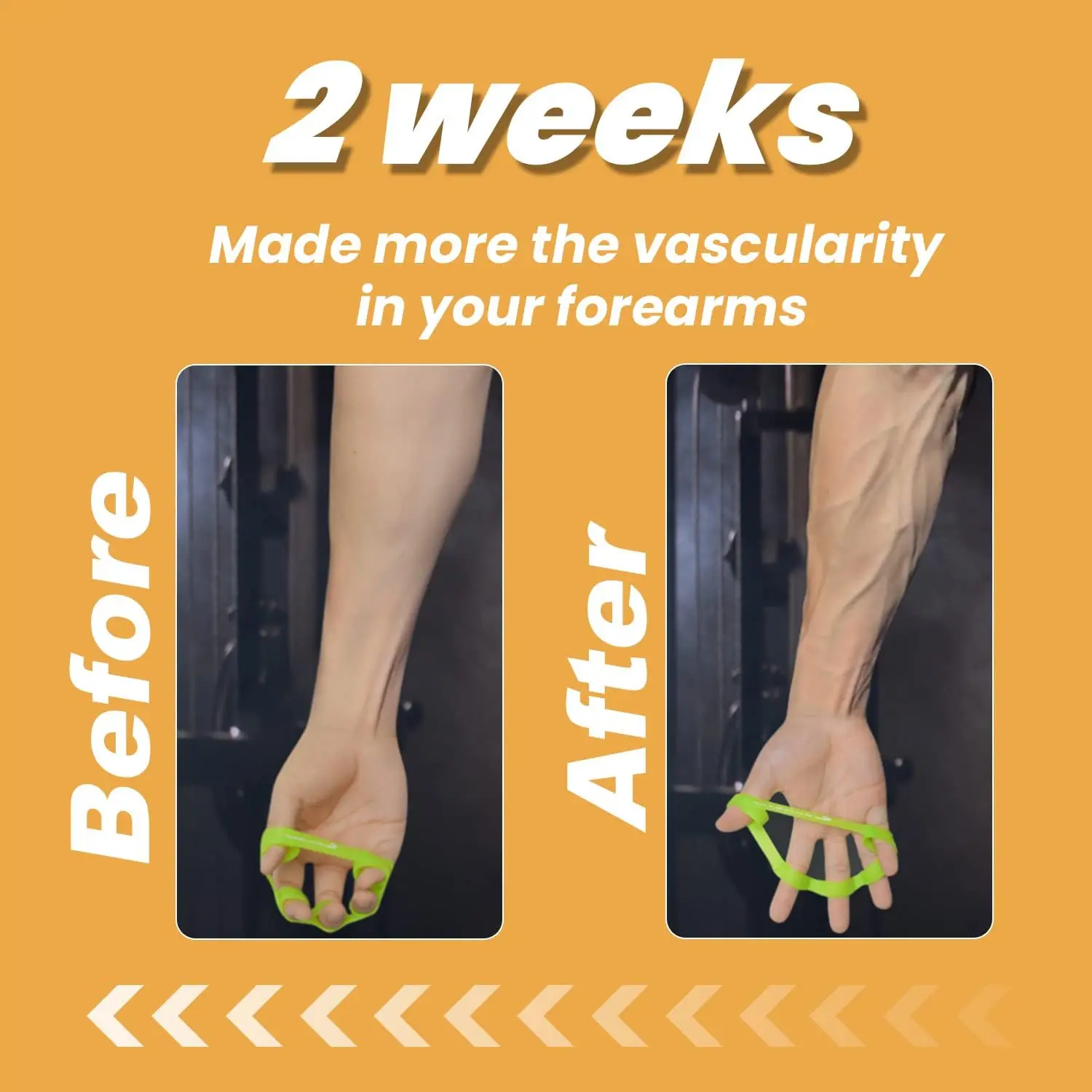
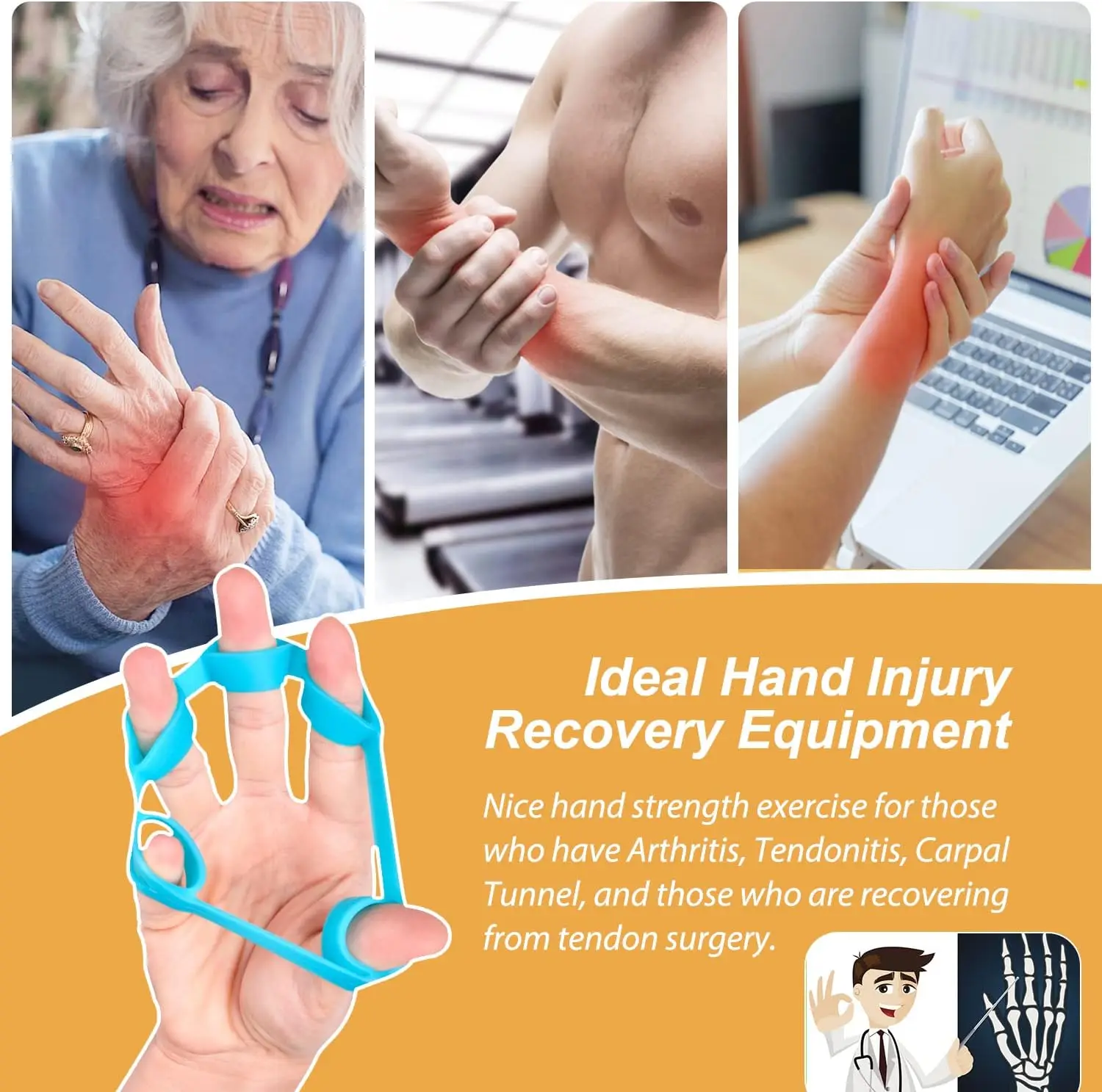
Work slowly and with control — this is tendon work, not a race. For the grippers, take about three seconds to squeeze to full closure, hold for a beat, then take three seconds to release; aim for two or three sets of ten to fifteen reps, two or three times a week. For the finger bands, loop them around the fingertips and open the hand against the resistance for fifteen to twenty controlled reps, and give this side at least as much attention as the squeezing. Start on the lightest resistance in the set even if it feels trivially easy, and only step up when you can complete every rep with a clean, slow tempo. Honesty: this is a training tool, not a medical device. Grip and forearm loading can be a legitimate part of tendinopathy rehab when it is progressive and appropriately dosed, but the tool itself does not treat anything, and the marketing phrase ‘relieve pain’ does a lot of unearned work. If your symptoms are numbness or tingling in the fingers rather than aching, that points toward nerve involvement such as carpal tunnel — and squeezing harder can make it worse. Safety: stop for sharp pain, numbness or pins and needles. Do not train to failure daily; tendons adapt far more slowly than muscle, and forearm overuse injuries are almost always a story of doing too much too soon. See a physiotherapist or doctor for any pain that persists.
Specifications
| Product type | Hand and finger strengthener set |
|---|---|
| Pieces | 6 |
| Material | Silicone |
| Trains | Grip flexion and finger extension |
| Resistance | Multiple levels across the set (colour differentiated) |
| Target areas | Fingers, hand, wrist, forearm |
| Best for | Grip strength, forearm training, climbing, lifting, keyboard and instrument users |
| Portability | Pocket and desk-drawer sized |
| Not a | Medical or therapeutic device |
Care & Maintenance
Wash with warm water and mild soap, rinse and air dry fully before storing — silicone attracts dust and skin oils. Keep the set out of prolonged direct sunlight and away from heat sources, both of which make silicone brittle over time. Inspect the finger bands for nicks or splits before use and retire any piece that has started to tear, since a silicone band fails suddenly rather than gradually.
What’s in the Box
6 x silicone hand and finger exercisers. Exact piece composition may be variant dependent.
Reviews
There are no reviews yet.