The Nine Tools That Cover Most Home Bike Maintenance
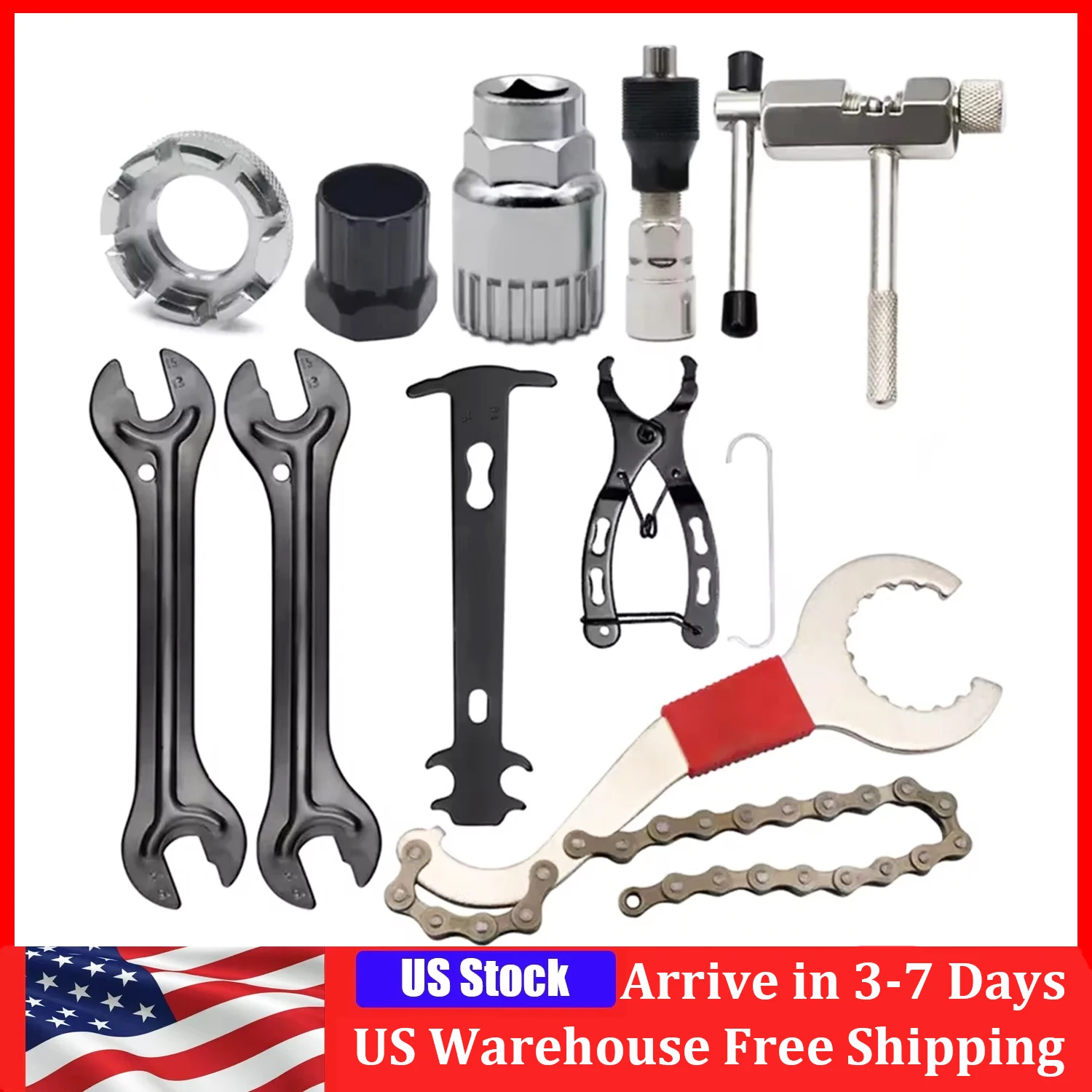
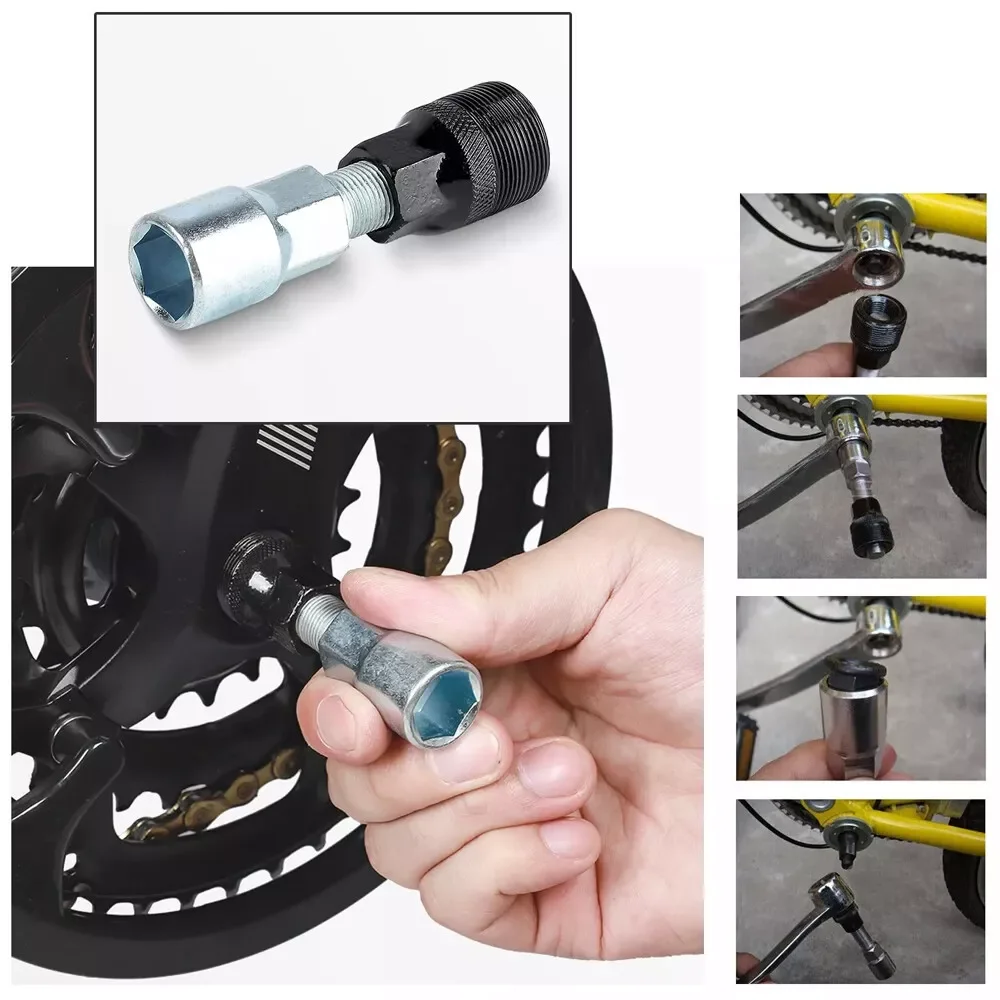
Most of a bicycle’s drivetrain is assembled with interference fits and fine splined threads, and those interfaces cannot be undone with a spanner and optimism. A crank puller threads into the crank arm and drives a bolt against the spindle to press the crank straight off — pull, not hammer, which is why the crank survives. A chain breaker pushes a rivet out under controlled axial pressure instead of shearing it. A freewheel remover engages the splines squarely so the torque goes into the thread and not into destroying it. The specialist geometry is the whole point.
Key Benefits
- Crank puller removes cranks without damage. The alternative — levering or hammering — bends the chainring and mushrooms the spindle. This threads in and presses the crank off in line with the axle.
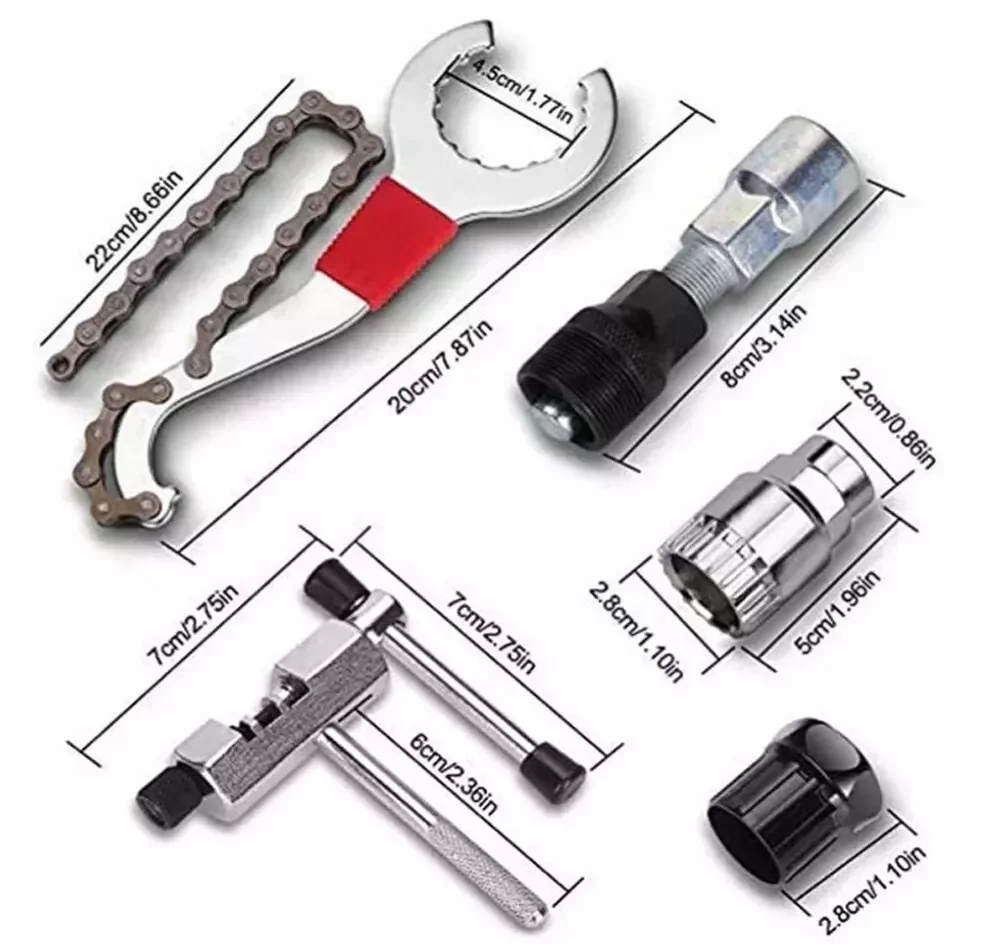
- Chain breaker/cutter sizes and repairs chains. Lets you shorten a new chain to length and rescue a broken one roadside, which is otherwise a walk home.
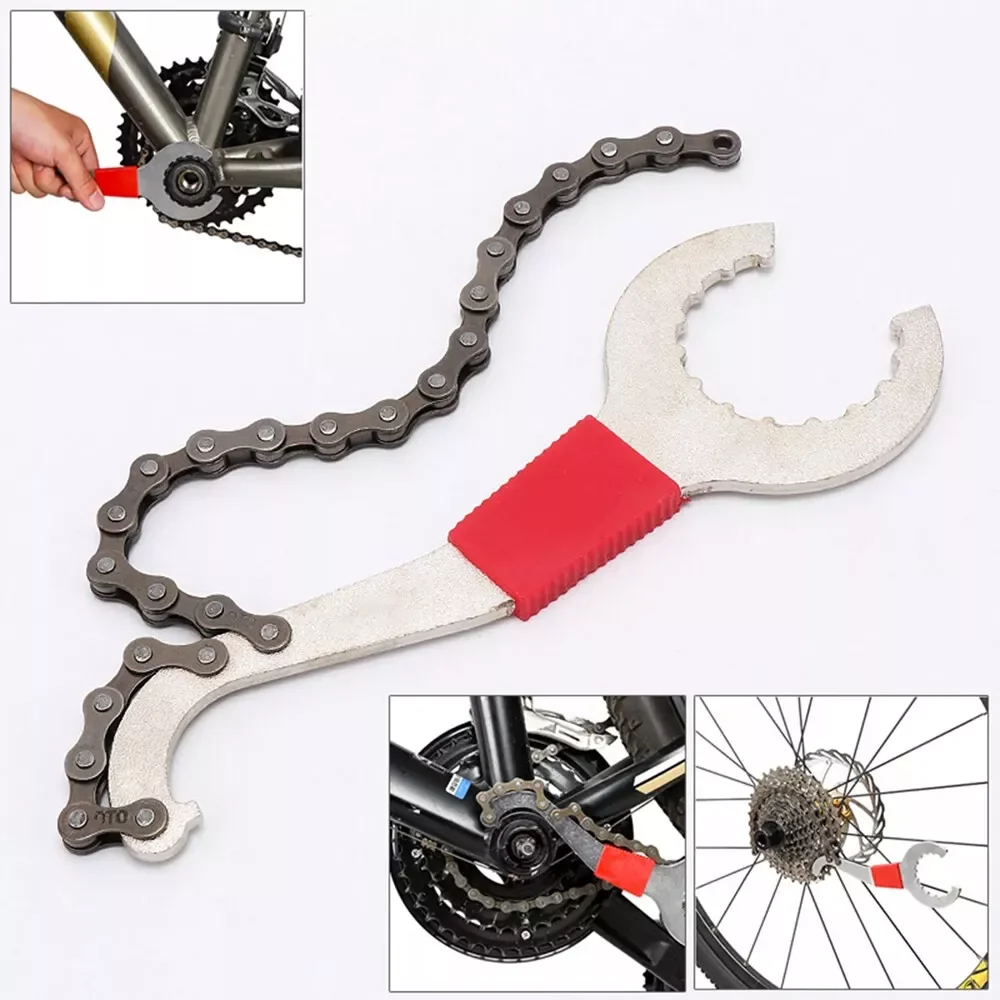
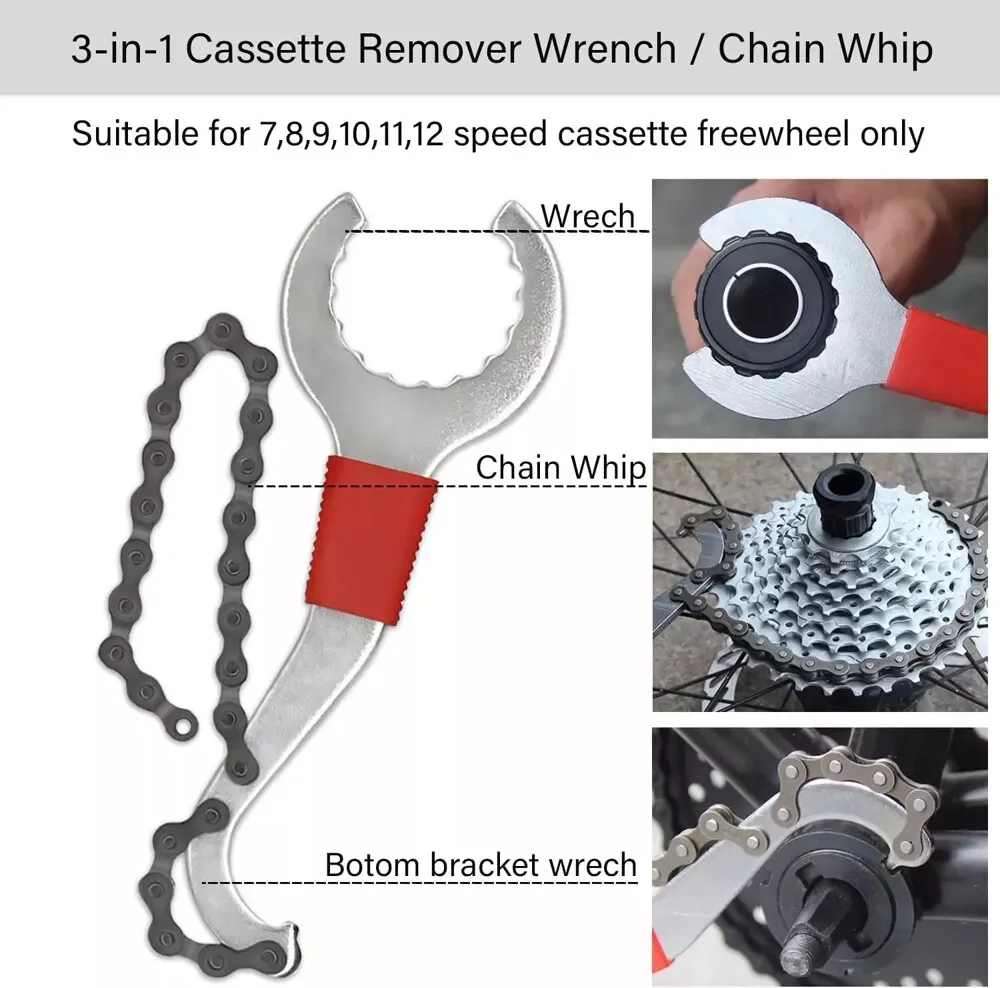
- Freewheel and cassette extraction. Splined engagement means the tool takes the torque rather than rounding off the lockring.
- Spoke wrench for wheel truing. A wheel goes out of true gradually; a quarter-turn here and there keeps it round long before it needs a wheelbuilder.
- Cheaper than one shop visit. A single bottom-bracket service at a shop typically costs more than the whole kit.
- Compact enough to keep with the bike. These are the tools that are useless in a drawer at home when the chain snaps ten miles out.
How to Use
Secure the bike properly — in a stand, or upside down on a soft surface — before applying force to anything, because the moment a tool slips is the moment you take skin off a chainring. With the crank puller, thread the outer body all the way into the crank arm by hand before you turn the inner bolt; if it is only half engaged, the aluminium threads in the crank will strip out and the crank becomes scrap. With the chain breaker, line the pin up dead centre on the rivet and turn slowly, checking alignment; a skewed pin bends the chain plate. With the spoke wrench, work in quarter turns and opposite pairs rather than cranking one spoke tight. Apply grease to threads on reassembly, and torque fasteners to the manufacturer’s spec — bicycle components, especially carbon and aluminium, are far more often destroyed by over-tightening than by under-tightening.
Specifications
| Pieces | 9 |
|---|---|
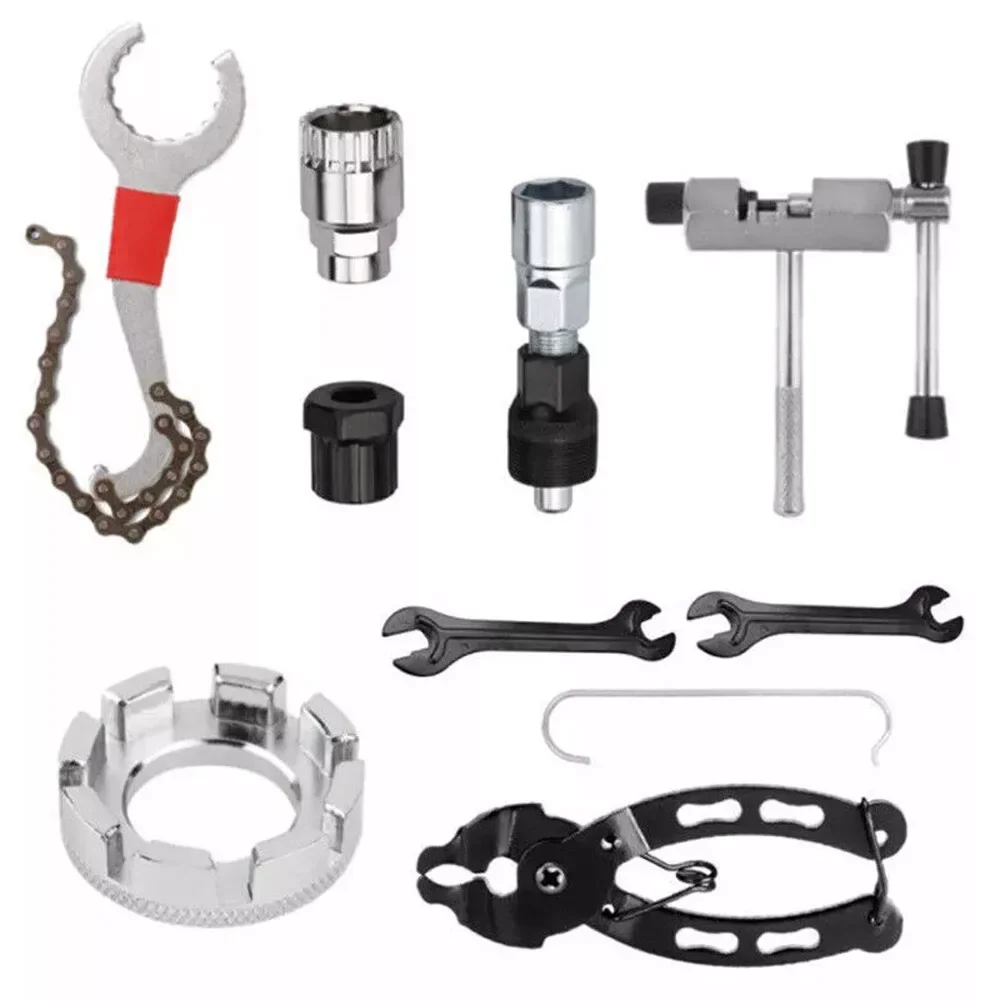
| Core Tools | Crank puller, chain breaker/cutter, freewheel puller, spoke wrench |
| Application | Drivetrain, chain and wheel maintenance |
| Colour | Grey |
| Bike Compatibility | Common road and MTB standards — verify your bottom bracket and cassette standard before ordering |
| Skill Level | Home mechanic |
| Torque Wrench Included | No — recommended separately for carbon components |
| Exact Tool Mix | Variant dependent — check the listing images for your configuration |
Care & Maintenance
Wipe tools down after every use; chain lube and road grit form a grinding paste that will pit the working faces. Keep the crank puller’s threads clean and lightly oiled, because a gritty thread is what strips a crank arm. Store dry — surface rust on a splined face is enough to make it slip under load.
What’s in the Box
9-piece bike repair tool kit. Exact tool selection is variant dependent; check the listing images before ordering if you need a specific tool for a specific standard.
Reviews
There are no reviews yet.