Train the Reflexes That Keep You Upright
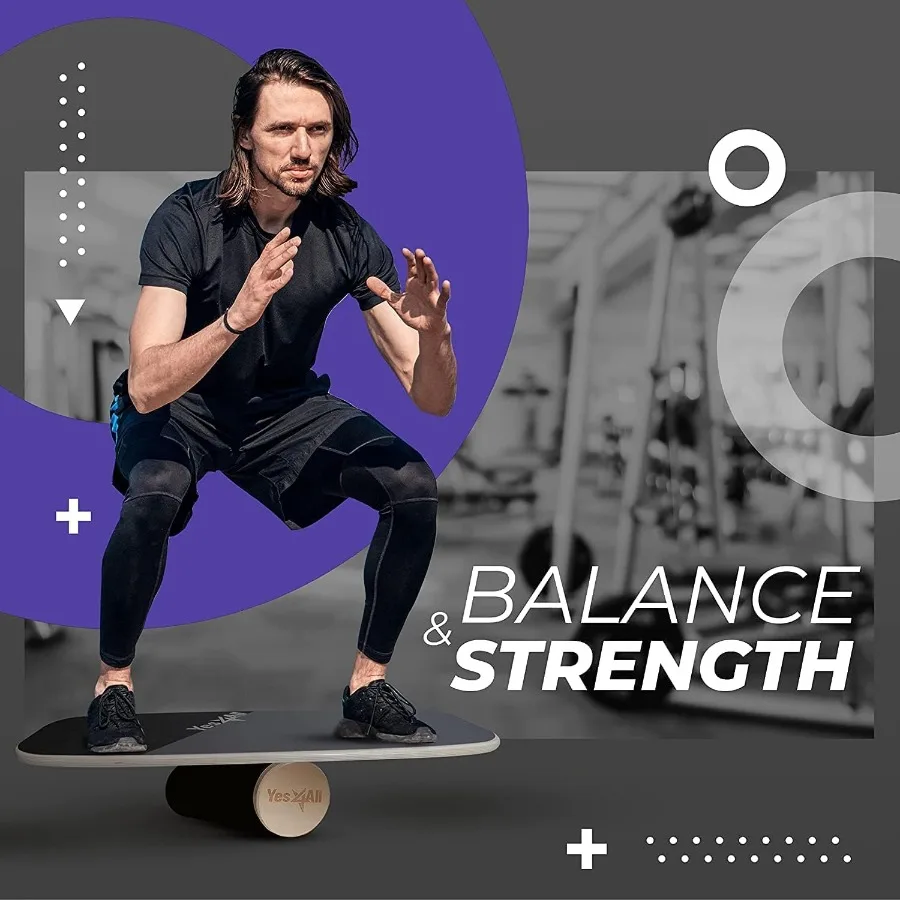
Balance is not a muscle — it is a feedback loop. Proprioceptors in your ankle ligaments and foot soles constantly report joint position to your cerebellum, which fires stabilising muscles before you consciously notice a wobble. A rolling board deliberately destabilises that loop, forcing hundreds of micro-corrections per minute through the peroneals, tibialis, glute medius and deep abdominal wall. Over weeks, the loop gets faster and the corrections get smaller. That is why balance boards appear in ankle-sprain rehab protocols and in surf, ski and skate off-season training.
Key Benefits
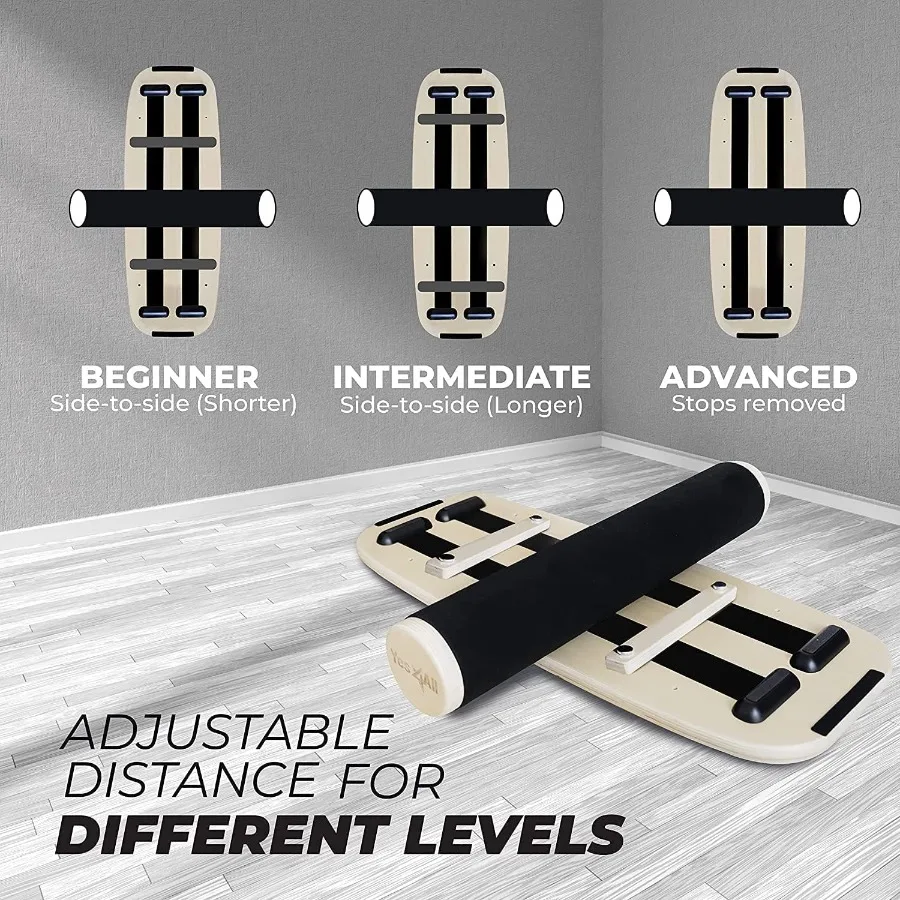
- Adjustable stoppers make it survivable on day one. Set them close to limit roller travel while you learn, then move them out as your control improves. Most cheap boards give you no such progression — it’s all or nothing.
- Ankle stability that transfers to real sport. Wobble-board training is one of the few interventions with reasonable evidence for reducing recurrent ankle sprains, because it retrains the reflex, not just the muscle.
- Continuous, non-fatiguing core work. Your transverse abdominis and obliques work isometrically the entire time you’re on the deck, without the spinal loading of crunches.
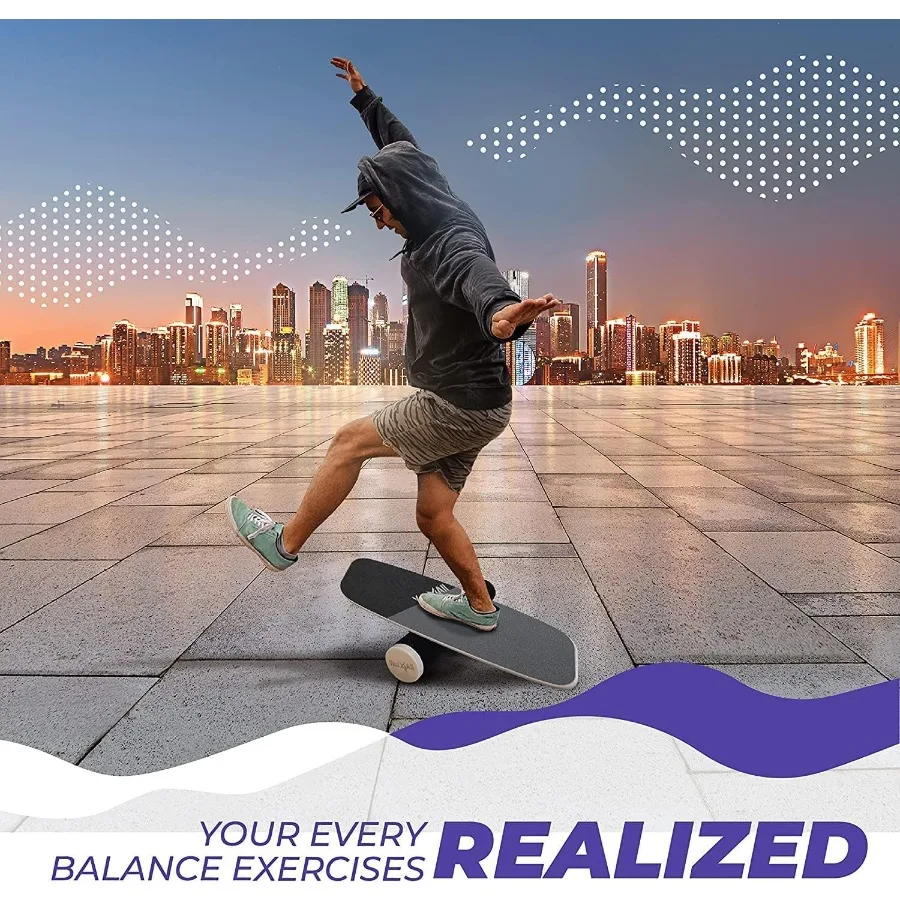
- Off-season carryover for board sports. The roller mimics the lateral instability of a surfboard, snowboard or skateboard closely enough to keep the movement pattern alive indoors.
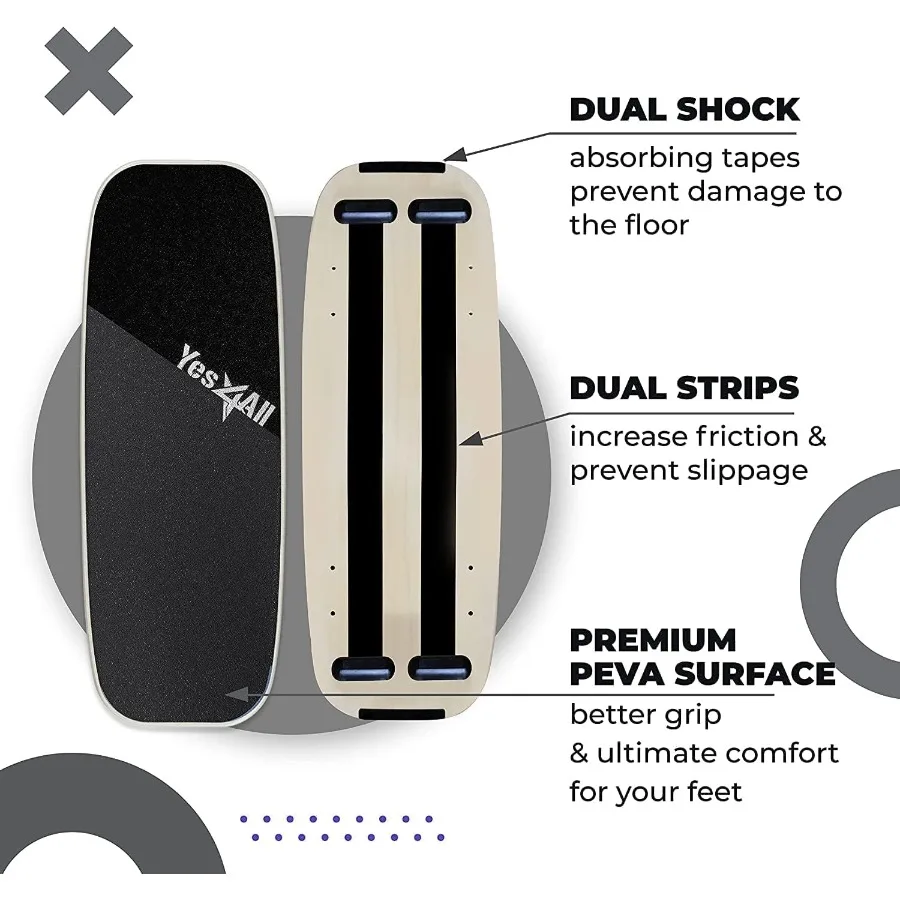
- Anti-slip deck surface. Grip is the whole safety story on a roller board — a slick deck is a broken wrist waiting to happen.
- Stores flat in seconds. Deck and roller separate and slide under a sofa or bed; no permanent floor footprint.
How to Use
Set up safely first. Use it on carpet or a mat, never a hard slick floor, and stand beside a wall, doorframe or kitchen counter you can grab. Clear at least a metre of space on every side, and keep the roller away from anything you could trip over. Set the stoppers to their narrowest position to start. Place the board on the roller, put your dominant foot on first with your weight into the deck, then step up and let the board settle. Look at a fixed point ahead of you — not at your feet — and let your ankles do the correcting. Aim for 30 seconds of controlled balance, rest, repeat 5-8 times. Once you can hold two minutes without touching down, widen the stoppers. Progress to squats, then to nose-and-tail taps. Safety: never use it barefoot on a smooth floor, never mount it without a handhold nearby, and check the roller for cracks or flat spots before each session. Do not use a balance board unsupervised if you have vertigo, balance-affecting neurological conditions, or an unhealed lower-limb injury without clearance from your physio.
Specifications
| Type | Roller balance board (surf/skate trainer) |
|---|---|
| Stoppers | Adjustable — multiple positions to limit roller travel |
| Deck surface | Anti-slip textured top |
| Primary use | Core stability, ankle proprioception, board-sport training |
| Skill level | Beginner to advanced (stopper-dependent) |
| Surface required | Carpet, mat or rubber flooring — not tile or polished wood |
| Assembly | None — deck sits free on roller |
| Dimensions & capacity | Variant dependent — see product options |
Care & Maintenance
Wipe the deck with a damp cloth to remove foot oils, which are the main cause of slipperiness over time; let it dry fully before storing. Keep the roller out of direct sun and away from radiators, as heat can deform it. Store the roller on its side, not standing under load, to avoid flat spots. Inspect the deck for splits and the stoppers for looseness before every session and retire the board if either is compromised.
What’s in the Box
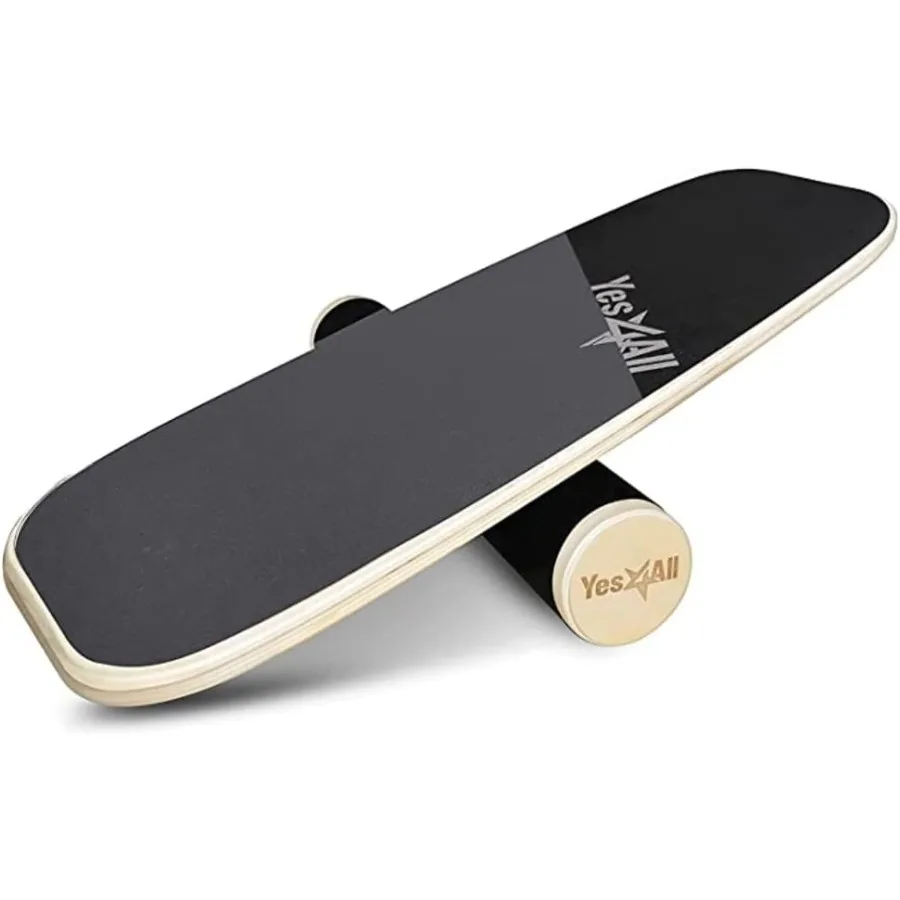
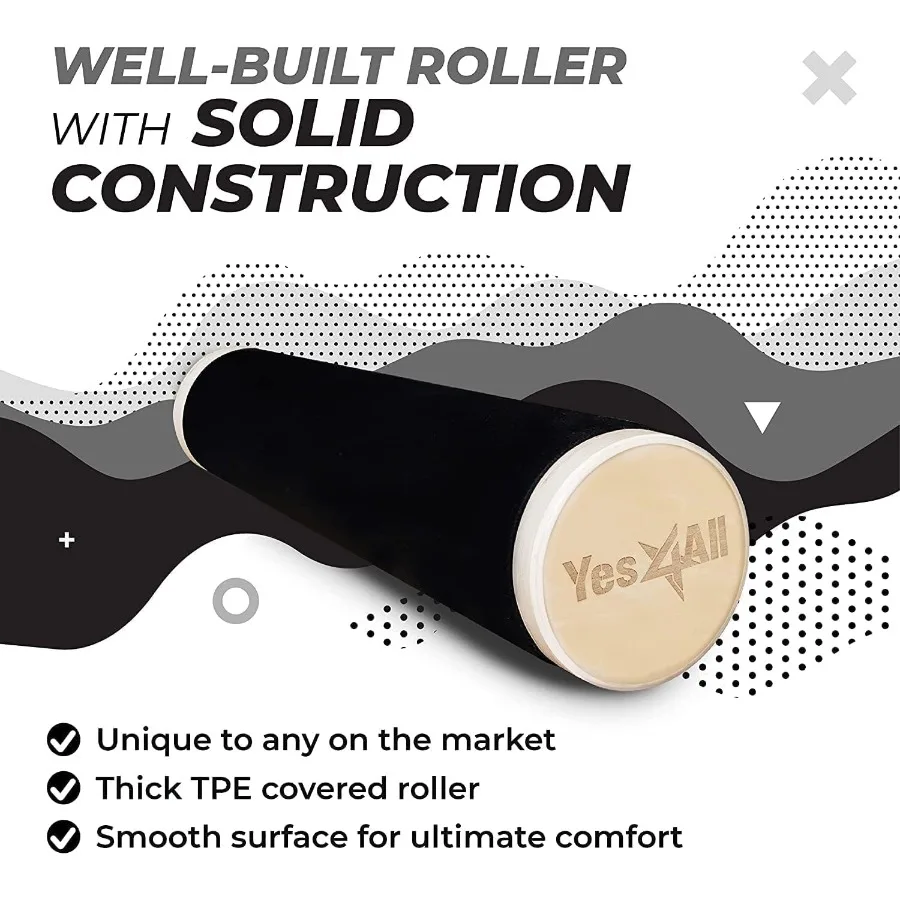
1 × balance board deck, 1 × roller, adjustable stoppers fitted to the deck. Exact contents vary by variant selected.
Reviews
There are no reviews yet.