TENS And EMS Are Not The Same Thing — Here’s What Each One Actually Does
These are two distinct technologies in one box, and most listings blur them. TENS sends a high-frequency, low-intensity current through the skin to stimulate large sensory nerve fibres. Under the gate-control theory, that barrage of harmless sensory traffic crowds out the slower pain fibres competing for the same spinal pathway, so the pain signal reaching your brain is diminished. EMS is different: it uses a stronger, lower-frequency current to depolarise motor nerves directly, forcing the muscle itself to contract without a signal from your brain. TENS masks pain. EMS moves muscle. Choose the mode that matches your goal.
Key Benefits
- EMS does not burn fat or build visible abs — a stimulated contraction burns a trivial number of calories, and no electrode pad creates a caloric deficit. Abdominal definition comes from body fat percentage, which is decided by diet and total activity. Anyone advertising an electrode as a fat-loss device is lying to you. EMS is useful for activation, circulation, muscle re-education and post-exercise relaxation. That is the honest pitch.
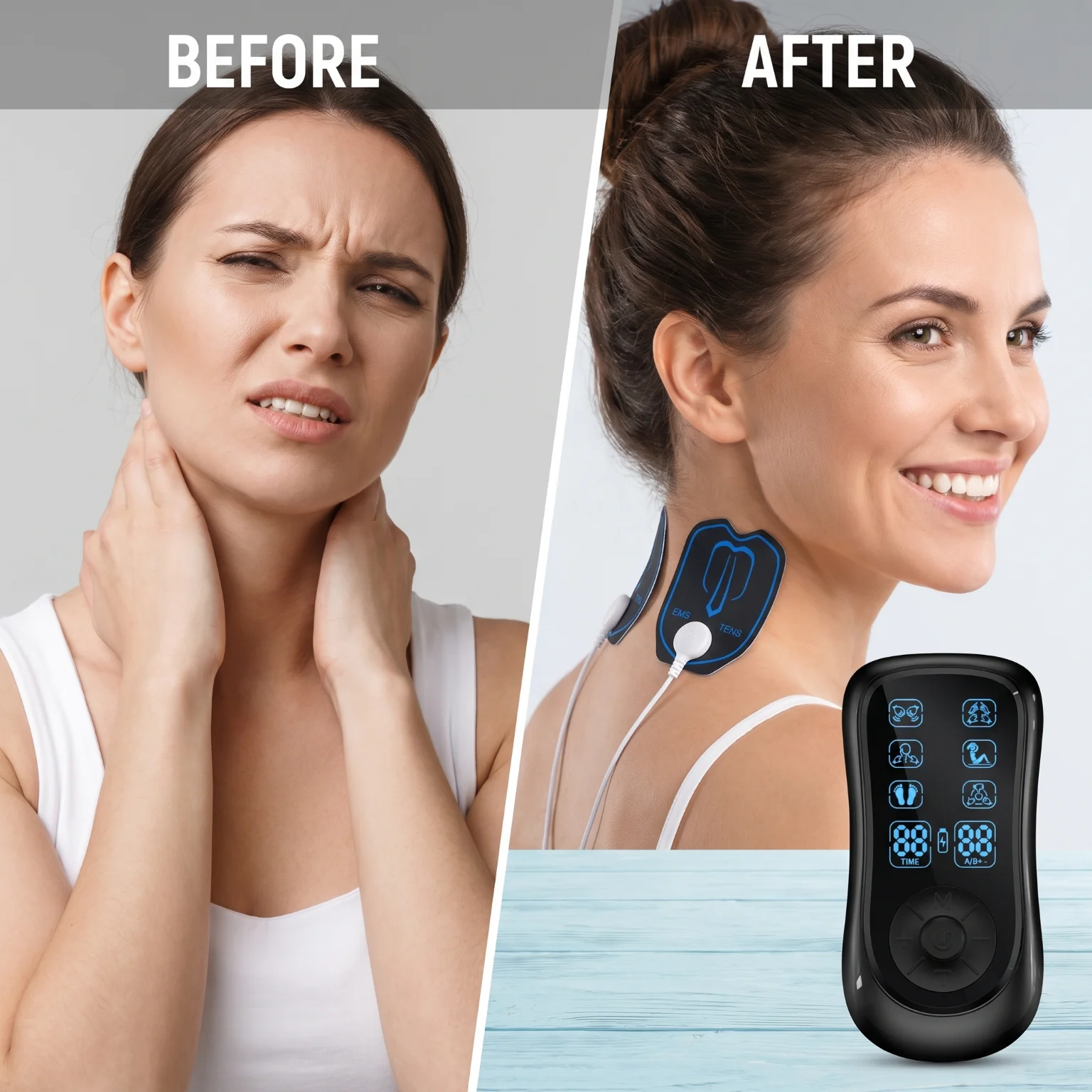
- Drug-free pain management that has real clinical use — TENS is a mainstream tool in physiotherapy and pain clinics for chronic musculoskeletal pain, and it works without the side-effect profile of oral analgesics.
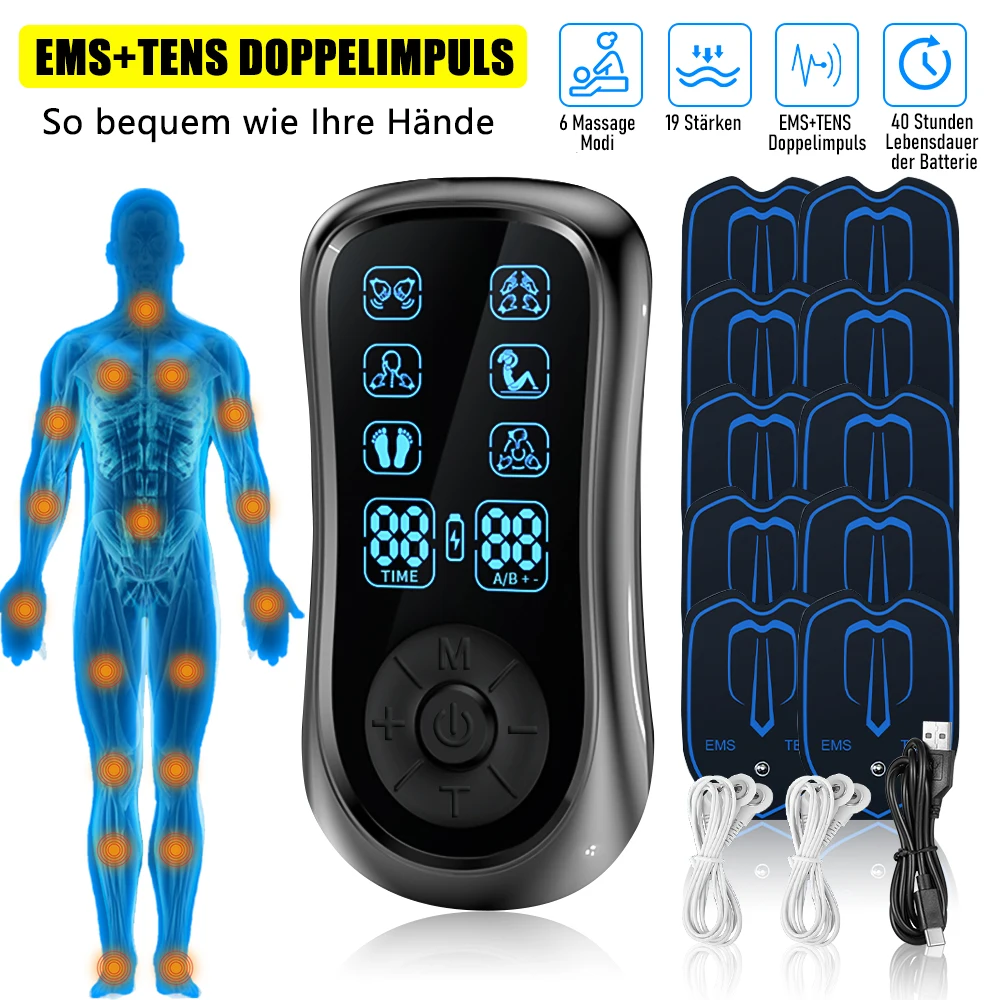
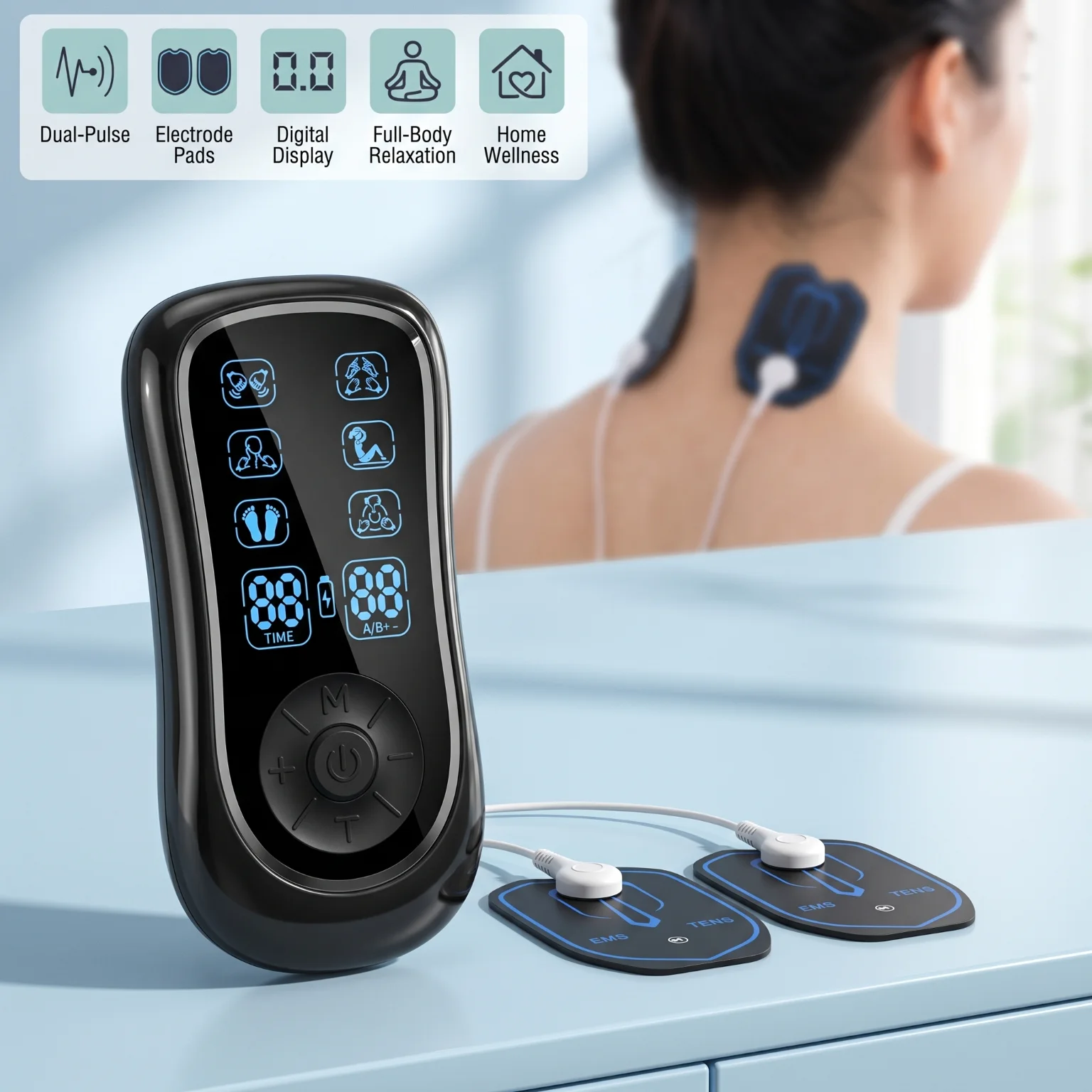
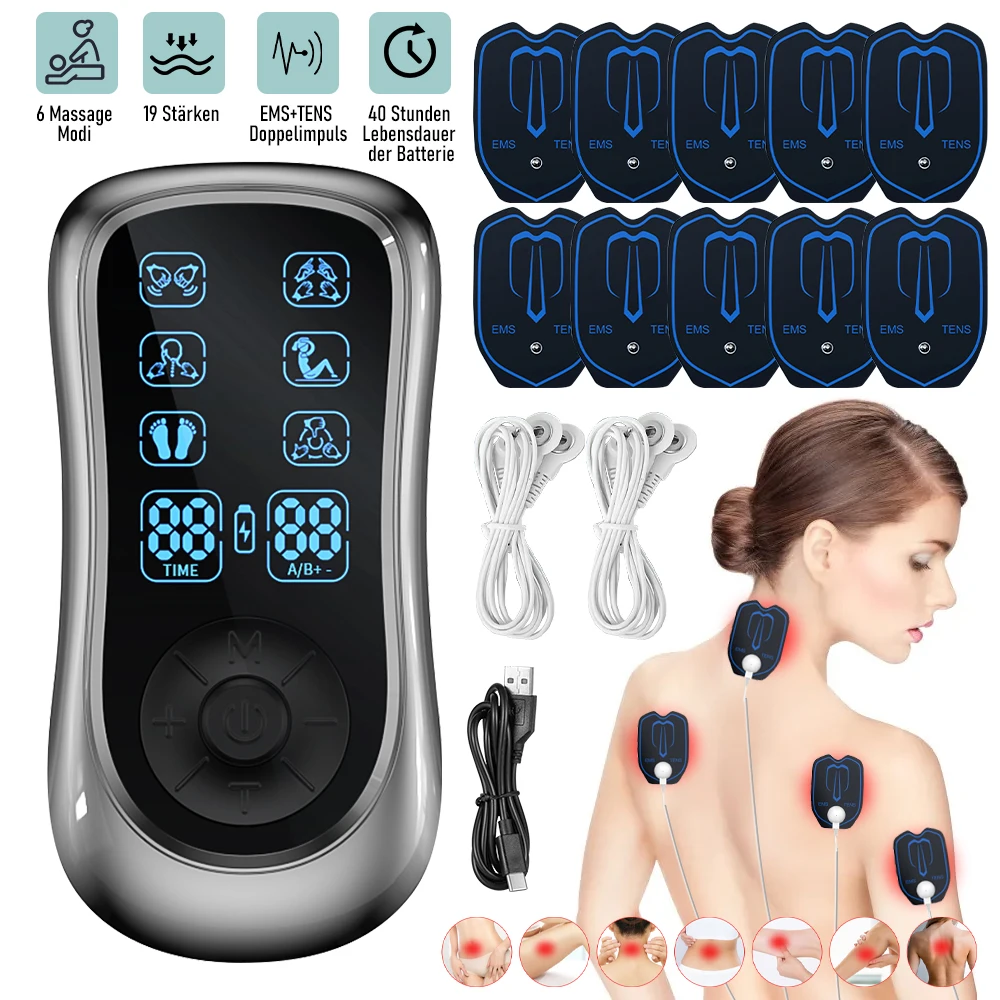
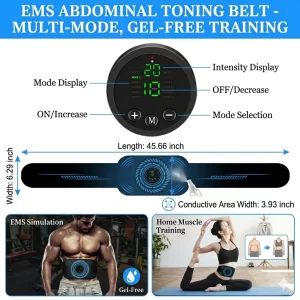
- Two independent channels — treat a lower back and a shoulder simultaneously, or run four pads around a single stubborn area to surround the pain with current.
- 19 intensity levels, which is the point — the useful therapeutic window is narrow. Fine steps let you find the level that is a strong tingle without becoming a painful jolt.
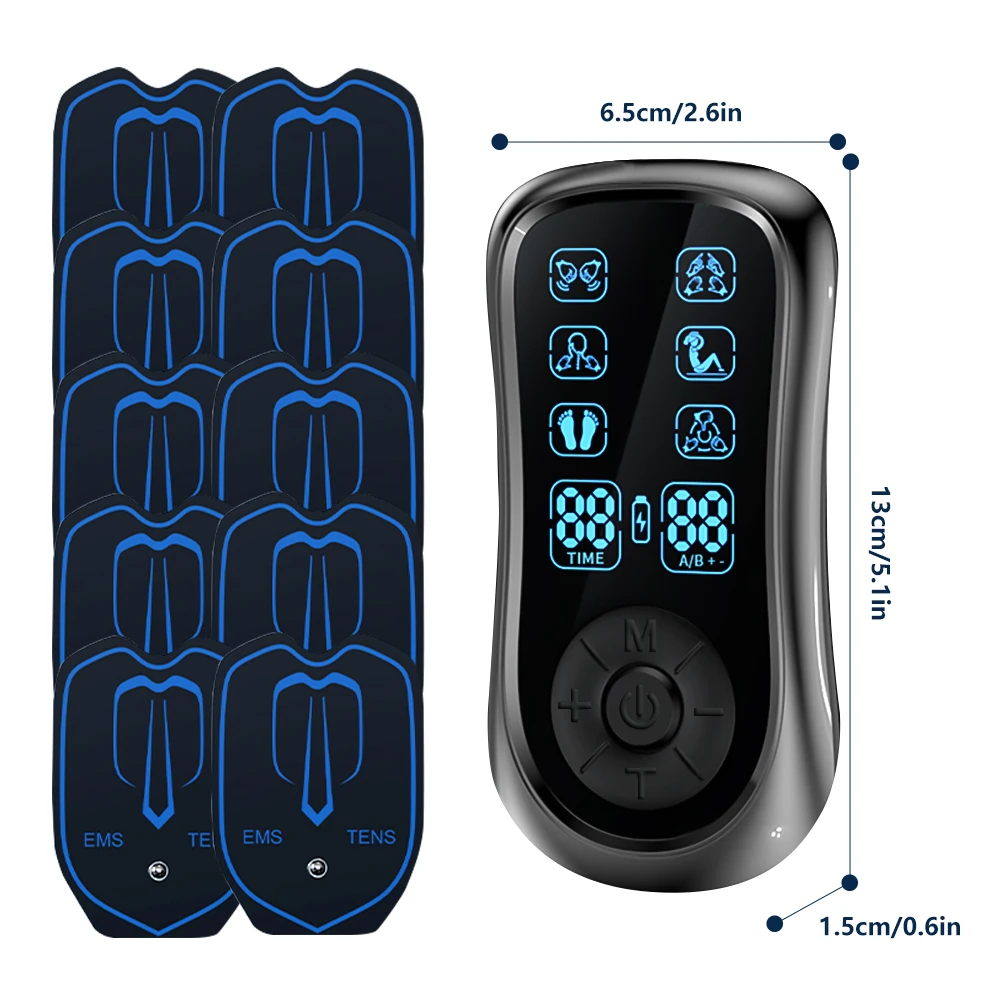
- Ten reusable pads — enough to keep a set for the back and a set for the legs, which means you are not moving grimy pads between body areas.
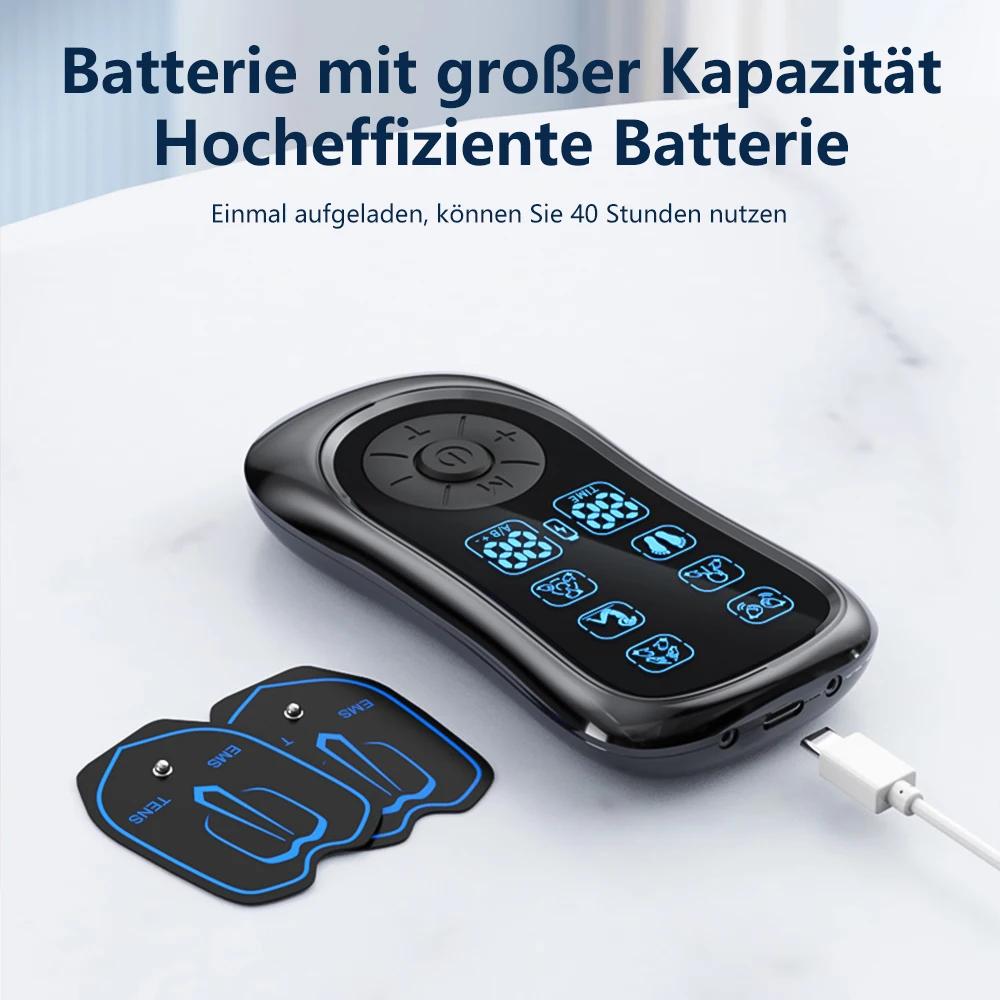
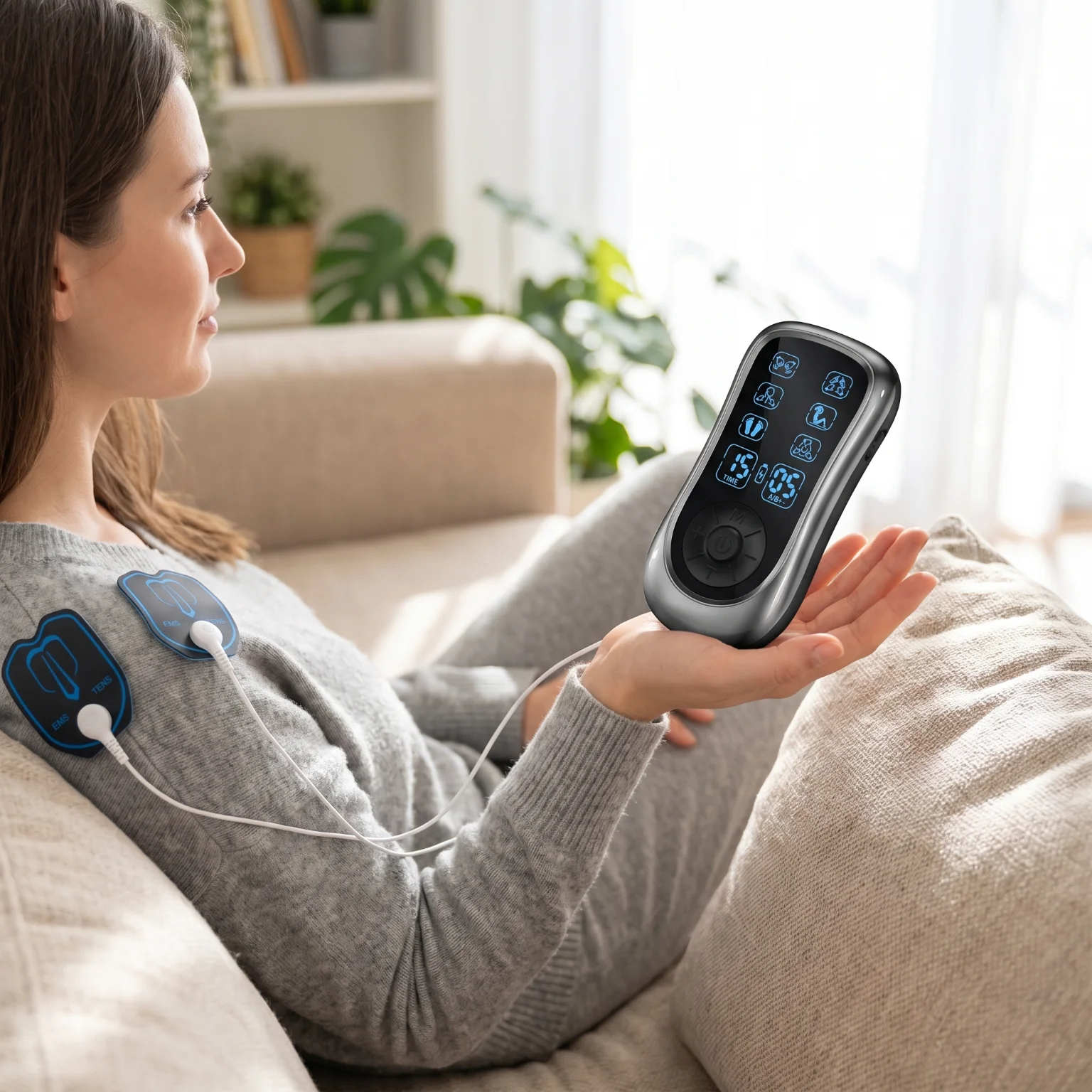
- Rechargeable and pocket-sized — no constant AAA battery drain, and small enough to run a session while sitting at a desk.
How to Use
Skin must be clean and dry, and free of lotion or oil. Place the pads either side of the painful area, roughly 2–5cm apart, never directly on top of the spine itself. Start at intensity zero and raise it one level at a time: correct TENS feels like a strong but comfortable tingling or buzzing, and correct EMS produces a visible, non-painful muscle contraction. If it hurts, it is too high. Twenty to thirty minutes is a standard session, and you can repeat it several times a day. Safety — these are absolute, not suggestions. Do NOT use this device if you have a pacemaker, an implanted defibrillator, or any implanted electronic or metal device. Do NOT use it if you are pregnant, if you have epilepsy, or if you have a heart condition or arrhythmia. NEVER place the pads on the front or sides of the neck — current near the carotid sinus can cause a sudden drop in blood pressure and cardiac problems. Never place pads across the chest or heart, on the head, on broken, numb, infected or irritated skin, over a cancerous lesion, or over an area of undiagnosed pain. Do not use it while driving, operating machinery, in the bath or shower, or while asleep. If you have diabetes or reduced skin sensation, get medical advice first. Stop immediately if you feel dizzy, faint, or any pain.
Specifications
| Device type | Dual channel TENS and EMS combination unit |
|---|---|
| Channels | 2, independently controlled |
| Modes | 6 |
| Intensity levels | 19 |
| Electrode pads | 10 reusable self-adhesive pads |
| Power | Rechargeable battery |
| Typical session | 20–30 minutes |
| Display | Digital |
| Absolute contraindications | Pacemakers and implanted electronic devices, pregnancy, epilepsy, heart conditions, front of neck |
Care & Maintenance
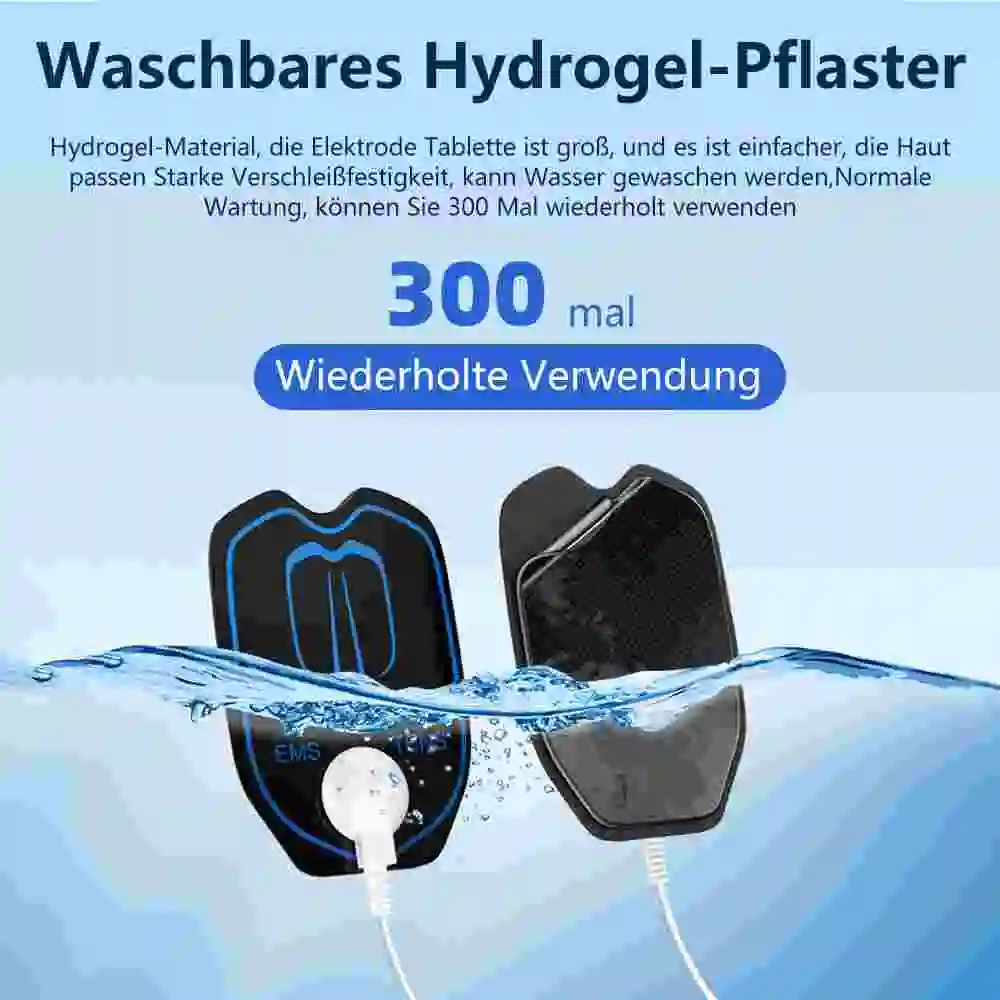
Return the electrode pads to their plastic backing sheet immediately after every use — leaving them exposed to air is what kills the adhesive gel. If they lose their stick, a single drop of water smoothed across the gel surface will often revive them; if that fails, replace them, because a partially adhered pad concentrates current and can burn the skin. Never wash the pads with soap. Wipe the unit with a dry cloth only, and never submerge it. Store somewhere cool and dry, and recharge periodically if the unit is not in regular use.
What’s in the Box
One dual channel TENS/EMS unit, 10 reusable electrode pads, lead wires and a charging cable. A user manual may be included. Exact accessories are variant dependent.

Reviews
There are no reviews yet.