What Electrical Muscle Stimulation Actually Does to Your Feet
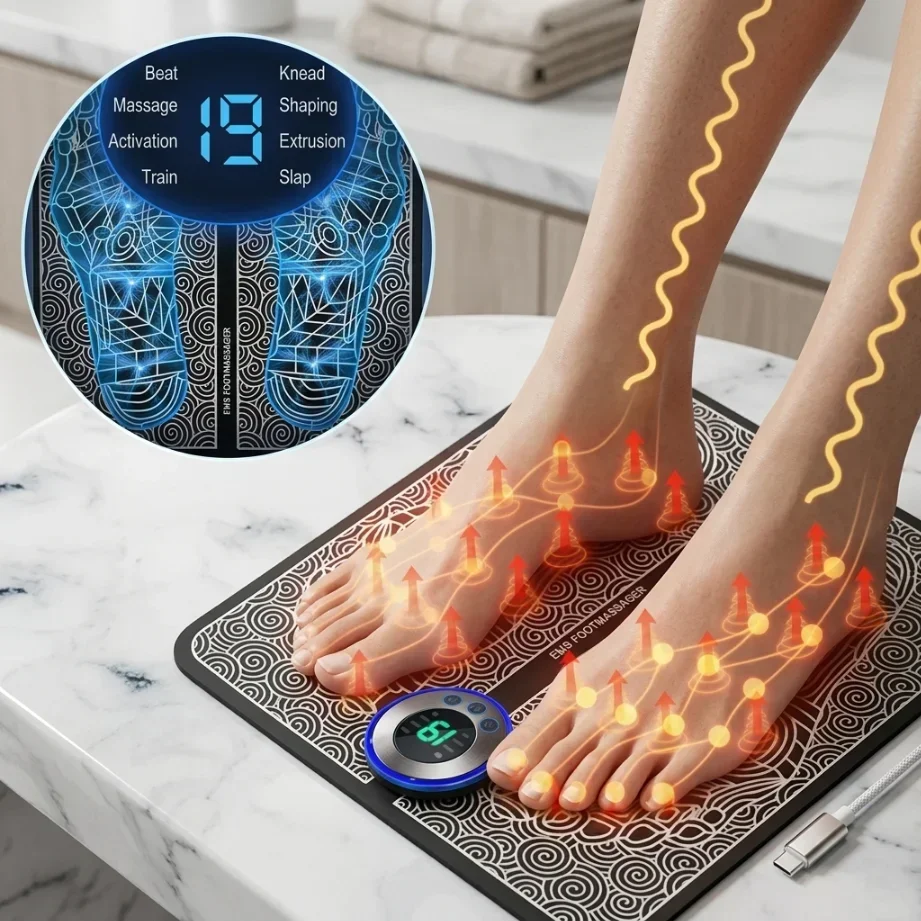
EMS works by passing a small electrical current through the skin to depolarise the motor nerves supplying a muscle. The nerve cannot tell the difference between that signal and one from your brain, so the muscle contracts. In the foot and calf, this is more useful than it sounds: the calf is the body’s secondary venous pump, and the deep veins of the leg rely on muscular contraction to squeeze blood back toward the heart. Sit still for eight hours and that pump does nothing, which is why feet and ankles swell at a desk. An EMS pad restores the contraction without the walking — and the increase in local blood flow that follows is real, measurable, and the honest reason to own one.
Key Benefits
- Reactivates the calf muscle pump while you sit. The genuine, evidence-backed benefit. Rhythmic contraction assists venous return and helps counter the heavy, swollen feet that come from a long day at a desk or on a flight.
- Increases local blood flow. Contracting muscle demands blood, so circulation to the feet and lower legs rises during a session — which is why they feel warmer and less dead afterwards.
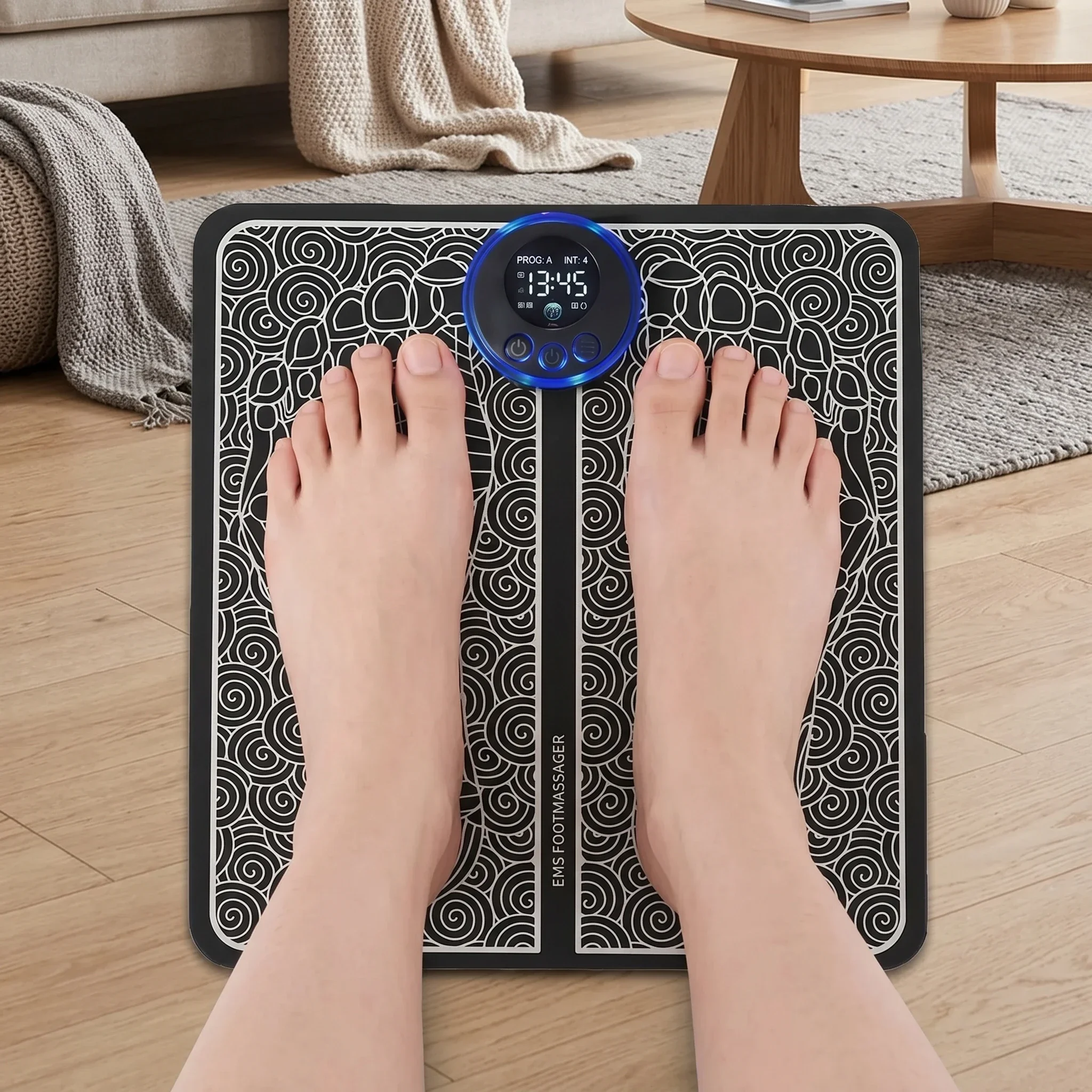
- Completely passive. You sit, place your feet on the mat, and read. No effort, nothing to hold, no technique to learn — you can run a session under a desk while working.
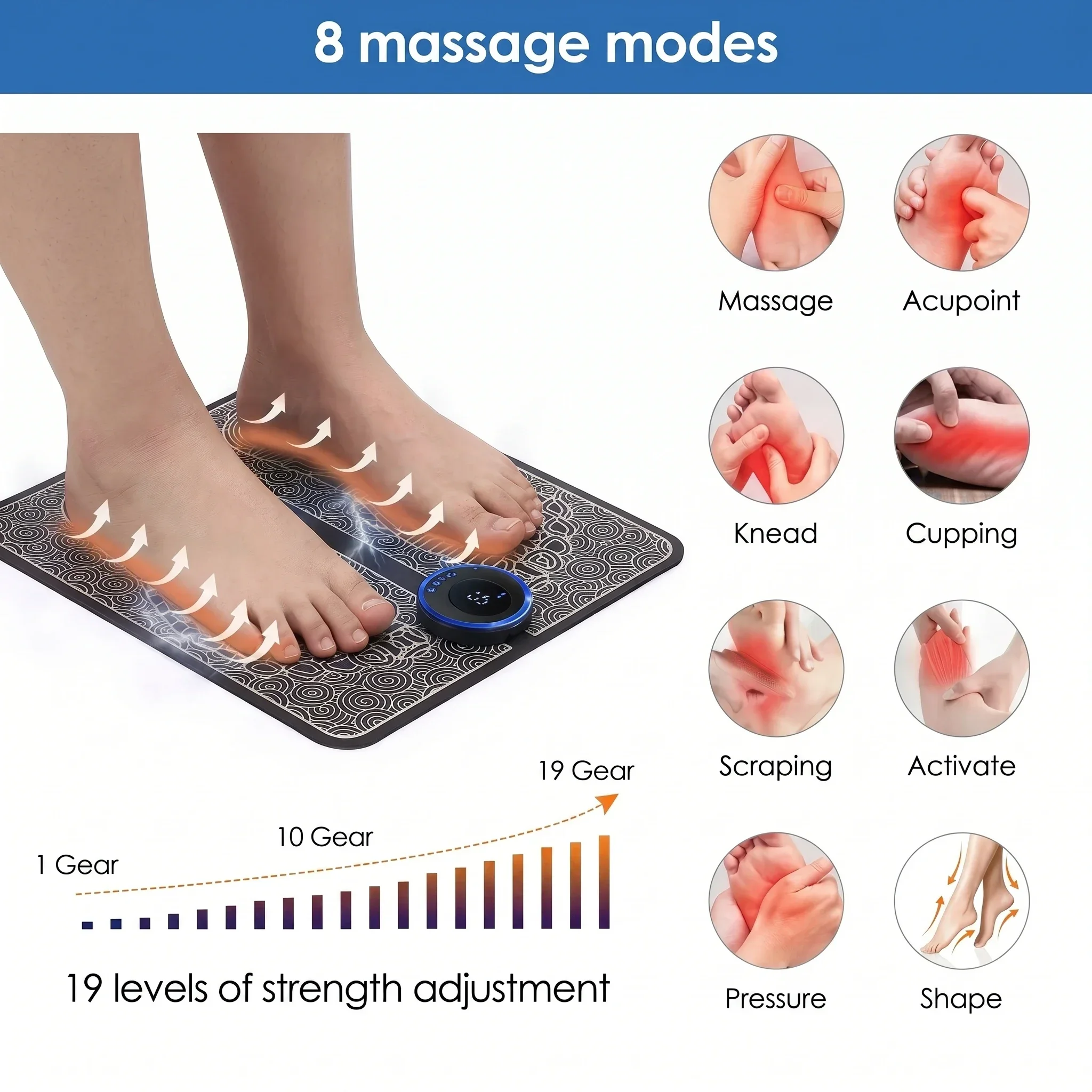
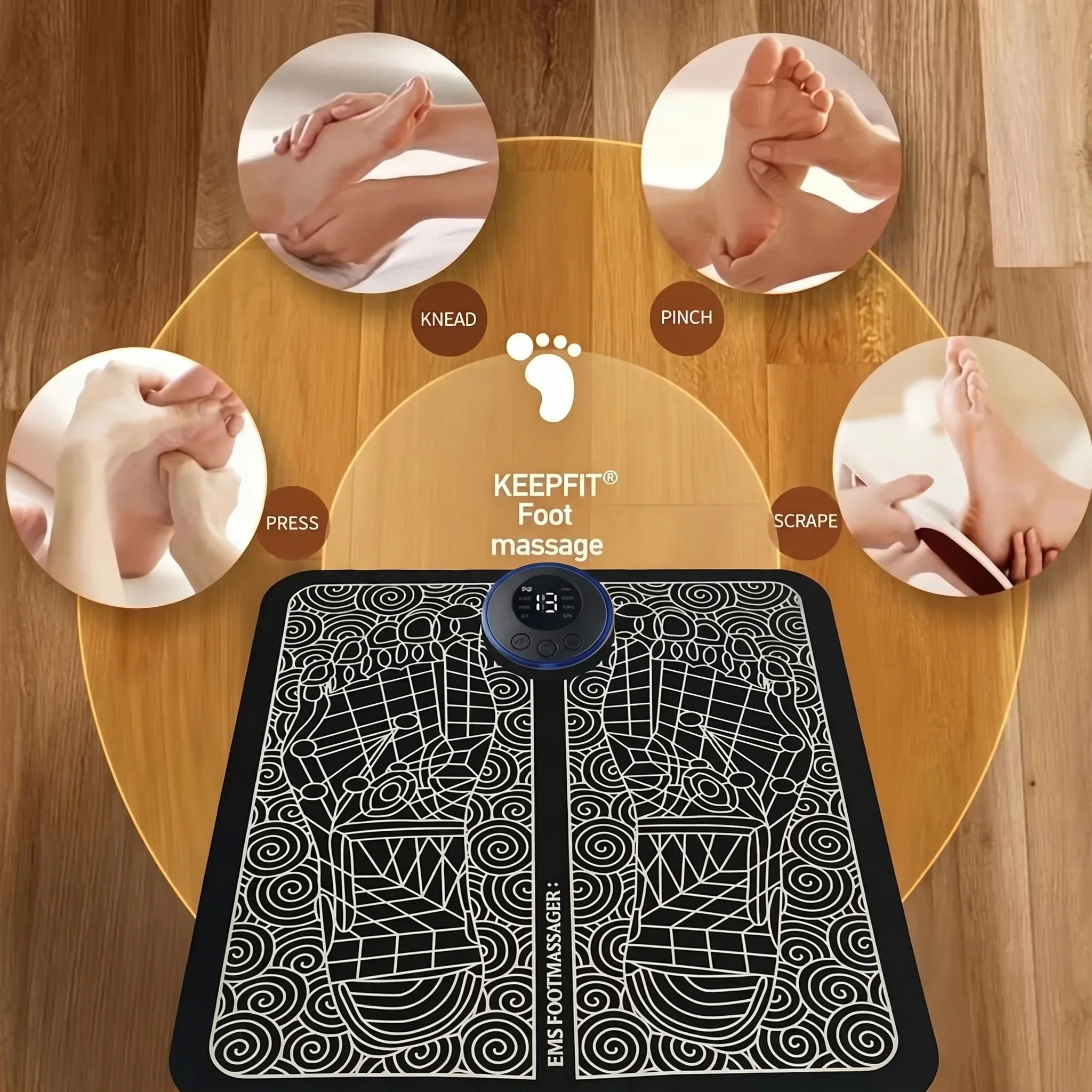
- Adjustable intensity and modes. Multiple programmes and intensity levels, so you can find a setting that is a comfortable tingle rather than an unpleasant jolt.
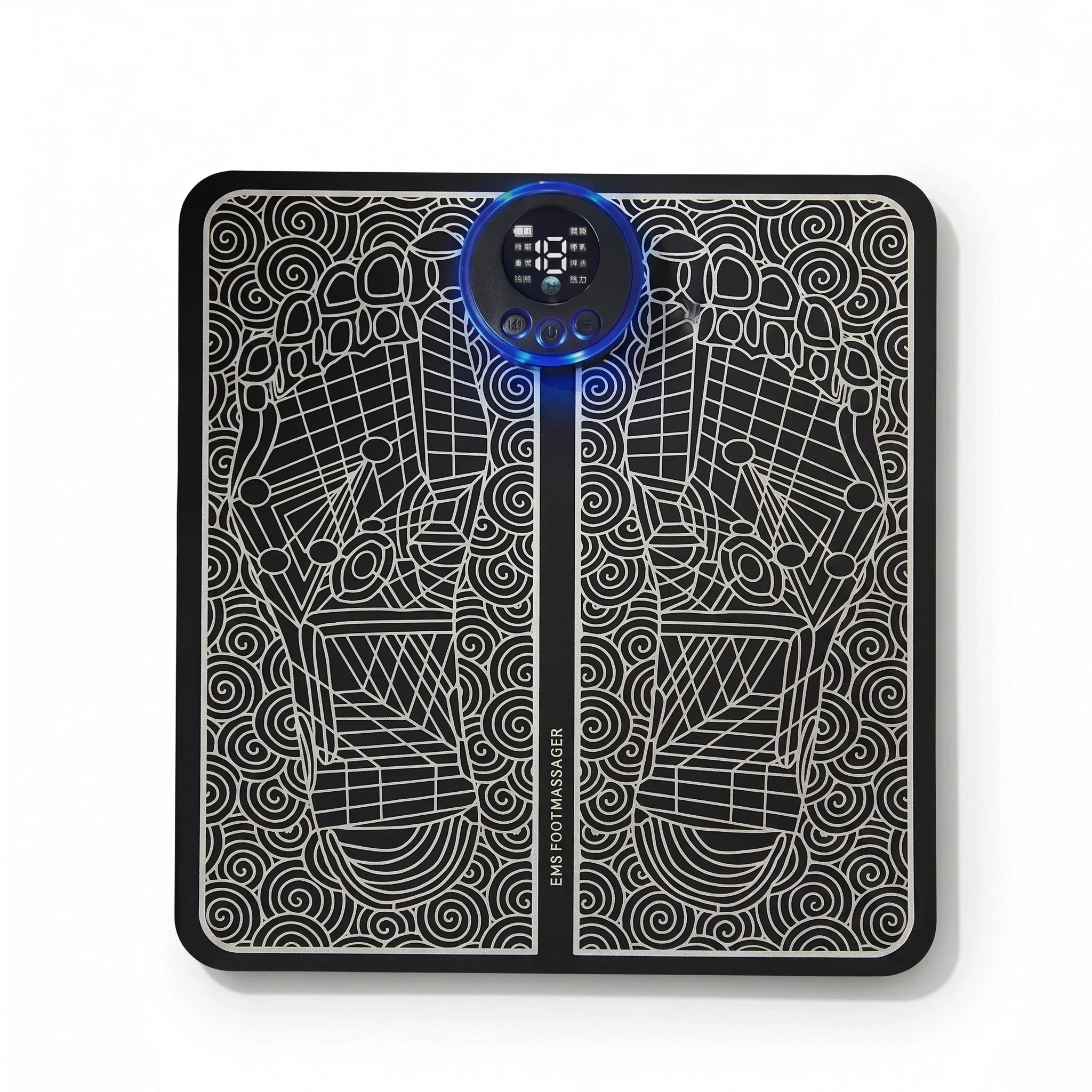
- Folds flat and stores anywhere. A thin mat that slides under a sofa or into a drawer, unlike a bulky roller-and-motor foot massager.
- The lie this category is built on, stated plainly. EMS pads and belts do not burn fat, do not cause weight loss, and do not slim or tone your legs. Spot reduction is not a real physiological phenomenon, and the energy cost of an EMS contraction is trivially small — a twenty-minute session burns a rounding error. If a product page promises fat loss from electrical stimulation, it is lying to you. This mat is for circulation, sensation and comfort, and it is worth owning for exactly that.
How to Use
Your feet must be bare and slightly damp for the mat to work at all — dry skin has high electrical resistance and the current will not couple properly, which is the single most common reason people think their pad is broken. Wipe your soles with a damp cloth first. Sit down, place both feet flat on the pad, switch on, and start at the lowest intensity, increasing gradually until you feel a firm but comfortable tingling and visible muscle twitch. It should never be painful. Sessions of 15–30 minutes, once or twice a day, are ample. Safety — read this before your first use, because these contraindications are absolute: do not use EMS if you have a pacemaker, an implanted defibrillator, or any implanted electronic or metal device. Do not use if you are pregnant. Do not use if you have epilepsy, a heart condition or arrhythmia, or a known or suspected DVT. Never place electrodes on the front of the neck, near the carotid arteries, on the head, or across the chest. Do not use on broken, numb, or infected skin, or over a fresh injury. If you have diabetes or peripheral neuropathy, speak to your doctor first — reduced sensation means you cannot reliably judge the intensity and you may burn skin you cannot feel. Do not use while driving, operating machinery, in the bath, or while falling asleep. Stop immediately if you get pain, dizziness, palpitations, or skin irritation, and see a doctor if it persists.
Specifications
| Type | EMS (electrical muscle stimulation) foot massager mat |
|---|---|
| Mechanism | Electrical stimulation of motor nerves causing muscle contraction |
| Target area | Soles of the feet, with contraction felt through the calves |
| Modes / intensity | Multiple programmes and adjustable intensity levels |
| Requirement | Bare, slightly damp feet — dry skin will not conduct |
| Session | 15–30 minutes, 1–2 times daily |
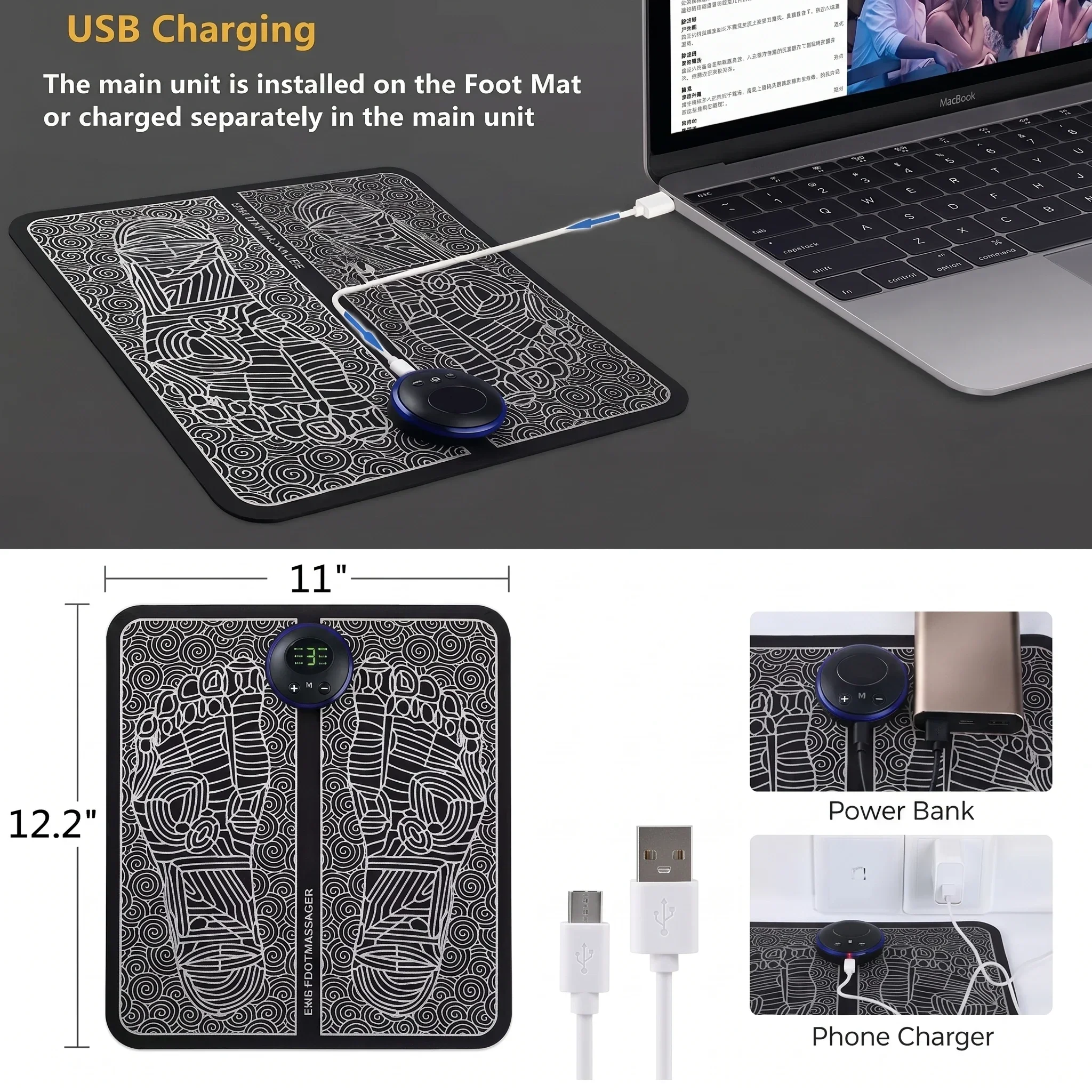
| Design | Foldable flat mat |
| Colour / power source | Variant dependent — select at checkout |
| Absolute contraindications | Pacemaker or implanted device, pregnancy, epilepsy, heart conditions, DVT |
| Does NOT | Burn fat, cause weight loss, or slim the legs — no EMS device does |
Care & Maintenance
Switch off and disconnect before cleaning. Wipe the surface with a soft, barely damp cloth and mild soap, then dry thoroughly — never submerge the mat, never run it under a tap, and never put it in a washing machine. Store flat or loosely folded rather than creased hard along the same line, which eventually cracks the conductive layer. Keep it away from heat and direct sunlight. Inspect the surface for cracks, wear or exposed wiring before each use, and stop using it immediately if you find any.
What’s in the Box
1 x EMS foot massager pad, 1 x controller, power/charging cable, 1 x instruction manual. Contents may vary slightly by variant — check the listing for your selection.
Reviews
There are no reviews yet.