Why a Child Needs a Child-Sized Mat, Not a Cut-Down Adult One
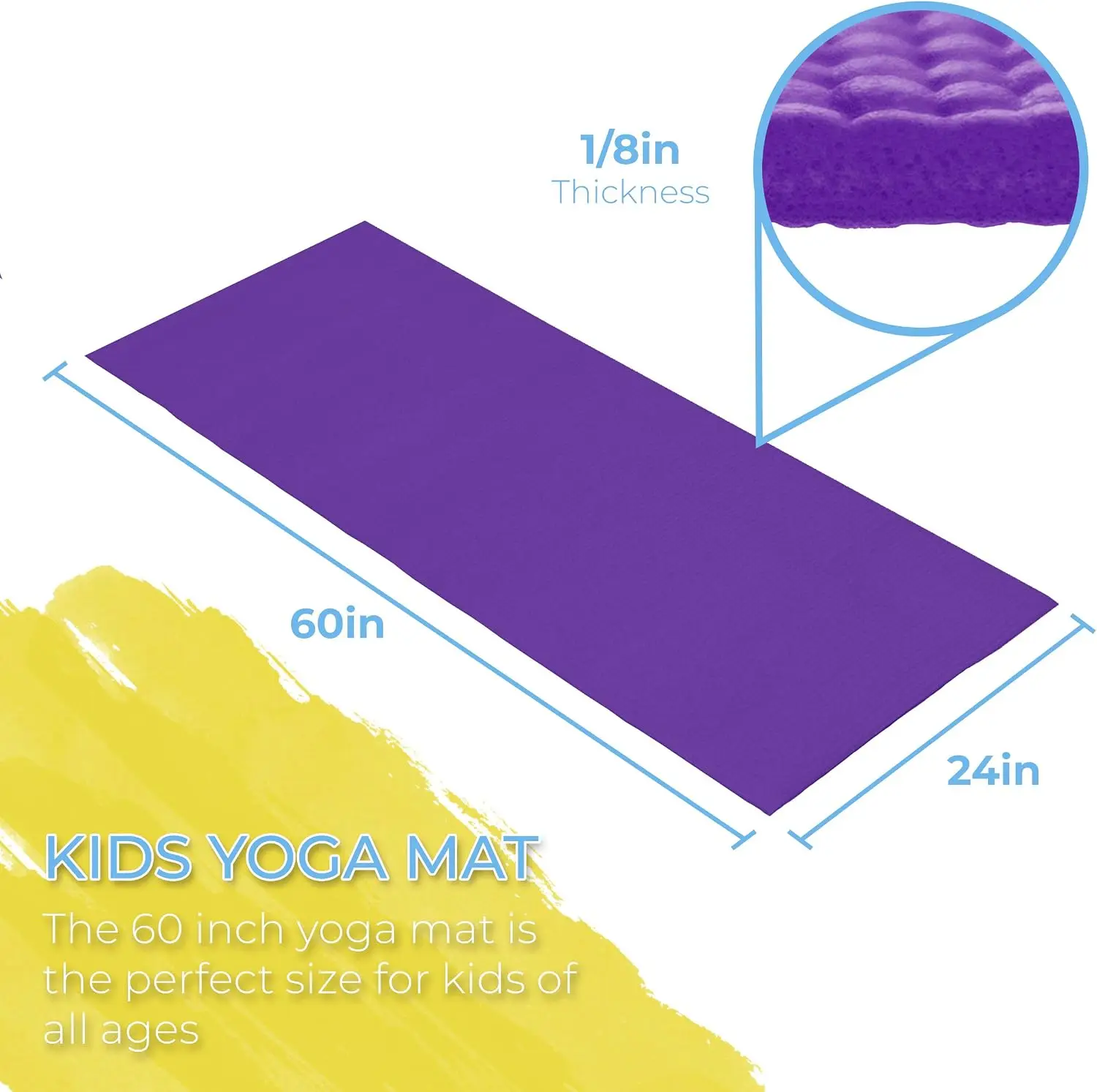
A yoga mat does two things: it provides friction so hands and feet don’t slide, and it provides a compliant layer between bone and floor. Both depend on the mat being the right size. On an oversized mat, a child’s feet land off the surface in a wide-legged pose while a metre of unused material bunches behind them — the grip is there, but not where the load is. A 60″ x 24″ mat maps to a child’s limb span, so their contact points stay on the textured surface throughout. The 4mm depth is a deliberate compromise: enough cushioning to protect knees, spine and wrists on a hard floor, thin enough that the mat doesn’t compress and destabilise a standing balance.
Key Benefits
- Sized for children, so poses land on the mat. 60″ x 24″ corresponds to a typical child’s height and reach — grip is under their hands and feet, where it needs to be.
- 4mm is the balance point. Thicker mats feel plush but wobble under one-legged poses, which is exactly when a child needs a stable base. 4mm protects the knees without sabotaging balance.
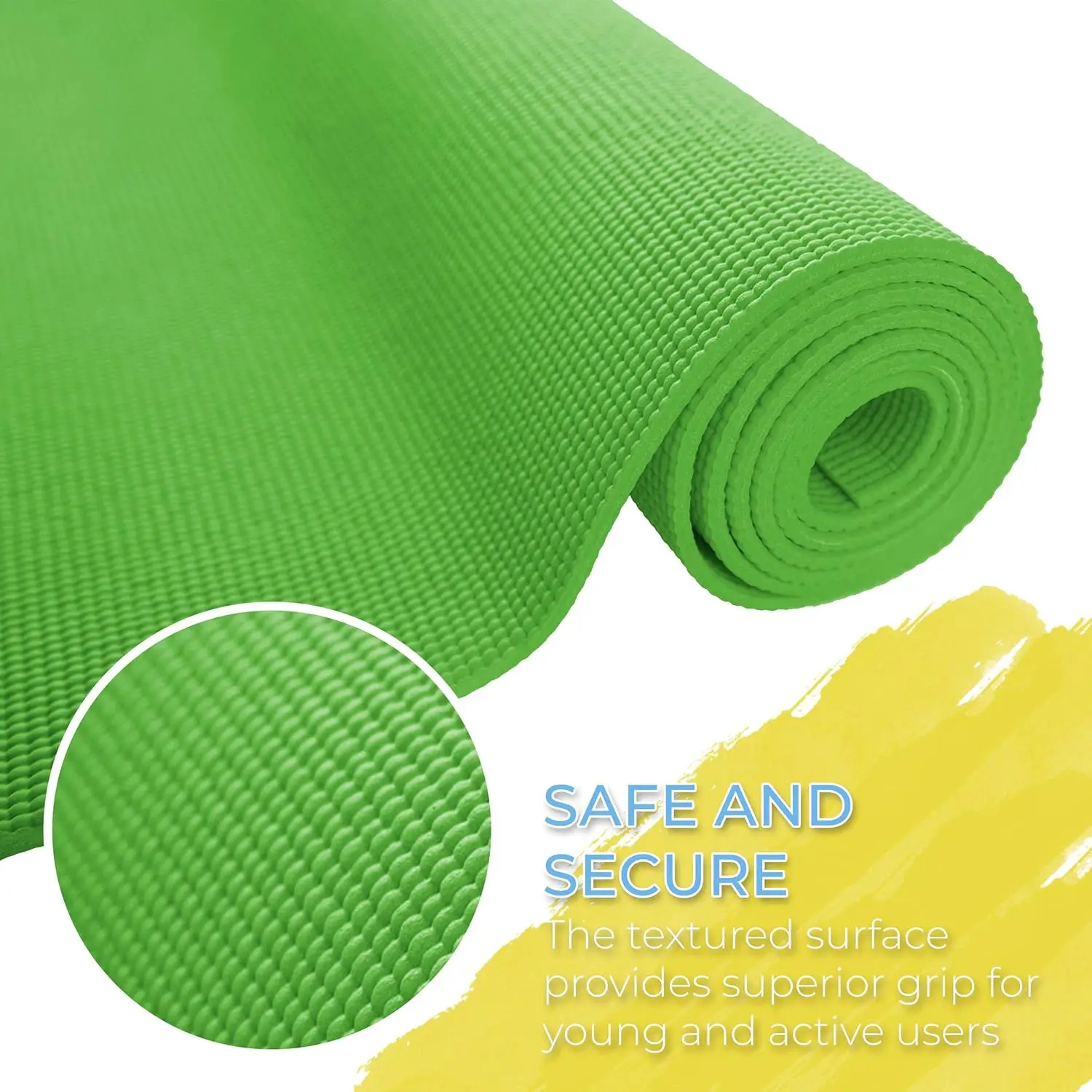
- Non-slip texture on both faces. Grip under the hands, and grip against the floor — a mat that slides on a gym hall’s polished surface is worse than no mat at all.
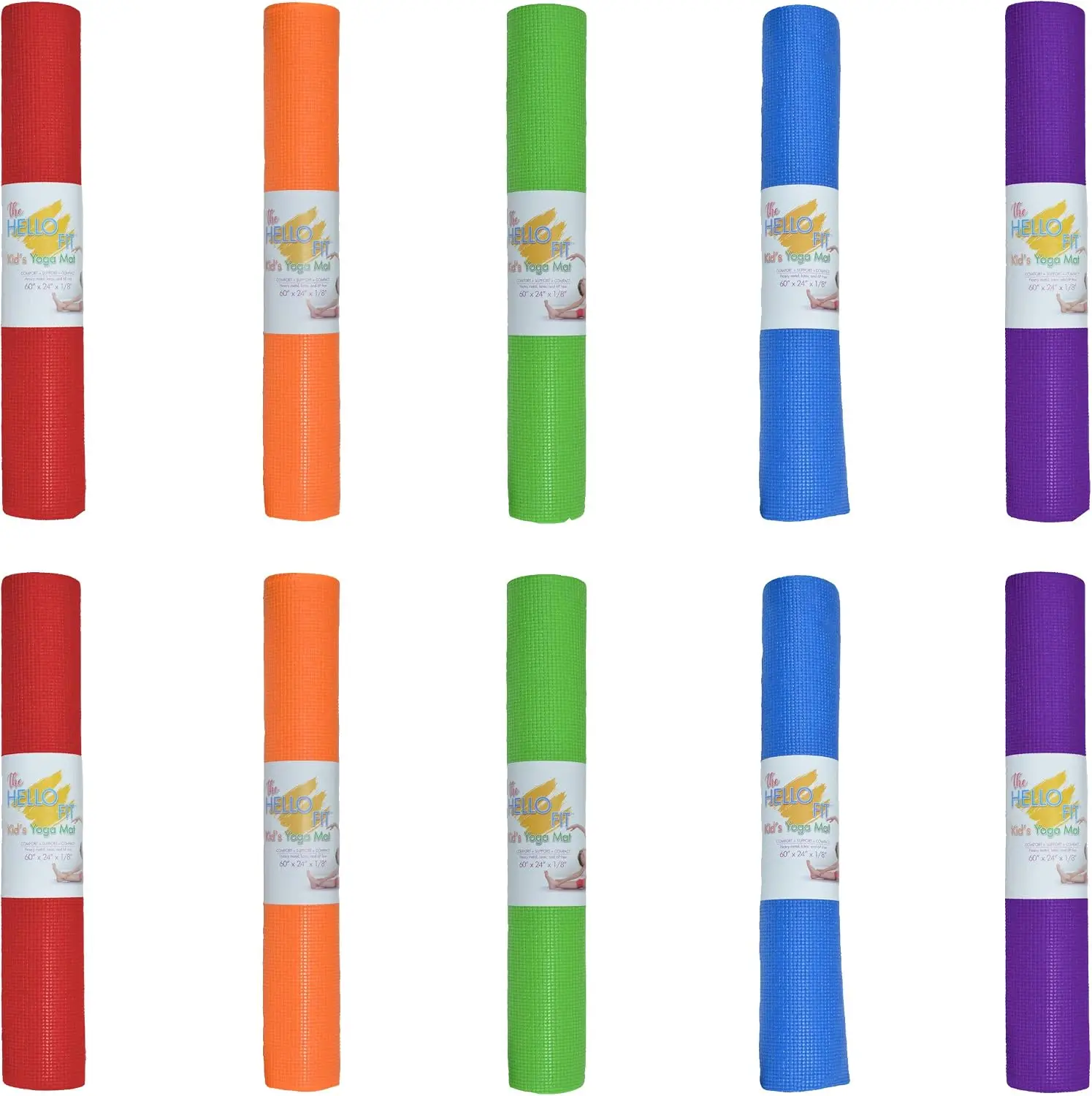
- A 10-pack, which is the real unit of purchase. Schools, after-school clubs, scout groups and studios don’t buy one mat. Buying the class set in one go is dramatically cheaper than ten singles.
- Rolls compactly for storage. Ten mats have to live somewhere between sessions. These roll tight and stack in a corner or a trolley.
- Wipe-clean surface. Shared mats used by children need to be cleaned between groups. A closed surface wipes down in seconds.
How to Use
Roll the mat out with the textured face up and let it lie flat for a few minutes — a new mat will want to curl back at the corners, and this settles within a day or two of use. Have children practise in bare feet or grip socks; ordinary socks defeat the entire non-slip surface and are the most common cause of a slip. Space mats at least an arm’s length apart in a class setting so nobody catches a neighbour on a wide arm sweep. If you are using them on a smooth gym-hall or laminate floor, check the mat doesn’t travel by pressing down and pushing forward before the session starts. Store mats rolled rather than folded — a permanent crease becomes a raised ridge, and a ridge underfoot is a trip hazard for a child who isn’t looking at the floor.
Specifications
| Dimensions | 60″ x 24″ (approx. 152cm x 61cm) per mat |
|---|---|
| Thickness | 4mm |
| Quantity | 10 mats (bulk pack) |
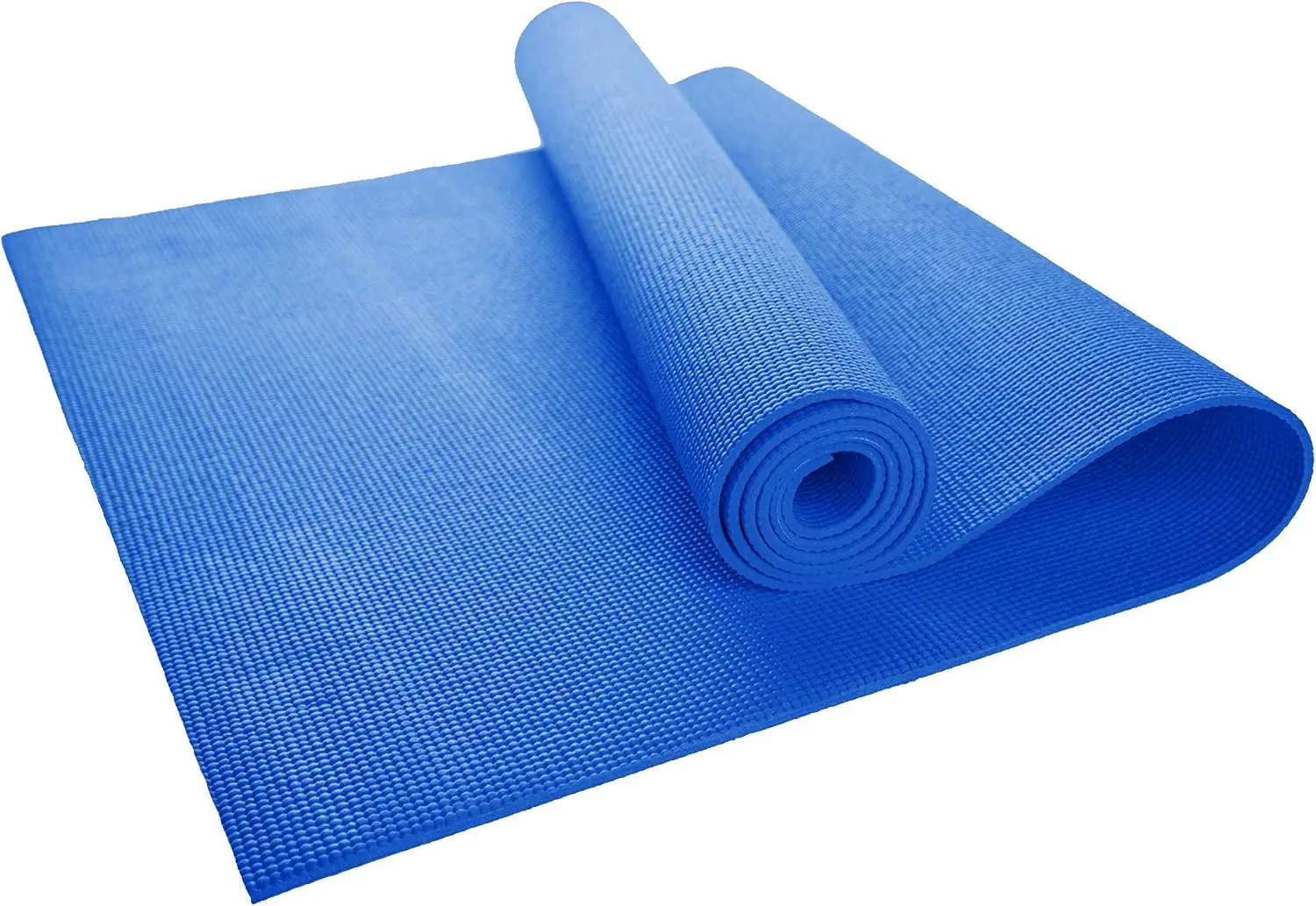
| Surface | Non-slip textured, both faces |
| Sized for | Children — boys and girls |
| Best for | Schools, clubs, studios, kids’ yoga and PE classes |
| Storage | Roll for compact stacking |
| Colours | Variant dependent |
Care & Maintenance
Wipe with a damp cloth and mild soap after group use; avoid alcohol-heavy or bleach-based cleaners, which strip the textured layer and leave the mat slick — the opposite of what you want. Let mats dry completely before rolling, since rolling a damp mat traps moisture and grows mildew inside the roll. Store rolled, upright or flat, out of direct sunlight.
What’s in the Box
10 x kids’ yoga mats, 60″ x 24″, 4mm.
Reviews
There are no reviews yet.