
How Cervical Traction Decompresses a Neck That Spends All Day Looking Down
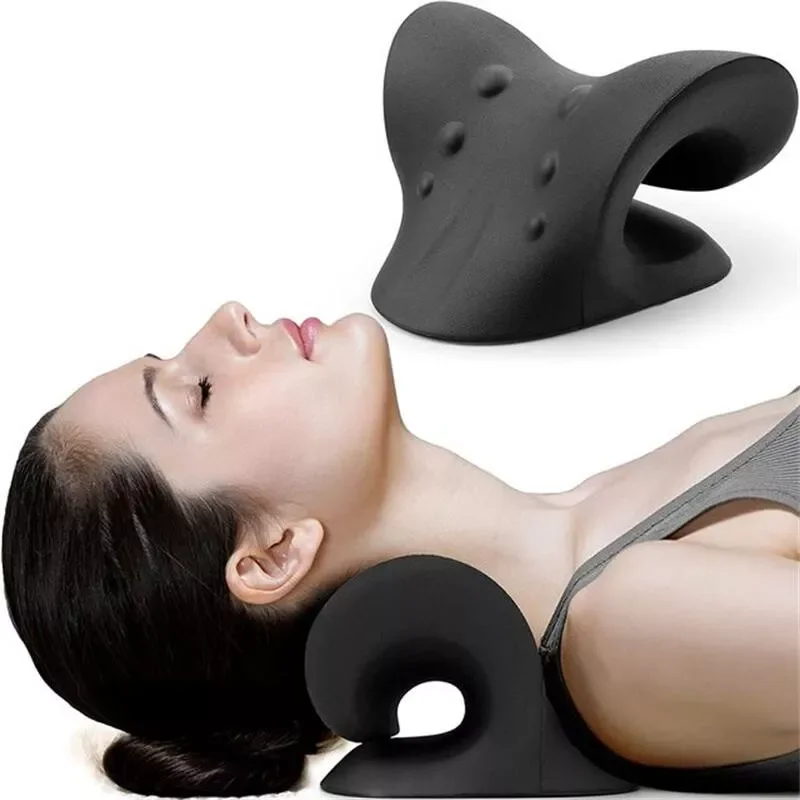
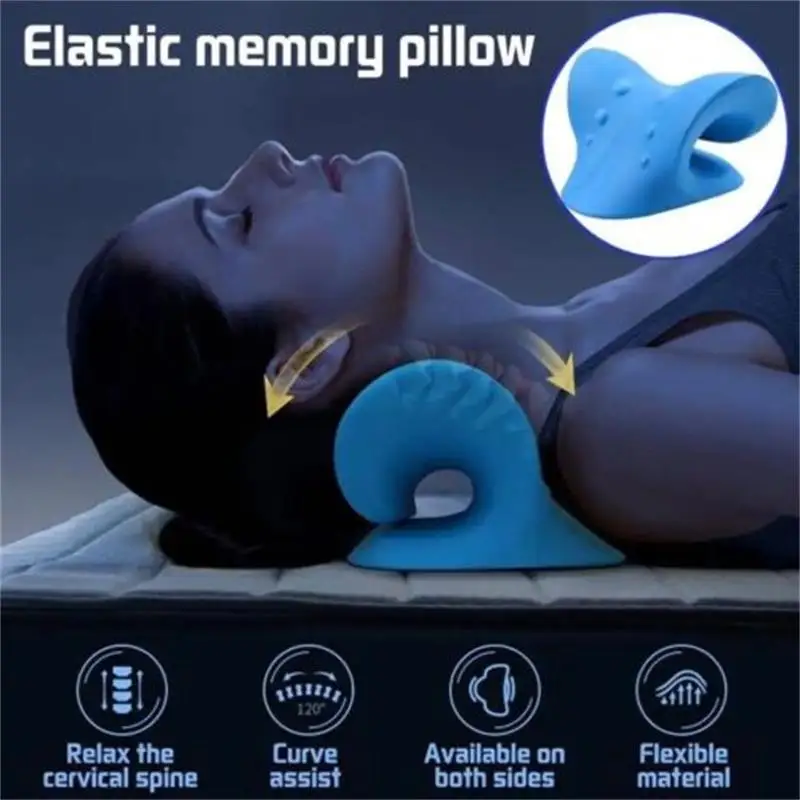
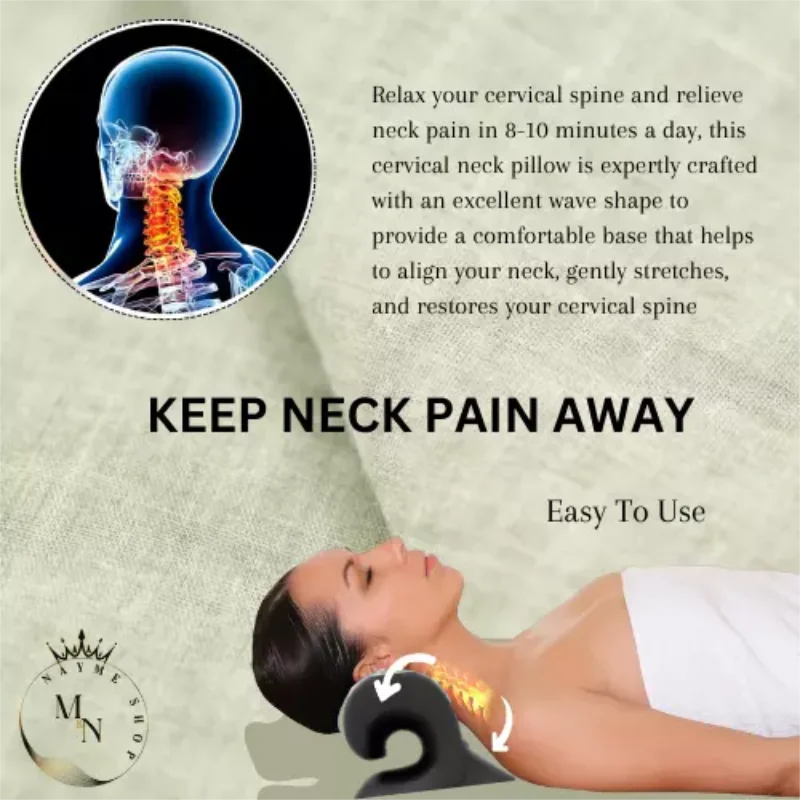
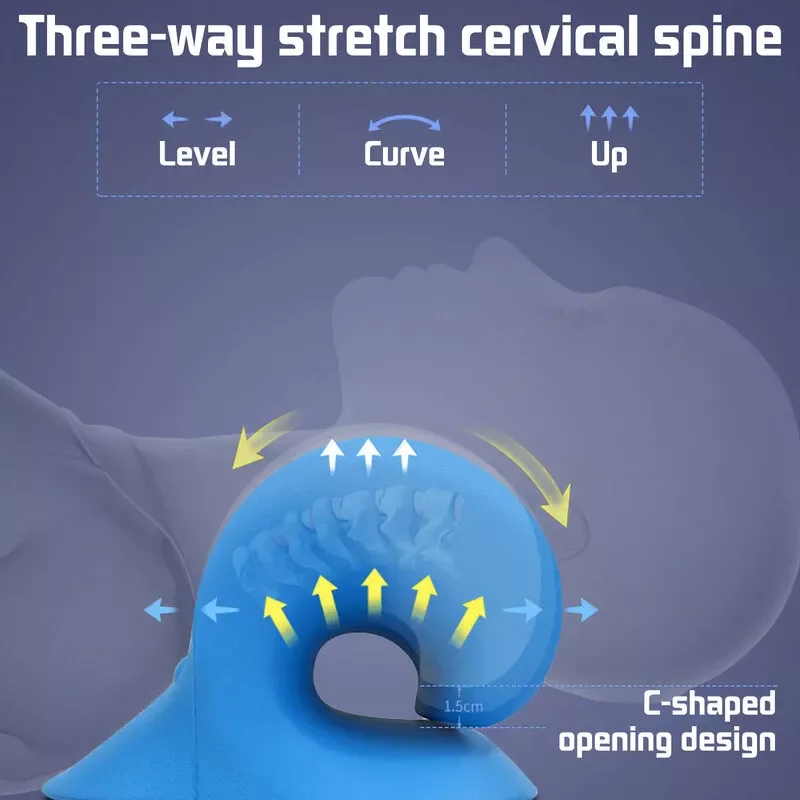
Your head weighs roughly 5 kg in neutral. Tilt it forward 45 degrees and the effective load on the cervical spine rises to something closer to 20 kg — a load the deep neck flexors and upper trapezius are then asked to hold, all day, for years. The result is a flattened cervical lordosis and chronically shortened suboccipital muscles. A traction device works in the opposite direction: lying supine over its contoured arch applies a gentle distraction force along the spine, which momentarily widens the space between vertebrae, relieves pressure on the discs and nerve roots, and passively restores the extension curve while the surrounding muscles are unloaded and finally able to let go.
Key Benefits
- Restores the cervical curve: The contoured arch passively extends the neck back into its natural lordosis — the shape a day at a desk quietly flattens out.
- Gentle spinal distraction: Traction increases the space between cervical vertebrae, taking pressure off the discs and the nerve roots that exit between them.
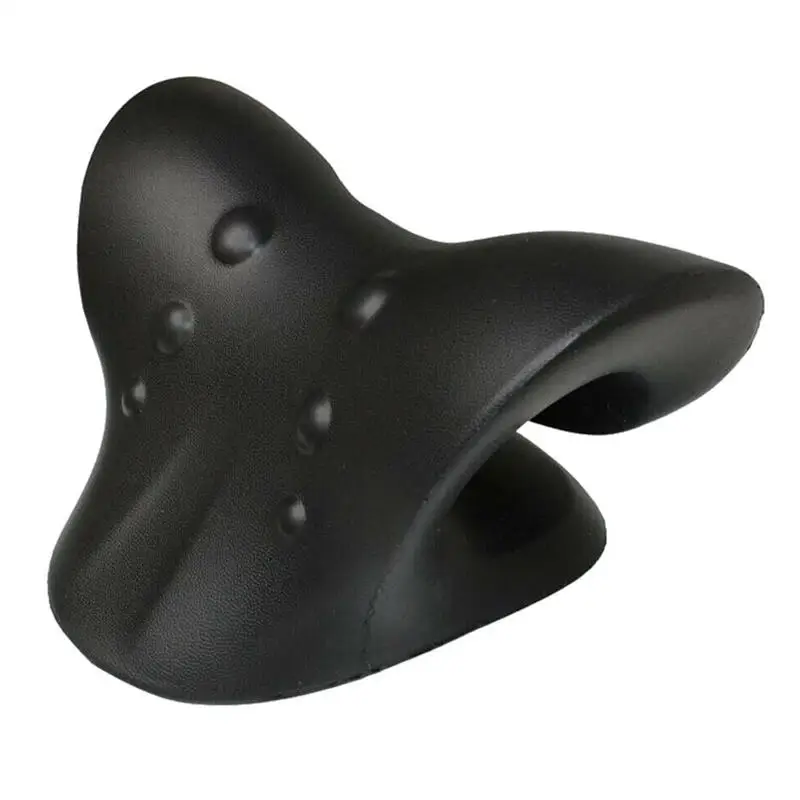
- Releases the suboccipitals: The raised ridge presses into the base of the skull, where the small muscles that generate most tension headaches live and where you cannot reach.
- Nothing to plug in, nothing to charge: A shaped block of EVA foam, gravity and ten minutes. It does not break, and it works in a hotel room.
- Relief, not a cure: This eases the symptom. It does not correct your posture — only changing how you sit, and strengthening the deep neck flexors, does that. Treat traction as the relief valve, not the solution.
- Multiple firmness positions: Use it directly on the floor for a strong stretch or on a bed or mat for a gentler one, so you can scale the intensity to your tolerance.
How to Use
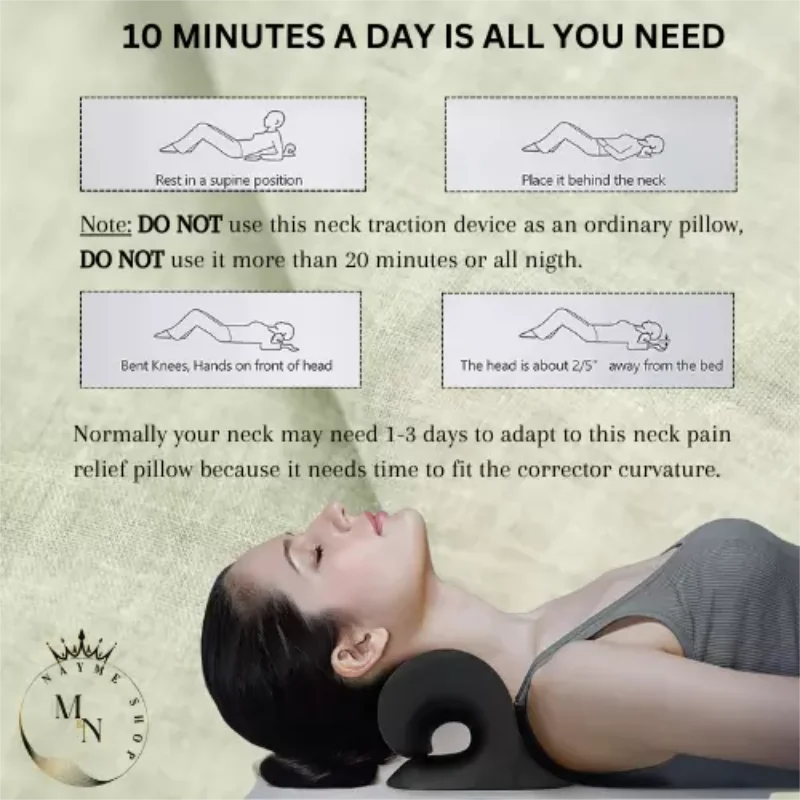
Lie on your back on a firm surface with the device under your neck, the raised ridge tucked into the base of your skull and your head hanging relaxed beyond it. Let gravity do everything — do not push, force or crane. Start with just 2 to 3 minutes and build gradually toward 10 to 15 minutes over a couple of weeks; going straight to a long first session is the reliable way to give yourself a stiff neck for two days. Come off it slowly by rolling to your side and sitting up, never by sitting straight up from the device. Mild stretching is expected. SAFETY — stop immediately and do not continue if you feel dizziness, nausea, tingling, numbness, shooting pain into the arms, or any change in vision. Do not use this device if you have osteoporosis, rheumatoid arthritis, cervical spine instability, a recent neck injury or surgery, a spinal implant or fusion, vertebral artery insufficiency, uncontrolled high blood pressure, or if you are pregnant. If you have diagnosed disc pathology or radiating nerve pain, ask a physiotherapist or doctor before your first use rather than after. Never sleep on it.
Specifications
| Product type | Cervical traction device / neck relaxer |
|---|---|
| Material | EVA foam |
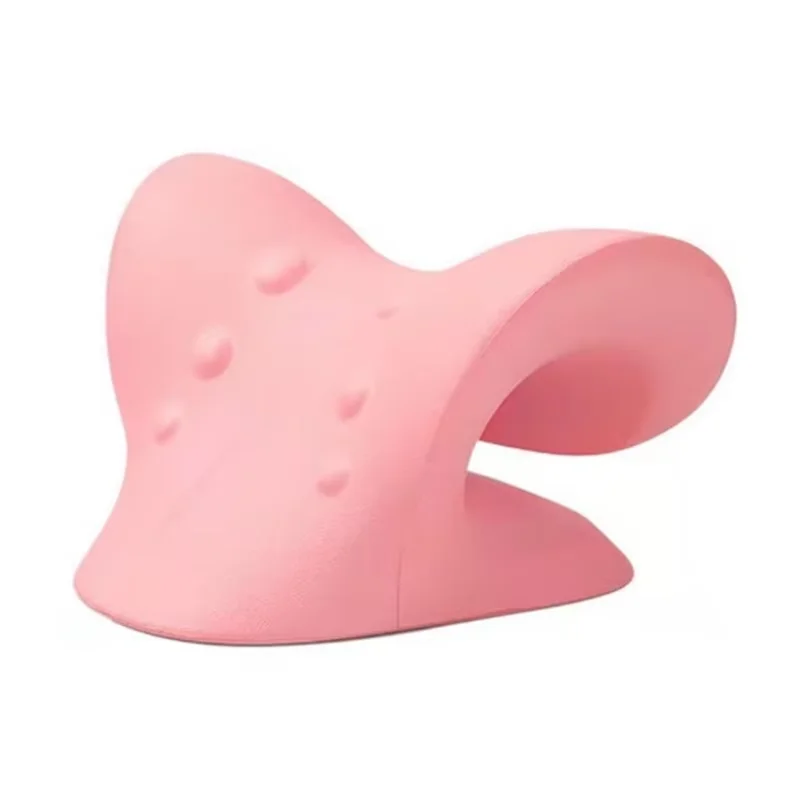
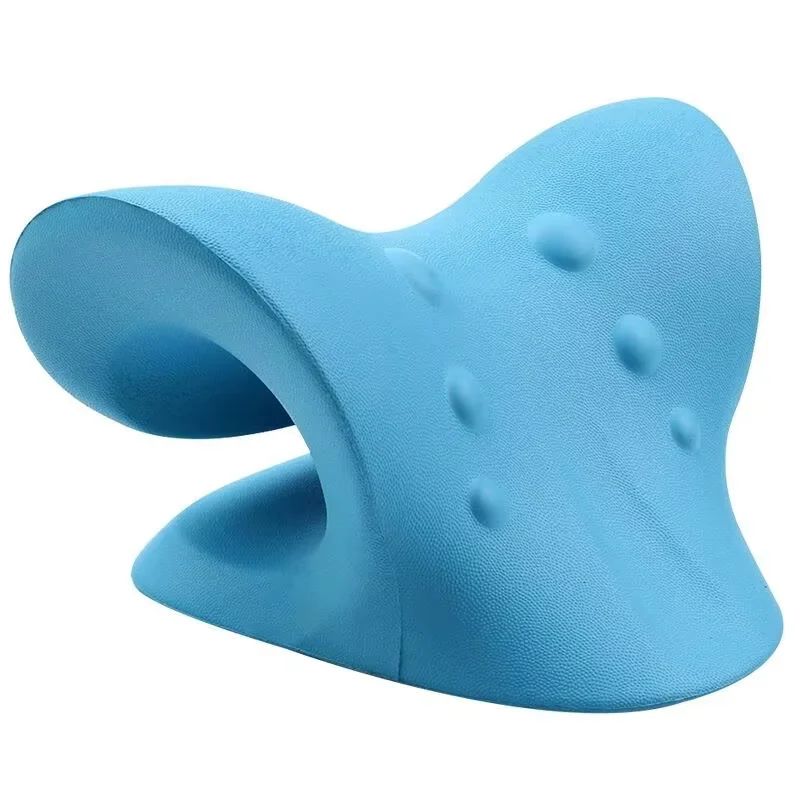
| Shape | Concave contoured arch with suboccipital ridge |
| Weight | 0.5 to 1 kg |
| Colour options | Blue, Pink, Black |
| Power required | None |
| Recommended session | Start at 2-3 minutes, build to 10-15 minutes |
| Portability | Lightweight, no assembly, travel friendly |
Care & Maintenance
Wipe with a damp cloth and mild soap; EVA foam is closed cell, so it does not absorb sweat but it will hold skin oils and become slick. Do not machine wash, soak or tumble dry. Keep it out of prolonged direct sunlight, which makes the foam brittle and yellow. Store it somewhere it will not sit compressed under weight, because a permanently deformed arch no longer produces the traction angle it was shaped for.
What’s in the Box
1 x cervical traction device in your selected colour. No assembly, no power supply, no batteries.
Reviews
There are no reviews yet.