The Roll-Top Seal Is the Product
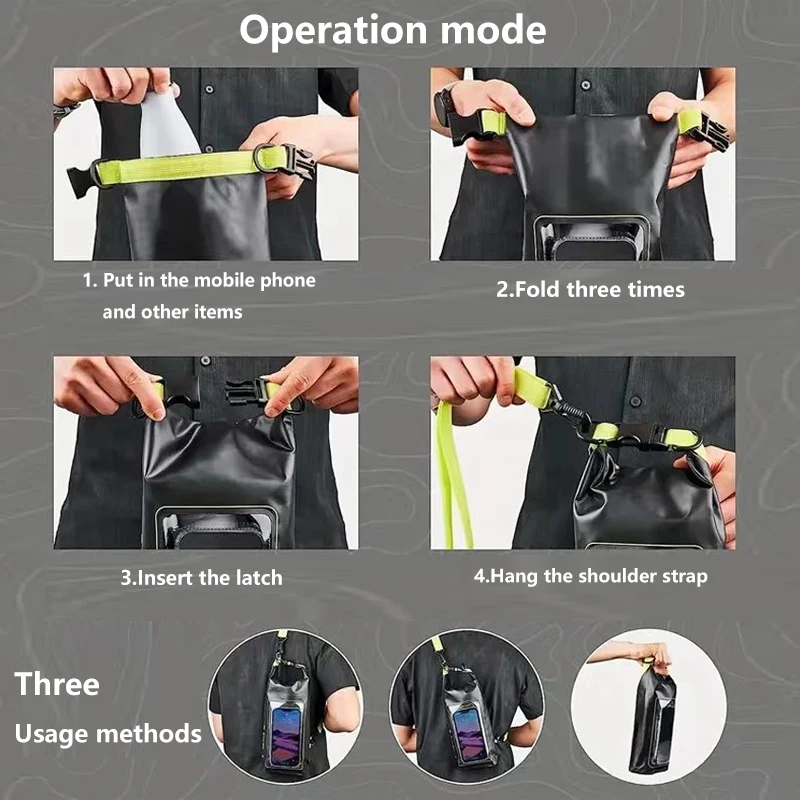
A dry bag does not work because the fabric is waterproof — every dry bag’s fabric is waterproof. It works because of the roll-top closure: folding the open end over on itself three or more times and clipping it traps a pocket of air and forces the two seal faces together, so water has no continuous path in. The trapped air is also why a properly rolled bag floats if you drop it overboard. Fold it once and clip, and you have a shopping bag with a buckle. Fold it three times and you have a sealed vessel.
Key Benefits
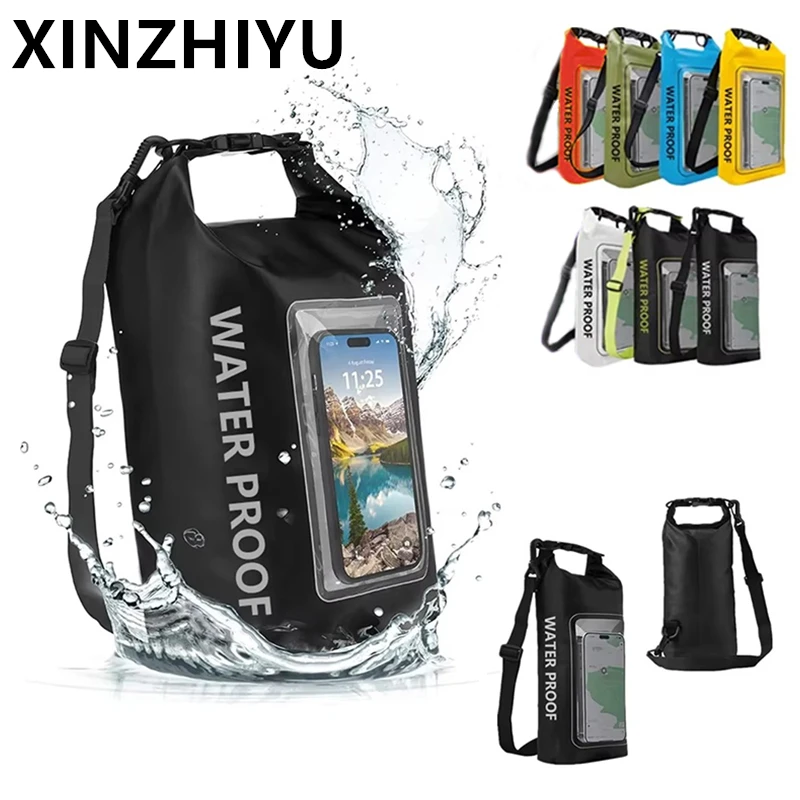
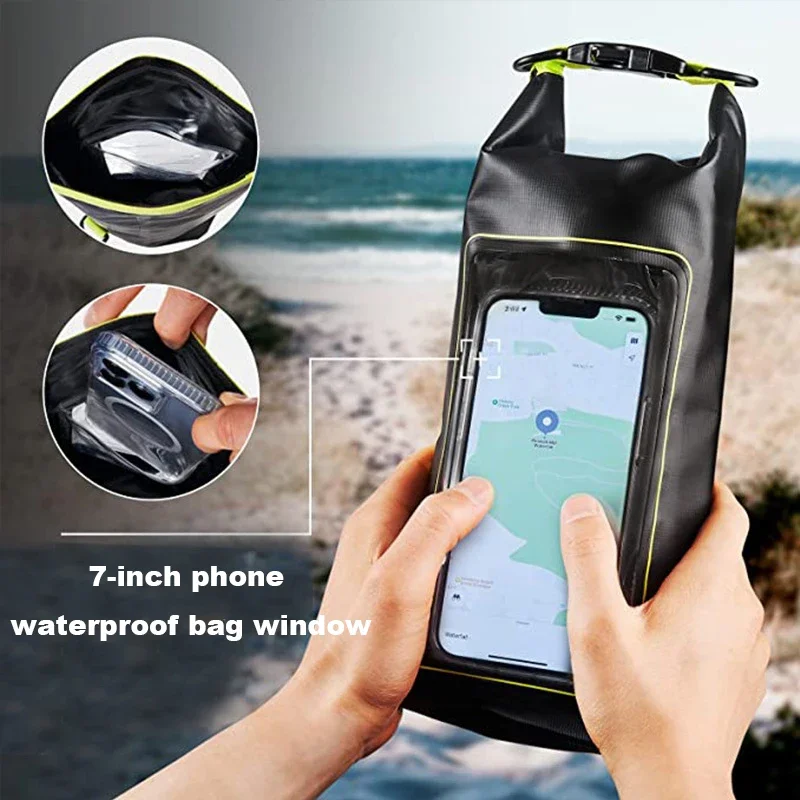
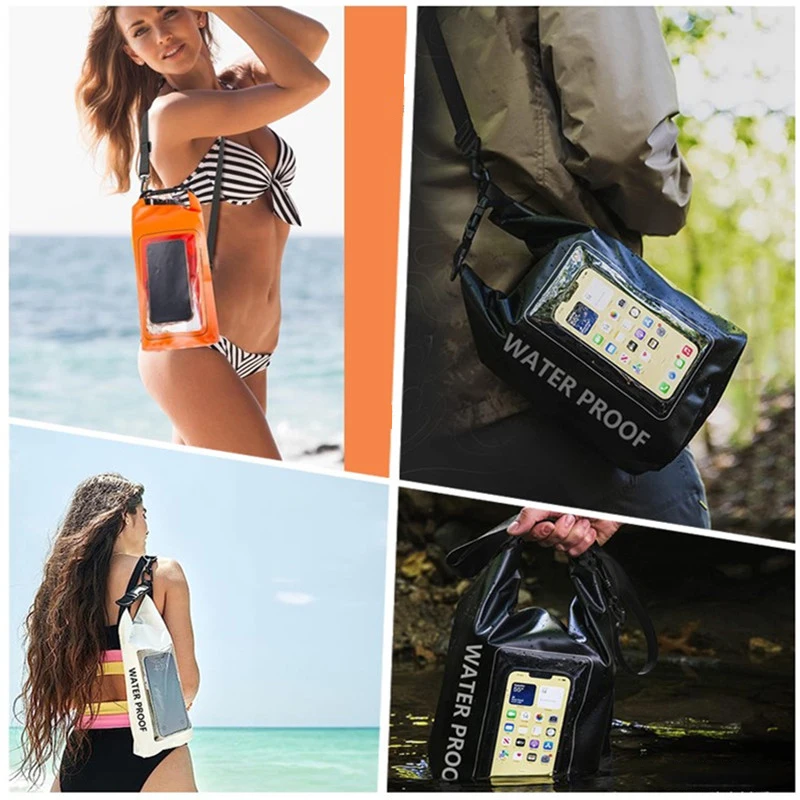
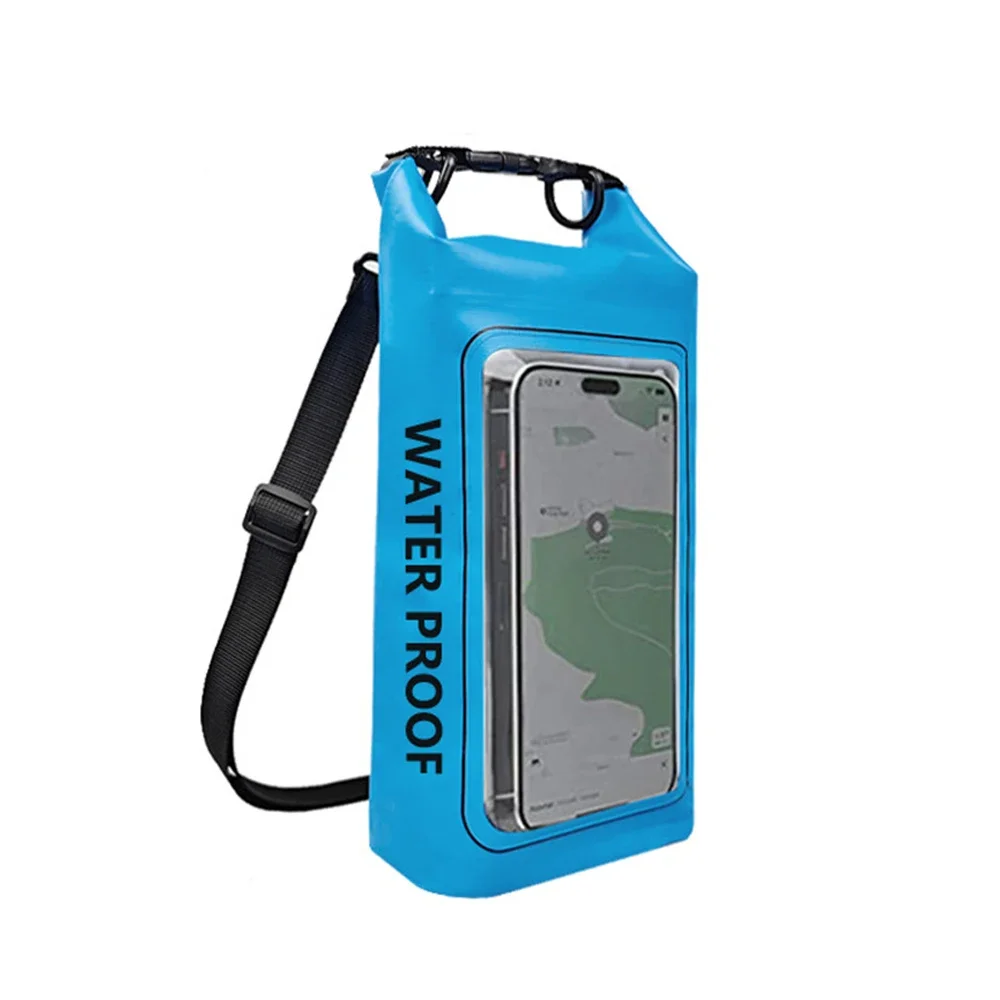
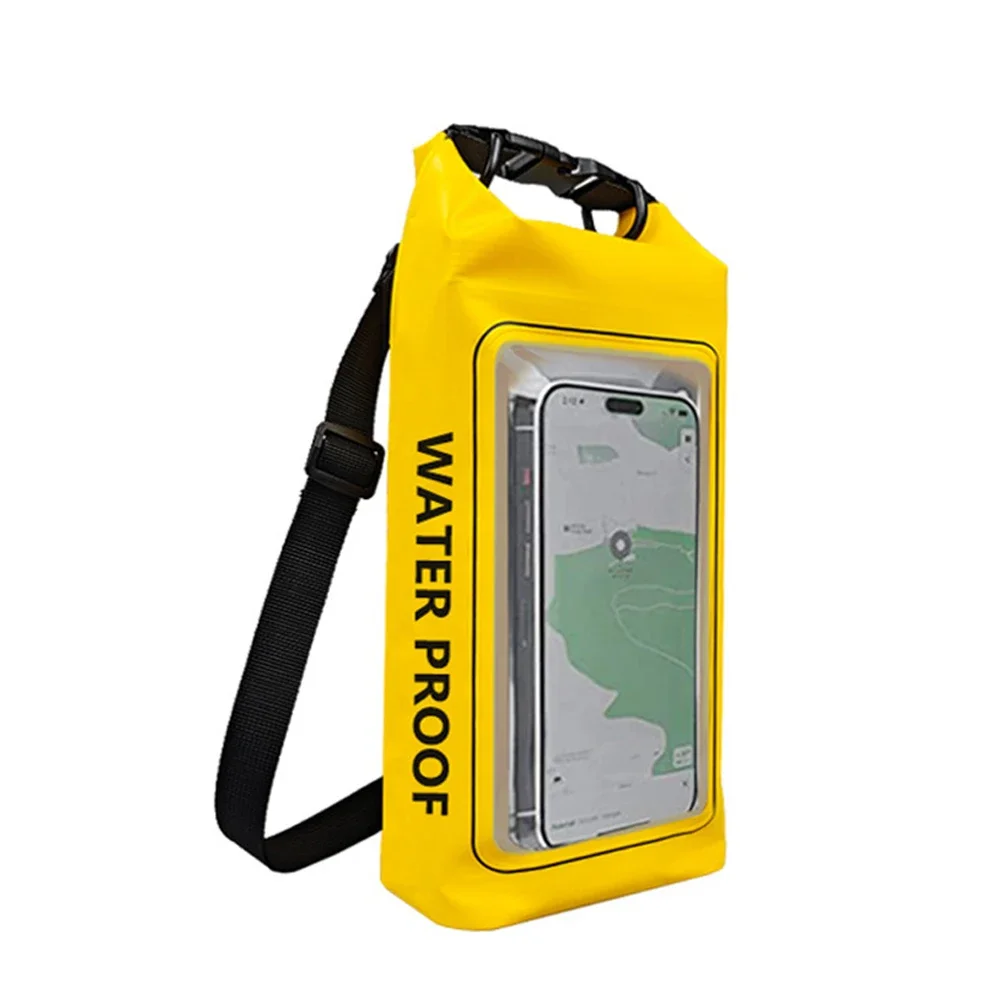
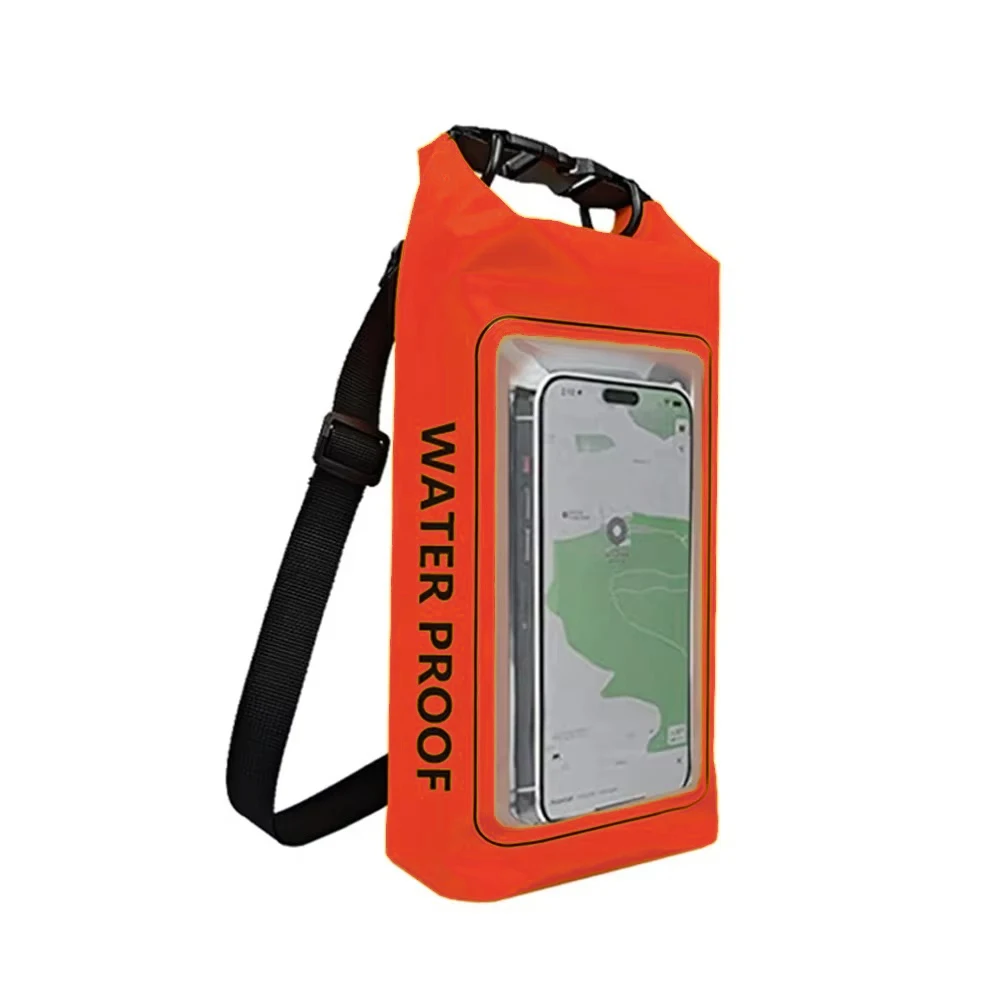
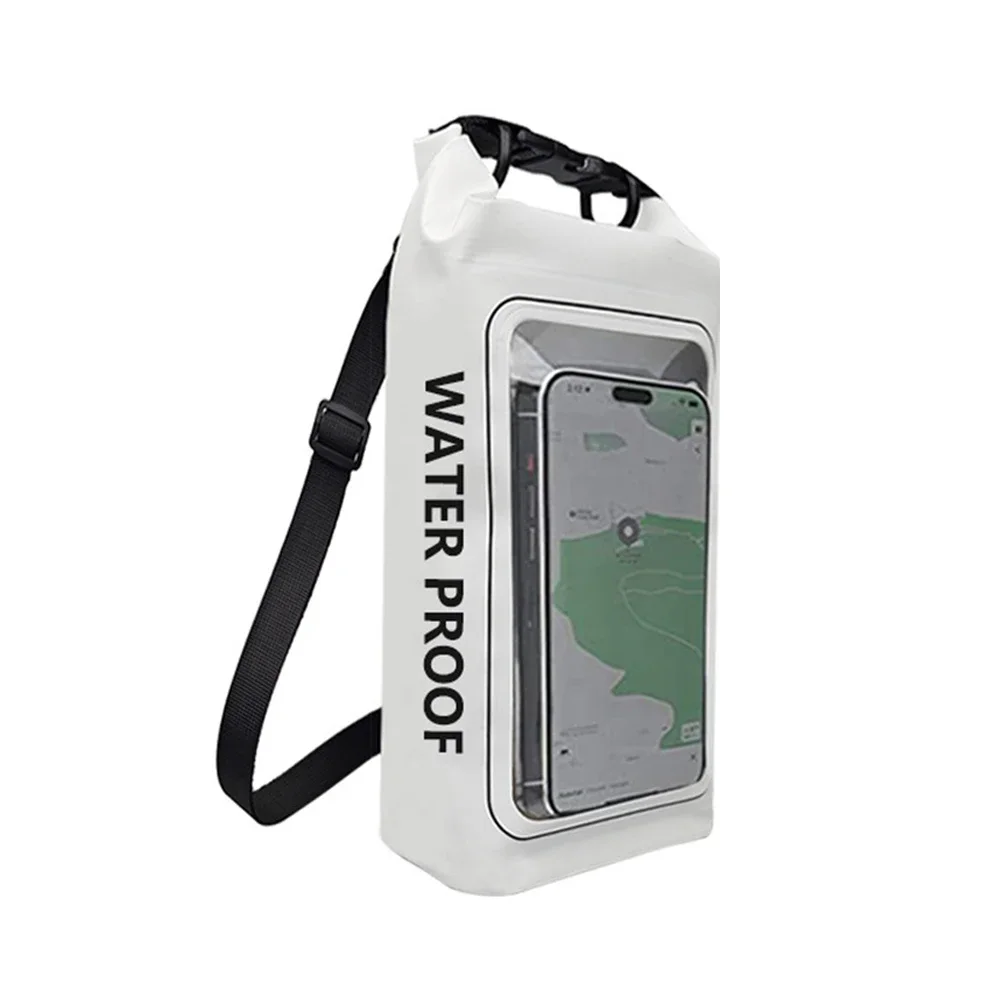
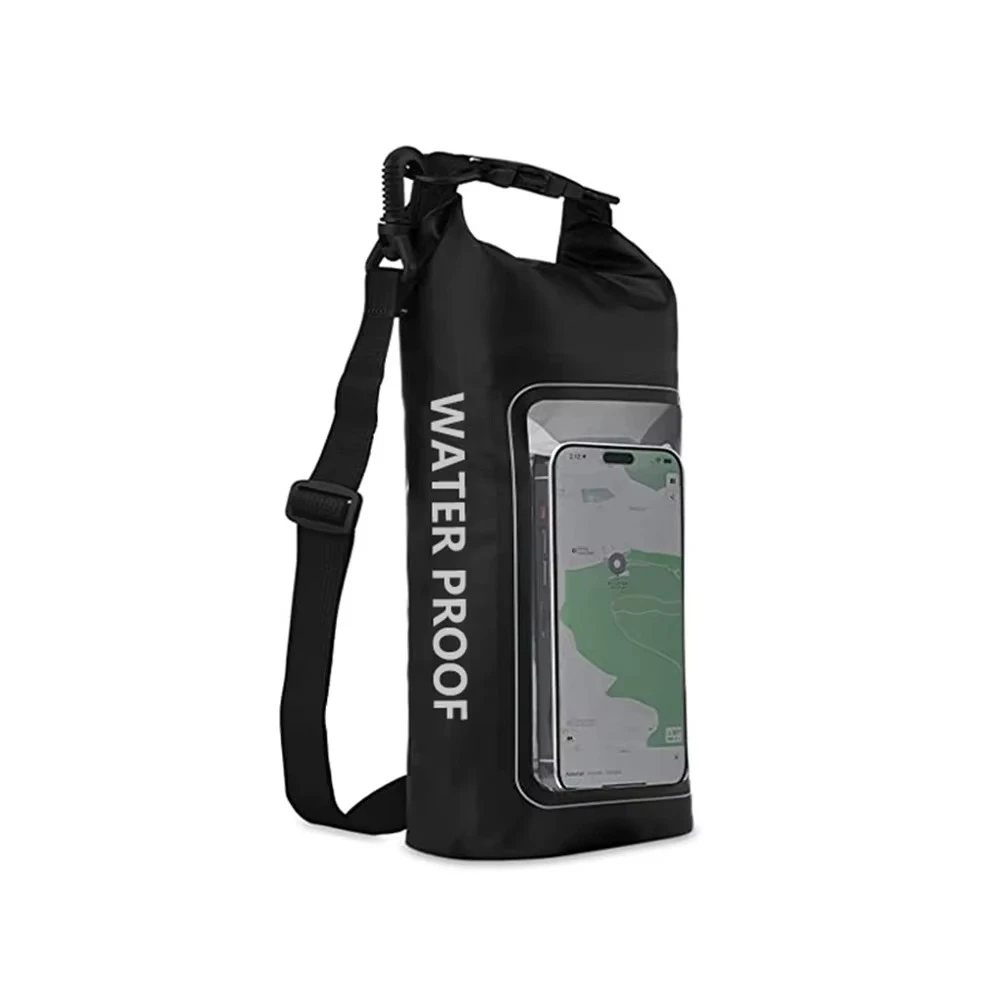
- Touch-through phone window. You can operate a touchscreen and take photos without breaking the seal — otherwise your phone is safe and useless at the same time.
- Floats when sealed correctly. The air trapped by a proper roll makes the bag buoyant, so a dropped bag stays on the surface rather than heading for the seabed.
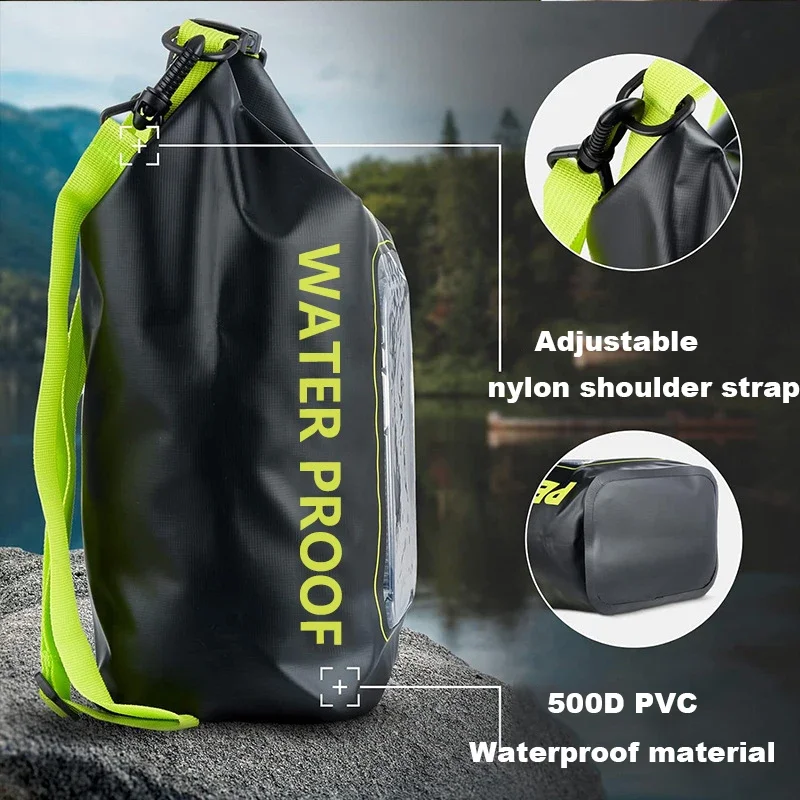
- Heavy PVC that survives a rock. Coated PVC handles the abrasion of a hull, a rock ledge or a shingle beach far better than lightweight nylon dry sacks.
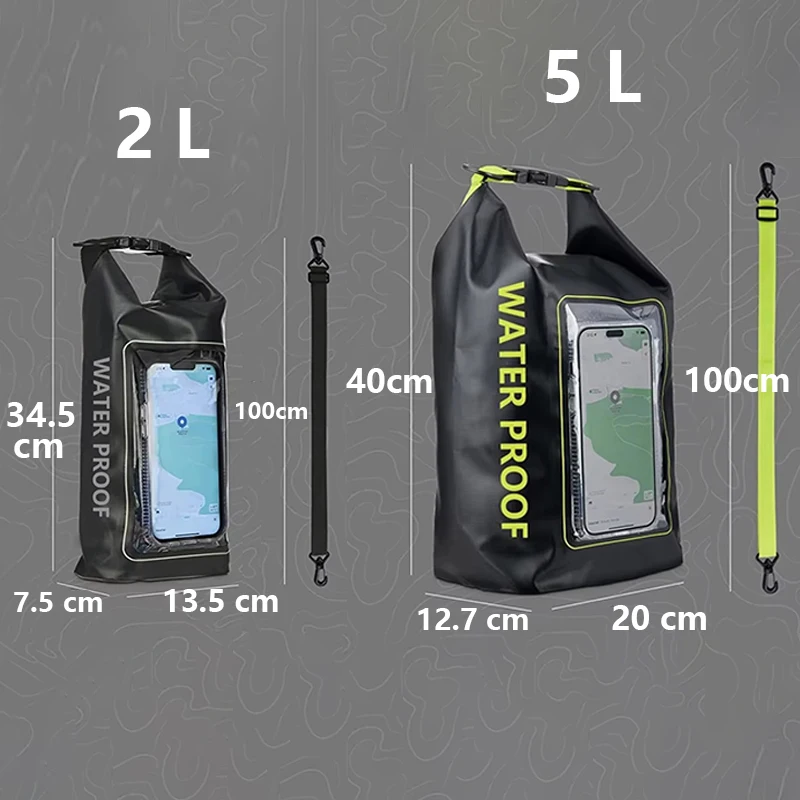
- 2L and 5L options. 2L is phone, keys, wallet, cards. 5L takes a dry layer, towel and a small first-aid kit.
- Adjustable shoulder strap. Wear it cross-body while swimming, paddling or scrambling so it doesn’t strap-slide off your shoulder.
- Not a substitute for a dive case. This is a splash, spray, rain and brief-immersion bag. It is not rated for sustained submersion at depth, and we would rather tell you now than after your phone dies.
How to Use
Pack the bag no more than about two-thirds full — you need slack fabric to roll. Push the excess air out or leave a little in if you want buoyancy, then fold the top edge over on itself at least three full turns, keeping the fold flat and even across the width with the two sealing faces pressed together. Clip the buckle across. Two rolls is not a seal; that is the single most common reason people get water inside a dry bag. Before you trust it with a phone, test it: seal it empty, hold it under water in a sink for a minute, and check the inside is dry. For extra insurance, put the phone in a zip bag inside the dry bag. Safety: a dry bag is not a buoyancy aid or a flotation device — never rely on it to support a person in water, and do not use it as a substitute for a lifejacket. Rinse salt water off after every sea use. Keep it away from sharp fins, hooks and knives, since a single puncture ends the seal.
Specifications
| Capacity | 2L or 5L — select variant |
|---|---|
| Material | Coated PVC |
| Closure | Roll-top with side-release buckle |
| Phone access | Touch-sensitive window (screen operable while sealed) |
| Buoyancy | Floats when sealed with air inside |
| Carry | Adjustable shoulder / cross-body strap |
| Water rating | Splash, rain, spray and brief immersion — not a dive case |
| Best for | Kayaking, rafting, boating, canyoning, surfing, beach, festivals |
Care & Maintenance
Rinse in fresh water after every use in salt or chlorinated water, then hang it upside down with the top open until completely dry — sealing a damp bag is how you grow mould inside it. Store it rolled loosely or hung, never crushed under weight, and keep it out of prolonged direct sun, since UV embrittles PVC and cracks the seams. Check the seal faces and seams for pinholes at the start of each season; small punctures can be patched with a PVC repair patch.
What’s in the Box
1 × waterproof roll-top dry bag with adjustable shoulder strap, in the capacity selected.
Reviews
There are no reviews yet.