Half a Gallon, Printed With the Hours — Hydration as a Visible Habit
Hydration status affects performance measurably: losing roughly 2% of body mass in fluid is associated with reduced endurance capacity, higher perceived effort and impaired thermoregulation, because lower plasma volume forces the heart to work harder to deliver the same oxygen. The mechanism this bottle addresses is behavioural rather than physiological — it makes your intake legible. Time markers convert an abstract daily target into a series of small, checkable deadlines, and a 64 oz capacity means fewer refill trips, which is the single most common point at which hydration routines quietly collapse.
Key Benefits
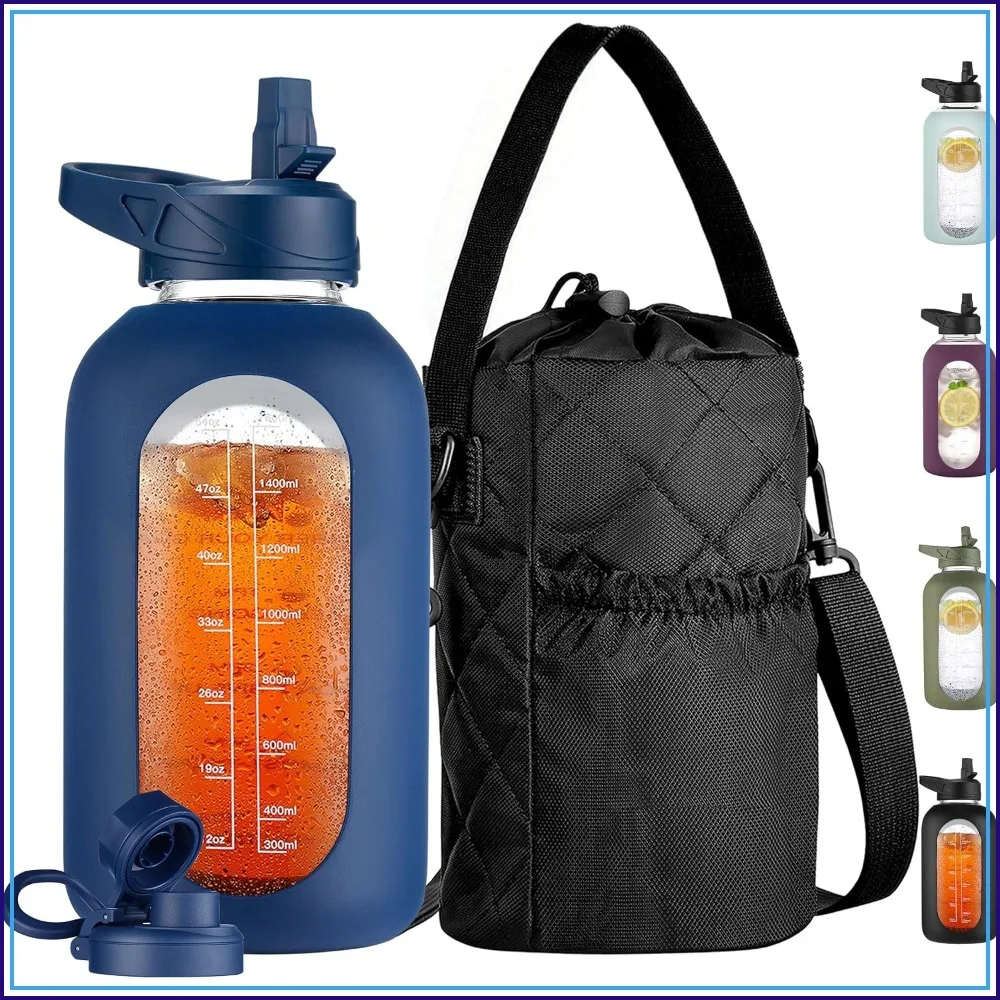
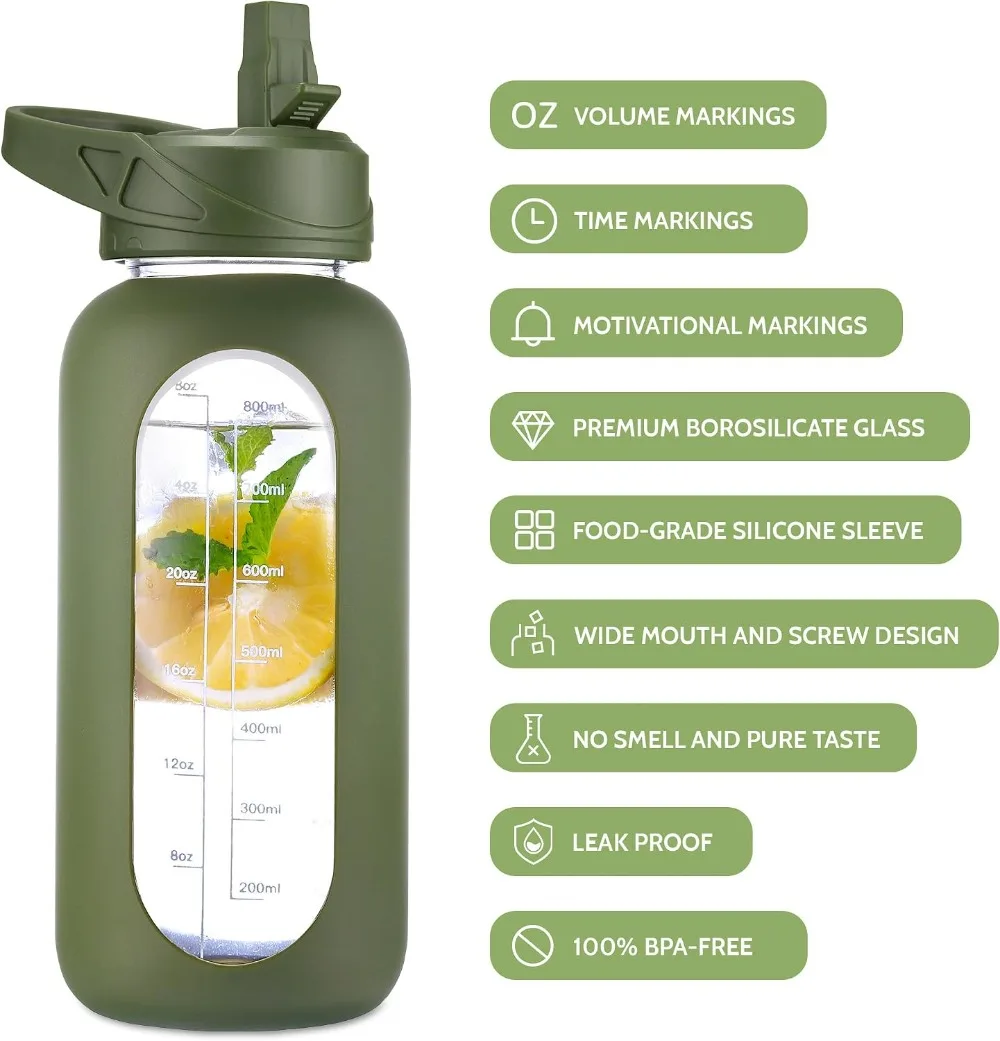
- Borosilicate glass, not plastic: glass is chemically inert, so water tastes like water on day 90 the way it did on day one. No plastic tang, no lingering ghost of yesterday’s electrolyte mix, and nothing to leach when the bottle heats up in a car.
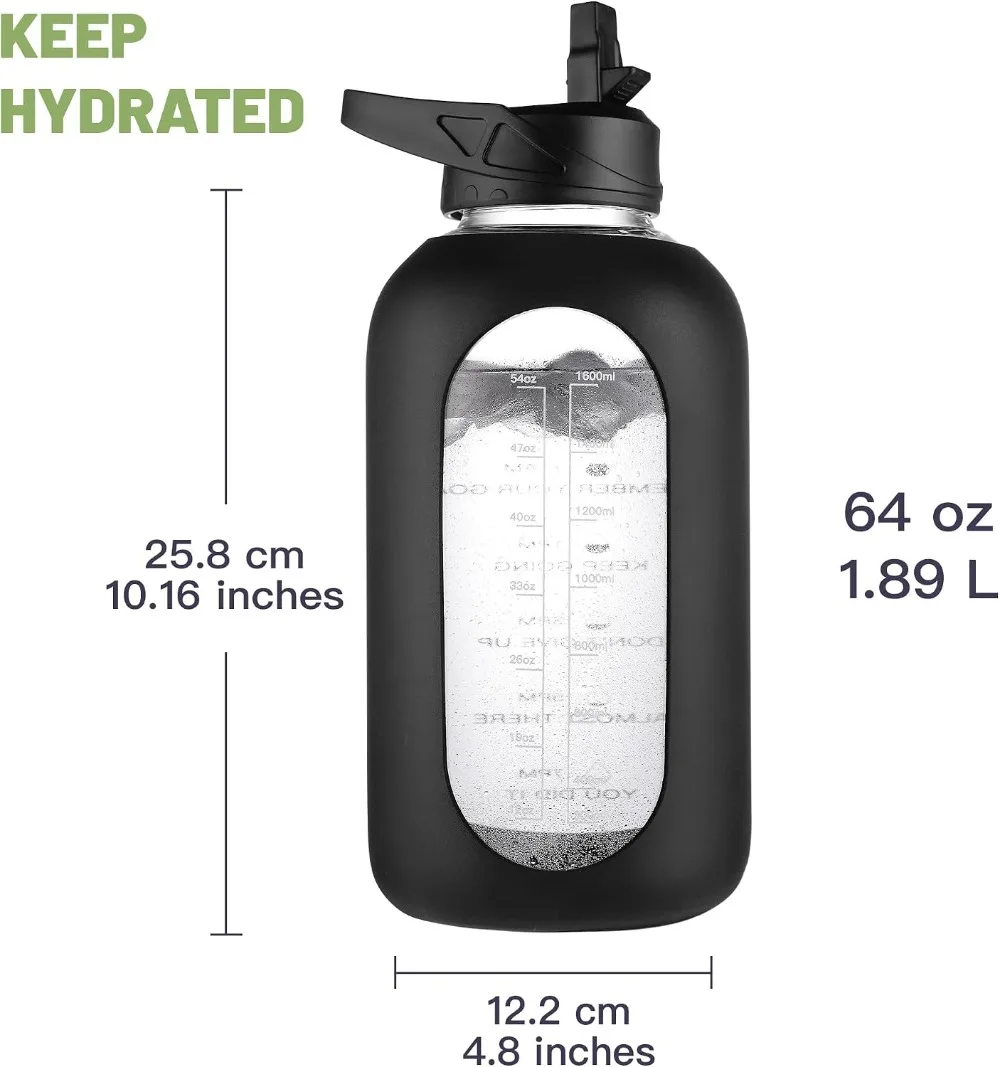
- Time markers make progress visible: hourly gradations turn ‘drink more water’ into ‘be past this line by 11am’. It is a cue, not magic — but visible progress is one of the better-supported nudges in behaviour change, and it’s the whole reason marked bottles work when unmarked ones don’t.
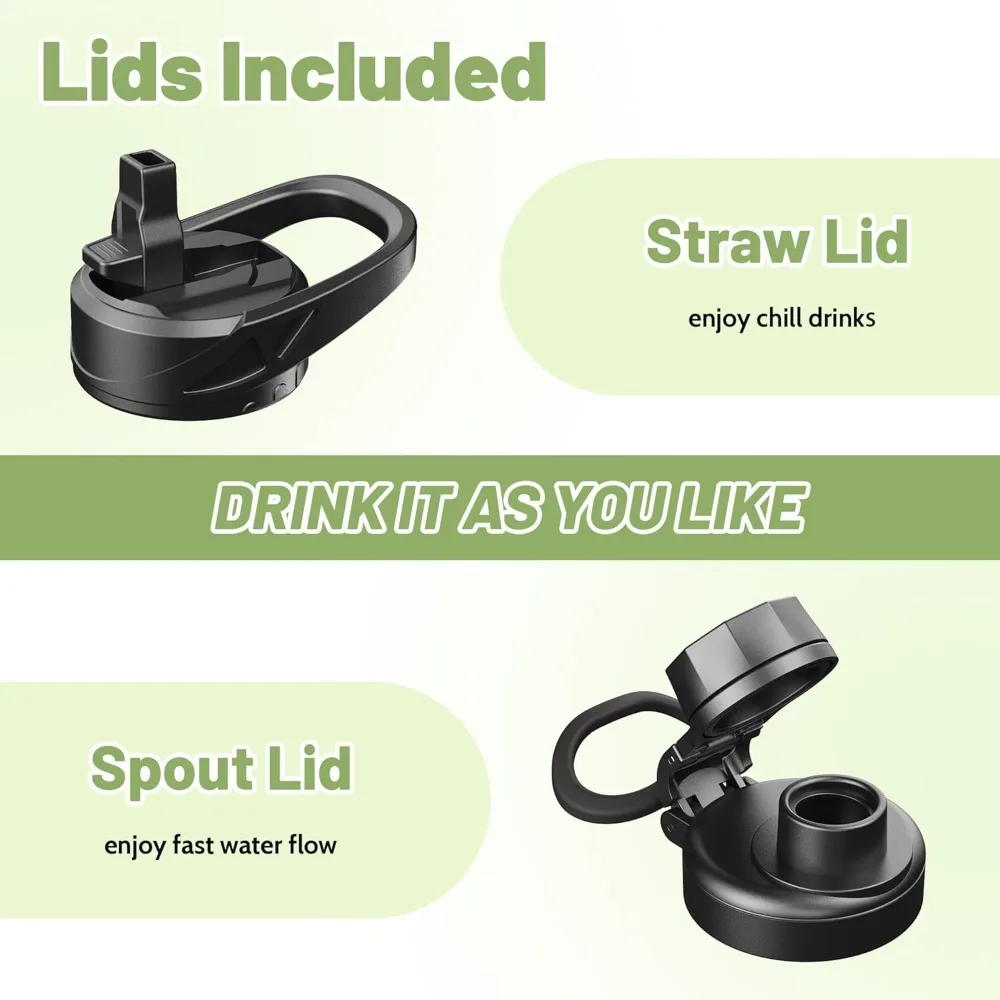
- Two lids for two situations: a straw lid for desk sipping, where the low effort of a straw genuinely increases how often you drink, and a sealed lid for transport in a bag.
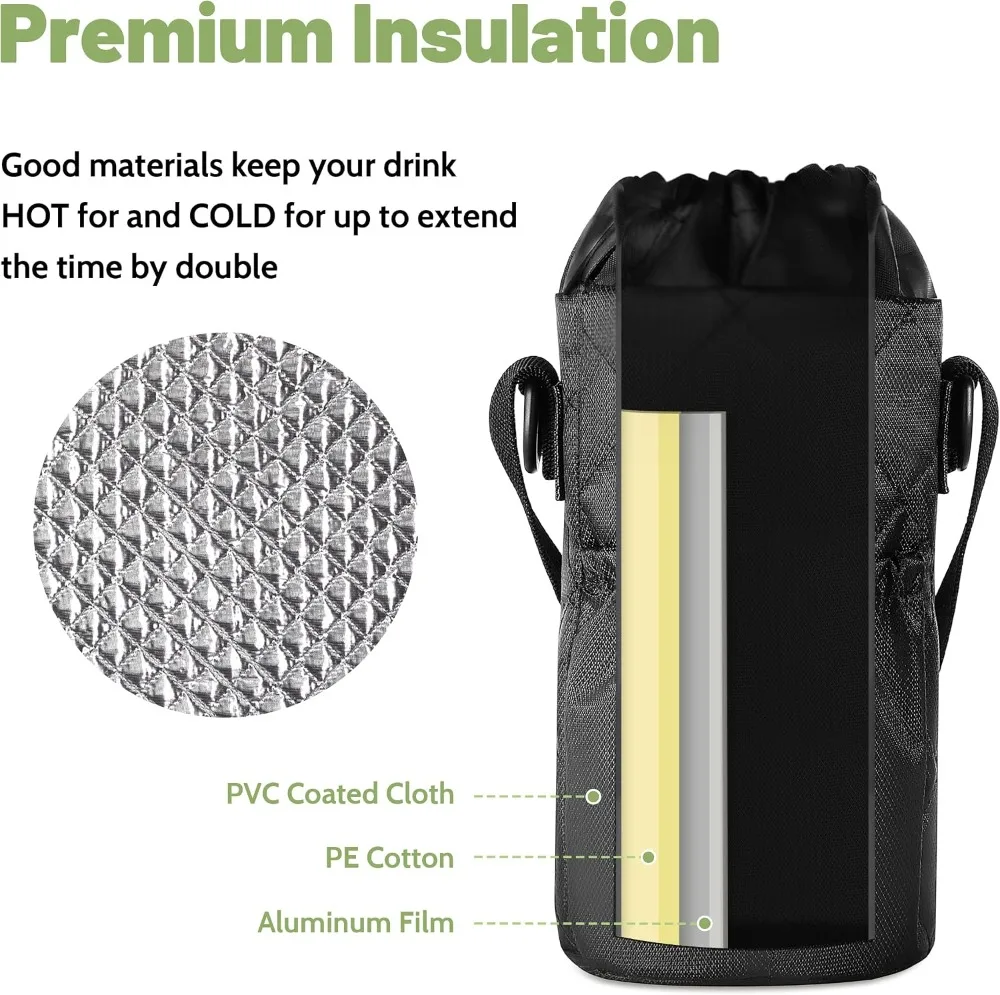
- Protective insulated sleeve: glass’s weakness is thermal shock and impact. The sleeve buffers both, keeps condensation off your desk, and slows warming — though this is a sleeve, not a vacuum flask, so treat ‘insulated’ as ‘stays cool for a while’, not ‘ice at 5pm’.
- 64 oz reduces refill friction: for most adults this is close to a full day’s fluid in one vessel. Fewer trips to the tap means fewer chances to forget.
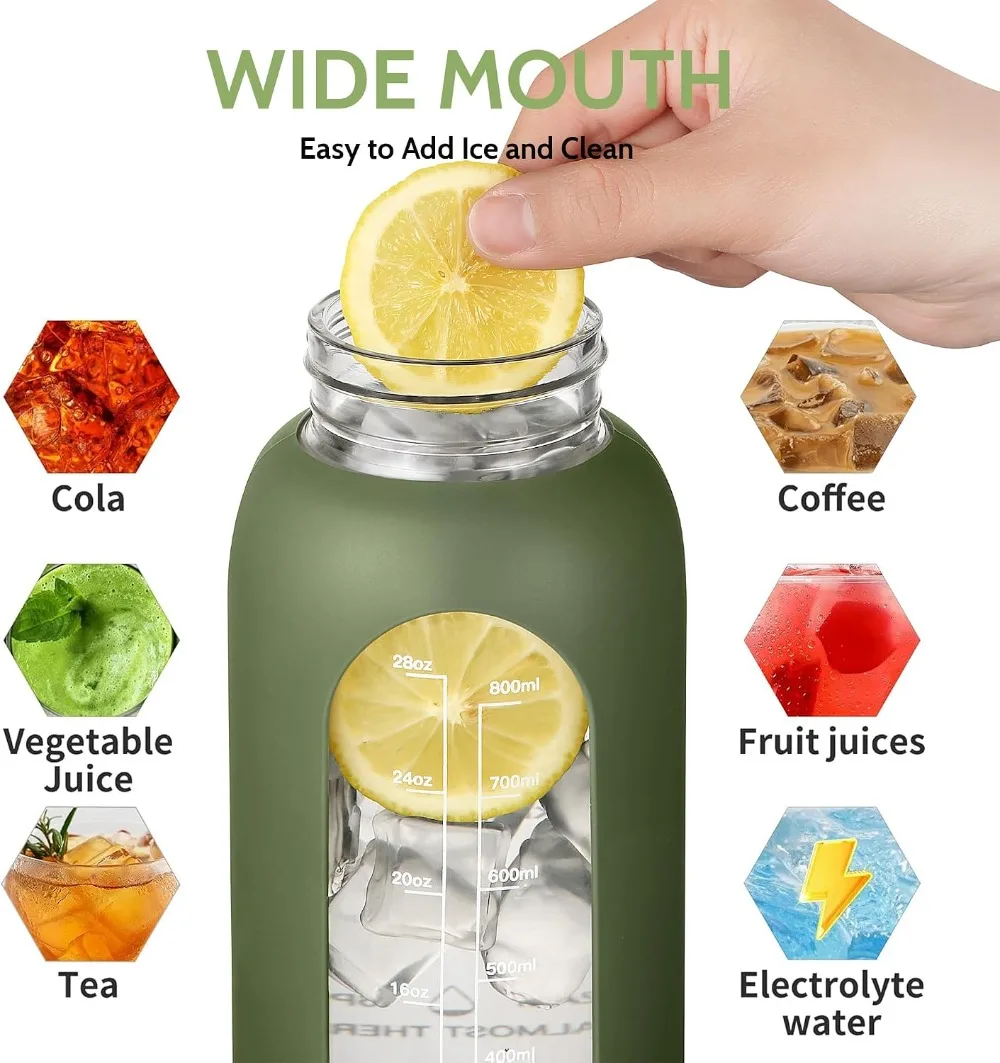
- Wide mouth for real cleaning: you can get a hand and a brush inside, which matters more than any feature on this list — a bottle you can’t clean properly becomes a bottle you stop using.
How to Use
Fill to the top in the morning and place it where you actually sit — visibility is doing most of the work here. Aim to be past each hour marker as you reach it, but treat the markers as a floor to nudge toward, not a quota to force. Ignore the ‘eight glasses’ folklore: fluid needs vary widely with body size, climate, and training load, and a good real-world check is pale-straw urine rather than hitting a number. If you’re training hard or sweating heavily, water alone may not be enough — sodium losses matter too. Two cautions specific to glass: avoid pouring boiling liquid into a cold bottle or vice versa, as sudden temperature swings can crack even borosilicate, and don’t leave it standing on the edge of a hard surface. Rinse the straw daily; it’s the part that grows things.
Specifications
| Capacity | 64 oz / approx. 1.9 litres (half gallon) |
|---|---|
| Bottle material | Borosilicate glass |
| Lids included | 2 (straw lid and standard sealed lid) |
| Markings | Printed hourly time markers with volume gradations |
| Sleeve | Insulated protective sleeve with carry handle |
| Mouth | Wide mouth for cleaning and ice |
| Microwave safe | No — lids and sleeve are not microwave safe |
| Dishwasher | Bottle is generally dishwasher safe; hand-wash lids, straw and sleeve |
| Colour / sleeve finish | Variant dependent |
Care & Maintenance
Hand-wash the straw and lids in warm soapy water daily and let them air-dry fully — a damp straw left capped is the fastest route to a musty bottle. Use a long bottle brush on the glass at least weekly. Remove the sleeve before washing and let it dry separately. Avoid abrasive scourers on the printed markers, which will fade if you scrub them, and never subject the glass to sudden temperature changes.
What’s in the Box
1 × 64 oz borosilicate glass bottle, 1 × straw lid, 1 × sealed lid, 1 × reusable straw, 1 × insulated protective sleeve. Cleaning brush inclusion is variant dependent.

Reviews
There are no reviews yet.