Why Your Sit Bones Hurt, and What Gel Actually Changes
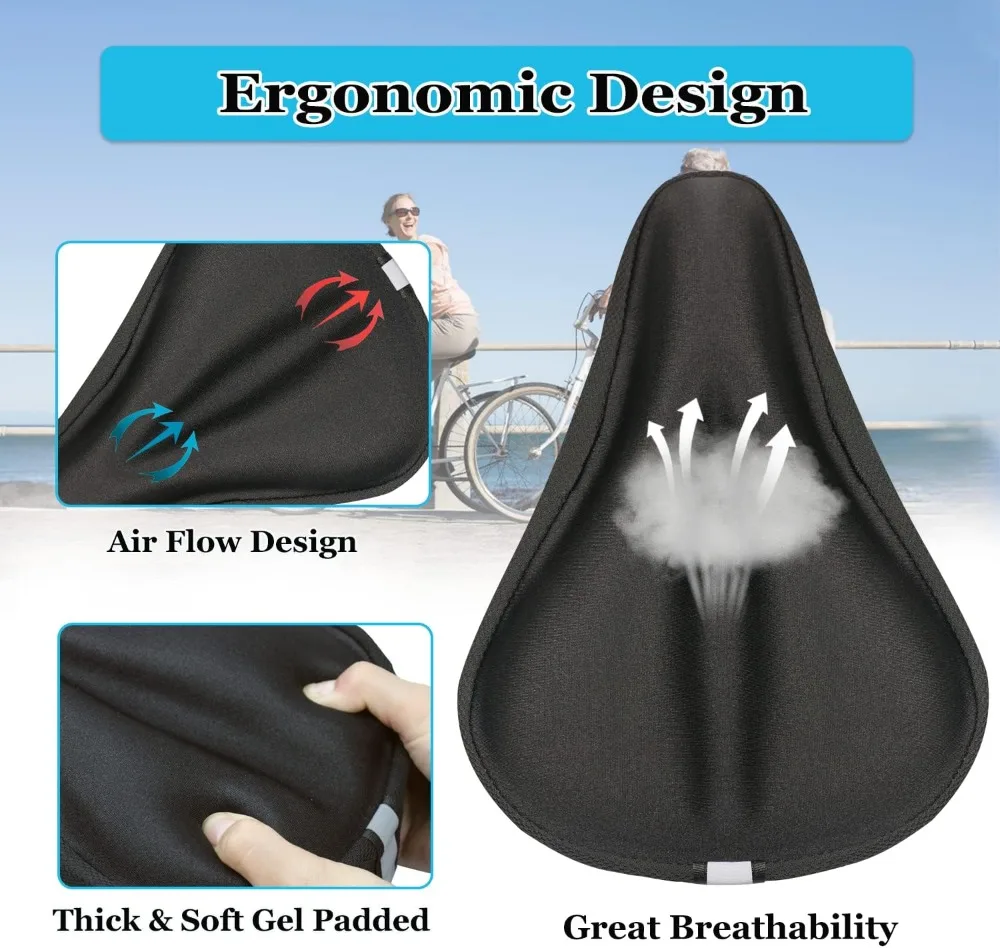
Saddle pain is a pressure problem. Your body weight funnels through two ischial tuberosities — the sit bones — into a small contact patch, and on a firm saddle the peak pressure at those two points is high enough to compress soft tissue and the blood vessels running through it. That is what produces the burn at forty minutes and the numbness at ninety. A viscoelastic gel layer deforms under load and redistributes that force across a wider area, lowering the peak pressure at each contact point rather than removing the load.
Key Benefits
- Lowers peak pressure at the sit bones — the gel flows under load and spreads the same body weight over a broader contact area, which is the whole mechanism behind the comfort gain.
- Damps road buzz and trainer chatter — a soft layer absorbs high-frequency vibration that a rigid saddle shell transmits straight into your pelvis.
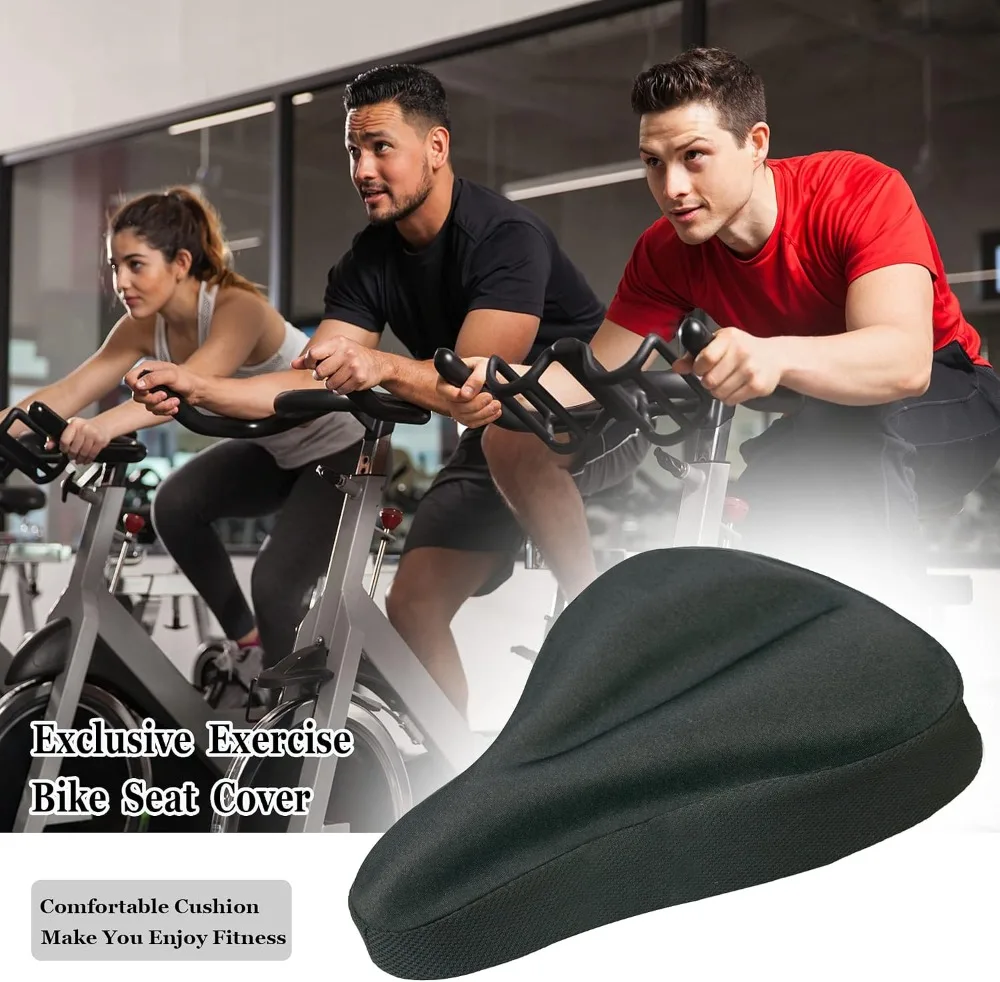
- Turns a spin-class saddle survivable — indoor bikes have notoriously hard, generic saddles you cannot swap, and a cover is the one fix available to you.
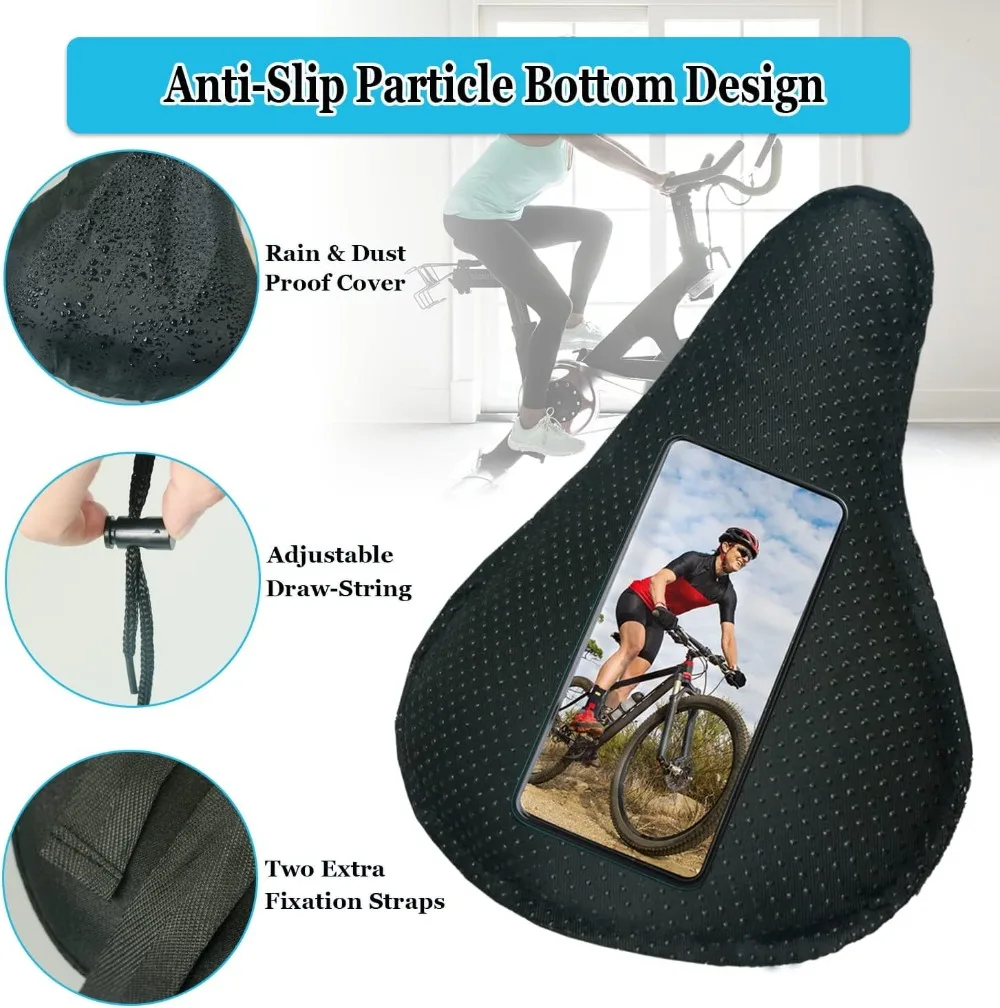
- Fits over your existing saddle — no tools, no saddle swap, no re-setting your fore-aft position and saddle height.
- Honest limitation: it is not a bike fit — if your pain comes from a saddle that is too high, too low, or the wrong width for your sit bones, gel will mask it, not solve it.
- Honest limitation: thicker is not always better — an over-thick cover can stop the sit bones settling into the saddle and push pressure onto the perineal soft tissue instead, which is the tissue you least want loaded.
How to Use
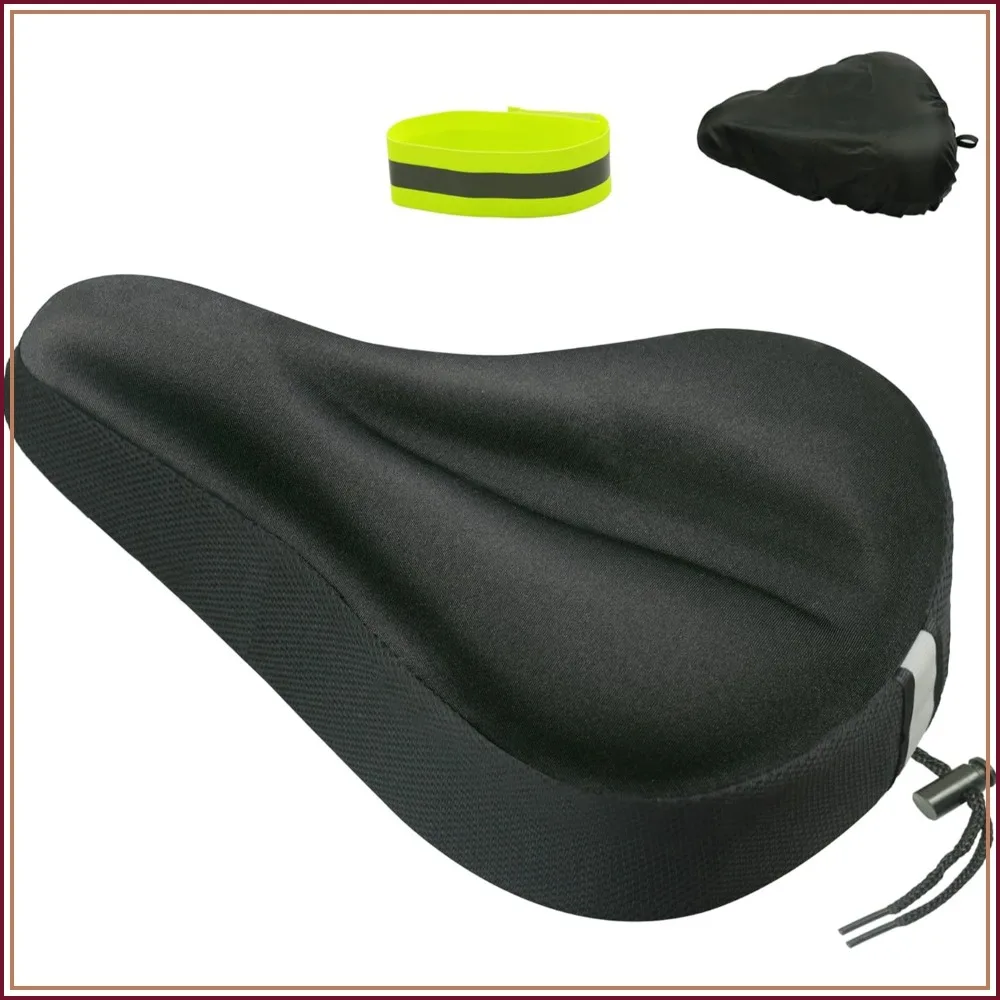
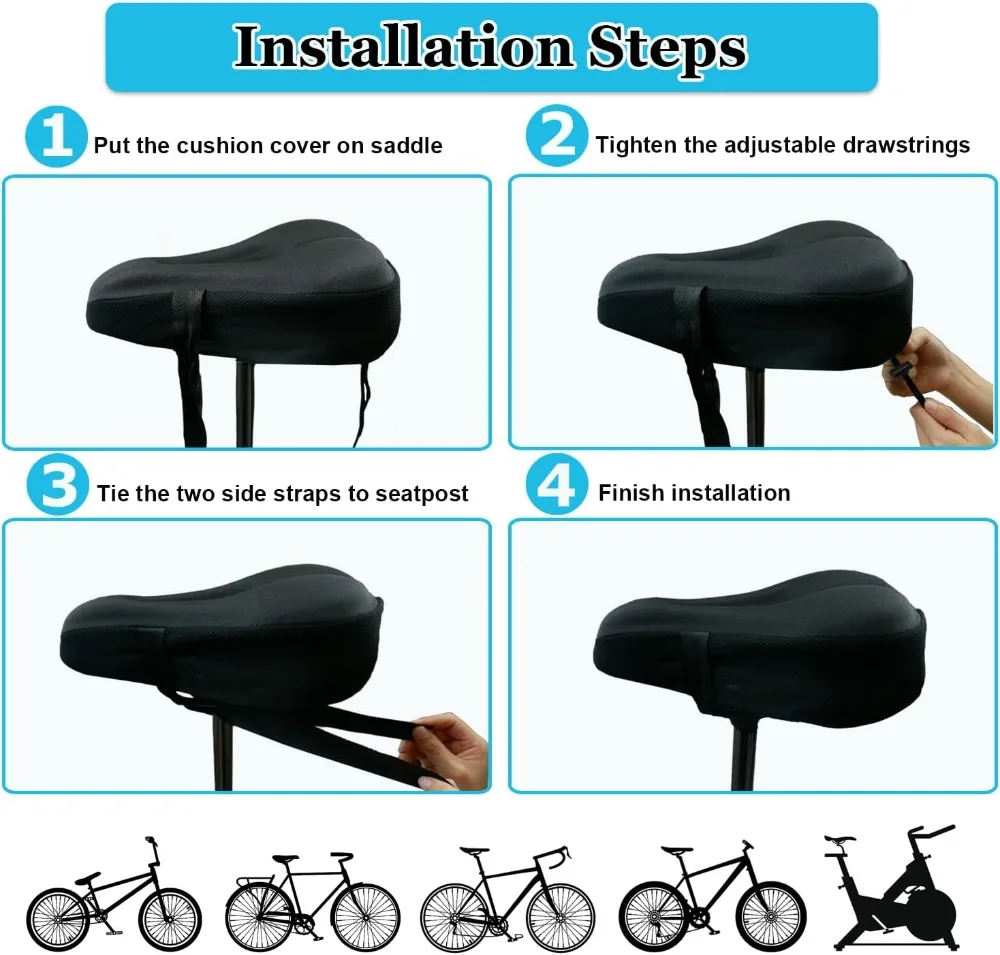
Stretch the cover over a clean, dry saddle and pull the drawstring or straps until it is tight and completely wrinkle-free — a loose cover slides, and the resulting friction causes more chafing than the hard saddle ever did. Re-check the tension after the first ride, as it will settle. Ride it for a couple of sessions before judging it; your tissues adapt. If you get numbness, tingling or any loss of sensation in the perineum or genitals, stop and get off the bike. That is nerve and vascular compression, not toughness, and the answer is a saddle position or width change — often nose-down a degree or two, or a saddle matched to your sit-bone measurement — not more padding. Persistent numbness warrants a proper bike fit and a doctor’s opinion.
Specifications
| Padding | Gel layer over foam base |
|---|---|
| Fit type | Stretch-over cover with drawstring / strap retention |
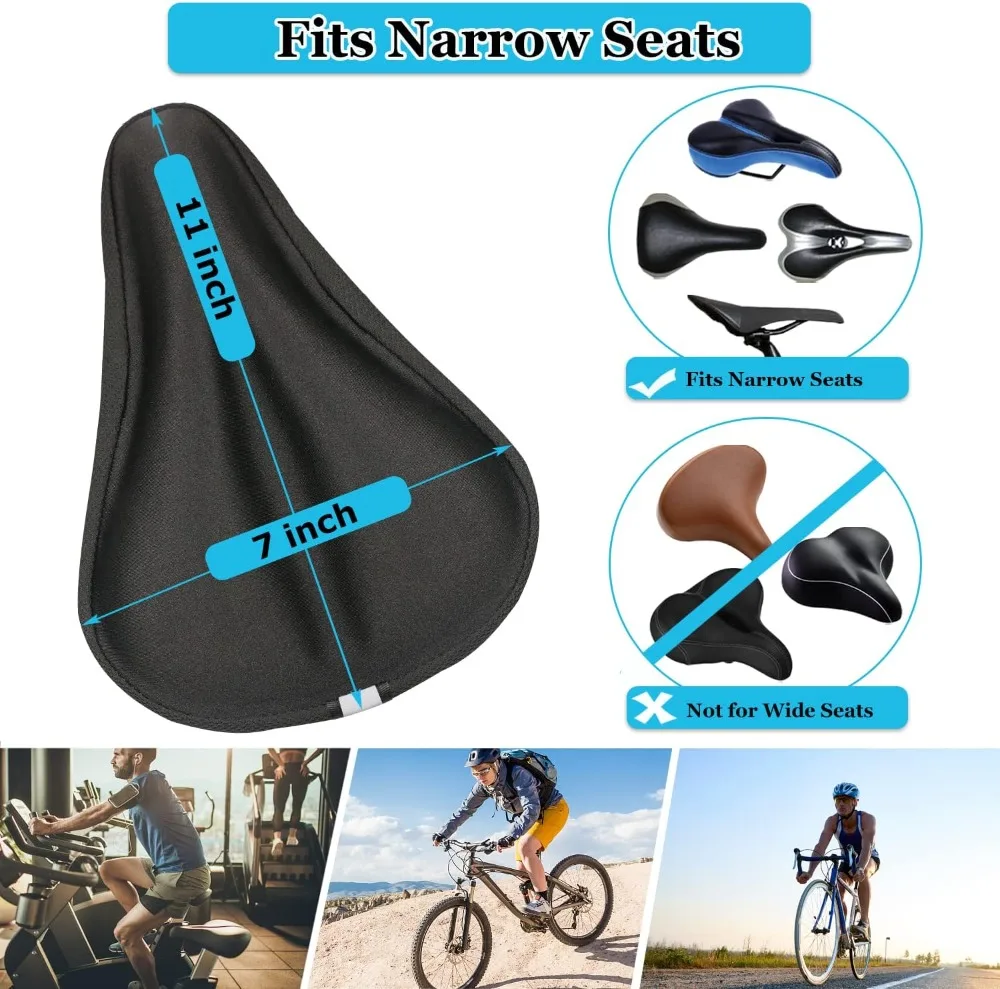
| Compatibility | Most standard exercise-bike, road and hybrid saddles (variant dependent) |
| Best for | Indoor cycling, commuting, leisure and recovery rides |
| Less suited to | Narrow performance race saddles and long high-intensity efforts |
| Unisex | Yes — sizing follows saddle shape, not rider |
| Colour | Variant dependent |
| Tools required | None |
Care & Maintenance
Remove it after wet rides and let the underside dry fully — trapped moisture between the cover and the saddle rots the saddle cover and grows mildew. Hand wash in warm soapy water, rinse and air dry; keep it away from radiators and direct sun, as UV hardens gel and cracks the outer skin over time. Inspect the drawstring or straps every few weeks and replace the cover if the gel has developed a permanent hollow, since a collapsed pad no longer redistributes anything.
What’s in the Box
1 × padded gel saddle cover with retention drawstring or straps. Saddle and bike not included.
Reviews
There are no reviews yet.