Why the Carriage Moves, and Why That Is the Whole Point
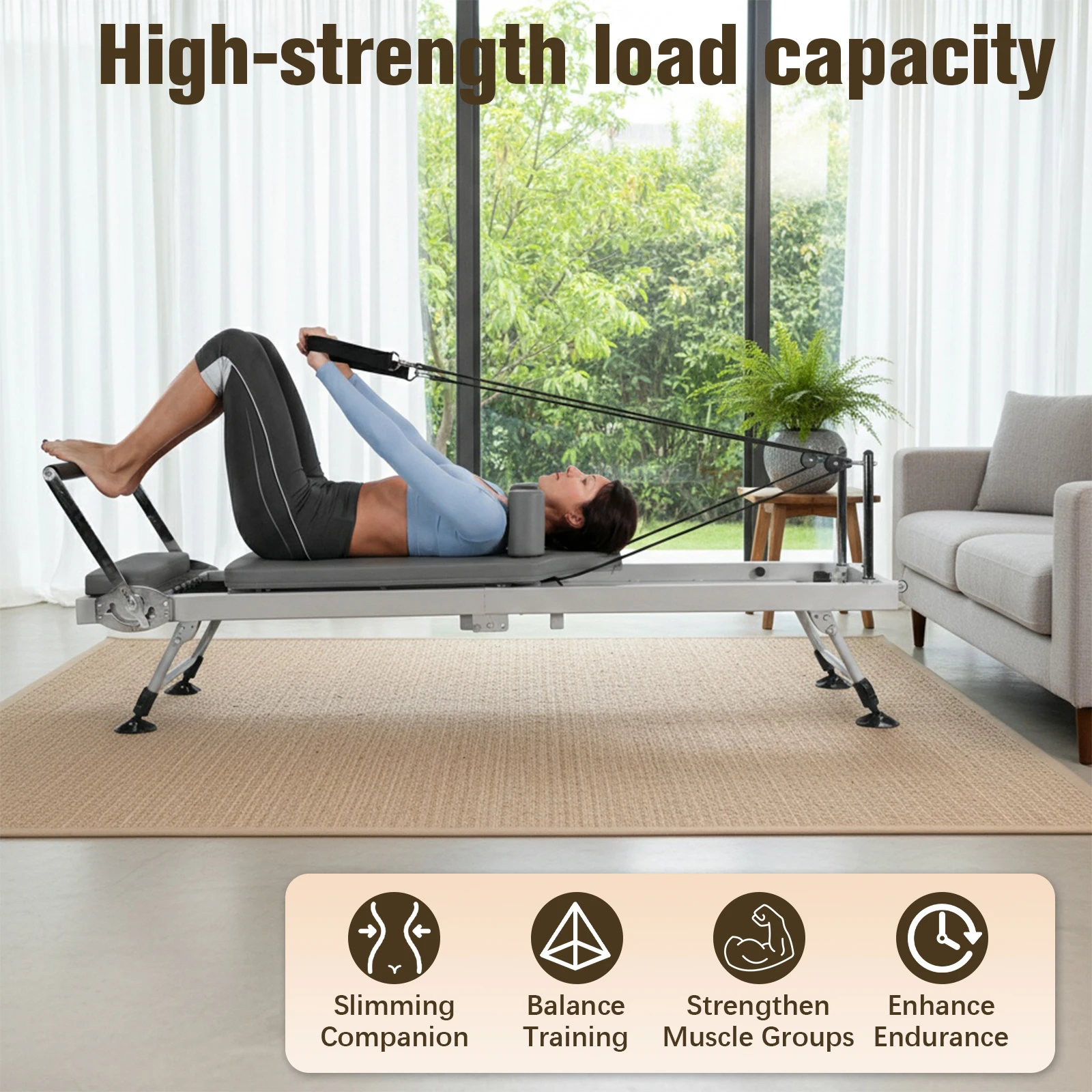
On a fixed machine, the load is the challenge. On a reformer, the surface you are lying on rolls, so every press of the footbar demands that you stabilise the pelvis and spine at the same time as you produce force. Springs supply resistance in both directions: they push back as you extend and pull as you return, which means the eccentric phase is loaded too, and that is where most control gets built. Counterintuitively, lighter springs are harder on the core, because they give the carriage less help staying still.
Key Benefits
- Spring resistance is bidirectional – unlike a dumbbell, a spring loads you on the way out and again on the way back. The controlled return is where reformer work builds most of its strength.
- Load without spinal compression – most of the repertoire is performed lying down, so the spine carries no axial load. This is why reformers are a staple in rehabilitation, and why they suit people who cannot tolerate loaded standing exercise.
- Lighter springs are harder, not easier – a heavy spring stabilises the carriage for you. Reducing spring load makes the core do more, which is why advanced work often uses less resistance rather than more.
- A smooth glide is not a luxury feature – a carriage that judders destroys the eccentric control the exercise is built around. Bearing and rail quality is genuinely where the money in a real reformer goes.
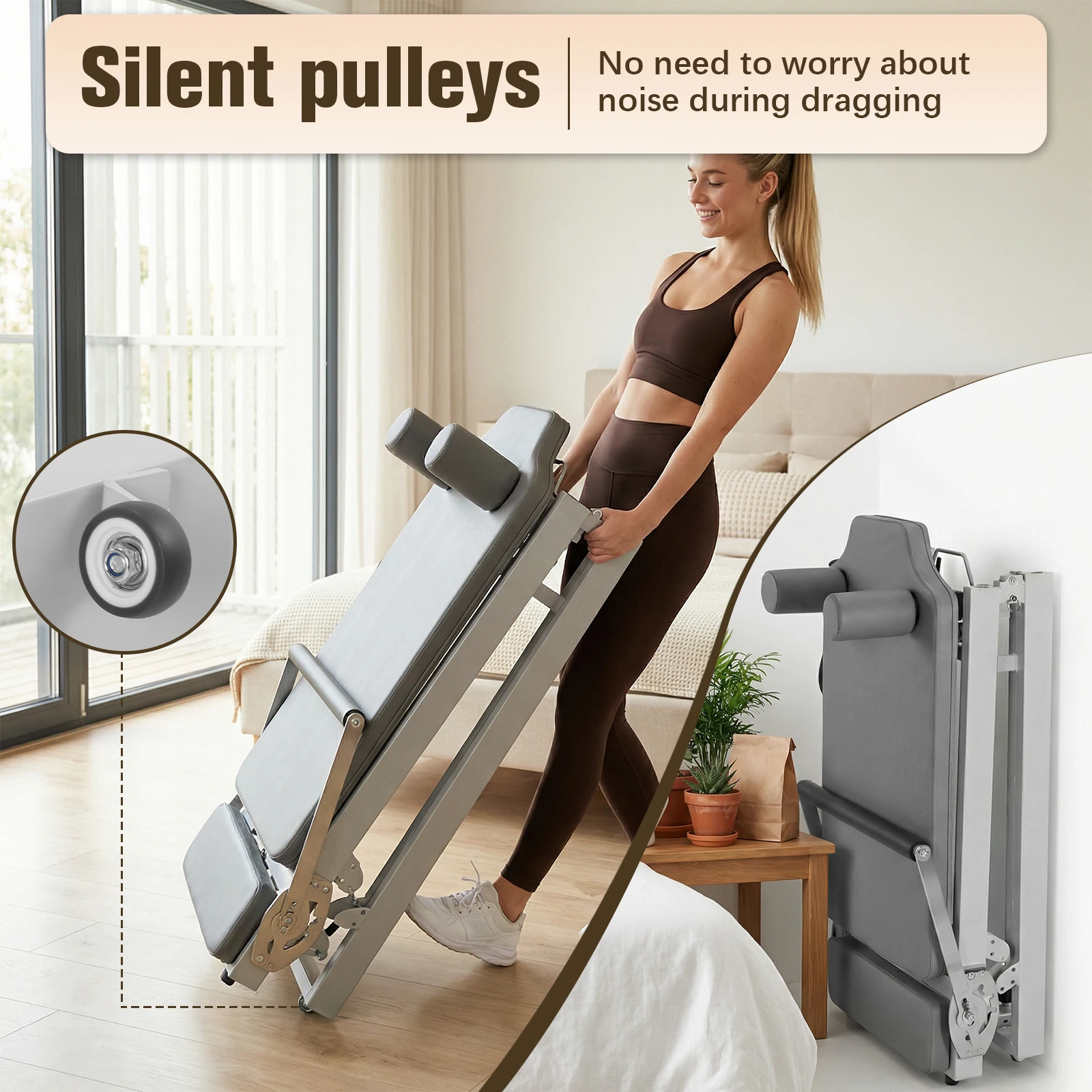
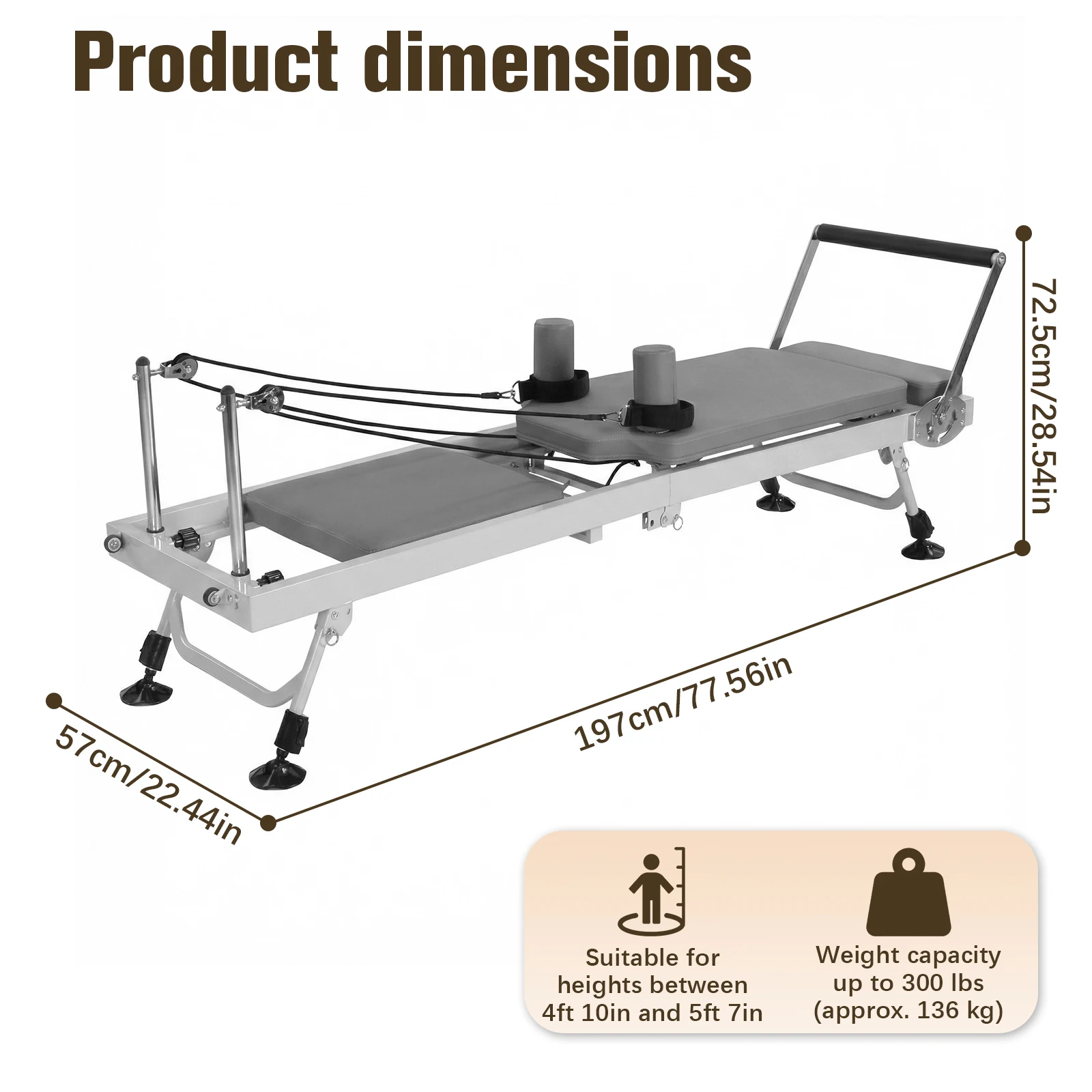
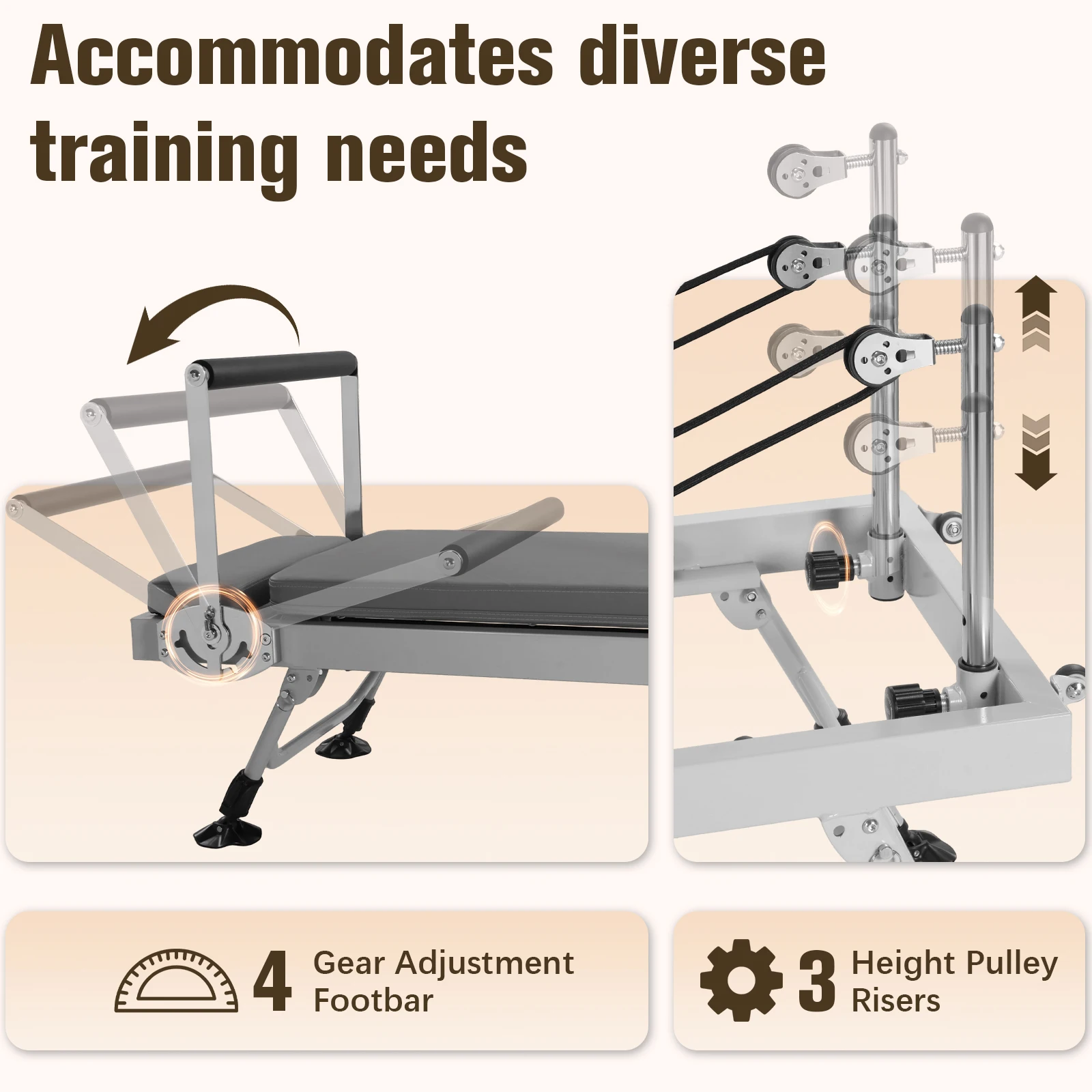
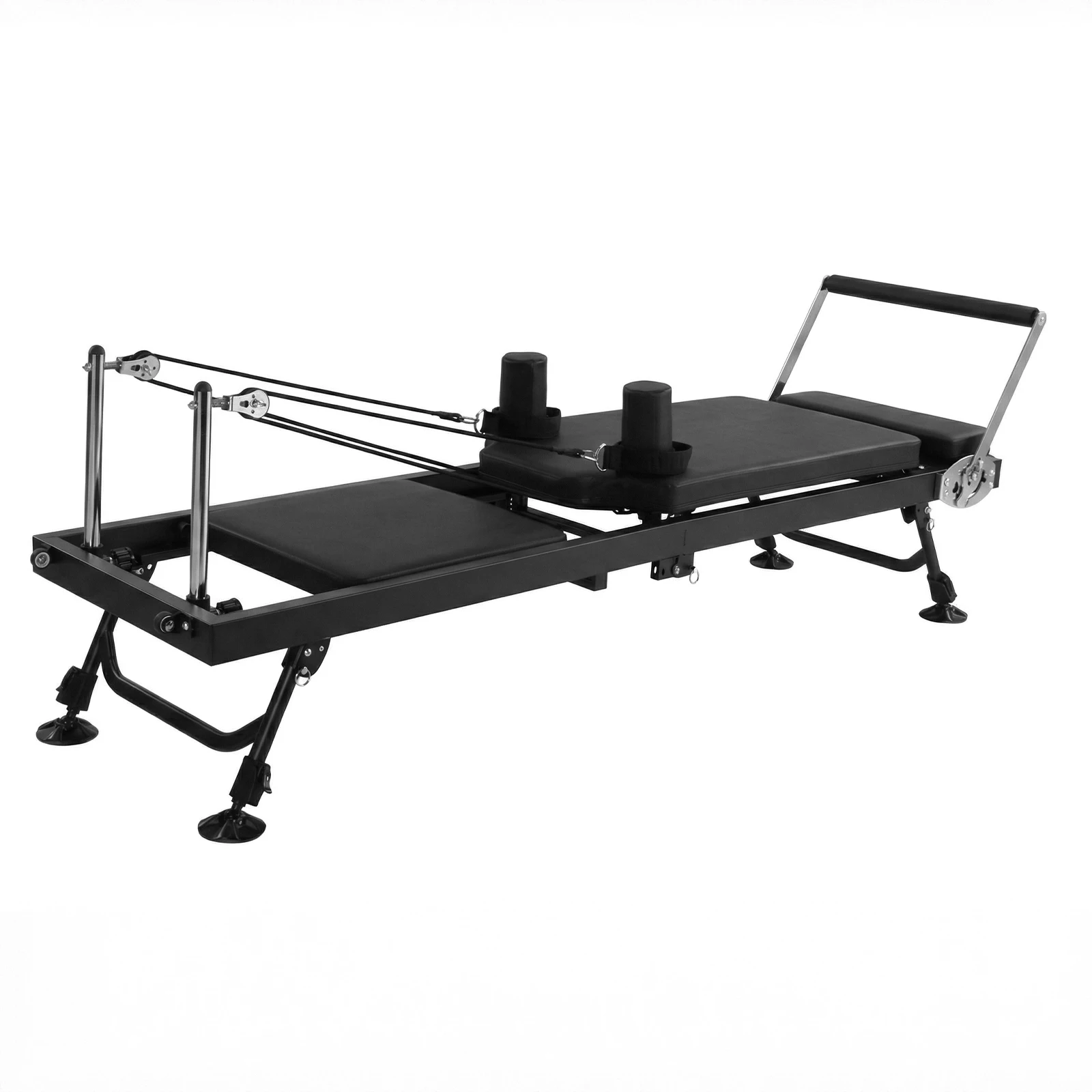
- It folds, which makes home use realistic – a 78-inch machine is a serious piece of furniture. Folding is the difference between owning one and resenting one.
- Learn it properly before you train alone – a reformer rewards technique and punishes guessing. A handful of sessions with a qualified instructor is the best money you will spend on this machine.
How to Use
Set the springs before you get on, never after. Attach the footbar at a height that lets your knees track over your toes in footwork without the carriage bottoming out. Lie supine with the shoulder blocks touching your shoulders – this is the stop that prevents the carriage running away from you under load, and it is not optional. Press out slowly, hold the end range for a beat, and return more slowly than you pressed, coming to a full stop before the carriage clicks home. Safety, and please read this properly: never load or unload a spring while the carriage is under tension, and never release a spring while anyone is on the machine, because the recoil is violent. Check every spring hook and every rope or strap connection before every single session – a spring that detaches at full extension is the one injury this machine can genuinely cause. Keep hands and hair away from the springs and the underside of the carriage, keep children and pets out of the room, and keep the space at the foot end clear. If you have a spinal injury, a hernia, uncontrolled blood pressure, or you are pregnant, get clearance and instruction before using a reformer.
Specifications
| Product type | Foldable Pilates reformer |
|---|---|
| Length | 78 inches |
| Resistance | Spring-based, adjustable |
| Carriage | Rolling carriage on rails, smooth-glide bearings |
| Foldable | Yes – for storage |
| Includes | Footbar, shoulder blocks, straps/ropes (configuration variant dependent) |
| Assembly | Required |
| Instruction | Prior professional instruction strongly advised |
| User weight limit | Refer to the manufacturer’s manual – do not exceed |
| Power | None – fully mechanical |
Care & Maintenance
Before each session, inspect every spring for stretched coils, rust or a deformed hook, and check ropes and straps for fraying. A spring or strap that fails at full extension is the one genuine danger on this machine, so replace any suspect component rather than getting one more session out of it. Wipe the carriage and footbar down after use, because sweat pits metal. Keep the rails clean and free of grit – debris is exactly what turns a smooth glide into a judder – and lubricate the bearings only as the manufacturer’s manual specifies. Store it folded, in a dry room, with the springs unloaded.
What’s in the Box
One foldable Pilates reformer frame with rolling carriage, springs, footbar, shoulder blocks, and straps or ropes, plus fixings and an assembly manual. The exact accessory configuration is variant dependent – check your selection at checkout.
Reviews
There are no reviews yet.