Why Two Straps Outwork a Rack of Dumbbells
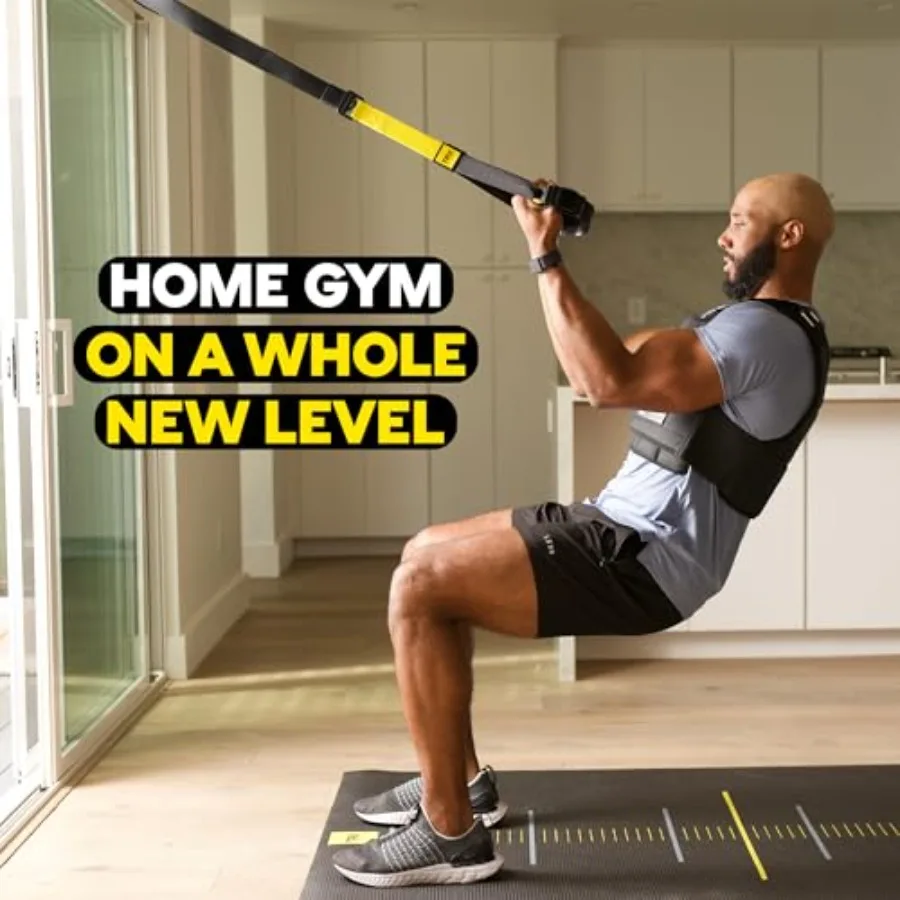
A suspension trainer anchors above you and hands one end of the load back to gravity. Because your feet stay planted and your hands or feet hold an unstable strap, every rep demands that the deep trunk stabilisers fire to stop rotation and sag — you cannot cheat a suspended row with momentum the way you can a machine. Intensity is set by body angle: step your feet forward and the movement gets harder, step back and it eases. That continuous, stepless scaling is what makes the same pair of straps usable for a beginner’s incline press and an athlete’s single-leg pistol progression.
Key Benefits
- Infinitely adjustable resistance. Change your foot position and the load changes — no plates, no dials, and no gap between one weight increment and the next.
- Constant core recruitment. The instability means the trunk works on every exercise, including the ones nominally aimed at chest, back or legs.
- Genuinely full-body. Rows, presses, single-leg squats, hamstring curls, planks and fallouts all run from the same anchor point.
- Joint-friendly progressions. Assisted squats and shallow-angle rows let people rebuild strength with far less spinal loading than barbell work.
- Packs into a bag. The whole system weighs about as much as a pair of trainers and sets up on a door, beam or rig anywhere.
- Progression you can measure. Track angle and rep count rather than chasing gadget metrics — it is a simple system that rewards consistency.
How to Use
Anchor to a structural point only — a solid overhead beam, a rated rig, or a properly seated door anchor on a door that opens away from you and is locked shut. Never anchor to a curtain rail, a pipe, a plasterboard fixing, or anything you have not verified will hold several times your bodyweight. Inspect the straps, stitching, carabiner and anchor before every single session; any fraying, deformed hardware or slipping adjuster means the system is out of service. Set your angle conservatively on the first attempt of any new movement, keep tension in the straps throughout the rep so you are never dropping into slack, and work on a clear, non-slip floor with space to fall safely. Aerial and suspension equipment fails suddenly when it fails at all — the pre-use check is the entire safety system.
Specifications
| Type | Suspension / bodyweight trainer system |
|---|---|
| Resistance method | Bodyweight, scaled by body angle |
| Anchoring | Overhead structural beam, rig, or door anchor |
| Adjustment | Length-adjustable straps with locking hardware |
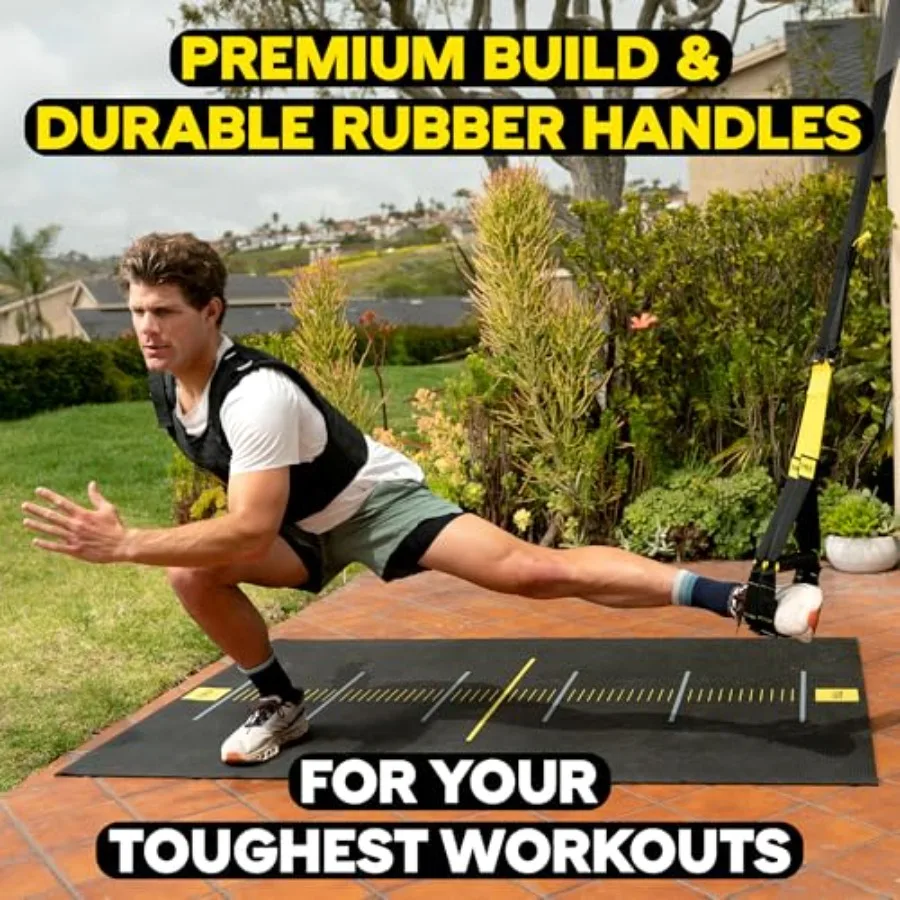
| Handles | Ergonomic grips with foot cradles |
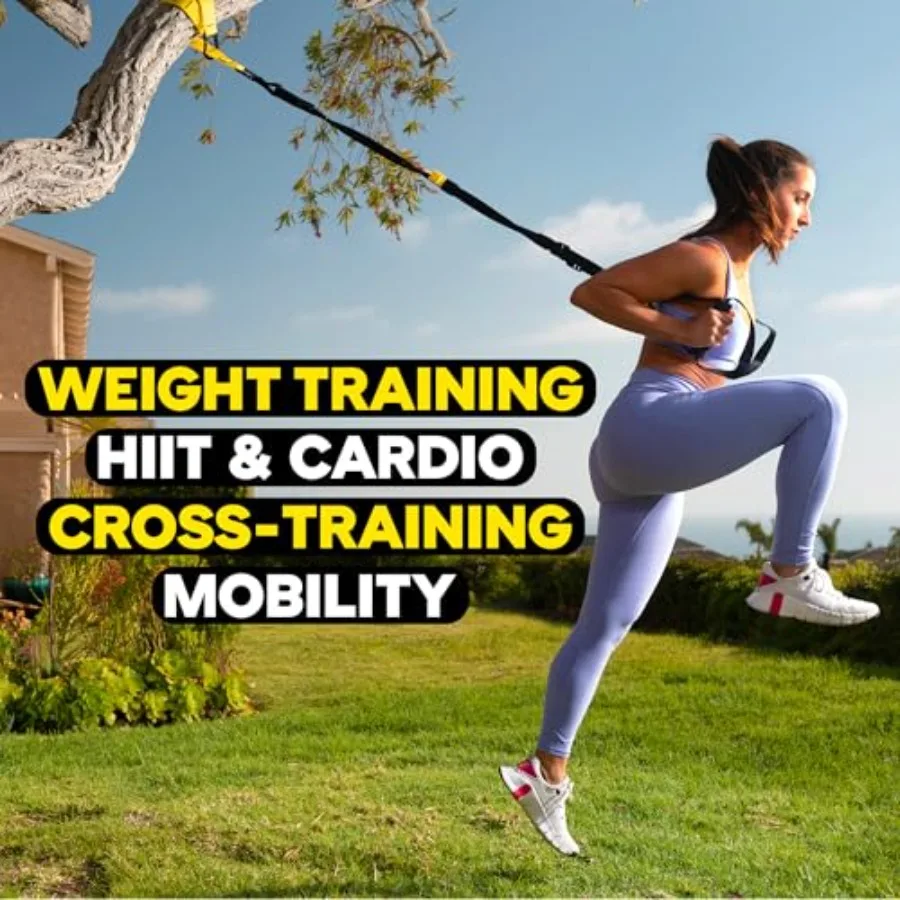
| Use cases | Strength, HIIT, cardio, mobility |
| Colour | Black |
| Portability | Packs down for travel; low weight |
Care & Maintenance
Air the straps after sweaty sessions and hand-wash the webbing occasionally with mild soap and cool water, then air-dry away from direct heat — do not machine wash or tumble dry, as heat degrades webbing strength. Keep hardware dry and free of grit. Store out of prolonged sunlight; UV weakens nylon over time. Retire the unit at the first sign of frayed webbing, damaged stitching, or a carabiner that no longer closes cleanly.
What’s in the Box
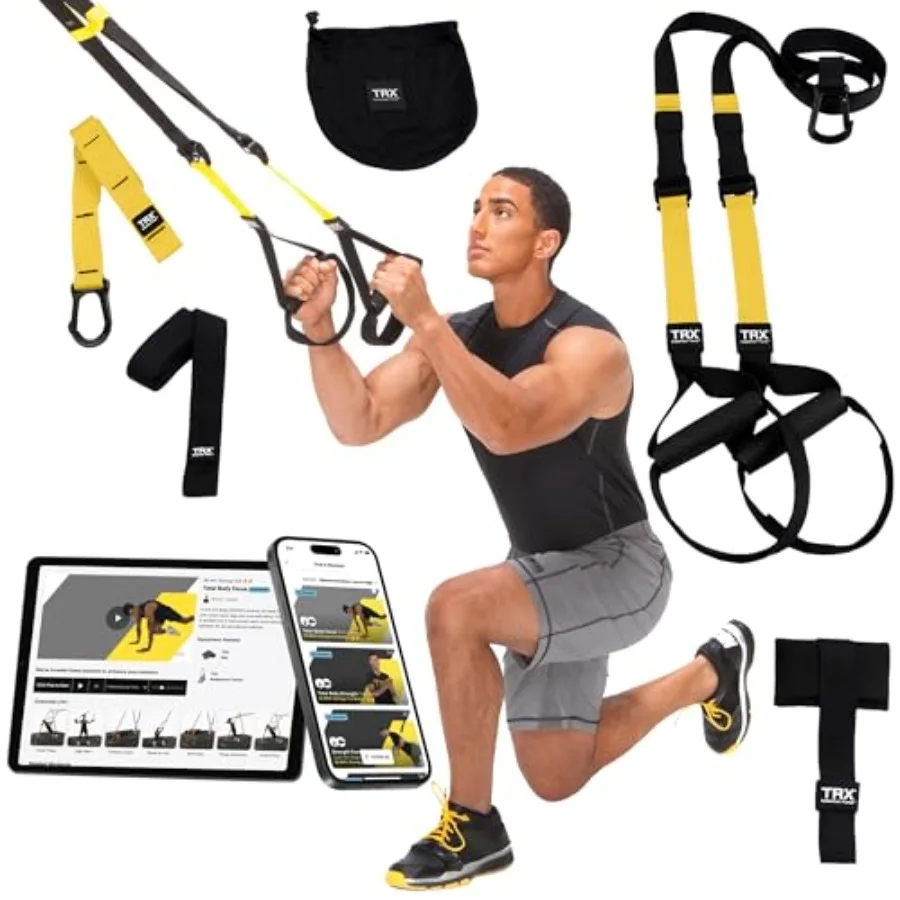
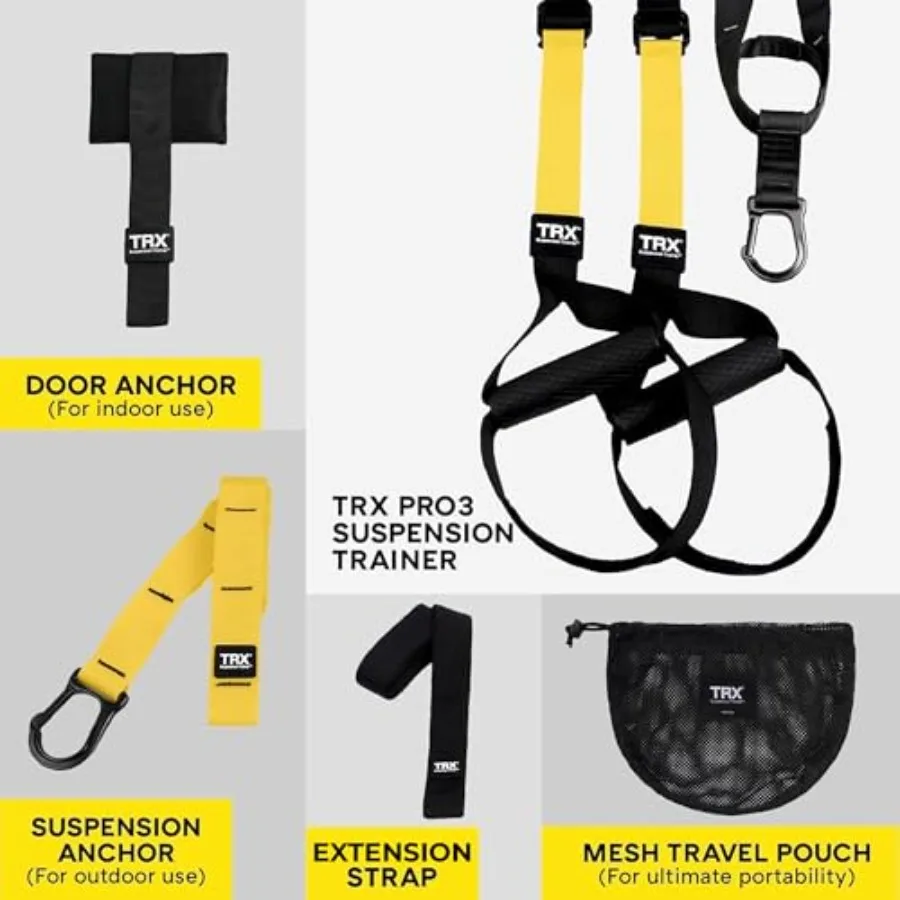
Suspension trainer straps with handles and foot cradles, door anchor, extension anchor strap, carry bag, and setup guide (inclusions may vary).
Reviews
There are no reviews yet.