Own the Two Movements Your Home Gym Is Missing
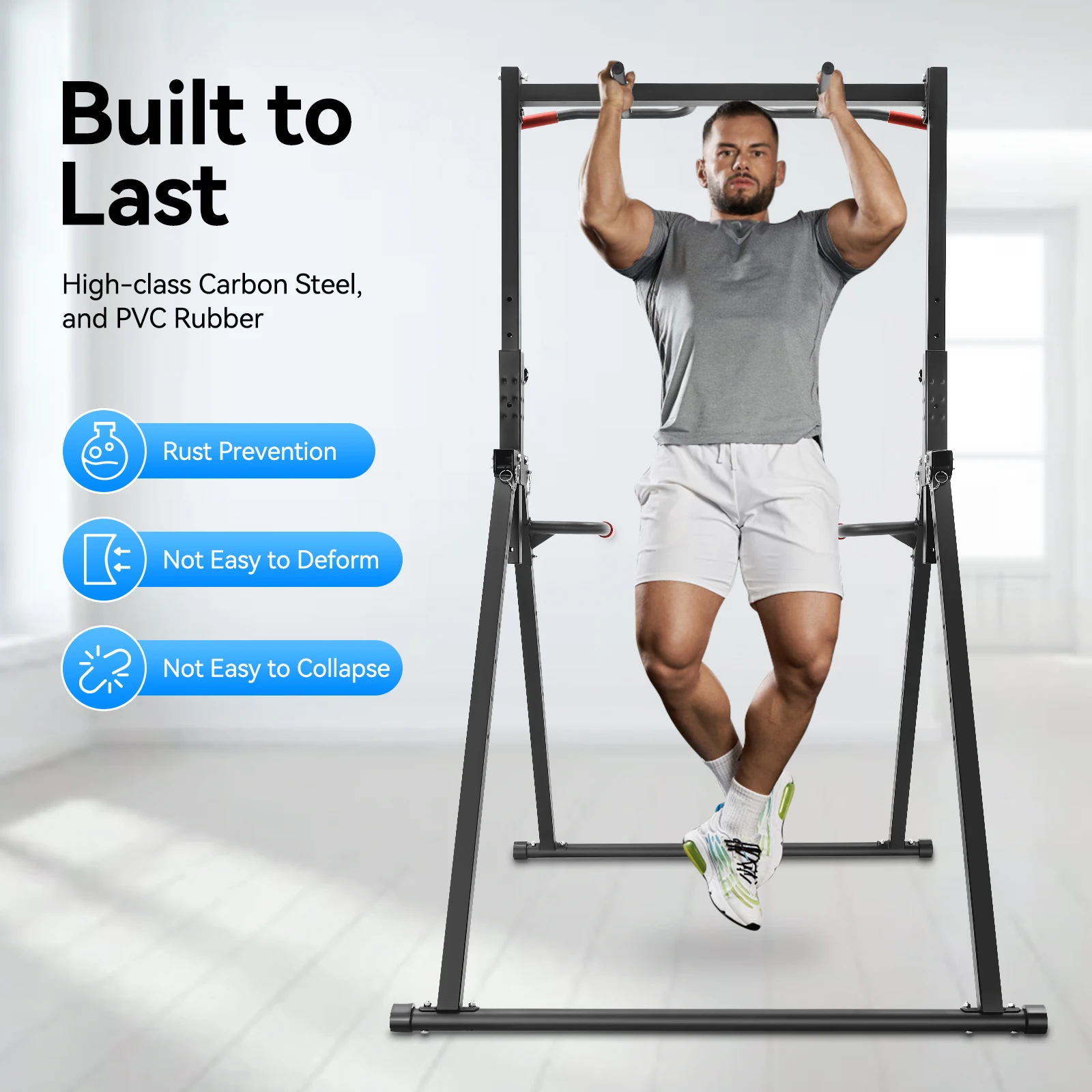
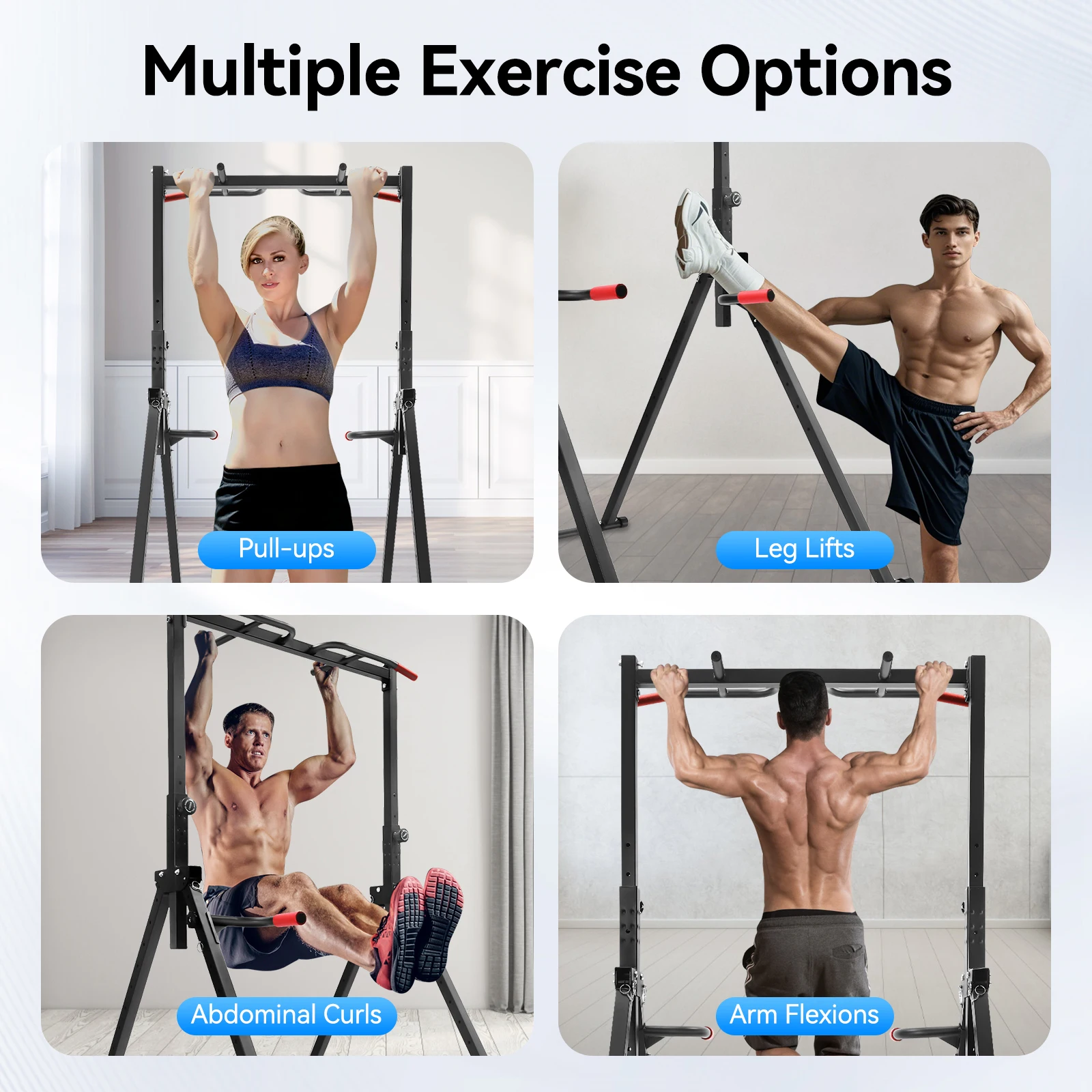
Vertical pulling is the one pattern that dumbbells cannot replicate. Hanging from a bar and pulling your own bodyweight up loads the latissimus dorsi through its longest range, and because your hands are fixed and your body moves, every stabiliser from the grip to the rotator cuff to the deep core is recruited to keep you from swinging. Dips on parallel bars are the pressing mirror image, loading chest, triceps and front delts under the same closed-chain conditions. Together these two movements cover the majority of upper-body pulling and pressing — and neither needs a single weight plate.
Key Benefits
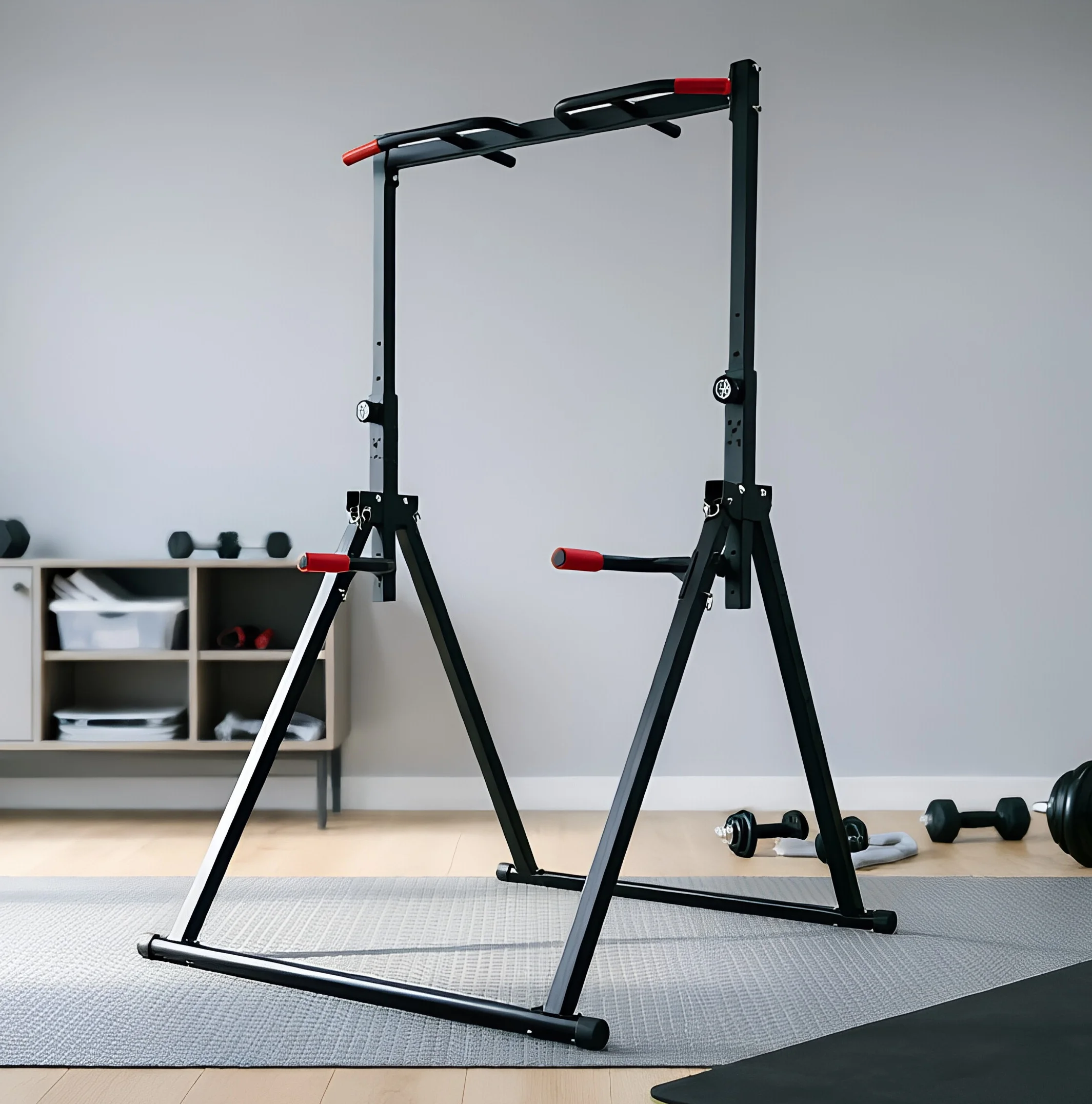
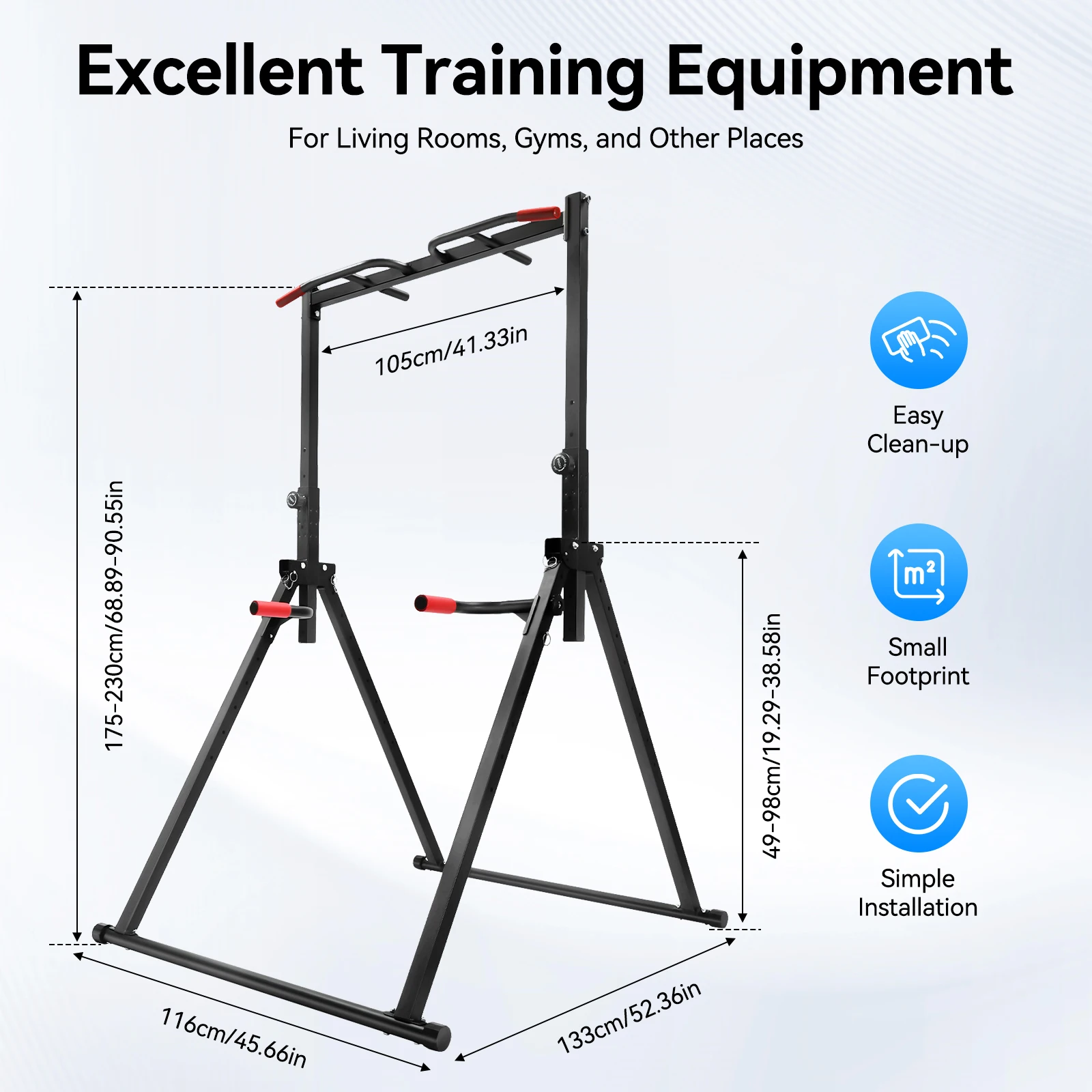
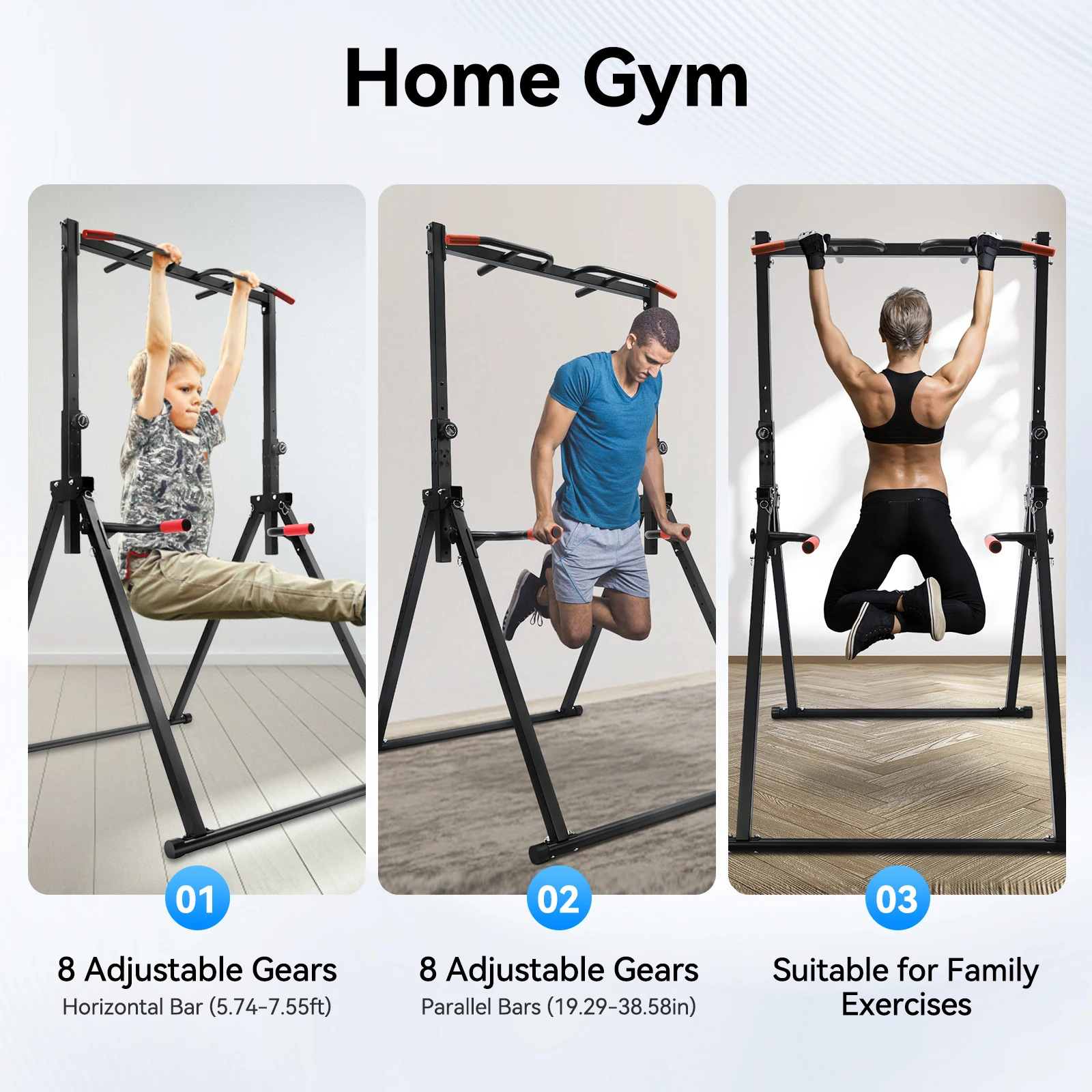
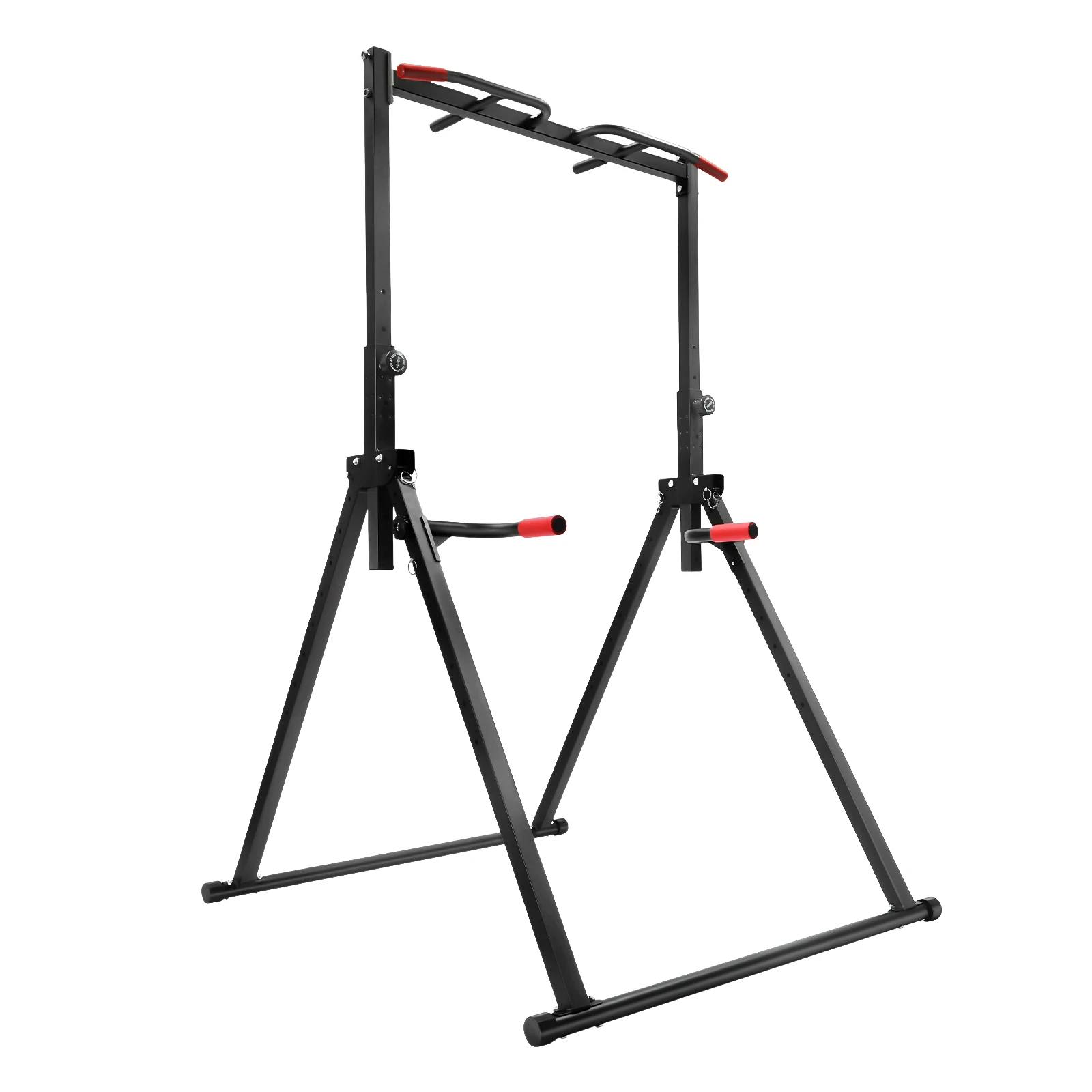
- Adjustable bar height. Set it high for full dead hangs or low enough for assisted and Australian rows, so beginners can build up to their first strict pull-up on the same frame.
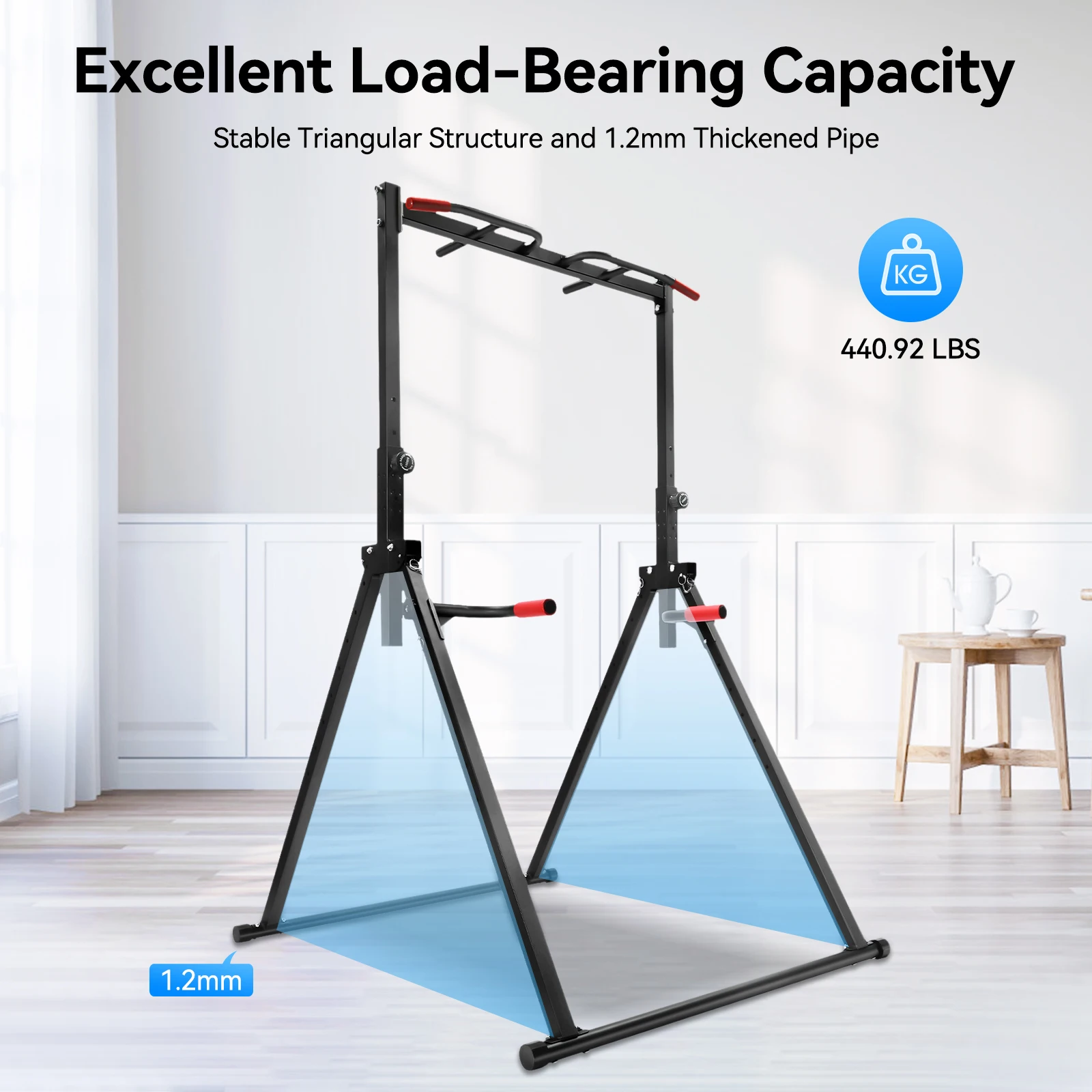
- Rated to 200 kg. Comfortably covers bodyweight plus a weight vest or dip belt as you progress into weighted work.
- Parallel bars for dips and L-sits. Full pressing and core work from a station most people buy just for pulling.
- Freestanding and foldable. No drilling into walls, no doorframe pressure mounts, and it collapses down between sessions.
- Multiple grip widths and orientations. Wide grip loads the lats harder; a supinated close grip brings the biceps in. Rotating grips through a programme builds a more complete back.
- A genuinely progressive tool. Band-assisted reps, then slow negatives, then strict reps, then weighted — one frame carries you from beginner to advanced.
How to Use
Set the station on a flat, level, hard floor and tighten every bolt before the first rep. If you cannot yet do a pull-up, do not just hang there and hope: loop a resistance band over the bar and put a foot or knee in it to assist, or use slow negatives — jump or step to the top position and lower yourself as slowly as you can, aiming for five seconds. Eccentric strength builds first and is what unlocks the concentric rep. On the way up, initiate by pulling the shoulder blades down and back before the elbows bend; this stops you shrugging into your ears and keeps the lats doing the work. For dips, lower until the upper arms are roughly parallel to the floor and no further. SAFETY: check the bolts before every session, ensure the base is not rocking, keep the space beneath the bar clear, and never let children play on the frame. Do not use it on carpet over an uneven subfloor or on a slippery surface.
Specifications
| Product type | Foldable multi-function pull-up and dip station |
|---|---|
| Frame material | Steel |
| Load rating | 200 kg |
| Bar height | Adjustable |
| Stations | Pull-up bar plus parallel dip bars |
| Colour | Black |
| Mounting | Freestanding — no drilling required |
| Storage | Foldable |
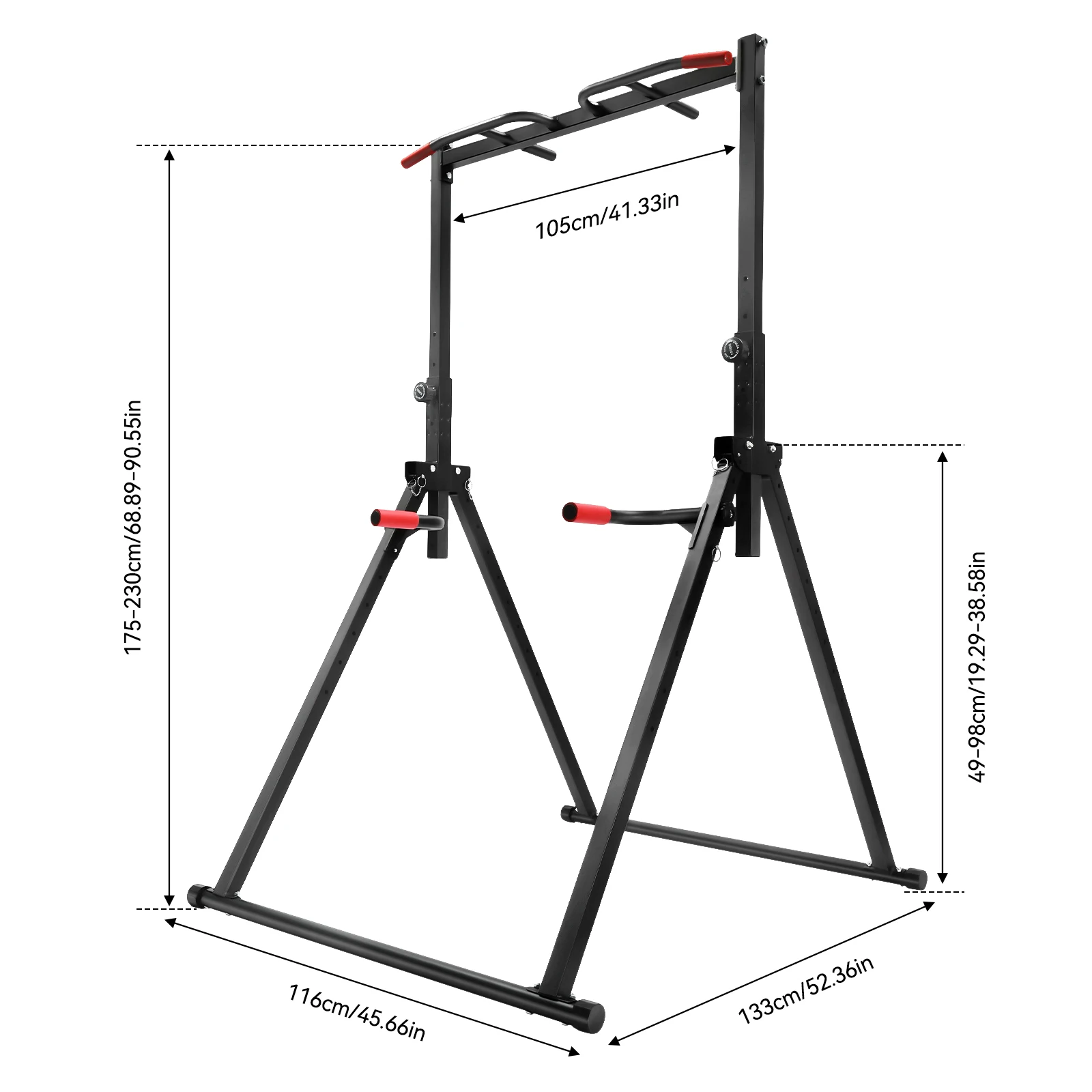
| Exact dimensions & height range | Variant dependent — see product options |
Care & Maintenance
Wipe the bar and frame clean of sweat after each session; salt corrodes steel and degrades foam grips faster than most people expect. Re-tighten all bolts monthly — vibration under load loosens fasteners. Inspect the welds, the height-adjustment pins and the foam sleeves before each use, and take the station out of service if you find any crack, deep rust or a pin that will not seat fully. Store indoors in a dry space.
What’s in the Box
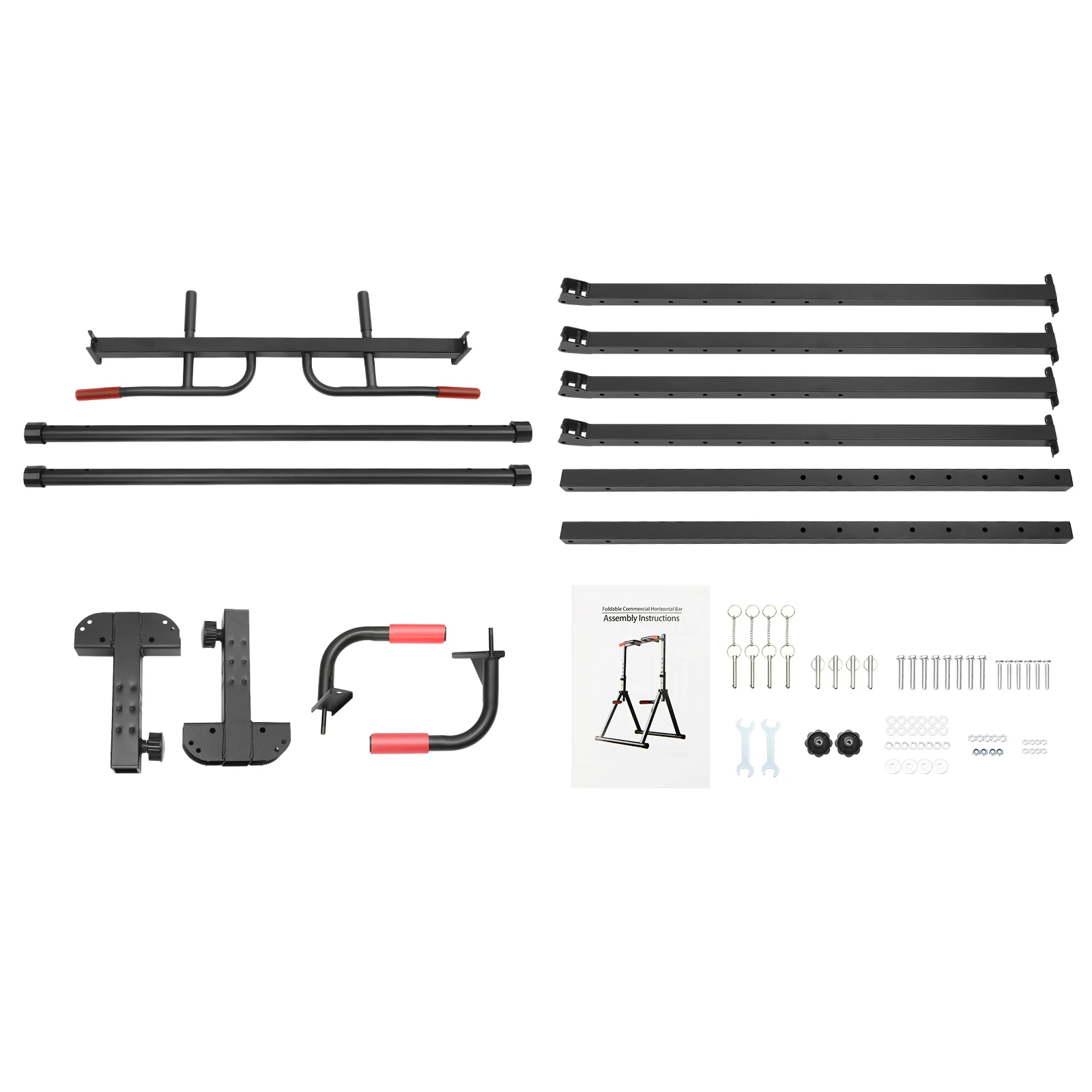
1 x pull-up and dip station frame with adjustable pull-up bar, parallel bars, foam grips, fixings and assembly instructions.
Reviews
There are no reviews yet.