The Angle Is the Exercise
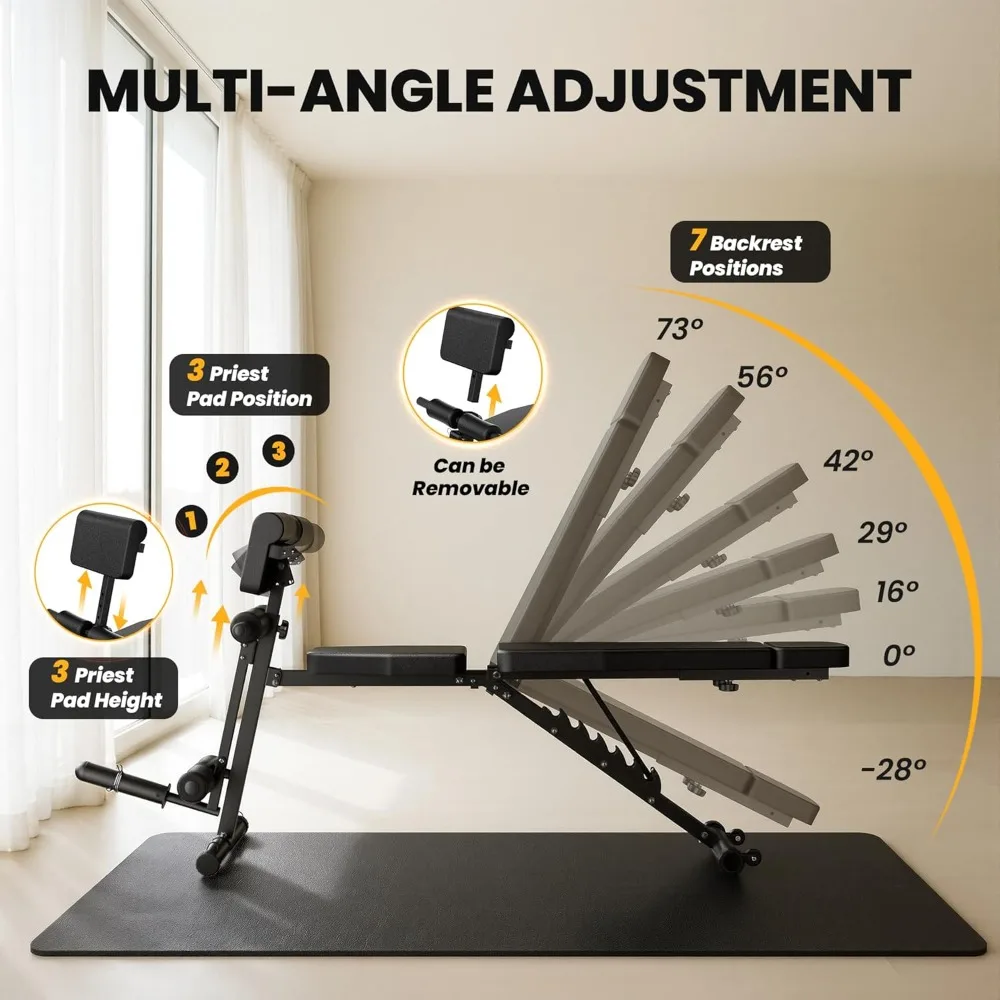
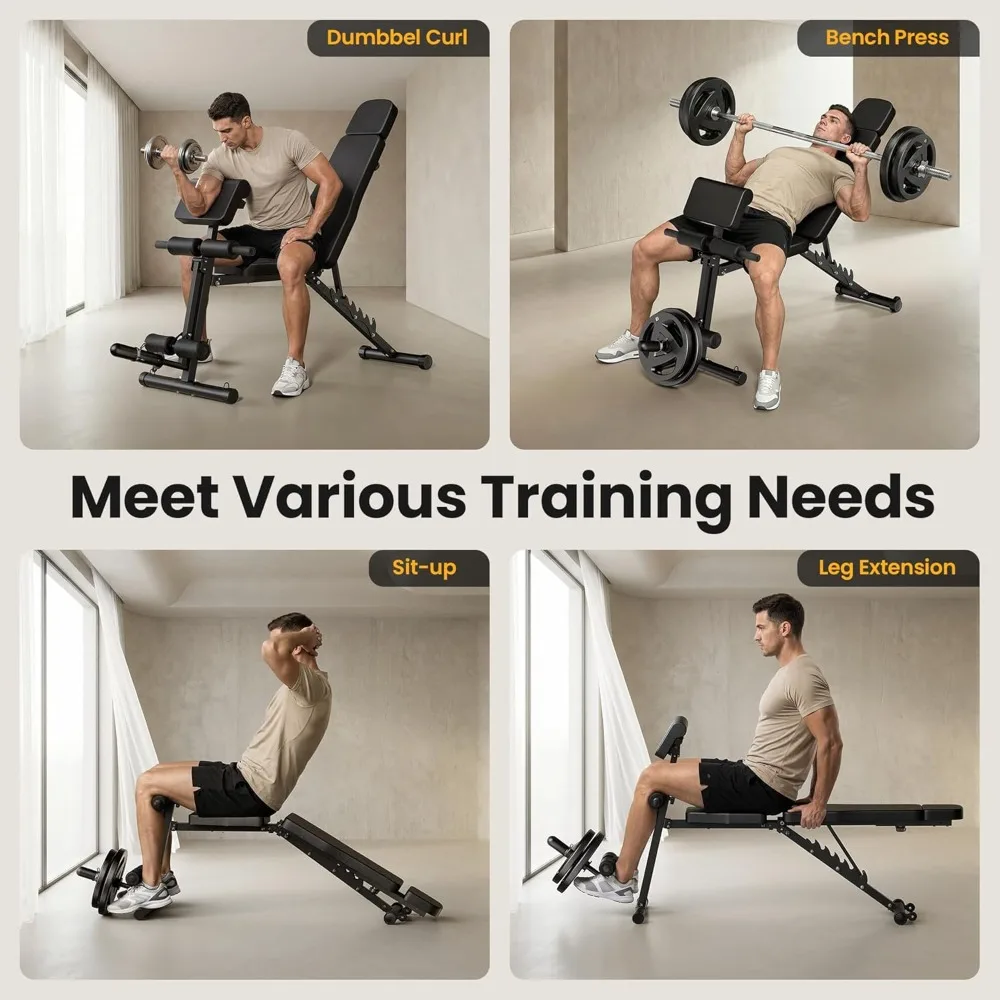
Changing the backrest angle does not just change how the movement feels — it changes which muscle fibres do the work. Pressing on a flat bench loads the sternal head of the pectoralis major. Tilt to roughly 30–45 degrees of incline and the emphasis shifts to the clavicular (upper) fibres and the front deltoid. Decline shifts it downward to the lower pec. Because muscle fibres contract hardest along their own line of pull, a bench that locks at multiple angles lets you hit a muscle from several directions with the same pair of dumbbells — which is exactly how you build complete development without buying more equipment.
Key Benefits
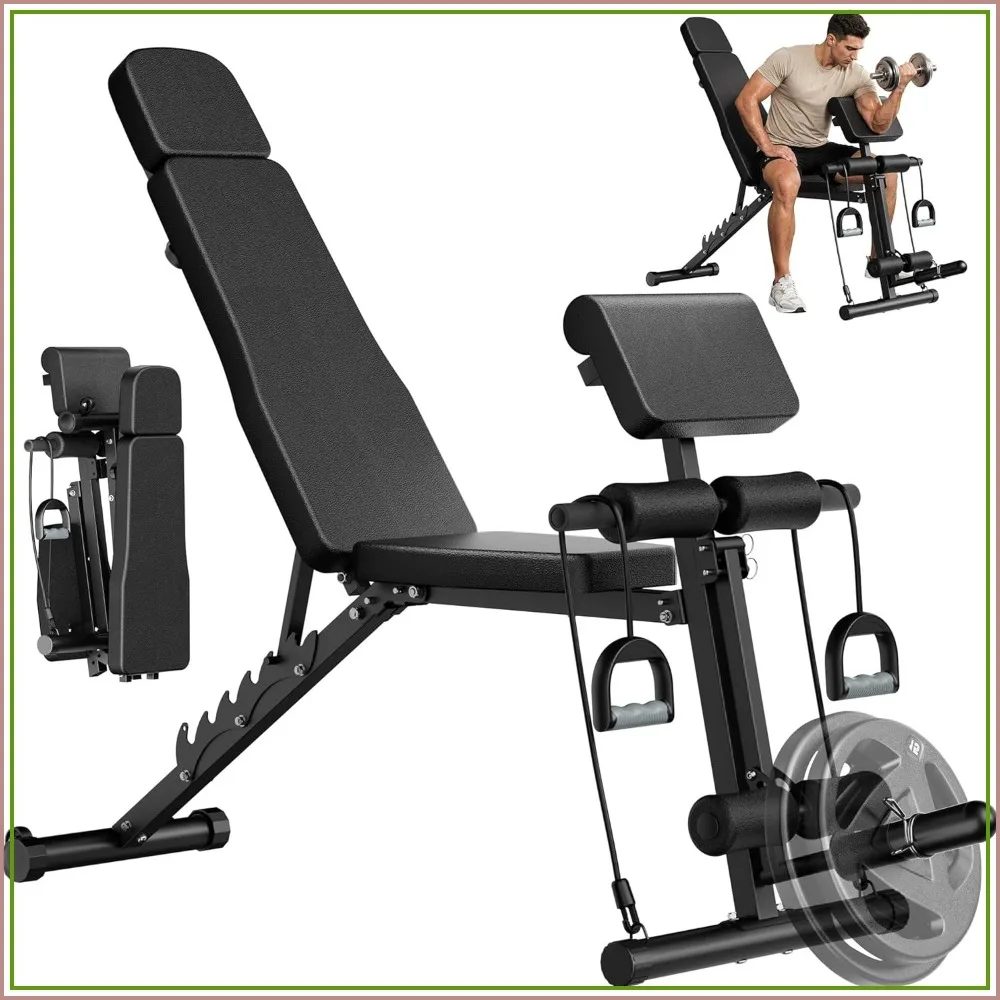
- Incline, decline and flat positions. Multiple locking angles let you shift emphasis between upper, mid and lower chest, shoulders and back from a single bench.
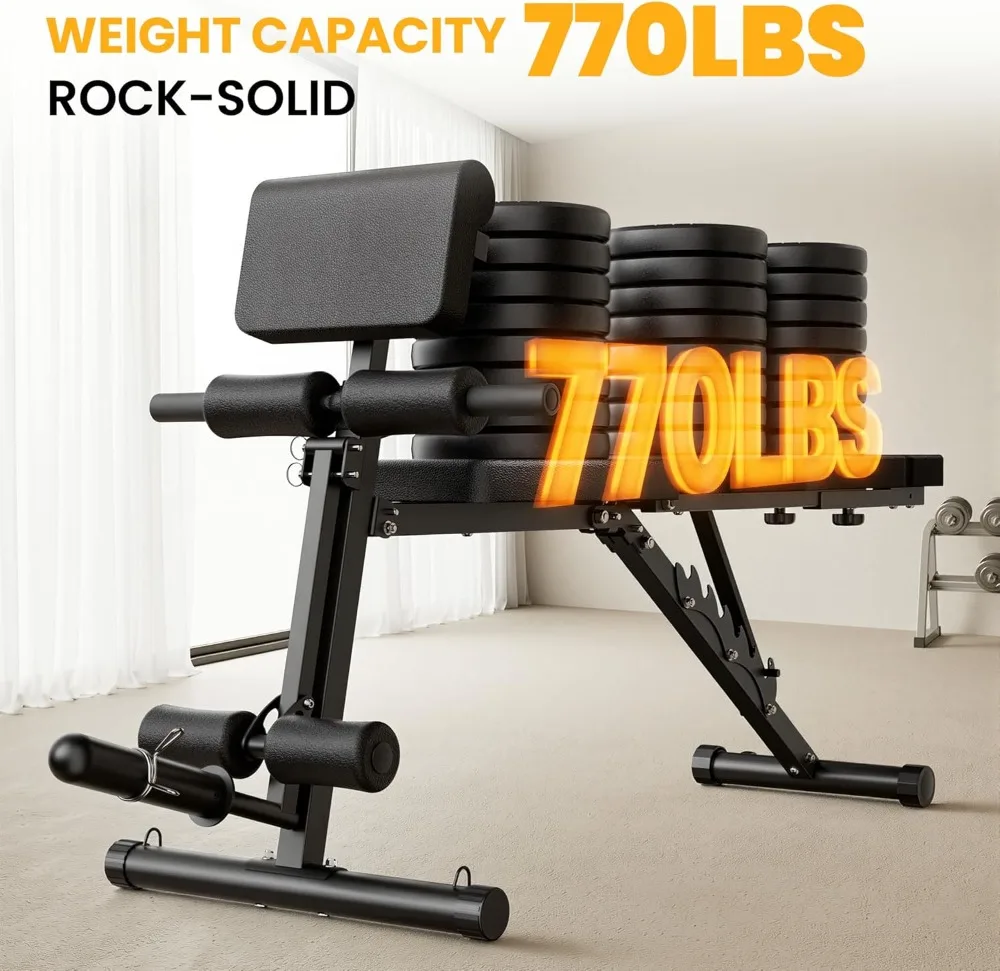
- 770 lb (approx. 350 kg) rated capacity. Ample headroom for bodyweight plus heavy dumbbells or a loaded barbell, with a wide margin of safety.
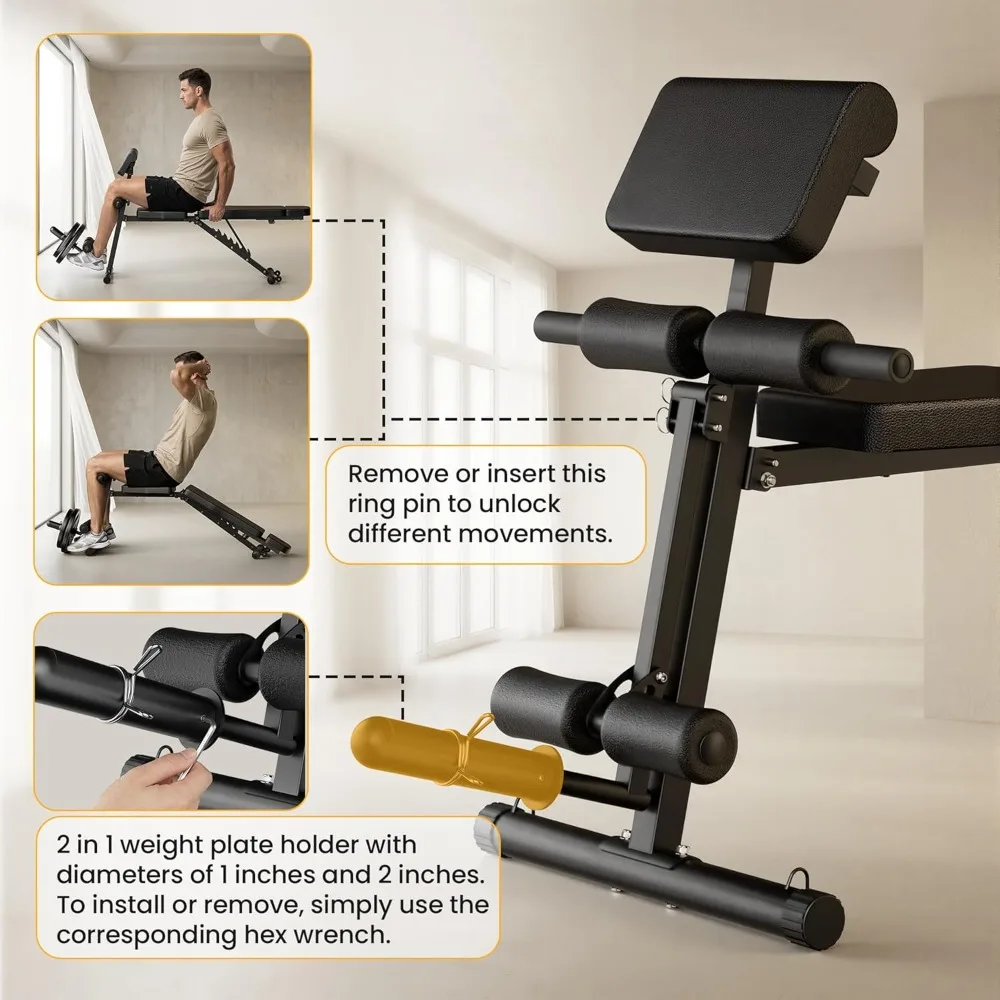
- Leg extension and leg curl attachment. Adds isolated quadriceps and hamstring work — the lower-body movements a plain bench and dumbbells cannot reach.
- Doubles as a decline sit-up bench. The leg rollers anchor your feet, so the same frame handles core work without a second purchase.
- Transport wheels and a folding frame. Tilt, roll and fold it away, rather than dragging a dead weight across the floor every time you need the room back.
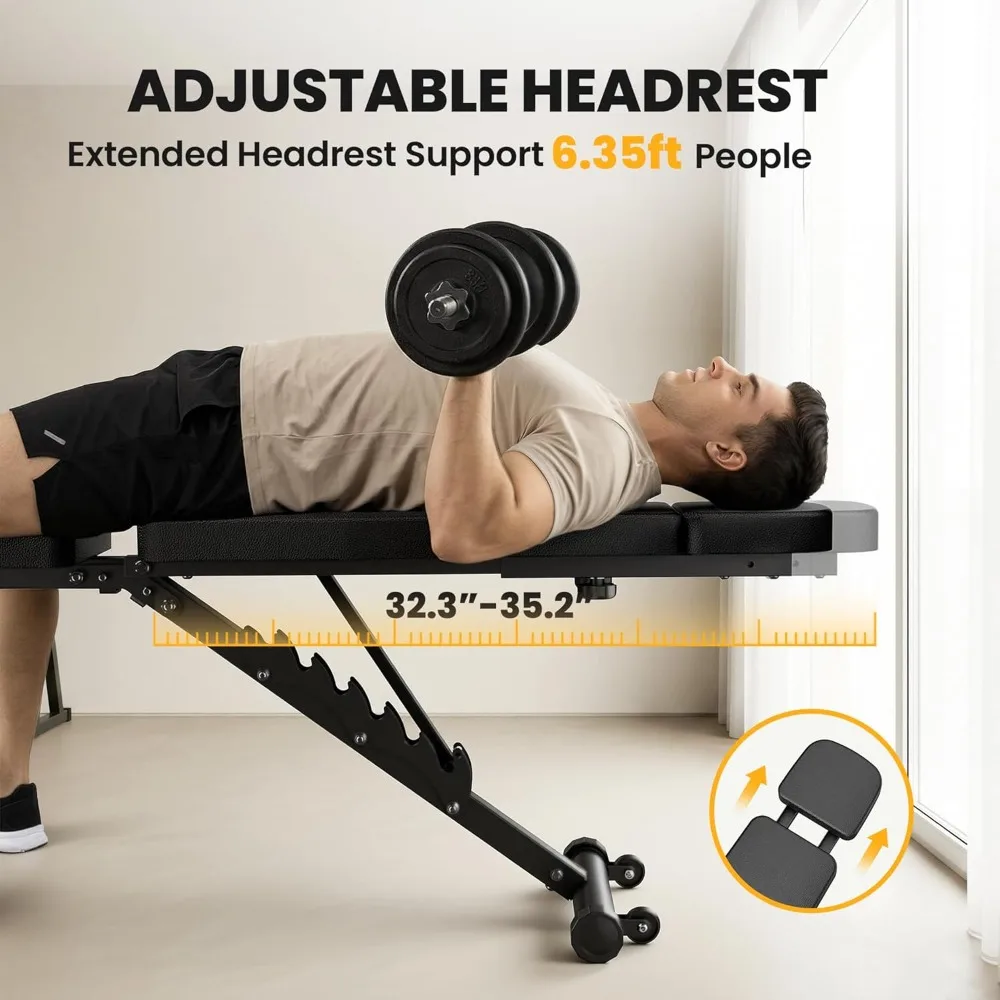
- Padded backrest and seat. Firm, supportive padding — a bench that is too soft lets your shoulder blades sink, which costs you a stable pressing base.
How to Use
Assemble on a level floor, tighten every bolt, and confirm the backrest pin or ratchet is fully seated in its detent before you ever load the bench — a backrest that drops mid-press is the single most dangerous failure mode of this piece of kit. For pressing, plant both feet flat, pull the shoulder blades together and down into the pad, and keep them retracted for the whole set; this protects the shoulder joint and gives you a stable platform to press from. Set incline near 30–45 degrees for upper chest — steeper than that and it quietly becomes a shoulder press. For leg extensions, adjust the roller so it rests just above the ankle, not on the shin bone, and control the lowering phase rather than letting the pad drop. SAFETY: never bench heavy alone without safety arms, a rack with catches, or a spotter. If you use a barbell, do not use collars when training alone — being able to tilt the bar and shed the plates is a genuine escape route. Fold and unfold with hands clear of the hinges.
Specifications
| Product type | Adjustable folding workout bench |
|---|---|
| Positions | Incline, decline, flat |
| Rated capacity | 770 lb (approx. 350 kg) |
| Attachments | Leg extension and leg curl; decline sit-up |
| Mobility | Transport wheels |
| Storage | Folds for compact storage |
| Padding | Padded backrest and seat with leg rollers |
| Assembly | Required |
| Exact angle range & dimensions | Variant dependent — see product options |
Care & Maintenance
Wipe the upholstery down after every session with a mild soap solution rather than an alcohol or solvent cleaner, which cracks vinyl over time. Check the adjustment pins, hinges and welds monthly and re-tighten all bolts, as repeated loading works fasteners loose. Inspect the pad for splits — a torn cover lets sweat into the foam, where it stays. Keep the bench indoors and dry, and put a mat underneath it to protect your flooring and cut down on shifting during heavy sets.
What’s in the Box
1 x adjustable weight bench with leg extension and curl attachment, leg rollers, transport wheels, fixings and assembly instructions.
Reviews
There are no reviews yet.