The Freestanding Frame That Replaces Half a Gym
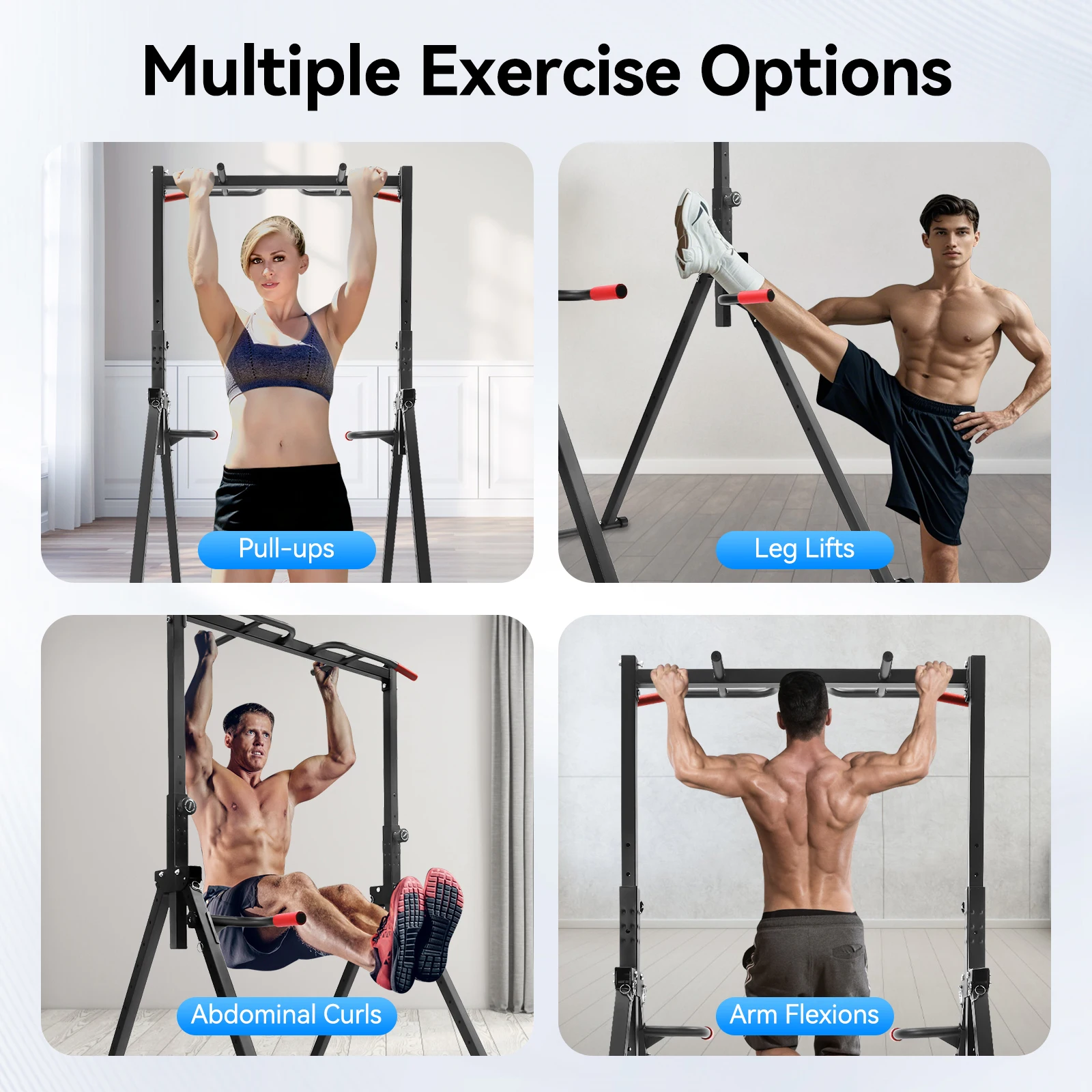
Pull-ups and dips are the two highest-value bodyweight movements most home setups simply cannot perform, because both need a rigid anchor above and beside you. A power tower supplies that anchor with a self-supporting steel frame, so you get vertical pulling (lats, rhomboids, biceps), vertical pressing (chest, triceps, front delts) and hanging or supported knee raises for the core. These are closed-chain, compound movements: the body moves through space while the hands are fixed, which recruits far more stabilising musculature than a machine that guides the path for you.
Key Benefits
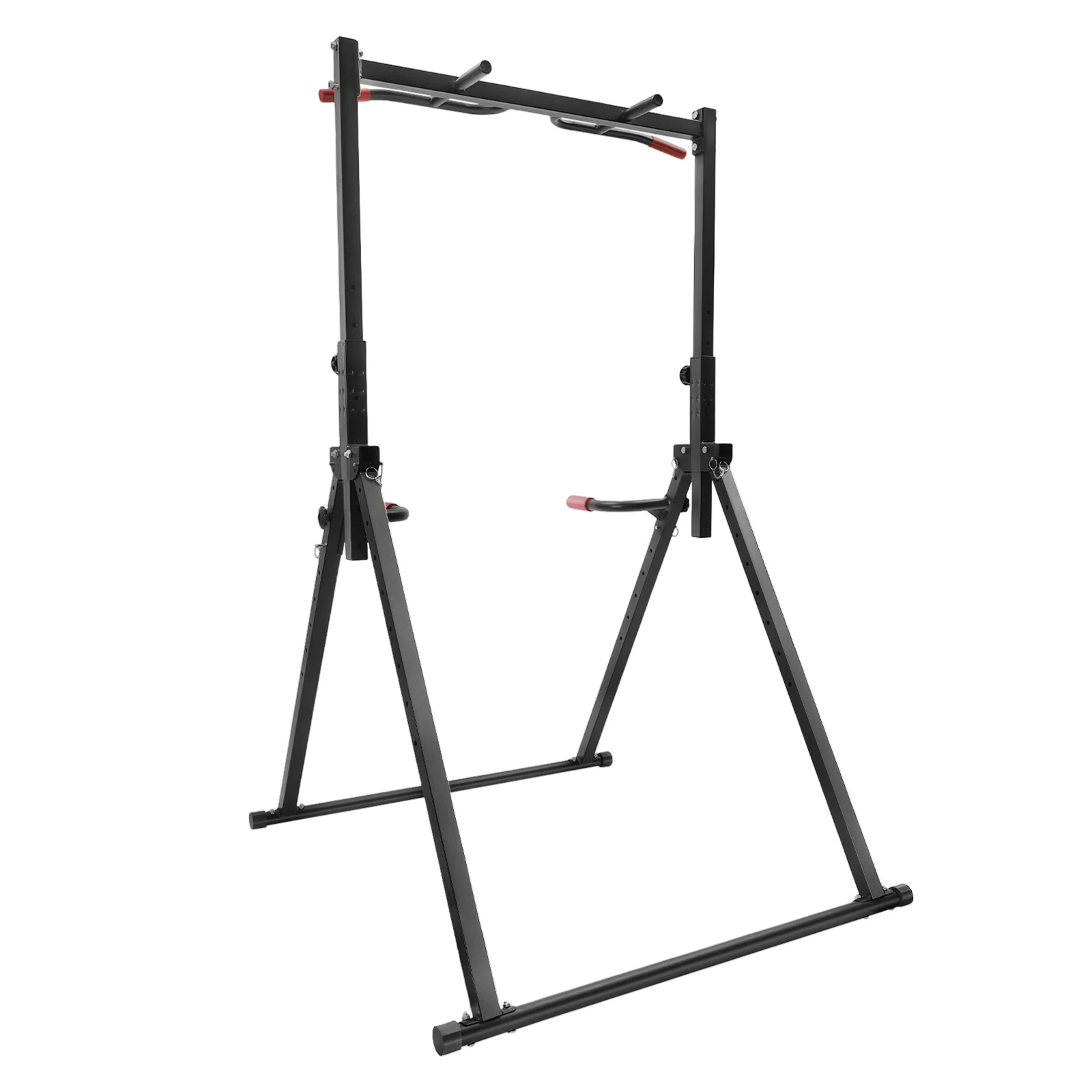
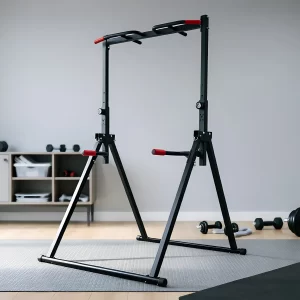
- Three stations, one footprint. Pull-up bar, dip handles and a padded backrest with armrests for knee and leg raises — the pull, push and core patterns in a single frame.
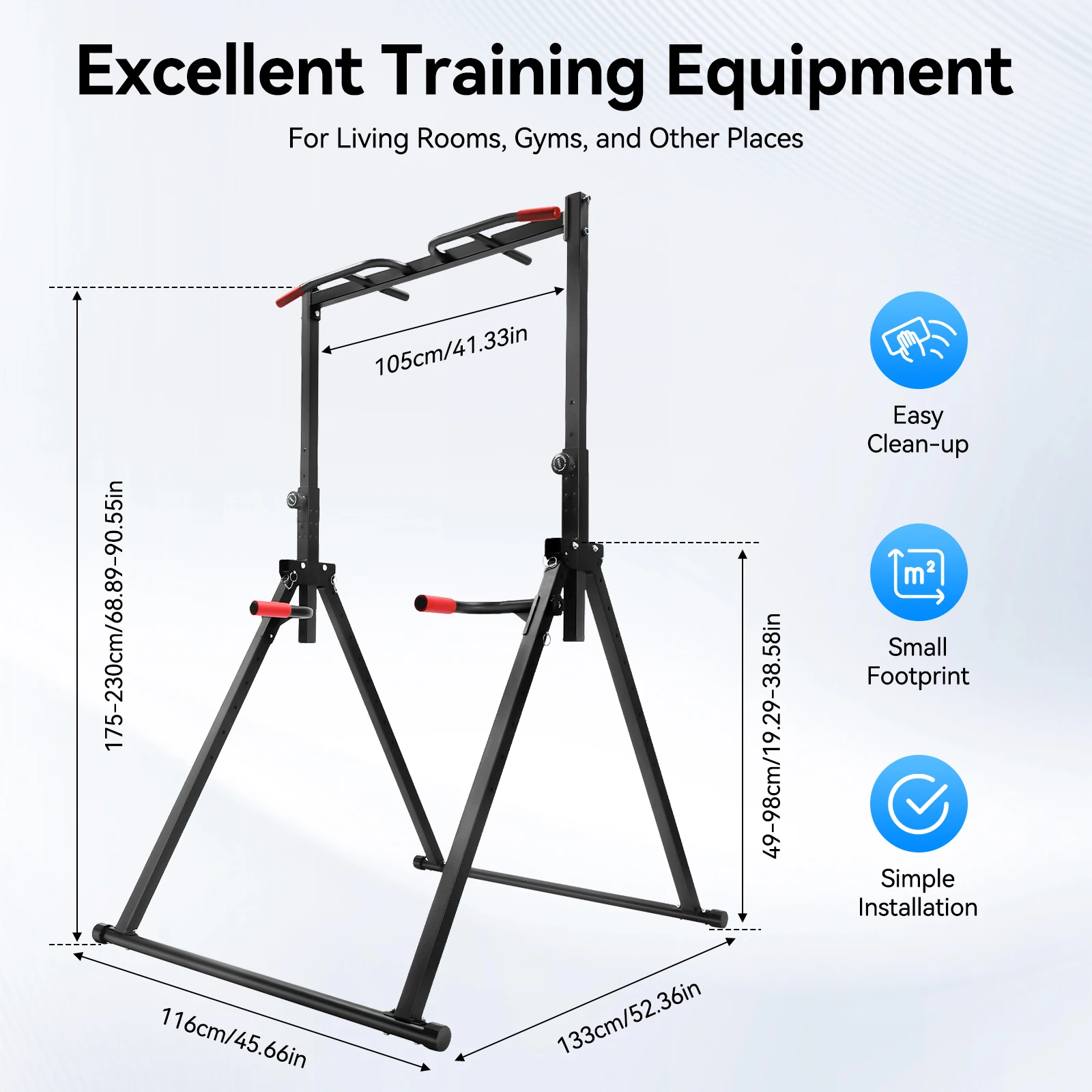
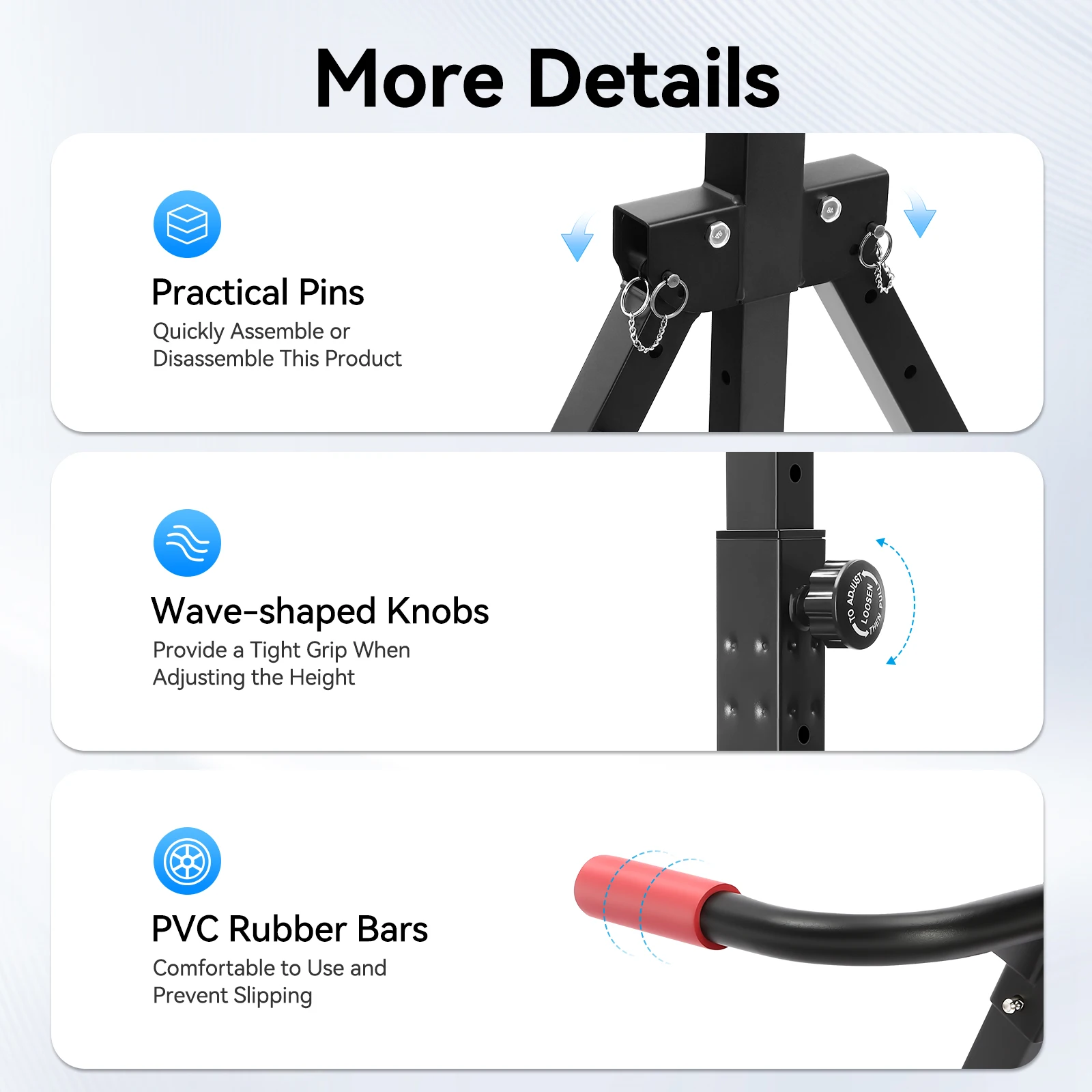
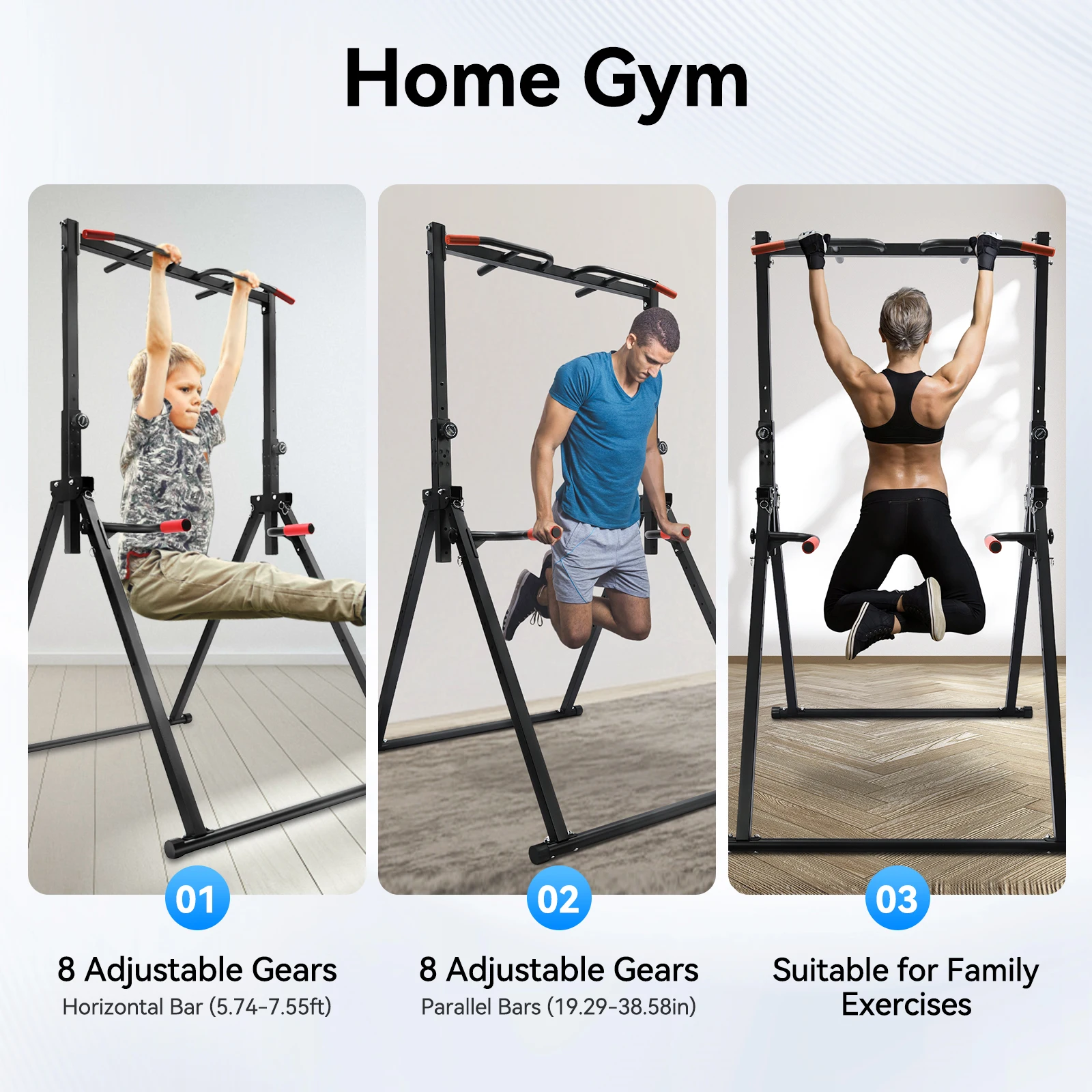
- Height-adjustable upright. Set the bar so you can hang with clear space beneath your feet, and adjust it for different users or ceiling heights.
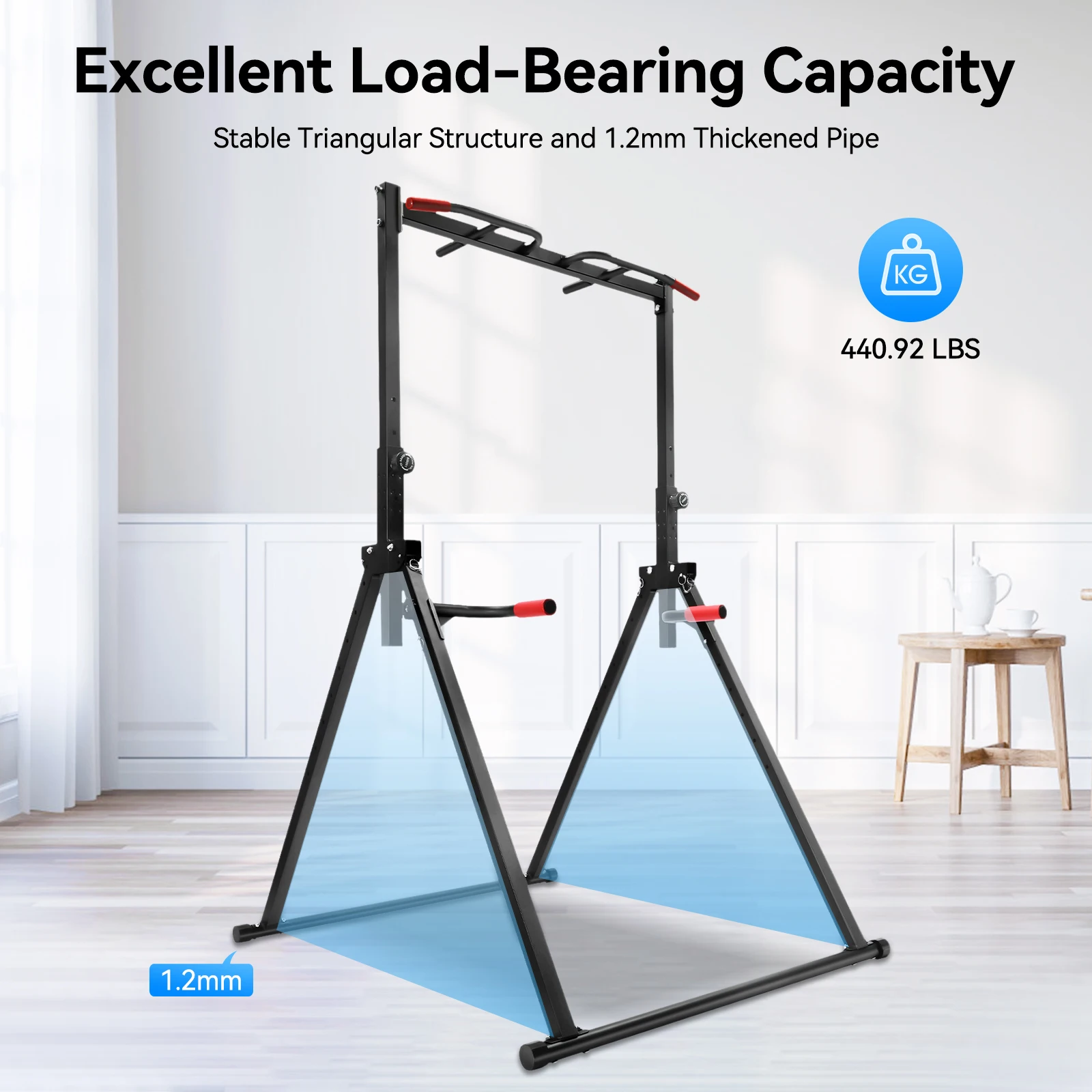
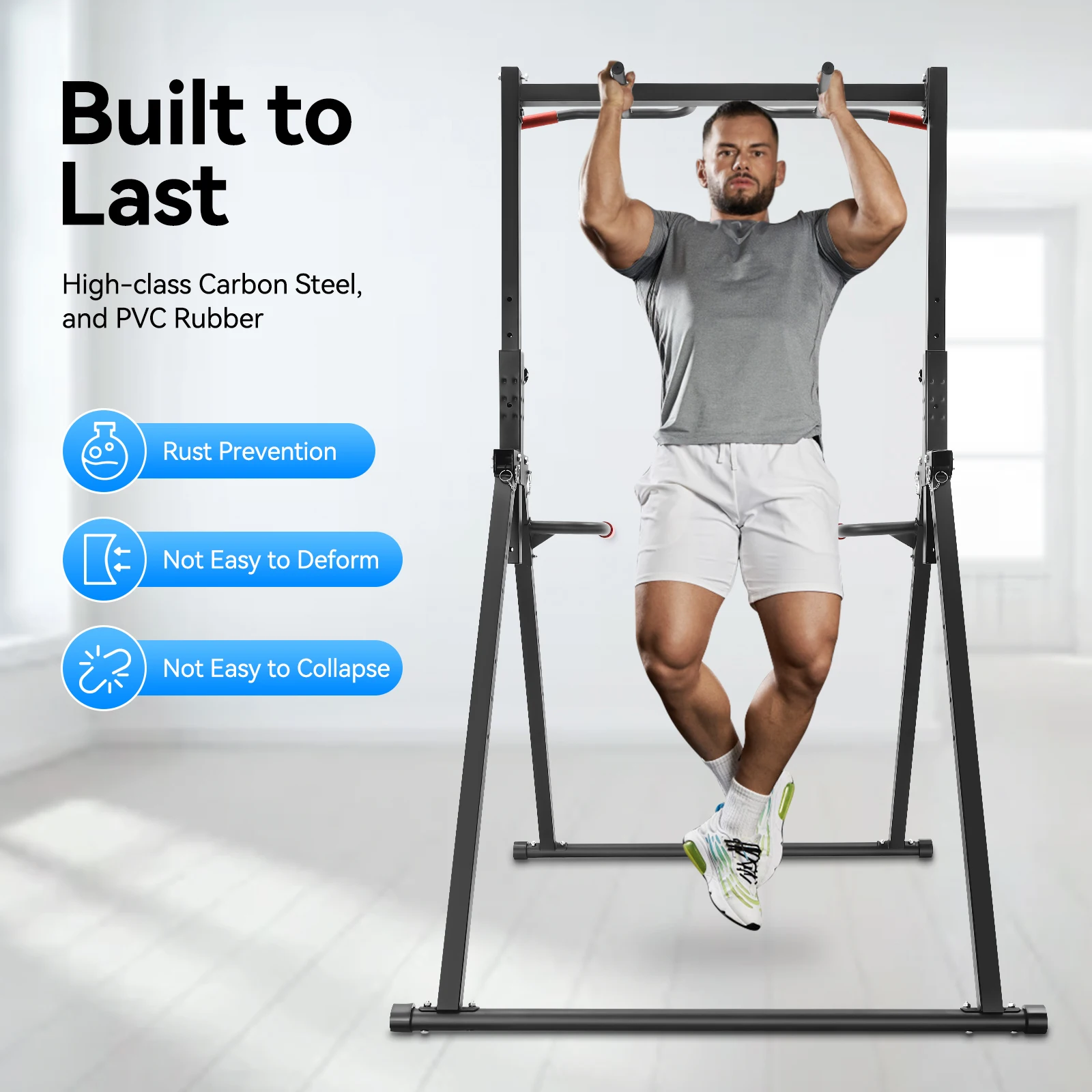
- Steel construction with a freestanding base. No wall drilling, no doorframe, and no reliance on your plasterwork holding your bodyweight.
- Folds for storage. Collapses down between sessions, which is the difference between a home gym you keep and one you resent.
- Scales with you indefinitely. Start with band-assisted or negative reps; progress to strict reps, then weighted, then to L-sits and muscle-ups on the same frame.
- Multiple grip positions. Wide, narrow and neutral grips shift the emphasis between lats, biceps and upper back without adding equipment.
How to Use
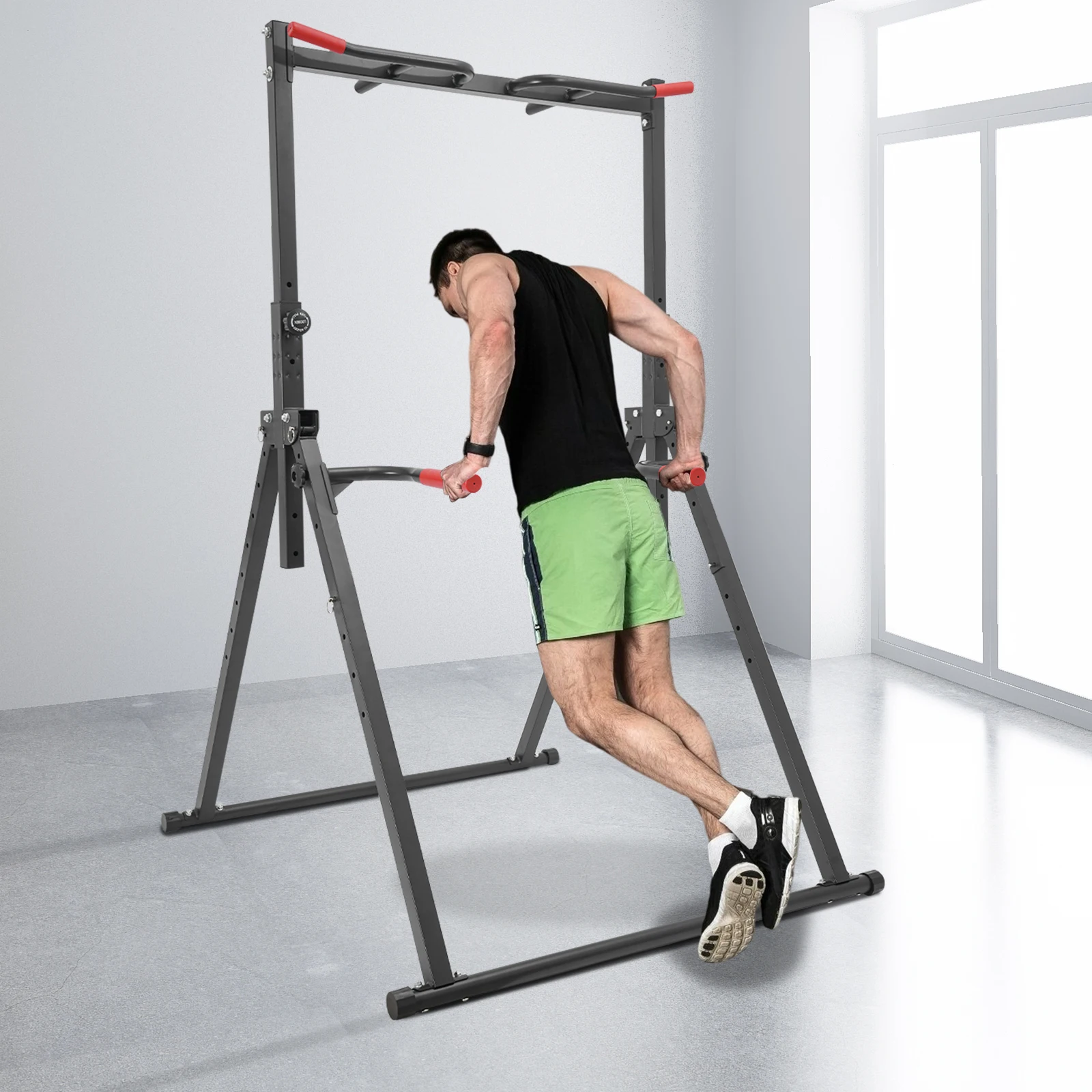
Assemble on a flat, hard, level floor and tighten every bolt fully — a power tower gets its rigidity from bolt tension, and a loose frame will rock alarmingly under load. Set the pull-up bar so your feet clear the floor at full hang. For pull-ups, start from a dead hang, pull the elbows down and back until the chin clears the bar, then lower under control for two to three seconds; the lowering half is where most of the strength is built. For dips, keep a slight forward lean for chest emphasis or stay upright for triceps, and stop the descent when the upper arms reach roughly parallel to the floor — going deeper puts the shoulder joint in a vulnerable, over-extended position. SAFETY: re-check the bolts before every session, keep the area clear, never allow children to climb the frame, and do not exceed the stated load rating. If you feel a sharp pinch in the front of the shoulder during dips, stop and reduce your depth.
Specifications
| Product type | Freestanding power tower / dip station |
|---|---|
| Frame material | Steel |
| Height | Adjustable |
| Stations | Pull-up bar, dip handles, backrest and armrests for knee/leg raises |
| Mounting | Freestanding — no wall or doorframe fixing needed |
| Storage | Foldable |
| Assembly | Required; bolts must be fully tightened |
| Floor requirement | Flat, level, hard surface |
| Load rating & exact dimensions | Variant dependent — see product options |
Care & Maintenance
Wipe sweat off the bar, handles and uprights after every session: perspiration is salty and will corrode a steel frame and rot the foam grips over time. Re-torque all bolts monthly, as vibration from repeated loading gradually works fasteners loose. Inspect the pads for splits and the welds for hairline cracks, and stop using the tower immediately if you find either. Keep it indoors and dry; do not store in a damp garage or outdoors.
What’s in the Box
1 x power tower frame with pull-up bar, dip handles, backrest and armrests, plus fixings and an assembly guide. Some configurations include extra accessories — check the product options.
Reviews
There are no reviews yet.