Movement for the Hours You Spend Sitting Still
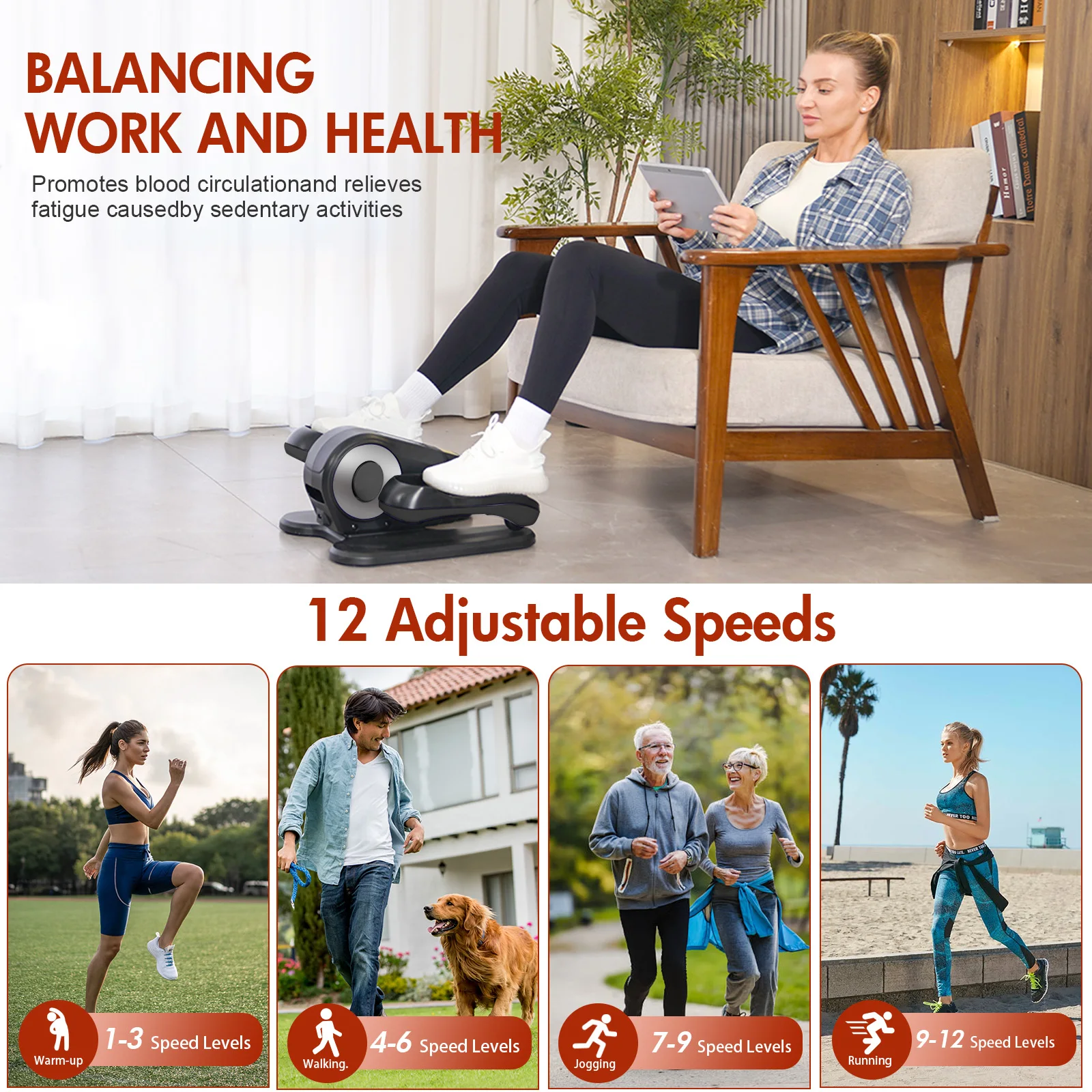
Prolonged sitting is not just a calorie problem — it is a circulation problem. When the leg muscles stay inactive, the calf muscle pump stops squeezing venous blood back toward the heart, blood pools in the lower limbs, and enzymes involved in fat metabolism become less active within hours. Gentle, continuous pedalling reactivates that pump. The motorised modes matter for anyone who is deconditioned, recovering, or has limited range: the machine moves your legs for you, so the joints keep travelling through their arc even when the muscles cannot yet drive them.
Key Benefits
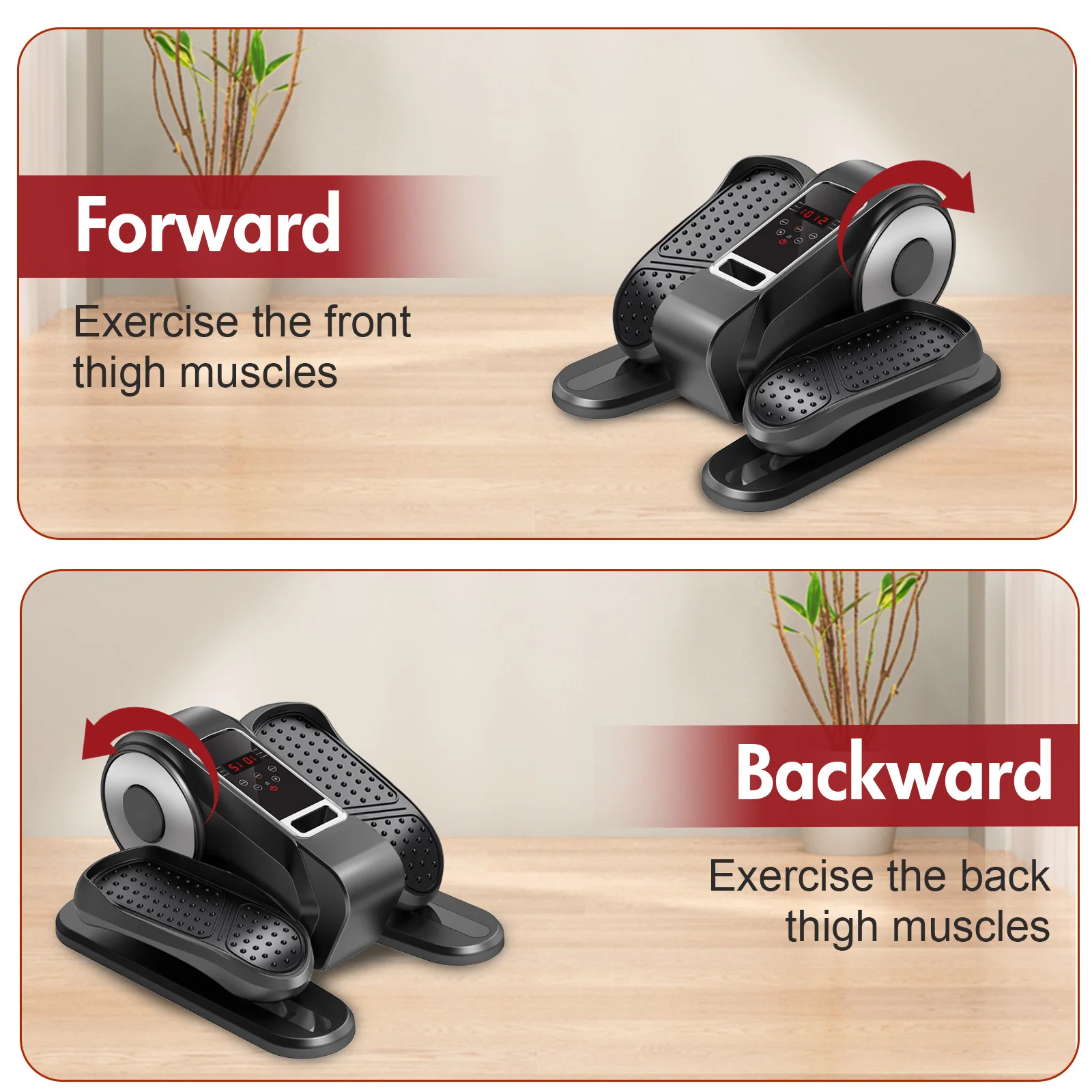
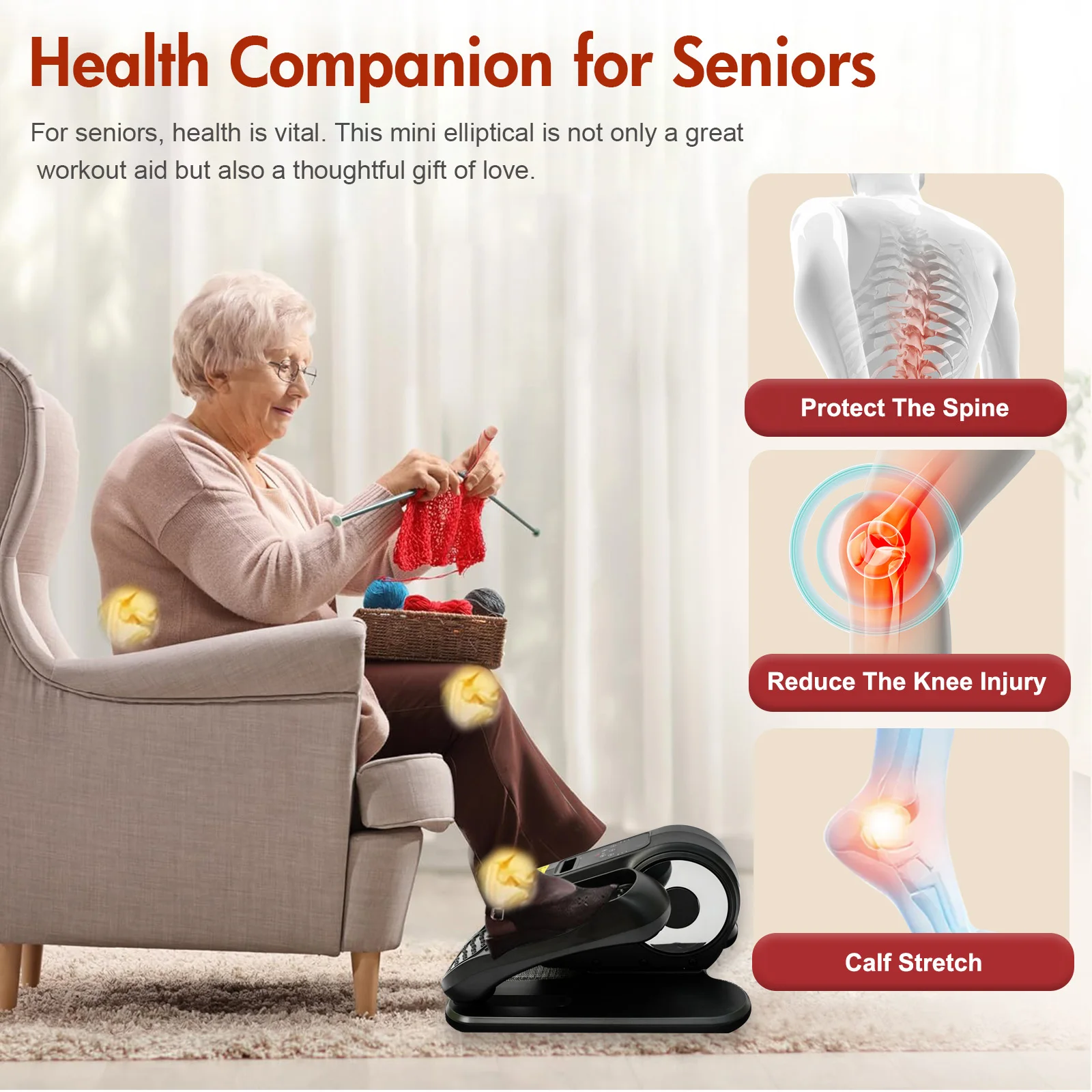
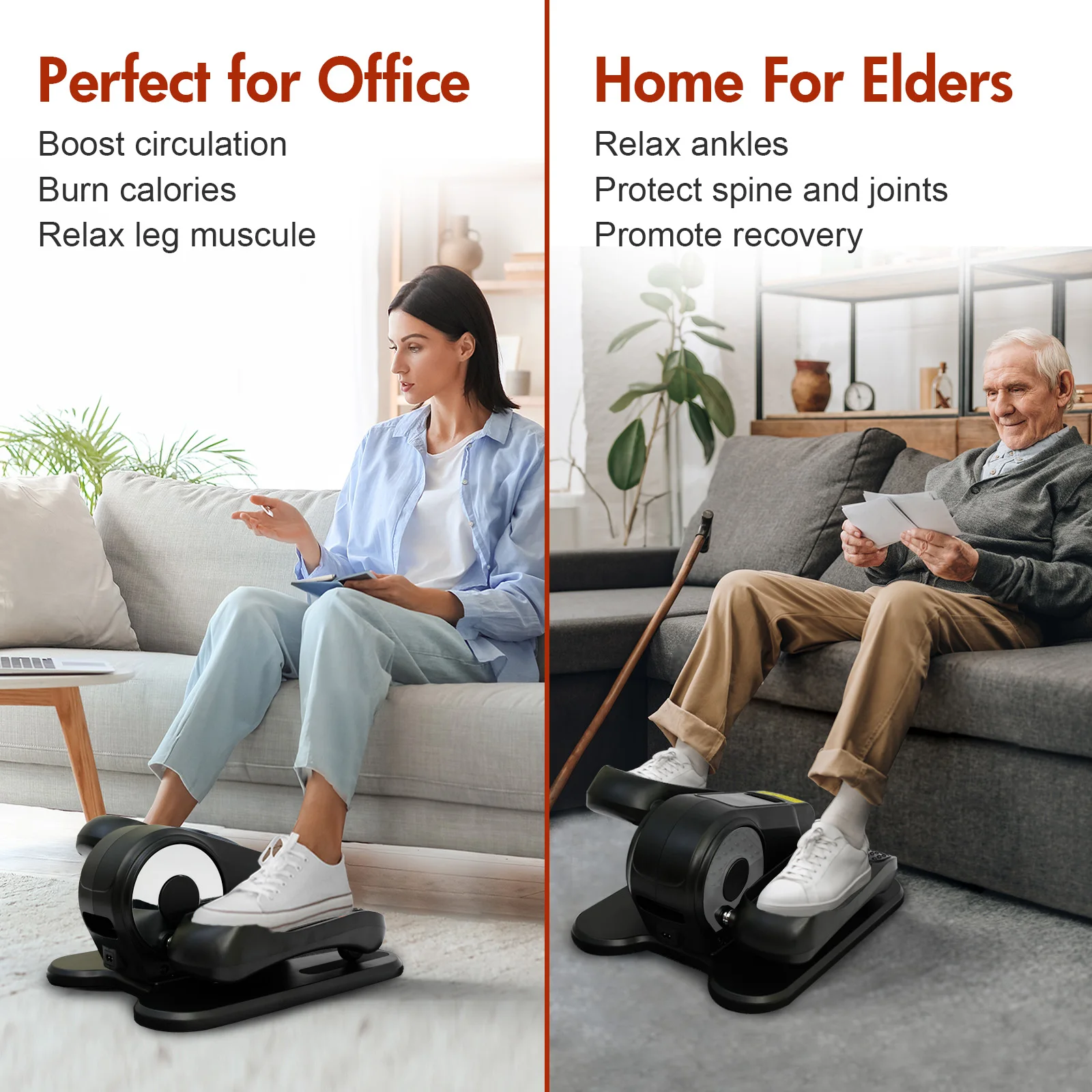
- Active and passive modes. Pedal it yourself for light effort, or let the motor drive the pedals so your knees, ankles and hips keep moving through range — genuinely useful for seniors, post-operative recovery and desk-bound days.
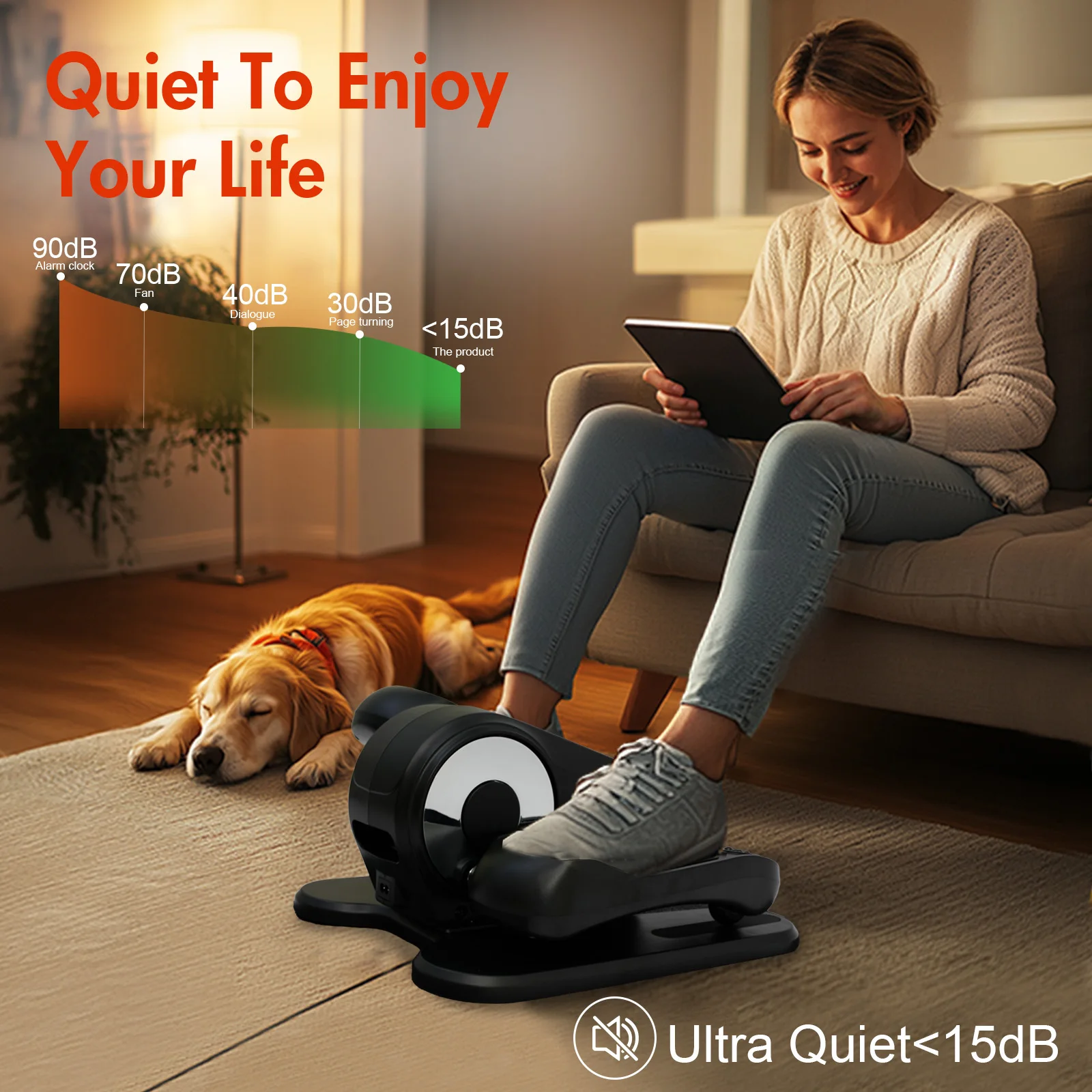
- Quiet enough for a shared room. The electric drive is designed to run without the whirr and clack that makes most pedal exercisers unusable on a video call.
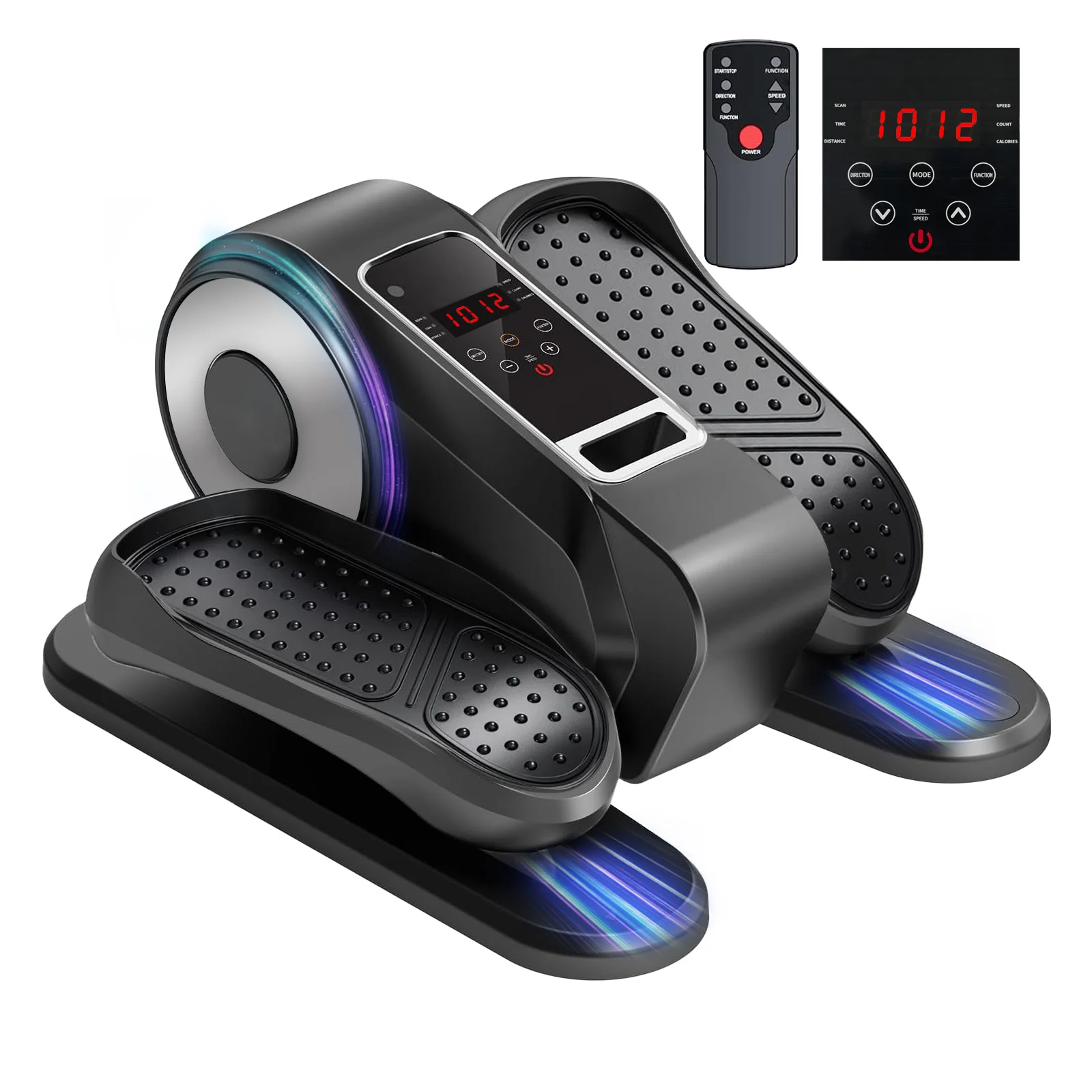
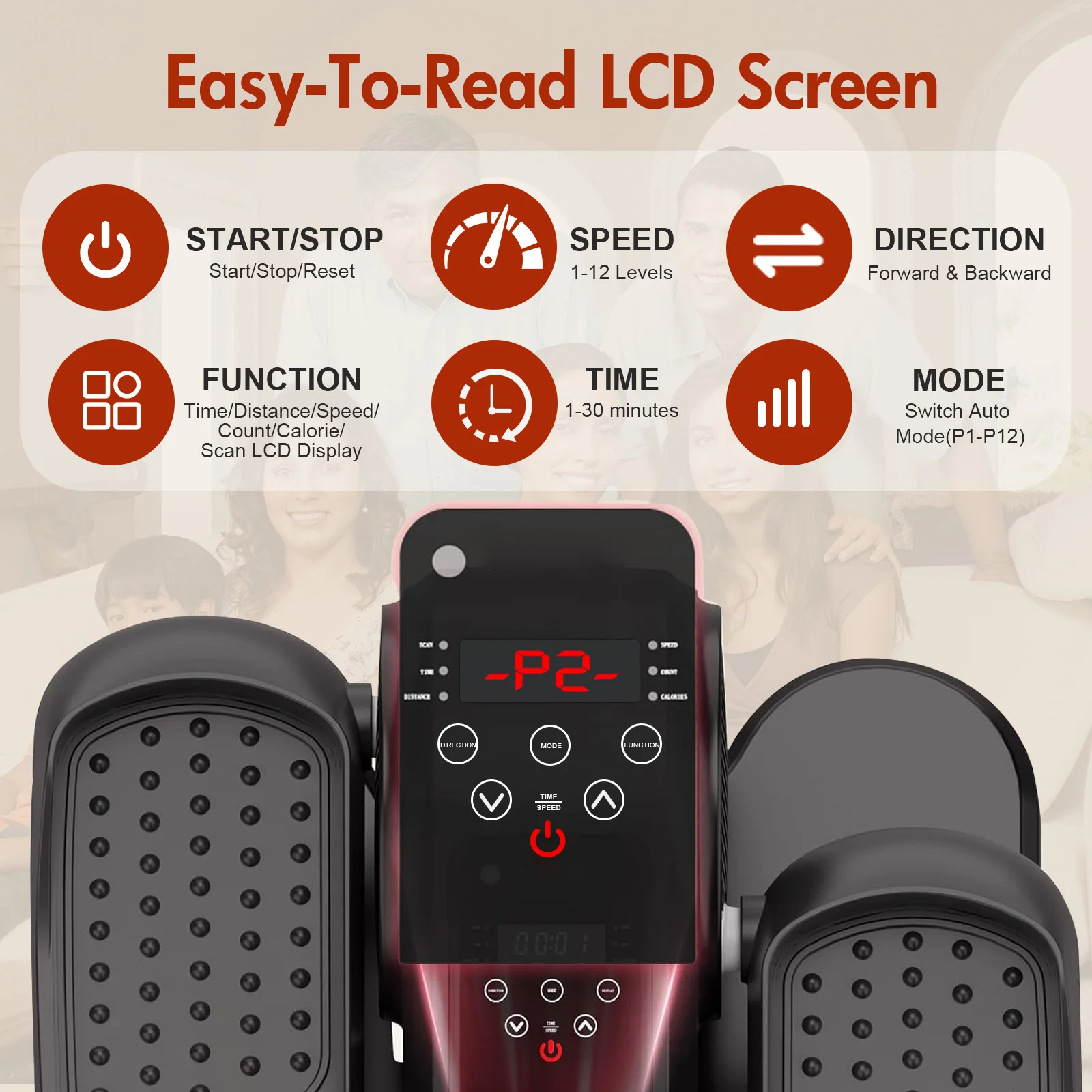
- Remote control and LCD. You can change speed and mode without bending under the desk, and the display tracks time, speed and count so you can actually see whether you did it today.
- 12 manual and automatic programmes. Enough variation to keep an easy pace during work and a firmer one during a break, without turning it into a piece of equipment you have to think about.
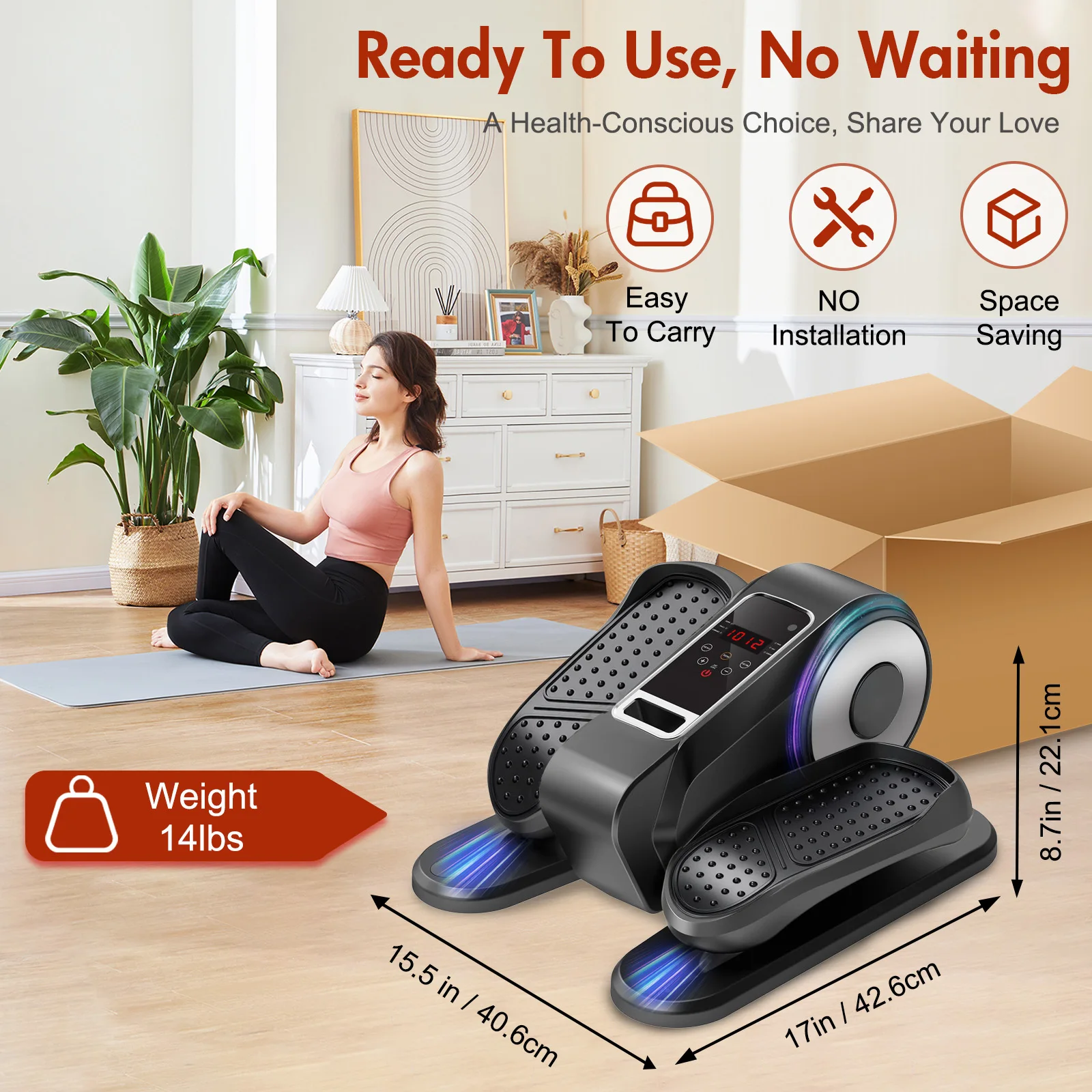
- Fully assembled out of the box. No bolts, no Allen key, no half-built machine leaning against a wall for three weeks.
- Honest about what it is. This is a low-intensity circulation and mobility tool, not a cardio machine. It will not replace training, and it is not a fat-loss device — but it does replace sitting completely still.
How to Use
Position it under the desk so your knees stay slightly bent at the top of the pedal stroke — if your knees hit the underside of the desk or your hips rock side to side in the chair, the unit is too close. Sit back in the chair with your spine supported, not perched forward. Start with passive or low-speed mode for 10–15 minutes a couple of times a day rather than one long session; the benefit comes from frequency, not duration. Use a chair that does not roll, or brace it against a wall — a rolling office chair will slowly push you away from the pedals. Keep feet secured in the straps. If you have had recent hip, knee or ankle surgery, or you have a condition affecting sensation in the feet, get your clinician’s clearance on range and resistance before you start, and stop if you feel joint pain rather than muscular effort.
Specifications
| Type | Seated under-desk elliptical / pedal exerciser |
|---|---|
| Drive | Electric motor, quiet operation |
| Modes | 12 manual and automatic modes |
| Display | LCD — time, speed, count |
| Controls | Remote control plus onboard panel |
| Assembly | Fully assembled |
| Intended users | Teens, adults and seniors |
| Use position | Seated (under desk or in front of a chair) |
| Power | Mains powered — variant dependent |
Care & Maintenance
Wipe the housing and pedals with a lightly damp cloth; keep liquid away from the vents, motor housing and control panel. Check the foot straps for fraying and the pedal bolts for looseness every few weeks — the constant rotation slowly backs fasteners out. Store it on a flat surface, unplug it when not in use, and keep it out of damp rooms. Do not open the motor housing; there are no user-serviceable parts inside.
What’s in the Box
1 × under-desk elliptical (assembled), 1 × remote control, user manual. Power adapter and battery type are variant dependent.
Reviews
There are no reviews yet.