Sharp, Then Warm: What an Acupressure Mat Is Really Doing to Your Nervous System
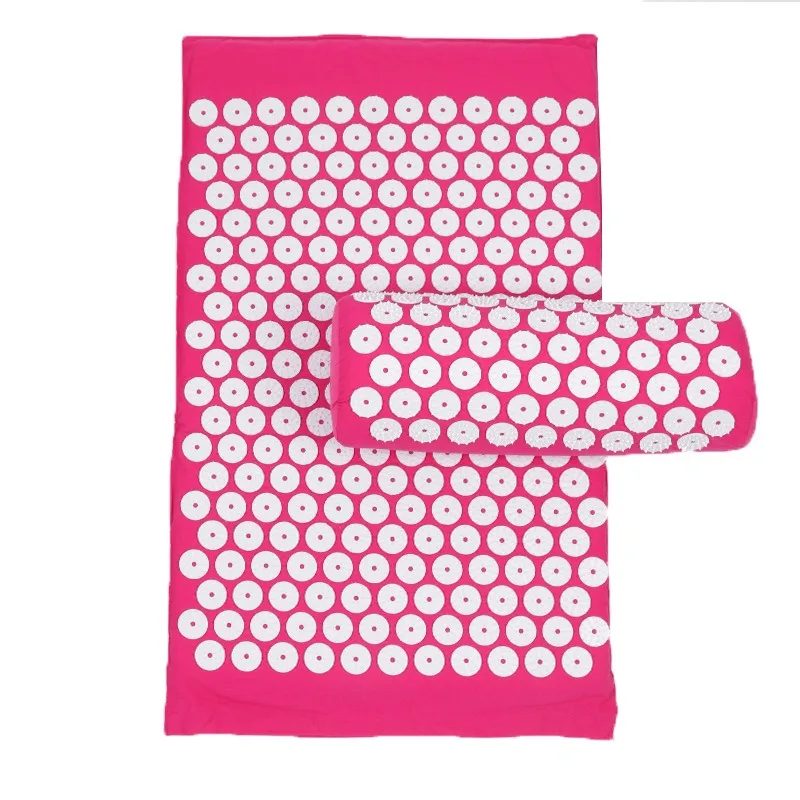
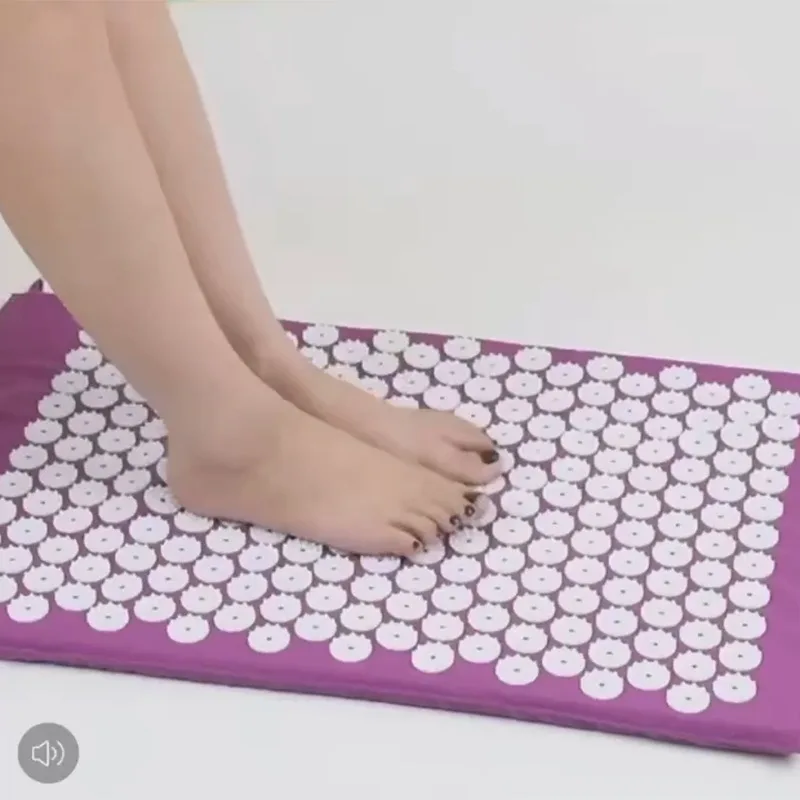
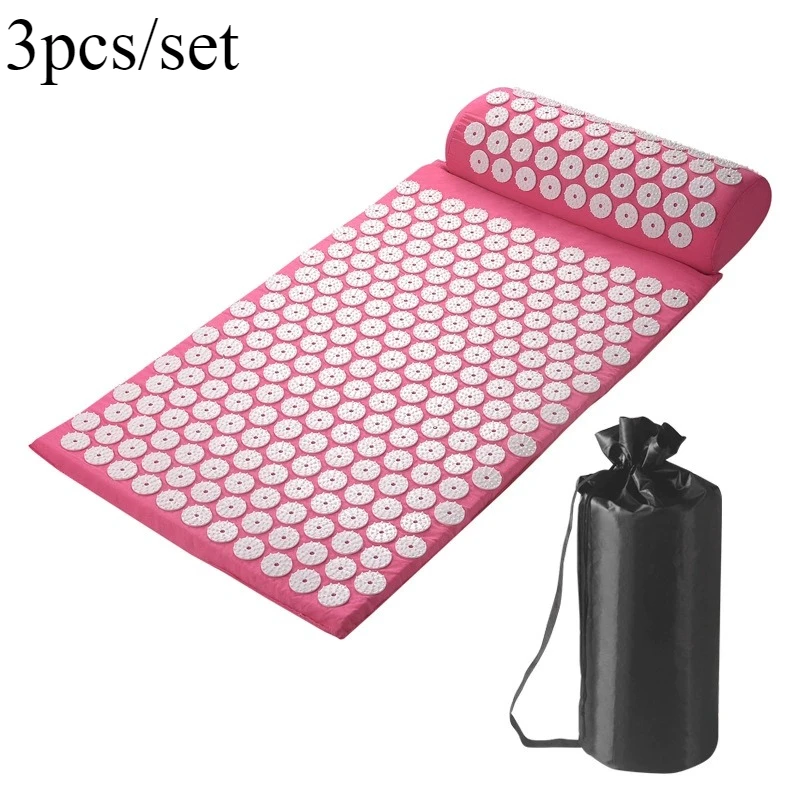
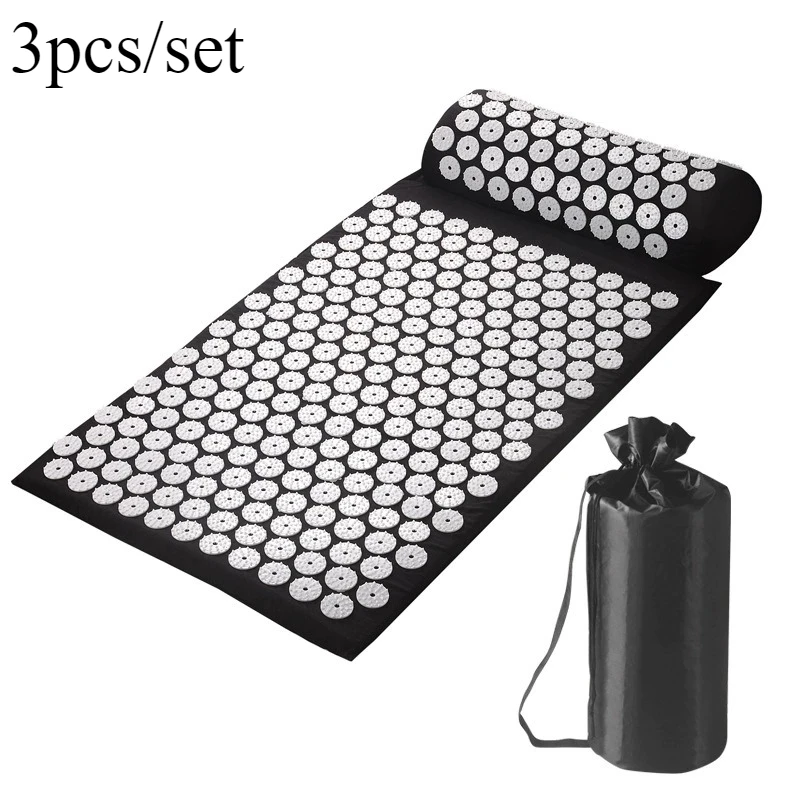
An acupressure mat is covered in thousands of small plastic spikes, and lying on it delivers a broad, intense wash of sensory input across the skin of your back. Two things follow. First, that flood of touch and pressure signals competes with pain signals at the spinal cord — the same gate-control mechanism behind rubbing a knock — which is why an aching back often feels quieter afterwards. Second, the sustained stimulation triggers local vasodilation, which is the warmth and flushing you feel, and for many people prompts a parasympathetic shift: slower breathing, lower arousal, the state you need to actually fall asleep. It is not a substitute for treating a structural back problem. As a nightly nervous-system downshift, it works.
Key Benefits
- Reliable, repeatable relaxation. The sharp-then-warm arc gives you a physical cue to breathe and switch off — far more effective than telling yourself to relax while scrolling.
- Eases non-specific back and shoulder tension. Best suited to the diffuse ache of desk work and long driving rather than acute injury.
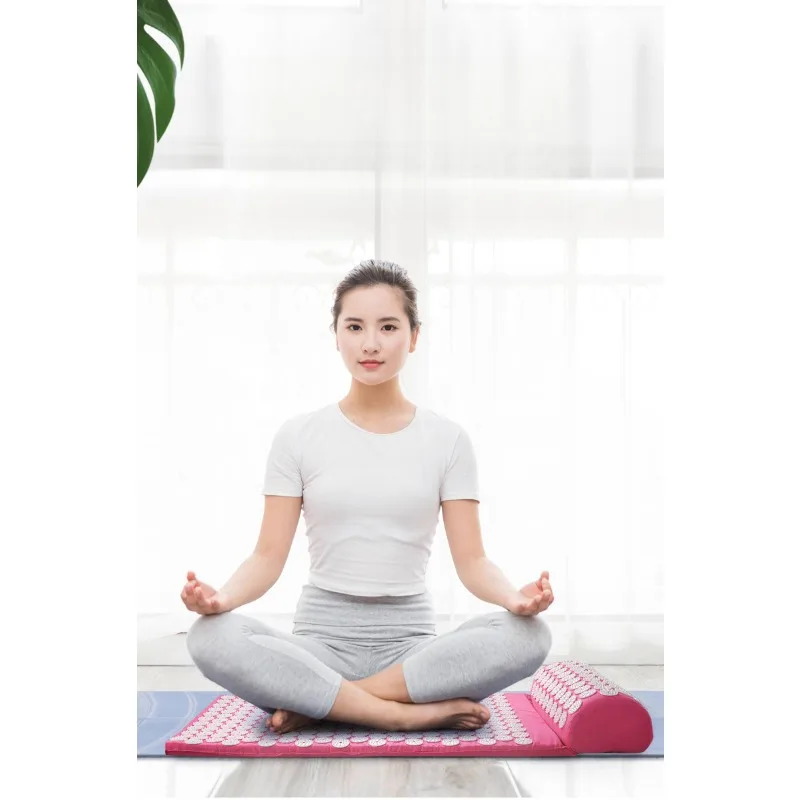
- The pillow matters more than you’d think. Neck and upper trapezius tension is where most desk-bound tightness lives, and the mat alone doesn’t reach it well.
- Often used as a sleep ritual. Ten to twenty minutes before bed is the most common routine, and the wind-down effect is what people keep coming back for.
- Non-slip cotton and sponge construction. It stays put on a hard floor rather than sliding out from under you.
- Rolls up and travels. The set packs into its bag, so a hotel room or an office floor works as well as home.
How to Use
Lie on it on a firm surface — a bed is too soft and the spikes won’t distribute properly. Beginners should wear a thin t-shirt for the first few sessions, then progress to bare skin once the sensation is tolerable. Lower yourself down slowly and evenly rather than dropping onto it, and resist the urge to shift around; stillness is what lets the initial sting resolve into warmth. Start at 5 minutes and build toward 15-20. Expect redness afterwards — that’s the vasodilation, and it fades within an hour. Do not use an acupressure mat if you have fragile or broken skin, a skin condition or infection in the contact area, poor circulation, uncontrolled diabetes or peripheral neuropathy (you may not feel damage occurring), a bleeding disorder, or if you’re taking blood thinners. Avoid it during pregnancy without medical advice, and don’t fall asleep on it. Sharp, worsening or radiating back pain needs a diagnosis, not a mat.
Specifications
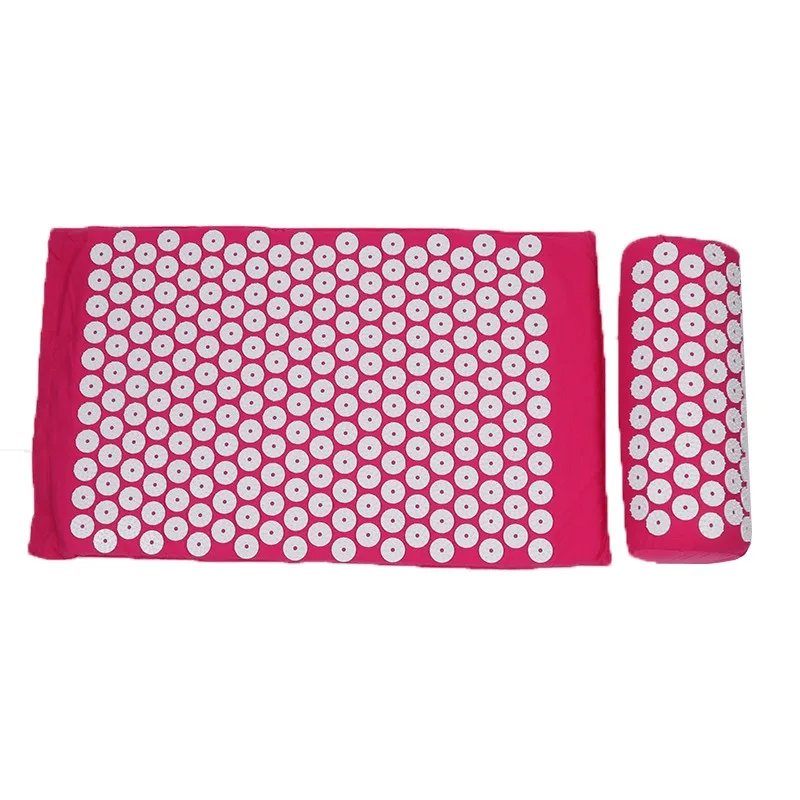
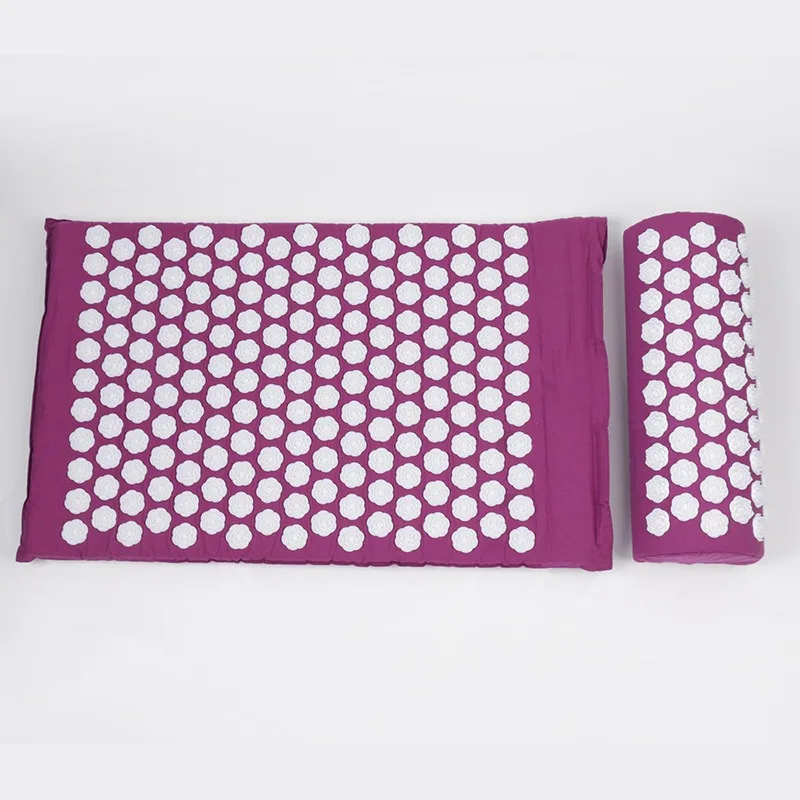
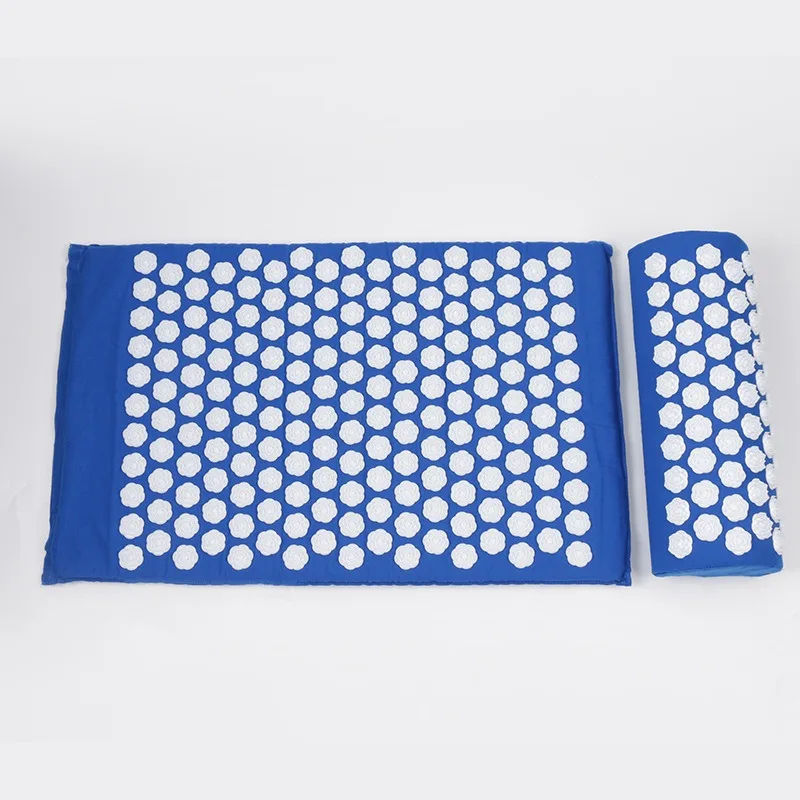
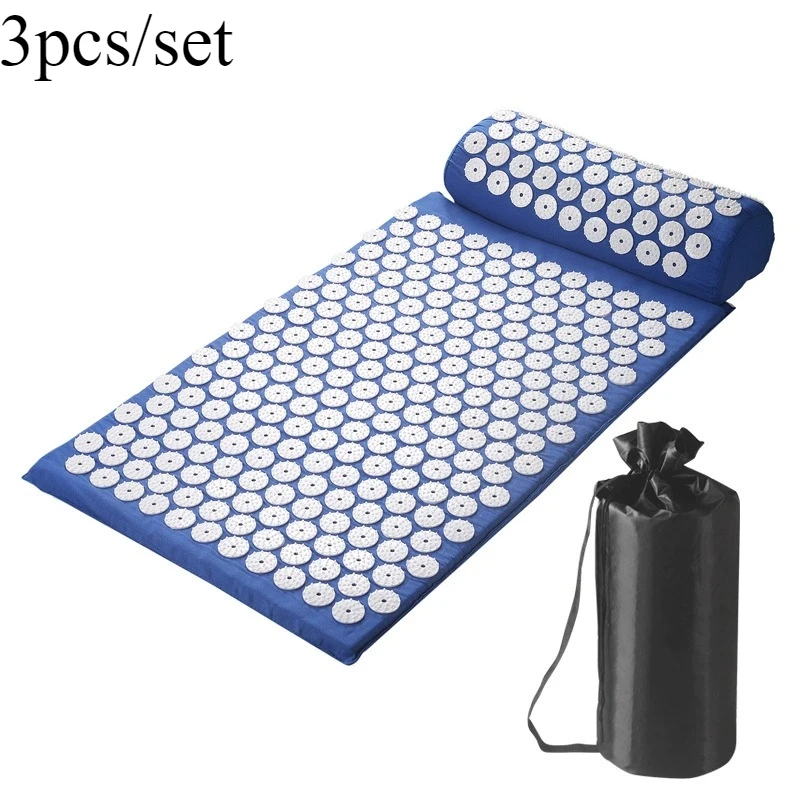
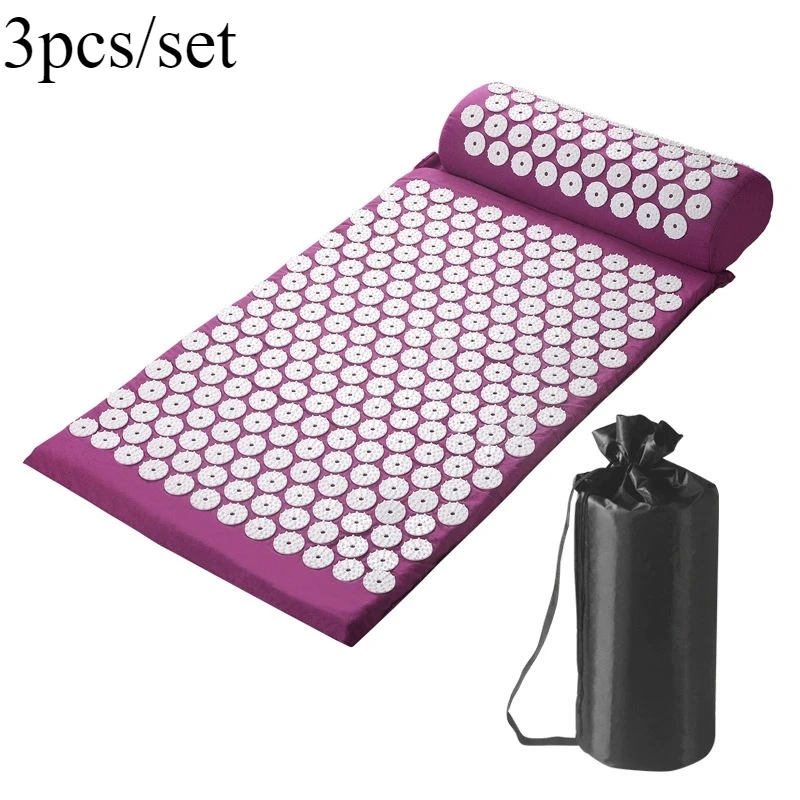
| Set contents | 3 pieces — mat, pillow and carry bag |
|---|---|
| Mat material | Cotton cover with sponge filling |
| Spike surface | Thousands of plastic acupressure contact points |
| Surface | Non-slip base |
| Colour | Blue, purple, red or black |
| Portability | Rolls up into the included bag |
| Typical session | 5-20 minutes |
| Best for | Upper and lower back tension, neck tightness, pre-sleep wind-down |
| Use on | Firm floor or mat — not a soft mattress |
Care & Maintenance
Detach the spike discs before washing if your variant allows it — most sets do. Hand wash the cotton cover in cool water with mild detergent and air dry; never tumble dry, as heat can warp the plastic points. Wipe the spike surface itself with a damp cloth and let it dry fully. Store it rolled rather than folded flat under heavy objects, which bends the discs. Check the points periodically and stop using the mat if any have cracked or snapped, as a broken point has a sharp edge.
What’s in the Box
1 x acupressure mat, 1 x acupressure pillow, 1 x carry bag.
Reviews
There are no reviews yet.