
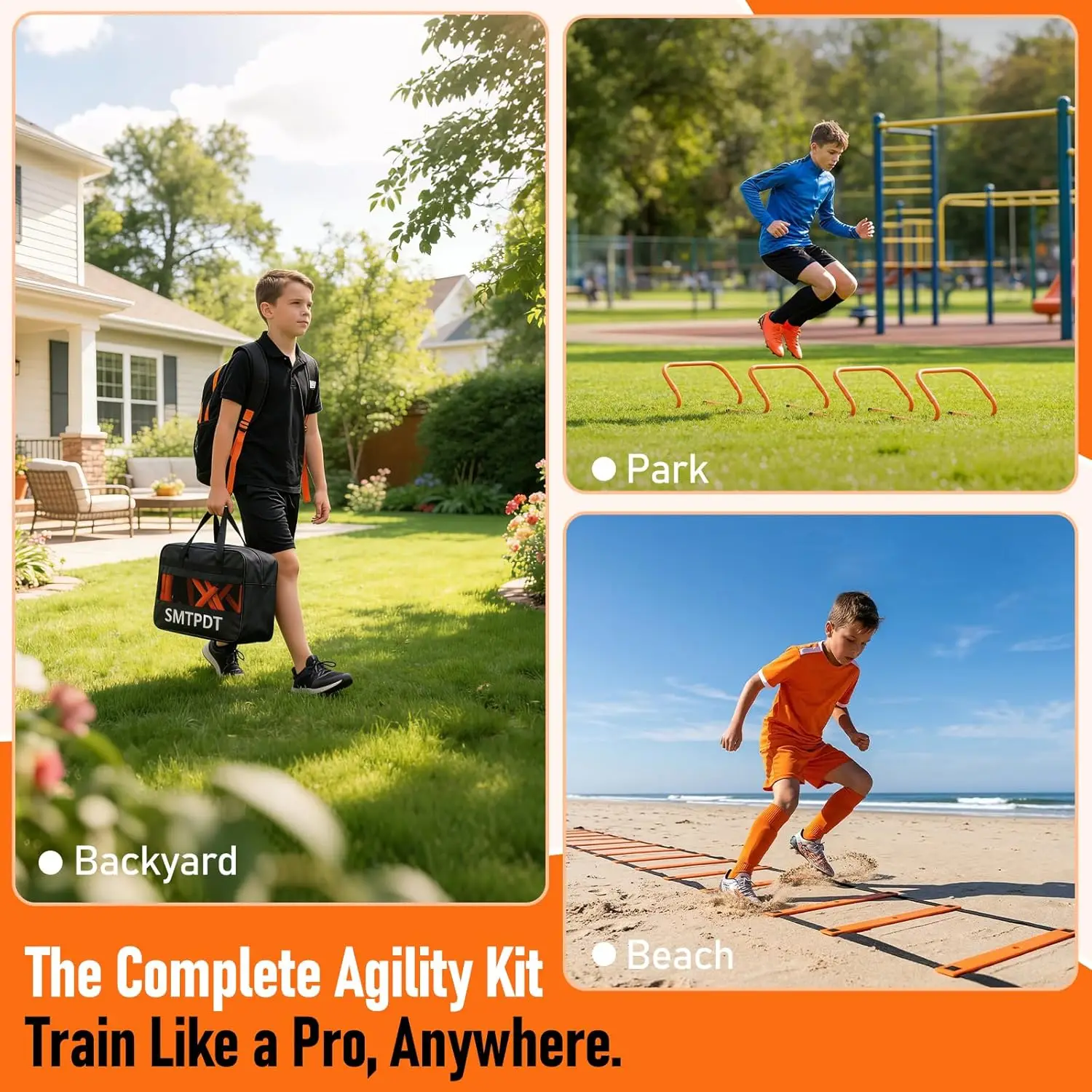
Footwork Is a Skill Before It Is a Fitness Quality
It is worth being clear about what an agility ladder does, because the marketing usually is not. Straight-line sprint speed is a product of how much force you put into the ground and how quickly — and ladder drills do not train that. What they do train is coordination: your nervous system learning to fire and relax muscles in rapid, precise sequence, and your feet learning to land under a moving centre of mass without hesitation. That is a motor skill, and motor skills are trained by high-quality repetition. Hurdles add a different quality — a genuine plyometric, elastic component, teaching the leg to absorb landing force and return it. Used honestly, this set builds rhythm, coordination and conditioning. It is not a speed machine.
Key Benefits
- Trains coordination, not top speed. The evidence for ladder drills improving sprint times is weak. The evidence that they improve foot placement, rhythm and movement confidence — which is what breaks a defender down — is much better.
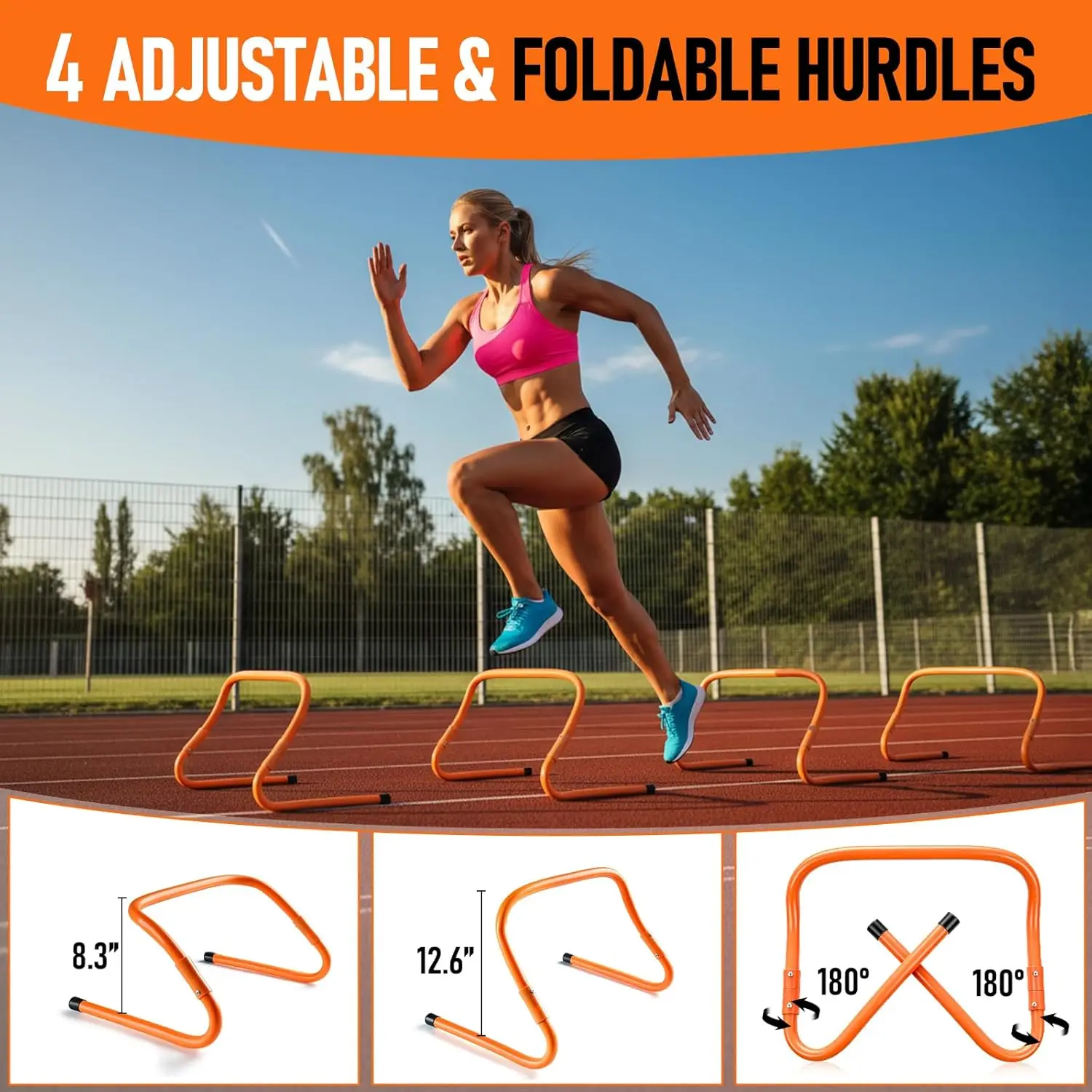
- Hurdles add elastic strength. Repeated low hops train the stretch-shortening cycle: the tendon stiffness and reflexive rebound that underpin genuine change-of-direction ability.
- Excellent low-impact conditioning. Continuous ladder work drives heart rate hard with far less joint load than sprinting or plyometric depth work.
- Adjustable hurdle height. Start low, where you can clear the hurdle with a light, springy contact, and raise it only once the landing stays quiet and controlled.
- Works for kids and adults. Children get genuine value here — the fundamental motor coordination window is exactly when this kind of practice pays the best long-term dividends.
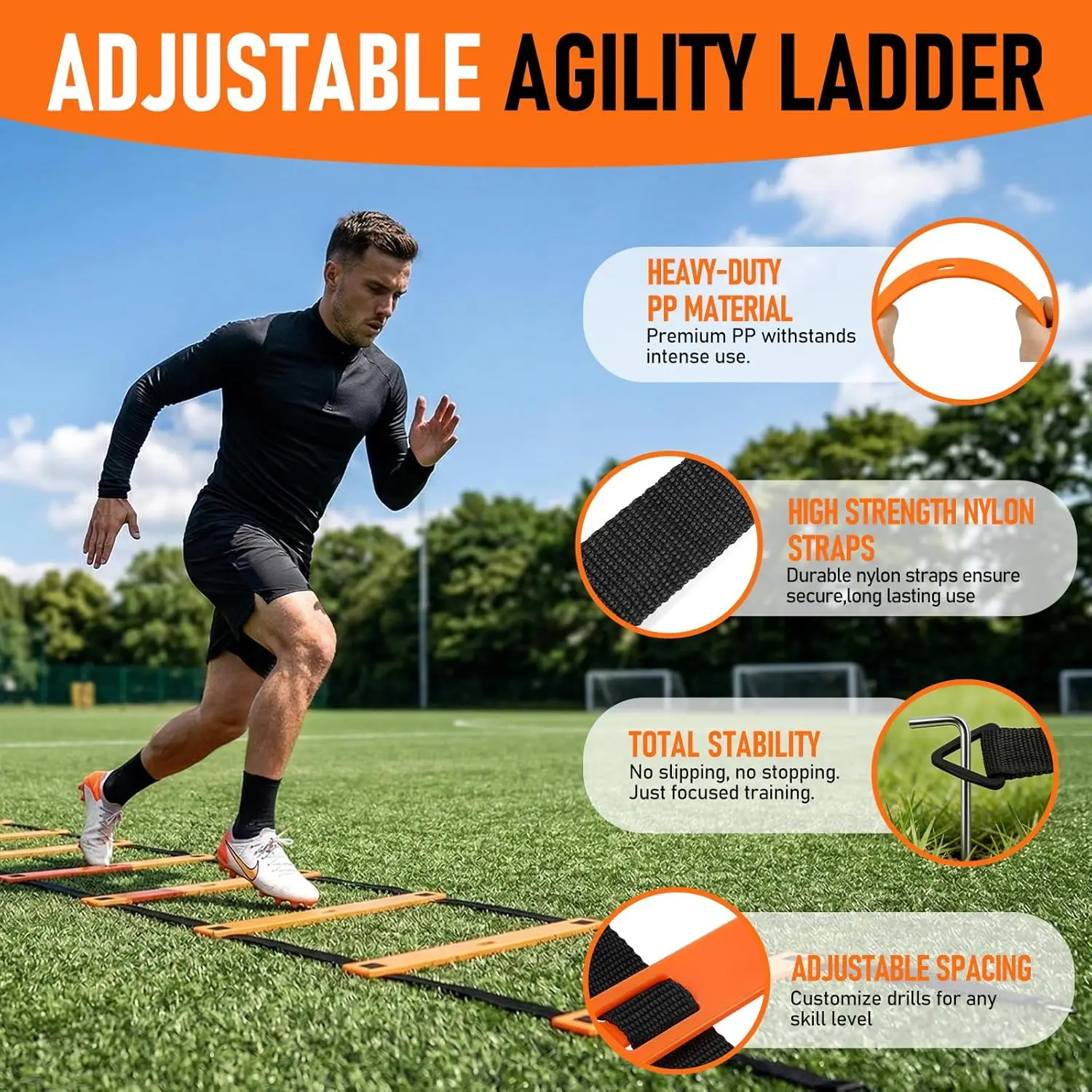
- Sets up and packs away in seconds. Rolls into a bag. Works on grass, turf, a driveway or a gym floor.
How to Use
Warm up properly first — five minutes of easy jogging and dynamic leg swings. Ladder work is neurologically demanding and cold, stiff ankles are where people roll them. Then prioritise quality ruthlessly over speed: a clean, controlled two-in-each-box run at 70 percent is worth more than a fast, sloppy one, because you are teaching your nervous system a pattern and it will faithfully learn whatever you rehearse, including the bad version. Land on the midfoot or ball of the foot with a soft knee, keep the chest up and the arms driving in time with the feet, and stop the set the moment the pattern degrades — that is fatigue, and fatigued reps train fatigued patterns. Six to ten repetitions of a drill, with full recovery between, is a real session. For the hurdles, start at the lowest height, aim for quiet landings, and stop if the landings become heavy. Set up on a flat, non-slip surface with clear space either side, check the ladder is lying flat with no raised rungs before you run it, and supervise children throughout.
Specifications
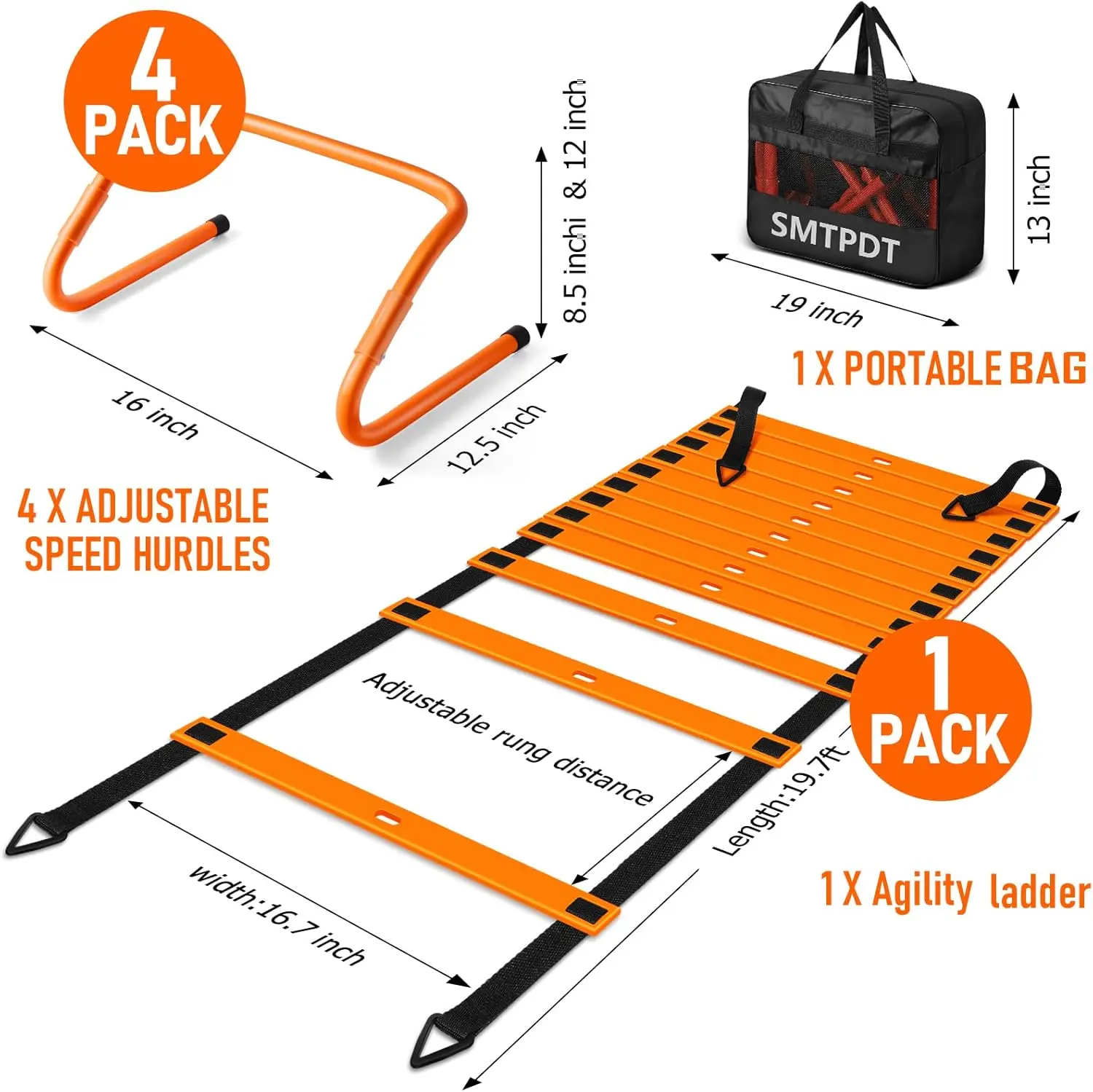
| Ladder | Flat-rung agility ladder with adjustable spacing |
|---|---|
| Hurdles | 4 adjustable-height training hurdles |
| Rung type | Flat plastic rungs — low trip risk |
| Surfaces | Grass, turf, gym floor, driveway |
| Best for | Football, soccer, basketball, tennis, general conditioning |
| Suitable for | Adults, teens and supervised children |
| Portability | Rolls into supplied carry bag |
| Ladder length and hurdle heights | Variant dependent — see selected option |
Care & Maintenance
Shake out grass and grit before rolling the ladder up, and let it dry fully before bagging — a damp ladder stored rolled will mildew. Check the rung straps and connectors for fraying and the hurdle joints for cracks before each use; a hurdle that collapses mid-stride is a rolled ankle. Store out of direct sunlight, since prolonged UV makes the plastic rungs brittle. Do not leave the set out in frost.
What's in the Box
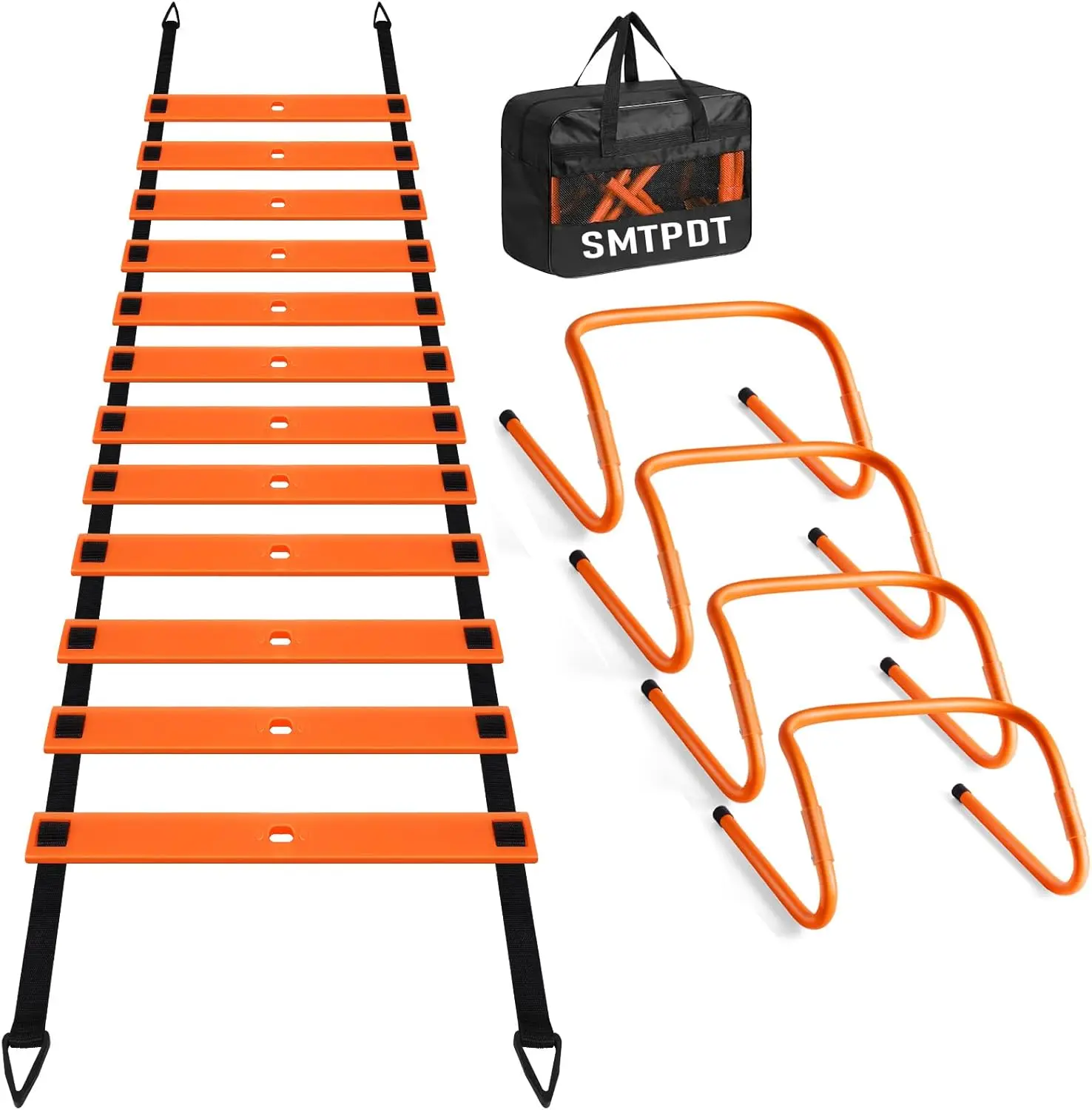
1 agility ladder, 4 adjustable hurdles and a carry bag. Ground pegs and marker cones are variant dependent.

Reviews
There are no reviews yet.