Chin Straps, Honestly: What Supporting the Jaw Can and Cannot Fix
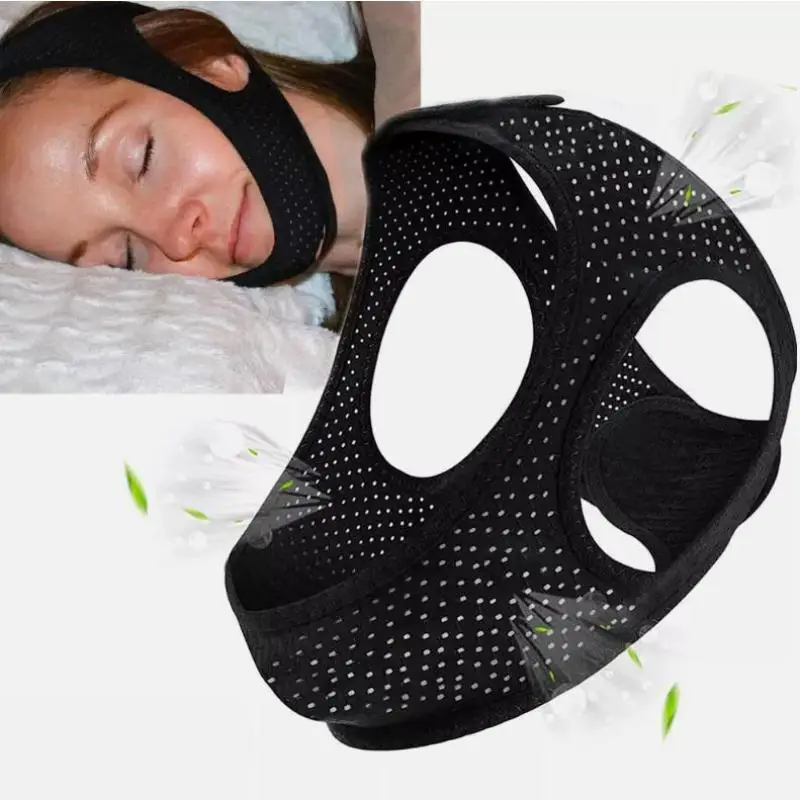
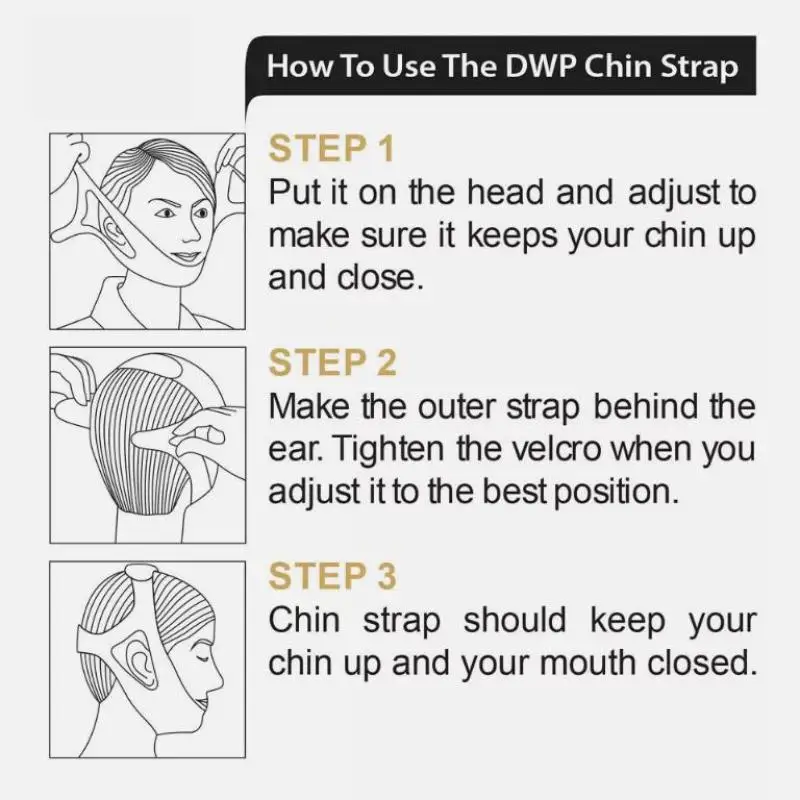
Snoring is the sound of soft tissue vibrating in a narrowed airway. When the jaw drops open in sleep, the tongue and soft palate slide backwards and downwards, narrowing the space behind them, and airflow turns that tissue into a reed. A chin strap works on exactly one link in that chain: it cradles the lower jaw and holds it closed, so the tongue base stays forward and the airway stays a little wider. That is the whole mechanism. It is mechanical, it is external, and it is limited — which is precisely why it is worth understanding before you buy.
Key Benefits
- Keeps the mandible closed, so the tongue stays forward. For people whose snoring is driven by an open, slack jaw, this is the direct fix, and it is the only claim on this page we would call well-founded.
- Converts mouth breathers into nose breathers. A closed mouth means air routes through the nose, which reduces the dry throat and cracked-lip mornings that mouth breathers know well.
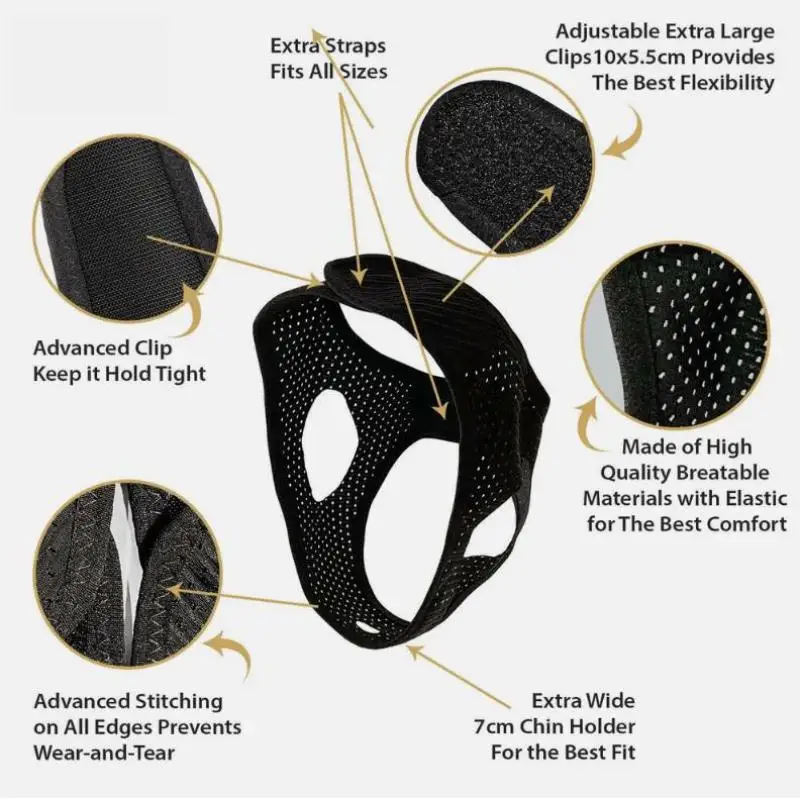
- Breathable, adjustable and silent. No motor, no charging, no app, no white noise. It is a strap. Adjustable straps let you find the tension that holds the jaw without clamping it.
- A cheap first test before expensive interventions. If a strap noticeably reduces your snoring, that tells you something useful about its cause. If it does nothing, that is useful too.
- It does NOT lift, slim or reshape your face. Listings that describe this as a “V-line” or “face lifting” belt are lying. No external strap changes facial fat, skin laxity or bone. Any morning tightness is temporary compression, nothing more.
- It does NOT treat sleep apnoea. Obstructive sleep apnoea is airway collapse, and a strap does not hold an airway open. Evidence for chin straps as a standalone apnoea treatment is poor. Snoring plus gasping, choking, pauses in breathing or heavy daytime sleepiness is a medical issue, not a shopping problem.
How to Use
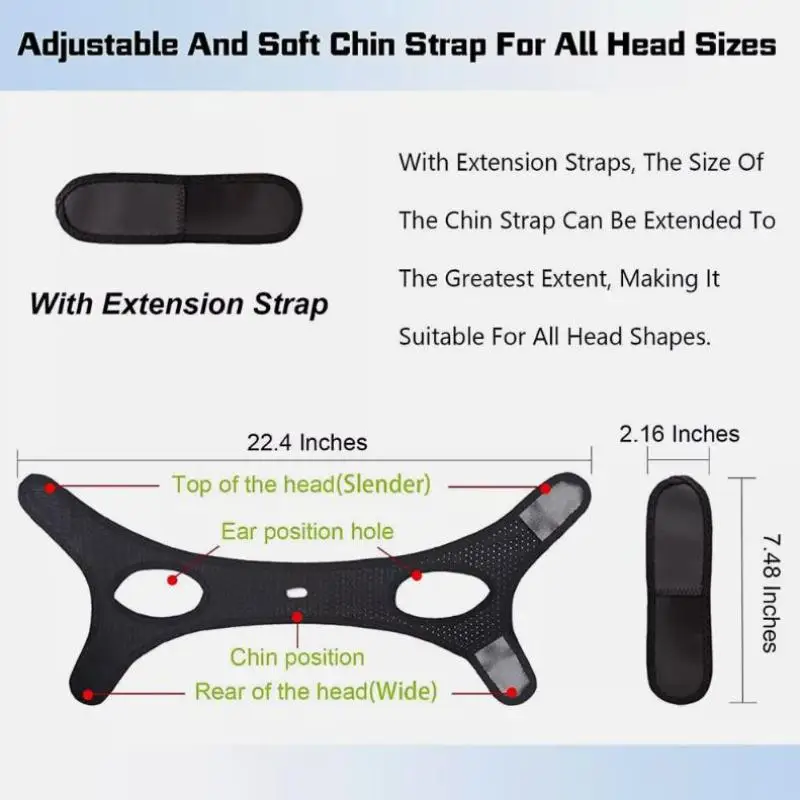
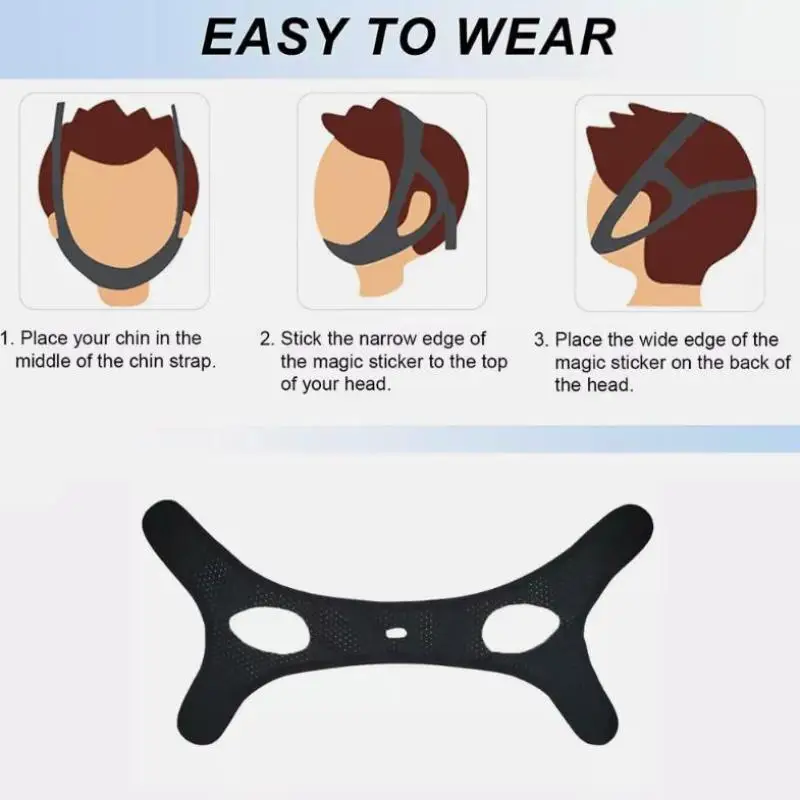
Fit it awake and in daylight first. Position the cup under the chin so it supports the jaw without forcing it back, then adjust the straps so the jaw stays closed under light, even tension — you should be able to slide a finger under any strap, and open your mouth against resistance if you need to. Too tight causes jaw ache, tooth pressure and morning TMJ soreness; too loose does nothing. Give it a week before judging, and ask whoever shares your bed rather than trusting your own recall. SAFETY: stop and see a doctor rather than persisting with a strap if you gasp, choke or stop breathing in your sleep, wake unrefreshed, or fall asleep during the day — these are signs of obstructive sleep apnoea, which needs assessing. Do not use if you have significant nasal congestion or cannot breathe through your nose, if you are nauseous or at risk of vomiting, or if you have a TMJ disorder or recent dental or jaw surgery, unless your clinician clears it. Discontinue if you develop jaw pain, tooth movement or skin irritation.
Specifications
| Product type | External chin and jaw support strap for sleep |
|---|---|
| Mechanism | Holds the mandible closed to keep the tongue base forward |
| Adjustment | Adjustable strap fastening |
| Construction | Breathable fabric with chin cup |
| Intended user | Adult mouth-snorers, men and women |
| Treats sleep apnoea | No — see a clinician if apnoea is suspected |
| Cosmetic face-slimming effect | None. This is a marketing claim, not a real one |
| Sizing | Adjustable; fit variant dependent |
Care & Maintenance
Hand-wash in cool water with a mild detergent, rinse thoroughly and air-dry flat away from direct heat — a tumble dryer or radiator will kill the elastic and the fastening. Wash weekly at minimum; it spends the night against your skin. Let it dry completely before storing, and replace it once the strap slackens enough that it no longer holds the jaw, as a loose strap is simply a placebo.
What’s in the Box
1 x adjustable anti-snoring chin strap.
Reviews
There are no reviews yet.