Spinal Traction: Real Relief, Honestly Explained
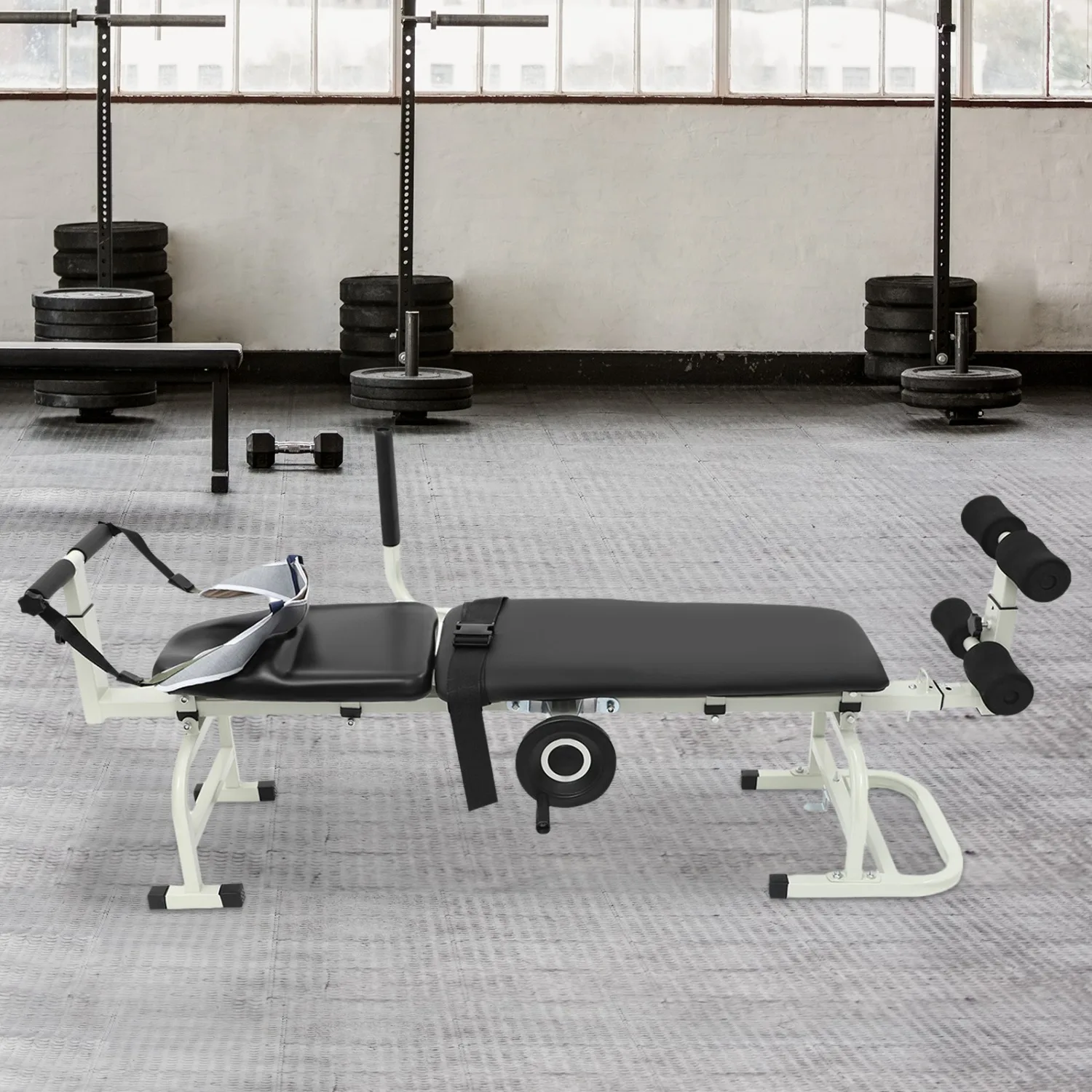
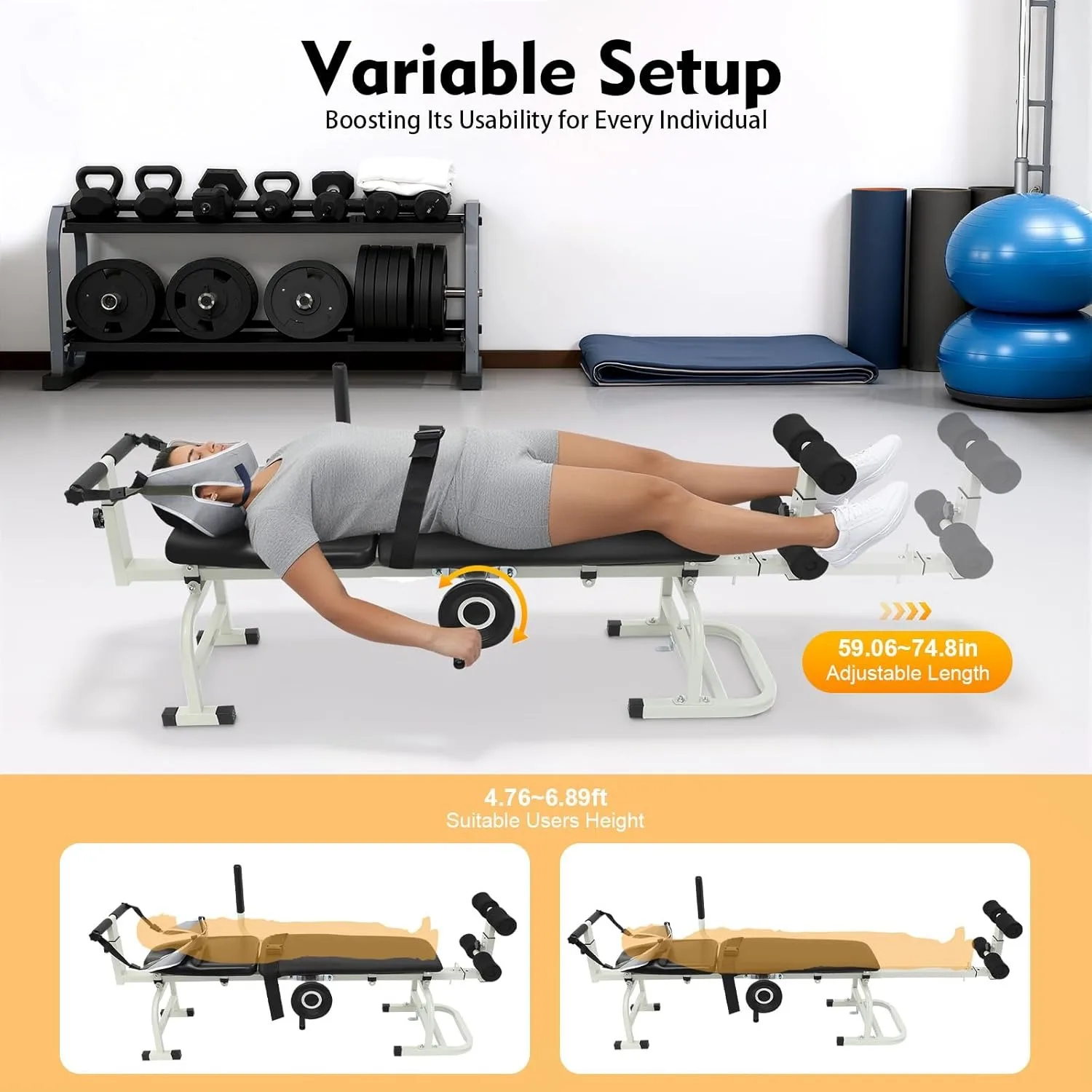
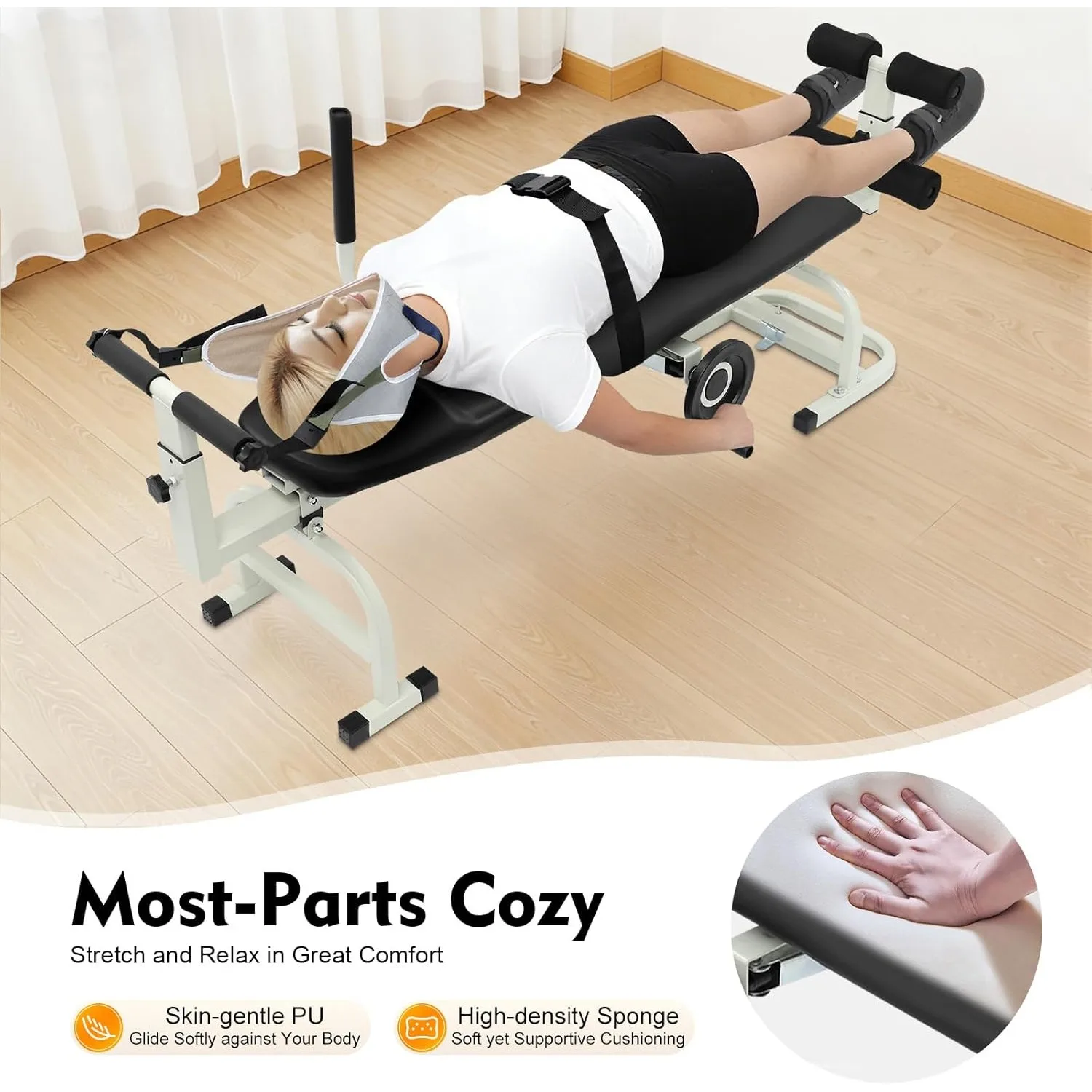
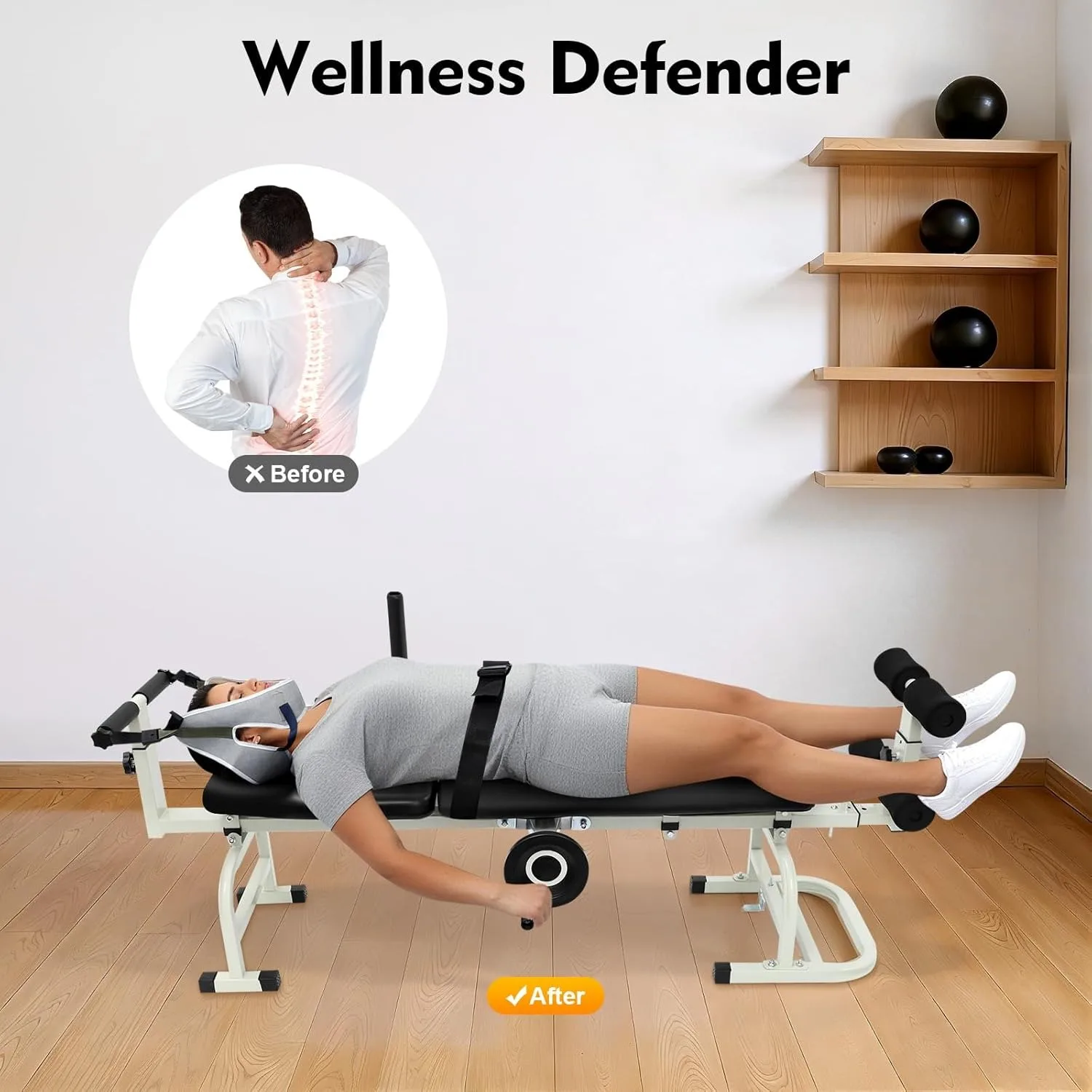
Lying back over an arched bench does two things. It puts your lumbar spine into extension, stretching the hip flexors, abdominal wall and anterior fascia that a day of sitting has shortened. And it applies a mild longitudinal distraction across the vertebrae, which briefly lowers the pressure inside the intervertebral discs and allows fluid to be drawn back in. That is why people feel taller and looser afterward. But the effect is transient – within hours of standing and walking, disc pressure returns to normal. This is a reset for a compressed, flexed posture, not a structural repair, and nothing here realigns anything.
Key Benefits
- Extension is the antidote to sitting. Desk posture holds the lumbar spine in flexion for hours. A supported extension stretch loads it in the opposite direction, and that is where most of the immediate relief comes from.
- Mild traction, temporary decompression. Distraction across the lumbar segments genuinely reduces disc pressure while you are on the bench. Be clear-eyed that it is temporary – the value is in doing it consistently, not in a permanent structural change.
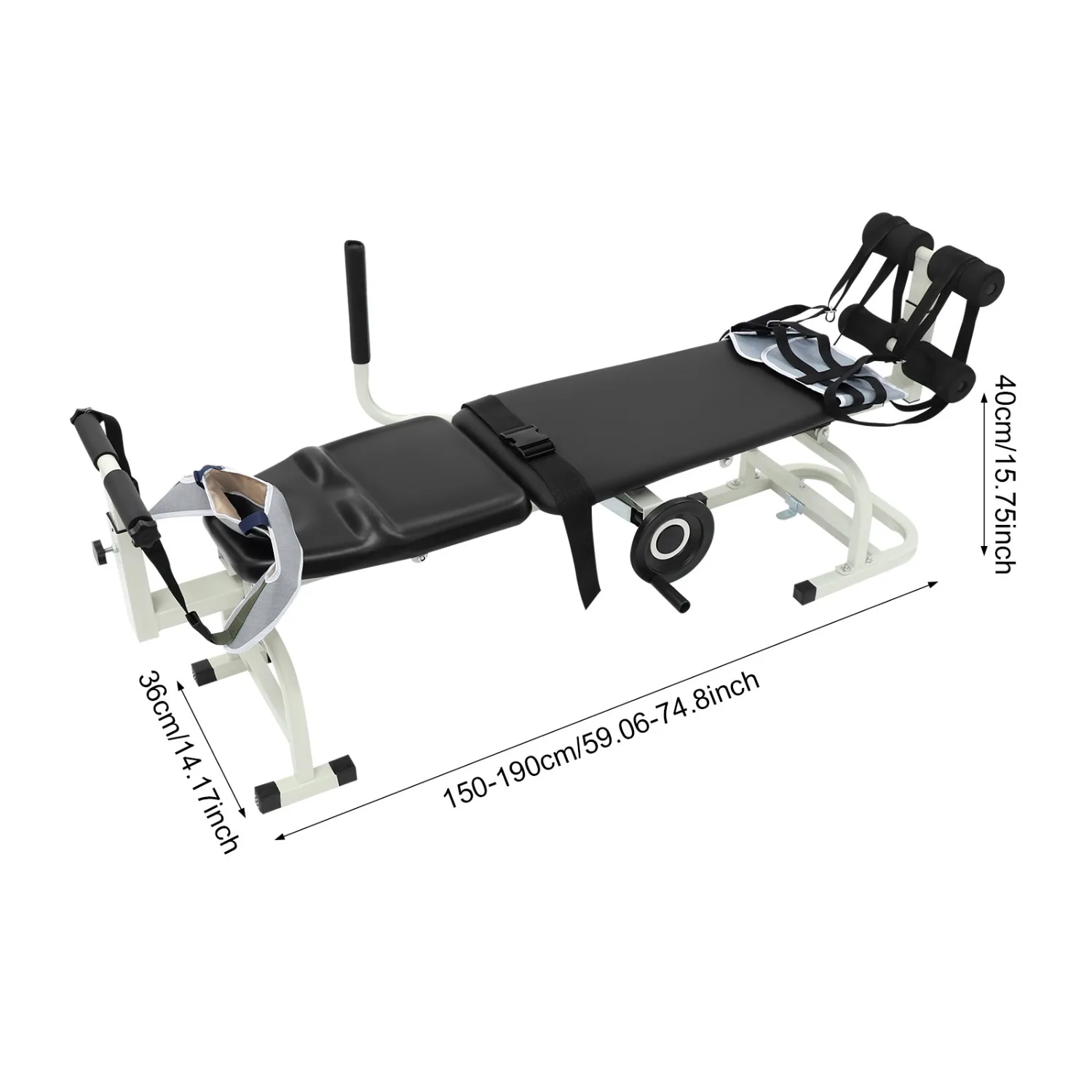
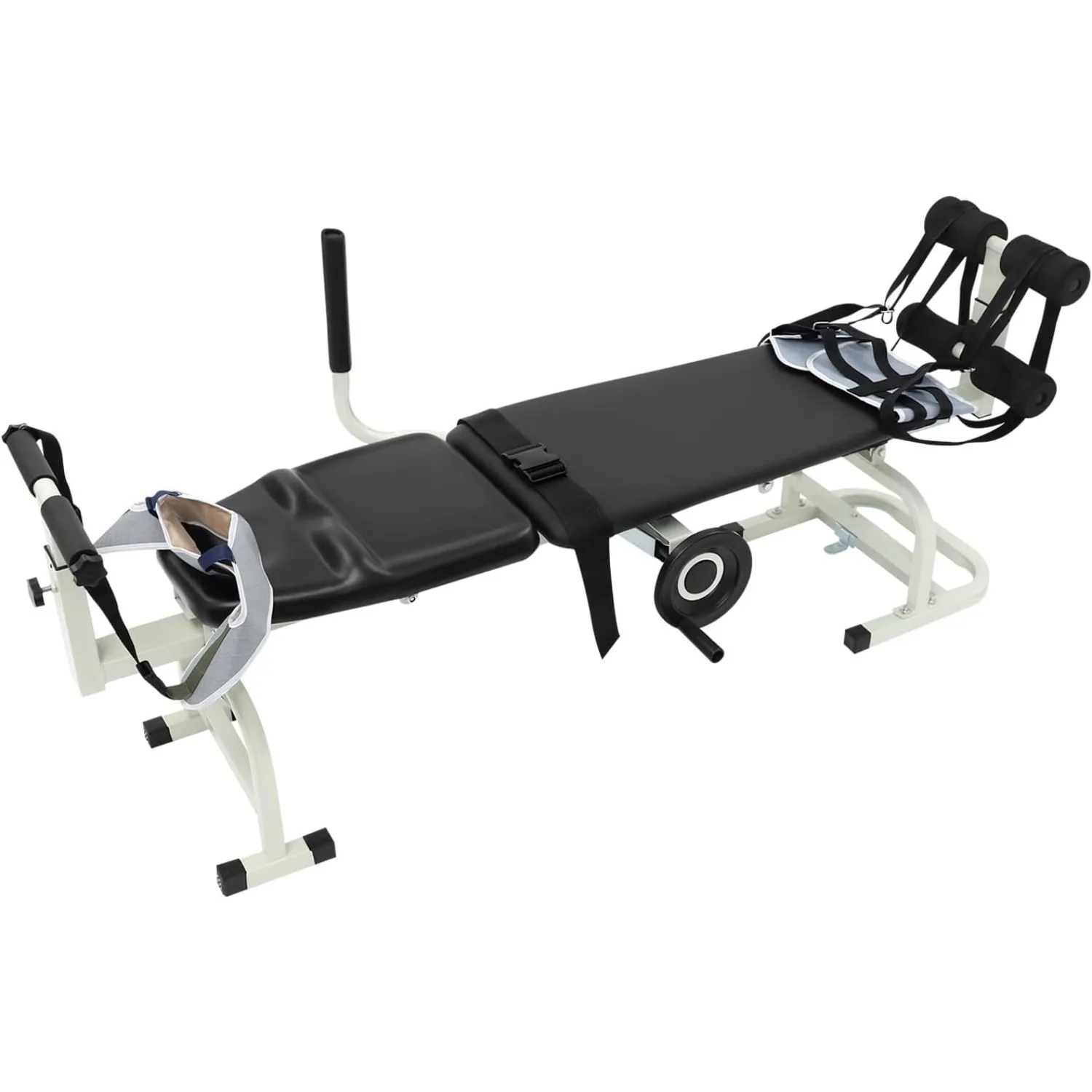
- Multi-level arch adjustment. You can start at a shallow angle and progress as your hip flexors and thoracic spine open up, rather than being forced straight into the deepest curve on day one.
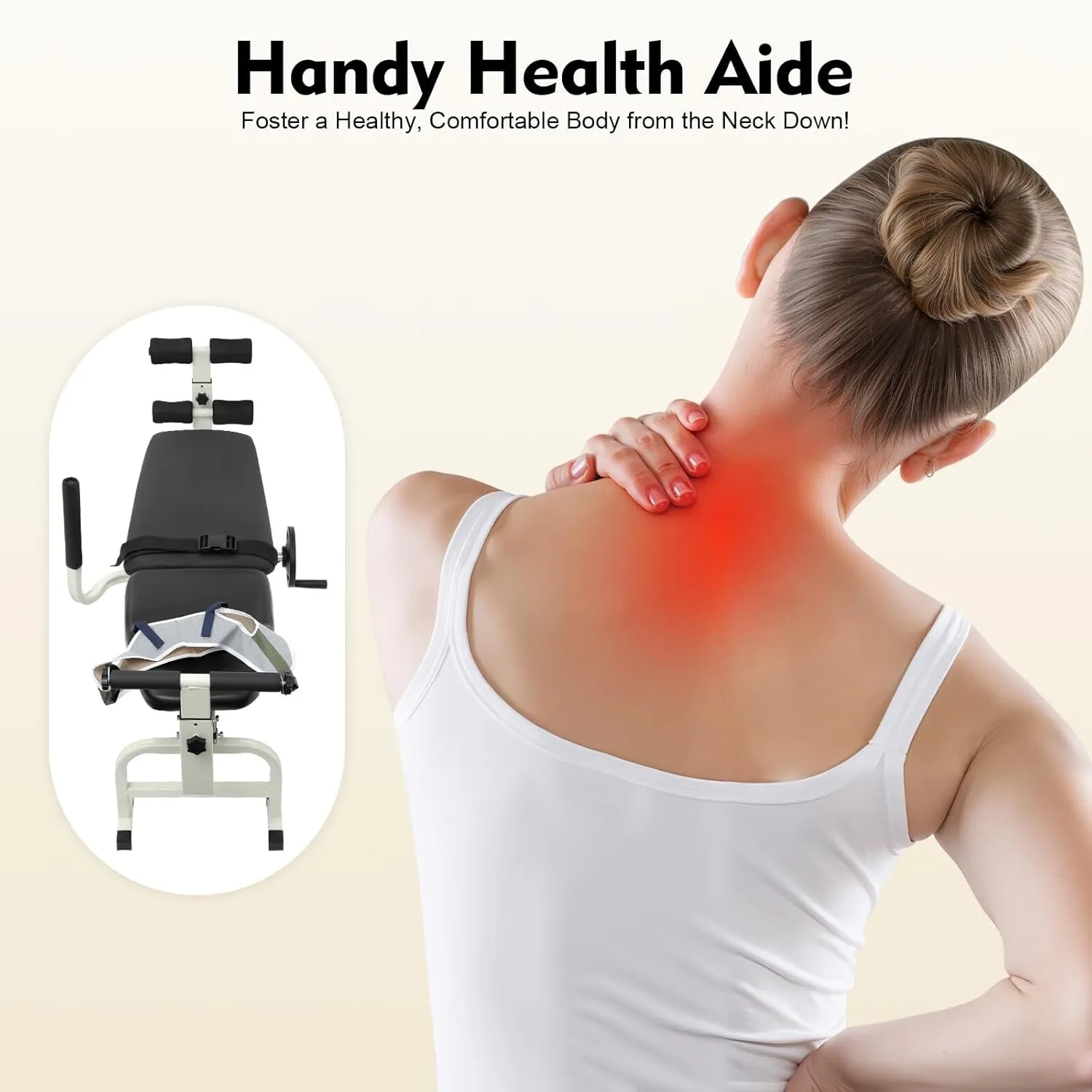
- Neck stretch section. Provides gentle cervical traction for people who spend the day with their head jutting forward at a monitor.
- Opens the thoracic spine and chest. Rounded upper backs and tight pecs from desk work respond well to sustained supported extension, which is very hard to achieve on the floor.
- Sturdy 130kg / 286.6lb frame. Rated capacity you can actually relax onto – fear of a flexing frame is the enemy of a decent stretch.
How to Use
Set the bench to its shallowest position for your first sessions. Lower yourself back slowly with your hands supporting you – never drop onto it. Start with 30 to 60 seconds, breathe out and let your ribcage and hips settle, and build gradually toward three to five minutes as you adapt. Never bounce or force the range. Come off slowly and roll to your side rather than sitting bolt upright, and expect to feel a little unsteady for a moment. Increase the arch level only when the previous one feels easy. Do not use this device if you have osteoporosis, a spinal fracture, recent spinal surgery, uncontrolled high blood pressure, glaucoma or retinal problems, or if you are pregnant. If you have a disc herniation with numbness, weakness or pain radiating down the leg, stop and see a clinician – traction is not a substitute for a diagnosis, and some presentations get worse with extension. Any sharp or radiating pain during use means get off immediately.
Specifications
| Type | Back stretch and lumbar traction bench |
|---|---|
| Load capacity | 130kg / 286.6lbs |
| Functions | Lumbar traction, back extension, neck stretch |
| Adjustment | Multi-level arch (variant dependent) |
| Frame | Steel construction |
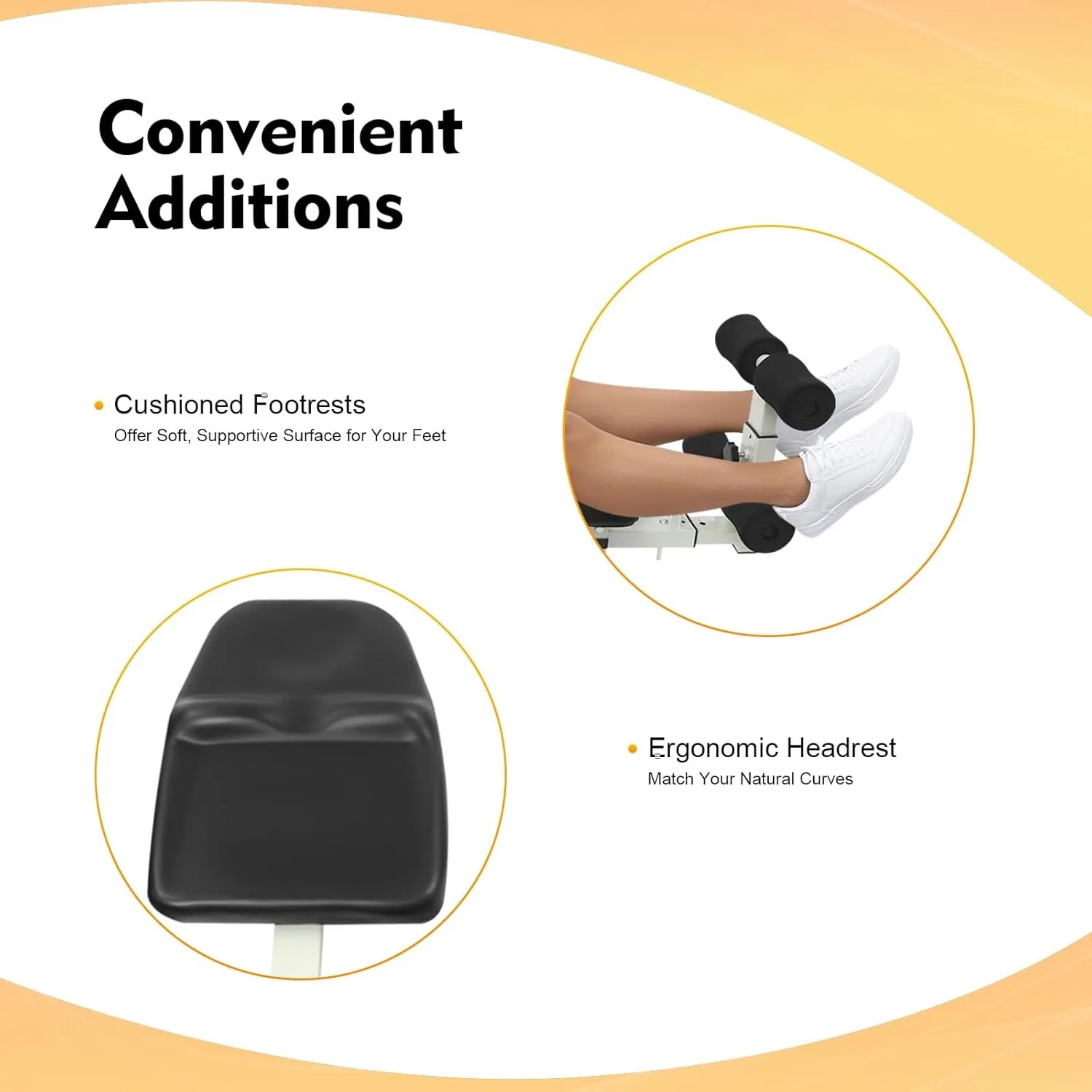
| Padding | Cushioned contact surfaces |
| Assembly | Required |
| Best for | Desk-related back stiffness, posture reset, home stretching |
Care & Maintenance
Wipe the padding with a damp cloth and a mild cleaner – sweat degrades foam and vinyl over time. Check every bolt and locking pin before each use and retighten anything that has worked loose; the failure mode on an adjustable bench is always a fastener nobody checked. Store somewhere dry to prevent frame corrosion. Stop using it immediately if the frame is bent, welds are cracked, or an adjustment mechanism will not lock positively.
What’s in the Box
Back stretch bench components, fixings and assembly instructions. Exact contents are variant dependent.
Reviews
There are no reviews yet.