The Anchor Is the Part That Decides Whether Your Setup Is Safe
Battle ropes do not load an anchor the way a hanging kettlebell does. Every wave you send down the rope arrives back at the anchor as a cyclical tensile pulse — dozens of load-and-release cycles a minute, for the length of the set. That is fatigue loading, and fatigue loading is what finds the weak point in a system. A webbing strap wrapped around a structural column distributes that repeated load around the whole member instead of concentrating it on a single bolt, hook or eyelet, which is exactly where improvised anchors fail.
Key Benefits
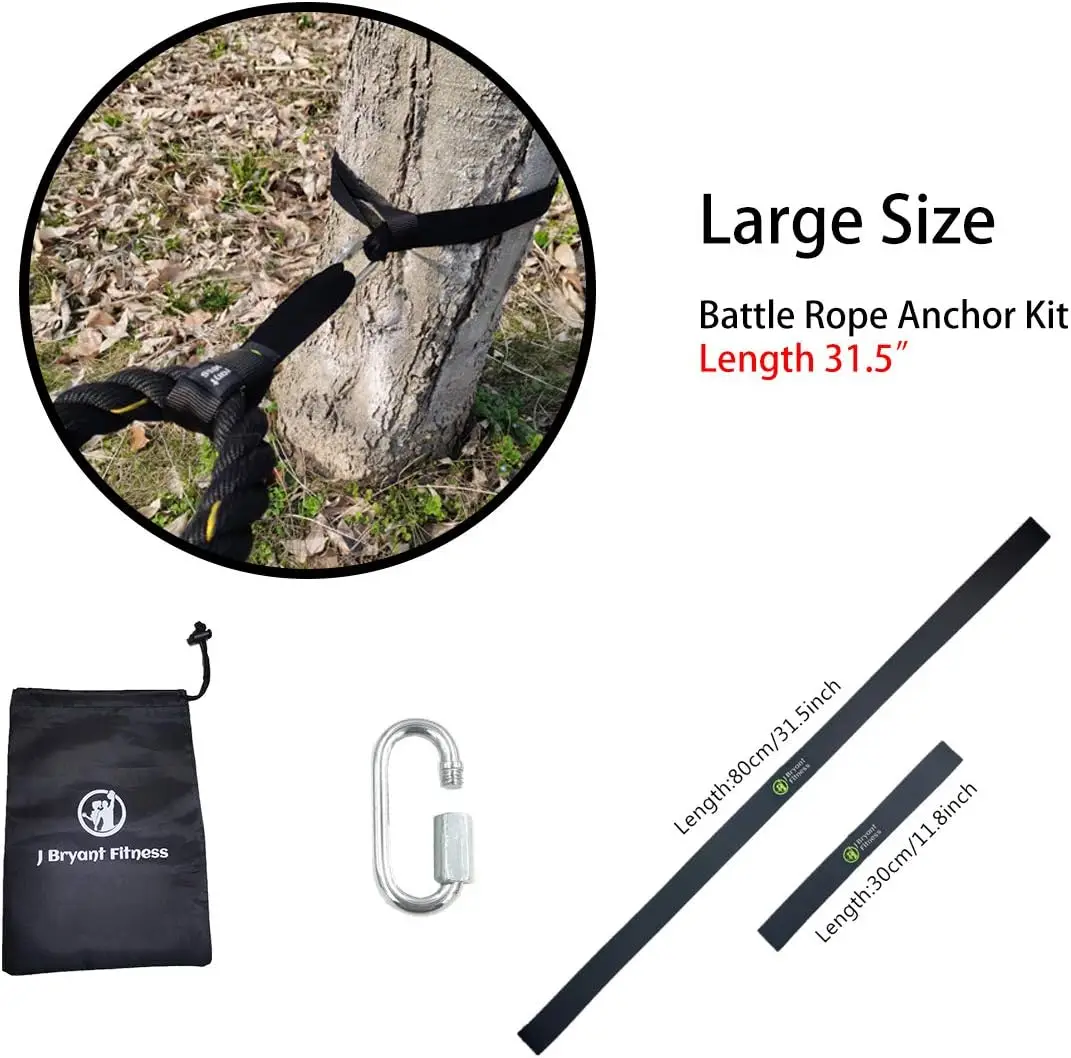
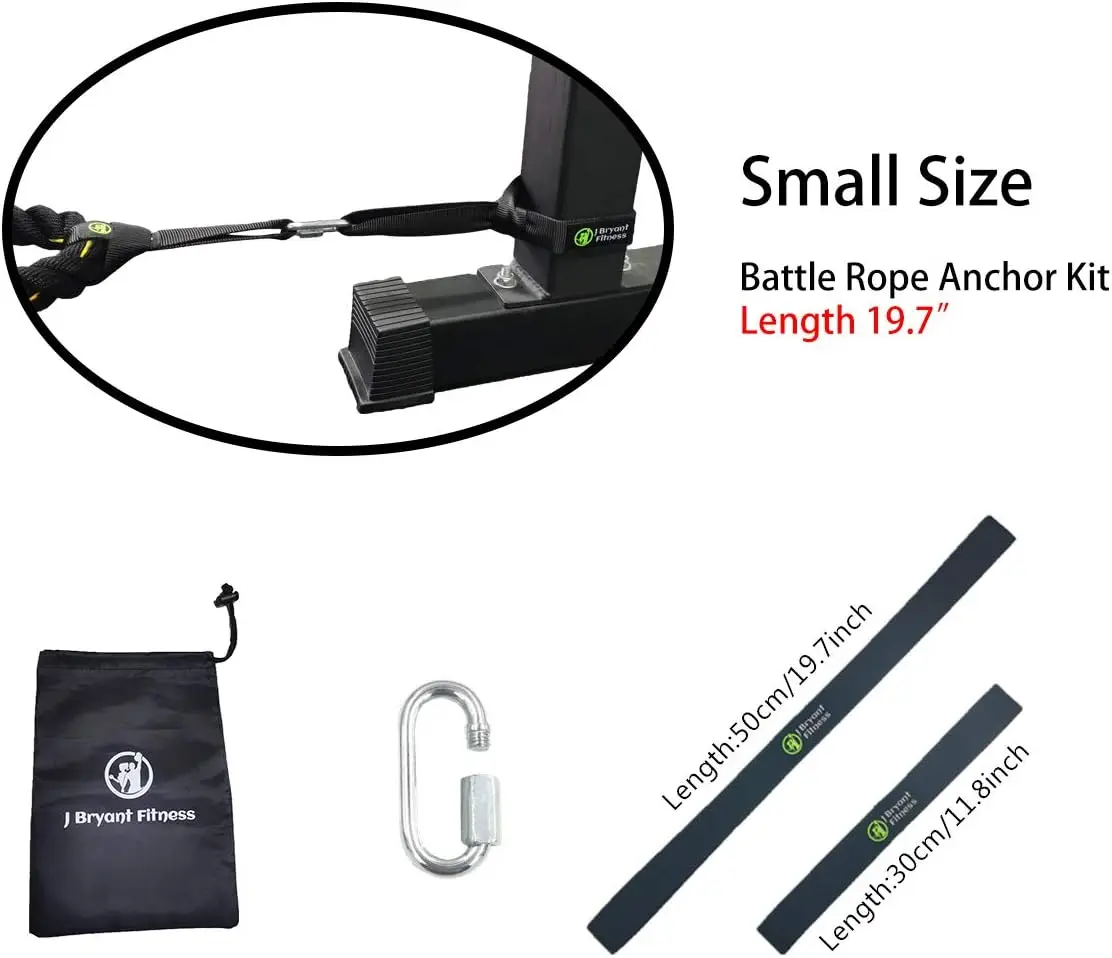
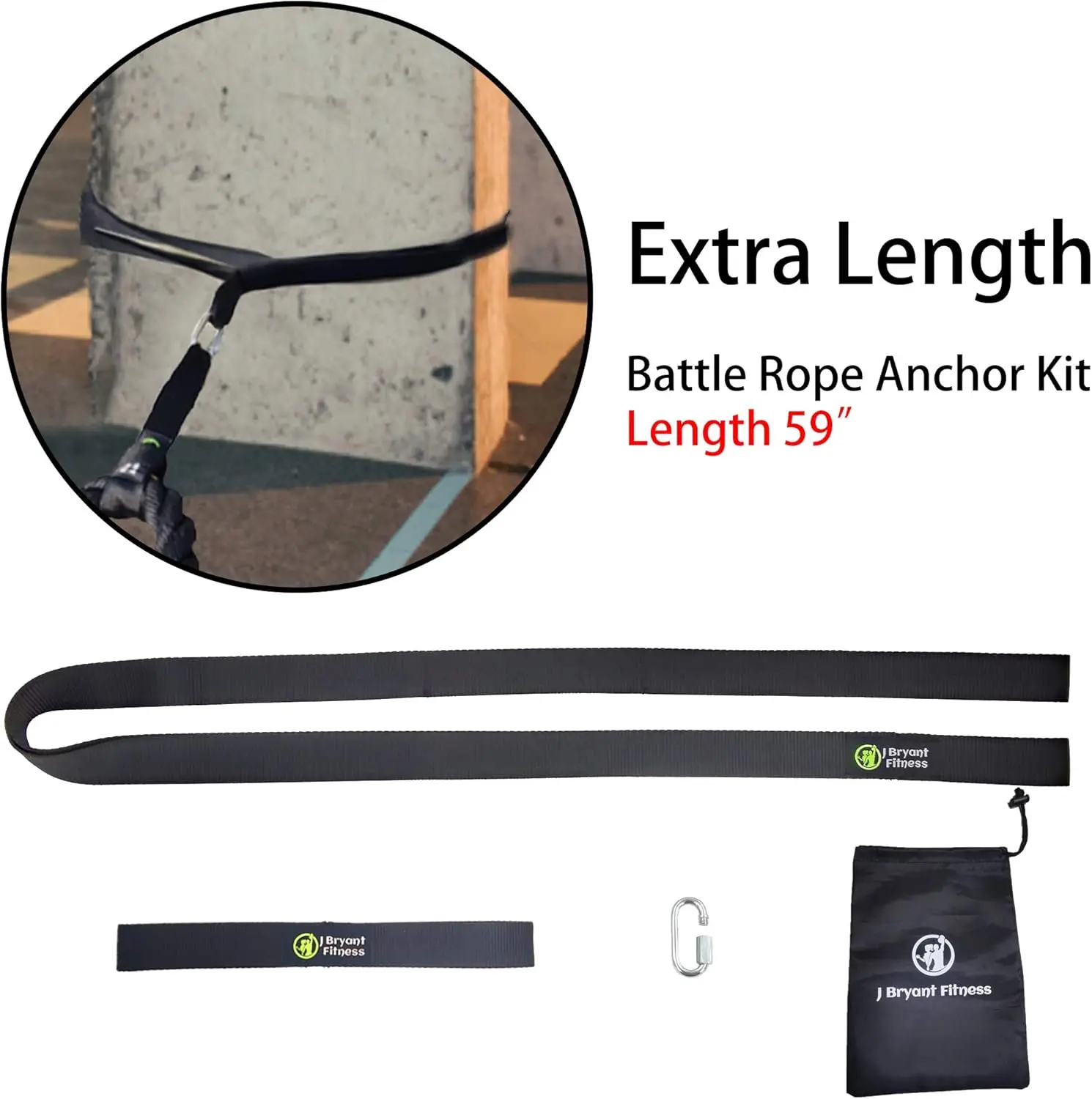
- Three lengths cover almost any anchor. At 19in, 31in and 59in you can wrap a rack upright, a stout pillar or a mature tree trunk without needing a different kit each time.
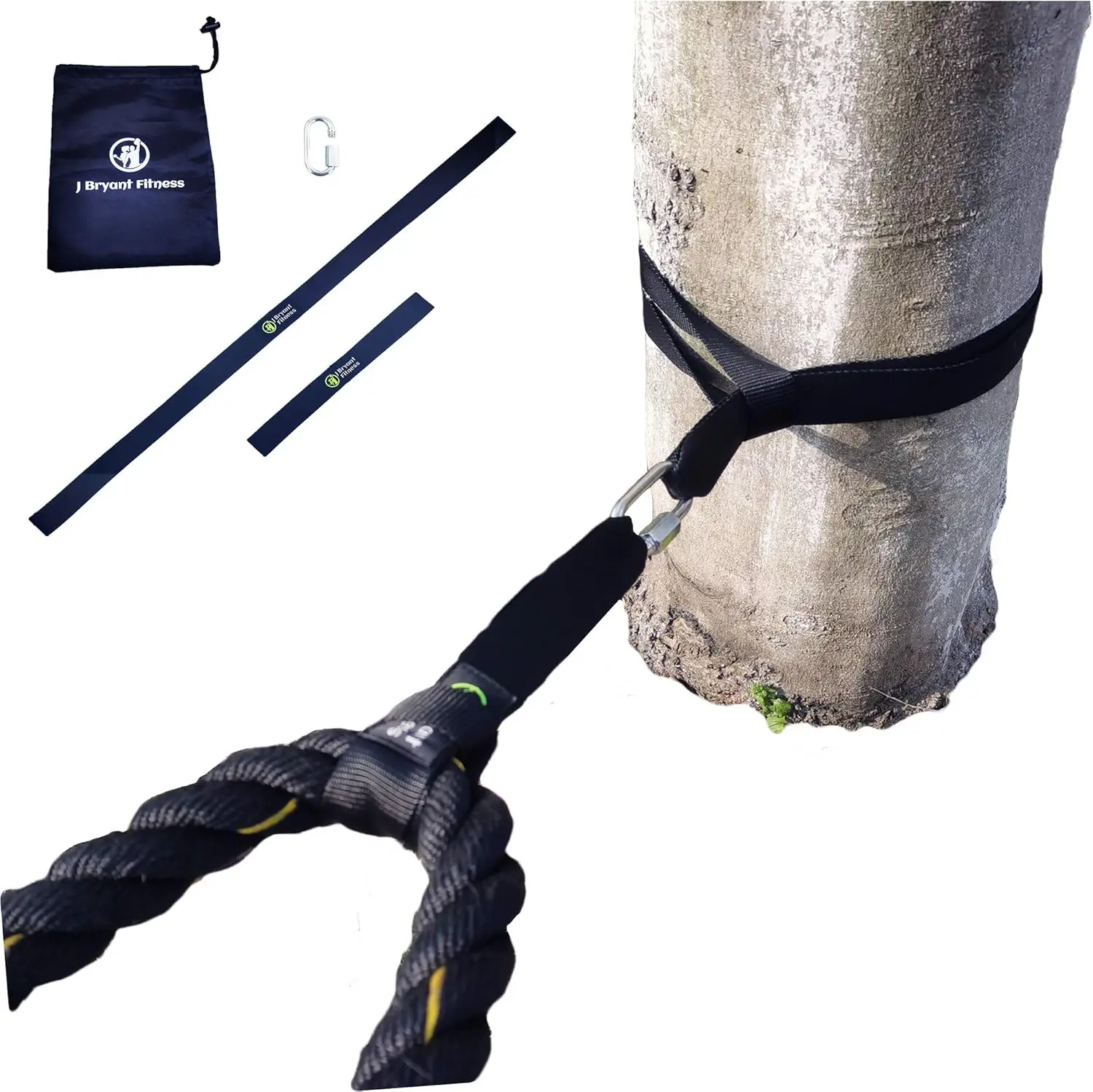
- Distributes load rather than concentrating it. Wrapping webbing around a column spreads a cyclical pull across the whole member, unlike a single screw-in hook, which puts every one of those cycles into one small point of material.
- Built for dynamic, repeated loading. Heavy-duty webbing and a rated D-ring, because the failure mode with battle ropes is not one big pull — it is thousands of small ones.
- Takes seconds to set up and to move. Wrap, thread, clip, train. Nothing bolted, nothing drilled, nothing left behind — which makes it viable in a rented flat or a shared gym.
- Works beyond battle ropes. The same anchor takes suspension trainers and resistance bands, provided the structure you wrap it around is genuinely sound.
- The strap is only ever as good as what it is wrapped around. This kit does not make an unsafe anchor point safe. It makes a sound one usable. That distinction is the whole of this product.
How to Use
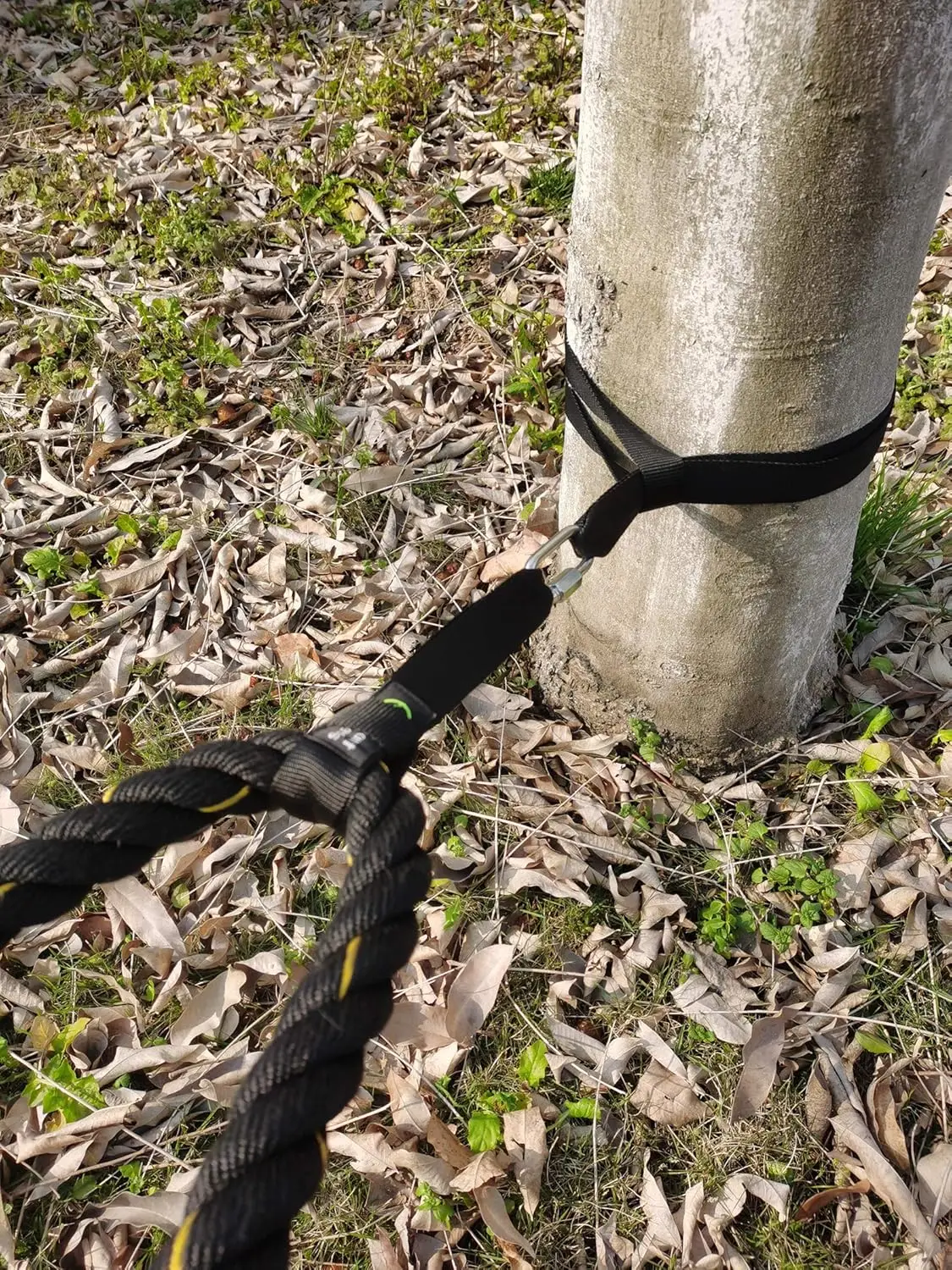
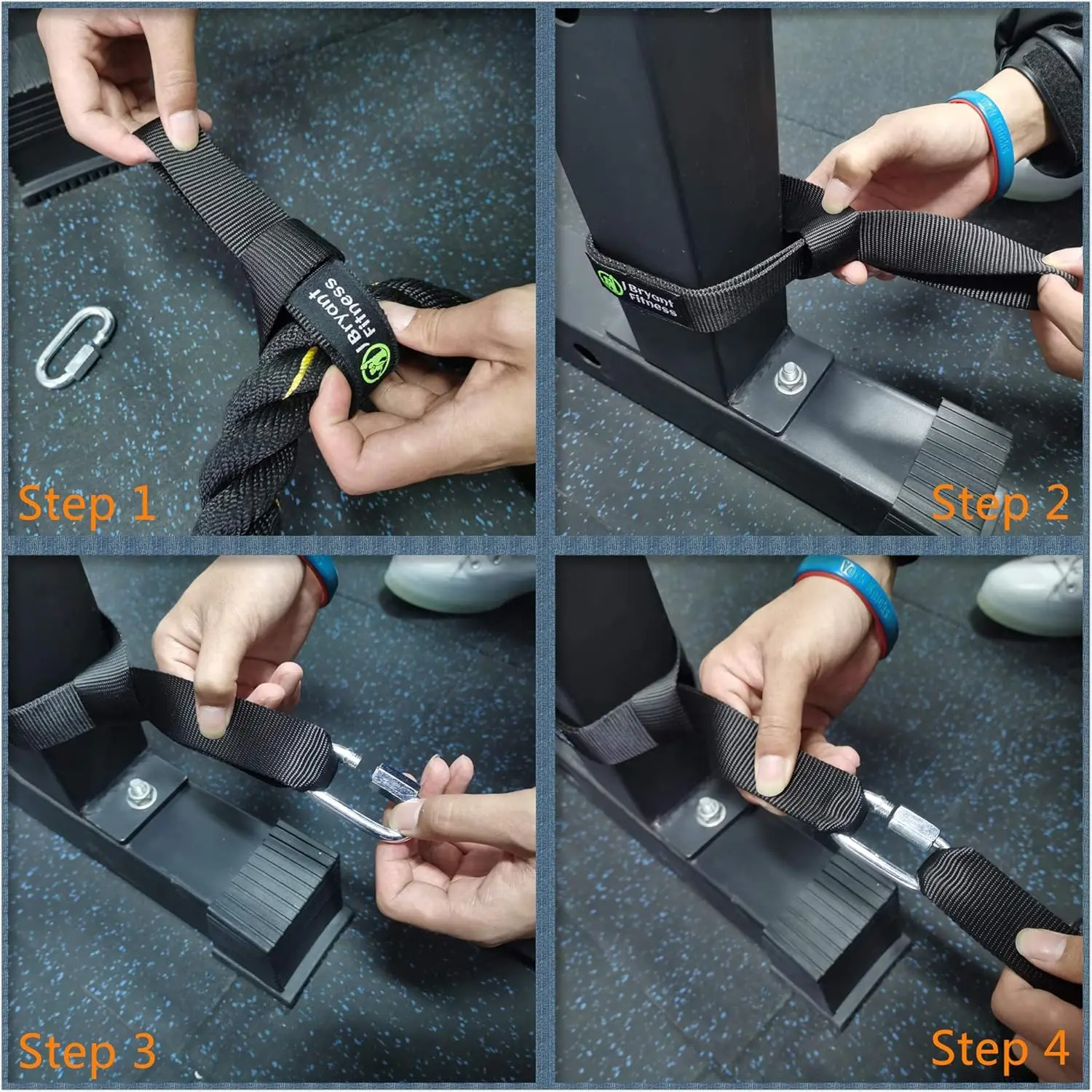
Choose a genuinely structural anchor point: a bolted power rack upright, a load-bearing steel or concrete column, or a healthy mature tree with a trunk thick enough not to flex under a hard pull. Wrap the strap around it, thread the strap back through its own loop so it cinches on itself, and clip your rope’s midpoint through the D-ring. Take up the slack and lean your bodyweight against it hard before you train — if it creaks, shifts, or the anchor moves at all, it is not an anchor. SAFETY, and this is the part people skip. Never anchor to a doorframe, a stud wall, drywall, a radiator, a pipe, a handrail, a banister, a fence post, a garden gate or any piece of furniture. None of these are designed for repeated horizontal dynamic loading, and a rope anchor pulling a fixture out of a wall at speed sends it straight back at you. Inspect the webbing before every single session: look for fraying, cuts, glazing, chemical staining, and the chalky fading that means UV has degraded the fibres, which is a real risk if you anchor outdoors. Retire the strap at the first sign of any of it — webbing gives very little warning before it fails. Keep the swing arc clear of people, pets and anything breakable.
Specifications
| Primary use | Anchoring battle ropes, suspension trainers and resistance bands |
|---|---|
| Lengths included | 19in, 31in and 59in |
| Material | Heavy-duty woven webbing |
| Hardware | Metal D-ring |
| Setup | Wrap and cinch — no drilling or bolting |
| Suitable anchors | Bolted rack uprights, structural columns, mature tree trunks |
| NOT suitable anchors | Doorframes, stud walls, pipes, radiators, handrails, fences, furniture |
| Load rating | Variant dependent — confirm the rating on the listing before use |
| Inspection | Required before every session |
Care & Maintenance
Rinse off grit and mud after outdoor use and dry fully before storage — abrasive particles work into webbing fibres and cut them from the inside, and damp webbing stored in a bag mildews, which weakens it. Keep the kit out of direct sunlight when not in use, as UV is the main thing that silently degrades nylon and polyester webbing. Never store it under tension. Check the D-ring for deformation or hairline cracks. Treat this as safety equipment with a finite life, not a permanent fixture: retire and replace it at any sign of wear rather than getting one more session out of it.
What’s in the Box
Three anchor straps (19in, 31in and 59in) with D-ring hardware. Battle rope not included.

Reviews
There are no reviews yet.