Small Ball, Deep Pressure: Working Trigger Points You Can’t Reach
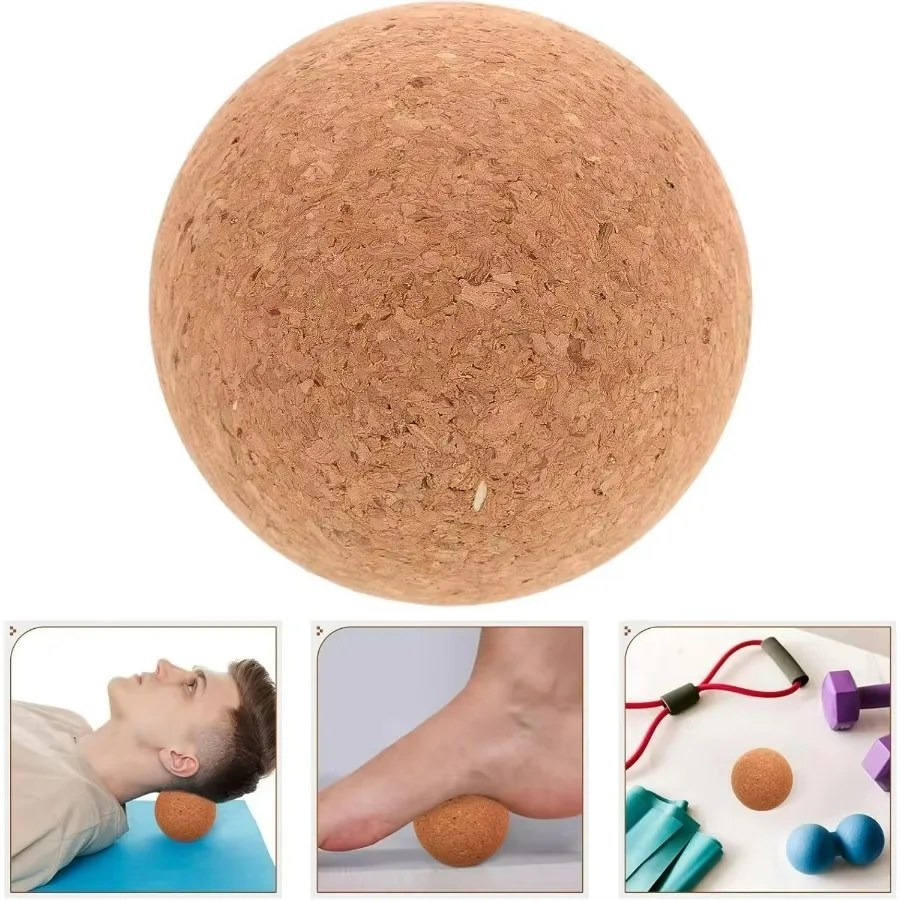
A trigger point is a tender, taut band within a muscle that refers pain elsewhere – the classic being an upper trapezius knot that produces a headache behind the eye. Sustained, focal pressure appears to work through several routes: local ischaemic compression followed by reactive blood flow, mechanical input to muscle spindles that reduces the resting tone of the band, and central pain modulation triggered by the sustained input itself. A small dense ball concentrates force into a few square centimetres, reaching depth that a broad foam roller simply cannot generate.
Key Benefits
- Cork grips instead of skidding – against a painted wall or a wooden floor, a rubber ball slides out from under you at exactly the wrong moment. Cork’s surface texture holds position under load.
- Firm enough for real depth – soft massage balls compress before the tissue does, so the pressure never arrives. Cork stays rigid and delivers the force where you point it.
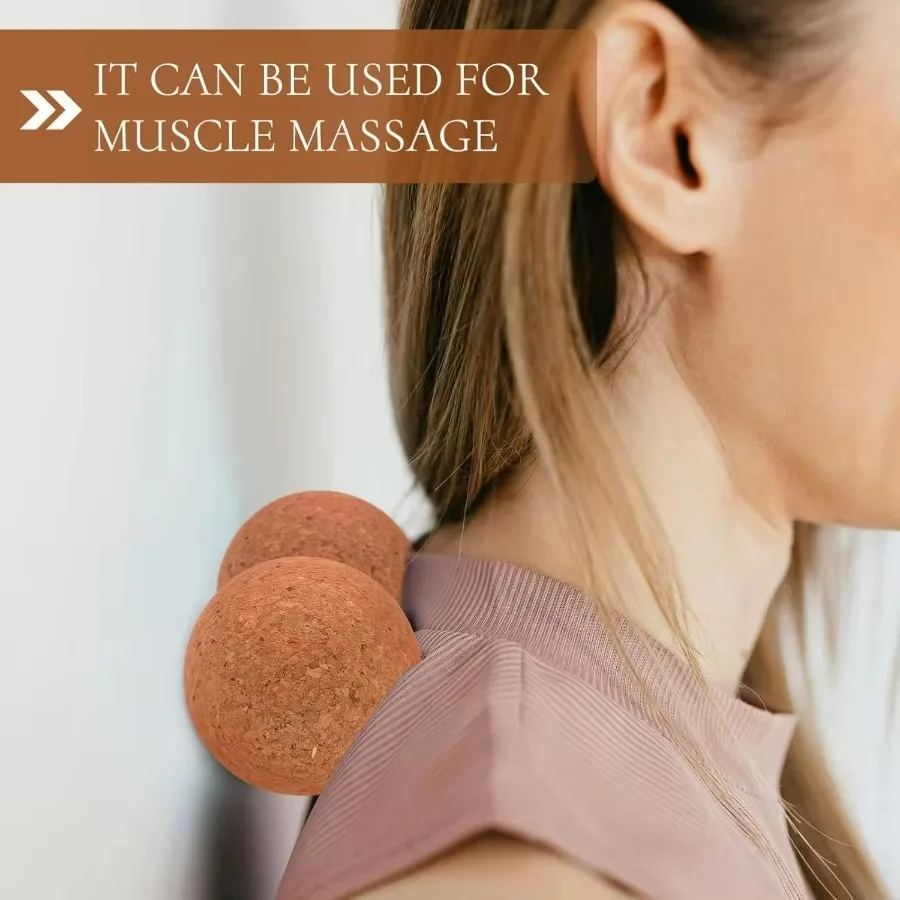
- Two balls, two uses – use one for focal work on the glute or shoulder blade, or hold both either side of the spine to work the paraspinal muscles without pressing on the vertebrae themselves.
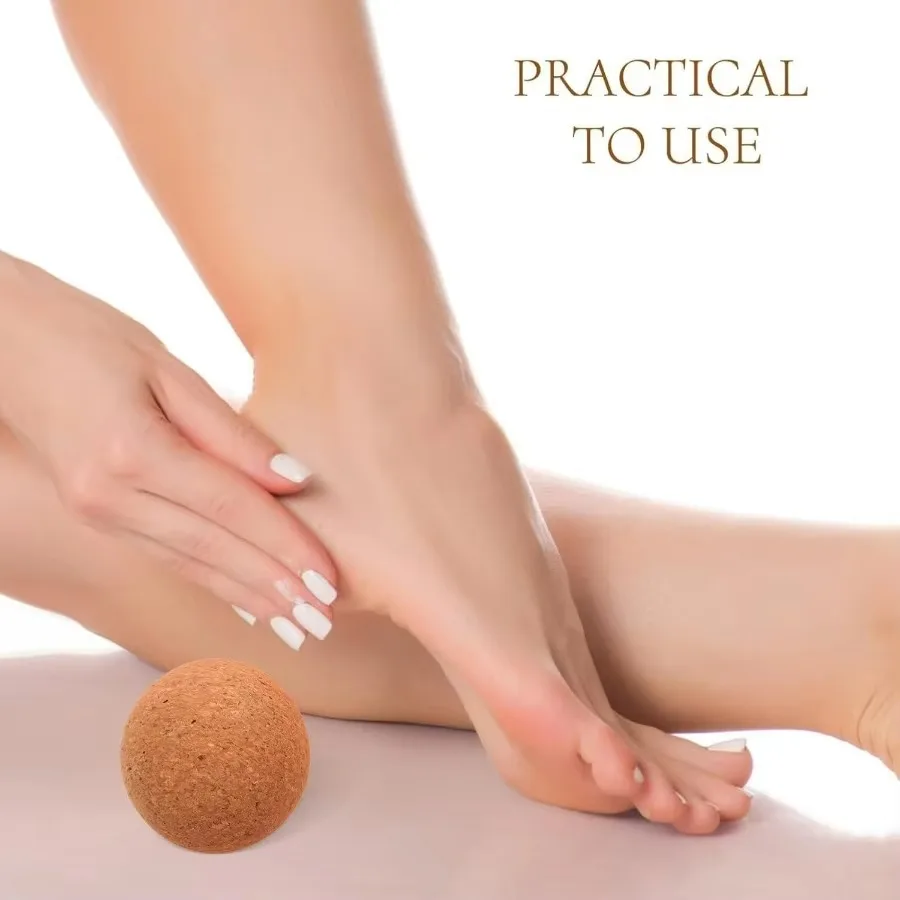
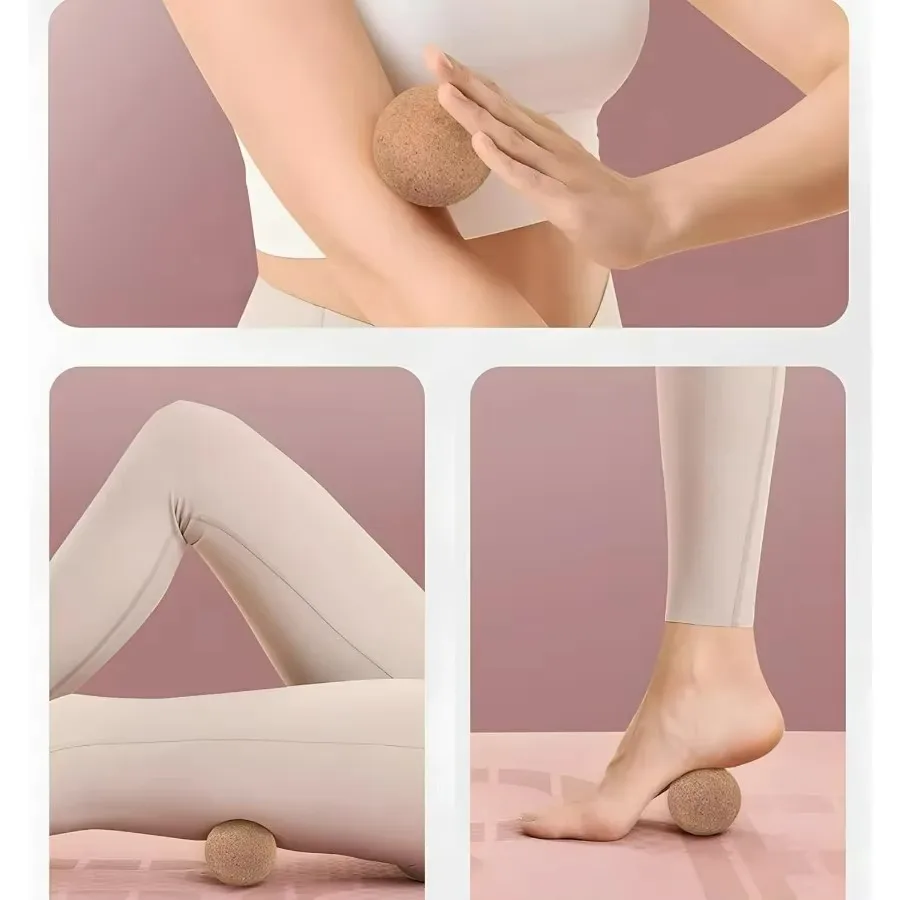
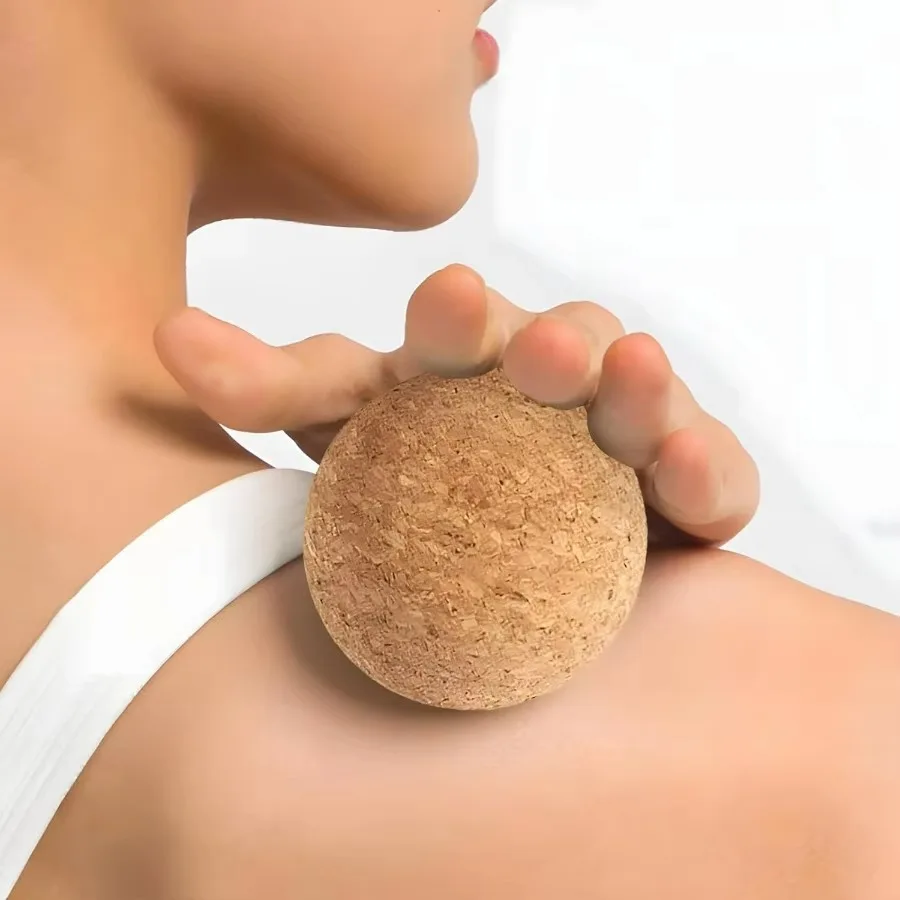
- Reaches what your hands and rollers can’t – the rhomboid area between spine and shoulder blade, the deep glute, and the sole of the foot are all near-impossible to self-treat any other way.
- Quiet and floor-friendly – it does not thud, bounce or roll away across the room, which matters if you are doing this in a flat with neighbours below.
- Natural, renewable cork – harvested from bark without felling the tree, and it does not carry the rubber odour that puts people off lacrosse balls.
How to Use
Place the ball between your body and a wall (easier to control) or the floor (much more pressure). Lean in until you find a tender spot, then stop and hold. Sustained pressure for 30 to 90 seconds beats aggressive rolling: breathe slowly and wait for the sensation to fade by roughly half, which is your cue to move on. For the upper back, stand against a wall and pin the ball just inside the shoulder blade, then slowly raise and lower the arm to move the tissue underneath it. For the glute, sit on the floor with the ball under one buttock and cross that ankle over the opposite knee. Safety: never place the ball directly on the spine, the neck, the front of the throat, the kidneys or any bony prominence – work the muscle either side of the spine, not the vertebrae. Skip areas that are bruised, inflamed, numb or recently injured, and stop if you feel tingling or shooting pain rather than a deep ache. Pain lasting more than a day or two after use means you went too hard.
Specifications
| Quantity | 2 balls per pack |
|---|---|
| Material | Natural cork |
| Firmness | Firm – comparable to a lacrosse ball |
| Best for | Upper back, rhomboids, glutes, shoulders, feet |
| Technique | Sustained ischaemic compression / trigger point holds |
| Surface grip | High – resists sliding on walls and floors |
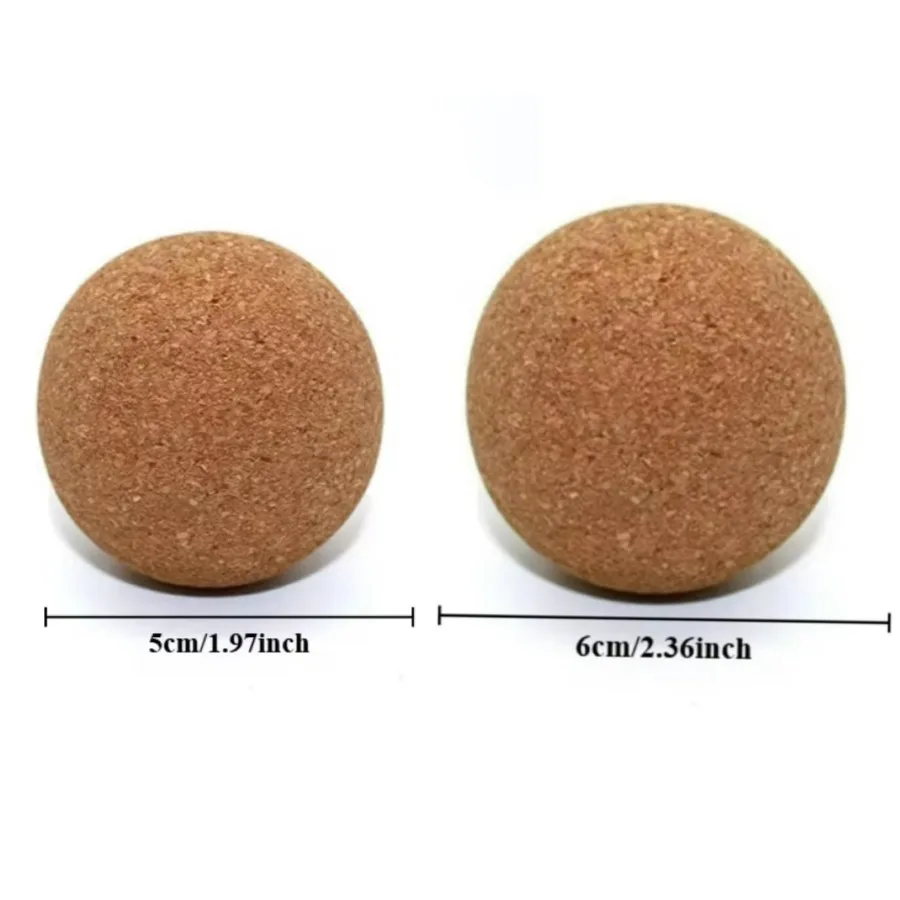
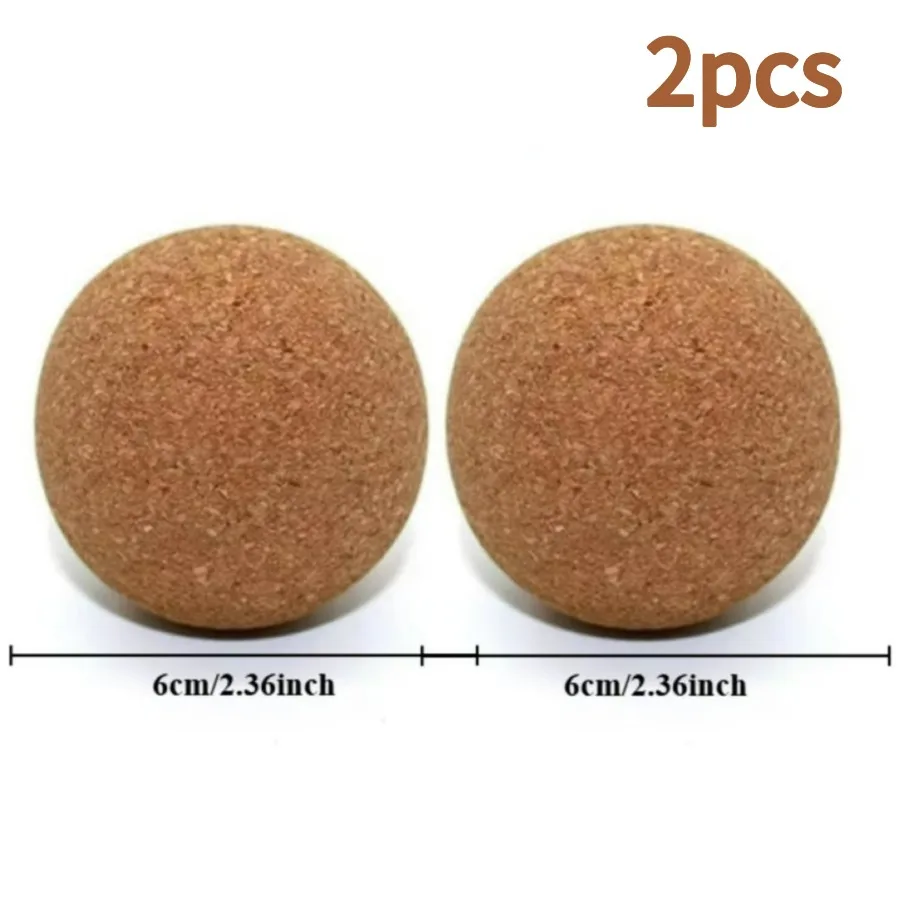
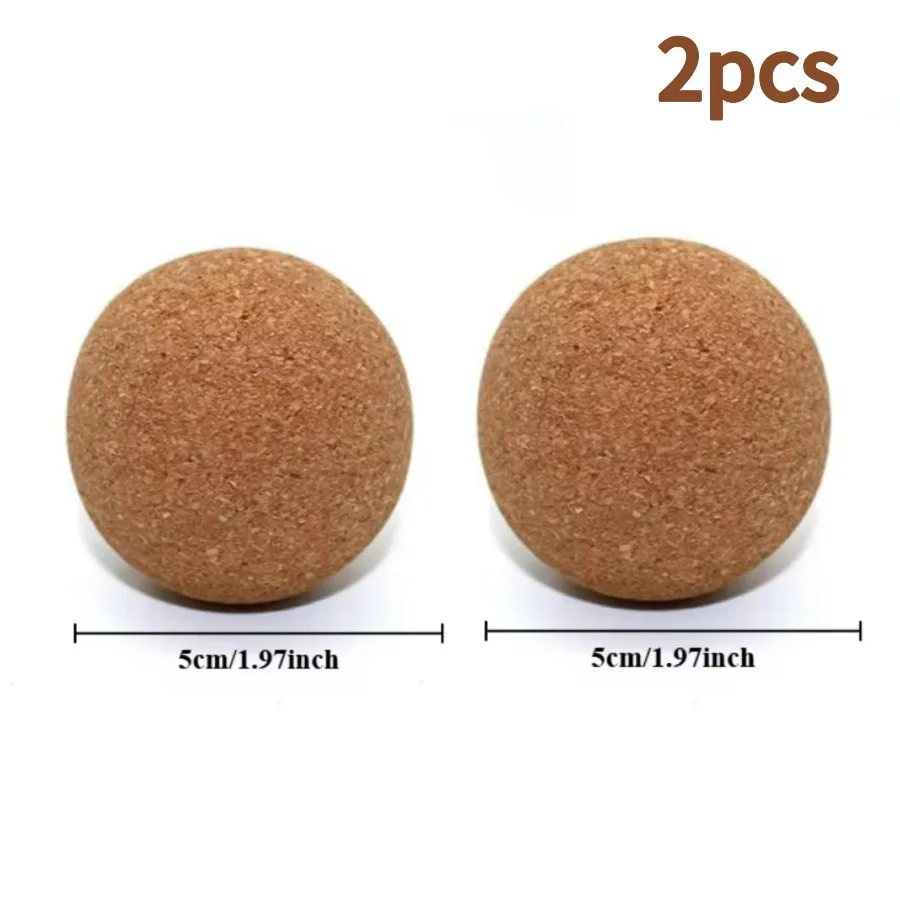
| Size / finish | Variant dependent – see options |
| Power | None required |
Care & Maintenance
Wipe with a dry cloth or a barely damp one; cork is porous and should never be soaked or put in a washing machine, as water will swell and eventually crumble the surface. Let it dry fully at room temperature away from direct heat. Small surface flakes over time are normal for natural cork and do not affect performance. Store somewhere dry – a humid bathroom is the one place these do not belong.
What’s in the Box
2 x natural cork massage balls. No assembly required.
Reviews
There are no reviews yet.