The Doorway Pull-Up Bar: Strong Enough, If Your Door Frame Is
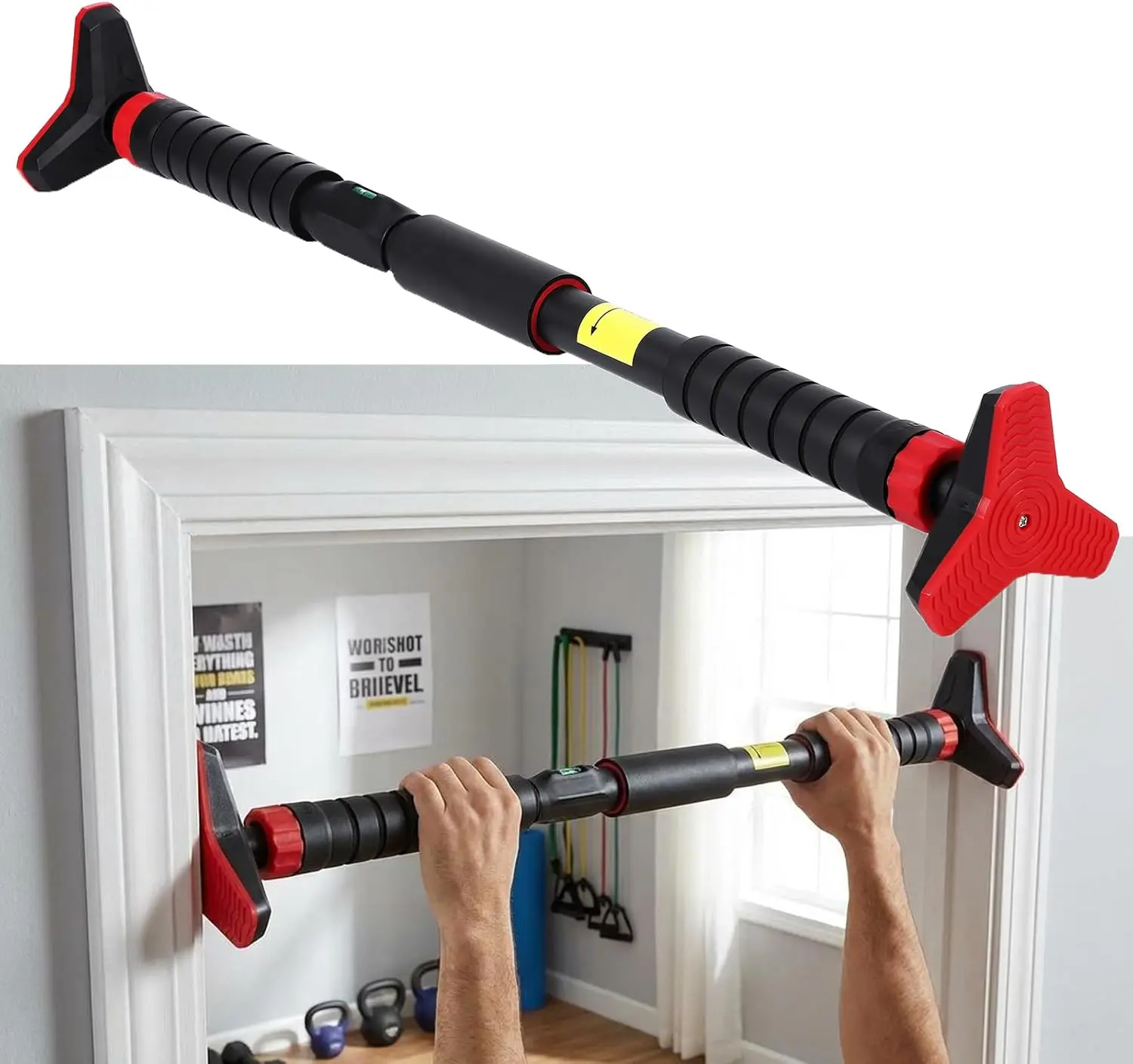
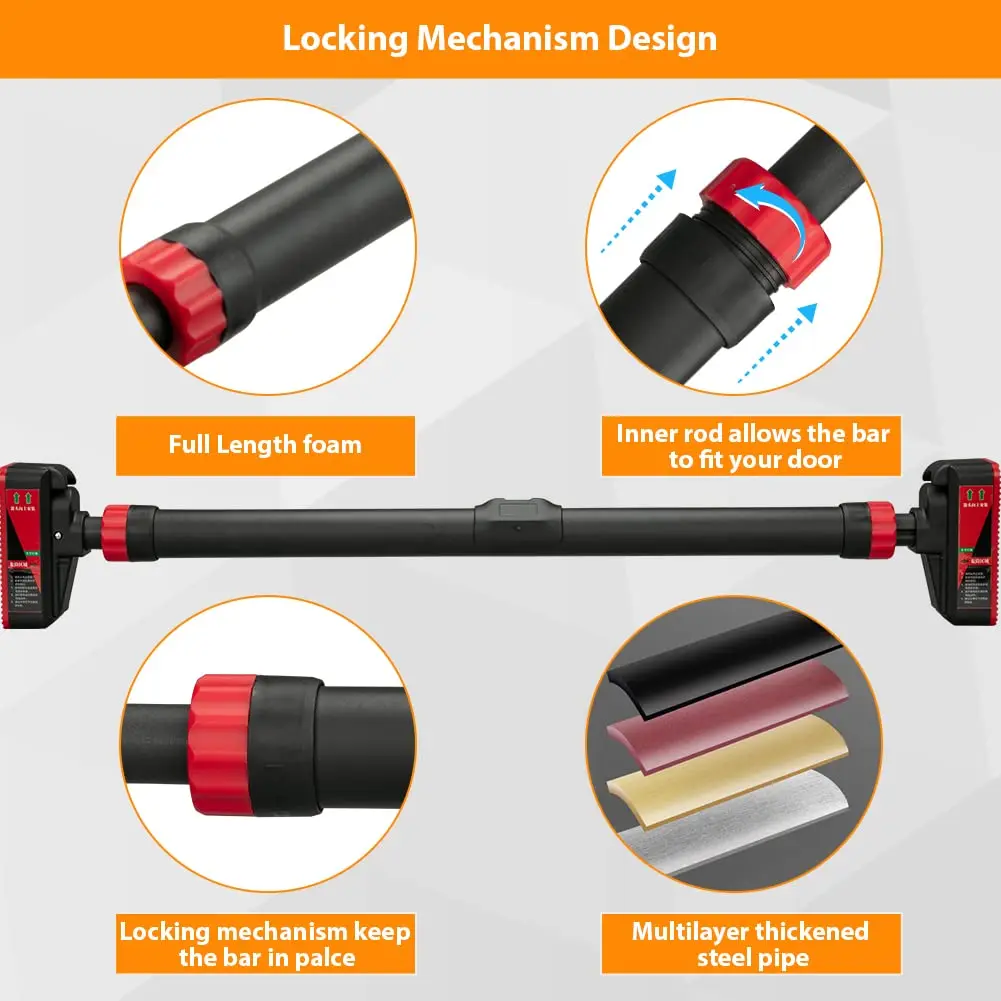
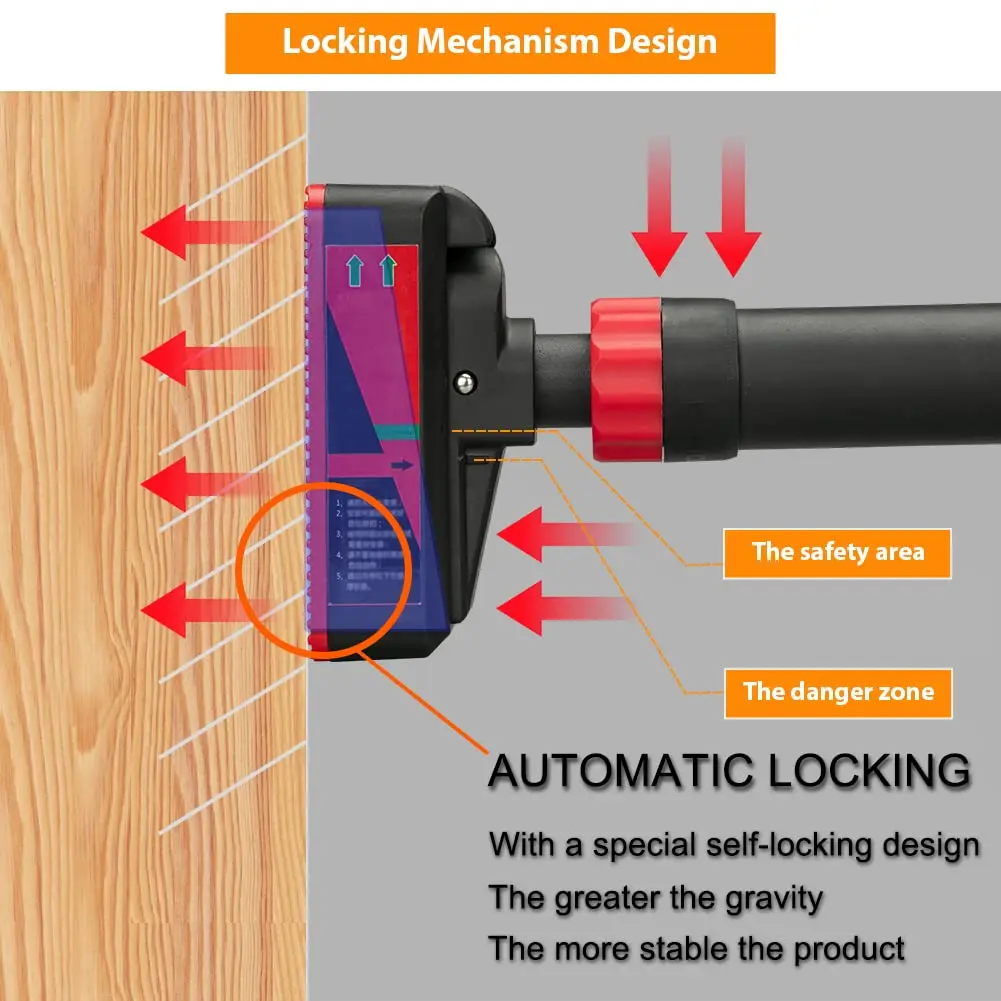
A leverage-mounted doorway bar is a lever, not a clamp. Your bodyweight hanging from the bar creates a moment that presses the upper arm hard against the wall above the frame while pulling the lower hooks back into the architrave — so the harder you pull, the tighter it grips, and it does not rely on friction or on drilling. The consequence of that geometry is the thing nobody tells you: the bar’s 440lb rating is almost never the limiting factor. The trim, the architrave and the wall behind it are. The locking mechanism adds a positive mechanical stop so the bar cannot rotate off the frame under a swing.
Key Benefits
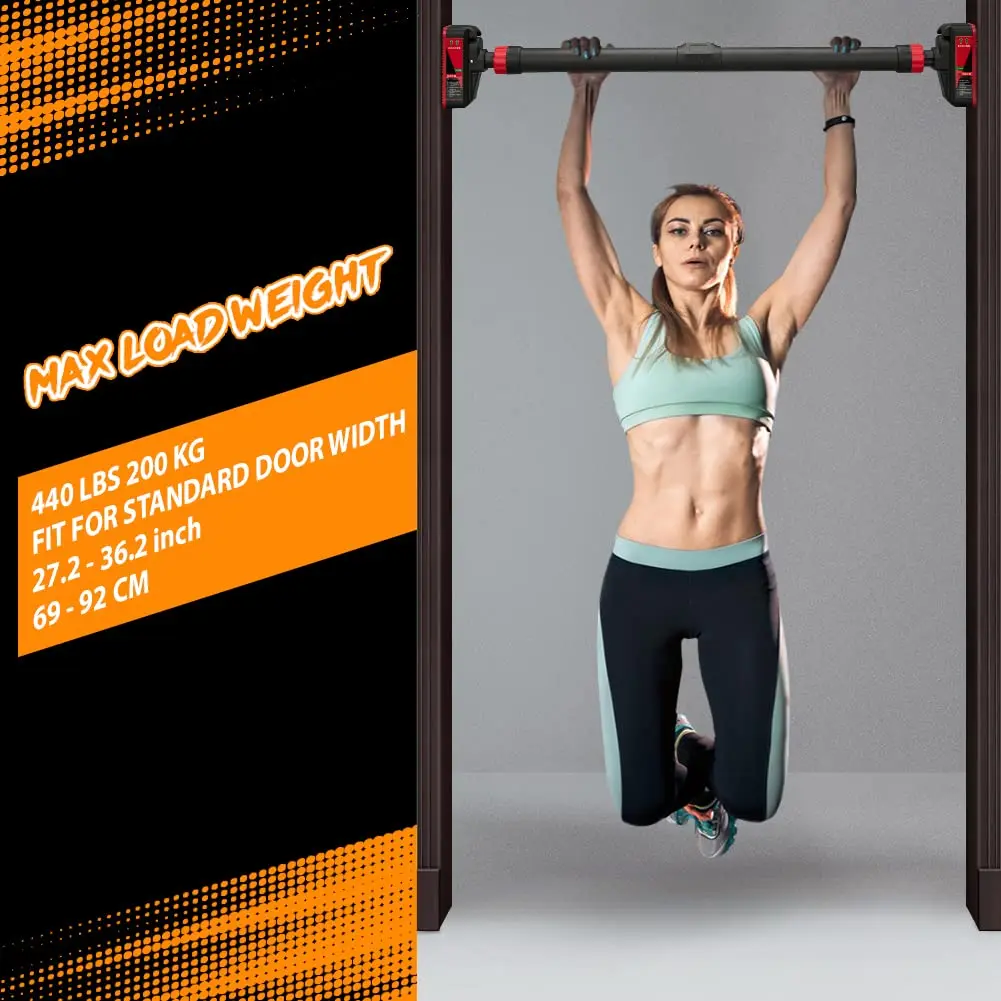
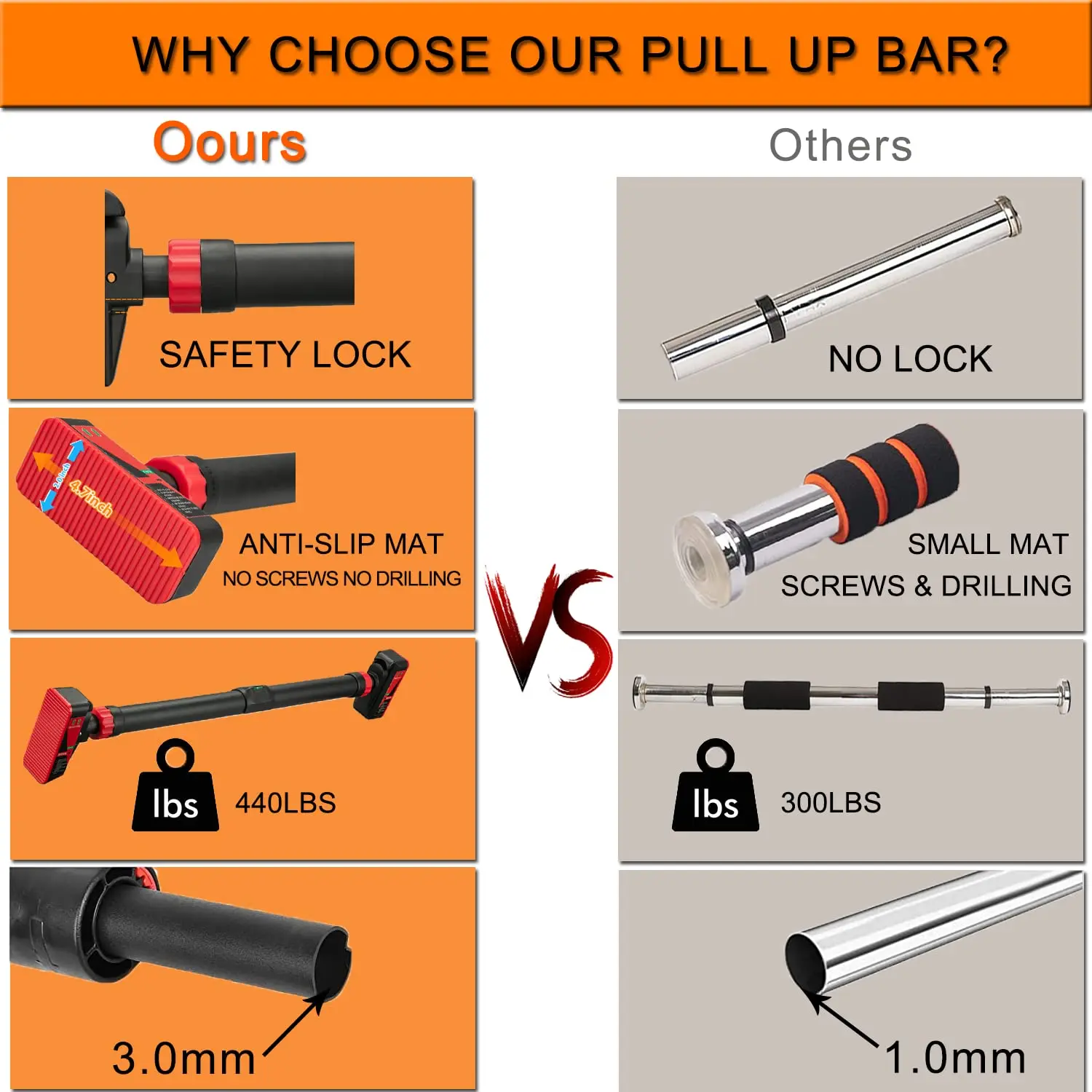
- 440lb (200kg) rated steel — headroom over any realistic load. Including a heavy lifter plus a weight belt, which is the point of a rating well above bodyweight.
- Locking mechanism stops rotation off the frame. The failure mode of an unlocked leverage bar is rolling off the top edge mid-rep. A positive lock removes that mode.
- Adjustable width fits a range of door frames. Measure yours first — this is the spec that decides whether the bar is usable in your house.
- No drilling, no permanent fixings. Renters can have a pull-up bar; landlords never need to know.
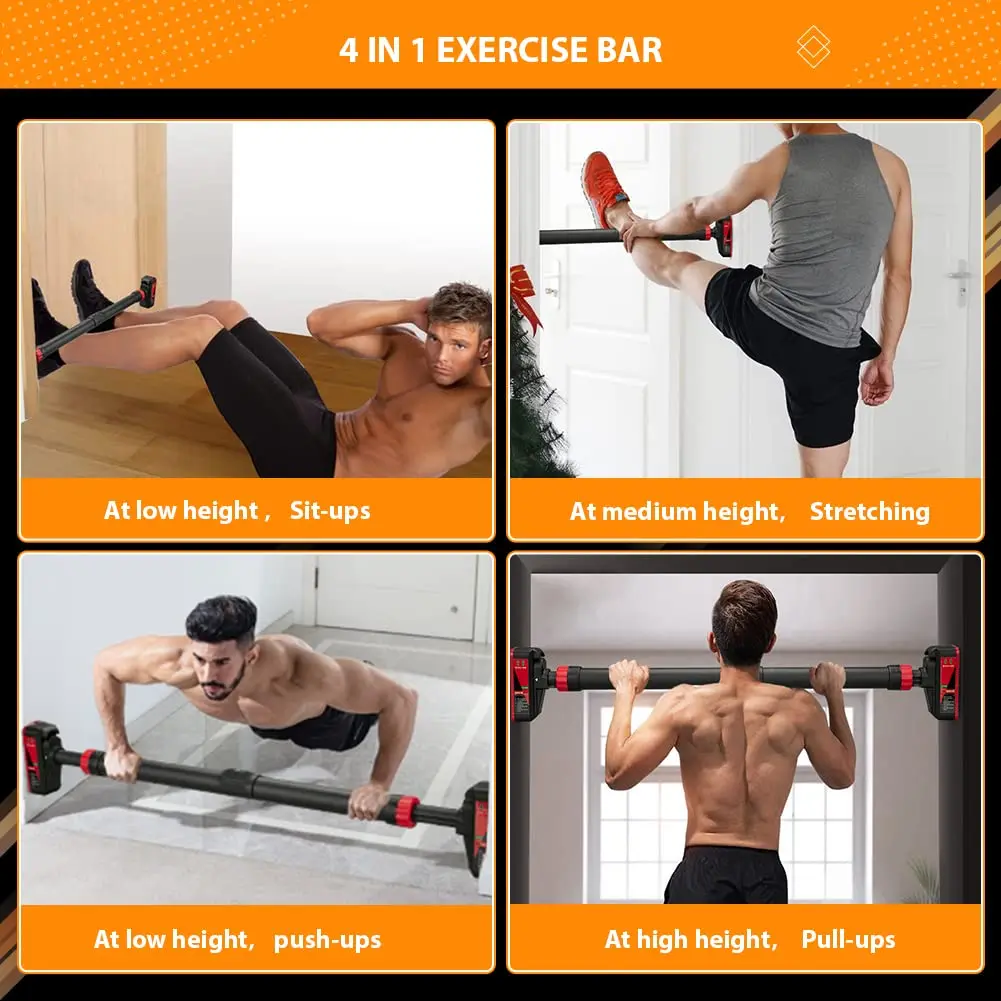
- The pull-up is still the best upper-body pull there is. Lats, mid-traps, rhomboids, biceps and grip, loaded through a full range, with nothing but you and gravity.
- Off in ten seconds when you need the door. Which matters far more for whether it gets used than any spec on this page.
How to Use
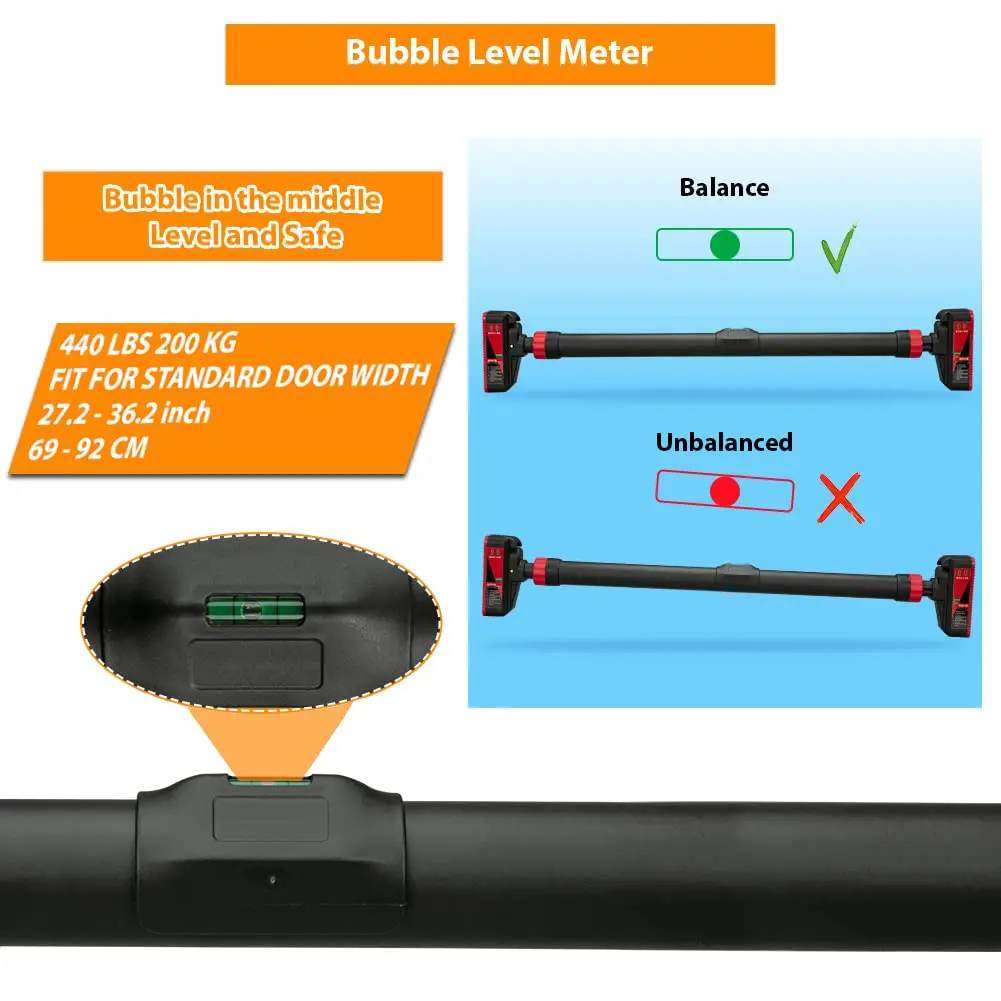
Fit the bar squarely over the door frame with the upper pad flat against the wall, adjust the width until it sits without lateral play, and confirm the locking mechanism is fully engaged before any load goes on it. Then — every session, not just the first — test it: hang your full weight with your feet still on the ground and give it a firm downward tug. If anything creaks, shifts, or the paint on the architrave cracks, stop and do not use it. Train with a dead hang, pull the shoulder blades down and back before the arms bend, and lower under control rather than dropping, because a hard drop shock-loads the frame far above your bodyweight. Safety, in full: this bar transfers load into your door frame. Verify the frame is solid timber or masonry — hollow plasterboard partitions, loose trim, uPVC and glued-on architrave will fail, sometimes catastrophically. Avoid kipping or violent swinging. Put a mat underneath. Never let children use it unsupervised. Re-check tightness and lock engagement before every session; a bar that was fine on Tuesday can have crept by Friday.
Specifications
| Maximum Load | 440 lb / 200 kg (bar rating — not a rating of your door frame) |
|---|---|
| Mount Type | Leverage doorway mount with locking mechanism |
| Width | Adjustable |
| Fixing | No drilling required |
| Frame Requirement | Solid timber or masonry frame with sound architrave |
| Grip Positions | Multiple — wide, neutral and narrow, variant dependent |
| Construction | Steel bar with foam grips |
| Door Width Range | Variant dependent — measure your frame before ordering |
| Not Suitable For | Hollow partition walls, uPVC frames, loose or glued trim |
Care & Maintenance
Wipe the foam grips down — sweat rots foam and a slick grip is a dropped rep. Every few weeks, inspect the welds, the pivot and the locking mechanism for cracks, deformation or play, and check the wall pad and architrave for compression marks or splitting. Any visible crack in the steel, or any movement in the lock, means the bar is retired. Do not attempt a repair.
What’s in the Box
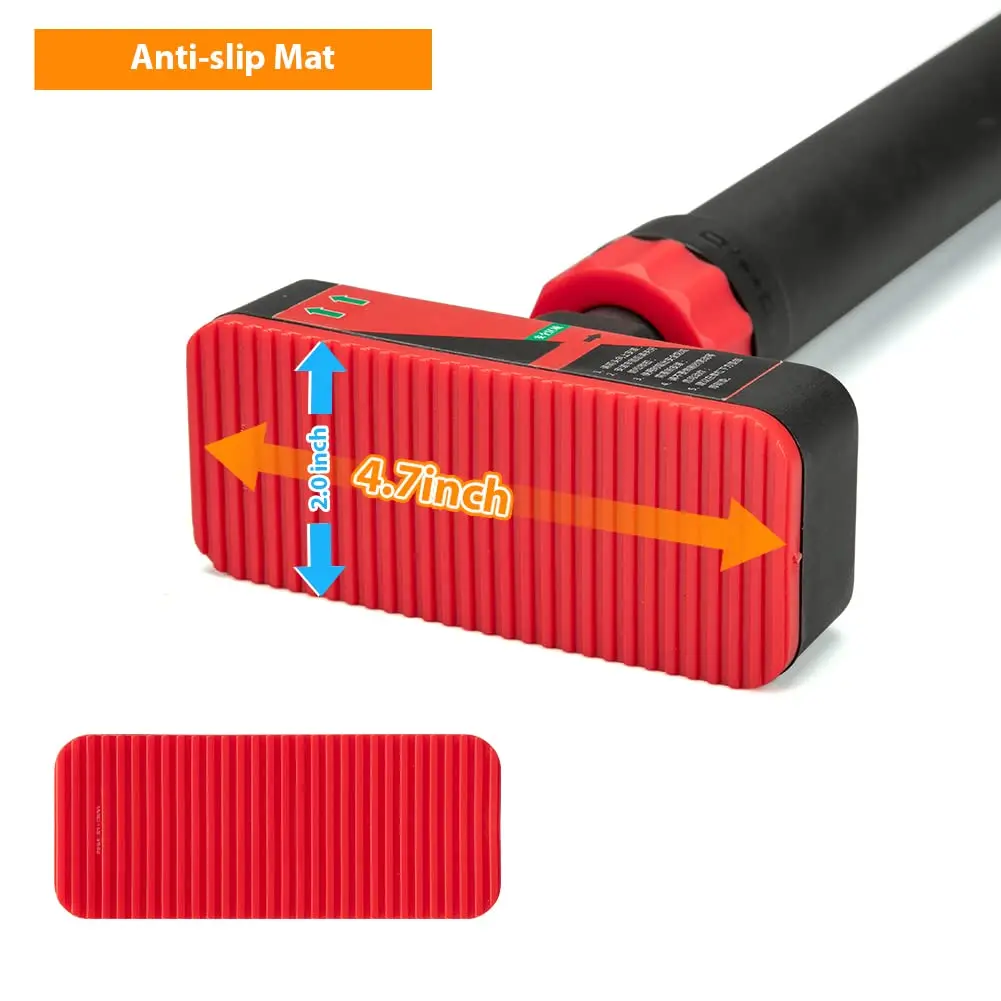
1 × adjustable doorway pull-up bar with locking mechanism, foam grips and wall protection pads. Assembly hardware included; no drilling or wall fixings required.

Reviews
There are no reviews yet.