Percussion Therapy: What the Hammering Actually Does
A percussion massager drives a head into muscle tissue at high frequency and short amplitude. The effect is largely neurological rather than mechanical: rapid oscillation floods mechanoreceptors with input, which inhibits the alpha motor neuron pool and briefly lowers the muscle’s resting tone. That is why range of motion improves within a minute or two. Blood flow to the treated area also rises. What percussion does not do is break up scar tissue, flush lactate, or repair muscle fibres — those claims are marketing. It reduces perceived soreness and stiffness and improves short-term mobility. That is a real, measurable, worthwhile benefit.
Key Benefits
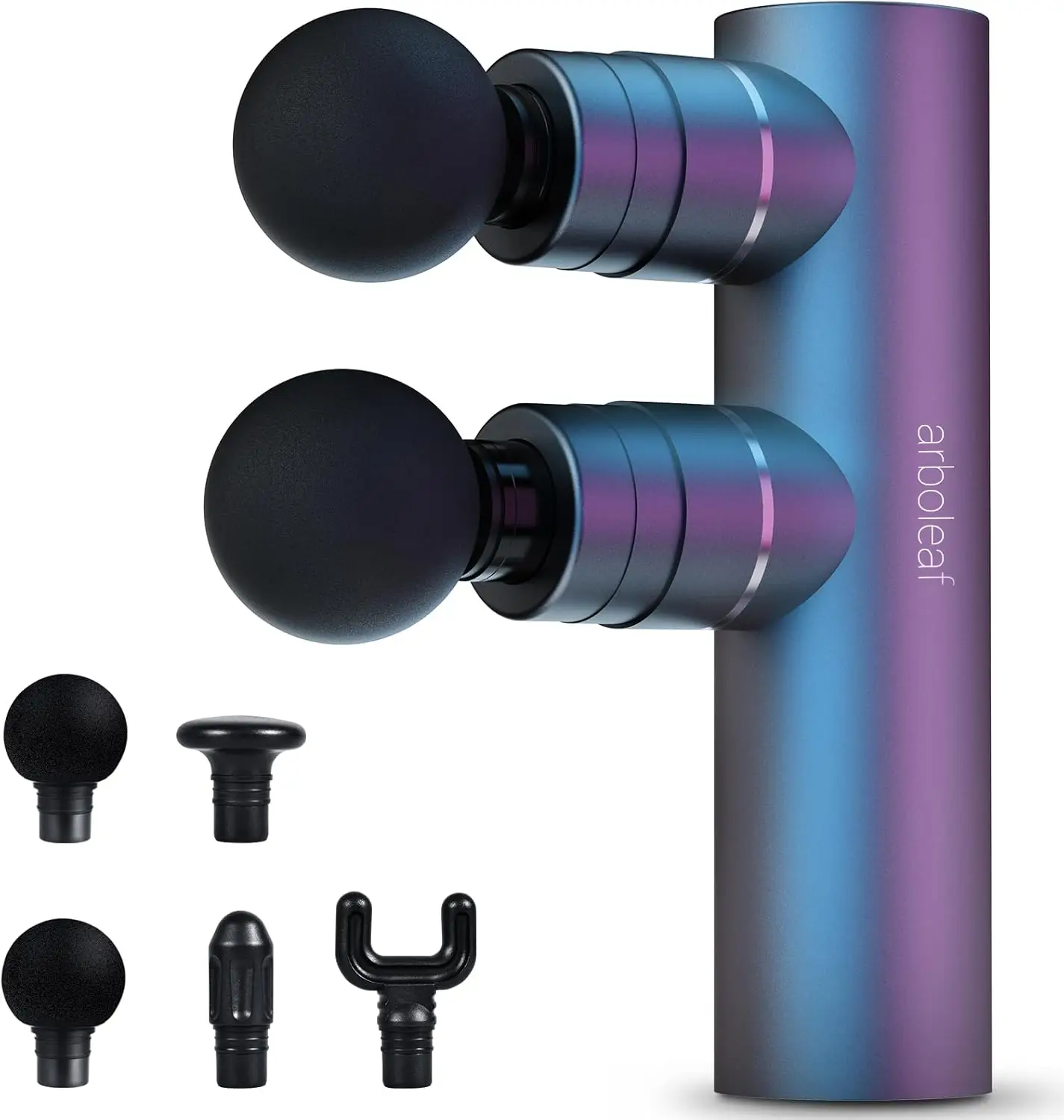
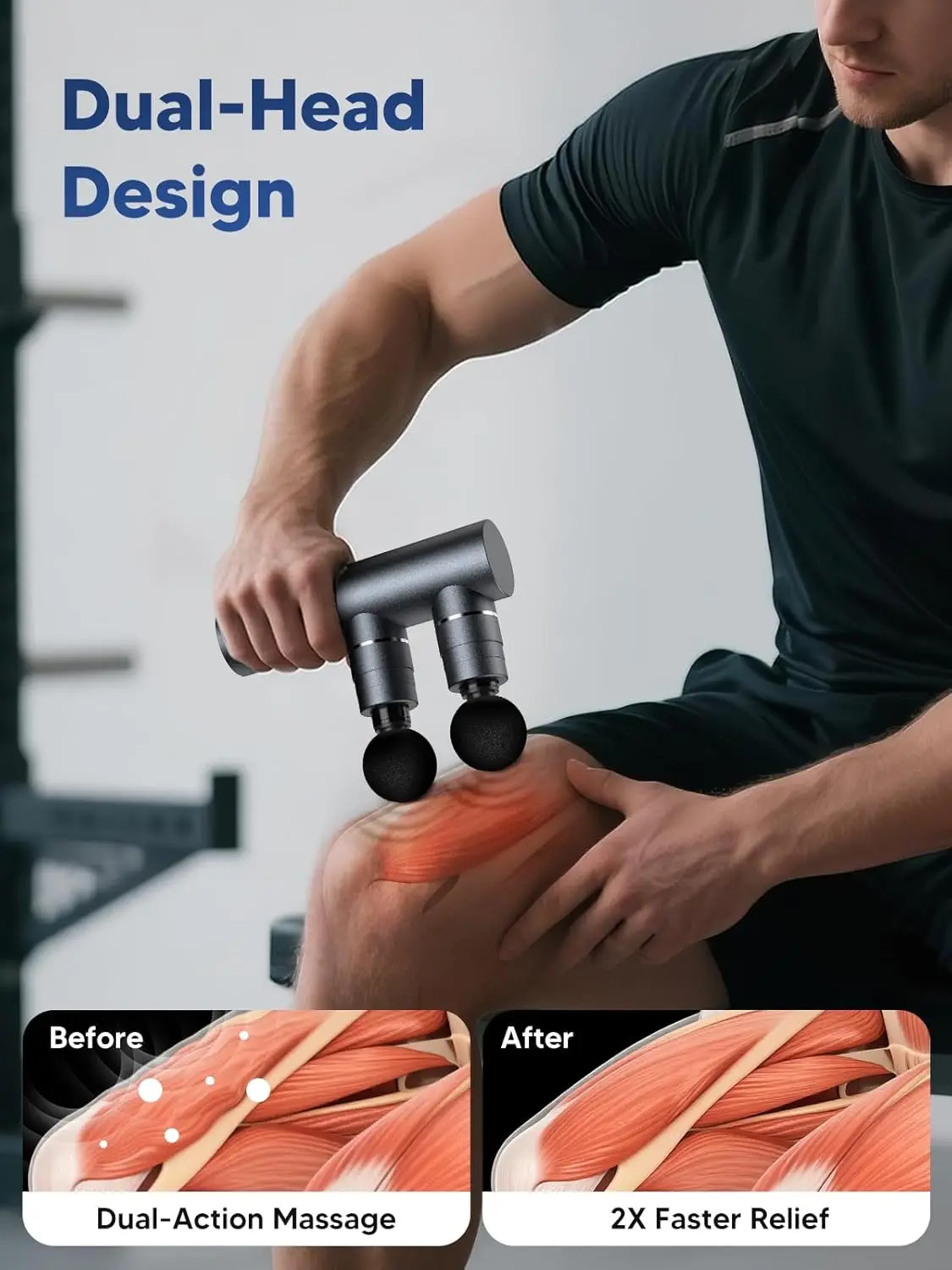
- Dual heads cover ground twice as fast — on large muscle groups like quads, hamstrings, and lats, two contact points mean fewer passes for the same coverage.
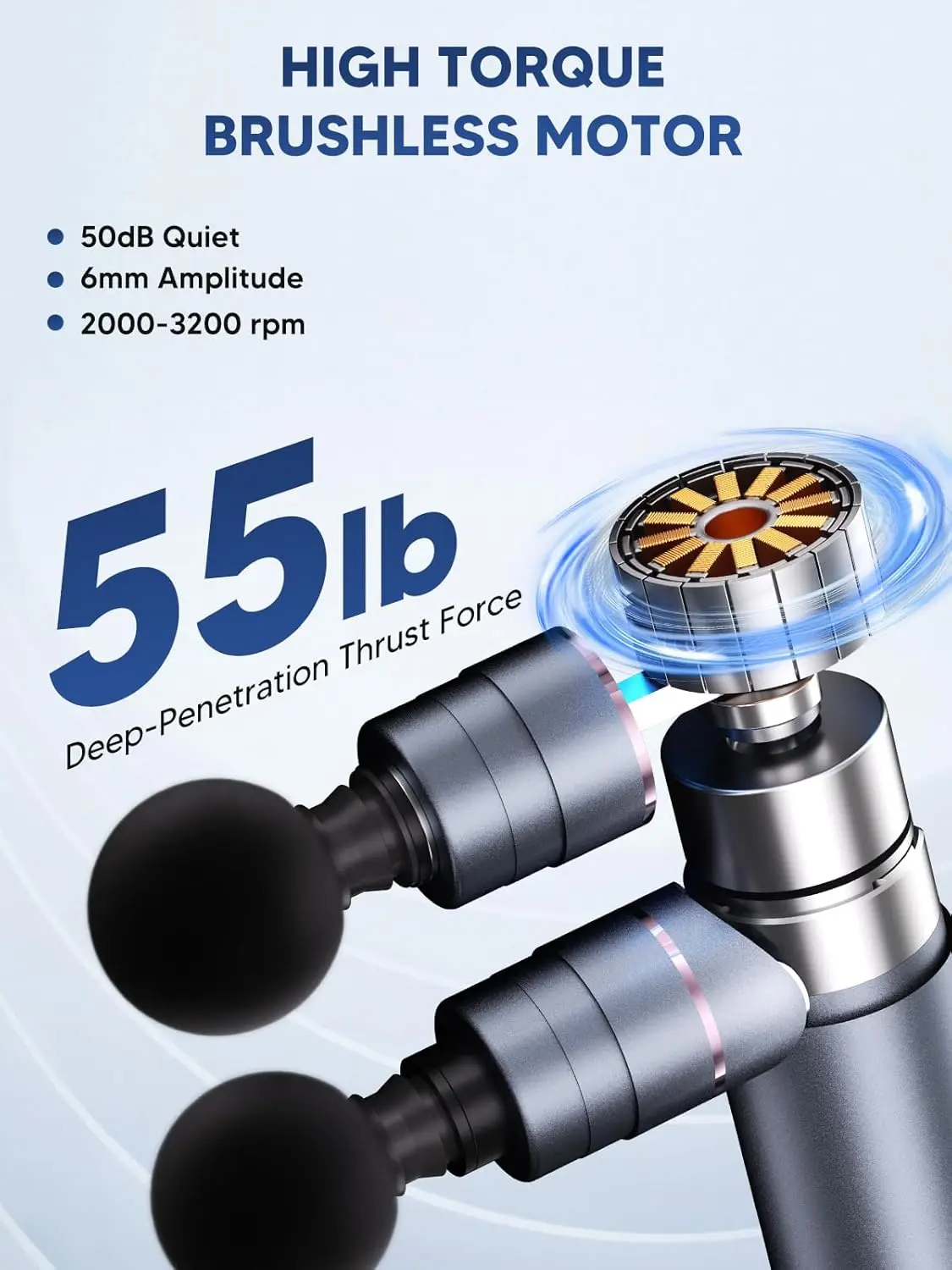
- Full-metal body dumps heat — plastic-shelled guns throttle or fail under sustained use; an alloy housing acts as a heatsink and survives long sessions.
- Best used before training, not just after — 30–60 seconds per muscle group pre-workout improves range of motion without the strength loss that long static stretching can cause.
- Won’t ‘break up’ anything, and doesn’t need to — the honest mechanism is neuromuscular, and it’s enough. Anyone selling you fascia demolition is selling you a story.
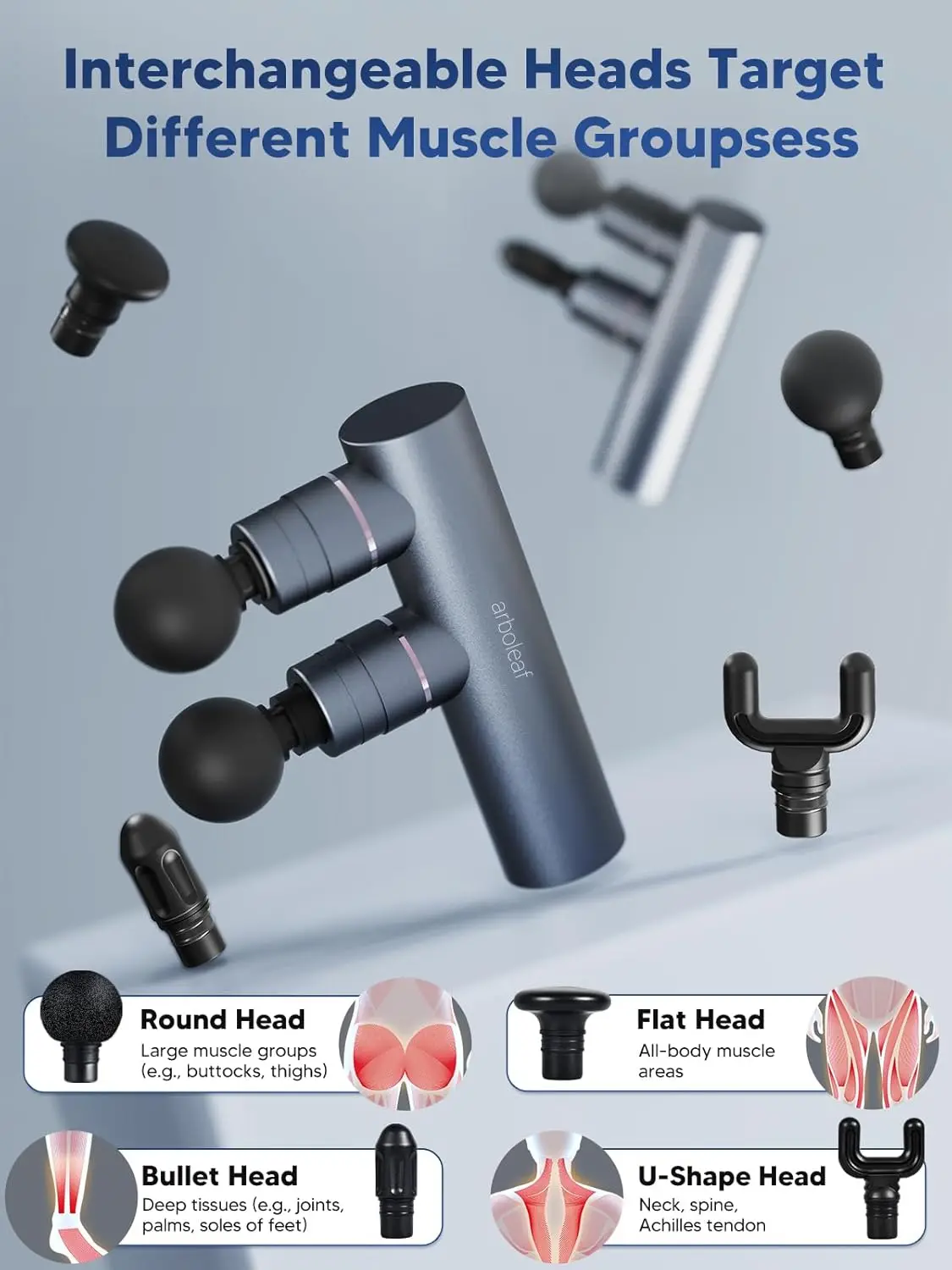
- Interchangeable heads for different tissue — a broad flat head for big muscle bellies, a softer head for areas near bone, a bullet head for a specific trigger point.
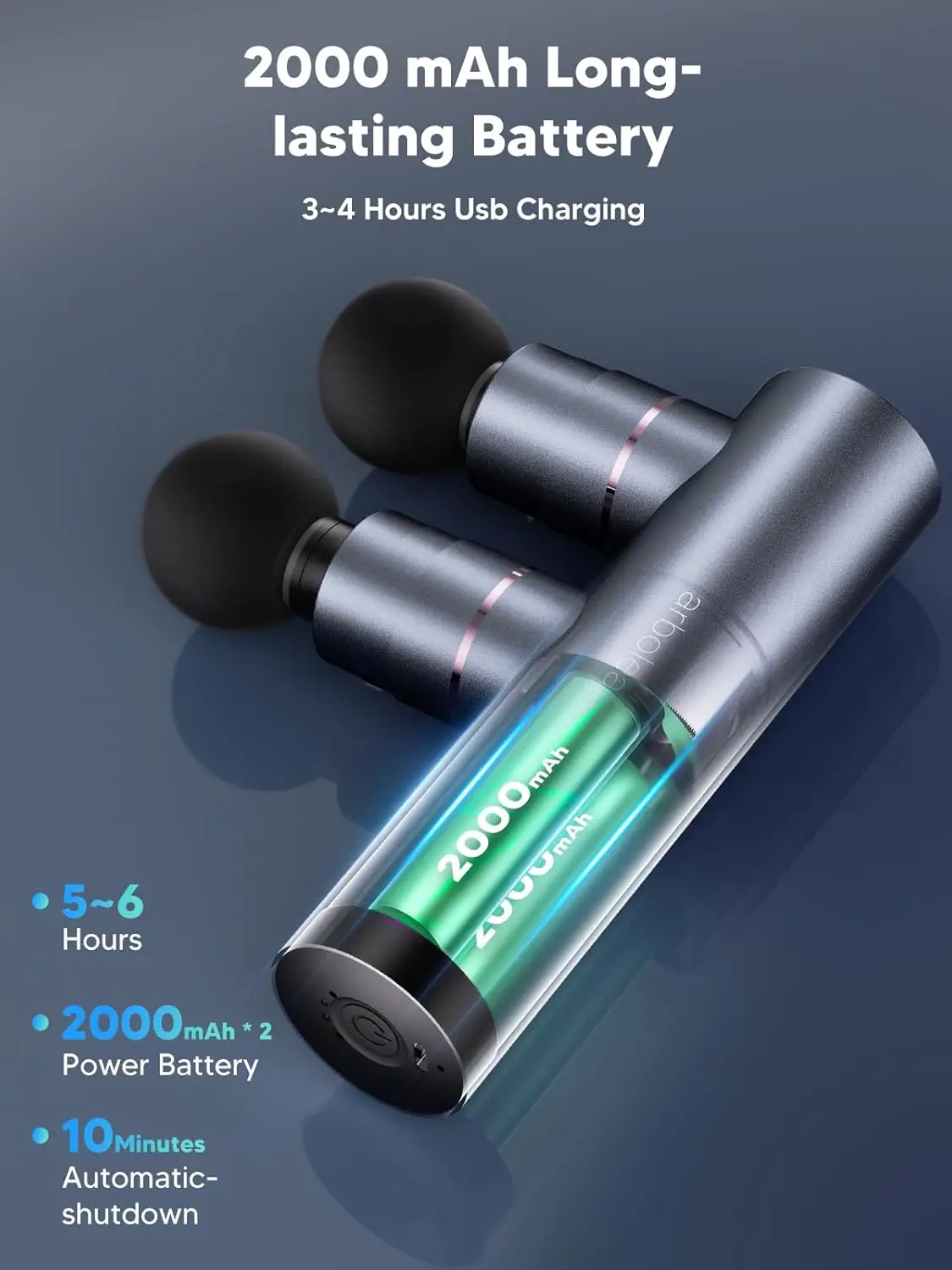
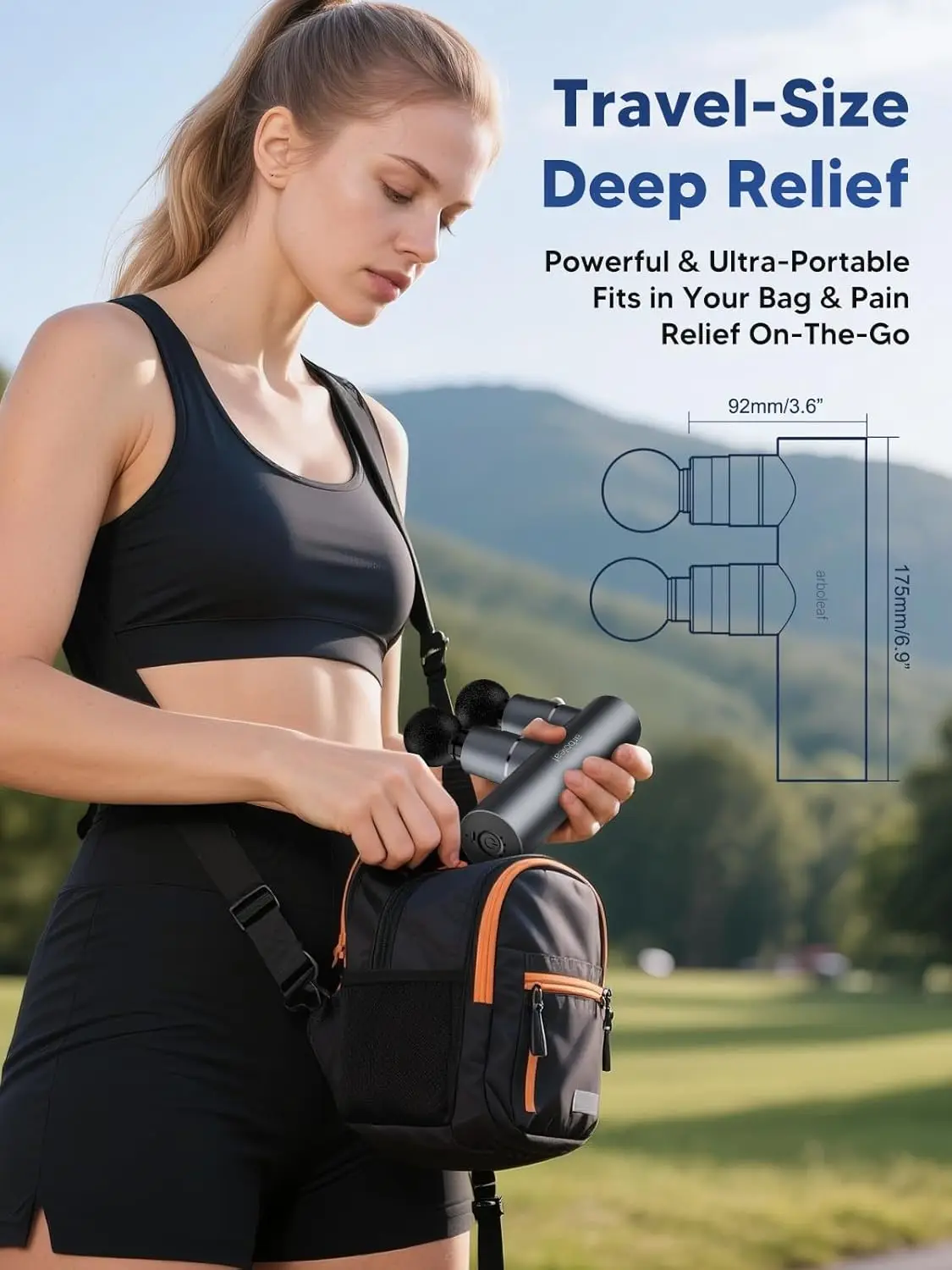
- Portable and cordless — usable in the gym car park, which is exactly where you’ll want it after a heavy leg session.
How to Use
Switch it on before it touches you, then let the gun’s weight do the work — pressing hard adds bruising, not benefit. Glide slowly along the muscle belly, roughly 2–3 cm per second, for 60–120 seconds per group. Stay on soft tissue and keep moving; never park it on one spot for minutes. Safety: never use it on bone, joints, the spine itself, the front or sides of the neck, the head, the kidneys, or any area that is bruised, swollen, numb, or freshly injured. Avoid over open wounds, varicose veins, or areas of known DVT risk. If you are pregnant, have osteoporosis, a bleeding disorder, are on blood thinners, or have an implanted device, ask a clinician before using percussion therapy. Sharp pain means stop — a percussion gun should register as intense but tolerable pressure, nothing more.
Specifications
| Type | Dual-head cordless percussion massager |
|---|---|
| Body | Full-metal alloy housing |
| Heads | Interchangeable attachments included |
| Speeds | Multiple selectable levels |
| Power | Rechargeable lithium battery, USB-C or DC charging (variant dependent) |
| Amplitude / stall force | Variant dependent — see product attributes |
| Use | Pre-workout mobility and post-workout soreness |
| Noise | Brushless motor, low-noise design |
Care & Maintenance
Wipe the heads with a damp cloth or alcohol wipe after each use and let them dry before reattaching — sweat degrades foam and silicone over time. Never submerge the unit or rinse it under a tap; the motor housing is not waterproof. Recharge before the battery is fully flat rather than storing it empty, and do not leave it charging indefinitely. Store in the case, out of direct heat. If the motor note changes, the head wobbles, or the housing gets unusually hot, stop using it.
What’s in the Box
1 × dual-head percussion massage gun, a set of interchangeable massage heads, 1 × charging cable, and a carry case. Head count and case type are variant dependent.
Reviews
There are no reviews yet.