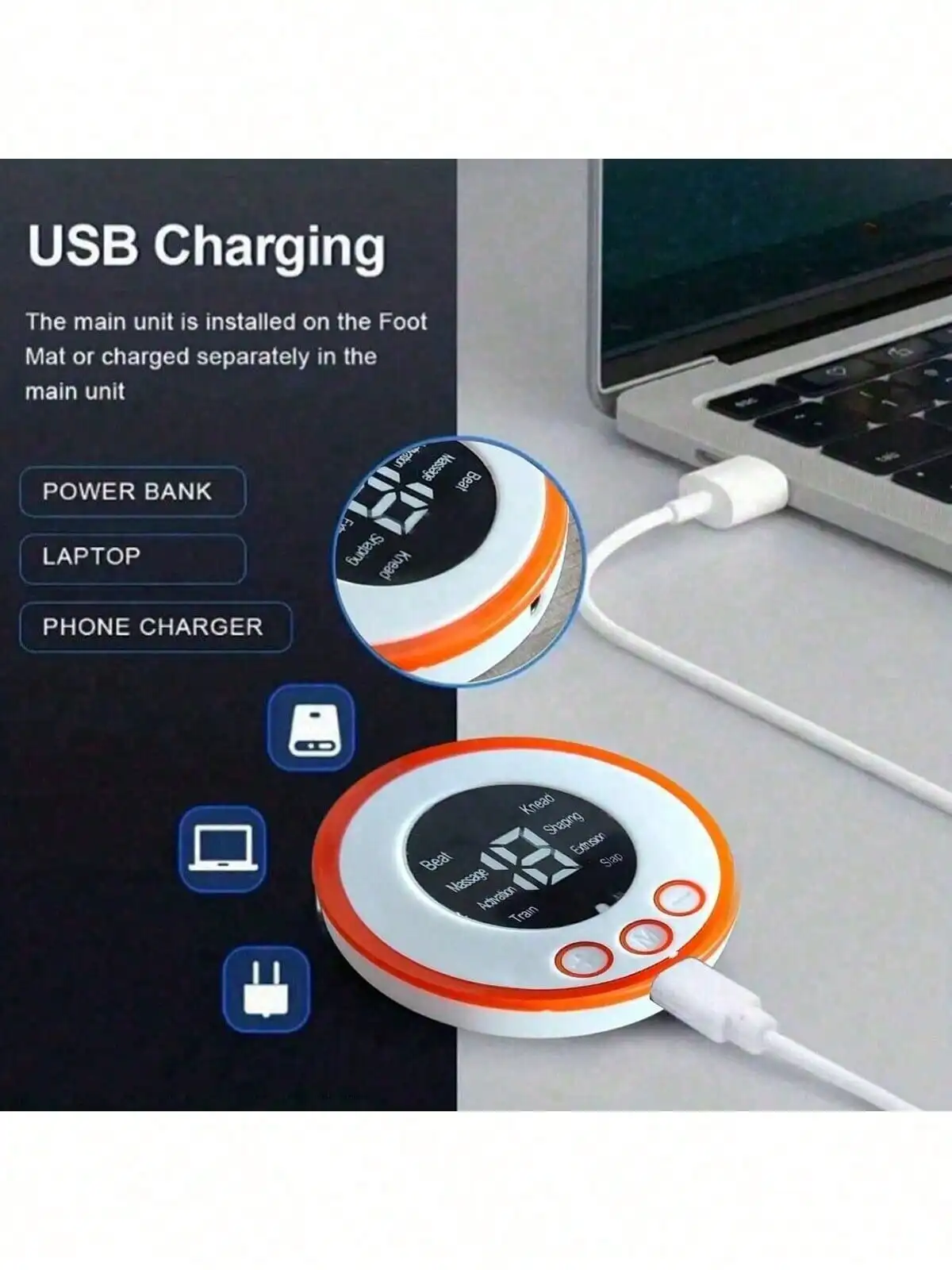
How an EMS Foot Mat Works — and What It Won’t Do
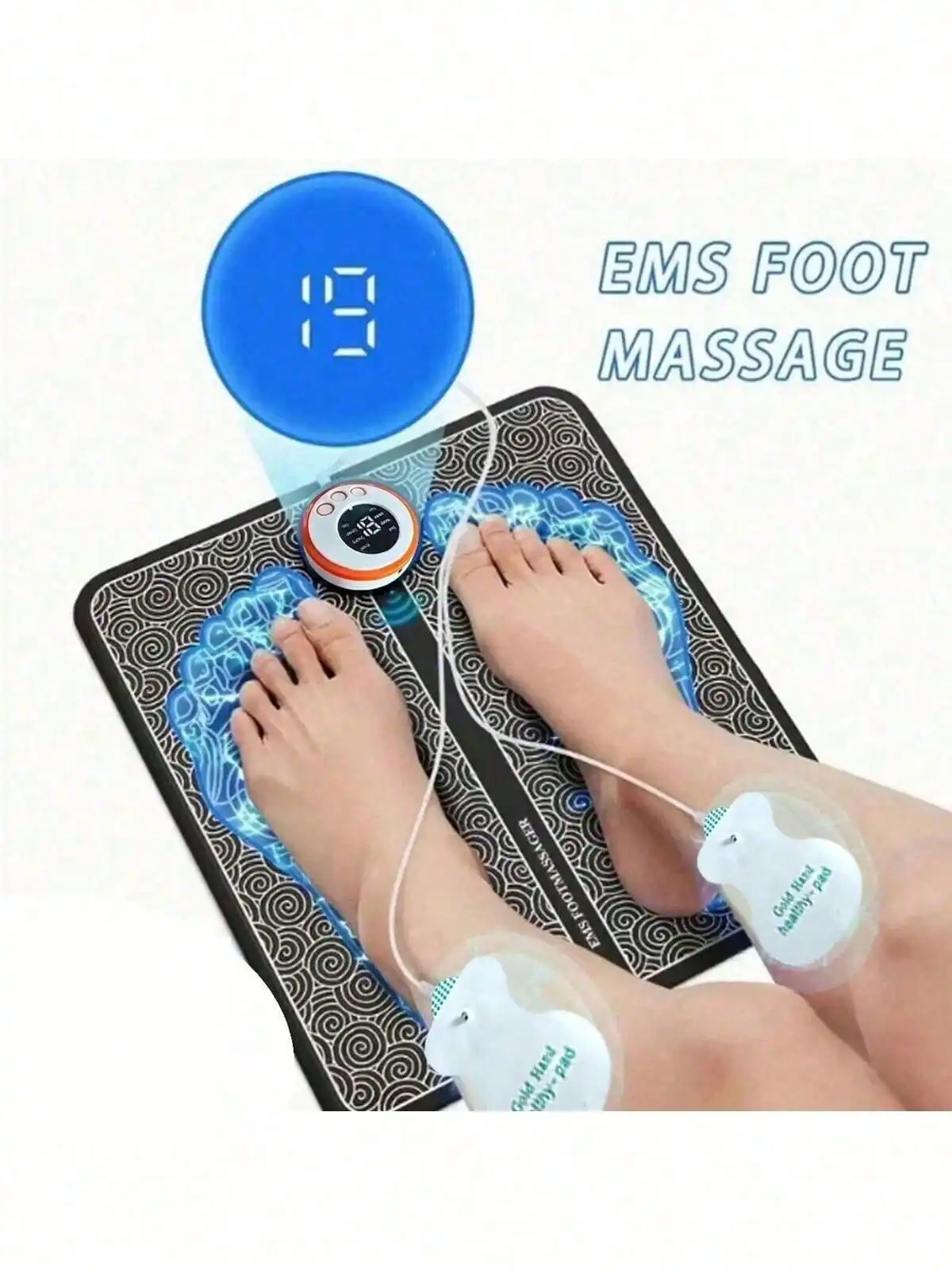
Electrical muscle stimulation sends small currents through the skin to the motor nerves of the foot and lower leg, triggering involuntary muscle contractions. Those contractions do two things: they produce a pumping action that assists venous return from the feet, and they generate sensory input that competes with pain signals at the spinal cord — the gate-control effect that makes TENS-style devices feel relieving. This is why an EMS mat helps heavy, aching feet after a day on them. What it does not do is burn fat, slim your legs, or substitute for exercise. Spot fat reduction is not a real physiological phenomenon, whatever the packaging says.
Key Benefits
- Assists circulation in the feet and calves. Involuntary contractions act as a muscle pump, which is exactly why people with heavy, tired legs after long shifts notice a difference.
- Pain relief via nerve gating, not magic. The tingling stimulation dampens ache signals from the sole and arch — the same mechanism behind TENS units used in physiotherapy.
- Adjustable intensity and modes. Start on the lowest setting; the correct intensity is a strong tingle with visible muscle twitch, never a painful jolt.
- Hands-free. You stand or rest your feet on it while you work, cook or watch something. No effort required, which is the point at the end of a long day.
- Rolls or folds flat. Slides under a sofa or desk; no shelf space consumed.
- It will not burn fat or slim your legs. We are not going to pretend otherwise. Buy it for circulation and comfort, and it will earn its keep.
How to Use
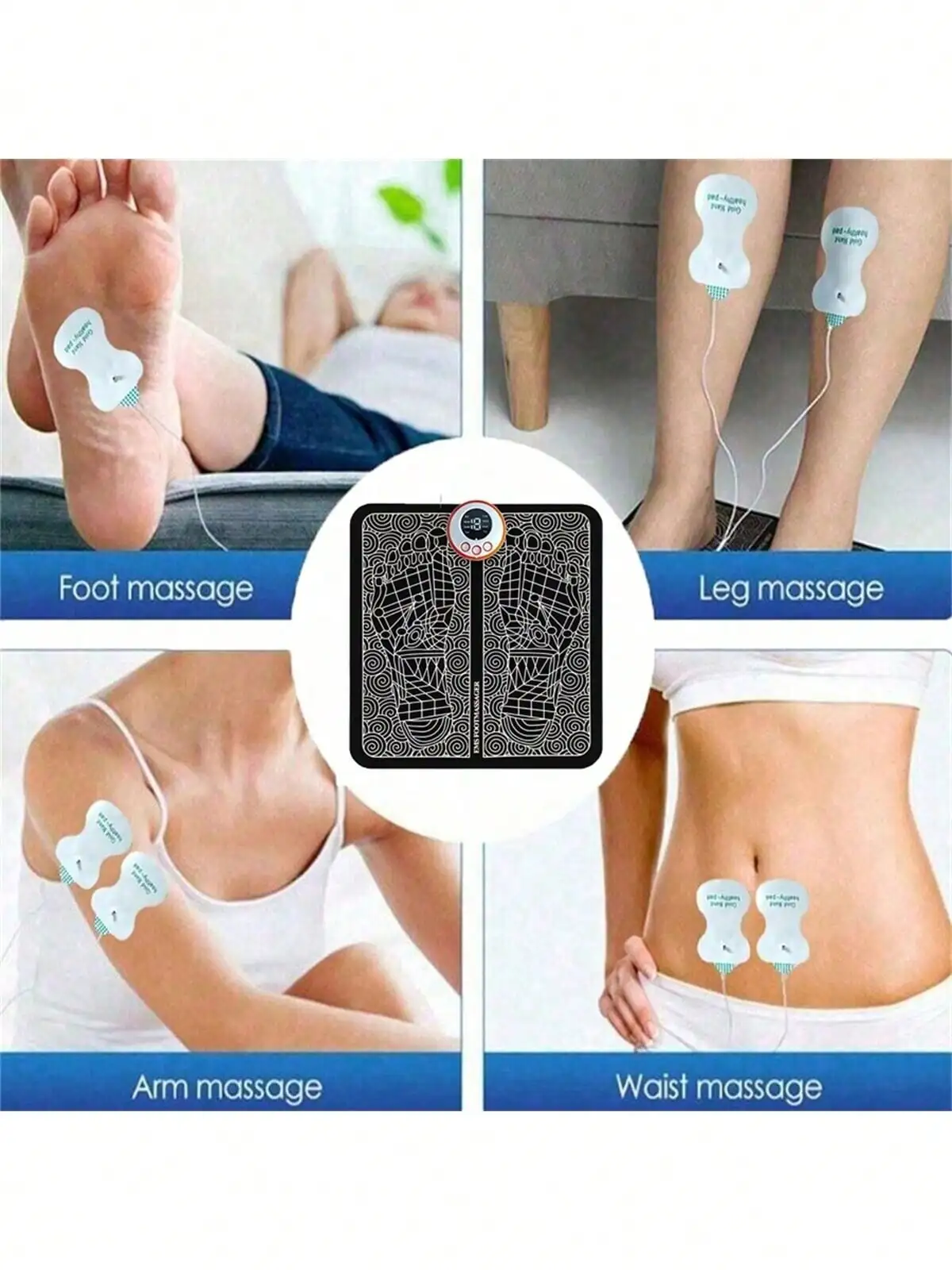
Place the mat on a flat floor, remove socks (EMS needs skin contact — through fabric it will not work), and stand or rest bare feet on the conductive pads. Start at the lowest intensity and increase gradually until you feel a firm tingling and can see the foot muscles twitching; it should never hurt. A typical session is 15–30 minutes; more is not better. Slightly damp feet conduct better than bone-dry ones, but do not use it standing in water. Important safety information — read this before use. Do NOT use this device if you have a pacemaker, implanted defibrillator or any other implanted electronic device; if you are pregnant; if you have epilepsy; or if you have a heart condition. Never place EMS electrodes on the front of the neck, over the carotid arteries, over the heart, on broken or infected skin, or over areas of numbness. People with diabetes, peripheral neuropathy, deep vein thrombosis or any circulatory disorder should speak to a doctor before using EMS at all. Do not use while driving, operating machinery, in the bath, or while asleep. If you feel dizzy, get skin burning or the sensation becomes painful, stop and switch off.
Specifications
| Type | Electric EMS (electrical muscle stimulation) foot mat |
|---|---|
| Mechanism | Motor-nerve stimulation → involuntary muscle contraction |
| Use position | Standing or seated, bare feet on conductive surface |
| Contact required | Bare skin — does not work through socks |
| Intensity | Multiple adjustable levels |
| Modes | Multiple massage/stimulation modes (count variant dependent) |
| Session length | 15–30 minutes recommended |
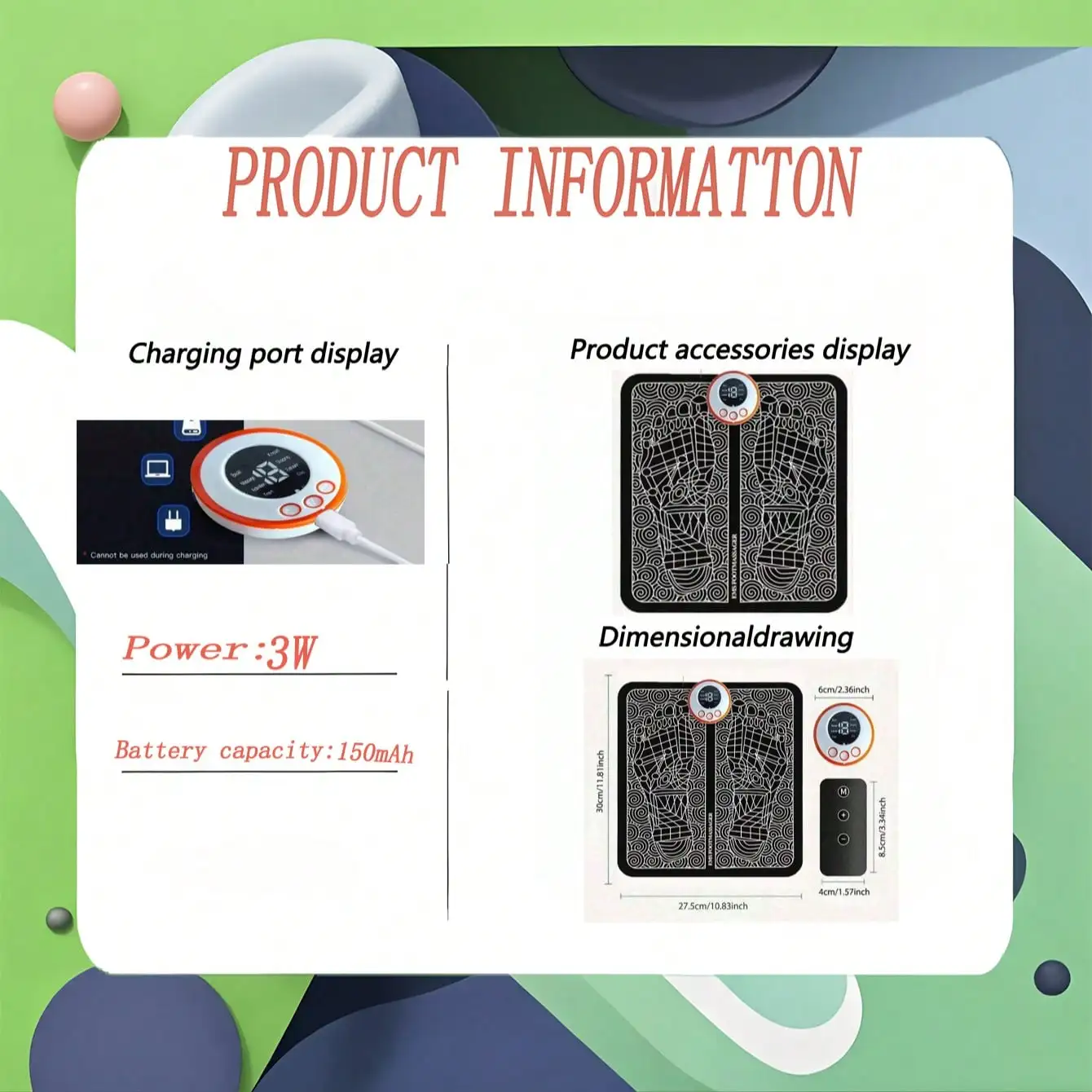
| Power | Electric — supply type variant dependent |
| Storage | Foldable / rollable flat |
| Contraindications | Pacemakers, implanted devices, pregnancy, epilepsy, heart conditions |
Care & Maintenance
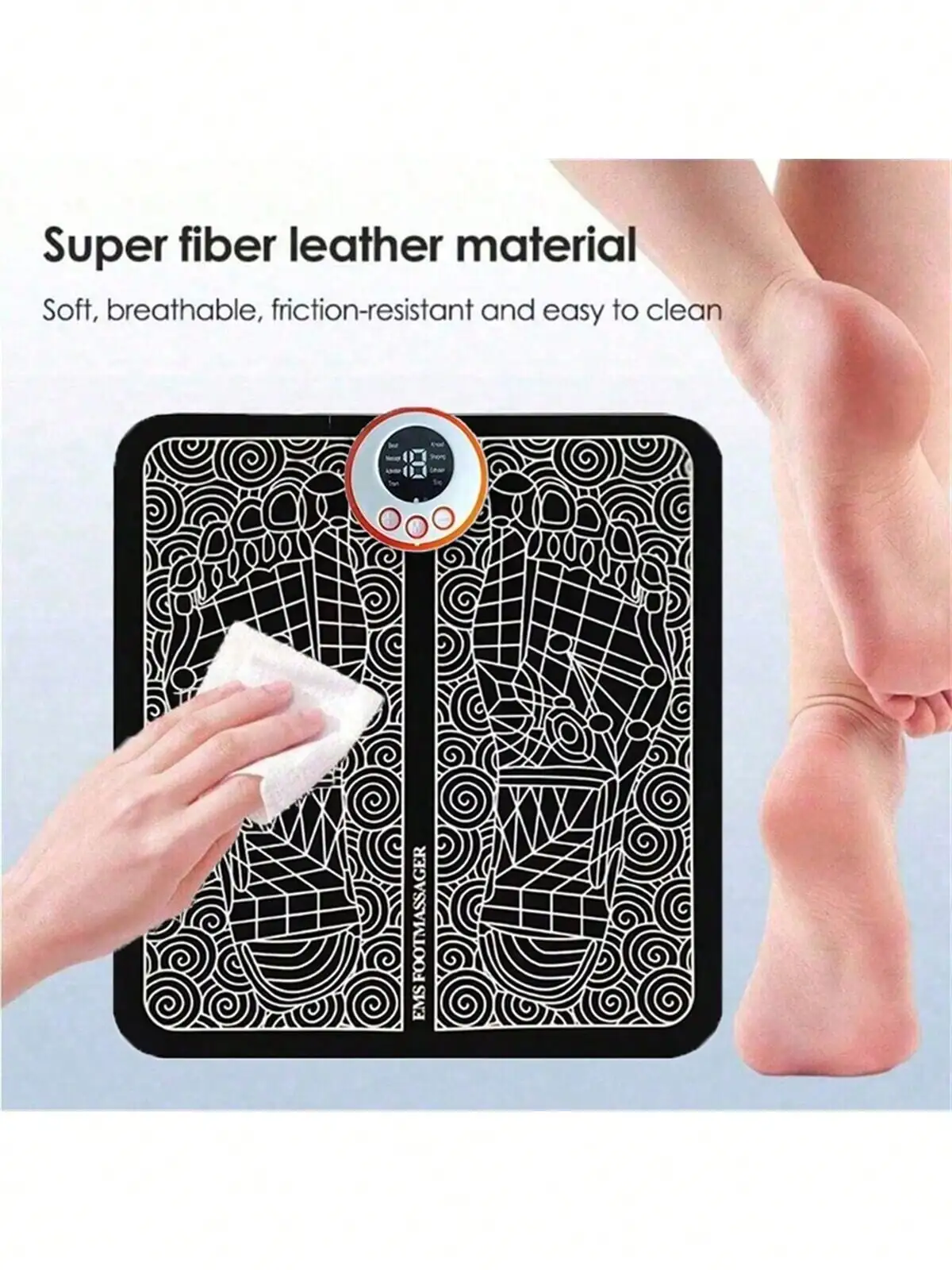
Wipe the mat surface with a barely damp cloth and dry it immediately — never submerge it, run it under a tap or put it in a washing machine; it is an electrical device. Do not use solvents, alcohol gels or abrasive cleaners on the conductive surface, as they degrade conductivity and you will lose the effect. Store it flat or loosely rolled; sharp creases can break the internal conductive tracks. Unplug it when not in use and inspect the cable for damage before every session.
What’s in the Box
1 × EMS foot massage mat with controller. Power adapter or cable as supplied; exact contents variant dependent.

Reviews
There are no reviews yet.