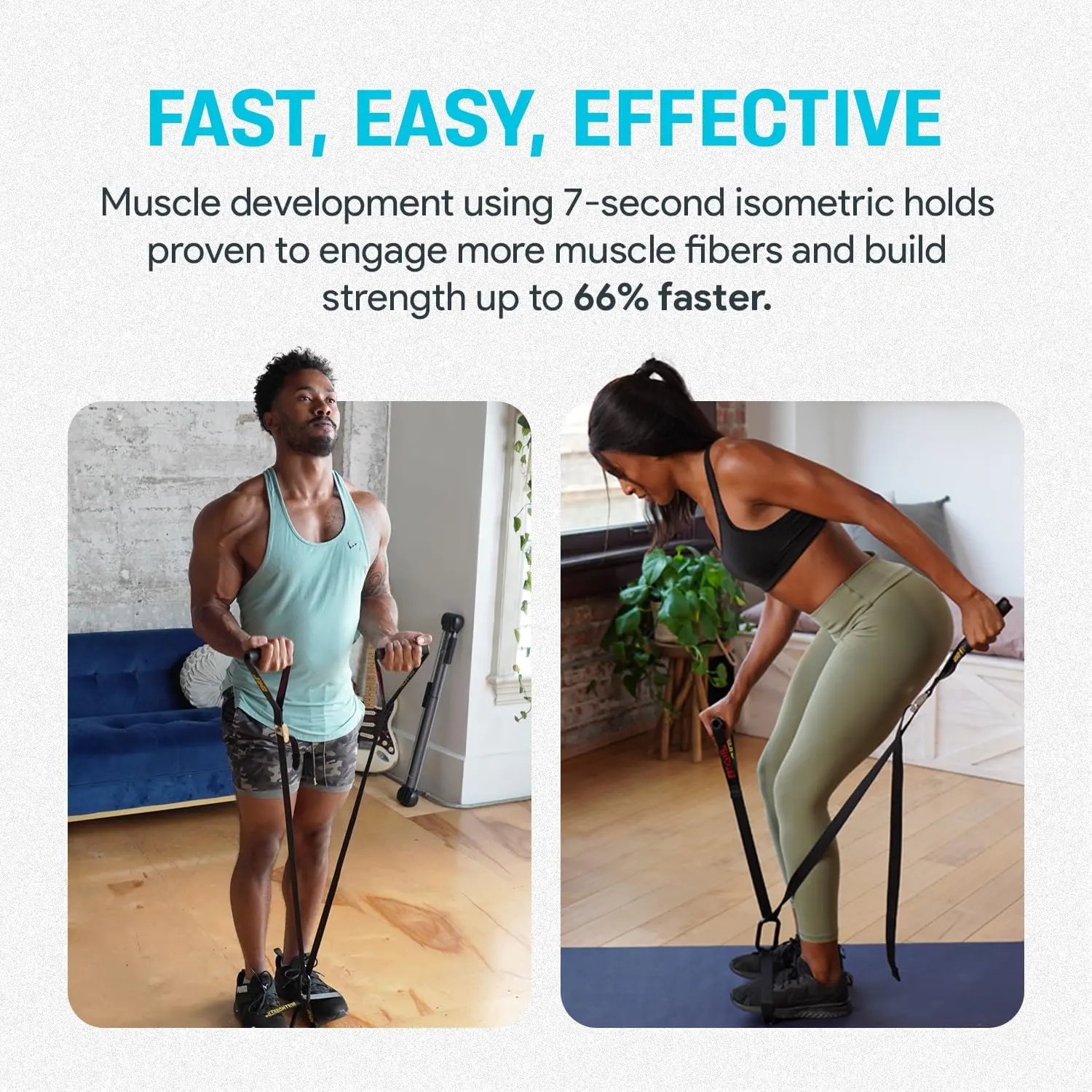
Maximum Tension, Minimum Impact: The Case for Training Without Moving
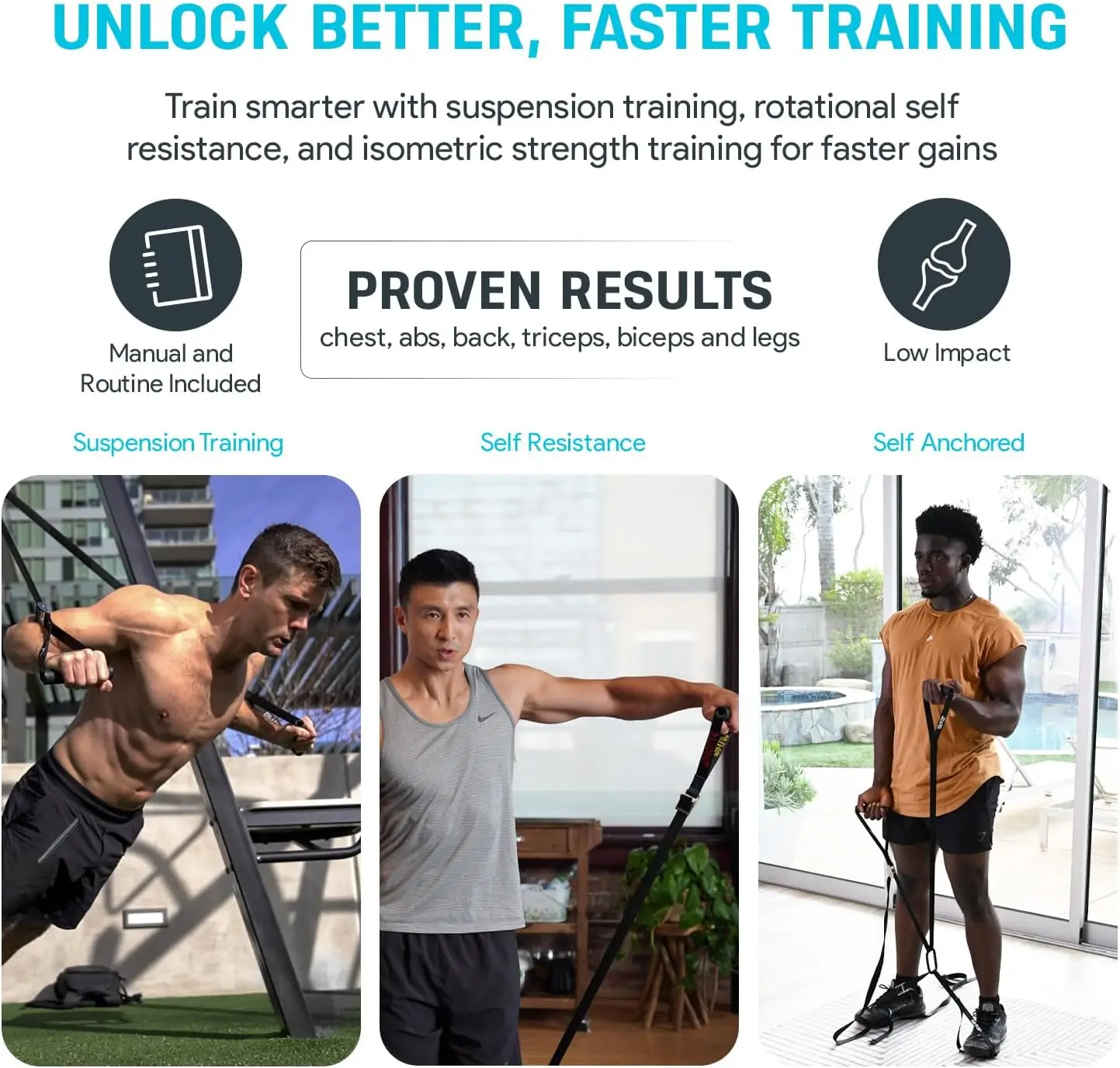
An isometric contraction generates force without changing muscle length, and that odd-sounding constraint has real advantages. Because there’s no eccentric lengthening phase, you avoid most of the microtrauma that drives soreness — so you can train hard and repeatedly without wrecking yourself. Sustained isometric holds have strong evidence for reducing tendon pain and improving tendon load tolerance, which is why they’ve become a first-line tool for patellar and Achilles tendinopathy. Suspension straps take this further: because you’re anchored to a fixed point and loading against your own bodyweight, you can grade the intensity precisely by changing your body angle, and the instability recruits stabilising muscle you’d never touch on a machine.
Key Benefits
- Near-maximal load, minimal joint stress. Isometric holds let you generate high muscle tension without the impact, momentum or eccentric damage of conventional lifting — a serious advantage for anyone managing joint pain.
- Real evidence in tendon pain. Sustained isometric loading is one of the better-supported interventions for tendinopathy, and this is the equipment that makes it convenient at home.
- Infinite load adjustment with no plates. Change the angle of your body, change the resistance. That’s the whole scaling system, and it works from beginner to advanced.
- Trains stabilisers a machine can’t. Suspension work is inherently unstable, so the small muscles around the shoulder and hip have to do their actual job.
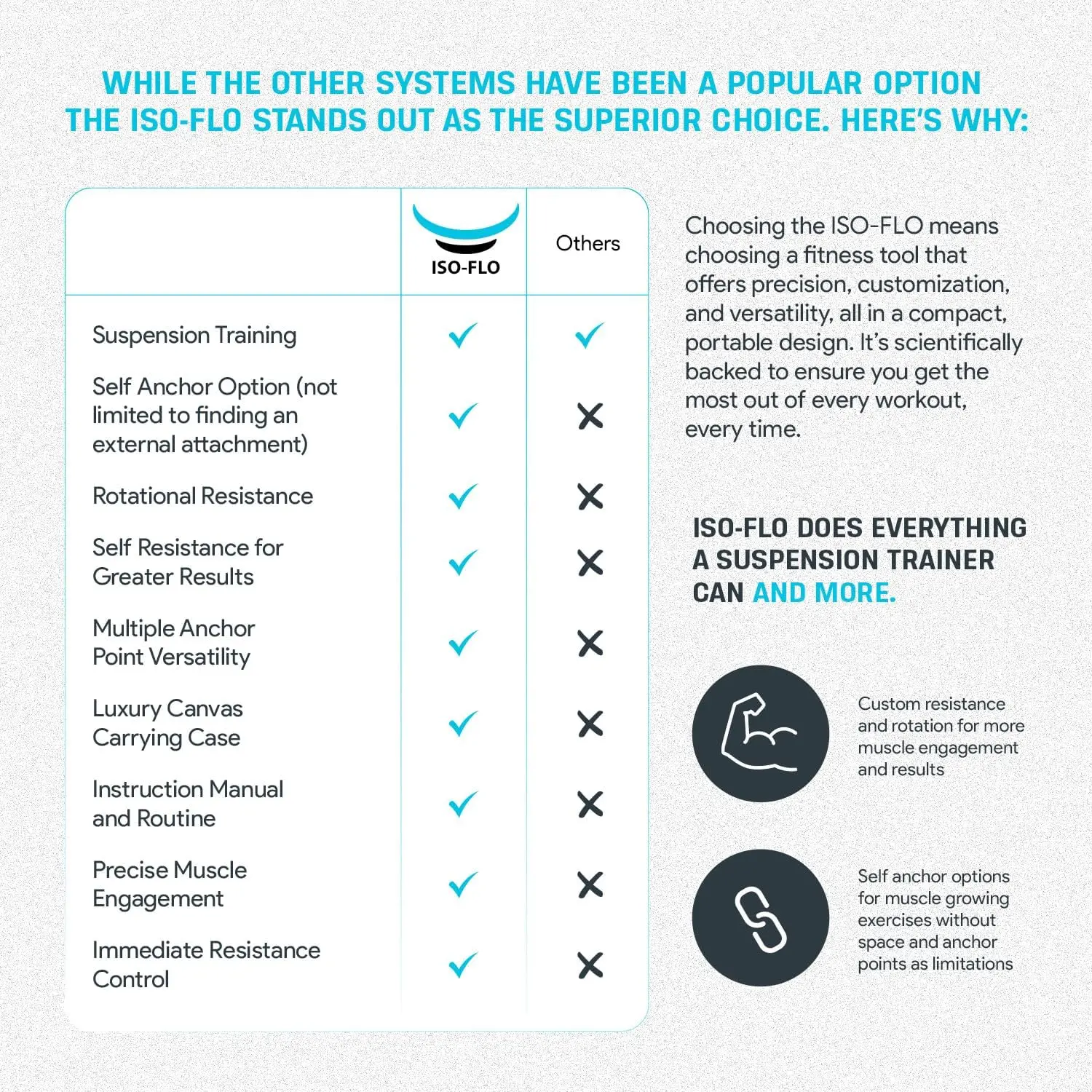
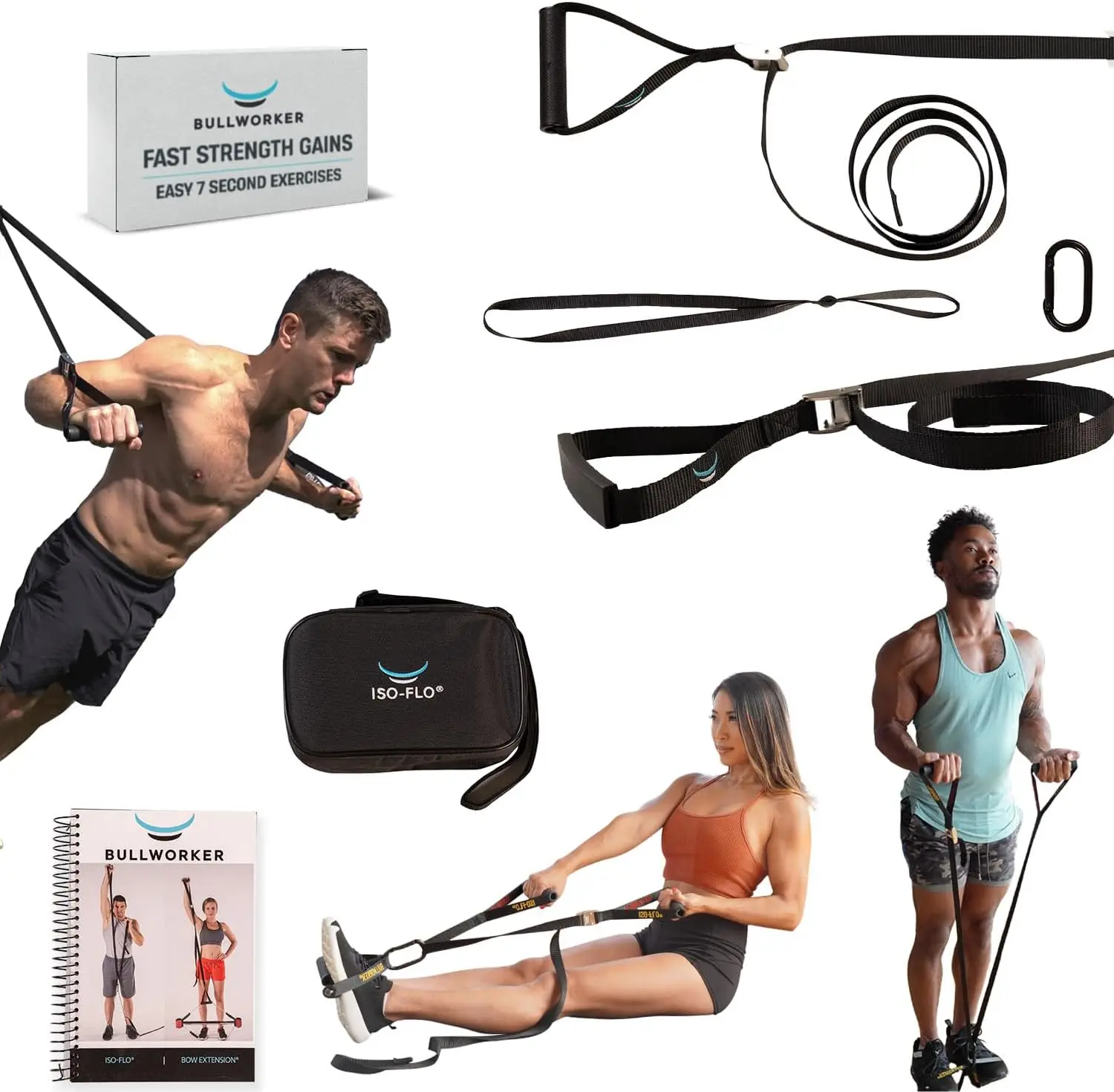
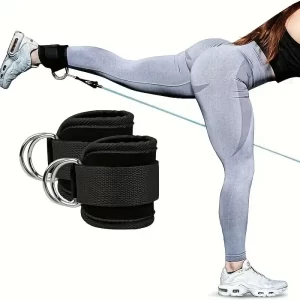
- Straps plus bands cover both worlds. The ResiBands add accommodating resistance for dynamic work; the straps handle bodyweight and isometric holds.
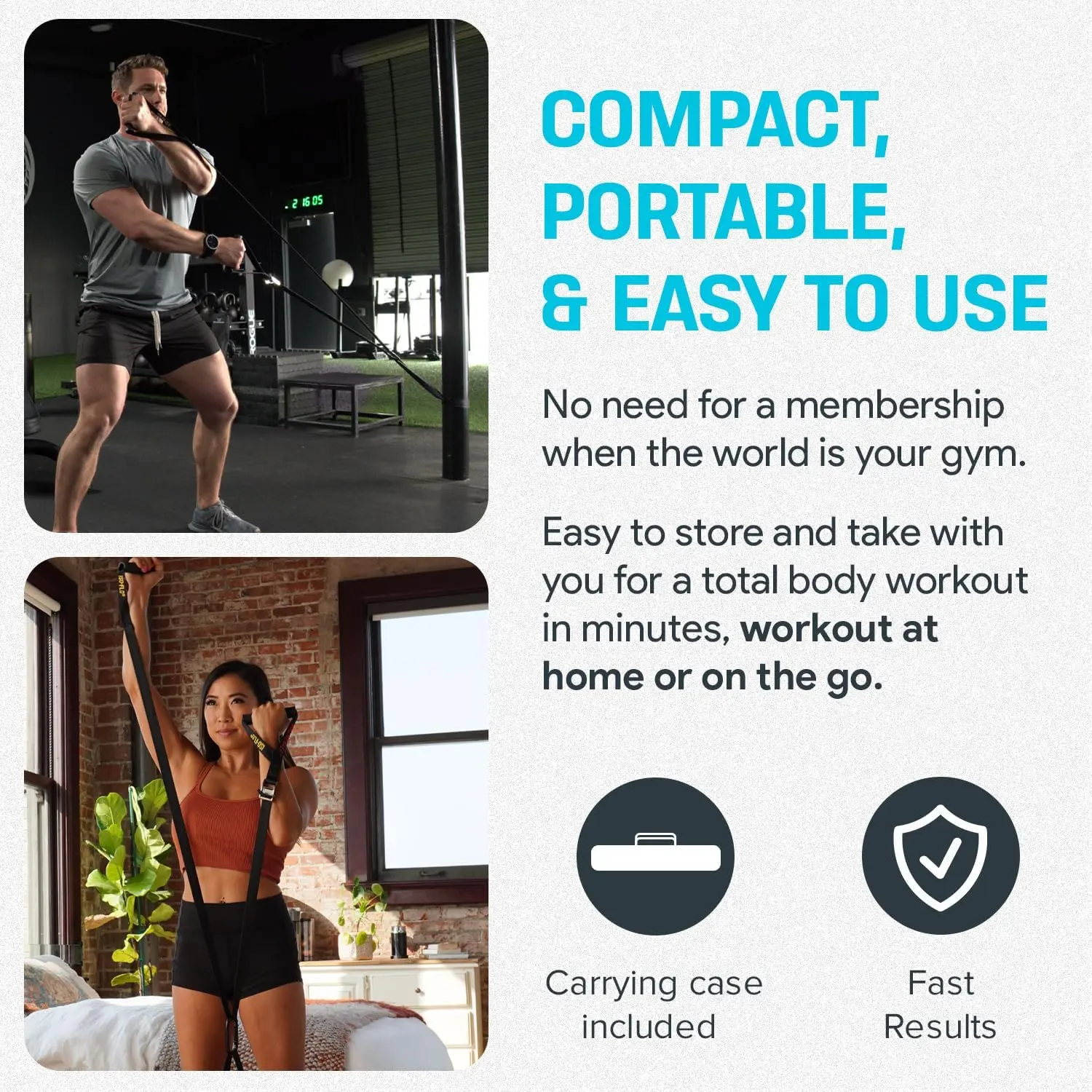
- Packs into a bag. An entire training system that fits in a drawer and comes with you.
How to Use
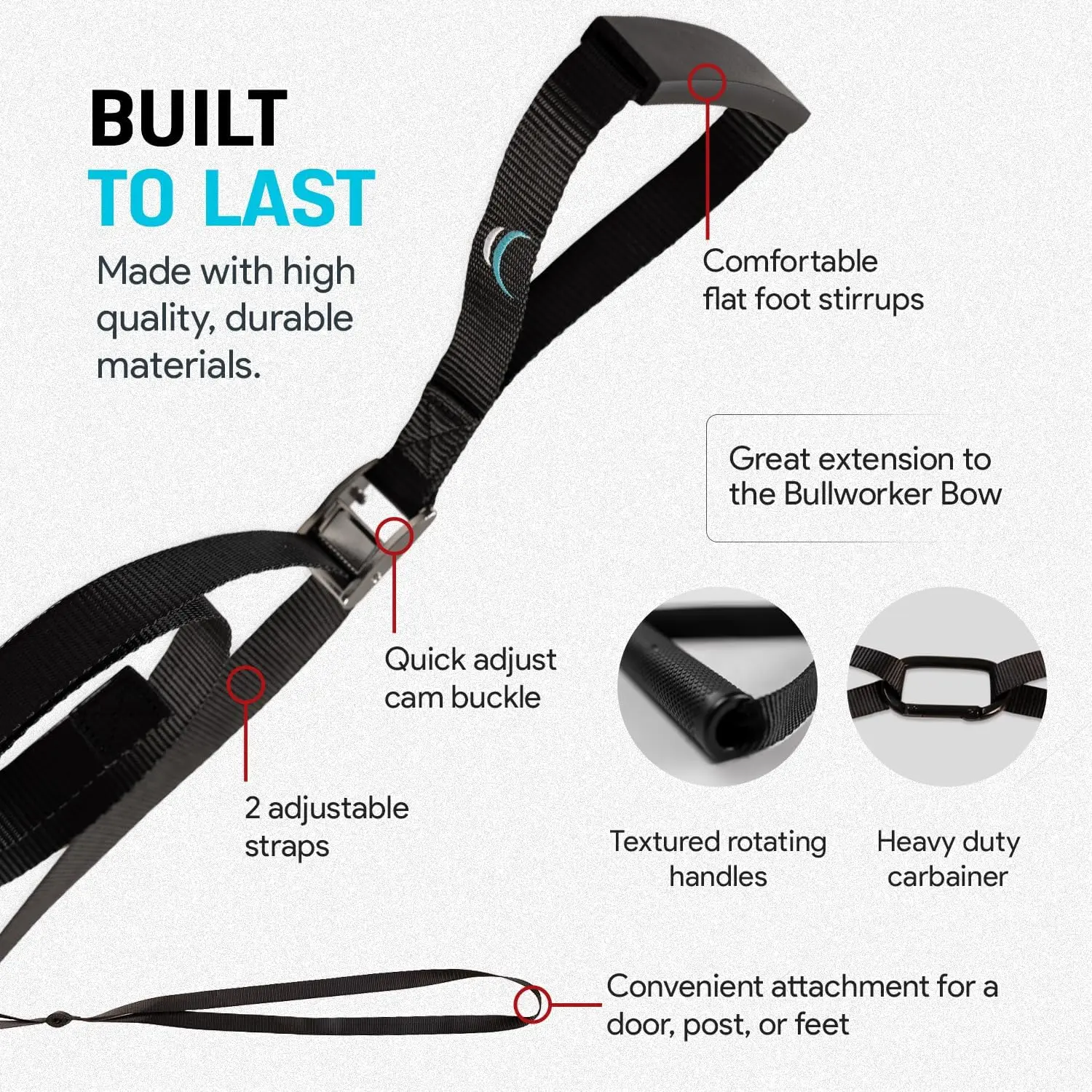
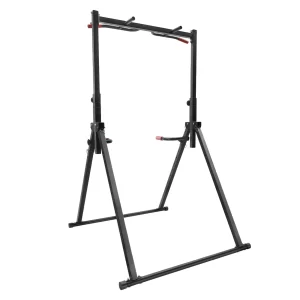
Anchoring is the single most important thing here, and it is a safety issue rather than a convenience one. Anchor only to a genuine structural point — a rated ceiling anchor bolted into a joist, a solid steel beam, or a properly installed pull-up bar. Never anchor to a door frame trim, a plasterboard fixing, a curtain rail, a radiator pipe, a bannister, or a tree branch you haven’t inspected. Before every single session, check the straps, stitching, buckles, carabiners and anchor for fraying, nicks or movement, and load the system gradually with your bodyweight before committing to it. For isometric work, get into position, build tension over 2-3 seconds rather than snapping into it, hold for 30-45 seconds while breathing steadily — do not hold your breath, as bearing down against a closed glottis spikes blood pressure — then release under control. Three to five holds per exercise is a productive set. Inspect the resistance bands for nicks and cracks before use and replace any that show damage; a band under tension that snaps travels fast, so never stretch one toward your face or anyone else’s. Keep the training area clear, and if you have high blood pressure or a cardiovascular condition, talk to your doctor before doing sustained isometric work, which raises blood pressure more than dynamic exercise does.
Specifications
| Type | Suspension trainer and resistance band training system |
|---|---|
| Components | Suspension straps plus ResiBands |
| Training style | Isometric holds, calisthenics, bodyweight suspension training |
| Resistance method | Bodyweight angle-graded, plus elastic band resistance |
| Anchor required | Yes — structural anchor point (rated ceiling anchor, beam or pull-up bar) |
| Adjustability | Strap length adjustable; load scaled by body angle |
| Portability | Packs down for storage and travel |
| Best for | Tendon loading, joint-friendly strength, core and stabiliser work |
| Not included | Ceiling or door anchor hardware — variant dependent |
Care & Maintenance
Inspect before every use, not just occasionally: run the straps through your fingers looking for fraying, check the stitching at load-bearing junctions, and check the carabiners close properly. Keep the straps dry and out of prolonged sunlight, as UV degrades webbing over time. Store the resistance bands away from heat and direct sun and never in a knotted or twisted state; latex perishes, and a perished band fails suddenly. Wipe sweat off after use — salt residue accelerates wear on both webbing and latex. Retire any component showing cuts, cracks, nicks or thinning immediately; the cost of a replacement strap is trivial next to the cost of a failure mid-rep.
What’s in the Box
ISO-FLO suspension trainer straps, ResiBands resistance bands, and setup instructions. Anchor hardware and accessory contents vary by variant.
Reviews
There are no reviews yet.