Why the Shape of Your Pillow Decides How Your Neck Feels at 7am
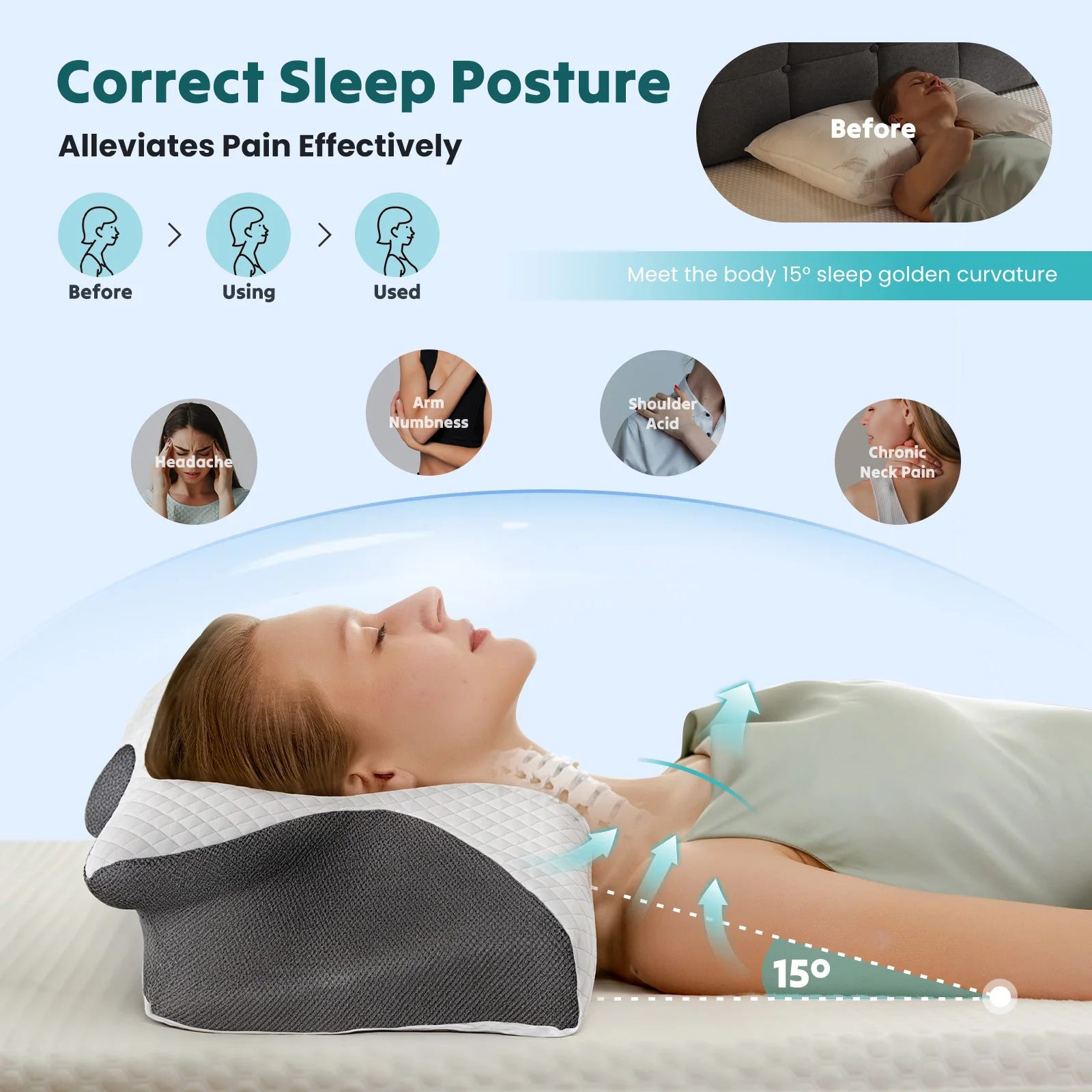
Your cervical spine has a natural forward curve. When a flat or over-lofted pillow lets the head drop back or push forward, that curve is held at end-range for hours, and the small muscles and facet joints of the neck stay under low-grade load all night — which is why the pain is worst on waking. A contoured cervical pillow works by filling the gap between the mattress and the neck, so the head is cradled and the curve is supported rather than defended against. Memory foam matters here because it holds that shape instead of compressing flat by 2am.
Key Benefits
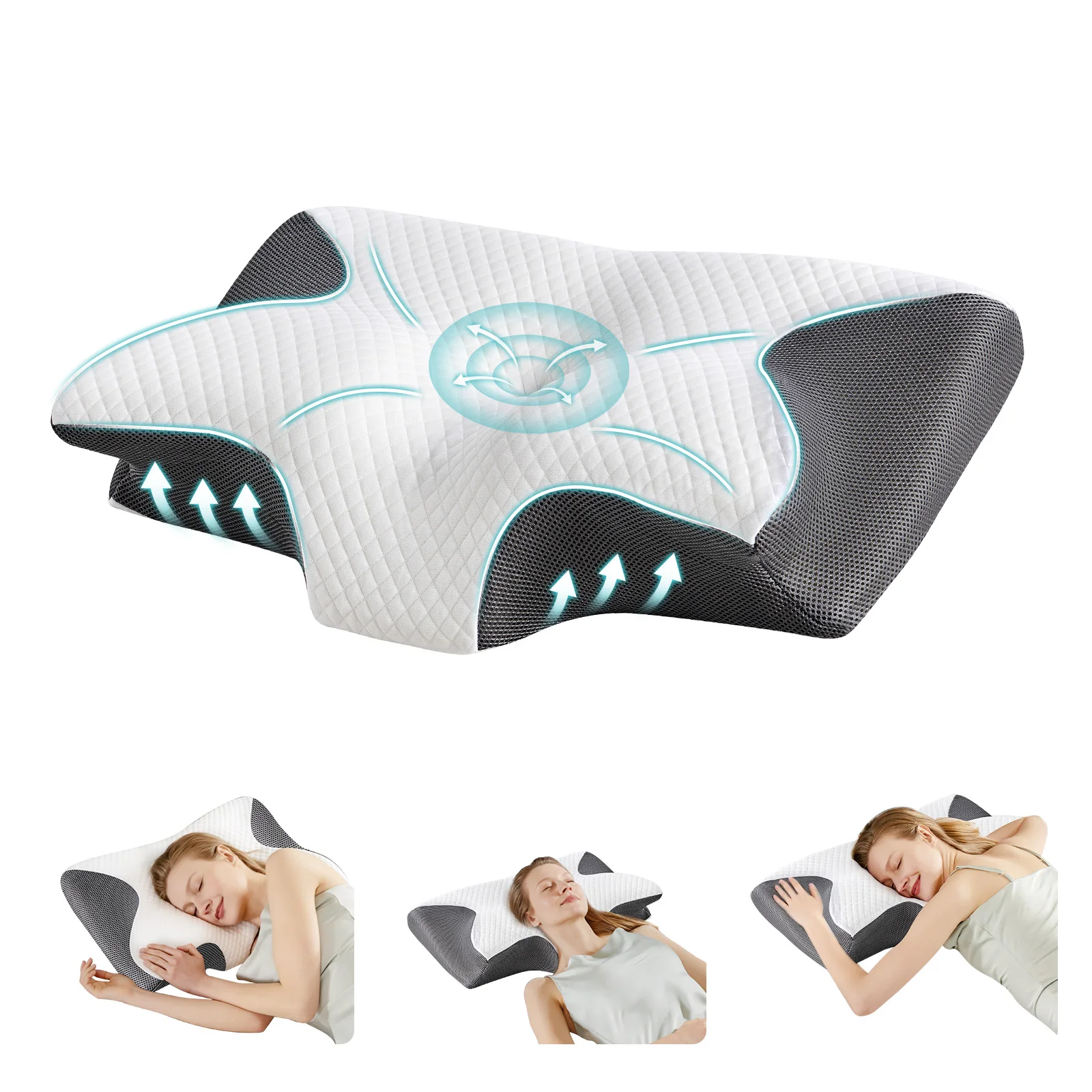
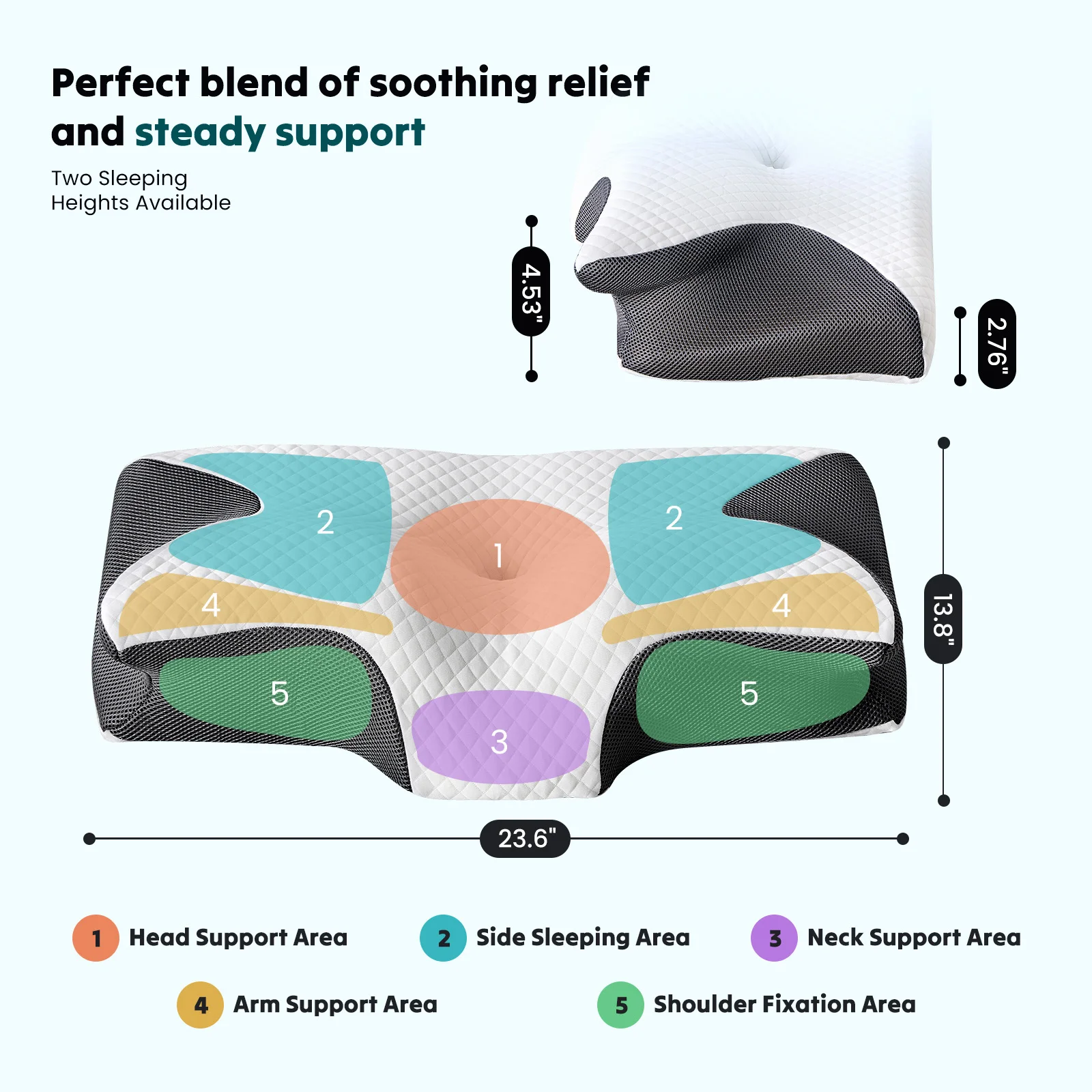
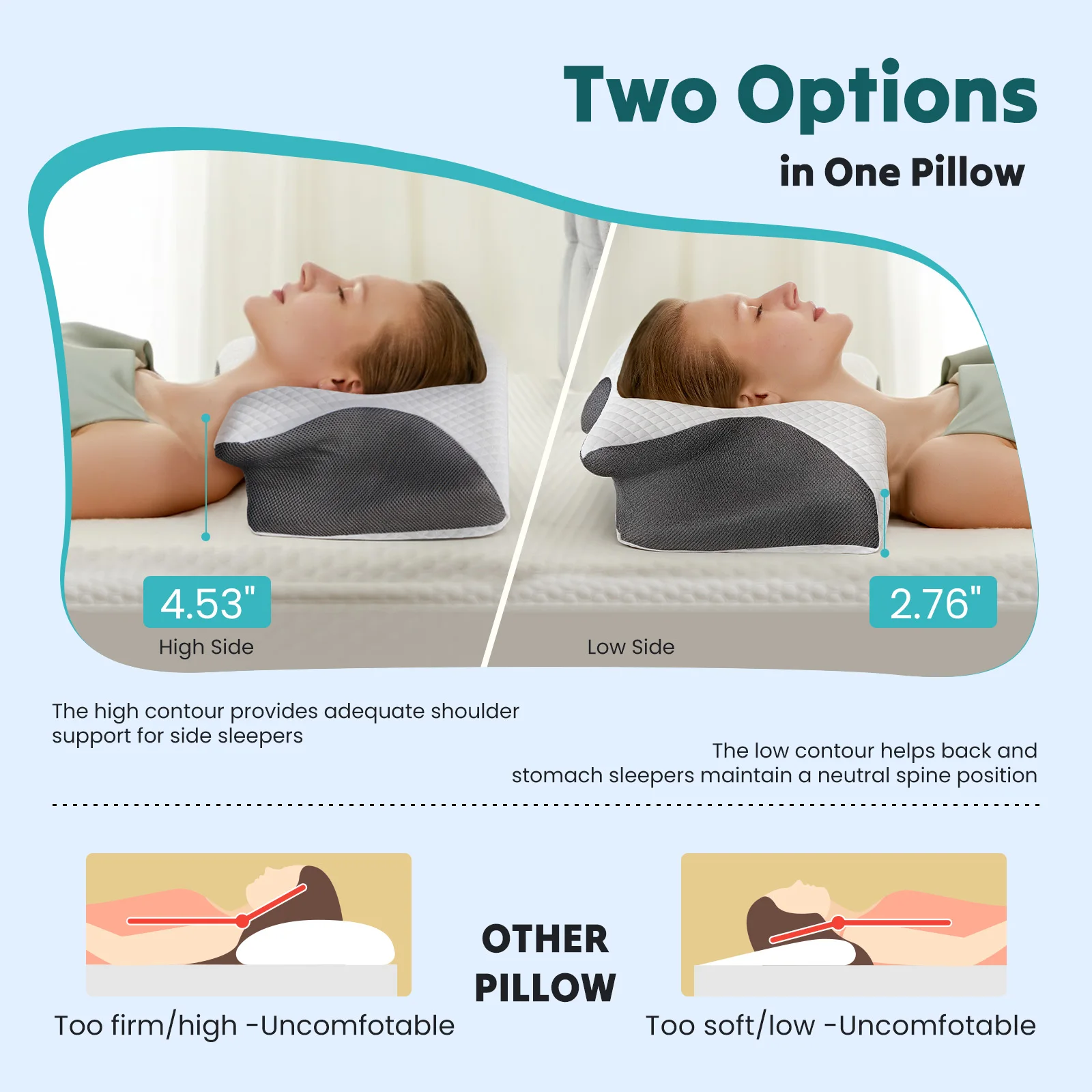
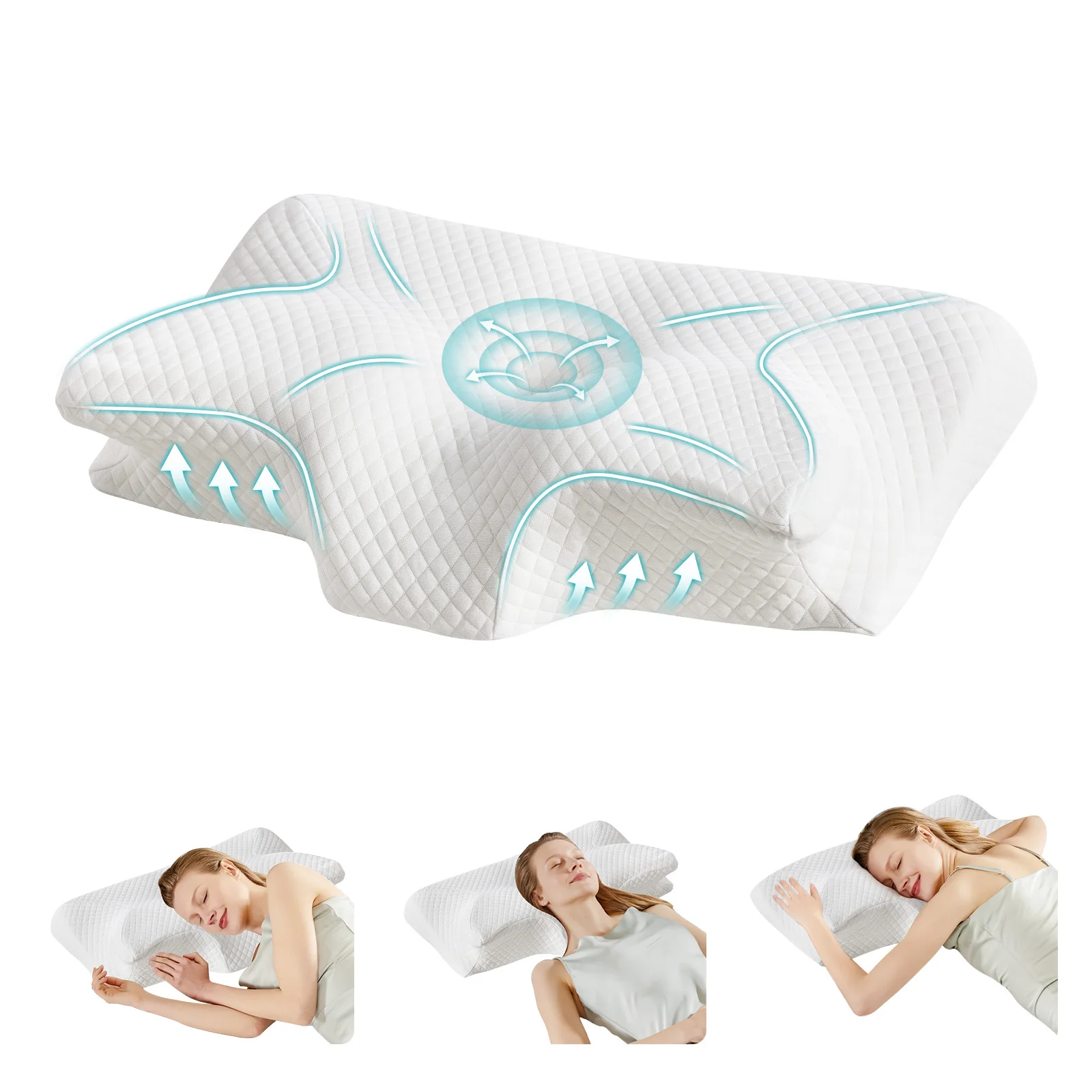
- Two lobe heights, one for each sleeping position. The lower contour suits back sleeping, the higher one fills the wider shoulder-to-ear gap of a side sleeper. Flip it to the side that matches how you actually sleep.
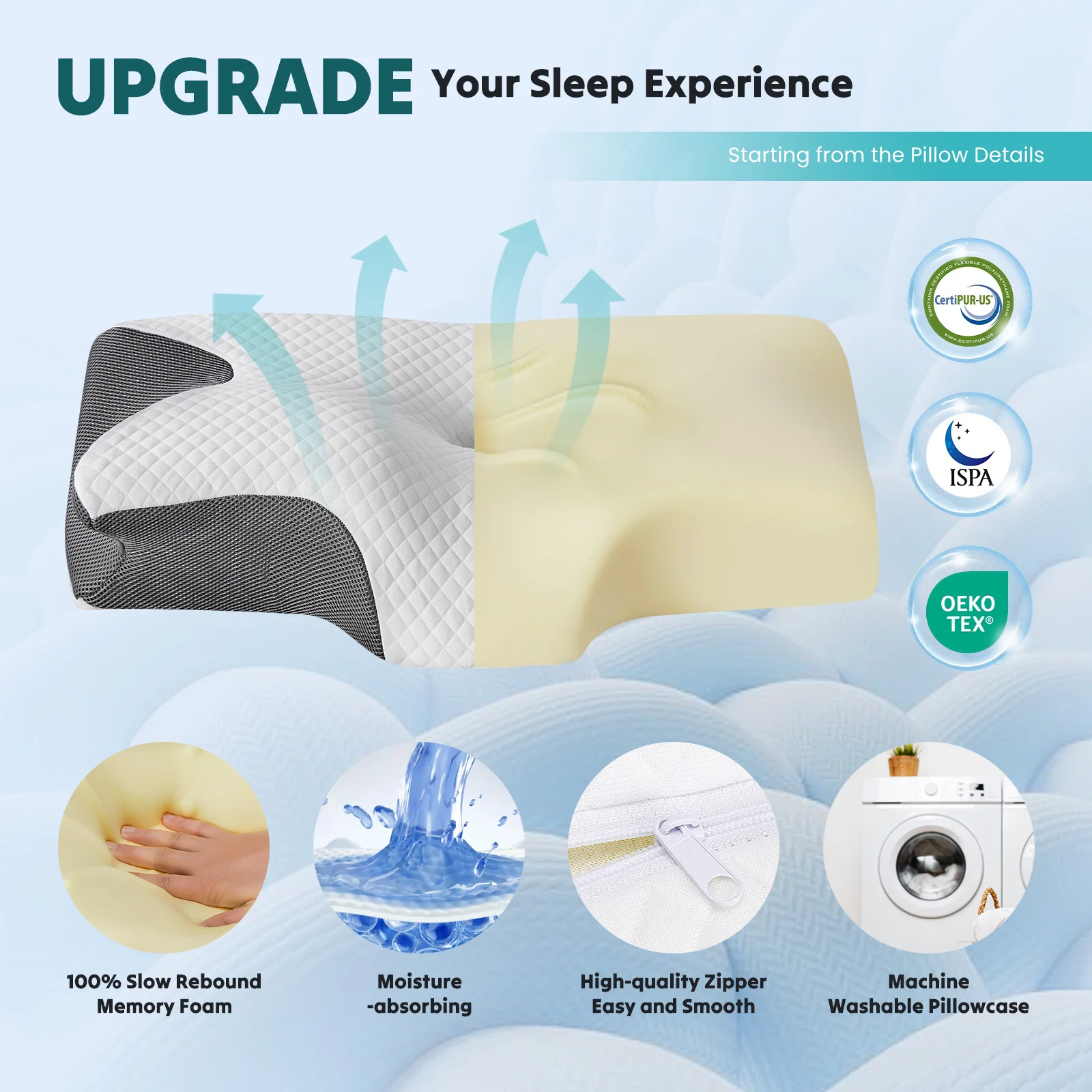
- Memory foam resists bottoming out. Polyester fill packs down within an hour and stops supporting anything. Viscoelastic foam holds its loft through the night, which is the entire point of buying a support pillow.
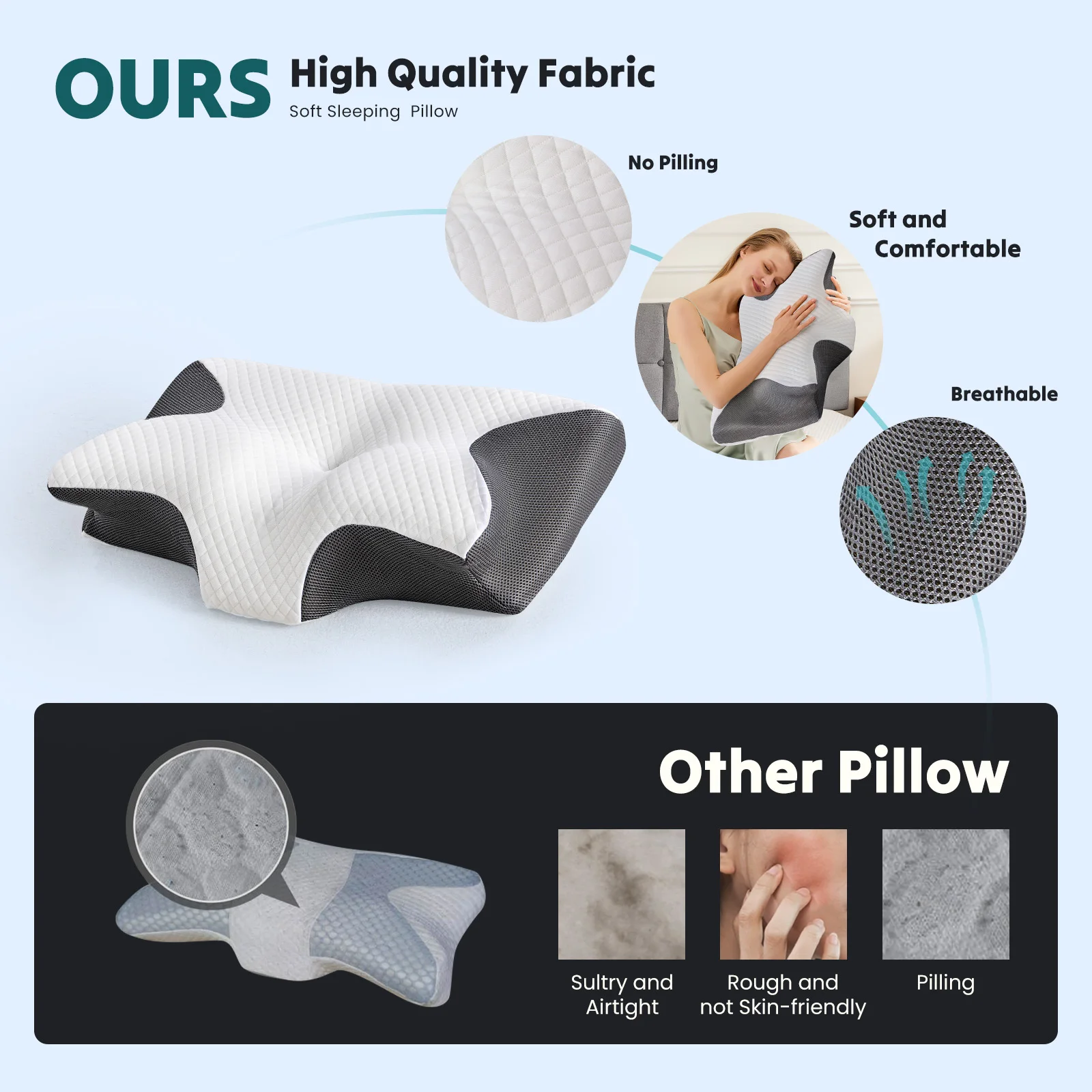
- Cooling pillowcase to offset foam’s main weakness. Memory foam is dense and traps heat — that’s a real trade-off. The included cooling cover is there to counteract it, not decoration.
- Central head cradle reduces rotation. The dip in the middle discourages your head from rolling into a twisted position, which is a common cause of waking up with a locked neck.
- Generous 23.6″ x 13.8″ footprint. Wide enough that you don’t roll off the contour the moment you shift position — a common failure of smaller cervical pillows.
- Removable, washable cover. The foam core cannot go in a machine; the cover can, which is what keeps the pillow usable long-term.
How to Use
Lie on your back with your neck resting in the lower contour and the back of your head in the central dip — your chin should be neutral, neither tucked toward your chest nor tipped back. If you sleep on your side, flip the pillow so the taller contour fills the space between your ear and your shoulder, keeping your nose in line with your sternum. Be aware of the honest part: a contoured pillow usually feels wrong for the first three to seven nights, because your neck has adapted to being held in a poor position and correcting it feels unfamiliar. Give it a week before judging it. If pain increases rather than settles over that period, stop using it. This pillow is not suitable for front sleepers, and it is a comfort and support product — not a treatment for cervical radiculopathy, disc pathology or any diagnosed neck condition. If you have persistent neck pain, numbness or arm symptoms, see a clinician.
Specifications
| Dimensions | Approx. 23.6″ long x 13.8″ wide |
|---|---|
| Core material | Memory foam (viscoelastic polyurethane) |
| Profile | Dual-height contoured, central head cradle |
| Cover | Cooling pillowcase, removable |
| Suits | Back sleepers and side sleepers |
| Not suitable for | Front / stomach sleepers |
| Firmness | Medium — supportive rather than plush |
| Break-in period | Typically 3–7 nights |
Care & Maintenance
Remove and machine wash the cover cool; air dry. Never machine wash or soak the foam core — water breaks down the cell structure and it will never recover its loft. Spot clean the core with a barely damp cloth and let it dry fully before re-covering. Air the pillow out of direct sunlight for a day or two if it has any manufacturing odour on unboxing, which is normal for memory foam and fades.
What’s in the Box
1 x contoured cervical memory foam pillow, 1 x cooling pillowcase.




Reviews
There are no reviews yet.