Focused Pressure Where a Foam Roller Is Simply Too Blunt
It is worth being straight about what rolling does. It does not break up scar tissue or adhesions, and it does not lengthen fascia — fascia is remarkably strong, and deforming it structurally requires forces far beyond anything a hand can generate. What rolling reliably produces is a short-term increase in range of motion and a drop in perceived stiffness and soreness, without a loss of strength. The mechanism appears to be largely neural: pressure stimulates mechanoreceptors, which modulates how the nervous system reports pain and tone in that region. The effect is real and useful. It is just a nervous-system effect, not a plumbing job.
Key Benefits
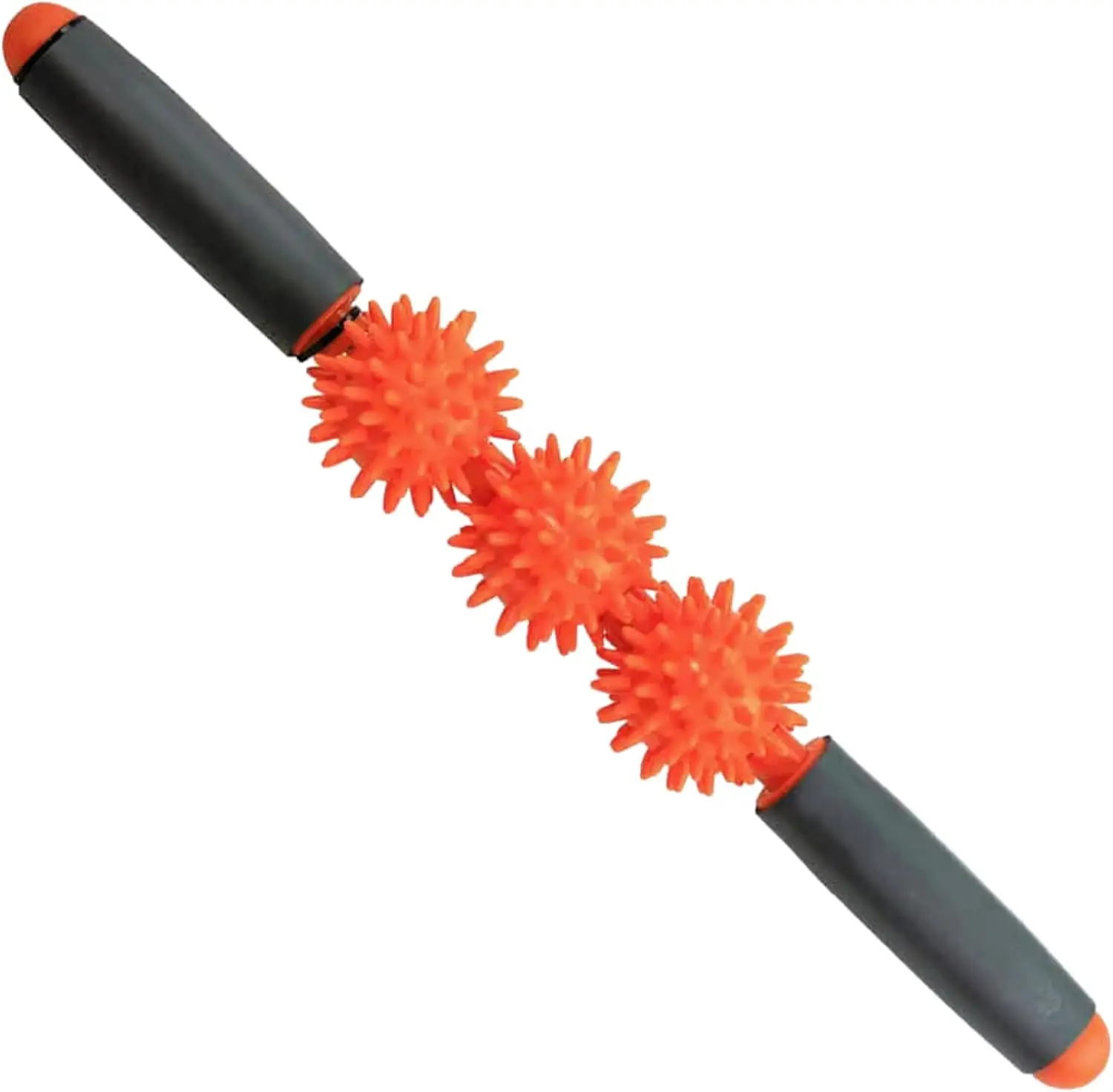
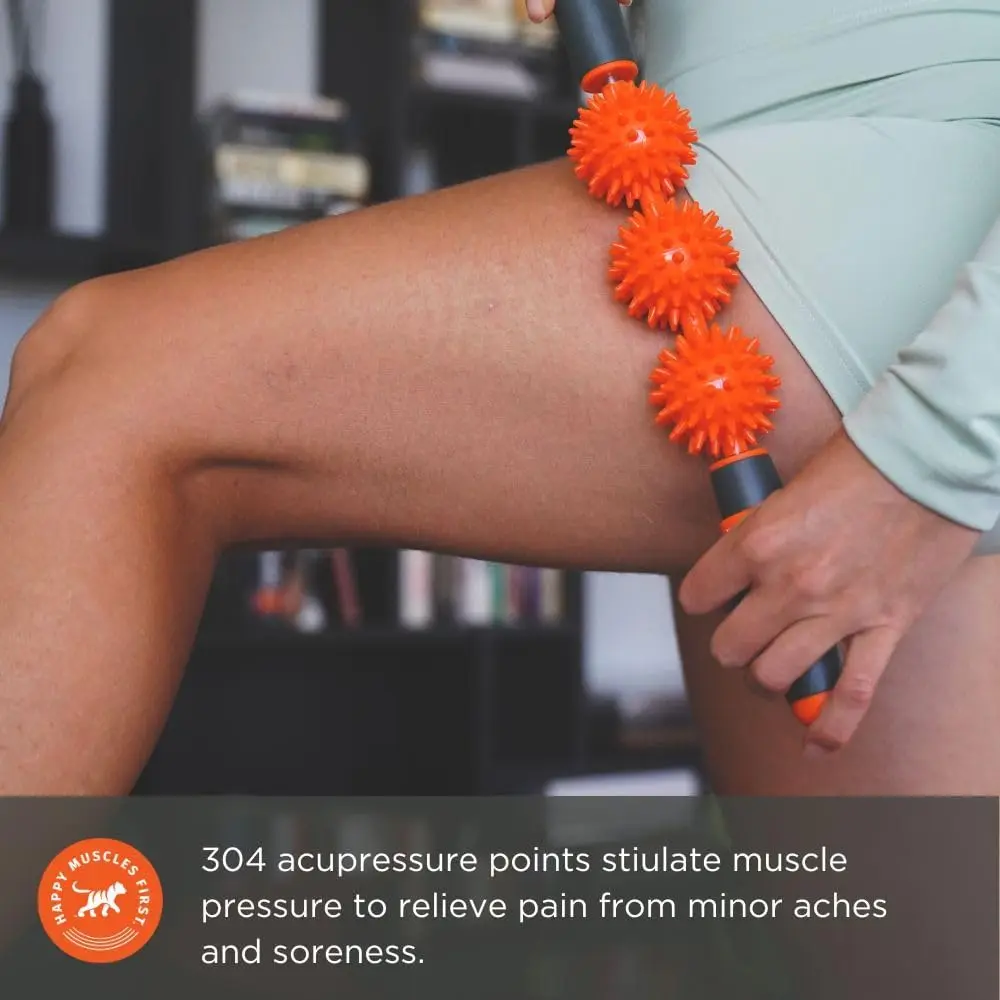
- Concentrated contact pressure: spiked ridges focus force into a much smaller area than a smooth roller, so you reach specific tender points instead of averaging pressure across a whole muscle.
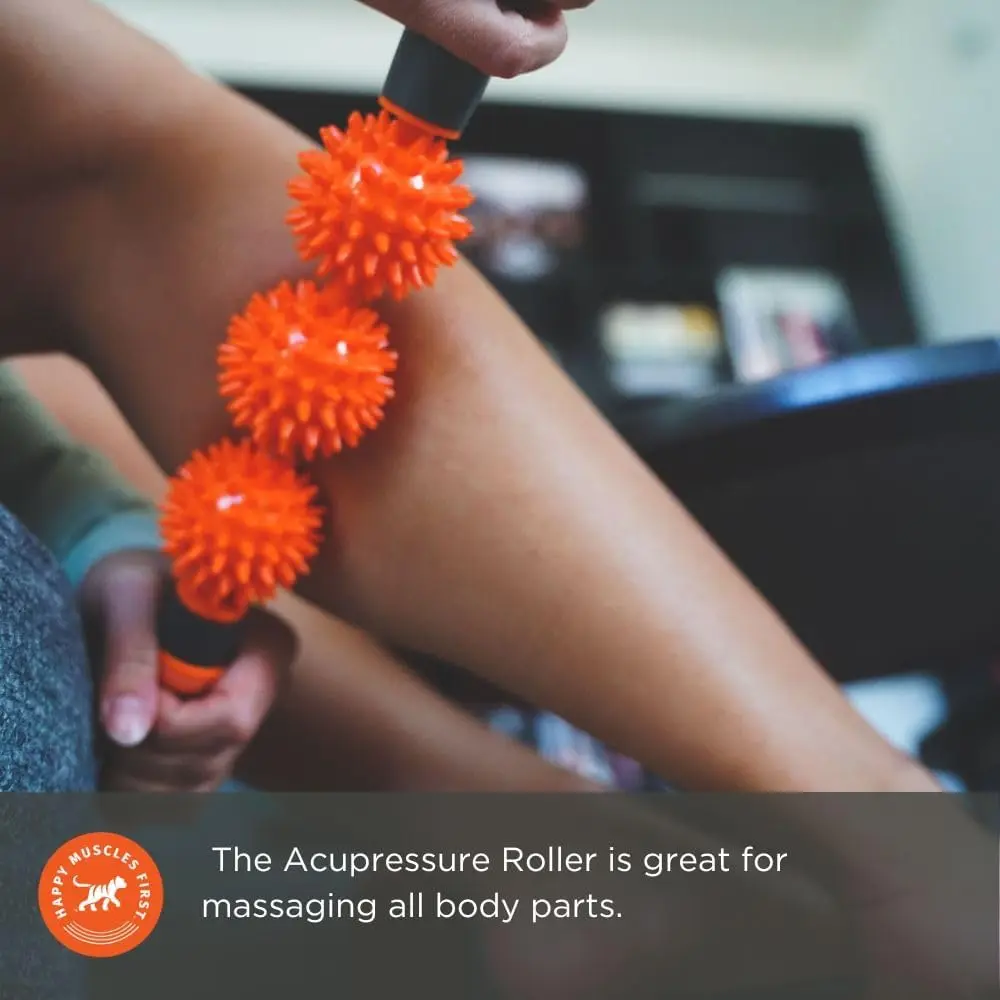
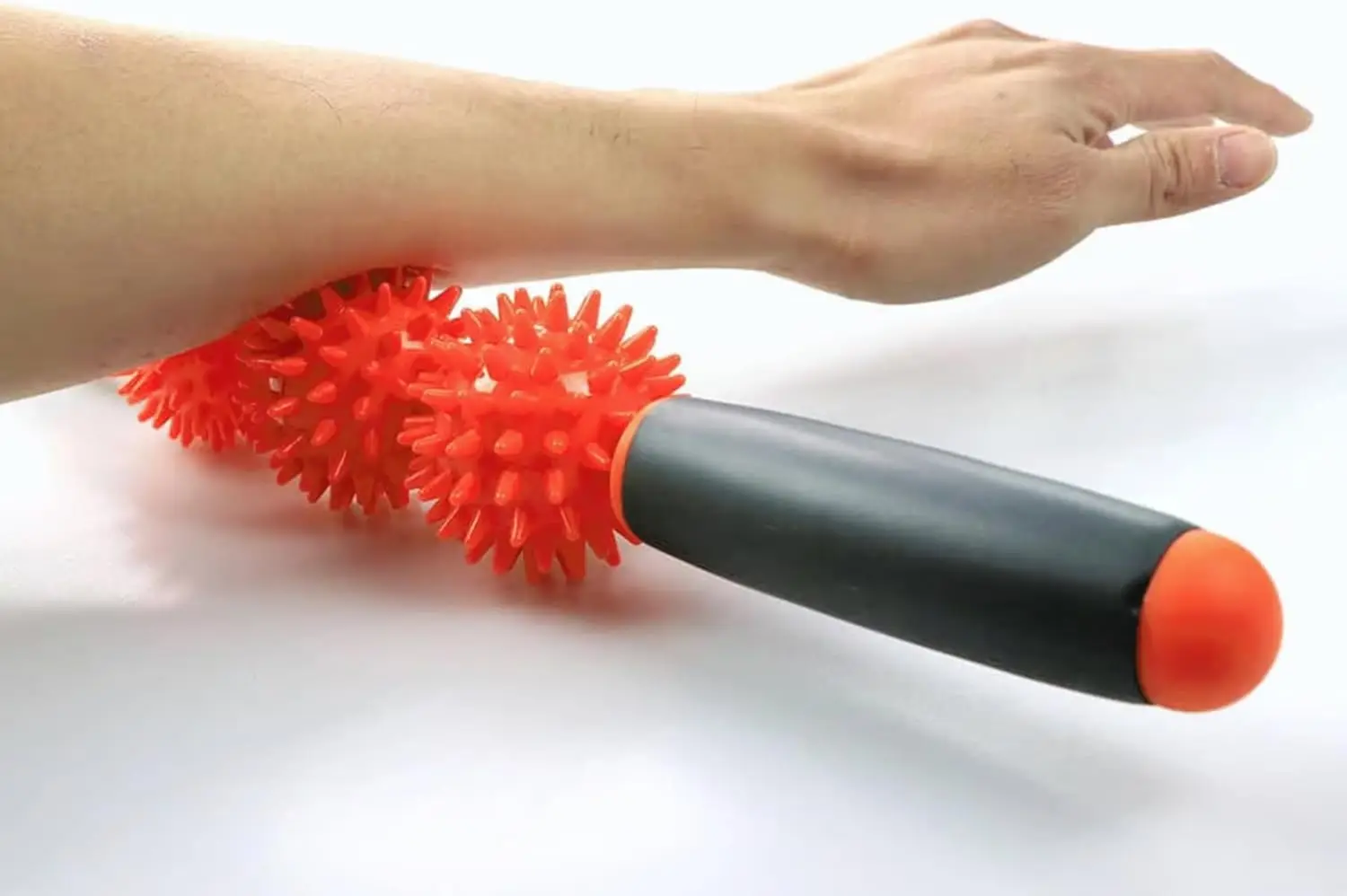
- Three independently rotating balls: each ball turns on its own, so the stick tracks over the contour of a calf or forearm without dragging or catching the skin.
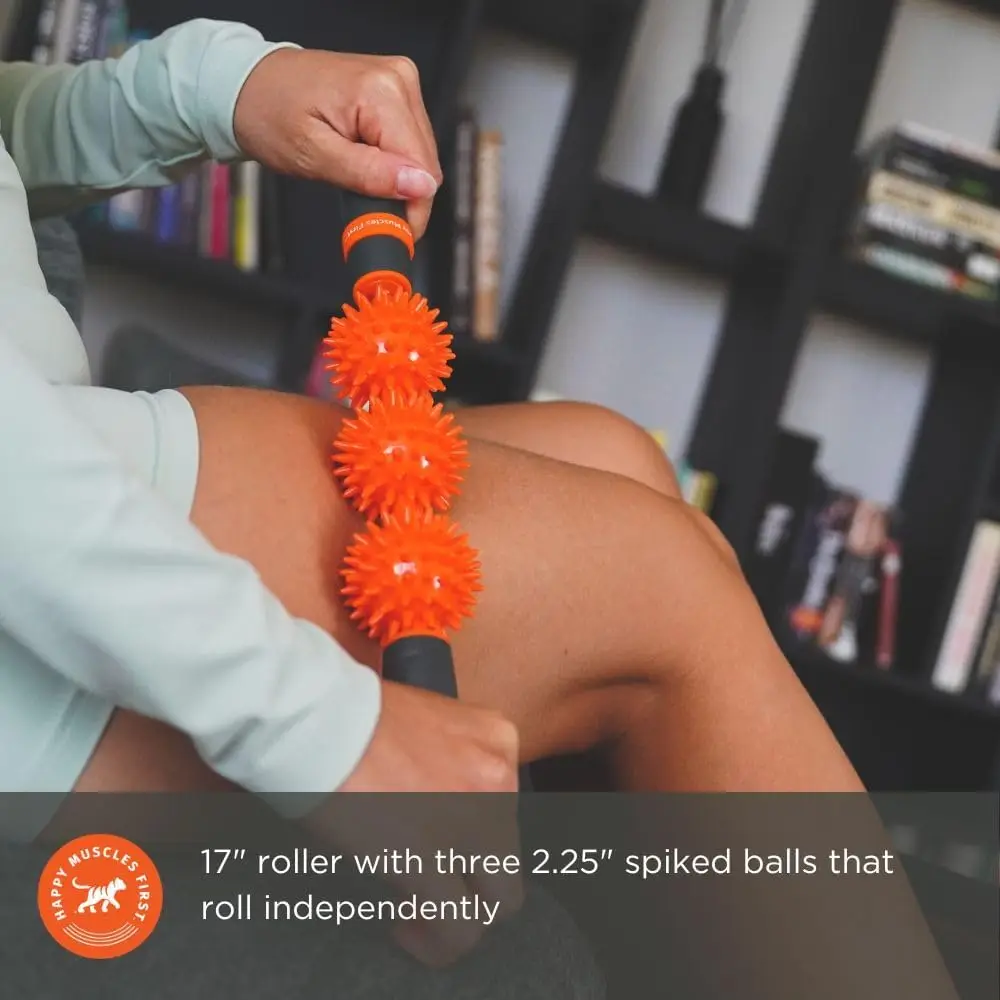
- You control the pressure precisely: a handheld stick means the pressure comes from your arms, not your bodyweight — so you can ease off instantly, which is exactly what you want on a genuinely sore spot.
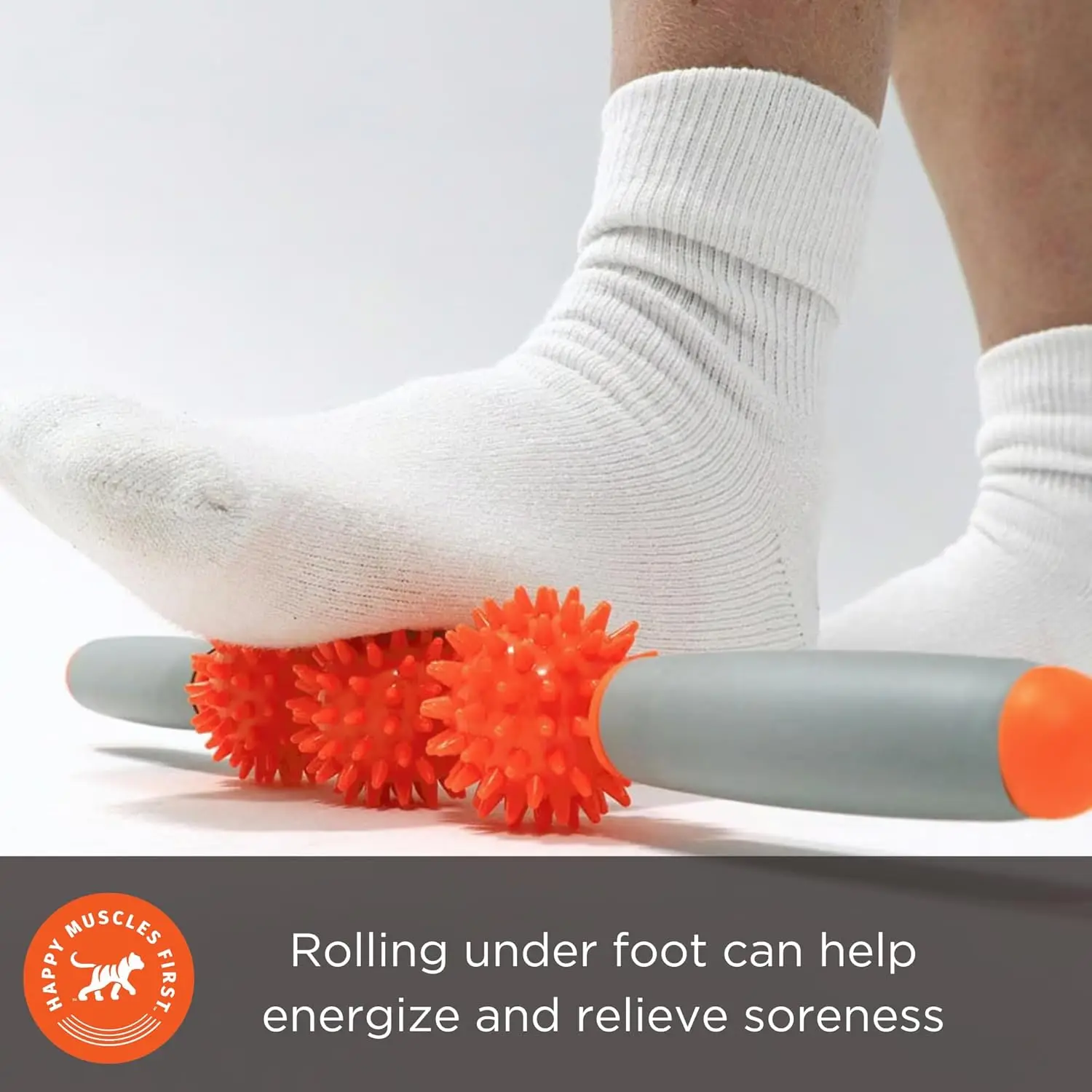
- Reaches what a floor roller cannot: forearms, shins, the front of the quads and the calves are awkward or impossible to load properly on a floor roller, and trivial with a stick.
- Usable anywhere, seated: at 17 inches it works at a desk, on a bench, in a car or on the sideline — no floor space and no getting down and up again.
- Honest mechanism: expect a temporary reduction in stiffness and soreness and a short-lived range-of-motion gain. Do not expect permanent structural change, because that is not what any rolling tool delivers.
How to Use
Place the stick against the muscle and roll slowly along its length with moderate pressure, taking several seconds per pass rather than sawing back and forth. When you find a tender spot, hold steady pressure on it for 20 to 30 seconds and breathe slowly out — the tension release comes from the nervous system settling, and holding your breath actively works against that. Around 60 to 90 seconds per muscle group is plenty; more is not better. Use it after training or on rest days for recovery, or before training as part of a warm-up if a specific area feels tight, in which case follow it with active movement rather than going straight to heavy work. Safety: roll muscle, not bone, joints or tendons. Stay off the back of the knee, the front of the shin bone itself, the inner thigh near the groin, and any area with varicose veins. Avoid the spine entirely with a spiked tool. Discomfort that you can breathe through is fine; sharp, radiating, electrical or numb sensations are not — stop. Do not roll over an acute injury, a fresh bruise, an area of swelling, broken skin, or a suspected muscle tear, and skip it entirely if you have a bleeding disorder, are on blood thinners, or have reduced skin sensation from diabetes or neuropathy.
Specifications
| Length | 17 inches (approximately 43 cm) |
|---|---|
| Rolling elements | 3 independently rotating spiked balls |
| Type | Handheld manual roller stick |
| Surface | Spiked / textured for concentrated pressure |
| Best-suited areas | Calves, shins, forearms, quadriceps, hamstrings, IT band region |
| Pressure control | User-applied via handles — fully adjustable |
| Power | None required — fully manual |
Care & Maintenance
Wipe the balls and handles with a damp cloth and mild soap after use, particularly if you roll over bare skin, and dry fully. Do not submerge the stick, since water sitting in the ball bearings and axle will eventually cause them to seize or squeak. Check periodically that each ball still rotates freely and that the end caps are secure. Store it somewhere dry and out of direct sunlight; there is nothing to charge, calibrate or replace.
What’s in the Box
1 x 17-inch spiky muscle roller stick with three independently rotating balls.
Reviews
There are no reviews yet.