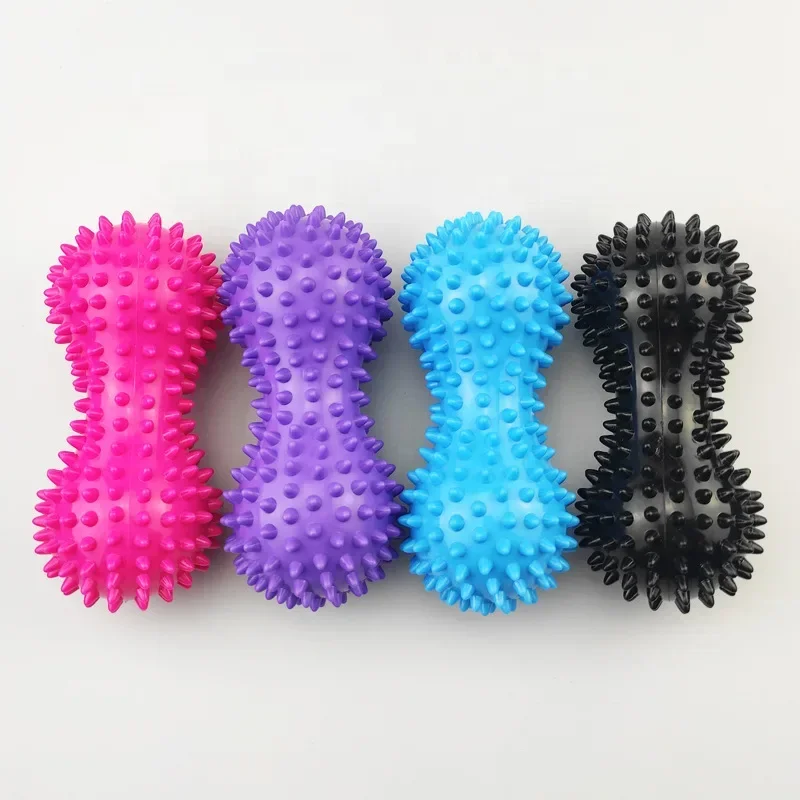
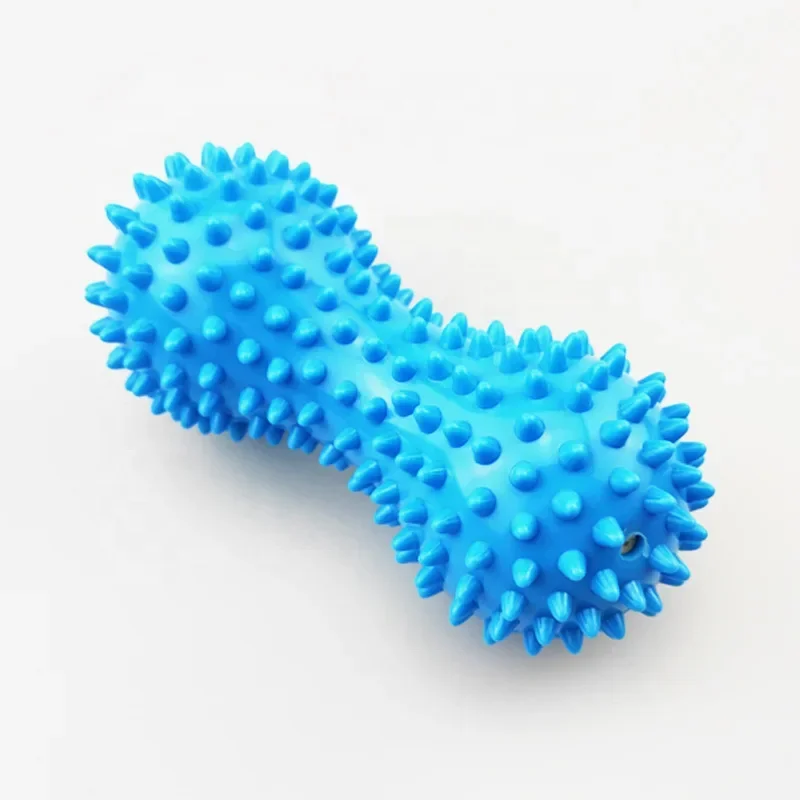
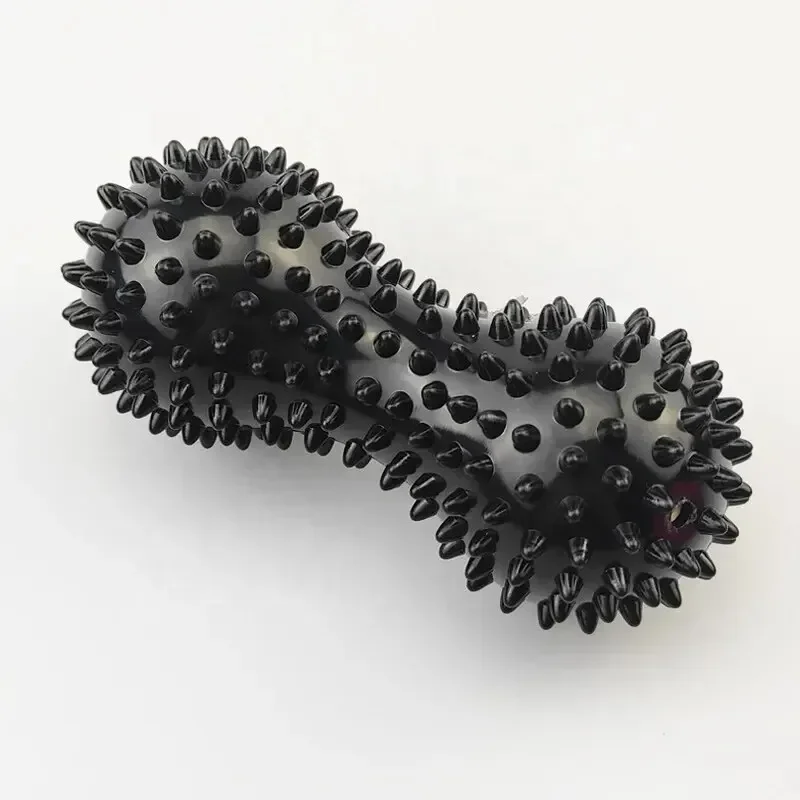
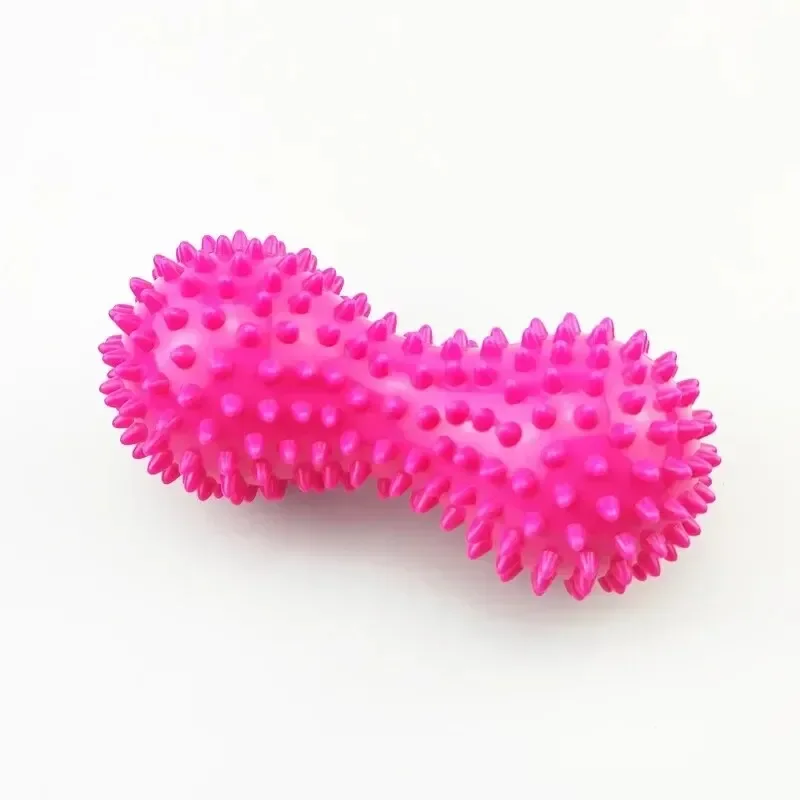
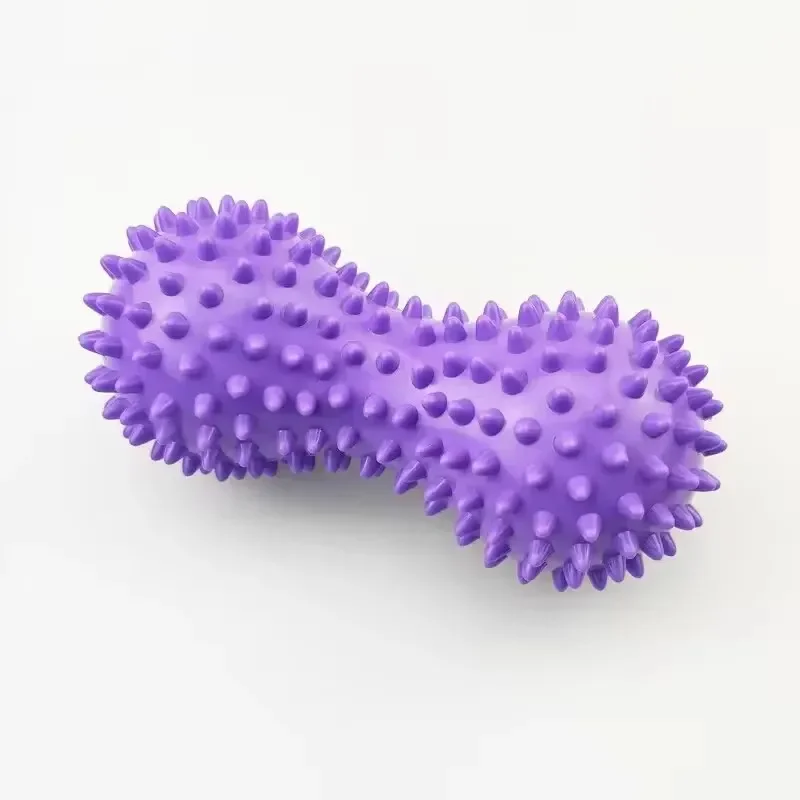
The Shape That Lets You Roll Your Spine Safely
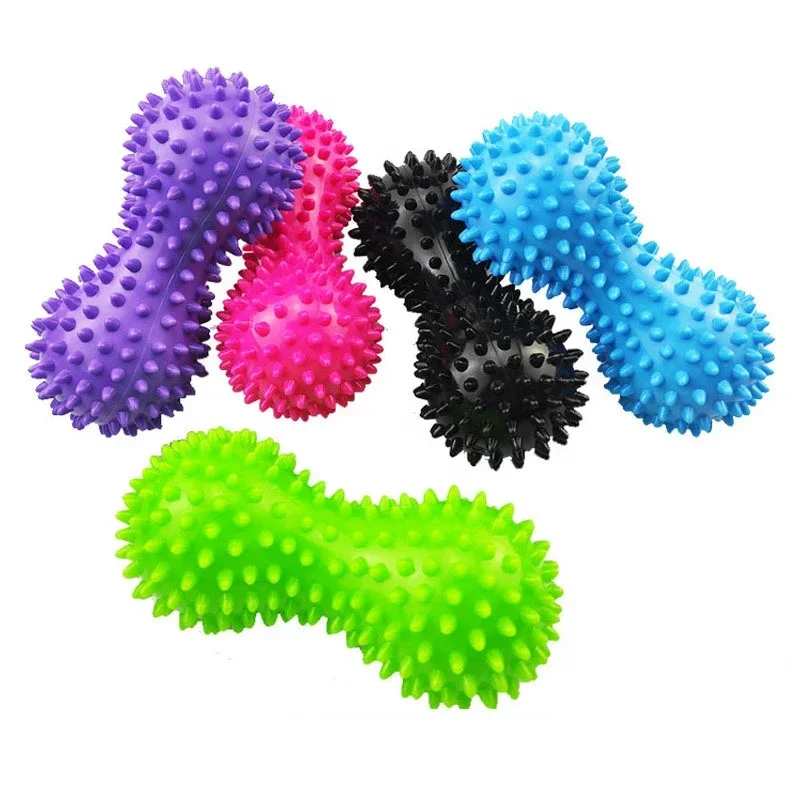
A single ball pressed against the spine puts load directly onto the spinous processes — the bony bumps you can feel down your back. A peanut ball solves that: the central waist bridges the vertebrae while the two lobes press into the erector spinae on either side. Sustained pressure on a tender spot produces a measurable drop in muscle tone, likely through autogenic inhibition and a local reduction in nervous system sensitivity to that input. The spiky surface adds a second layer — sharp, distributed skin stimulation that behaves as a counter-irritant, which is why the tenderness fades as you hold rather than builds.
Key Benefits
- Central groove protects the spine — you can roll the thoracic and lumbar paraspinals without ever compressing the vertebrae themselves.
- Two lobes work both sides at once — symmetric pressure, half the time, and it does not roll away from you.
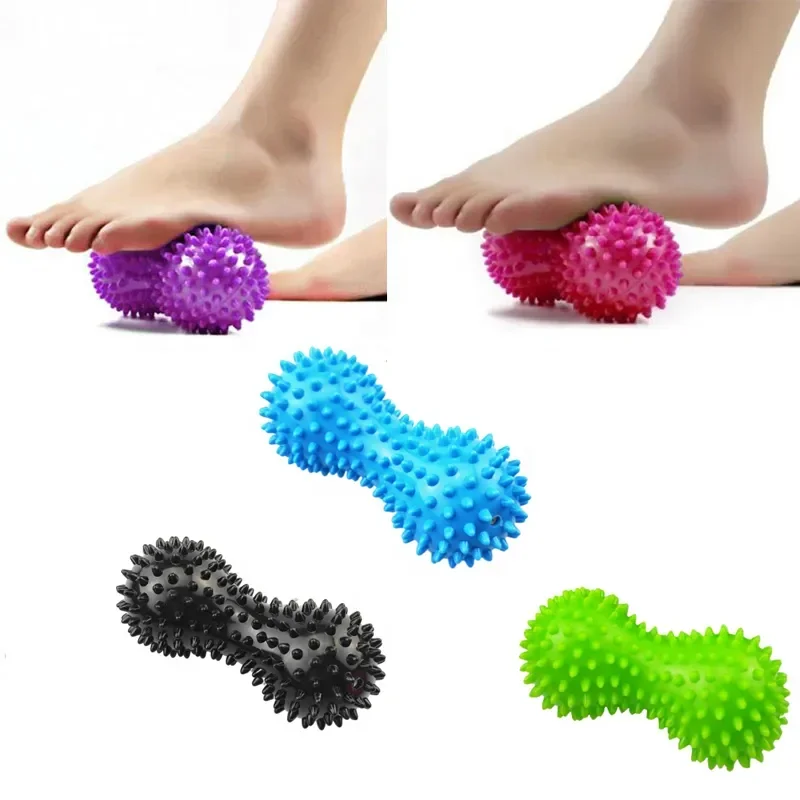
- Spiky PVC surface for plantar fascia work — underfoot, the nodes reach into the fascia and the intrinsic foot muscles in a way a smooth ball cannot.
- Firm but hollow construction — it delivers real pressure yet gives slightly, so it does not feel like standing on a rock.
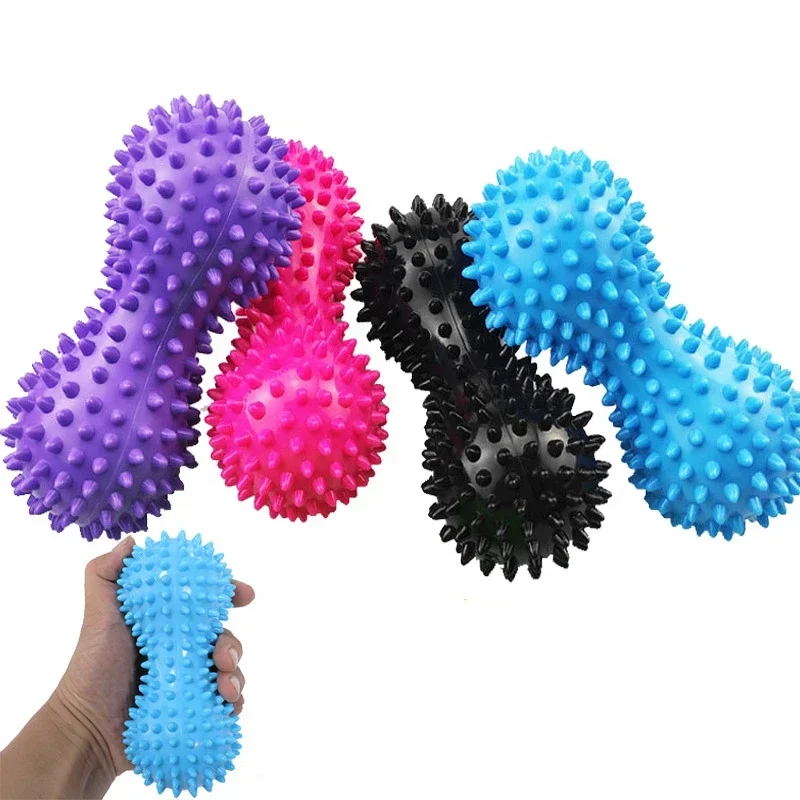
- Sensory and stress use — the textured surface doubles as a fidget and hand-strength tool; some people use it purely for that.
- Small enough to live in a gym bag — it fits where a foam roller never will, which means you actually use it.
How to Use
For the upper back: lie down, place the peanut under the spine with the groove straddling it, cross your arms over your chest and let your bodyweight sink in. Breathe, hold on a tender spot for 20 to 30 seconds until it eases, then move a couple of centimetres and repeat. For feet: sit or stand and roll the ball slowly from heel to forefoot, pausing on tight areas — thirty to sixty seconds per foot is enough. For glutes and hips, sit on one lobe against the floor or a wall. Keep it off the front of the neck, off the kidneys and lower ribs, and off any bone, bruise or varicose vein. Aim for a strong, tolerable pressure you can still breathe through — if you are holding your breath, you are pressing too hard. Not for use on areas of acute injury, inflammation or numb skin.
Specifications
| Type | Peanut / double massage ball, spiky surface |
|---|---|
| Material | PVC |
| Construction | Hollow, firm |
| Surface | Raised nodes (spiky) |
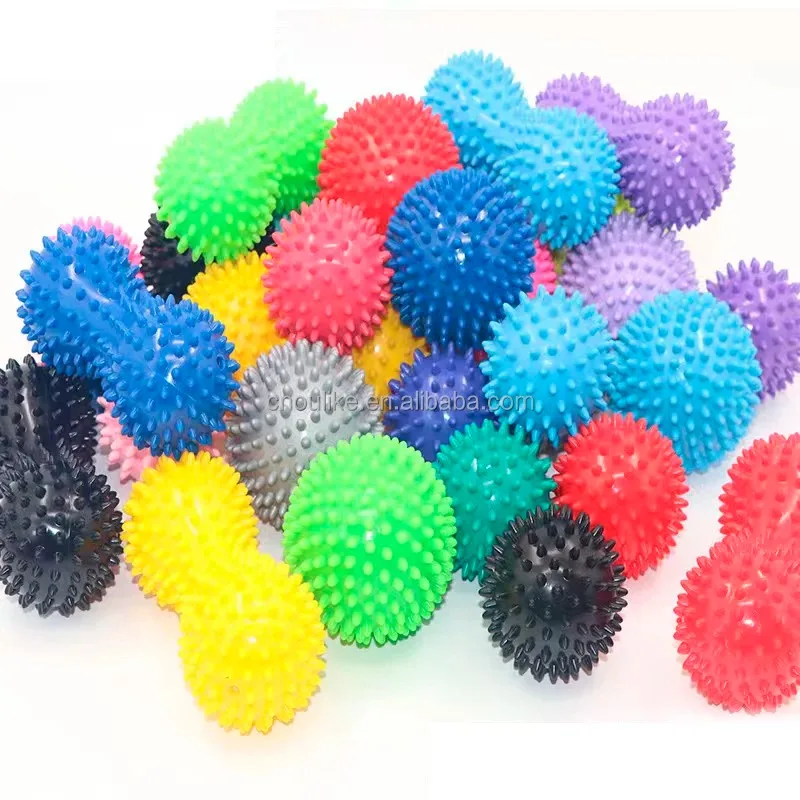
| Colour | Multicoloured, variant dependent |
| Quantity | 1 piece |
| Firmness | Firm — beginners can reduce load by using it against a wall rather than the floor |
| Best for | Plantar fascia, spinal paraspinals, glutes, hands, sensory use |
Care & Maintenance
Wipe clean with a damp cloth and mild soap after use — it will pick up floor grit and foot sweat. Air dry fully. Keep it away from heaters, radiators and hot cars; PVC softens and deforms with heat. Do not overinflate if the variant has a valve, and stop using it if the surface splits.
What’s in the Box
1 × peanut spiky massage ball. Colour as selected.
Reviews
There are no reviews yet.