
How A Band Gets You To Your First Unassisted Pull-Up
A pull-up is hardest at the dead hang, where your lats are at full length and at their worst mechanical advantage. A looped band exploits Hooke’s law: stretched furthest at the bottom, it stores the most elastic energy exactly where you are weakest, then returns progressively less help as you rise and get stronger through the range. You still have to finish the rep yourself. That is why banded pull-ups build the strength curve you actually need, rather than letting a machine carry you through the whole movement. Move down in band thickness as you progress.
Key Benefits
- Assistance where you need it, not where you don’t — the band unloads the dead-hang portion of the pull-up and fades out near the bar, so the top of every rep is still earned.
- Works in reverse for accommodating resistance — anchor it to the floor and loop it over a bar or your shoulders and the same band gets harder as you lock out, matching the strength curve of a squat, deadlift or bench press.
- Progressive by design — thicker bands give more assistance, so stepping down a band is a clean, measurable milestone on the way to bodyweight-only reps.
- Layered continuous latex — these are moulded loops, not glued tubes, which is what lets them take repeated near-full stretch without delaminating.
- Portable strength training — a set weighs less than a single dumbbell and turns any doorway bar, tree branch or squat rack into a full training station.
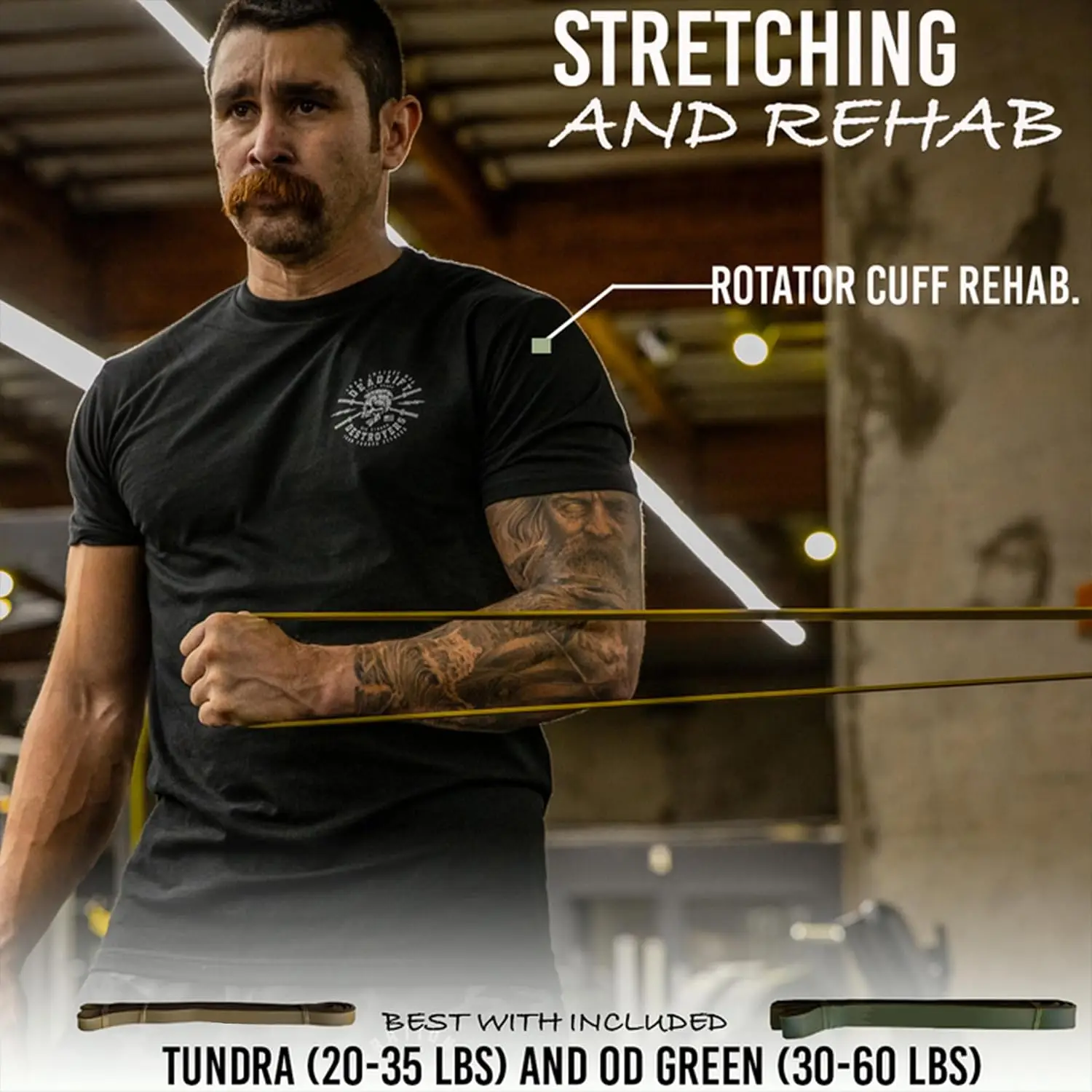
- Genuinely useful for stretching and warm-ups — banded shoulder dislocates, hip distractions and lat stretches use the same loops, so nothing sits idle.
How to Use
For assisted pull-ups, loop the band over the bar and thread it back through itself so it cinches. Put one knee or one foot into the bottom loop — knee is more stable, foot gives more assistance — and step in carefully while holding the bar. Keep tension in your core so you do not get whipped forwards. Choose the band that lets you complete 5–8 reps with your chin clearly over the bar, then work up to 3 sets of 8–10 before moving to a thinner band. Safety, and this matters: inspect the whole band for nicks, cracks, dry patches or fraying before every single session — a band that fails under full stretch releases a lot of energy at once. Never stretch a band toward your face, never look directly down the line of a stretched band, and never use one on a bar or anchor you have not confirmed is secure. Keep bands away from rough concrete, splintered wood, sharp rack edges and direct sunlight, which degrades latex. Replace any band showing surface cracking, regardless of age.
Specifications
| Type | Continuous looped resistance bands |
|---|---|
| Material | Layered natural latex |
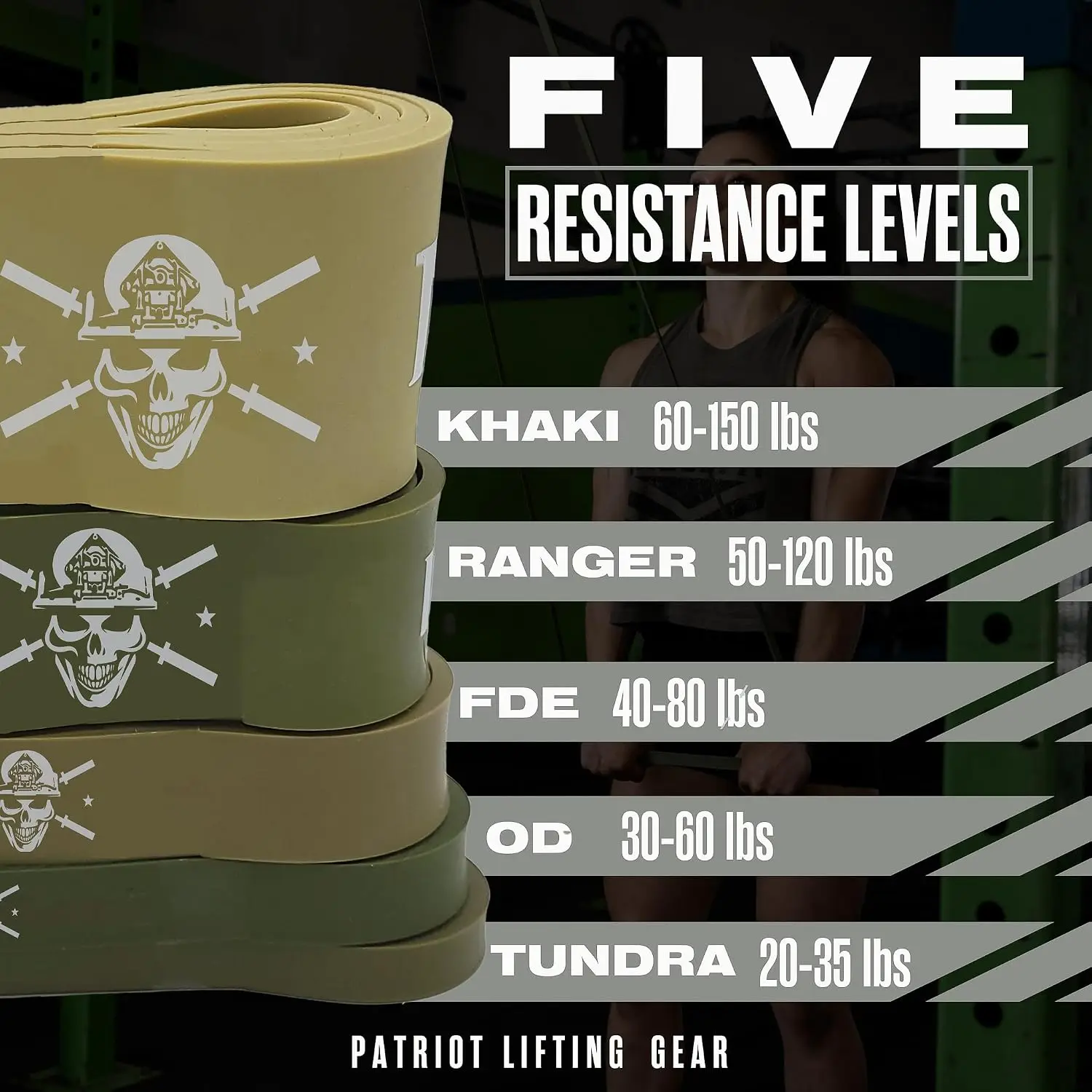
| Resistance levels | Multiple thicknesses — variant dependent |
| Primary uses | Assisted pull-ups, accommodating resistance, stretching, mobility |
| Anchor requirement | Rated pull-up bar or structurally sound overhead anchor |
| Set contents | Variant dependent — check the option you select |
| Latex | Contains natural latex |
| Storage | Cool, dry, out of direct sunlight |
Care & Maintenance
Wipe bands down with a damp cloth and mild soap after sweaty sessions — salt and skin oil accelerate latex breakdown — then let them dry fully before storing. Do not leave them stretched, knotted or hanging over a hook under tension for long periods. Never store them in a hot car or in sunlight. Dusting occasionally with a little cornflour prevents surface tackiness. Any band with a visible nick, tear or crack should be cut up and binned, not ‘used carefully’.
What’s in the Box
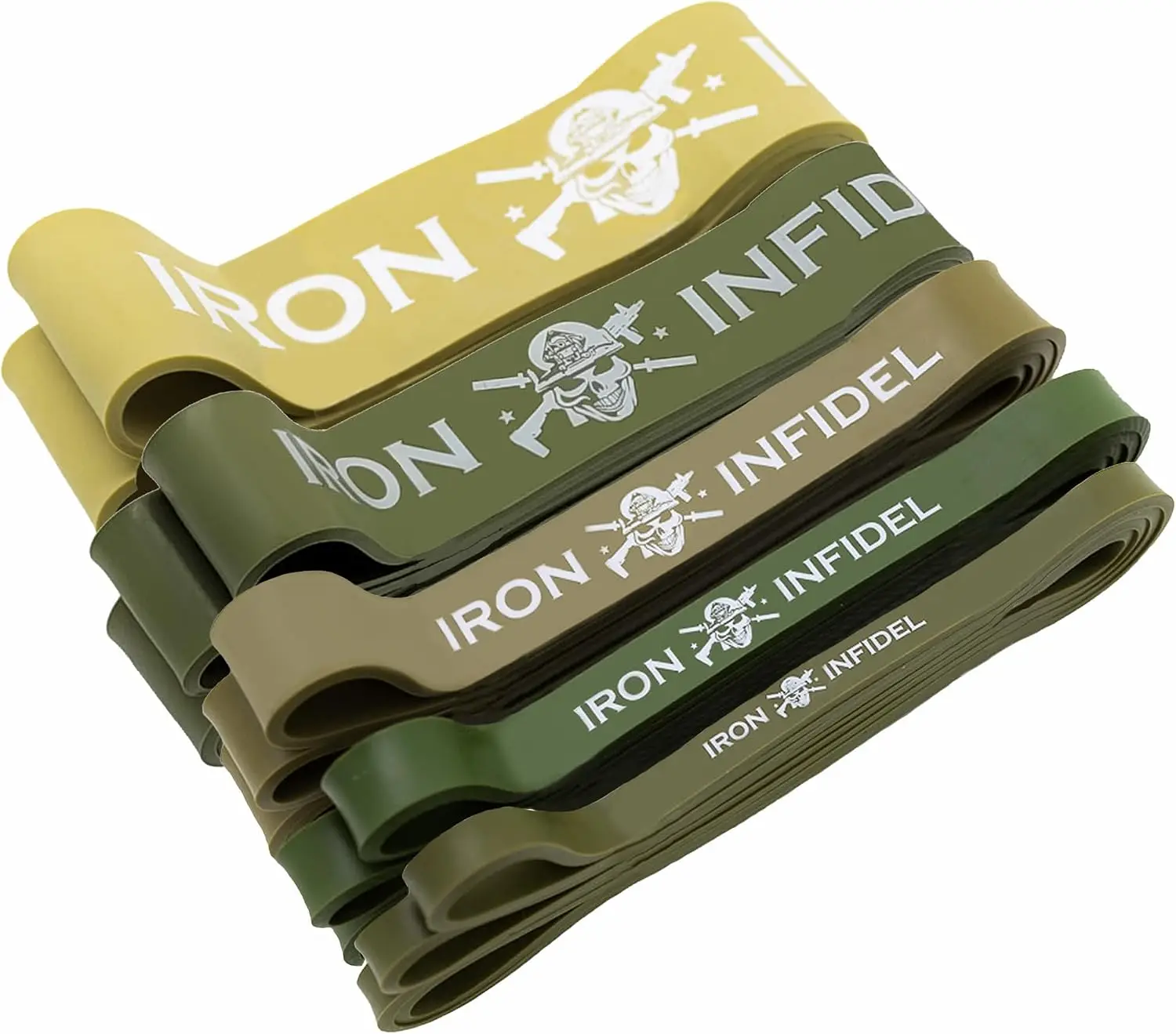
Resistance loop bands as specified by the variant you select. Contents, thicknesses and colour coding are variant dependent. Please note these bands contain natural latex and are not suitable for anyone with a latex allergy.


Reviews
There are no reviews yet.