Get the Weight Off Your Back and Onto the Bike
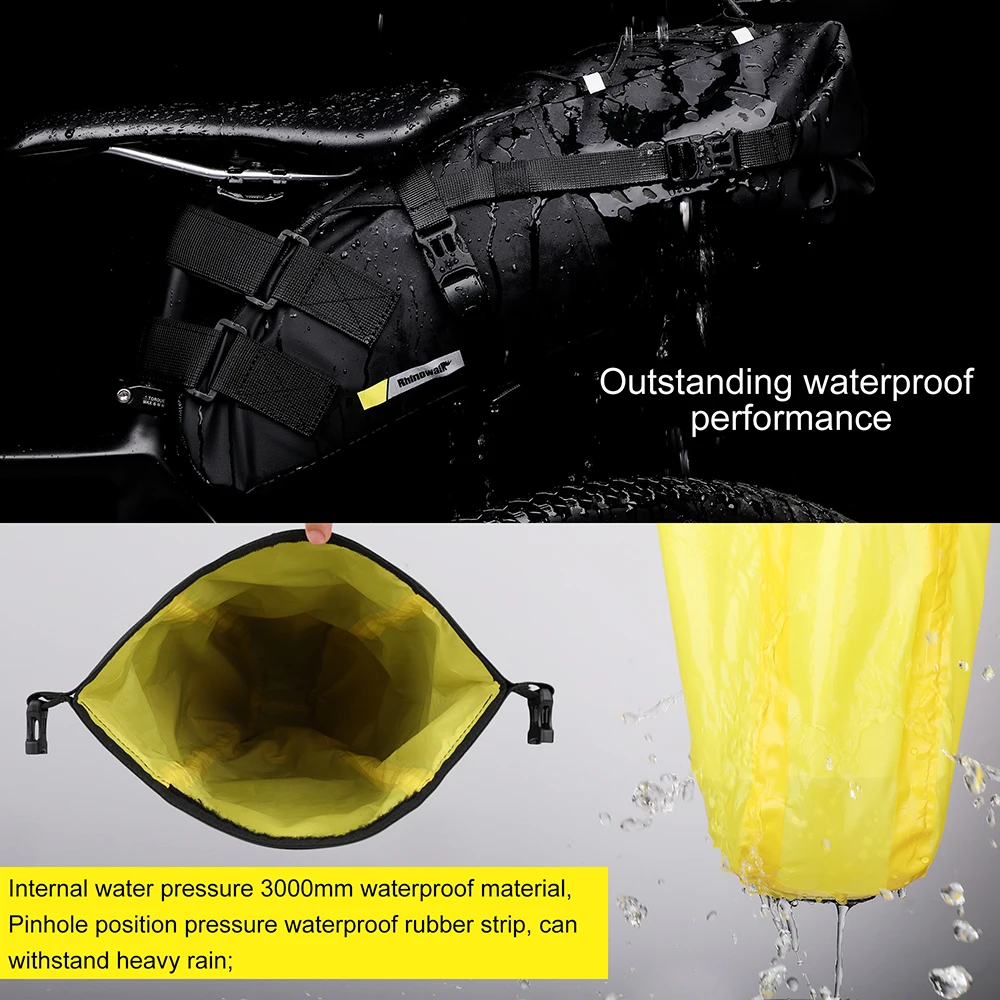
A loaded backpack puts its mass on your shoulders and lumbar spine, raises your combined centre of gravity, and — the part riders underestimate — seals a large area of your back against evaporative cooling. On a long ride that means shoulder and neck fatigue, a soaked base layer, and a body working harder to shed heat. Move the same load onto the bike and the frame carries it, positioned low and behind you, close to the existing centre of mass so handling stays predictable. A roll-top waterproof closure matters more than raw capacity: on a multi-day tour, wet kit is the failure that ends the trip.
Key Benefits
- Waterproof roll-top, not a zip. Zips leak. A rolled and buckled closure is the only closure that reliably keeps rain out, which is why it is the standard on serious bikepacking luggage.
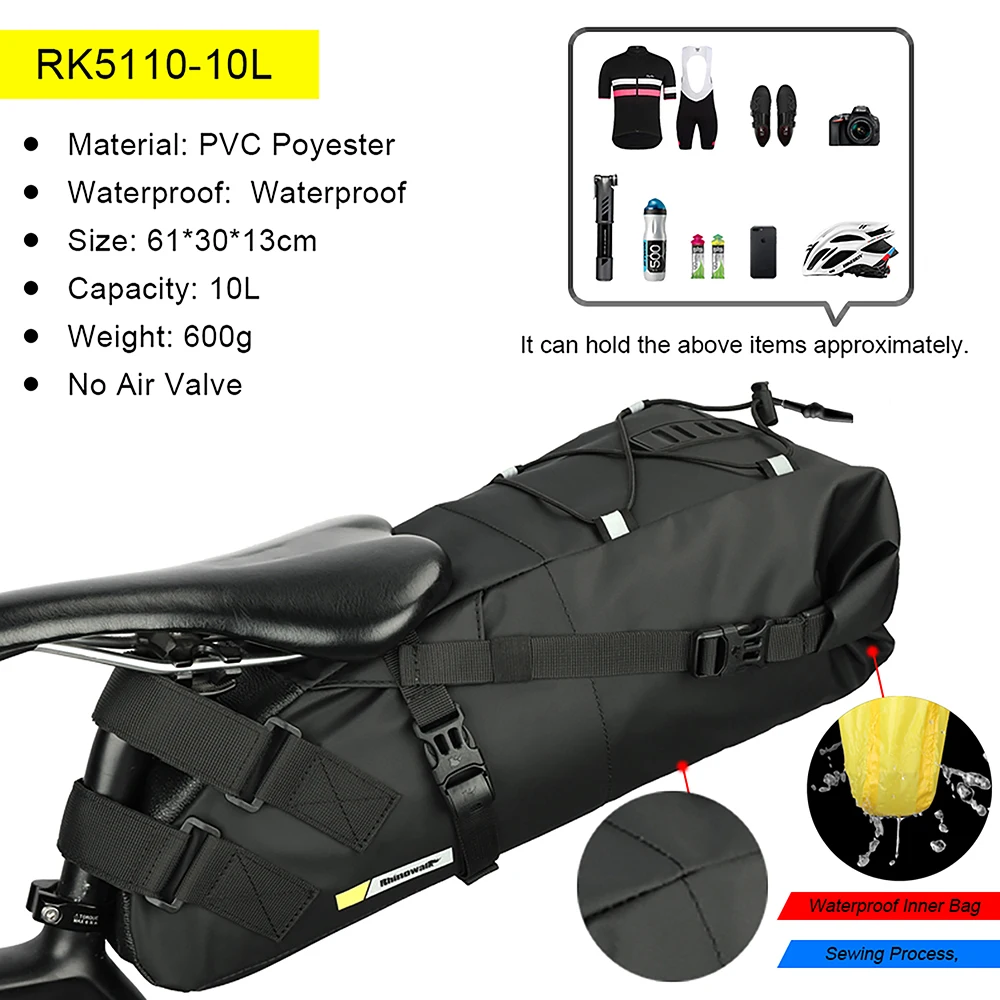
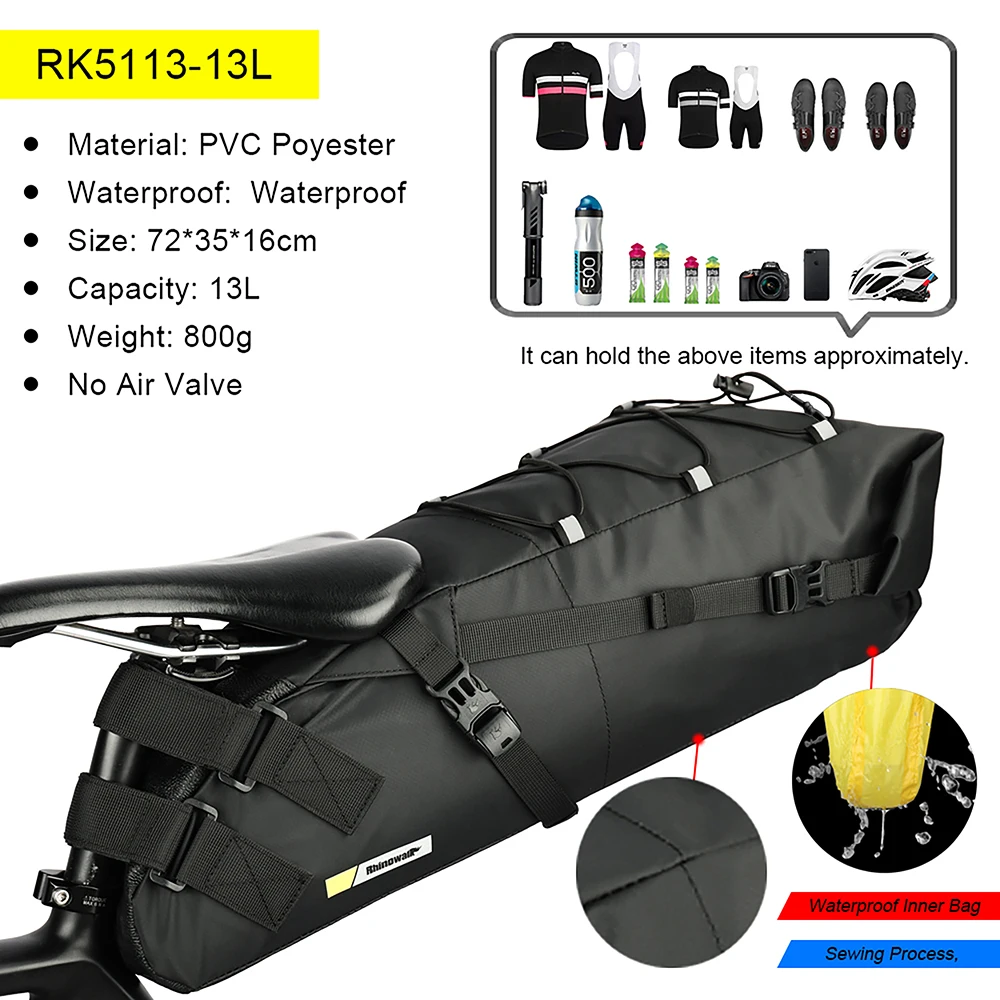
- 10L or 13L. Enough for a change of clothes, tools, a shell and food — the difference between a commute and an overnighter.
- Folds down when empty. Compresses rather than flapping around as an empty sail behind you, so you can run it half-loaded without it swinging.
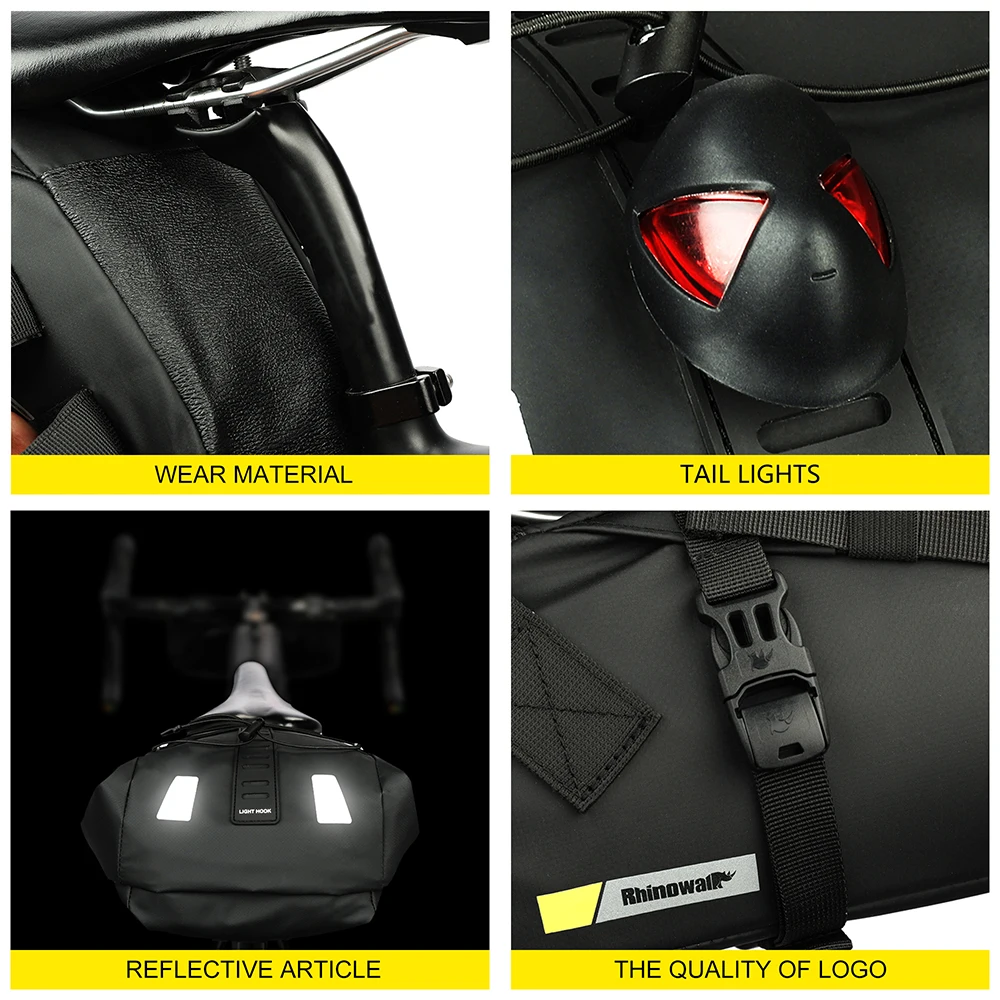
- Reflective detailing. A saddle bag sits exactly where a following driver’s headlights hit, which makes it prime real estate for retro-reflective material — it works in headlight beams, not just under streetlights.
- Your back can breathe. On a hot climb this is not a minor comfort point; it is thermoregulation, and it changes how you feel two hours in.
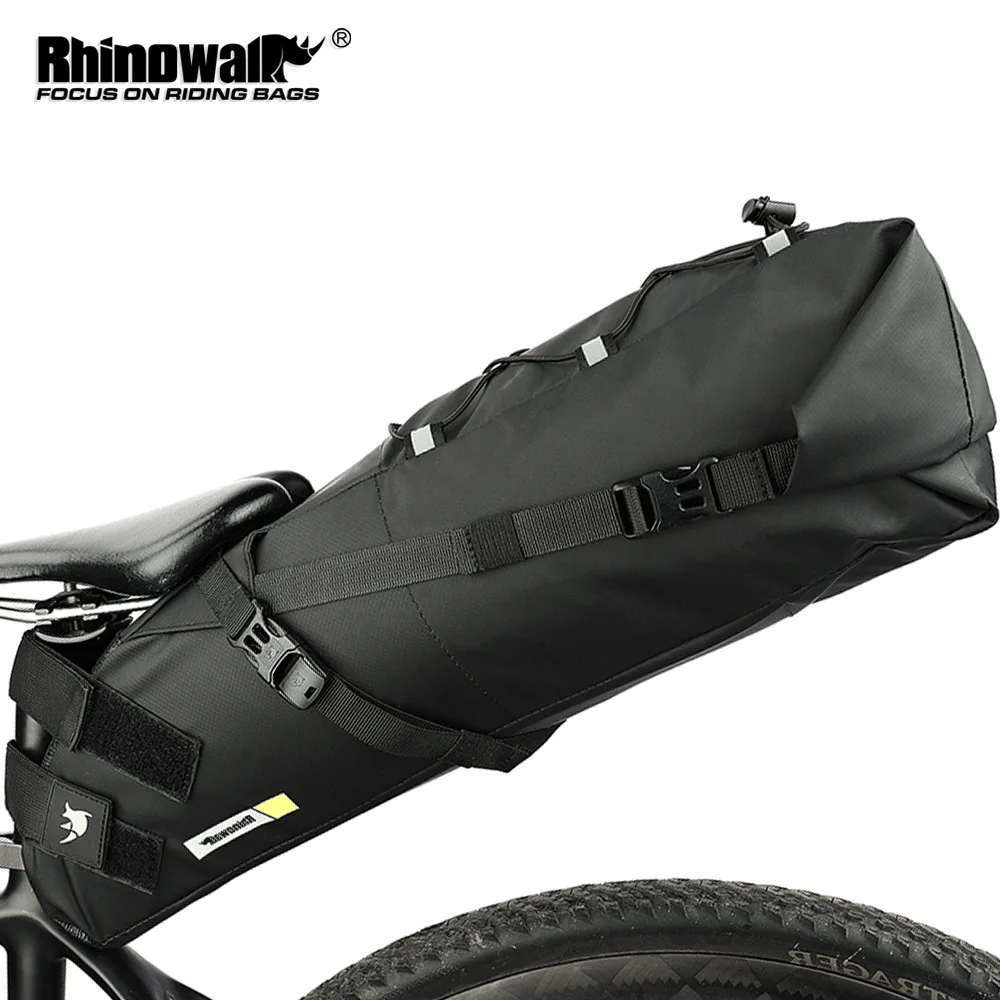
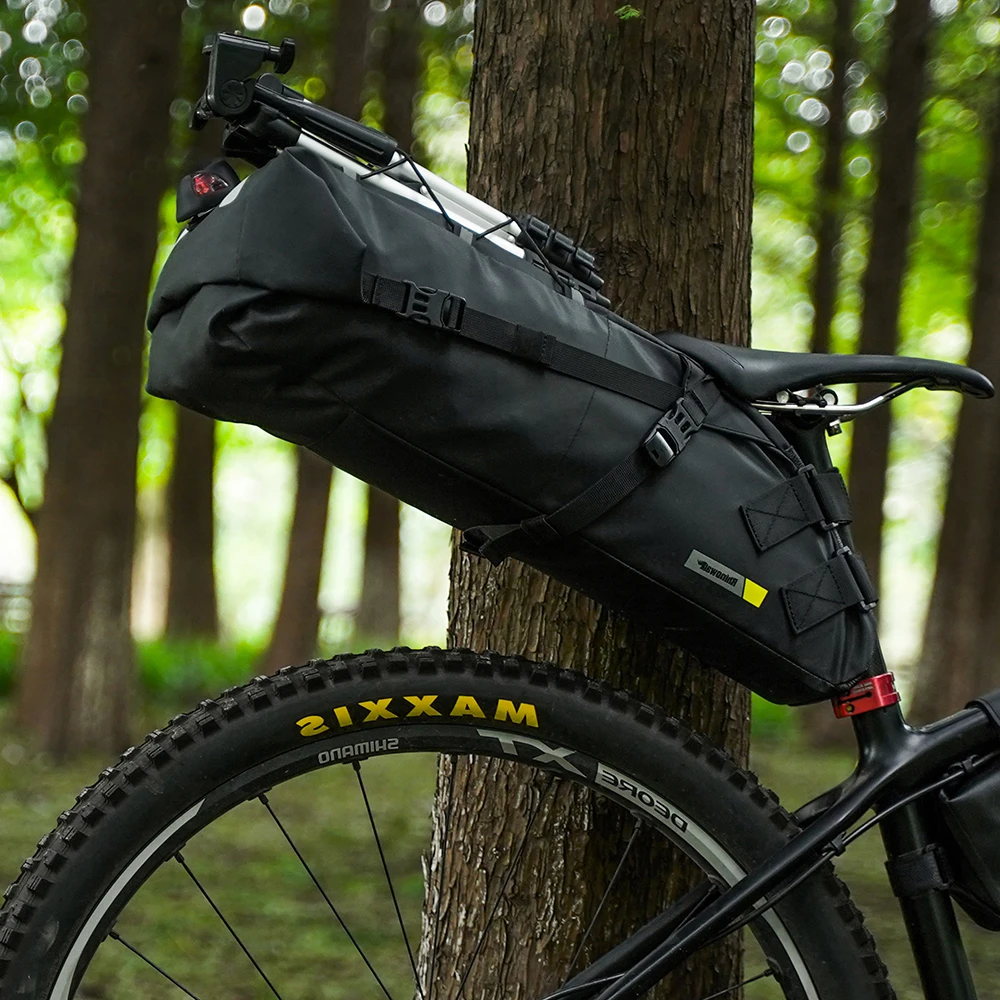
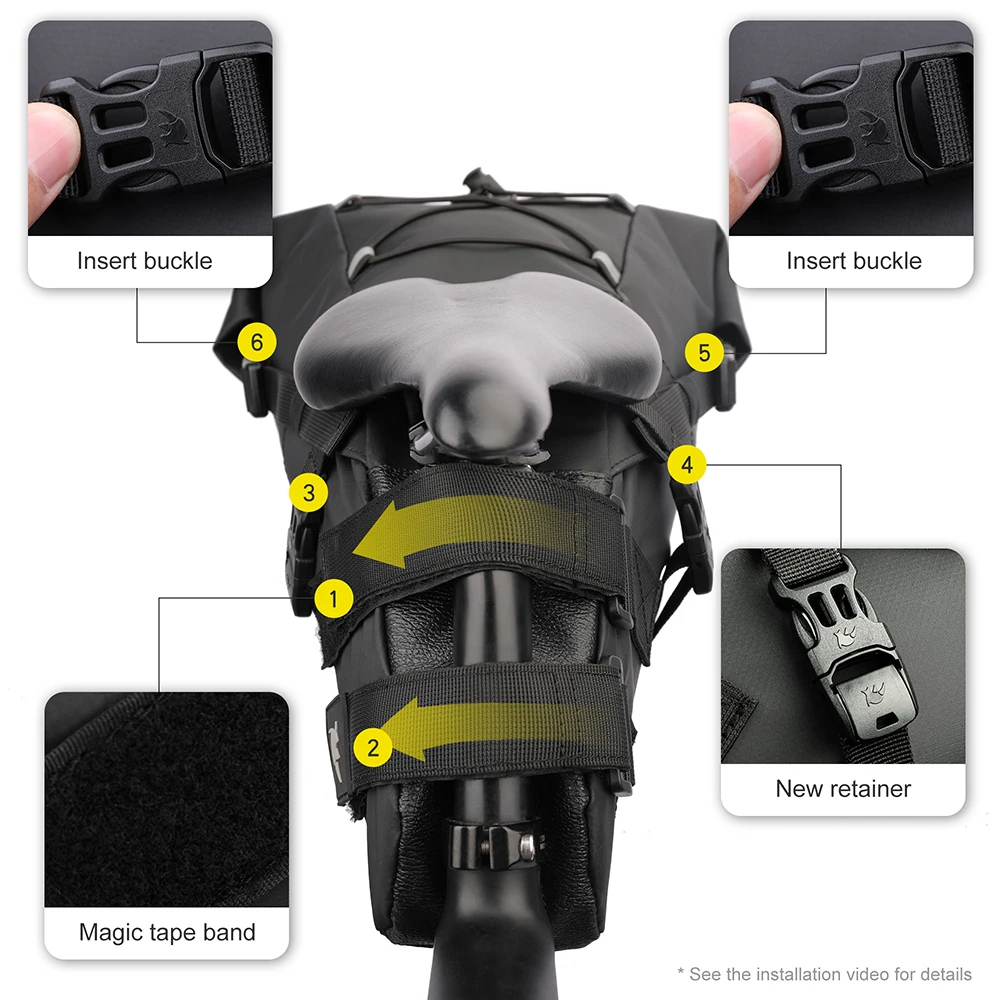
- Mounts to seatpost and saddle rails. No rack needed, so it works on bikes that have no mounting eyelets at all.
How to Use
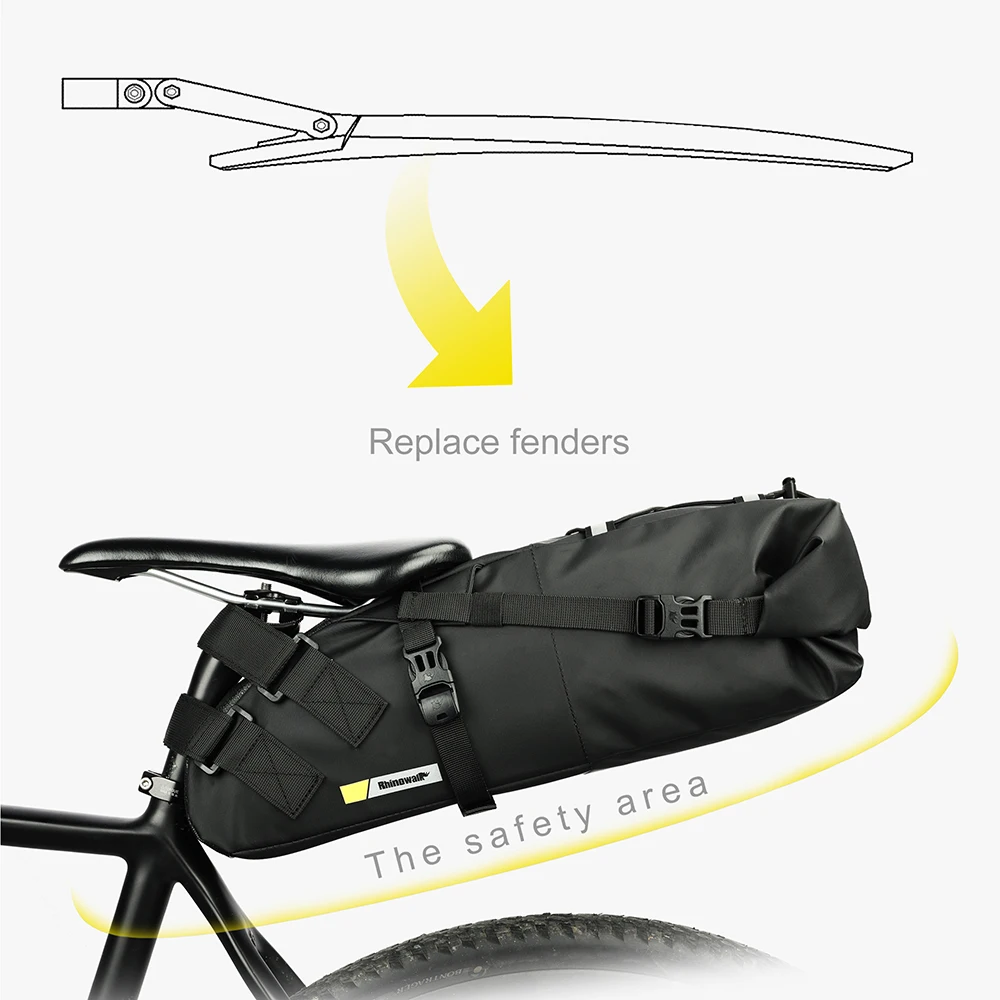
Pack heavy items low and as far forward as possible — right against the seatpost — and put light, bulky items at the tail. Weight carried far behind the seatpost acts on a long lever and is the direct cause of the tail wag that saddle bags are notorious for. Roll the top down at least three full turns before buckling; fewer than three and the waterproof seal is not made. Cinch the compression straps until nothing shifts when you shake the bag by hand. Safety: check tyre clearance with the bag fully loaded and compressed — a bag that drops onto the rear tyre under load will wear through and can lock the wheel. Check the seatpost and rail straps before every ride, as these are the failure points. Be aware that a heavily loaded saddle bag can induce speed wobble on fast descents; pack light, pack low, and test the loaded bike at low speed before you commit to a descent. Do not exceed the seatpost’s rated load, and take particular care with a carbon seatpost, which is not designed for clamping loads and can be damaged by a tight strap.
Specifications
| Brand | Rhinowalk |
|---|---|
| Capacity | 10L / 13L (range 5L–13L across variants) |
| Closure | Roll-top, waterproof |
| Mounting | Seatpost and saddle rails — no rack required |
| Foldable | Yes — collapses when partially loaded |
| Reflective | Yes — reflective detailing |
| Intended use | Commuting, touring, bikepacking |
| Fit note | Requires sufficient seatpost length and tyre clearance |
Care & Maintenance
Rinse off road salt and grit after winter rides and let the bag dry fully, unrolled and open, before storing — a rolled, damp waterproof bag will grow mould on the inside where you cannot see it. Do not machine wash or tumble dry: heat and agitation destroy the waterproof coating and the taped seams, which is the entire point of the bag. Keep the buckles clean and check the straps for fraying at the stress points where they wrap the seatpost. Store loosely rolled rather than tightly creased, since permanent folds eventually crack the laminate.
What’s in the Box
One Rhinowalk waterproof bike saddle bag with seatpost and saddle rail mounting straps, in your chosen capacity.


Reviews
There are no reviews yet.