The Offset Handle Does the Real Work
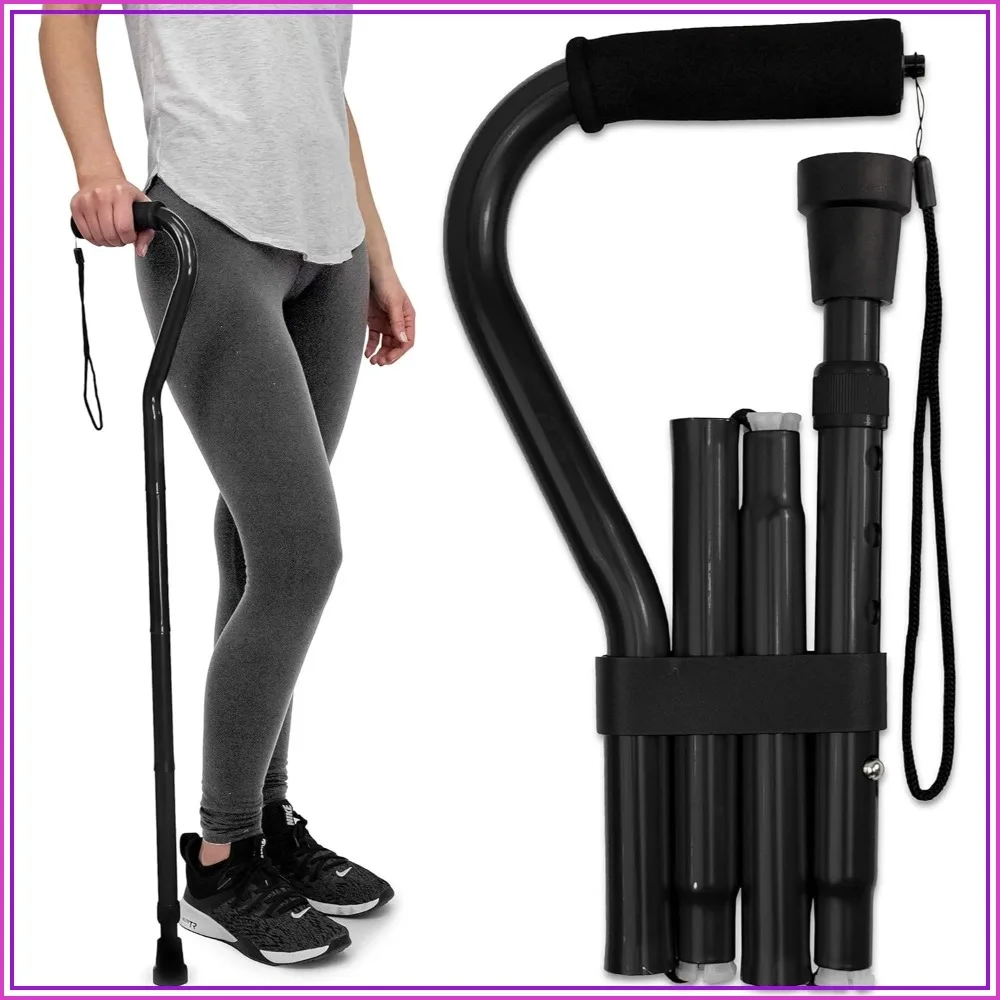
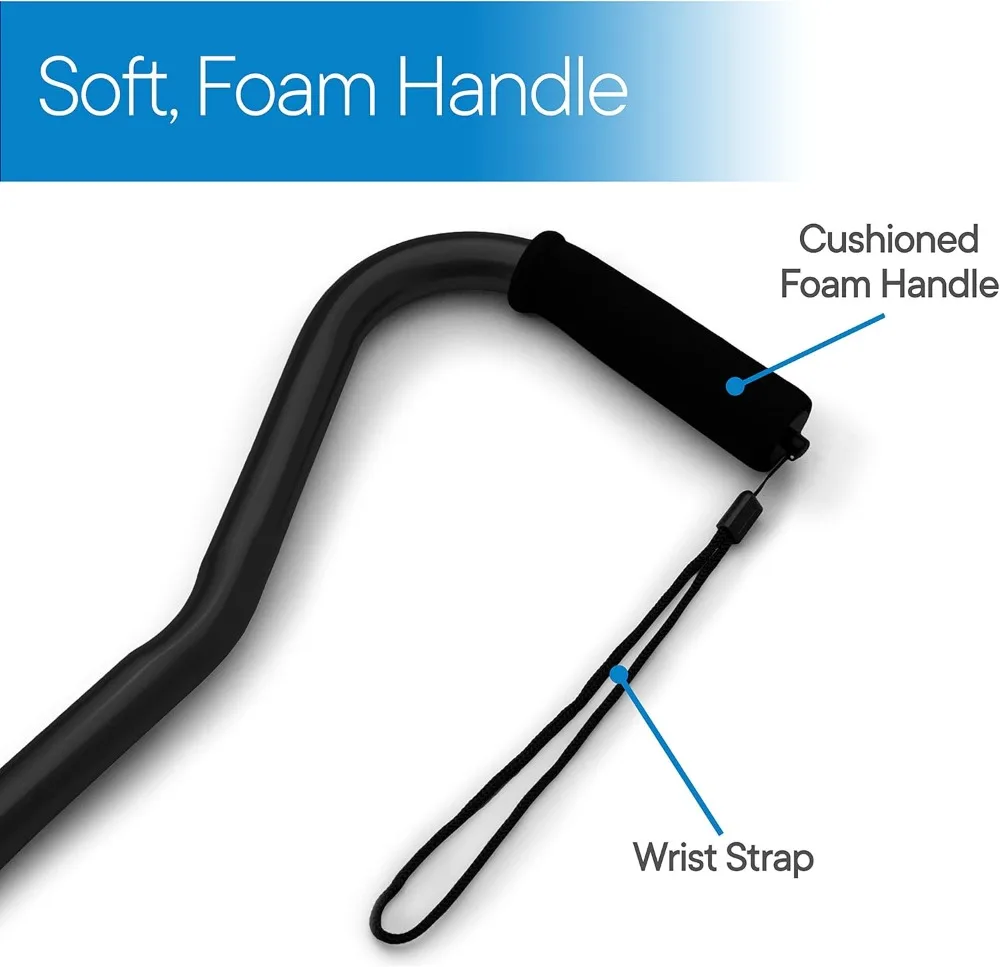
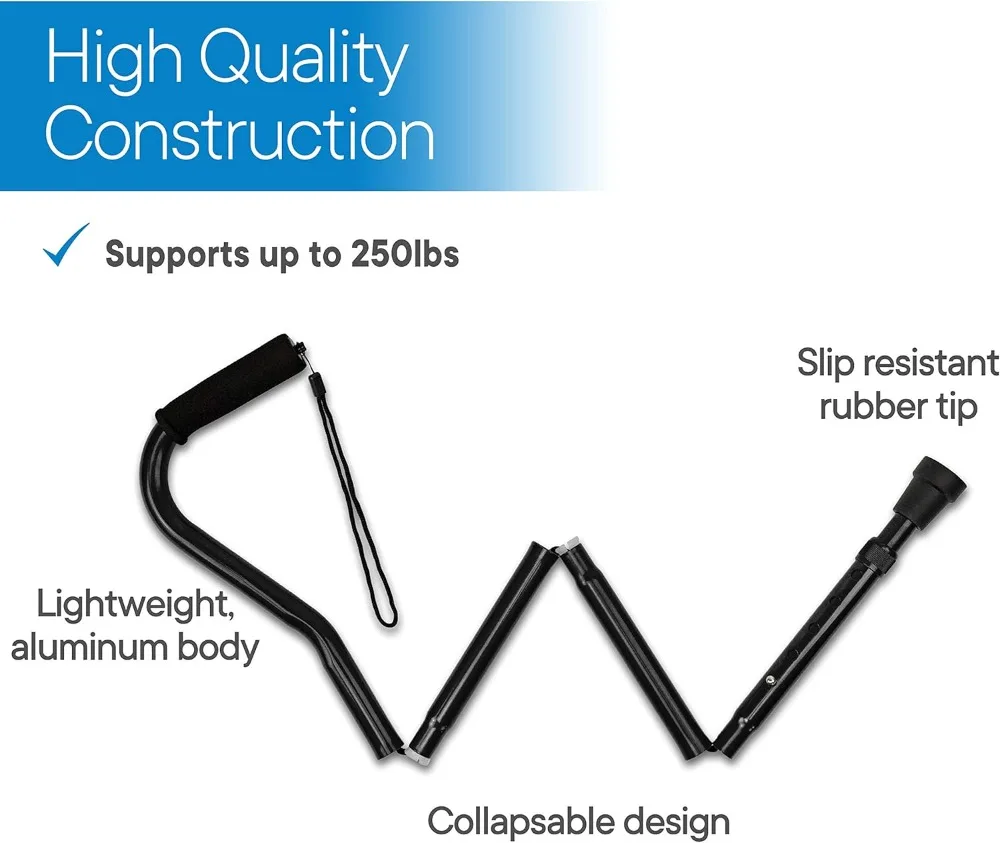
On a straight-handled cane, your hand grips a point that sits to the side of the shaft, so every step drives load through the wrist at an angle. An offset handle steps the grip out and over the centreline of the shaft, so the force from your hand travels straight down the cane and into the ground. That reduces the twisting moment through the wrist and hand — the reason offset canes are routinely recommended for people with arthritis or a weak grip. The foam grip spreads pressure across the palm rather than concentrating it in a narrow band.
Key Benefits
- Offset handle geometry. Aligns your hand over the shaft so load runs straight down the cane — noticeably kinder to arthritic wrists than a straight-handle design.
- Cushioned foam grip. Spreads palm pressure and stays comfortable on longer walks; also warmer to hold than bare metal or hard plastic.
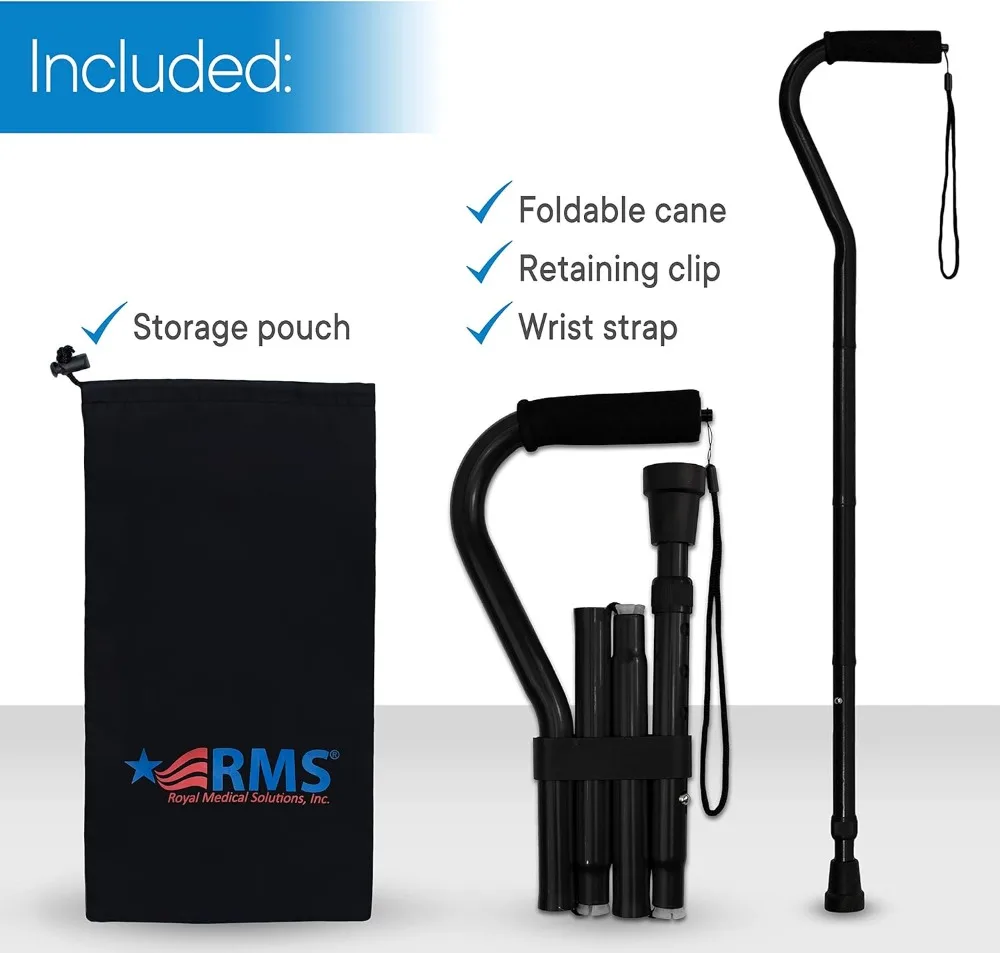
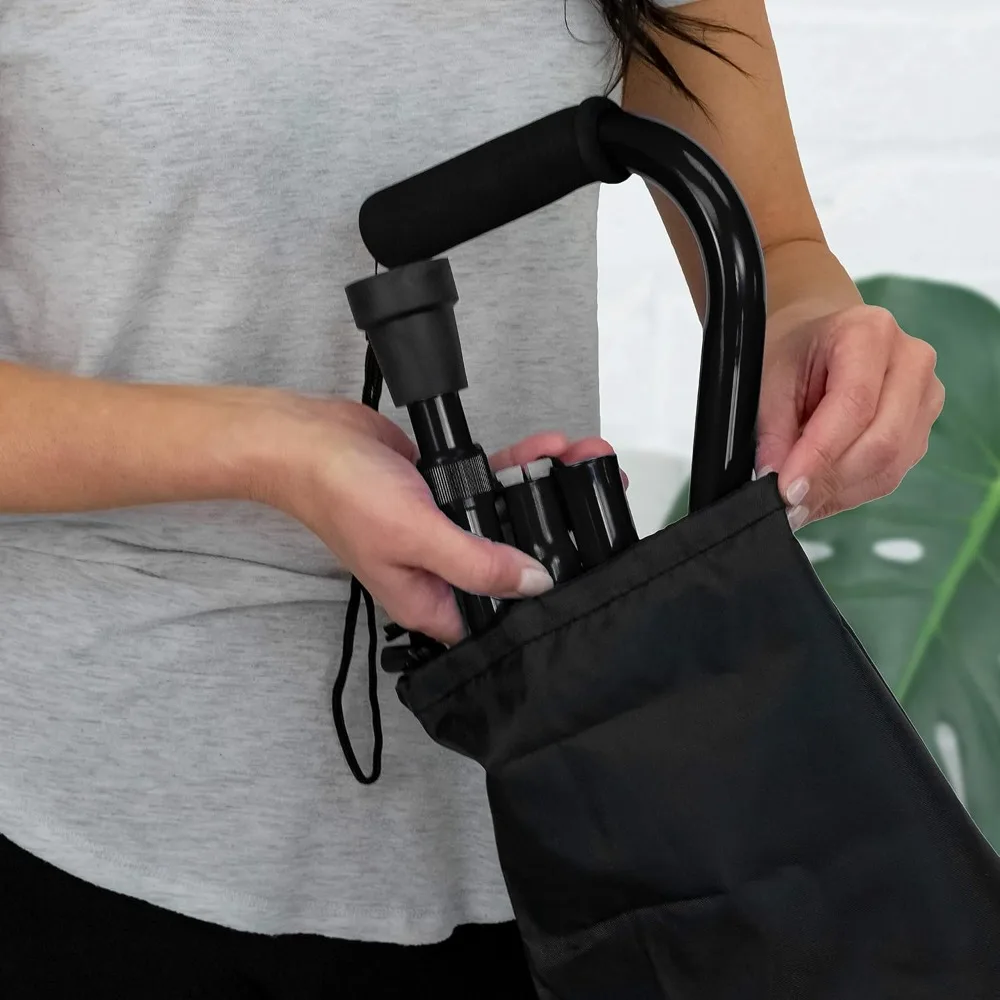
- Folds into four sections. Collapses small enough for a handbag, backpack, or the seat pocket on a plane, and the included pouch keeps it contained.
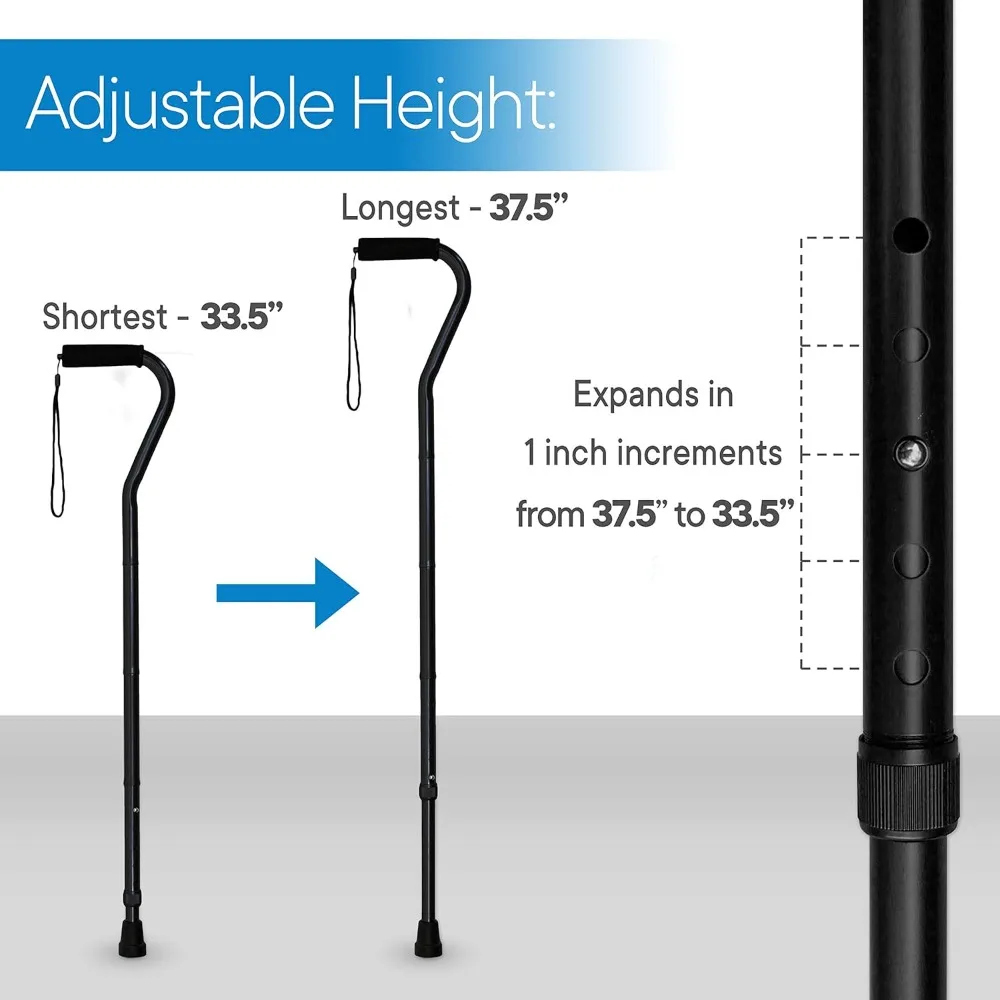
- Height-adjustable shaft. Set once to your wrist crease and lock — the difference between a cane that helps and one that hunches your shoulder.
- Genuinely light. Low swing weight means you can use it all day without the carrying arm tiring.
- A mobility aid, honestly framed. It provides balance support and modest offloading. If a leg cannot bear weight at all, a quad cane, crutch or frame is the right tool instead.
How to Use
Assemble by letting the internal cord draw the sections together and confirm each joint is fully seated — a partially seated joint is the weak point on any folding cane. Set the height so the handle reaches your wrist crease when you stand relaxed in your usual shoes, giving a slight elbow bend. Carry the cane in the hand opposite your weaker leg, and advance the cane with that weak leg, then step through. Safety: confirm the locking pin is fully engaged and every folding joint is seated before putting weight on it. Replace the rubber tip when the tread wears down; smooth tips slip badly on wet tile and polished floors. On stairs use a handrail wherever one exists. Do not use a folding cane as a lever to pull yourself out of a low chair — push from the chair arms instead.
Specifications
| Type | Folding adjustable walking cane |
|---|---|
| Handle | Offset design with cushioned foam grip |
| Shaft | Lightweight aluminium, folds into sections |
| Adjustment | Telescoping, height-adjustable with locking pin |
| Tip | Non-slip rubber ferrule |
| Included | Carrying pouch |
| Intended user | Adults needing balance and light-to-moderate support |
| Handedness | Use in the hand opposite the affected leg |
Care & Maintenance
Keep the joints clean and dry so the sections seat cleanly; grit in a joint is what stops it locking. Wipe the foam grip with a damp cloth and mild soap. Inspect the rubber tip regularly and replace it once worn. Check the elastic cord tension over time — a slack cord means the sections no longer draw together securely and the cane should be replaced.
What’s in the Box
Folding walking cane with offset foam handle, non-slip rubber tip fitted, and carrying pouch.

Reviews
There are no reviews yet.