Two Different Currents, Two Different Jobs — Read This Before the First Session
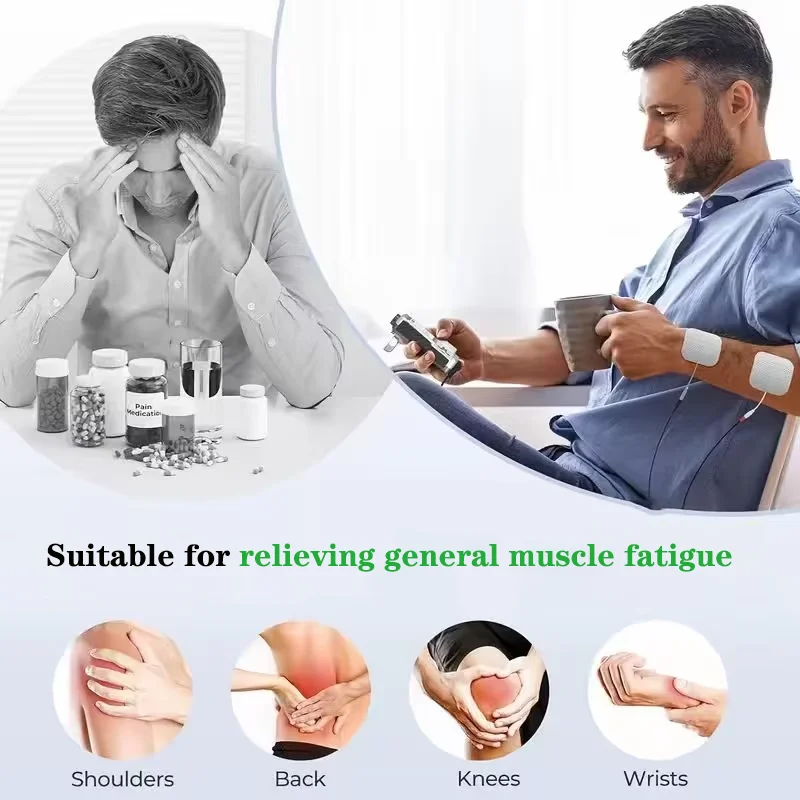
TENS (transcutaneous electrical nerve stimulation) sends a low-level current that preferentially stimulates large sensory nerve fibres. Under the gate-control theory of pain, this input floods the spinal cord’s dorsal horn and reduces the transmission of slower pain signals to the brain; higher-frequency settings may also encourage endogenous opioid release. EMS (electrical muscle stimulation) does something else entirely: it depolarises motor neurons directly, forcing the muscle to contract without your brain issuing the command. That is useful for maintaining activation in a muscle you cannot fully recruit, for post-exercise blood flow, and for reducing perceived soreness. What EMS does not do is burn fat or produce visible abdominal definition. Muscle contraction from a pad on the skin costs a trivial number of calories, and abdominal definition is a function of body fat — which is determined by diet and total energy expenditure, not by current. Any device sold on the promise of electrically induced abs is selling a claim physiology does not support.
Key Benefits
- TENS for pain modulation: a well-established, drug-free approach for chronic and musculoskeletal pain, working by competing with pain signals at the spinal cord rather than by masking them systemically.
- EMS for muscle activation and recovery: forced contractions promote local blood flow and can help maintain activation where voluntary recruitment is limited, such as around a joint you’re guarding.
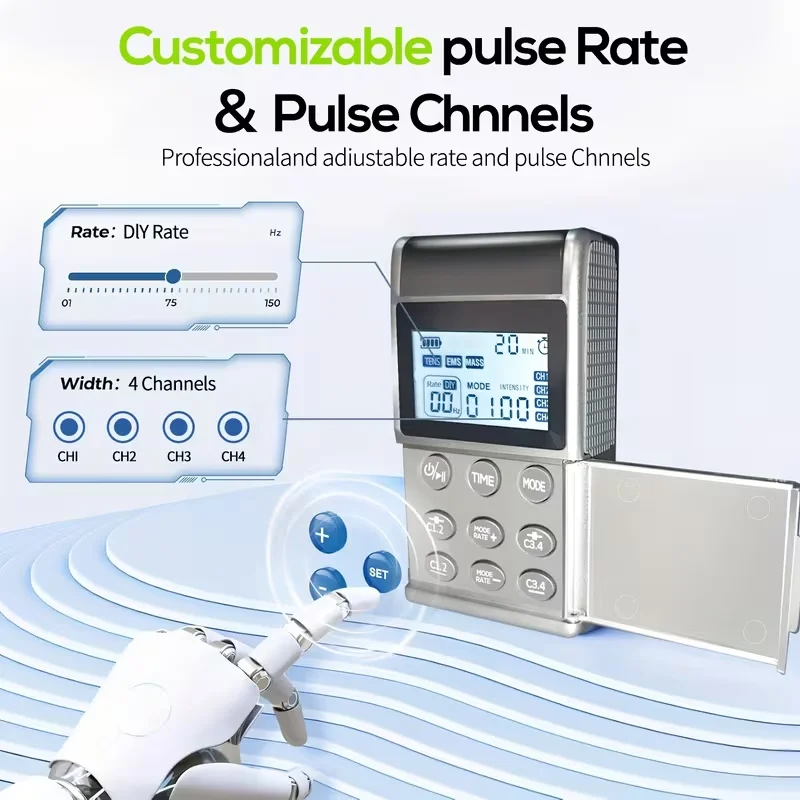
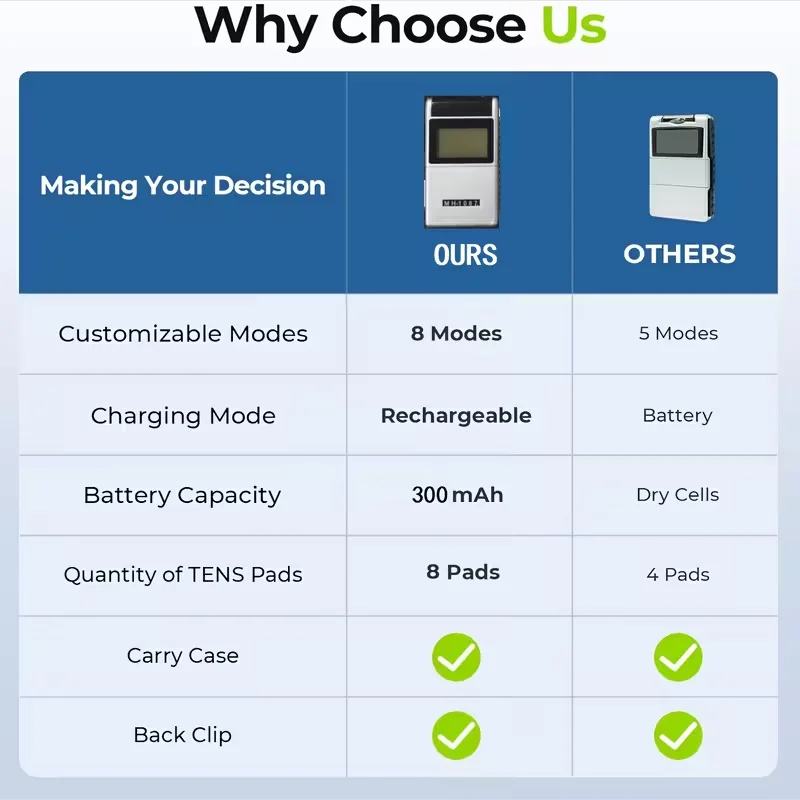
- 48 modes and 20 intensity levels: enough granularity to find a setting that’s effective without being unpleasant. The right intensity is strong, distinct, and not painful.
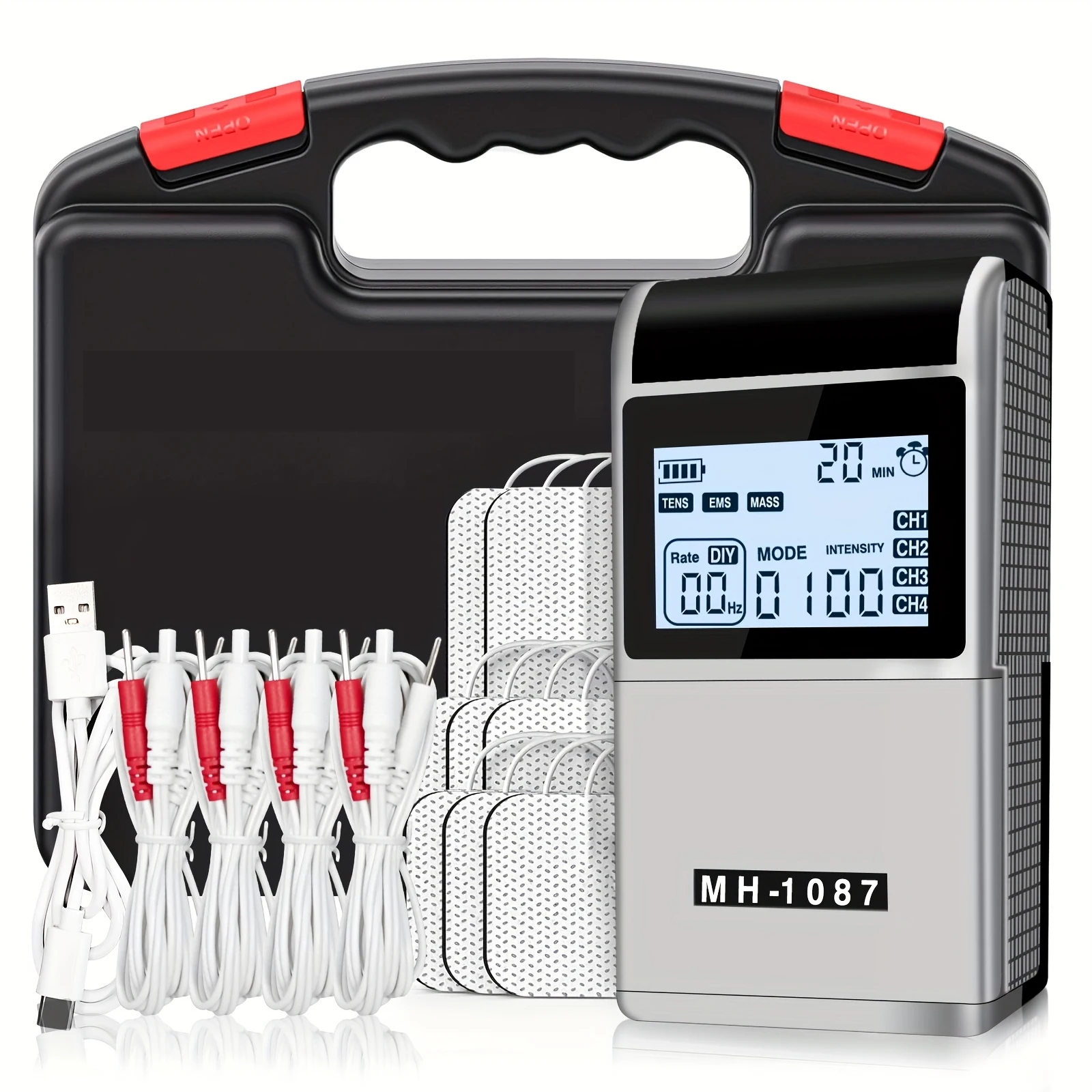
- Eight electrode pads: lets you cover a large area or treat multiple sites, and means the pads — which are the consumable part — last longer before you’re forced to replace them.
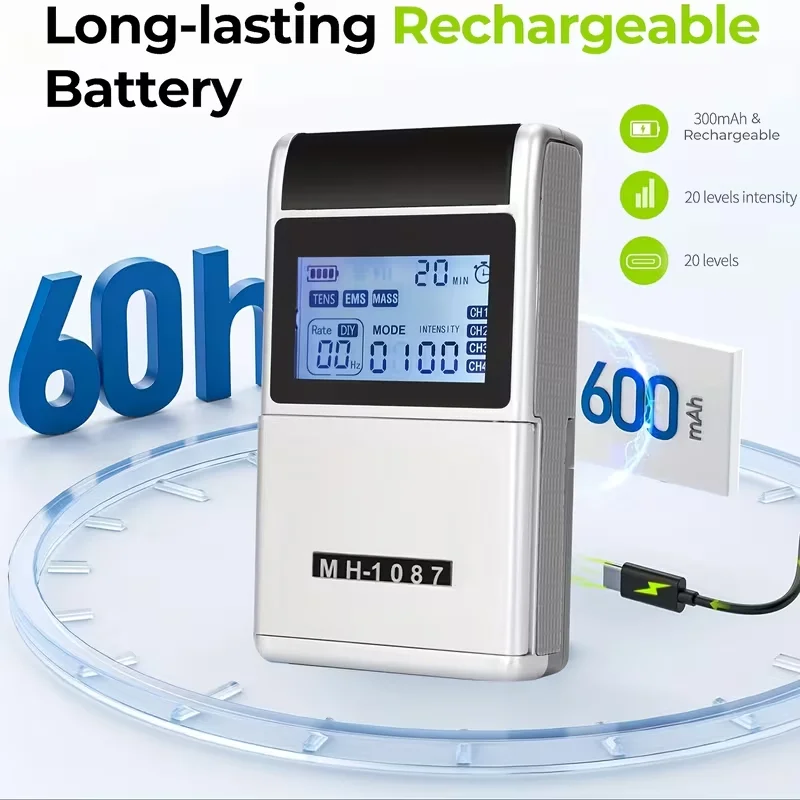
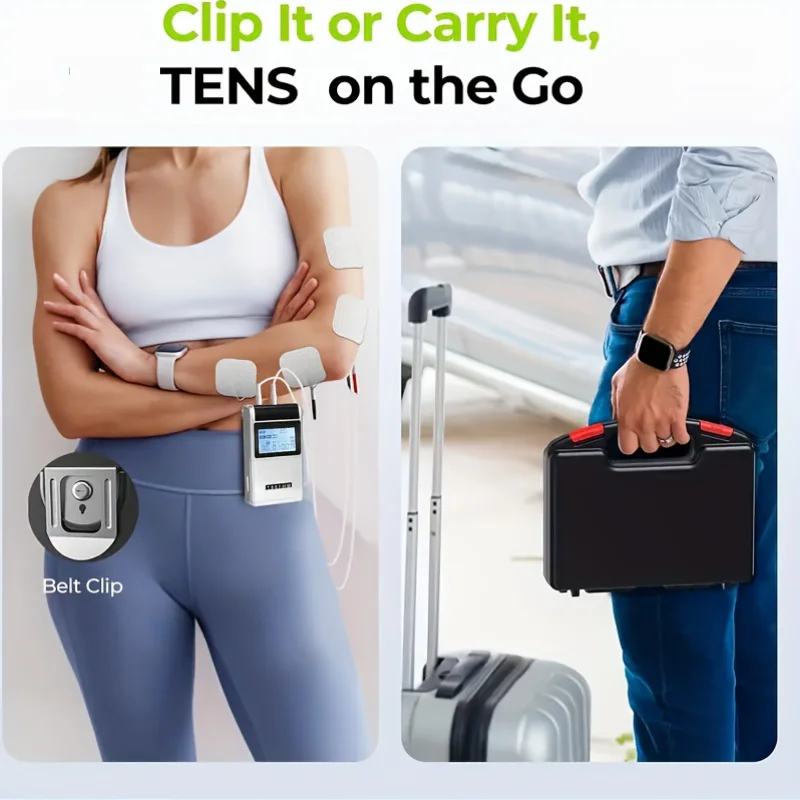
- Rechargeable, with a carry case: no battery hunt, and a case that keeps the pads flat, which is the main determinant of how long they stay sticky.
- What it will not do: burn fat, reduce fat in a specific area (spot reduction is not physiologically real), or substitute for training. On its actual merits it’s a very good pain and recovery device.
How to Use
Start every session at the lowest intensity and raise it slowly until the sensation is strong but comfortable — never painful. Apply pads to clean, dry, intact skin, positioning them to bracket the painful area rather than directly on top of a fresh injury. Always keep at least a pad’s width between electrodes so they don’t touch. Sessions of 20 to 30 minutes are standard; run TENS as often as needed within reason, and give muscles a day of recovery between hard EMS sessions. Turn the unit OFF before applying or removing pads — an active electrode against the skin can deliver an unpleasant jolt. Critical contraindications, and these are absolute: do NOT use this device if you have a pacemaker, implanted defibrillator or any implanted electronic device; if you are pregnant; if you have epilepsy, a heart condition or arrhythmia; or if you have cancer in the area being treated. Never place electrodes on the front or sides of the neck (this can affect blood pressure and the airway), across the chest or heart, on the head, over the eyes, over broken or numb skin, near the carotid sinus, or on an area with reduced sensation. If you have any medical condition or implant at all, ask your doctor before your first use.
Specifications
| Modes | 48 preset modes (TENS and EMS) |
|---|---|
| Intensity levels | 20 |
| Electrode pads | 8 included |
| Channels | Dual channel (independent intensity) |
| Power | Built-in rechargeable battery, USB charging |
| Timer | Adjustable session timer |
| Display | Digital LCD |
| Case | Carry case included |
| Pad reusability | Reusable self-adhesive gel pads — consumable, replace when tack is lost |
Care & Maintenance
After each session, return the pads to their plastic backing sheet, gel side down, and store them flat in the case; leaving pads exposed to air is what kills the adhesive. If a pad loses tack, a single drop of water smoothed over the gel often revives it, but a pad that no longer sticks evenly must be replaced — poor contact concentrates current and can irritate or burn skin. Wipe the unit with a dry cloth only and never immerse it in water. Clean the skin before use; oils and lotions block conduction. Recharge before long storage rather than leaving the battery flat.
What’s in the Box
1 × rechargeable TENS/EMS unit, 8 × self-adhesive electrode pads, 2 × lead wires, 1 × USB charging cable, 1 × carry case, 1 × instruction manual.
Reviews
There are no reviews yet.