Being Seen Is a Different Job From Seeing
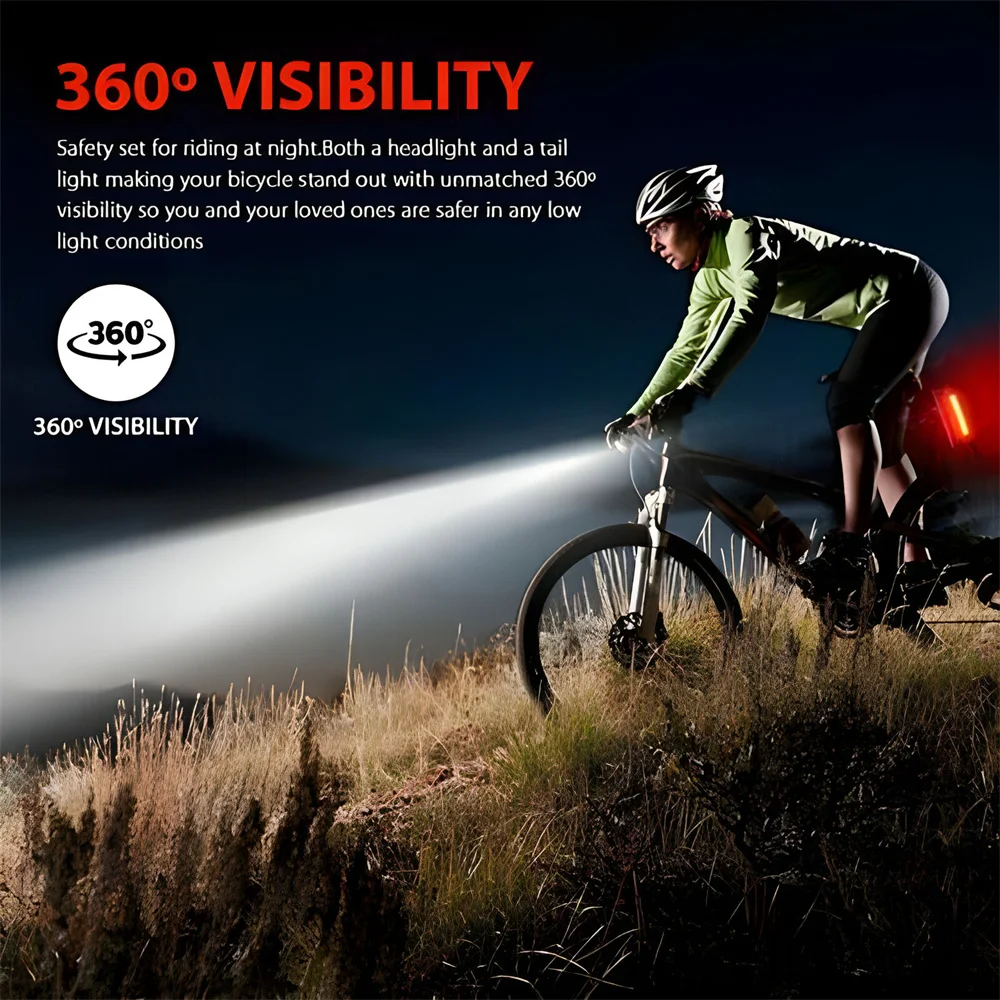
Cyclists conflate two problems that have opposite solutions. On a lit street the danger is not that you cannot see — it is that a driver’s eye does not separate you from a cluttered background. What defeats that is conspicuity: motion and contrast, which is why a flashing rear light works, because peripheral vision is far more sensitive to change than to a steady point of light. On an unlit lane the problem inverts. Now you need enough sustained output to reveal a pothole at the speed you are travelling, and a beam aimed at the road rather than into the eyes of whoever is coming the other way. One light cannot do both jobs, which is why this is a set.
Key Benefits
- A front light bright enough to actually ride by. In the 600–1000 lumen bracket you are past ‘be seen’ territory and into genuinely lighting an unlit road at commuting speeds.
- A rear light, included, not sold separately. The rear is the one that protects you from the most dangerous impact vector, and it is the one people forget to buy.
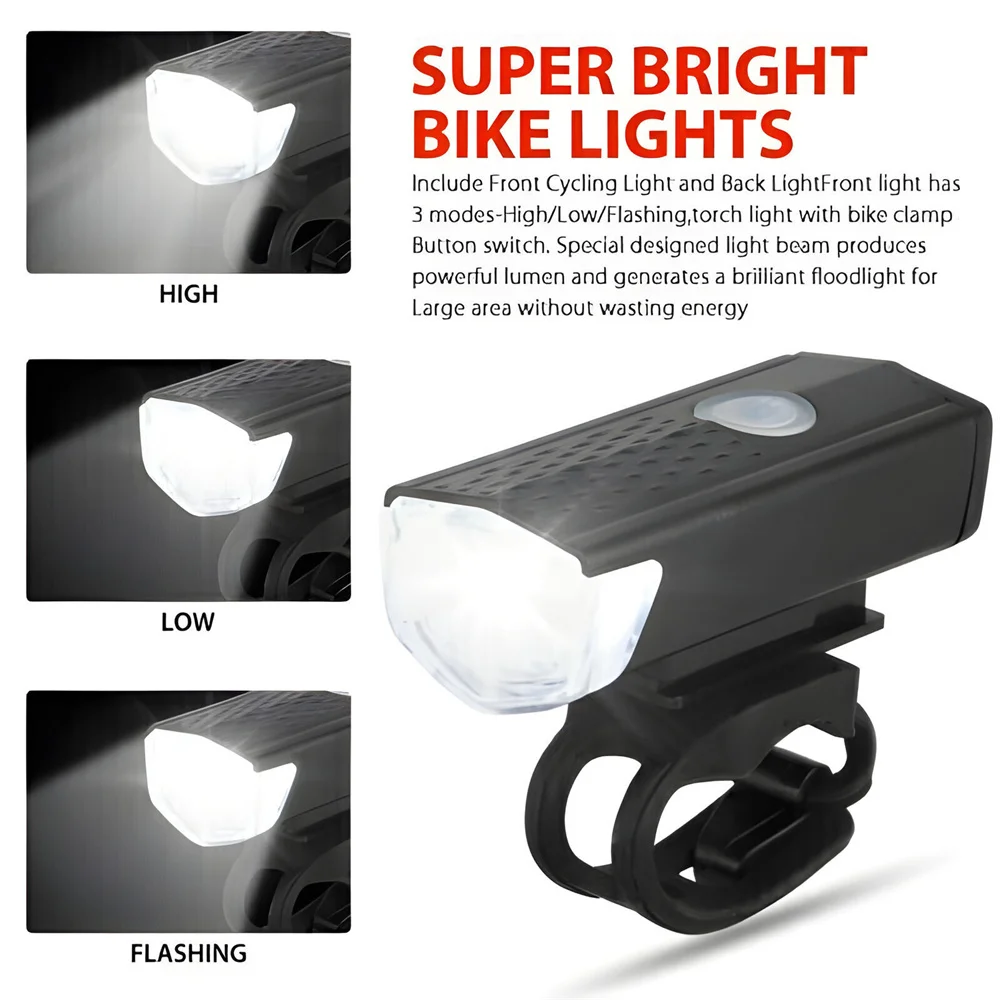
- Three modes. High for dark lanes, low to conserve battery on lit streets, flash for daylight conspicuity — daytime running lights measurably reduce cyclist collision risk and cost you nothing.
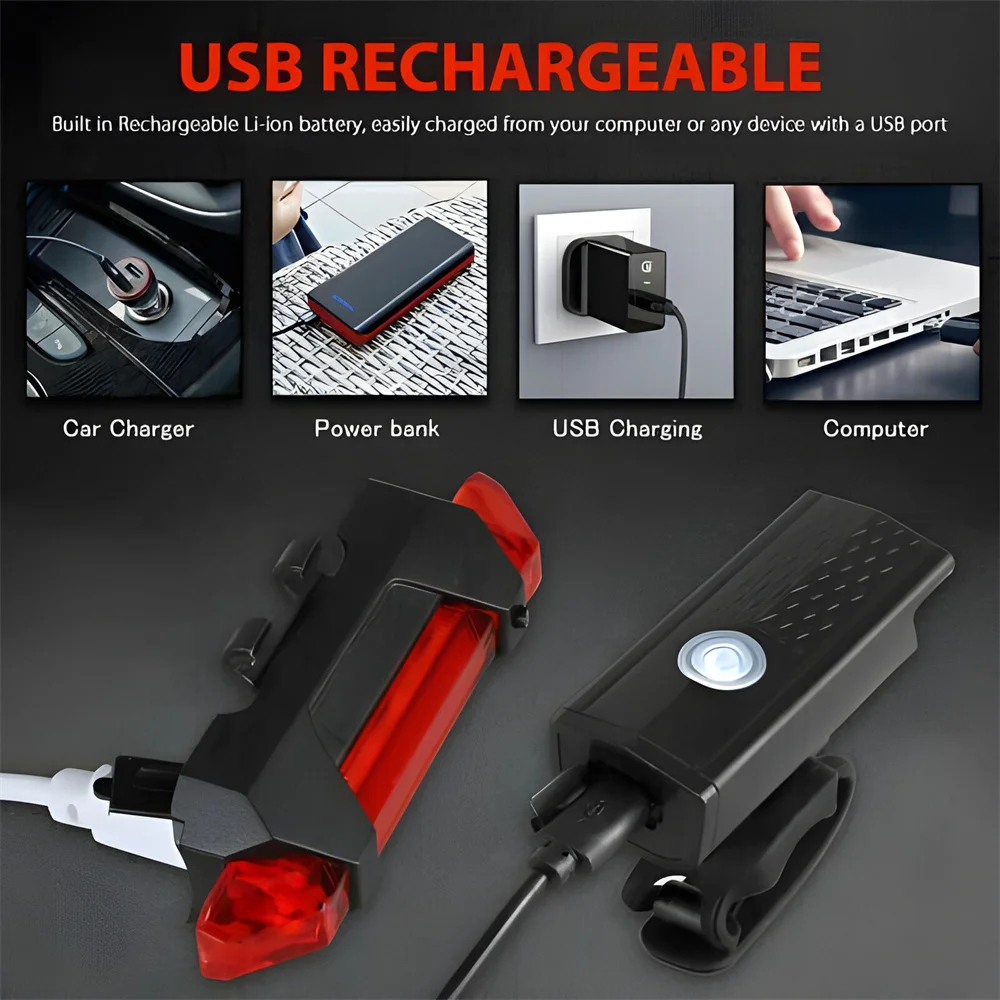
- USB rechargeable. No coin cells, no AAAs going flat in a drawer. Top it up at a desk on the same cable as everything else you own.
- Tool-free mounting. Straps on and off in seconds, which matters because a light left on a bike in a city is a light that gets stolen.
- Honest about the lumen number. Output figures on unbranded lights are typically the LED’s theoretical maximum, not measured output at the road, and the highest mode always drains the battery fastest. Treat 600–1000 lm as a bracket, not a promise, and carry a backup on any ride where being left without light would be a serious problem.
How to Use
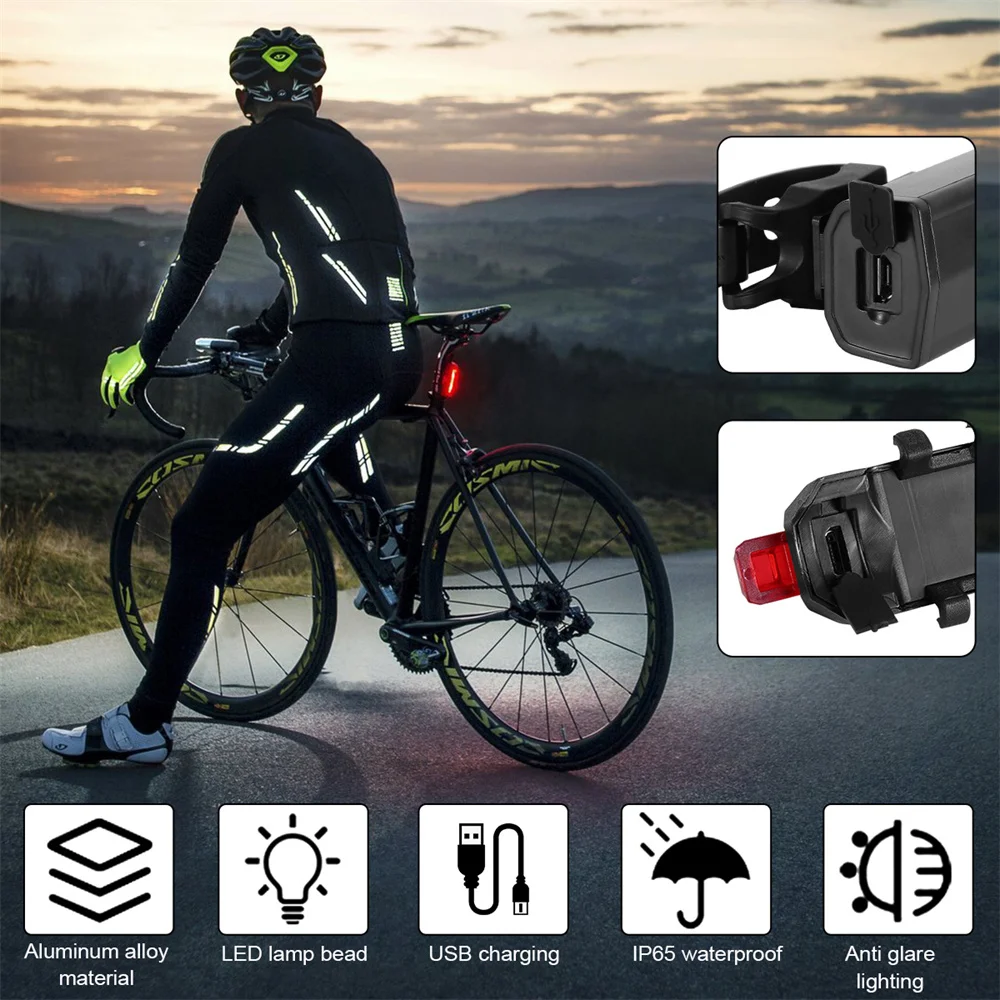
Charge both units fully before first use. Mount the front light on the handlebar and aim it slightly downward so the brightest part of the beam lands about 10 metres ahead — pointing a 1000-lumen light straight forward dazzles oncoming traffic and, ironically, makes you less safe. Mount the red taillight on the seatpost, angled so it is visible from directly behind, not pointing at the sky or the ground. The usual convention is steady on the front and flashing on the rear. Safety: check your local law before you rely on flashing modes, because many jurisdictions legally require a steady front white light and a red rear light after dark, and flashing-only setups can be non-compliant. Charge before, not during, a ride, and treat the lights as rain-resistant rather than submersible unless the supplier states an IP rating — do not jet-wash them or leave them submerged. Take them off the bike when you lock up.
Specifications
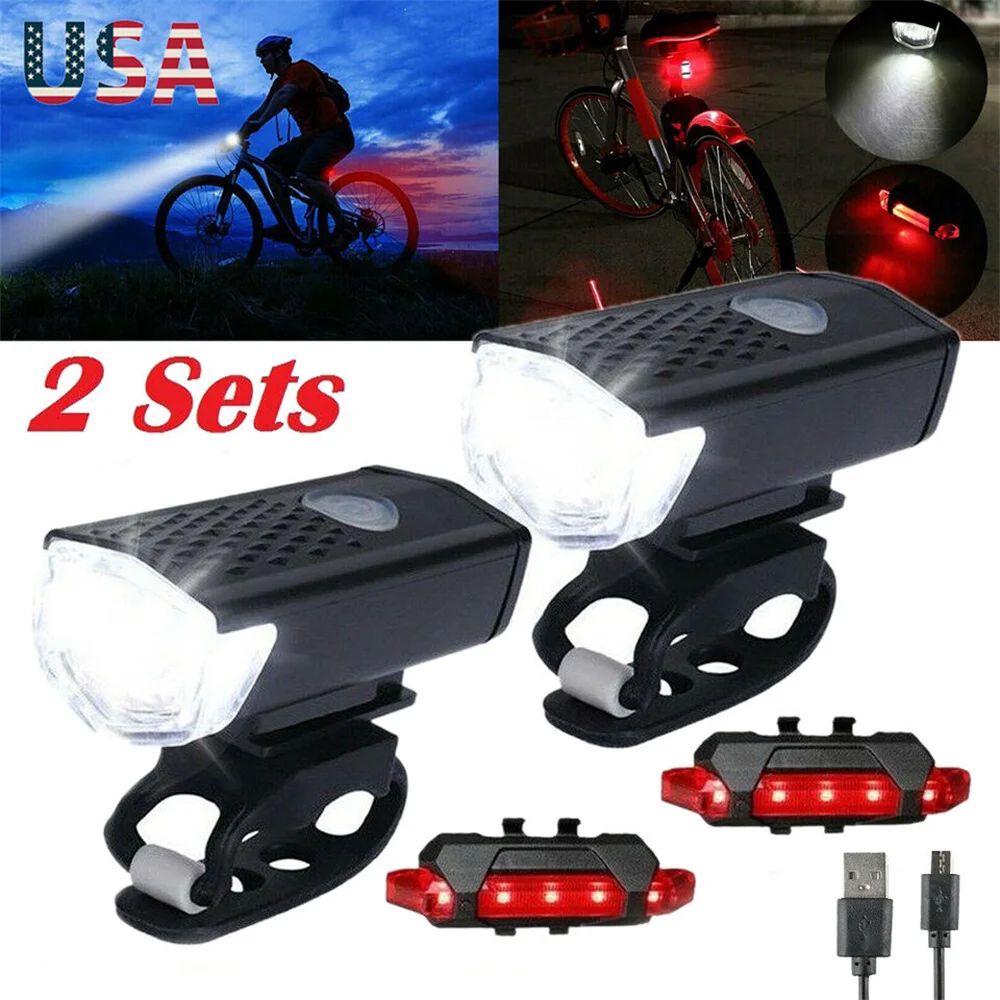
| Pieces | 2 — front light and rear taillight |
|---|---|
| Front output | 600–1000 lumens (variant dependent) |
| Modes | 3 |
| Power | Built-in rechargeable battery, USB charging |
| Rear light | Red |
| Mounting | Tool-free strap mount |
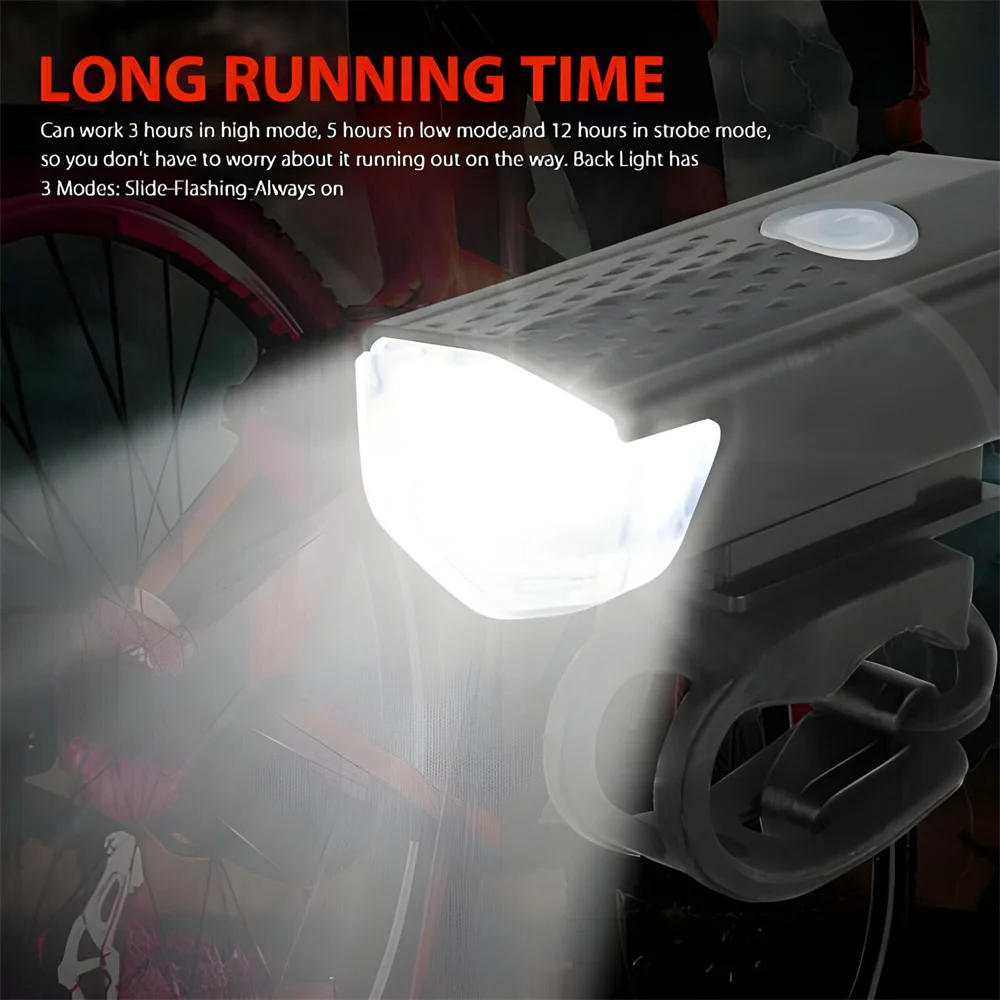
| Runtime | Mode dependent — not specified by the supplier |
| Water resistance | Rain-resistant; no IP rating stated by the supplier |
Care & Maintenance
Charge the batteries every few months even if you are not riding — lithium cells left fully flat for long periods lose capacity permanently. Wipe the lenses with a soft damp cloth; grit dragged across a plastic lens scratches it and scatters the beam. Keep the USB port cover closed and seated, as that is the point where water gets in and kills a light. Dry the units off after a wet ride rather than leaving them wet on the bike.
What’s in the Box
Front bike light, rear taillight, mounting straps and USB charging cable.

Reviews
There are no reviews yet.