The Only Resistance That Scales Itself to Your Effort
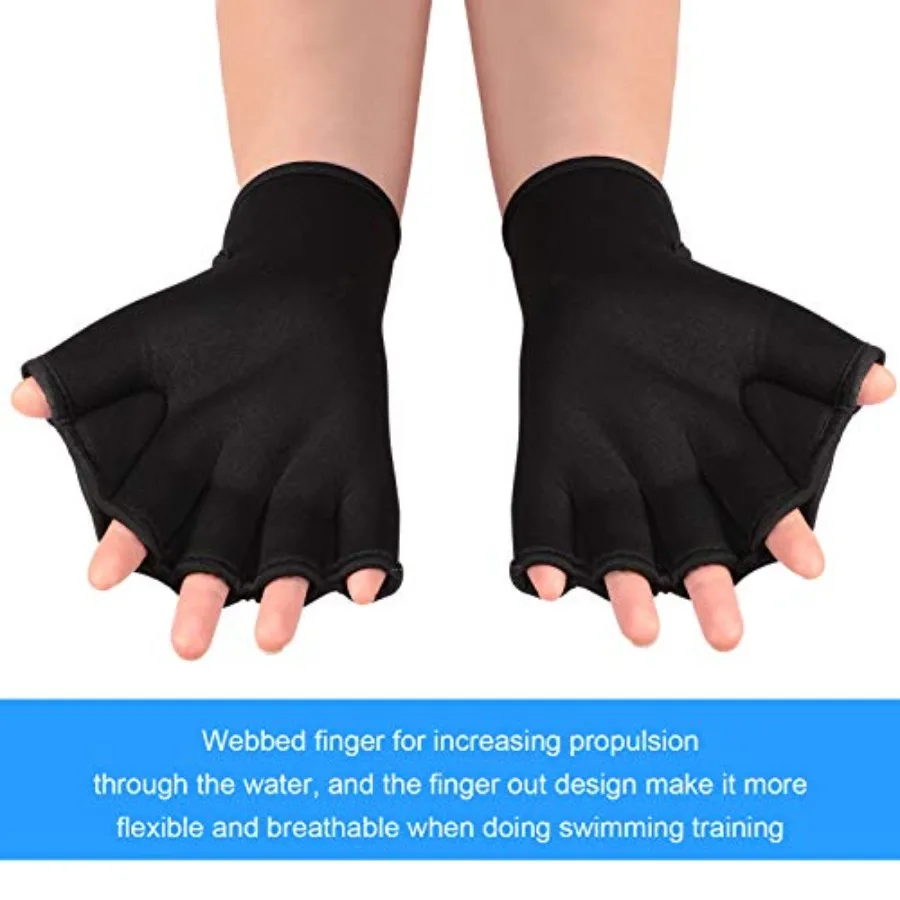
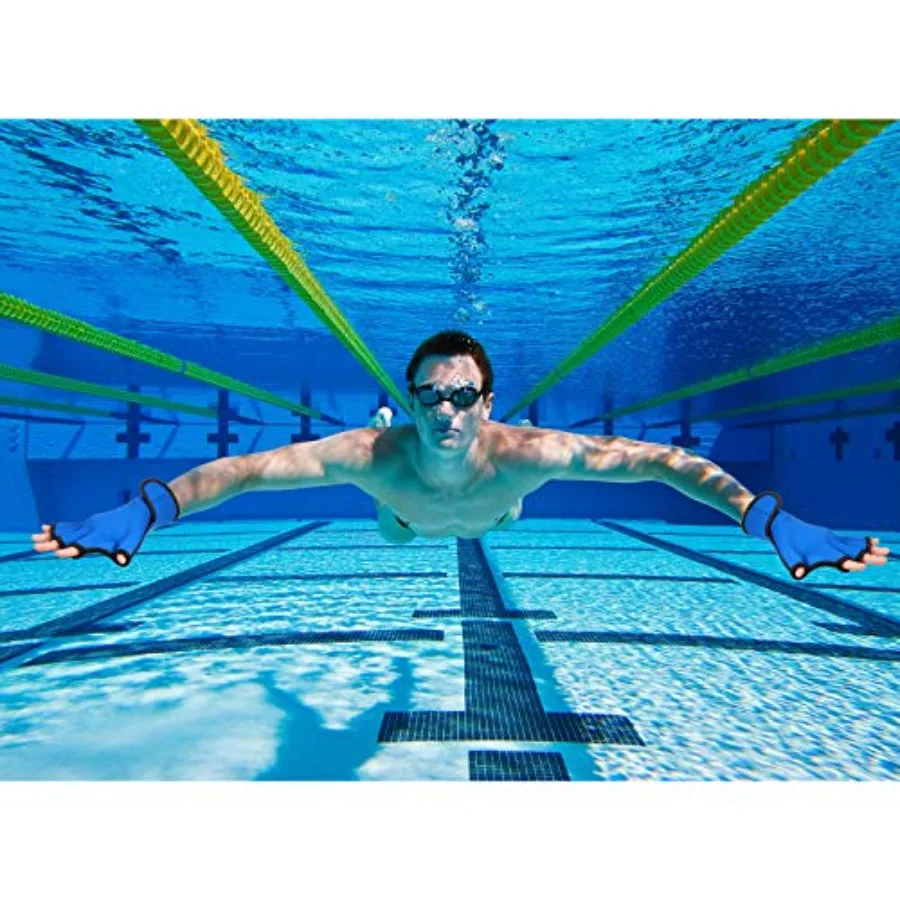
Drag force rises with the surface area you present and roughly with the square of how fast you move through the water. Webbing the fingers enlarges the effective paddle of the hand, so every pull meets substantially more resistance. Two consequences follow. First, the resistance is self-scaling: push harder and the water pushes back harder, with no plates to change. Second, water resistance is almost purely concentric — there is no eccentric lowering phase, which is the phase that causes most exercise-induced muscle damage. That is why aquatic training builds upper-body endurance with strikingly little next-day soreness, and why it is a staple of rehabilitation.
Key Benefits
- Joint-friendly loading. Buoyancy offloads the spine, hips and knees while the webbing loads the shoulders, chest and back — a rare combination, and the reason aqua training suits arthritis, post-injury rehab and heavier bodies.
- Meaningfully harder aqua sessions. The most common complaint about water aerobics is that it stops being challenging. More hand area is the cheapest way to fix that without adding impact.
- Neoprene keeps your hands warm. Hands lose heat fast in a pool, and cold hands are the reason people cut sessions short.
- Two pairs. One for the pool bag and one that is actually dry — or one for a training partner.
- Builds a feel for the catch. Swimmers use paddle-type tools to sense water pressure on the hand and learn to hold it through the pull.
- Honest limits. These will not make you a faster swimmer on their own, and they will not “tone” your arms in the fat-loss sense — spot reduction is not a real phenomenon. They add resistance. Used constantly, paddles and webbed gloves can also mask a poor catch, so coaches recommend limited, purposeful use rather than every length of every session.
How to Use
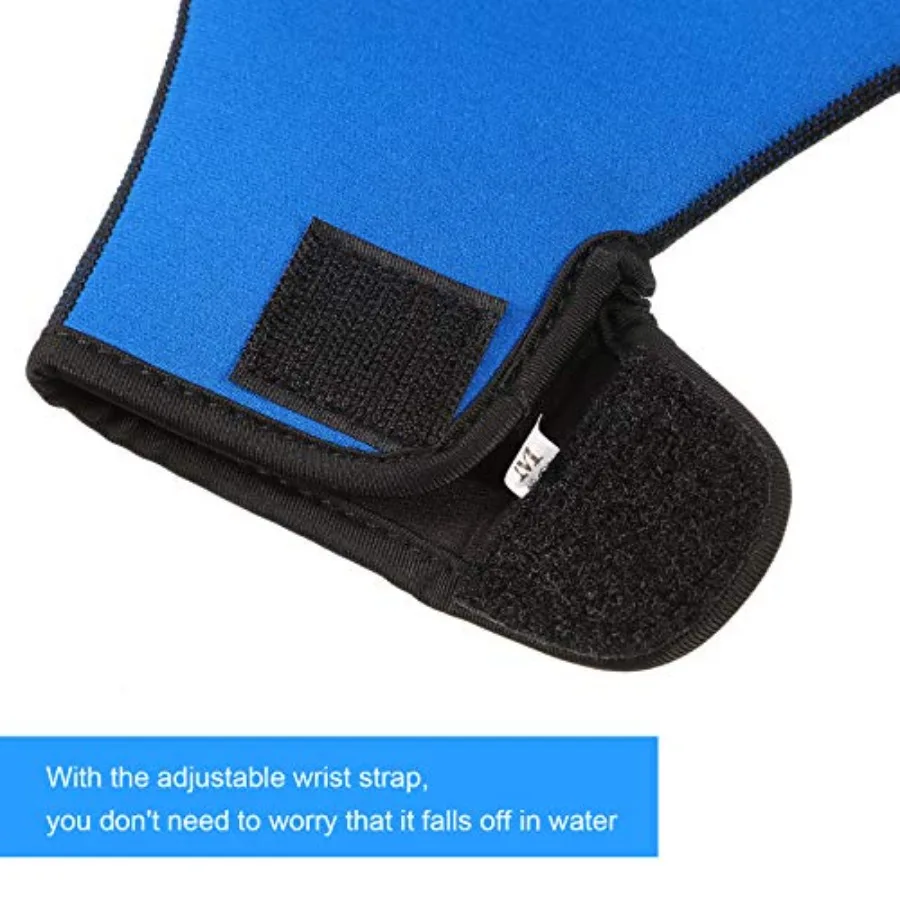
Fit them snugly — a loose glove floods and flaps, which kills the paddle effect. Keep the fingers together so the webbing stays taut; splayed fingers let water through and you lose the resistance you paid for. Work in sets: pulls, presses, rows and sculling patterns performed with control, feeling for constant pressure on the palm through the whole range. Move deliberately rather than thrashing — the drag is generated by pushing a large surface through water, not by speed alone. Safety: these are not a flotation device and provide no buoyancy or life-saving assistance. Do not use them as a swim aid for a weak or non-swimmer, do not use them in open water where you cannot stand, and always train within your depth or with supervision. Ease in — the extra load on the shoulder is real, and shoulder impingement is the classic overuse injury when people jump straight to high volume.
Specifications
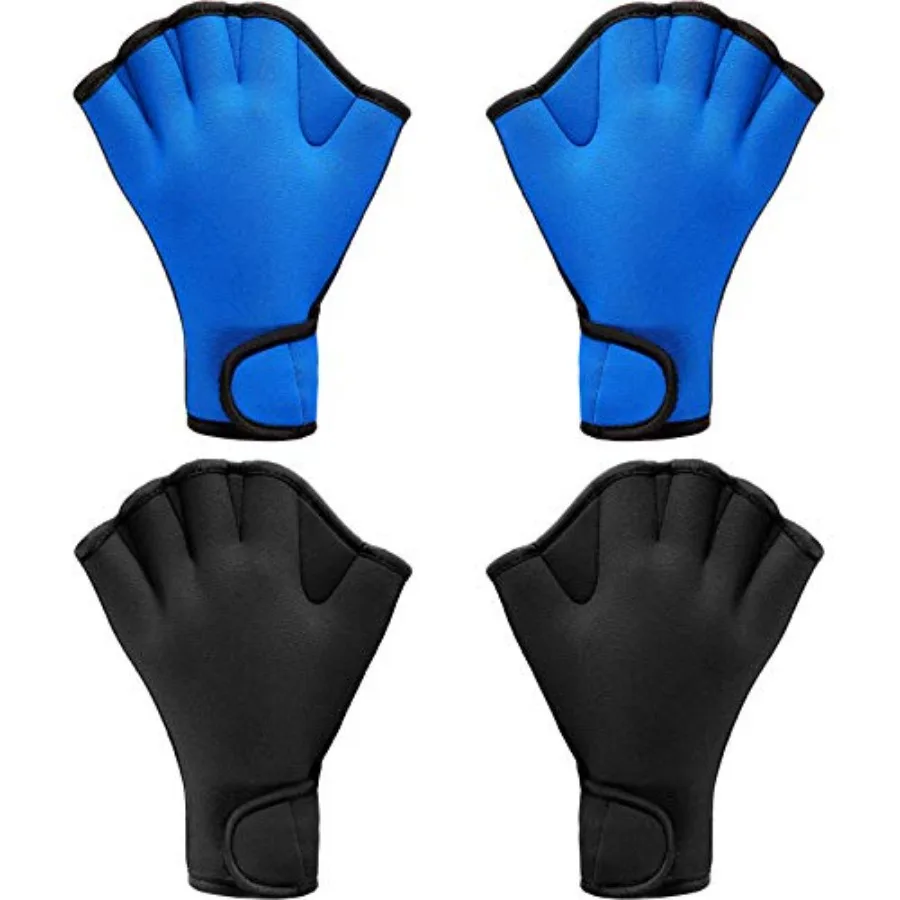
| Quantity | 2 pairs |
|---|---|
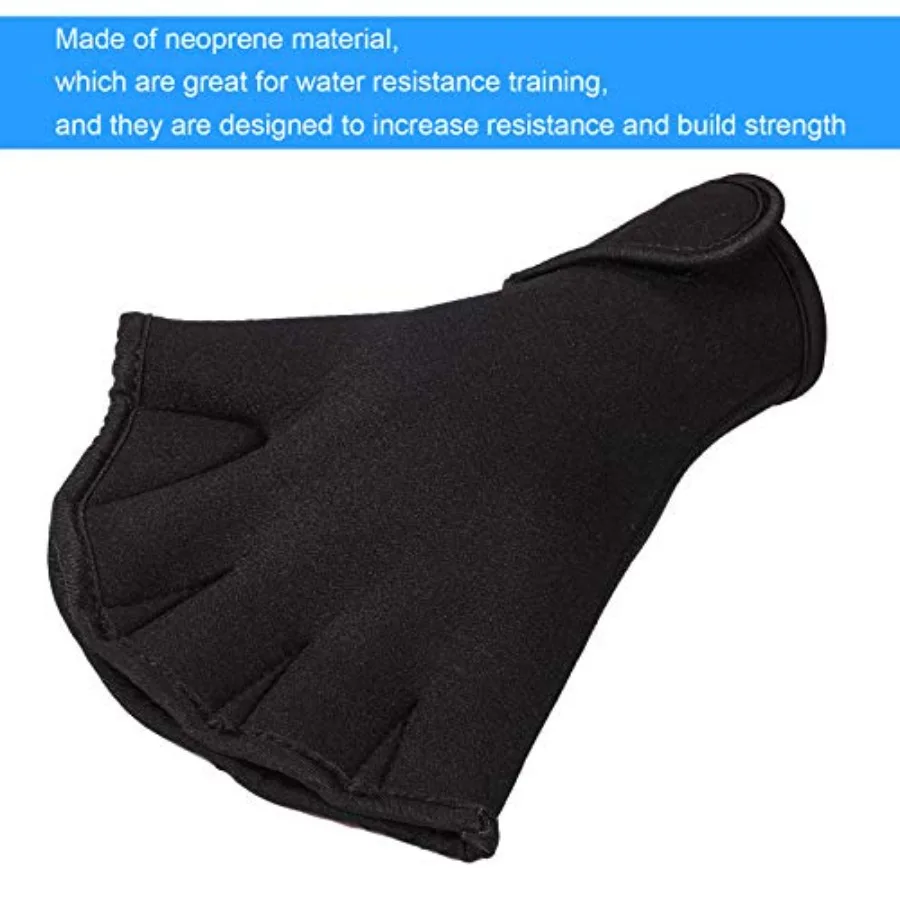
| Material | Neoprene |
| Colour | Black / Blue |
| Design | Webbed fingers (paddle style) |
| Intended use | Water aerobics, aqua resistance training, swim conditioning |
| Suits | Women and men |
| Buoyancy | None — this is not a flotation device |
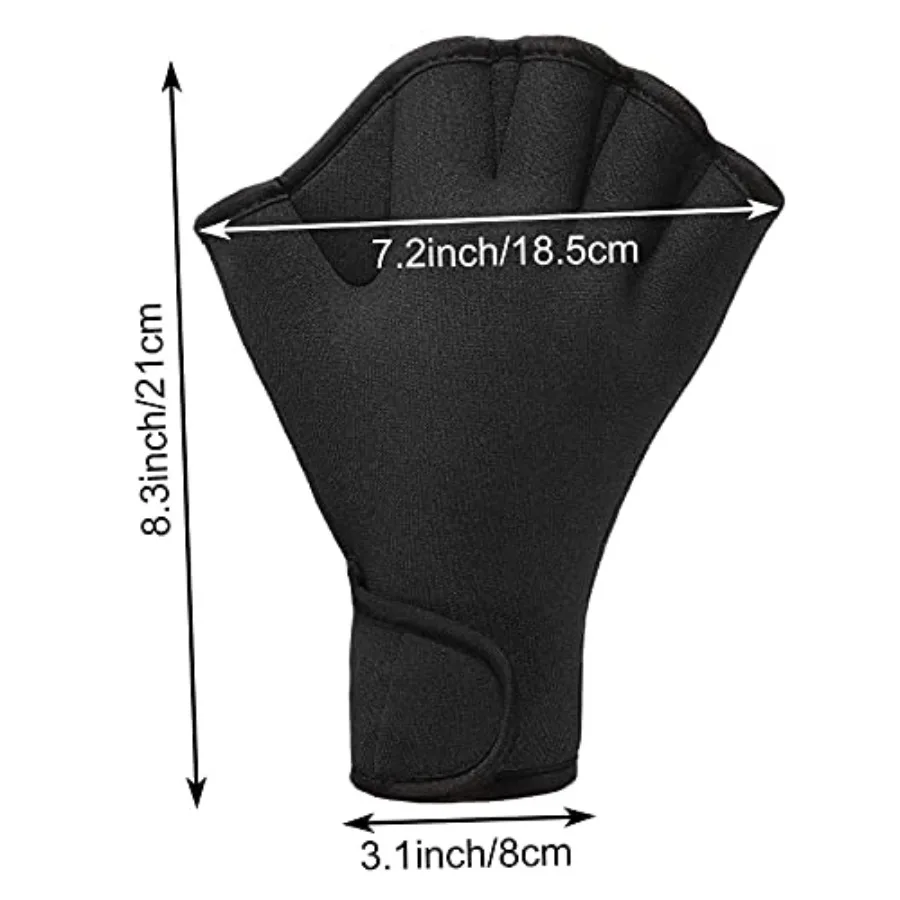
| Sizing | Variant dependent — check the option you select |
Care & Maintenance
Rinse thoroughly in fresh water after every session; chlorine left in neoprene degrades it and salt is worse. Air dry away from direct sunlight and never on a radiator — heat and UV are what make neoprene go stiff and crack at the seams. Do not machine wash, tumble dry or wring them out. Dry them fully before storing, or they will smell.
What’s in the Box
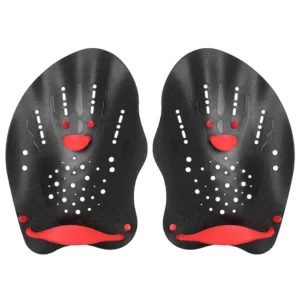
Two pairs of webbed neoprene aquatic training gloves.
Reviews
There are no reviews yet.